Specters on Stage—Guide to Haunted Southern Theatres

Life’s but a walking shadow, a poor player
That struts and frets his hour upon the stage
And then is heard no more.

—Williams Shakespeare, Macbeth, Act V, Scene 5

The world of the theatre is filled with mysticism, superstition, and spirits. As a theatre person, nearly every theatre I have worked in has this mysterious side, especially in the connection to the spirit world. In his Ghost Hunter’s Guide to New Orleans, author Jeff Dwyer contends that one can be almost certain that a theatre will be haunted.

There are few certainties in ghost hunting. But when it comes to haunted places, ships and theaters offer ghost hunters the greatest opportunities for encounters with the spirit world. Theaters often harbor the ghosts of actors, writers, musicians and directors because something about their creative natures ties them to the place where they experienced their greatest successes or failures. Stagehands and other production staff may haunt backstage areas where they worked and, perhaps suffered a fatal accident. They may also be tied to room where props are stored. The ghosts of patrons remain long after death because they love the theater or, more likely, they loved an actor who performed regularly at that location.

Much of the mysticism in theatre revolves around actors, especially in how they take on a character. Even the language of an actor bears parallels with the language of ghosts and spirits. Some actors will describe an experience akin to possession when they are inhabiting another’s body and lose themselves. Certainly, within the ritual of preparing for a show, there may be a ritual in applying makeup, getting into costume, and warming up. I’ve watched as some actors will walk the set, absorbing the energy of the world of the play, all of which resembles summoning. If the play utilizes masks, actors may put on the mask in a nearly religious manner. Onstage, the actors are in tune with the energy that surrounds them, including that from other actors, the set, the audience, the crew, and the audience. Once the actor has finished his hour of strutting and fretting upon the stage, these spirits are banished to the world of fiction. But, are they really? Perhaps some of these spirits linger in the theatre?

As for the directors, writers, musicians, technical crew members, and the backstage functionaries, many imbue their work with their own passion, thus leaving a little bit of themselves behind in their work. Even once these people pass on, they may return to the theatres to feed their passion in the afterlife.

The practice of leaving a ghost light onstage when the theatre is dark is wrapped up in superstition and practicality. Some will argue that the light assures the theatre’s spirits that the theatre is not abandoned and provides light for their own performances. In a way, this could be a sacrifice to the genius loci, or the spirit of a location. As for practicality, non-superstitious thespians will contend that a ghost light provides illumination to prevent injuries if someone enters the darkened space.

Theatres are often inherently dangerous places where actors, crew, and even some patrons can, and do, get injured. Indeed, there have been numerous accidents throughout history where deaths have occurred on or just off stage sometimes leaving spirits in limbo within the space. The haunting of the Wells Theatre in Norfolk, Virginia comes to mind. One of the spirits in this 1913 theatre may be that of a careless stagehand who became entangled in the hemp rope-operated fly system (a system that is still in use) and accidentally hung himself. Other deaths may be blamed on medical conditions that have claimed have claimed lives while people are at work.

As for lingering spirits of theatre patrons, a love for theatre or a particular space may be reason enough to return in the afterlife. Though it seems that most of the hauntings by members of the audience are residual in nature with phantom laughter and applause sometimes being heard.

Contributing to theatres’ haunted natures, some theatres occupy spaces that were not intended to be performance spaces. These repurposed buildings may already be haunted, and the spirits adapt to the new use of the location. Among the numerous examples of these types of theatres are the Baltimore Theatre Project in Maryland in an old building originally constructed for a men’s fraternal organization and the Hippodrome State Theatre in Gainesville, Florida, formerly a post office and courthouse.

Over the decade I have worked on this blog, I have covered a number of theatres and theatre spaces. In addition to places that have formerly served as theatres, I have added movie houses, larger structures that include a theatre, structures that are associated with theatres, and the Maryland home of the Booth family, which included some of America’s most famous and infamous actors in the 19th century.

Alabama

Lyric Theatre Birmingham Alabama
Balconies of the Lyric Theatre. Photo by Andre Natta, 2006, courtesy of Flickr.

District of Columbia

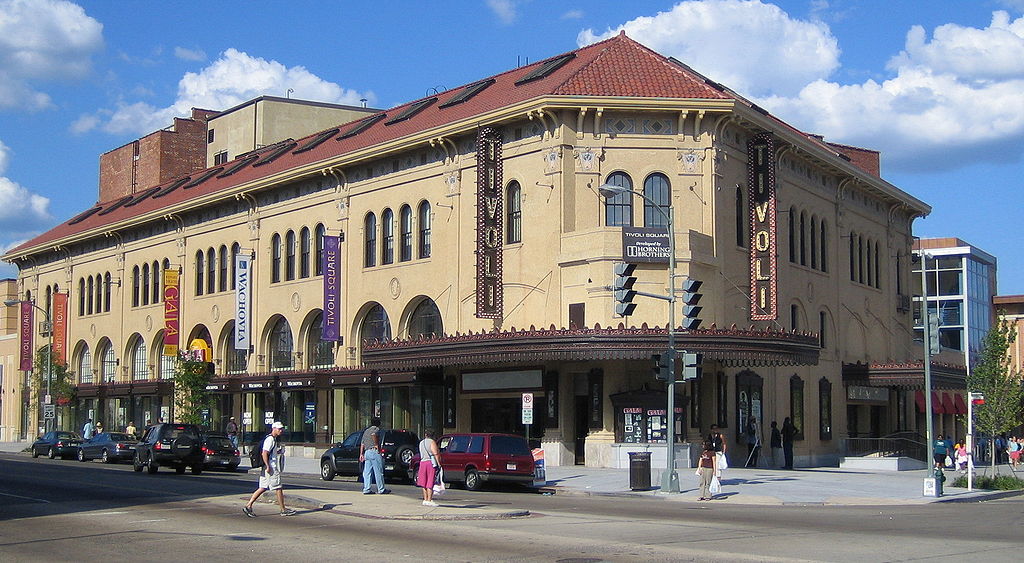
Tivoli Theatre Washington DC
Tivoli Theatre, 2005, by D Monack. Courtesy of Wikipedia.

Florida 

Floirda Theatre Jacksonville Florida
Florida Theatre, 1927. Photo courtesy of the Jacksonville Historical Society.

Georgia 

Wink Theatre Dalton Georgia
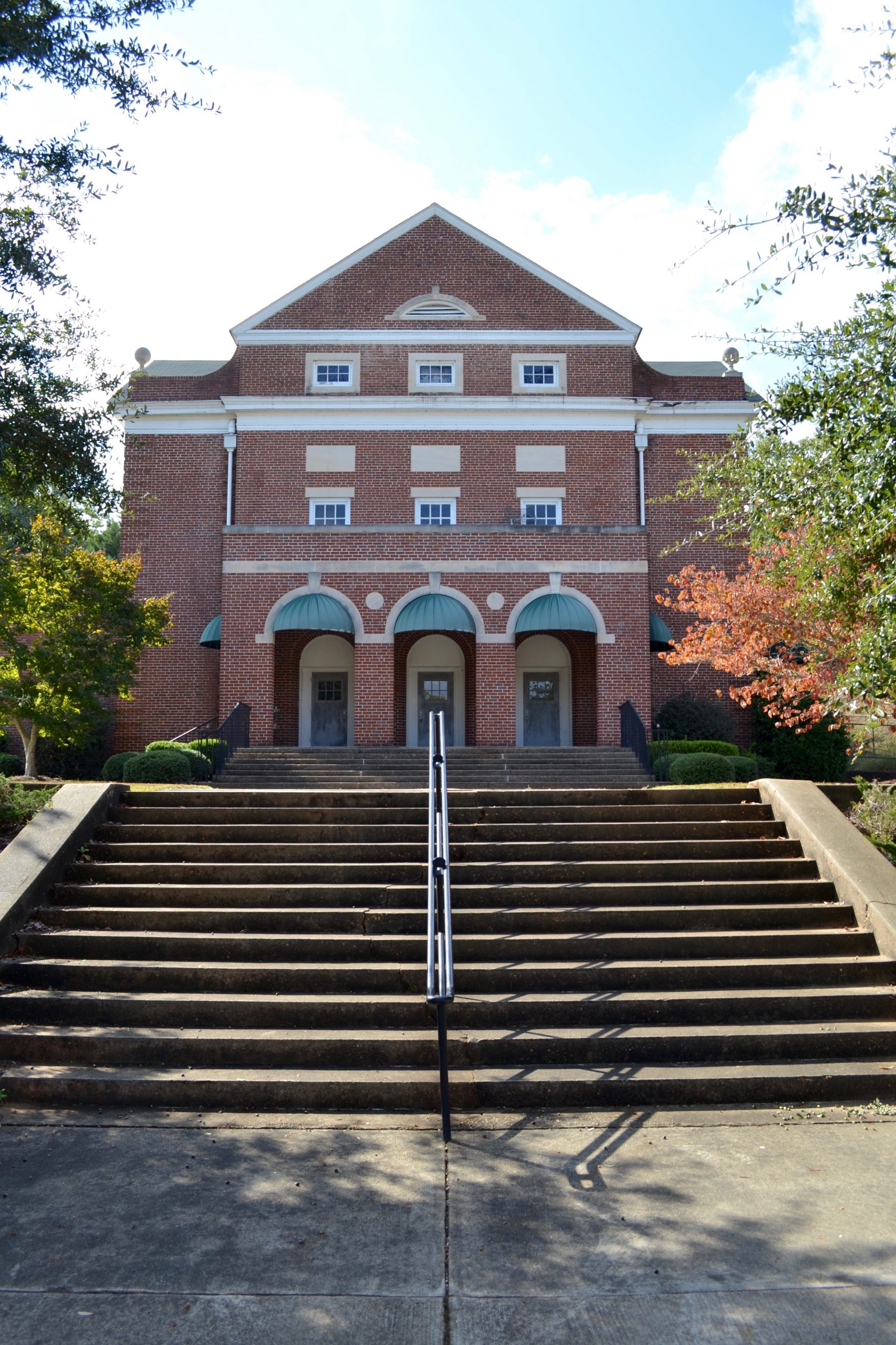
Wink Theater, 2018. Photo by Lewis Powell IV, all rights reserved.

Kentucky 

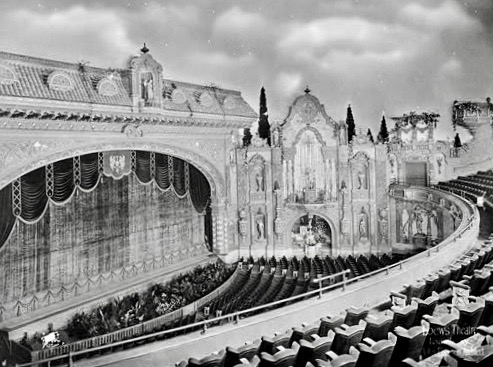
Louisville Palace Theatre Kentucky
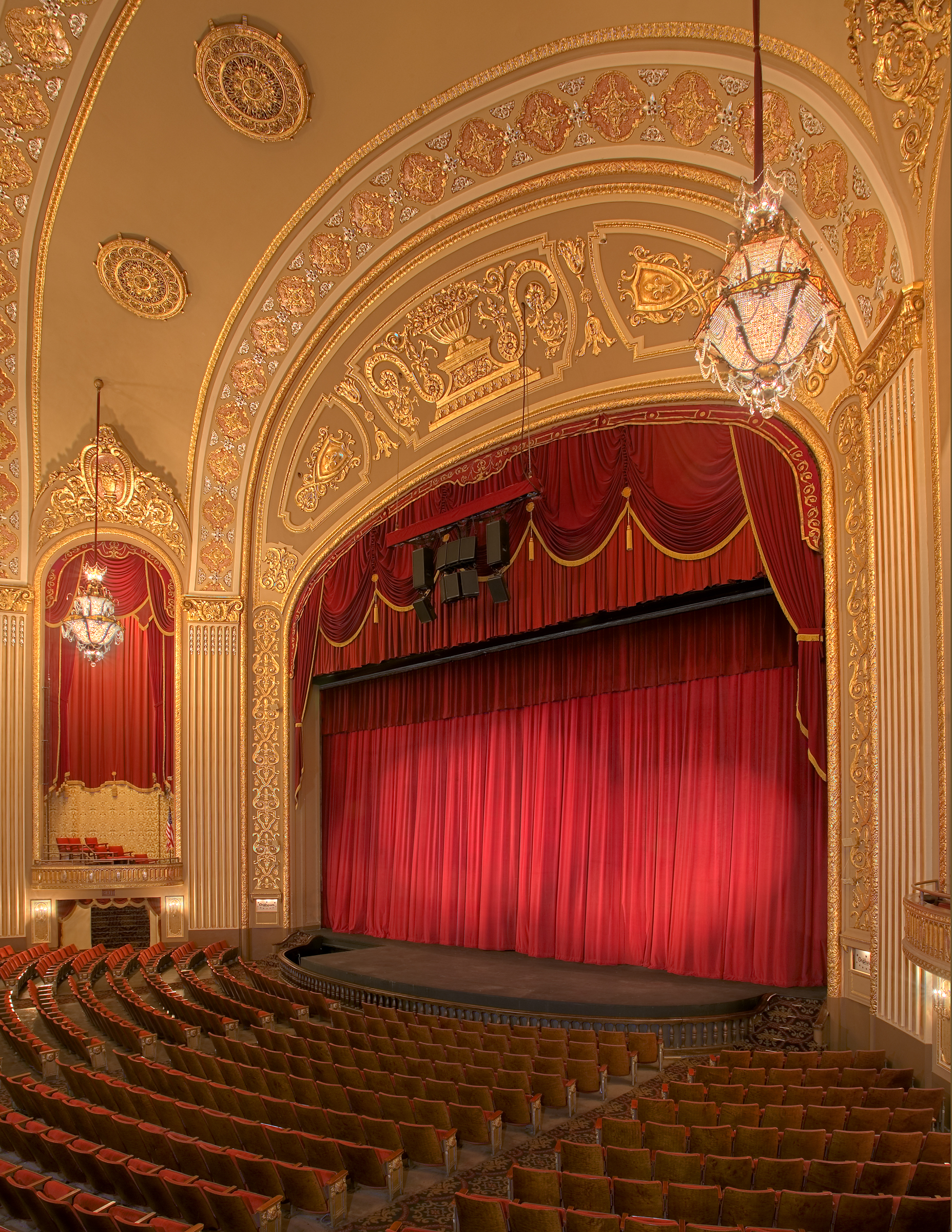
The house and stage of the Louisville Palace. The theater is designed to ensconce the audience in a Spanish Baroque courtyard. The ceiling is an atmospheric ceiling with clouds. In the 1960s, this balcony was enclosed as a second theater, but this alternation was removed in the 1990s restoration. It’s not hard to imagine spirits spending their afterlife in such a magnificent edifice. A handful of spirits have been reported here including a man in 1930s clothing that has been seen in this balcony. When approached by ushers, the man disappears. Photo taken in 1928, courtesy of the Historic American Building Survey (HABS) collection, Library of Congress, Prints and Photographs Division.

Louisiana

Shreveport Municipal Memorial Auditorium Louisiana
The elaborate facade of the Shreveport Municipal Memorial Auditorium. Photo by Michael Barera, 2015, courtesy of Wikipedia.

Maryland 

Maryland Theatre Hagerstown
The modern entrance to the Maryland Theatre, 2014. Photo by Acroterion, courtesy of Wikipedia.

Mississippi

Temple Theatre Meridian Mississippi
Temple Theatre, 2008. Photo by Dudemanfellabra, courtesy of Wikipedia.

North Carolina 

Carolina Theatre Greensboro North Carolina
Greensboro’s Carolina Theatre in 2008. Photo by Charles Brummitt, courtesy of Wikipedia.

South Carolina

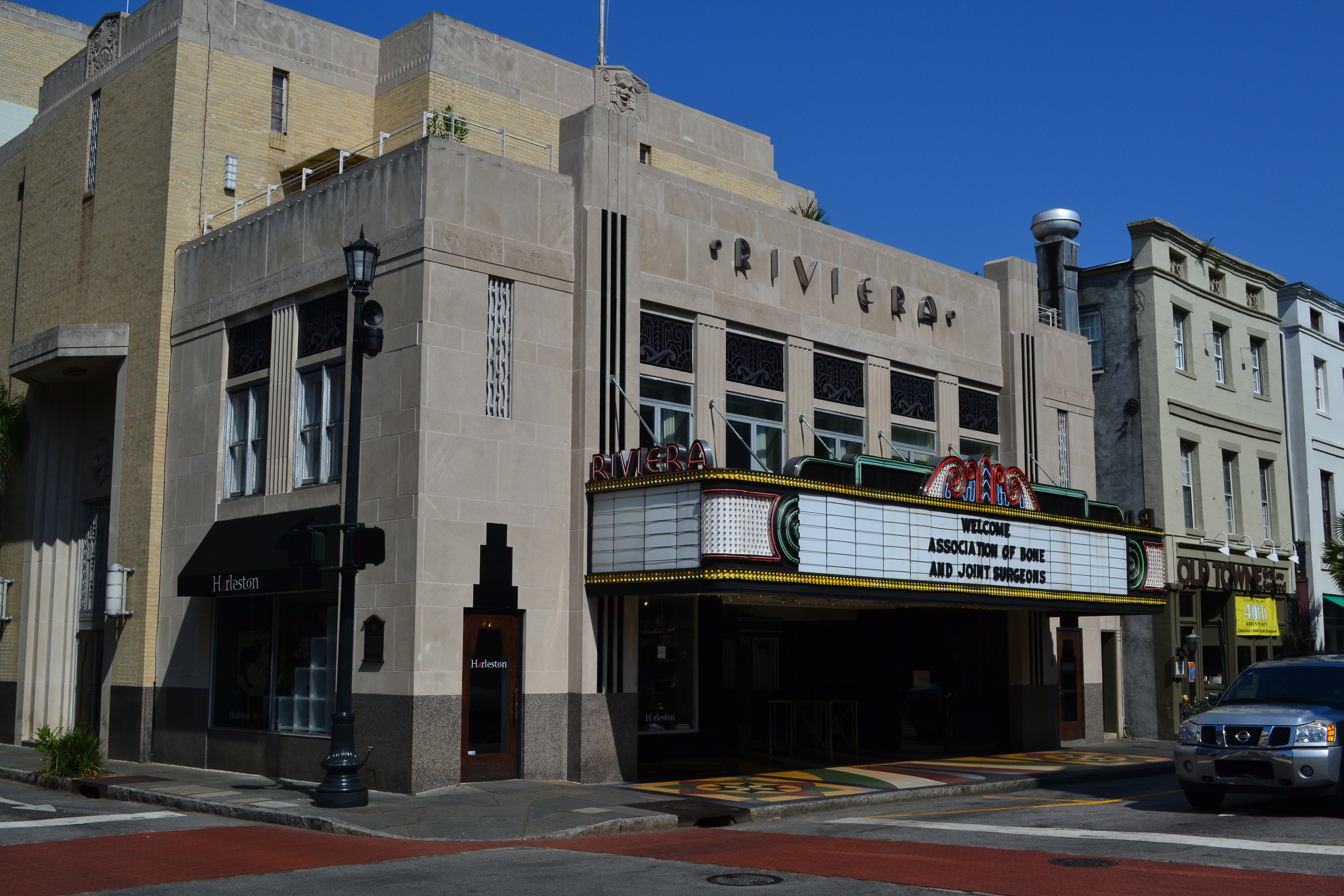
Riviera Theatre Charleston SC ghosts haunted
Riviera Theatre, 2011. Photo by Lewis O. Powell, IV. All rights reserved.

Tennessee

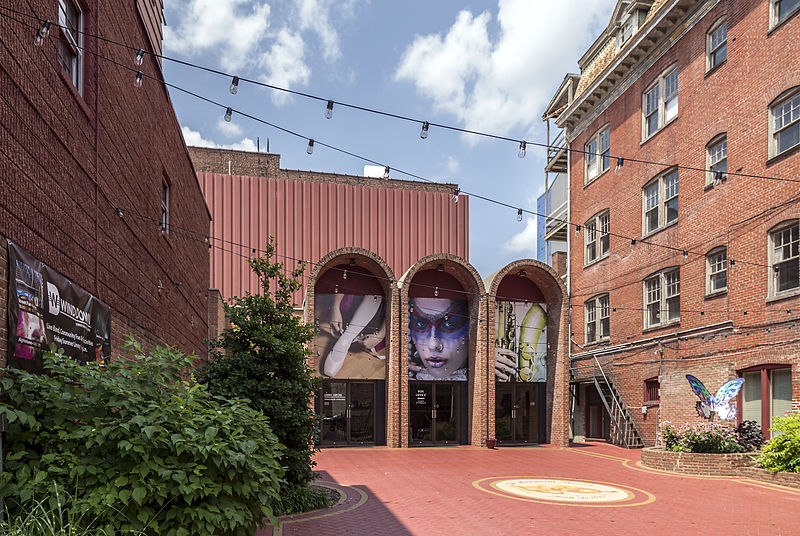
The proscenium arch of the Orpheum Theatre, 2010, by Orpheummemphis. Courtesy of Wikipedia.

Virginia

Hanover Tavern Virginia
Hanover Tavern, 2007 by BrandlandUSA. Courtesy of Wikipedia.

West Virginia 

Apollo Theatre Martinsburg West Virginia
Apollo Theatre, 2009, by Acroterion. Courtesy of Wikipedia.

Alabama Haunt Briefs

Needing a project to carry me through this quarantine, I’ve decided to return to some original blog roots. Just after establishing this blog in 2010, I created a series of articles highlighting ten haunted places within each of the 13 states that I cover. Over time, these articles have been picked apart, rewritten, expanded, and used elsewhere. When I moved this blog, I did not move over those articles. Because I have a backlog of incomplete articles and bits and pieces that haven’t been published I’m creating a new breed of these articles during this quarantine.

The Alabama article, the first to be posted, was recreated after I finished my Alabama book as the “Southern Spirit Guide to Haunted Alabama.” This article contains new entries that I have not covered in this blog.

Hank Williams Boyhood Home and Museum
127 Rose Street
Georgiana

One of Alabama’s most important native sons, Hiram King “Hank” Williams, Sr. played a major role in taking country music from the rural backwaters and byways of the South to nationwide popularity. He created a sound that combined the folksy sound of Jimmie Rodgers with stylistic elements of African-American blues, taught to him by Rufus “Tee Tot” Payne, all combined with honest, straight-talking, and evocative lyrics that are now the standard for country music lyricism. Williams’ hard drinking and even harder living lead to an early death at the age of 29 while traveling to West Virginia. While he sang, “I’m Leavin’ Now,” it seems that Williams’ spirit may remain earthbound. His lonesome spirit appears at several sites associated with his life including Birmingham’s Redmont Hotel.

Hank Williams Boyhood Home Georgiana Alabama
Hank Williams’ Boyhood Home, 2010, by Carol M. Highsmith. Courtesy of the George F. Landregger Collection of Alabama Photographs in Carol M. Highsmith’s America. Courtesy of the Library of Congress, Prints and Photographs Division.

Born in rural Butler County in 1923, young Hank’s early childhood was fraught with difficulties. Hank’s father, a long-term patient at the veterans’ hospital in Pensacola, Florida suffering from a brain injury sustained during his service in World War I, left Lily, Hank’s mother, to fend for herself and her little family. They were offered this home in Georgiana in 1930 after the family lost their cabin and all their possessions in a fire.

Williams lived here with his family during perhaps the most significant time in his musical development. During the four years the family occupied this house, Williams is said to have practiced his guitar underneath it while sitting on “an old car seat.” Williams’ son, Hank Jr., writes of an encounter with his father’s spirit at this home in his song, “127 Rose Avenue.” Can this be considered actual evidence of a haunting? Perhaps, or maybe it’s simply Hank Junior’s lyrical way of memorializing his late father.

Sources

  • Butler County Heritage Book Committee. Heritage of Butler County, Alabama. Clanton, AL: Heritage Publishing Consultants, 2003.
  • Lange, Jeffrey J. “Hank Williams Sr.” Encyclopedia of Alabama. 19 March 2007.
  • Serafin, Faith. Haunted Montgomery, Alabama. Charleston, SC: History Press, 2013.

Lafayette Lanier Elementary School and Langdale Auditorium
6001 20th Avenue
Valley

Following the Civil War, local industrialists began establishing textile mills throughout the South. In order to provide for their employees—and also as a way of making them and their families beholden to the mill owners and managers—these industrialists established mill villages. These villages provided most everything an employee and their families would require including housing, schools, churches, and stores. Valley, Alabama is made up of a series of mill villages on the western bank of the Chattahoochee River.

Langdale Auditorium Valley Alabama
Langdale Auditorium stands next to Lafayette Lanier Elementary. Photo 2016, by Lewis O. Powell IV, all rights reserved.

One of the oldest of these villages is centered on the Langdale Mill that was established in 1866. While the village has a number of late-19th century buildings, many of the most prominent buildings were constructed in the early 20th century. Lafayette Lanier Elementary School and the adjoining Langdale Auditorium were constructed around 1935. Though the mill across the street has closed, both buildings are still used for their initial functions and known to be haunted.

Kenneth W. Allen, a local paranormal investigator, penned a book, Southern Alabama Hauntings, in 2013. An employee with local law enforcement and first responders, Allen was in a great position to collect tales of strange doings in the area. With these stories, he also investigated several of these locations to further prove rumors of them being haunted.

In the book, Allen includes the experience of a local police officer who was sent to investigate a possible intruder in the school. He made his way through the first floor and found no one so he headed up to the second floor. Stepping into the second-floor corridor, he spotted a figure darting into one of the classrooms. He drew his weapon and called for backup. When three other officers arrived, they proceeded into the classroom that the suspect had disappeared into only to find the room empty. Over the years, teachers, staff, and students have seen an odd figure on the second floor. One story reveals that the figure is that of one of the school’s principals.

The auditorium has its own panoply of ghosts. Besides footsteps that reportedly resound throughout the old building, the spirits enjoy playing with toys that are kept in storage. Allen tells one story of a teacher who put toys away only to find them out again when she entered the storage room a short time later.

Sources

  • Allen, Kenneth W. Southern Alabama Hauntings. CreateSpace: 2013.
  • Binkley, Trina. National Register of Historic Places Nomination form for the Langdale Historic District. May 1999.

Mount Pisgah Missionary Baptist Church Cemetery
7400 Tabor Road
Gadsden

A recent conversation with a Northeast Alabama resident led me to begin uncovering stories from this cemetery. Located northeast of Gadsden on Lookout Mountain, this small country church has an old cemetery located just across the road. Consulting the Find-A-Grave page on this cemetery, it seems that the first burial occurred in 1886 and continuing to the present day.

As for the spookier side of this cemetery, it is reported that strange lights are sometimes seen here. I would note that these are likely cemetery lights, which are seen in and around cemeteries worldwide. Additionally, disembodied voices are heard.

A search on this location brought up a frightening account on GhostsofAmerica.com. While I cannot vouch for the validity of this account, it seems to me to ring true. According to this account, a group of curious people decided to visit the cemetery after finding it listed on a haunted places website. As they stepped out of their car, the group began to hear strange whistling, screaming, and a thumping noise. Frightened, the group piled back in their car as the sounds grew closer. Before the group drove away, a hand appeared, pressing against the passenger window.

Please respect this holy burial ground, and tread lightly taking only memories with you.

Sources

Old Bibb County Jail
21 Court Square, West
Centreville

When I wrote my Alabama book, the Old Bibb County Jail was facing a death sentence. Local officials had made the decision to demolish the forlorn building on the town square. Sadly, the death sentence was imposed, and the building has been razed.

Built in 1910, this imposing Renaissance Revival structure had seen many a prisoner pass through its barred cells until its closure in 2004. Indeed, it also saw executions as well, with the last occurring in 1949. Perhaps this is why the building may be haunted. A 2009 investigation report from the Tuscaloosa Paranormal Research Group suggests that paranormal activity in the old jail ranges from full body apparitions to odd sounds and a feeling of being watched.

Sources

  • Floyd, W. Warner. National Register of Historic Places Nomination form for the Centreville Historic District. 21 December 1977.
  • McClanahan, Mike. “Old Bibb County Jail set to be demolished, citizens protesting decision.” WIAT. 5 June 2015.
  • Reed, Jon. “See inside 105-year-old abandoned Alabama jail.” com. 15 June 2015.
  • Tuscaloosa Paranormal Research Group. Bibb County Jail. 14 November 2009.

Peerless Saloon & Grille
13 West 10th Street
Anniston

The Peerless Saloon may have had few peers when it opened in 1899, though now there are quite a few options for spirits in Anniston. However, the Peerless has few peers regarding ghosts, legends, or history. From 1899 until Prohibition, the Peerless offered an opulent place to enjoy a cocktail and possibly buy some time with a lovely woman upstairs.

Peerless Saloon Anniston Alabama
The Peerless Saloon in all its Victorian glory, 2014. Photo by Chris Pruitt, courtesy of Wikipedia.

Gentlemen entering the Peerless in the early 20th century were greeted by Lucinda Talley from her perch at the top of the stairs. She reigned as a queen over her brothel for a little more than 20 years before she met her death here. In 1920, as police chased a saloon patron upstairs, she unknowingly stepped into the line of a police bullet; some suspect she has not left her post.

After sitting abandoned and decaying for many years, the saloon was restored and reopened in 1992. Mrs. Talley’s upstairs domain now features an events space called the Atlanta Room. Staff members have glimpsed Lucinda still at her post at the top of the stairs and in the Atlanta Room. It may also be her spirit who occasionally breaks glasses behind the bar. The Oxford Paranormal Society visited The Peerless some years ago capturing a few visual anomalies on video.

Sources

  • Barton, Donna. “Local filmmakers tackle the legend of Lucinda.” Anniston Star. 1 March 2015.
  • “History.” Peerless Saloon. <http://www.southernmusic.net/peerless2.html>. Accessed 6 June 2015.
  • Kazek, Kelly. “Few historic stagecoach inns and taverns survive across Alabama, take a tour.” com. 14 August 2014.
  • Oxford Paranormal Society. Peerless Saloon. Accessed 6 June 2015.

Swift-Coles Historic Home
17424 Swift-Coles Lane
Bon Secour

This late 19th century home presents a glimpse into life on the Alabama coast in the early 20th century. When Charles Swift moved to the area in 1885, he purchased a small dogtrot house—a house featuring an open hallway through the middle— with four rooms on either side. During the Swift family’s occupation, they transformed the home into a luxurious 16-room mansion. The house remained in the family until 1976 when a local entrepreneur bought and restored it.

Swift-Coles House Bon Secour Alabama
Swift-Coles House, 2015, by Sandy Forsman. Courtesy of Wikipedia.

In 2008, the house was investigated by Bon Secour Paranormal Investigations. An article from the Mobile FOX affiliate details the investigation and reveals that the apparition of a female servant has been seen on the stairs, while Civil War soldiers have been seen in the front yard. The article reports that throughout the night the team experienced “small, but strange phenomena.”

Sources

  • Jackson, John. “Baldwin County’s tidewater mansion: the historical Swift-Coles home.” Gulf Coast Visitor’s Guide. 20 August 2013.
  • Rockwood, Mike and Charissa Cowart. “Ghost hunters, Swift-Coles House.” FOX10. 31 October 2008.

Trinity Lutheran Church
1024 Quintard Avenue
Anniston

A “benign, Casper-like, presence” may haunt Trinity Lutheran Church, according to the church’s pastor. A Halloween 2010 article in the Anniston Star details the haunting of this 1920s-era church and the parish house next door. The legend of this church dates to the church’s construction as Sacred Heart of Jesus Catholic Church. A priest supposedly died in a bedroom of the parish house, and he has continued to return for many years. Another priest living in the parish house later summoned the police after hearing heavy footsteps walking towards his bedroom. When police arrived, no one was found in the home. Now a Lutheran church, members and staff have continued to hear footsteps and have sensed the presence of the long- dead priest.

Sources

  • Buckner, Brett. “Ghost of the parsonage: It is said that Trinity Lutheran is haunted by a benign spirit.” Anniston Star. 30 October 2010.

A slab shattering spirit—Fairfield, Alabama

Walter J. Hanna Memorial Library
4615 Gary Avenue
Fairfield
, Alabama

Since I’m under semi-quarantine like so many other people, I have begun to haunt several Facebook groups in search of new-to-me hauntings and further information. I was delighted to find accounts of several frightening encounters experienced by a member of the Hauntings of Alabama group in the public library in Fairfield.

It seems that the poster was involved in renovations at the library in 1989. According to her, the building formerly housed a financial institution Judging from the architecture, it appears that the building was built in the 1950s, though it could be earlier and appears to have been a bank building. A photograph on the library’s website shows what appears to be an old bank vault. It appears to be clad in light colored marble, with a band of darker marble on the front façade. The presence of marble (a type of limestone) may be significant as limestone is believed to possibly attract paranormal activity. Unfortunately, there’s little available online speaking of the building’s history.

Among the activity the poster described was seeing shadow figures “that would dart below my 20 ft ladder as I was painting.” She also noted that something in the ladies’ room scared her so much that she avoided using that restroom in the building for the remainder of the three months she worked there. “There is something in the ladies’ restroom that makes you just want out.”

Most significant was an encounter that happened during a work break. As the workers sat on the stairs inside the building an amorphous black figure “with no defined edges” entered through the door. A four-foot-long slab of marble leaning against the wall, was lifted by the entity and shattered on the floor. After a chill went through the group on the stairs, they heard a door slam.

Fairfield Alabama Seal
Seal of the City of Fairfield, note the steel mill for which the town was created is prominently displayed.

Fairfield is located in Jefferson County, just west of Birmingham. It was founded in 1910 by the Tennessee Coal, Iron and Railroad division of U.S. Steel as a “model industrial city” built around a steel plant. The community was incorporated in 1919 and continues to operate as a separate entity from Birmingham.

For other haunted libraries in Alabama, see my guide.

Sources

The Unquiet Grave—St. Clair County, Alabama

William Gibson Gravesite
US-11 between Shelley Drive and Pinedale Road
Springville, Alabama
 

The wind doth howl today m’love
And a winter’s worth of rain;
I never had but one true love
In cold grave she was lain.

–“The Unquiet Grave,” traditional ballad (Child Ballad #78)

Since I wrote my Alabama book, I have been searching for a haunting from St. Clair County. I finally found one, thanks to my friend, Dr. Kelsey Graham. Dr. Graham has always had an interest in the unexplained, even recently creating an organization, Abnormal Alabama. In his travels through his home state, he has explored numerous sites, including this lonely, and possibly unquiet roadside grave. My thanks to him and the members of the Hauntings of Alabama Facebook group for information!

U.S. Route 11, which stretches from New Orleans to the Canadian border in Rouses Point, New York, passes through many small towns such as Springville. It also passes a number of haunted sites including the white oak outside of Surgoinsville, Tennessee, that is the subject of the “Long Dog Legend.” Created in 1925, this U.S. Highway pieced together a number of roads under one designation to ease driver confusion and to systematically establish travel routes between major cities. Among the Southern cities linked are Meridian and Hattiesburg, Mississippi; Tuscaloosa, Birmingham, and Gadsden, Alabama; Chattanooga and Knoxville, Tennessee; Winchester, Staunton, and Roanoke, Virginia; Martinsburg, West Virginia; and Hagerstown, Maryland. Dr. Graham notes that this road was originally a stagecoach route between Georgia and Tuscaloosa.

About six miles north of the town, the road passes a single gravesite with a headstone still standing sentinel over a broken marble slab. This is the grave of William G. Gibson, born 12 December 1795, who died, possibly near here, on 20 October 1827. This early grave may be the one of the oldest marked burials in the county.

William Gibson Gravesite Springville Alabama
The roadside grave of William Gibson. Photo courtesy of Waymarking.com.

There is some mystery and legend surrounding the grave’s occupant. Legends agree that Mr. Gibson was a hat salesman from North Carolina. How he ended up dying in the wilds of Alabama is mere speculation. Some stories describe him as the victim of a duel, while others say that he was gored by an ox. The most likely reason for his death was probably an illness that afflicted him as he traveled this early road.

Despite its location in the right-of-way, officials have worked to preserve this grave, even carving out part of the landscape when the road was graded and paved. However, this location just above the road can sometimes surprise drivers. A 1961 article from the newspaper in nearby Pell City describes how this gives “the illusion that it is in the road.” One motorist felt chills when he spotted “the grave silhouetted against the sunset.” Strange lights are sometimes seen around the grave, which I might attribute to cemetery lights, which are frequently seen around graveyards.

Sources

Mobile’s Haunted Five

Among the oldest cities in the Deep South, Mobile was founded in 1702 by brothers Pierre Le Moyne d’Iberville and Jean-Baptiste Le Moyne de Bienville, of whom the latter is considered the founder of New Orleans and Louisiana. The city’s location on the well-protected Mobile Bay, led to the city becoming a major port for exportation. That strategic location, however, made it a major target during the Civil War, which brought economic devastation to the city; that devastation would last for many decades. Through the 20th century, the port city’s fortunes have been restored and the city has become a major tourist destination with beautiful and large historic districts which are, of course, brimming with spirits.

The genteel ghosts of Mobile have been explored in a number of sources, including three books by Elizabeth Parker: Mobile Ghosts (2000), Mobile Ghosts II (2004), and Haunted Mobile (2009). In this blog, I have covered a few sites in the city including the Bragg-Mitchell Mansion, the Richards DAR House, and the Phoenix Fire Museum.

Battle House Renaissance Mobile Hotel & Spa
26 North Royal Street

Considered one of Alabama’s premier hotels, the Battle House is the fourth hotel on this site, though only the second called the “Battle House.” In 1825, as floods ravaged the state capital at Cahaba, Daniel White moved his inn to Mobile using flatboats. That hotel opened as the Franklin House and operated until a fire destroyed it in 1829. A larger hotel, the Waverly Hotel, was constructed on this site only to be destroyed by fire in 1850. Led by James Battle and his brothers, a group of prominent locals created a company to build a large hotel on this site, and the Battle House opened in 1852.

Throughout the second half of the 19th century, this hotel served many luminaries including presidential candidate Stephen Douglas, who was here the night he lost the presidential election to Abraham Lincoln. That hotel burned in 1905, and it was replaced by the current hotel building which opened in 1908. Among the prominent figures who have stayed in this building are President Woodrow Wilson who stayed here in 1913. The hotel went through a difficult financial period in the 1970s and closed in 1974. After being closed for nearly 30 years, the hotel has recently been fully restored and reopened.

Battle House Hotel Mobile Alabama ghosts haunted
The Battle House Renaissance Hotel & Spa, 2008, by Altairisfar. Courtesy of Wikipedia.

Historic hotels like this rarely do not have ghosts or, at the very least, rumors of ghosts. The Battle House spirits have not been well documented, though an article by Amy Delcambre on the website, VisitSouth.com, includes an interview with George Moore, the hotel’s resident historian. When asked, Moore disavowed a belief in ghosts, though he did recount some of the curious incidents that have taken place here.

One story Moore recounted involved a recently married couple who stayed in the hotel in 1910. The husband left his wife alone while he took care of some business outside of the hotel. When he did not return, she supposedly hung herself in the hotel’s Crystal Ballroom. After the hotel’s recent reopening, a wedding reception was held in the ballroom where a portrait of the bride was displayed on an easel. The mother of the bride noticed a strange man in a gray suit admiring the picture, when guests began to enter the room, the strange man disappeared.

Other guests here have seen mysterious lights and apparitions in their rooms on the 3rd and 4th floors.

Sources

  • Delcambre, Amy. “Haunted History of the Battle House Hotel.” com. 19 October 2014.
  • Floyd, W. Warner. National Register of Historic Places Nomination form for Battle House Royale. 4 June 1975.
  • The Battle House Hotel. Wikipedia, the Free Encyclopedia. Accessed 22 May 2015.

Boyington Oak
Located within Church Street Cemetery, just off Bayou Street

Boyington Oak Chucrh Street Cemetery Mobile Alabama ghost haunted legend
The legendary Boyington Oak in Church Street Cemetery, 2009. Photo by Altairisfar, courtesy of Wikipedia.

This mighty live oak growing amid the gravestones of Church Street Cemetery is a supposed sign of the innocence of Charles R. S. Boyington. In 1834, within this cemetery, the body of Nathaniel Frost was found; severely beaten and robbed of his money and pocket watch. Boyington, who had been close friends with Frost and, according to testimony, had been seen walking near here with him, was arrested for the murder and found guilty. He was hung before a huge crowd on gallows erected in Washington Square. Before his execution, however, he stated that his innocence would be proven by an oak sprouting from his heart. This tree sprouted not long after Boyington was laid in his grave. Passersby have claimed that whispers are still heard as the wind blows through the branches.

Sources

  • Kirby, Brendan. ”Murders, burglaries and ‘lynch discipline;’ Mobile was a lawless place in the 1830s.” com. 12 June 2013.
  • Windham, Kathryn Tucker. Jeffrey’s Latest 13: More Alabama Ghosts. Tuscaloosa, AL: University of Alabama Press, 1982.

Central Fire Station
701 St. Francis Street

Firefighters were shocked in 2010 when the Gamewell Alarm System here lit up. Of course, as firefighters, they should always be prepared, but they’re not usually prepared for dealing with the supernatural. The alarm system was last used in the 1960s, and the system was not connected to a power source, so there was no reason it should be lit up.

The old Gamewell system is displayed on the second-floor museum of this active fire station. Some firefighters have suggested that the system lights may be just more evidence of the presence of Laz Schwarz, a former mayor for whom this facility was dedicated when it opened in 1925. The shadowy figure of a man has been seen here for years and is believed to be the shade of the Mayor Schwarz.

Sources

  • Dials, Renee. “South Alabama re station haunted?” WISH TV. 17 August 2010.
  • Hough, Jere. “New re station museum in Mobile is trip back in time.” com. 26 April 2009.
  • Brown, Alan. The Haunted South. Charleston, SC: History Press, 2014.

Malaga Inn
359 Church Street

One of Mobile’s finest inns, the Malaga Inn is noted as being haunted, though the specifics are harder to discern. Elizabeth Parker, the author of three books on haunted Mobile, notes in her blog that she spoke with a few guests who had haunting experiences in this inn that occupies a pair of 1862 townhomes. One guest reported smelling a flowery, perfume-like scent in her room while another guest was physically touched by something she could not see. A different guest awoke to find the apparition of a man standing at the end of his bed.

Sources

  • “Ghost-berfest, Day 31: Ghostober Notebook and Happy Hallowe’en.” Mobile Ghosts Blog. 31 October 2010.

Mobile Carnival Museum
355 Government Street

Housed in the historic 1872 Bernstein-Bush House, the Mobile Carnival Museum displays artifacts from the history of Mobile’s Mardi Gras celebration, the oldest in the nation. Prior to the building’s use as the Carnival Museum, this building contained the Museum of Mobile which did not experience much paranormal activity besides having a men’s patent leather shoe mysteriously appear on the staircase of the carriage house. The staff arrived one morning to find this very nice shoe sitting on the stairs. There was no sign of an intruder, and the building had been tightly secured.

Carnival Museum of Mobile Alabama ghost haunted
The Mobile Carnival Museum, 2008 by Altairisfar, courtesy of Wikipedia.

An unseen entity, dubbed “Ralph” by the museum’s staff, is known to make adjustments to displays. After the Carnival Museum began to install its exhibits in 2005, one mannequin was repeatedly found to be lying on its side. Lights throughout the building often turn themselves on after they have been turned off for the night. One of the more mysterious incidents involved a Mardi Gras crown that was found to be missing from an exhibit. After a frantic search, the curator found the crown sitting on a chair next to her desk the following Monday morning. None of the staff fessed up to knowing anything about the missing object. No one is sure who Ralph may be, though the building did house a funeral home for some decades.

Sources

  • Parker, Elizabeth. Haunted Mobile: Apparitions of the Azalea City. Charleston, SC: History Press, 2009.
  • Parker, Elizabeth. Mobile Ghosts: Alabama’s Haunted Port City. Apparition Publishing, 2001.

Sipping with Spirits—Guide to Spirited Southern Bars

N.B. Last updated 29 May 2020.

Throughout the South, there are many places where you can sip with spirits. This guide covers all of the bars that I have explored in the pages of this blog over the years. Not only have I included independent bars, but breweries, wineries, restaurants, and hotels with bars as well.

Alabama

Buttermilk Hill Restaurant Sylacauga Alabama ghosts haunted
Buttermilk Hill Restaurant, 2016. Photo by Lewis O. Powell, IV, all rights reserved.

District of Columbia

Omni Shoreham Hotel Washington DC ghosts haunted
Omni Shoreham Hotel, 2009. Photo by Jurgen Mattern,  courtesy of Wikipedia.

Florida

Island Hotel Cedar Key Florida ghosts haunted
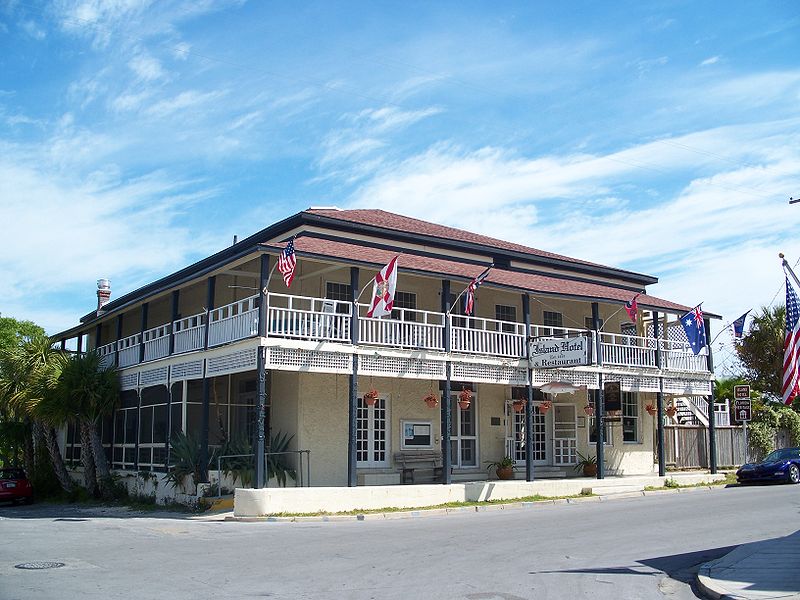
Island Hotel, 2007. Photo by Ebyabe, courtesy of Wikipedia.

Georgia

Jekyll Island Club Hotel Jekyll Island Georgia ghosts haunted
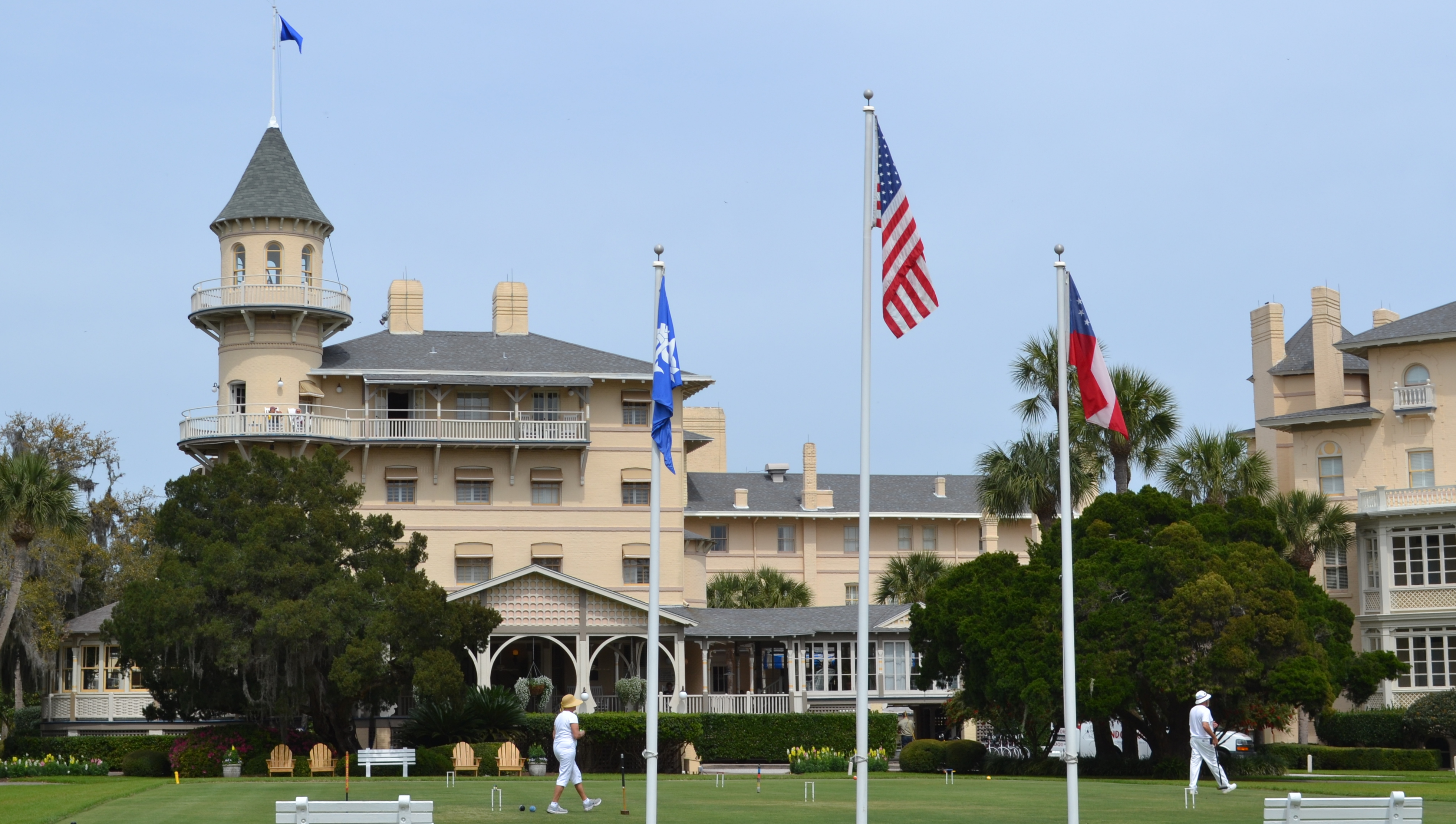
Jekyll Island Club, 2012, by Lewis Powell IV. All rights reserved.

Kentucky

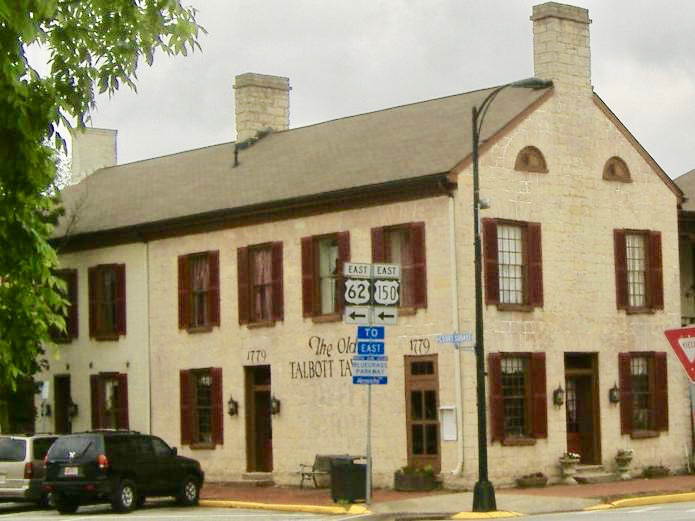
Old Talbott Tavern Bardstown Kentucky ghosts haunted
Old Talbott Tavern, 2008, by C. Bedford Crenshaw. Courtesy of Wikipedia.

Louisiana

Hotel Monteleone French Quarter New Orleans Louisiana ghosts haunted
Hotel Monteleone, 2009 by Bart Everson, courtesy
of Wikipedia.

Maryland

Middleton Tavern Annapolis Maryland ghosts haunted
Middleton Tavern, 1964. Photograph for the Historic American Buildings Survey (HABS). Courtesy of the Library of Congress, Prints & Photographs Division.

Mississippi

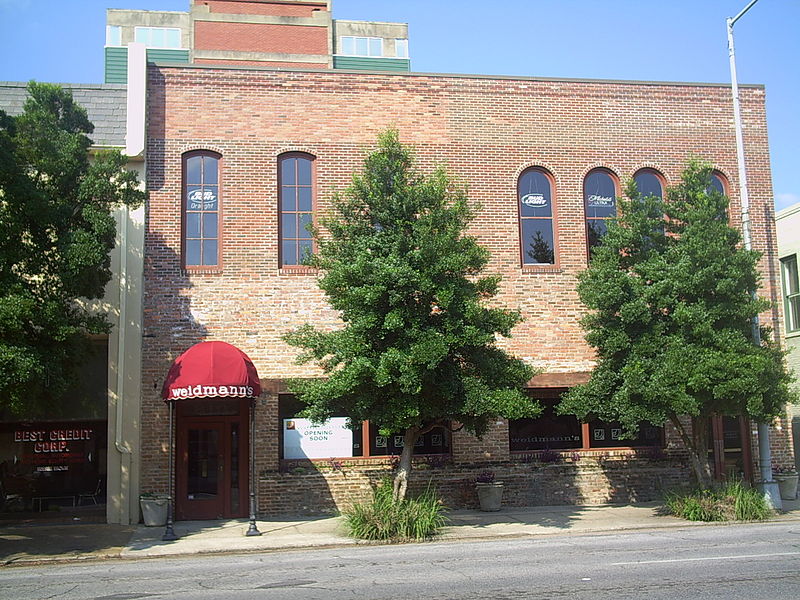
Weidmann's Meridian Mississippi ghosts haunted
Weidmann’s, 2010, by Dudemanfellabra. Courtesy of Wikipedia.

North Carolina

Lake Lure Inn North Carolina ghosts haunted
The 1927 Lake Lure Inn. Photo 2012, by Lewis Powell IV, all rights reserved.

South Carolina

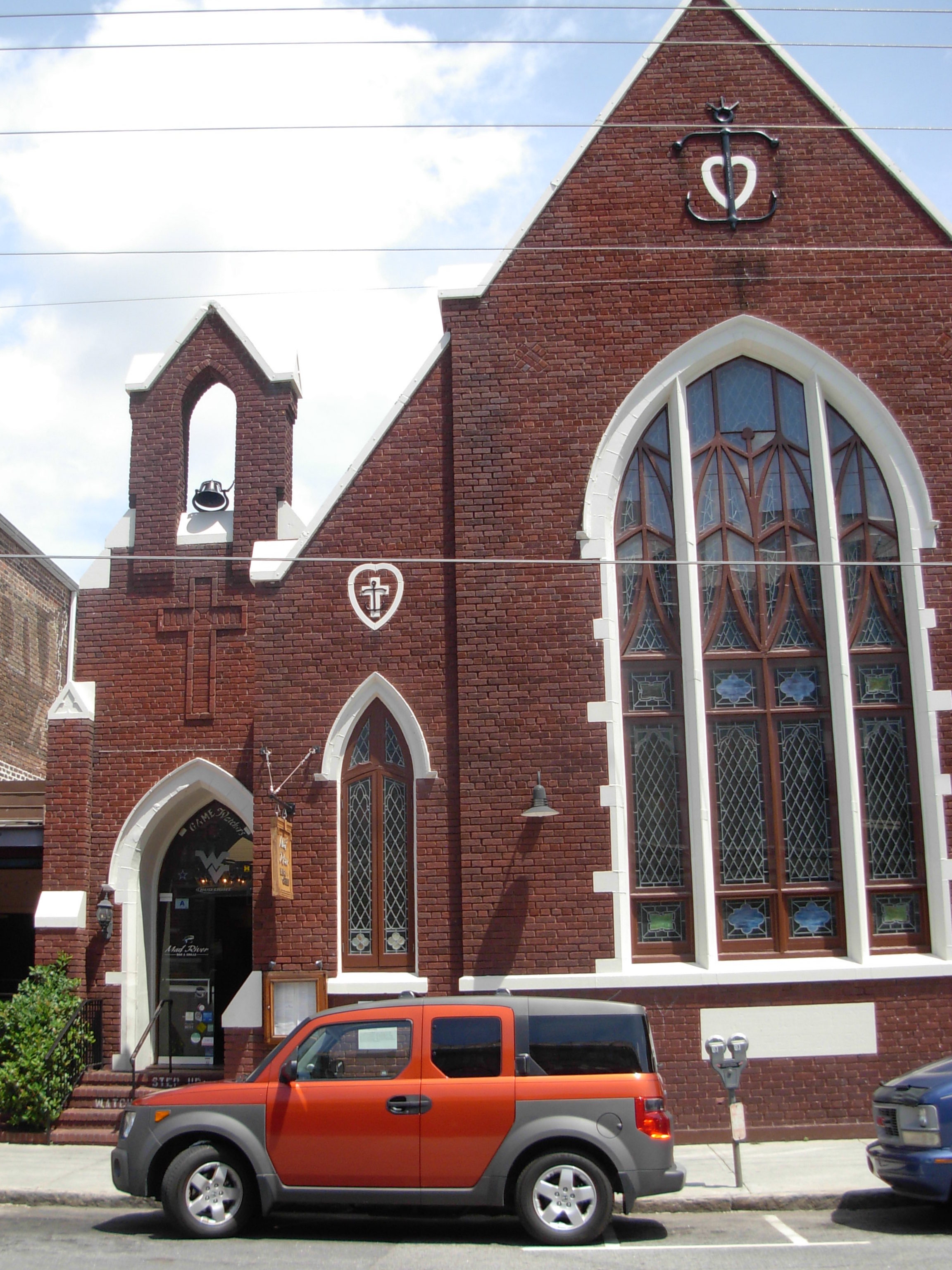
Mad River Grill Charleston SC ghosts haunted
Mad River Grille, 2011. Photo by Lewis O. Powell, IV. All rights reserved.

Tennessee

Earnestine and Hazel's Memphis Tennessee ghosts haunted
Earnestine and Hazel’s, 2012, by Thomas R.
Machnitzki, courtesy of Wikipedia.

Virginia

Michie Tavern Charlottesville Virginia ghosts haunted
Michie Tavern, 2005, by Forestufighting, courtesy of Wikipedia.

West Virginia

Armstrong-Osborne Public Library Update–Alabama

Armstrong-Osborne Public Library
202 South Street East
Talladega, Alabama

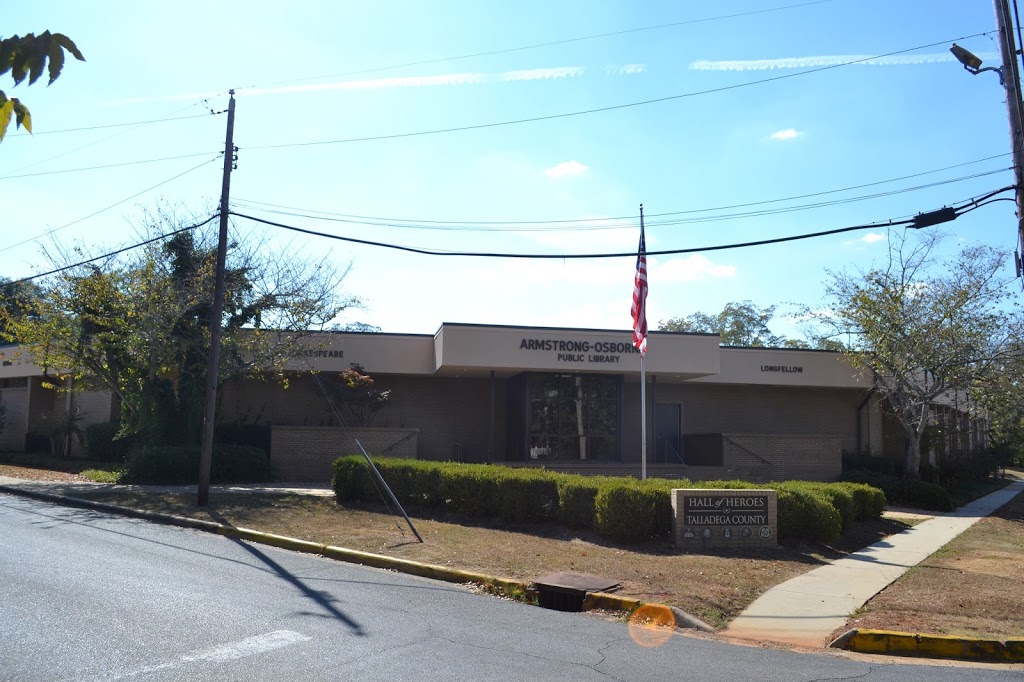
Just three days after posting my “Guide to the Haunted Libraries of the South—Alabama,” I was surprised to see an article posted by Birmingham’s ABC affiliate, WBMA ABC 33/40, concerning the ghosts of Talladega’s Armstrong-Osborne Public Library.

haunted Armstrong-Osborne Public Library Talladega Alabama ghosts
Main entrance of Armstrong-Osborne Public Library, 2016. Photo by Lewis O. Powell, IV, all rights reserved.

In October of 2016, I participated in an investigation of this library and its older, original building, now Heritage Hall, next door with S.C.A.Re of Alabama (a group founded by Kim Johnston, who wrote Haunted Shelby County, Alabama and Haunted Talladega County with Shane Busby). In my “Ramblings from a Spirited Alabama Sojourn,” I recorded my impressions of the two buildings and the modest results of the investigation, as well as the history. Speaking to staff members in both locations, it seems that there was, oddly, far more activity in the new library than the old one. With this recent article, that seems to be the case.

According to the article, the activity has been experienced in two ways: as things moving on their own accord, and in visual phenomena.

haunted Armstrong-Osborne Public Library Talladega Alabama ghosts
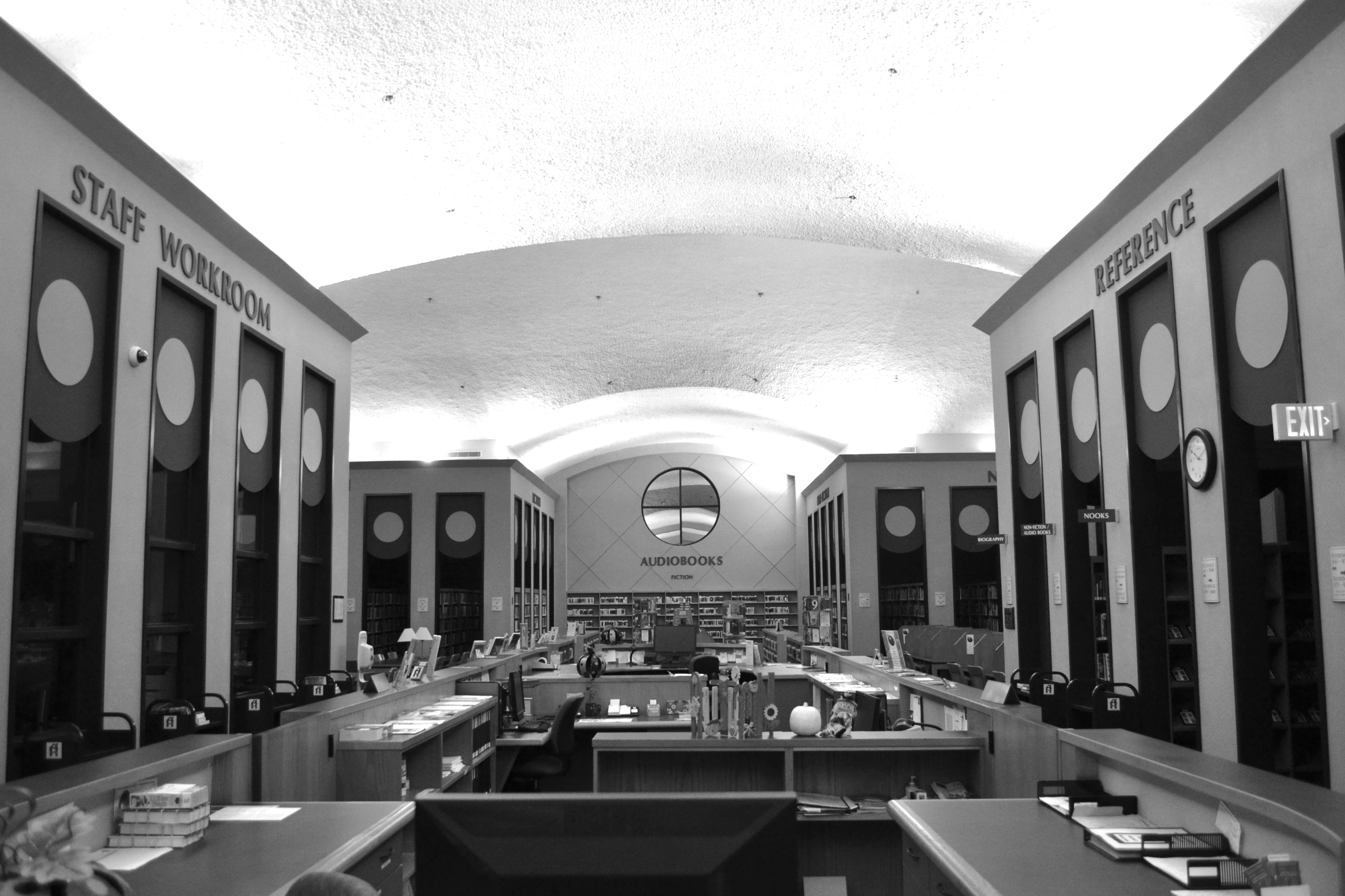
Adult reading room of the Armstrong-Osborne Public Library, 2016. Photo by Lewis O. Powell, IV, all rights reserved.

Doors open and close on their own, sometimes surprising employees. One librarian had a door “almost hit her in the face and no one was on the other side.” Books also regularly move about, sometimes flying off the shelf in front of multiple witnesses. Another librarian had a box of labels disturbed while she worked with them. “It was like somebody hit the box from the bottom and they came flying out of the box.”

Others have witnessed orbs floating in mid-air, but the most perplexing of the visual phenomena is the shadow-like apparition that has been seen. A staff member was leaving for the day when she saw the specter. “It could have been the light shining through…it looked like it was just standing there, waving.” Librarians have named the spirit Fred.

haunted Armstrong-Osborne Public Library Talladega Alabama ghosts
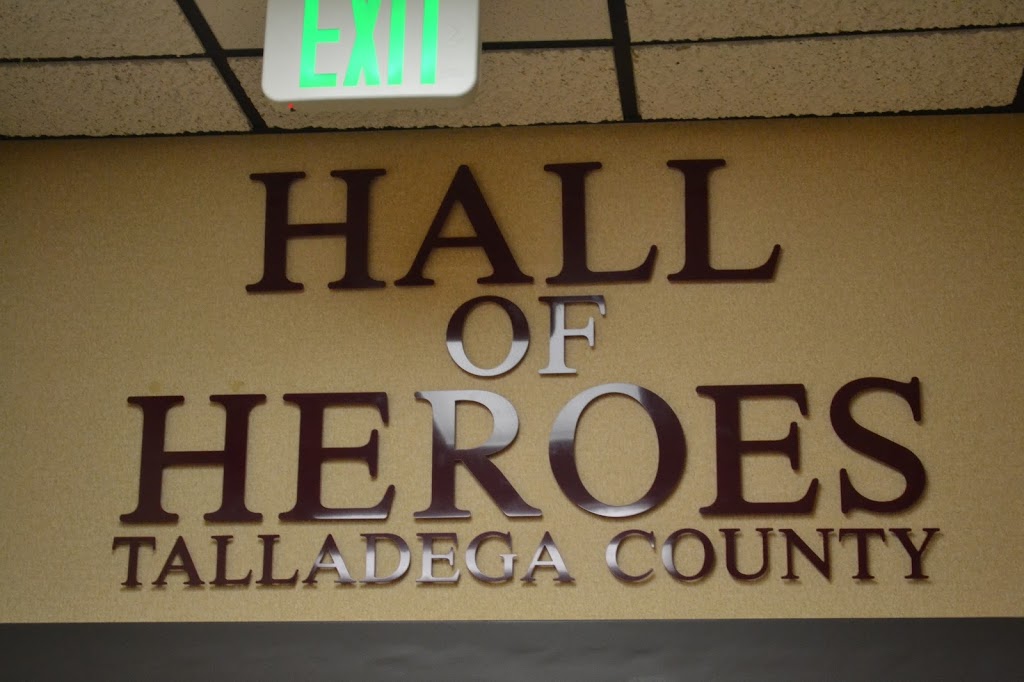
Hall of Heroes entrance, 2016. Photo by Lewis O. Powell, IV, all rights reserved.
haunted Armstrong-Osborne Public Library Talladega Alabama ghosts
The Hall of Heroes is lined with the photos of men and women who served in the armed forces from Talladega County. Photo by Lewis O. Powell, IV, 2016, all rights reserved.

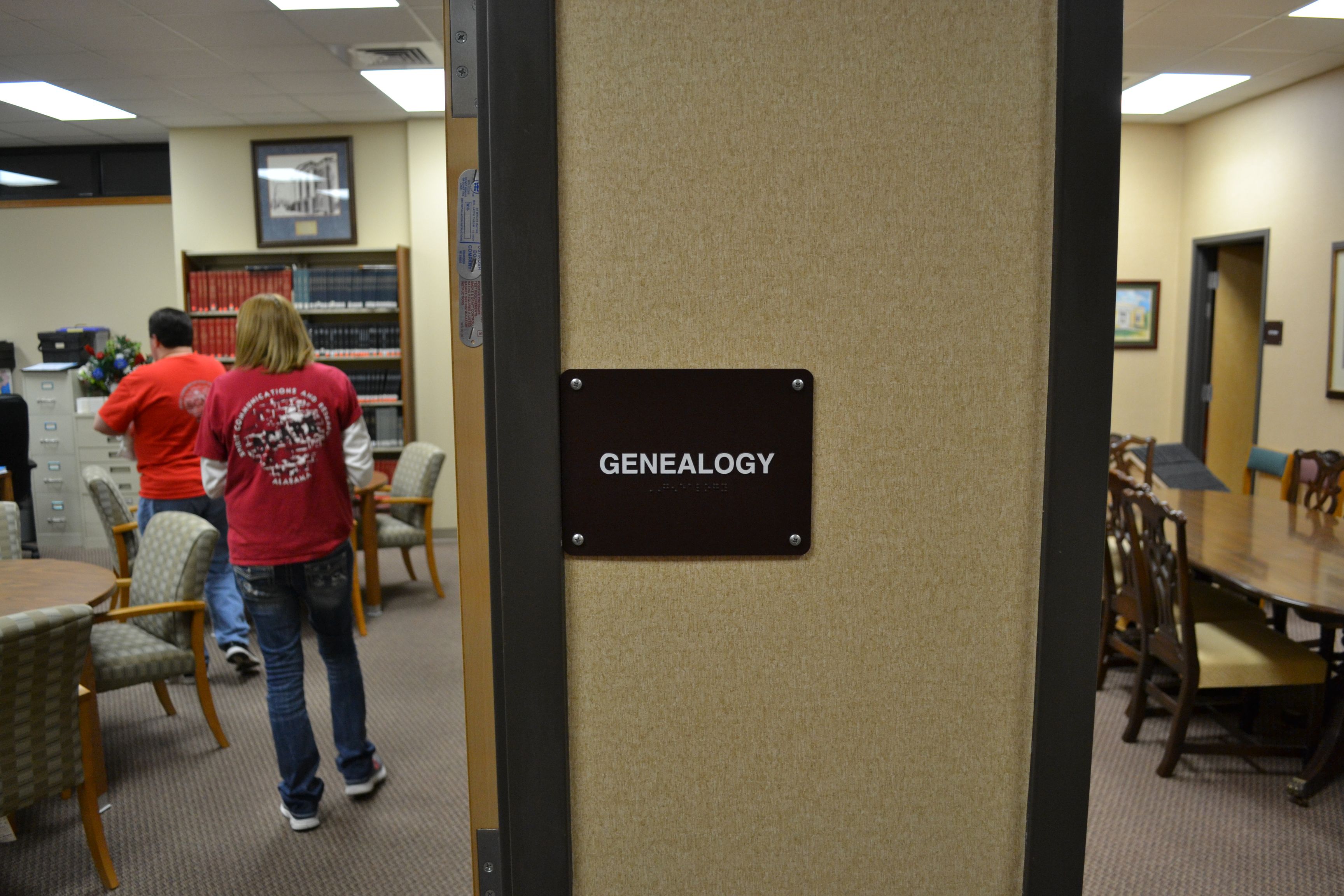
The article speculates that the cause of the activity may be the Civil War memorabilia that the library has in its collections; noting that the orbs are seen in the room where this memorabilia is kept. The library does have a genealogy room that we spent time in during our investigation. If I remember correctly, this room was noted as having some activity, which could easily be the same room the article refers to.

haunted Armstrong-Osborne Public Library Talladega Alabama ghosts
The sign of the genealogy room at the Armstrong-Osborne Public Library, on the night of the investigation, 2016. Photo by Lewis O. Powell IV, all rights reserved.

The library’s genealogy room is off of its Hall of Heroes. Lined with photographs and other mementoes, the exhibit pays homage to the county’s veterans. Perhaps, this concentration of artifacts has attracted spirits to the library for a last farewell?

Sources

Guide to the Haunted Libraries of the South—Alabama

Several years before I started this blog in 2010, a series of articles by George Eberhart about haunted libraries was published in the Encyclopedia Britannica Blog. This comprehensive list, still up on the now defunct blog, covers perhaps a few hundred libraries throughout the world with a concentration on the United States. After perusing the list and noting the many Southern libraries missing from the list, I’ve decided to create my own list here.

Like theatres, it seems that every good library has its own ghost. George Eberhart argues that there are two reasons for libraries to be haunted: one, that the library inhabits a building that may have been the scene of a tragedy, or two, that the library may be haunted by a former librarian or benefactor who may continue to watch over it.

For other haunted Southern libraries, see my entries on the District of ColumbiaKentucky, Louisiana, Mississippi, and West Virginia.

Albertville Public Library
200 Main Street
Albertville

For years, rumors have circulated of this library being haunted, but according to the library’s director, the stories are just rumors. Is this library haunted? See my entry for further information.

Amelia Gayle Gorgas Library
University of Alabama Campus
Tuscaloosa

Amelia Gorgas was beloved in life as the university’s postmistress and librarian and, those who have encountered her spirit contend that even in death she continues to provide a comforting presence. The wife of Confederate General Josiah Gorgas, the eighth president of the university and later its librarian, Amelia took over her husband’s position as librarian after his death, a position she held for 23 years. When this massive library was constructed in 1939, it became the first building on campus named for a woman.

Amelia Gayle Gorgas Library University of Alabama Tuscaloosa haunted library ghost
Amelia Gayle Gorgas Library, 2010, by Carol M. Highsmith. Courtesy of the George F. Landregger Collection of Alabama Photographs in Carol M. Highsmith’s America. Courtesy of the Library of Congress, Prints and Photographs Division.

Much of the supernatural activity within the library occurs on the fourth floor, home to the library’s special collections. According to Daniel Barefoot, the library’s elevators will only travel to the fourth floor if the rider has a special key, though the elevators will often arrive on that floor with the doors opening to reveal no one. Some members of the library’s staff have claimed to have encountered the apparition of Mrs. Gorgas within the stacks on this floor.

Higdon and Talley note another specter seen within the library: a man dressed entirely in black who approaches shocked students with his arms reaching out for them.

Sources

  • Barefoot, Daniel W. Haunted Halls of Ivy: Ghosts of Southern Colleges and Universities. Winston-Salem NC: John F. Blair, 2004.
  • Higdon, David and Brett J. Talley. Haunted Tuscaloosa. Charleston, SC: History Press, 2012.

Armstrong-Osborne Public Library
202 South Street East
Talladega

Talladega possesses not only one, but two haunted libraries. The Armstrong-Osborne Library is the town’s current library and sits next to the town’s first library, now the Jemison-Carnegie Heritage Hall Museum. Both buildings have a number of spirits which I have explored in my “Ramblings from a Spirited Alabama Sojourn.” Just days after publishing this article, an article on the paranormal activity was published, the details of which have been described in this update.

Bay Minette Public Library
205 West 2nd Street
Bay Minette

Does the spirit of the first Bay Minette Public Library director continue to watch over the library? See my post, “Alabama Hauntings–County by County Part I,” for futher information.

Comer Museum & Arts Center
711 North Broadway Avenue
Sylacauga

This small marble building on a hill was originally used as the town’s library when it was constructed in 1939. It is now a museum of local history and art. In recent years it has become known for its paranormal activity and I have investigated here with S.C.A.Re. of Alabama twice. The first investigation was written up in “The Haunted Collection in the Marble City—Alabama.”

Demopolis Public Library
211 East Washington Street
Demopolis

In 2014, the Tuscaloosa Paranormal Research Group was called in by the library’s director to find out if the “creaks and quirks” of the old building are simply that, or possibly something paranormal. The director states that staff have discovered books repeatedly falling off shelves, as well as hearing footsteps in the building’s mezzanine. The building that now houses the library was constructed in 1926 and long occupied by the Ulmer Furniture Store. It has housed the library since 1990. There’s been no word as to what, if any, evidence of paranormal activity was found.

Sources

  • Averette, Justin. “Haunted Collection: Paranormal group Investigates Demopolis Public Library.” The Demopolis Times.26 August 2014.
  • Marengo County Heritage Book Committee. Heritage of Marengo County, Alabama. Clanton, AL: Heritage Publishing Consultants, 2000.

Evergreen-Conecuh County Public Library
119 Cemetery Avenue
Evergreen

On the grounds of this modern public library, the apparition of a girl in riding attire accompanied by a phantom horse has been spotted. Within the library, staff have reported many odd happenings including cold spots, books being turned “topsy-turvy” on the shelves, and inexplicable noises.

Sources

Gadsden Public Library
254 South College Street
Gadsden

A library staff member closing up the library some years ago stepped off the elevator on the third floor and came face to face with a strange lady in 19th century clothing. The specter faded before his eyes. After that initial encounter, the staff member met the woman several more times. Throughout the years other staff members have experienced cold spots and odd smells, such as burning coal, on the third and fourth floors of the 1960s-era library. Author Mike Goodson contends that these unusual occurrences have ceased after the library’s recent renovation.

Sources

  • Goodson, Mike. Haunted Etowah County. Charleston, SC: History Press, 2011.
  • McCoy, Betty S. Haints, Haunts and Hullabaloos: Etowah and Surrounding Counties. CreateSpace, 2011.

Homewood Public Library
1721 Oxmoor Road
Birmingham

interior Homewood Public Library haunted ghost
Adult reading room of the Homewood Public Library. The space was originally the sanctuary of a church. Photo 2016, by Lewis O. Powell IV, all rights reserved.

Occupying a building that was initially constructed as a Church of Christ, it has been suggested that this library is haunted by some of the former church members. Library staff members have heard the sound of a group of ladies talking in the basement rooms that once served as Sunday school classrooms. Doors have been seen opening and closing on their own, and lights have been known to turn off and on by themselves. This activity mostly occurs after hours.

Sources

  • Brown, Alan. Haunted Birmingham. Charleston, SC: History Press, 2009.
  • Singleton, William C. III. “Homewood Public Library – Researcher hopes for chance to study ghostly activity.” Birmingham News. 31 March 2010.

Houghton Memorial Library
Campus of Huntingdon College
Montgomery

Houghton Memorial Library at Huntingdon College haunted ghost
Houghton Memorial Library at Huntingdon College, 2008. Photo by Chris Pruitt, courtesy of Wikipedia.

Campus tradition tells of a scholarly spirit residing in this private, Methodist, liberal arts college’s 1929 Houghton Memorial Library. Faith Serafin reports that the spirit remained unnamed until 1990 when he was dubbed Frank. Library staff and students have been putting up with Frank’s antics for many years. Frank is such a well-known fixture in the library that he has been granted his own study room and given a chair which rolls around the library on its own volition on a regular basis. The mischievous spirit enjoys pulling books from the shelves, slamming the building’s heavy doors, and moaning to scare occasional students.

Sources

  • Enzwiler, Susan & Trina Brinkley. National Register of Historic Places Nomination form for Huntingdon College. August 1999.
  • Serafin, Faith. Haunted Montgomery, Alabama. Charleston, SC: History Press, 2013.

Houston Memorial Library
101 North Houston Street
Athens

The former home of Governor George S. Houston has been used as a public library since 1936. The governor’s spirit may still occupy the premises. The library has been covered as the Limestone County entry in “Alabama Hauntings—County by County Part V.”

Jemison-Van de Graaf Mansion
1305 Greensboro Avenue
Tuscaloosa

The history of this grand Italianate mansion–which served as a library at one point in its life–connects with several haunted places throughout Alabama. Robert Jemison, the prominent businessman and politician who had this house built, ardently supported the construction of the haunted Bryce Hospital and had the construction supervisor for the hospital, John Stewart, oversee this home’s construction as well.

Jemison-Van de Graaf Mansion haunted ghost
Jemison-Van de Graaf Mansion, 2010. Photo by Altairisfar, courtesy of Wikipedia.

Another tale links this house with the Drish Mansion. Higdon & Talley, authors of Haunted Tuscaloosa and Haunted Alabama’s Black Belt, note that the mansion’s tower was constructed specifically by Dr. John Drish so that he could observe this mansion’s construction. Additionally, Robert Jemison worked with African-American bridge builder Horace King who is believed to have designed and built Spring Villa, a haunted mansion in Opelika.

Throughout the years, the Jemison Mansion has played host to several families including the Van de Graaf family (Robert Jemison Van de Graaf was the inventor of the Van de Graaf generator) and later served as the Friedman Library. Staff within the house have encountered some paranormal activity. A director of the mansion told The Crimson White, a student newspaper for UA, that several times he had heard a tremendous crash within the house. “It sounds like a bookcase is falling over. You can hear the glass and timber splintering, but you can’t feel it like you would if something had actually fallen over.”

Sources

  • Higdon, David and Brett J. Talley. Haunted Tuscaloosa. Charleston, SC: History Press, 2012.
  • Leopard, Colby. “Buildings on campus and around Tuscaloosa thought to be haunted.” The Crimson White. 31 October 2012.

Julia Tutwiler Library
University of West Alabama Campus
Livingston

Opened in 1962, this International-styled campus building seems like the least likely of places on campus to harbor a ghost. Yet it does harbor a spirit; one that may remain here until a spelling error is corrected. First encountered in 1995, the spirit is believed to be that of former education professor Lucille Foust. She was known as a very “serious-minded woman” and an excellent educator. Therefore, Miss Foust may not be pleased that her memory is honored with a portrait with a brass plaque reading, “Principle of the Laboratory School.” Those on campus who knew Ms. Foust knew very well that she did not tolerate misspelled words, especially when it came to her title as “principal.” The portrait now hangs in the library with the uncorrected plaque.

Students and library staff have observed a feminine form, perhaps that of Ms. Foust, moving through the stacks, though her spirit is most commonly heard. Staff members have had their names called and have heard pages turning and drawers slamming in the empty building late at night. While this spelling error may keep the indomitable Ms. Foust’s spirit earthbound, it is all in the principle of the issue.

Sources

  • Brown, Alan. Stories from the Haunted South. Jackson, MS: University Press of Mississippi, 2004.
  • Higdon, David and Brett J. Talley. Haunted Alabama Black Belt. Charleston, SC: History Press, 2013.

Linn-Henley Research Library
2100 Park Place
Birmingham

Opening in 1927, this historic library building originally served as the Birmingham Public Library. When the new library building was constructed across the street, this became a research library housing archives, government documents, a southern history library, and a ghost. Please see my entry, Southern Spirit Guide to Haunted Alabama, for further information.

Monroe County Public Library
121 Pineville Road
Monroeville

Few libraries can boast that someone famous slept there, though the Monroe County Public Library can. Actor Gregory Peck, star of the film, To Kill a Mockingbird, based on the novel by Monroeville’s most famous resident Harper Lee, stayed here in the 1960s when the building was the LaSalle Hotel. The old hotel was converted into the public library in 1984.

A sense of foreboding surrounds the second floor of the library. People have experienced disembodied footsteps, inexplicable sounds, and strange lights here.

Sources

Old Shelby County Courthouse
1854 Old Courthouse Circle
Columbiana

Old Shelby County Courthouse Columbiana Alabama
Old Shelby County Courthouse, 2016. By Lewis O. Powell IV, all rights reserved.

This 1854 building has served a myriad of uses over the years. In 1934, a public library was opened on the second floor which moved into a new dedicated library building in 1940. People within the old courthouse have had a variety of paranormal experiences. For more information, see the Shelby County entry in my article, “Alabama Hauntings—County by County.”

Ralph Brown Draughon Library
Auburn University Campus
Auburn

According to Brandon Stokes and John Mark Poe of the Haunted Auburn Walking Tour, someone passing the South College Street façade of the Draughon Library saw a woman peering out the third-floor windows. While seeing someone looking out the windows is not unusual, being able to see the fluorescent lights behind the woman through her is quite unusual.

Draughon Library, Auburn University,
South College Street facade of the Draughon Library at Auburn University, 2017. Photo by Lewis O. Powell IV, all rights reserved.

The third floor seems to be the primary location of most paranormal activity. This includes books sliding across tables and desks as students worked, books pulling themselves off shelves, and strange noises heard within the stacks.

Sources

  • Haunted Auburn Walking Tour. Organized and guided by Brandon Stokes and John Mark Poe. Auburn University Campus, 31 October 2016.

Tallassee Community Library
99 Freeman Avenue
Tallassee

This small library near Montgomery could be considered one of the most paranormally active libraries in the state. It is the representative haunting for Tallapoosa County in “Alabama Hauntings—County by County Part VII.”

Walter J. Hanna Memorial Library
4615 Gary Avenue
Fairfield 
 

During a renovation of this downtown Fairfield building in 1989, several workers witnessed odd and frightening activity. Please see my article, “A slab shattering spirit,” for further information.

Spiritual Spirits—Athens, Alabama

Donnell House
601 South Clinton Street
Athens, Alabama

N.B. Originally published as part of “Newsworthy Haunts 5/10/13—Alabama’s Battlefields and Charleston’s Jail,” 10 May 2013; republished as part of “’Twas the Night Before Halloween—Recycled Revenants,” 30 October 2017.

Originally called Pleasant Hill, this home was built by the Reverend Robert Donnell, a Presbyterian minister and native of North Carolina. Donnell moved into his newly completed home in 1840 and died here in 1855. The house remained in his family until 1869 when it passed out of the family and became home to the Athens Male Academy. It later became a public school and is now surrounded by Athens Middle School. The house is occasionally opened to the public.

haunted Donnell House Athens Alabama ghosts spirits
The Donnell House, 1935, by Alex Bush for the Historic American Buildings Survey (HABS), courtesy of the Library of Congress, Prints and Photographs Division.

During the Civil War, this home was commandeered by Union troops under Colonel John Basil Turchin, a Russian soldier who led the Sack of Athens in 1862. The Donnell family remained in the house during this time with Rev. Donnell’s 16-year-old daughter Nannie lying sick in bed while the troops camped on the lawn. Reportedly, she was kept awake by the soldiers’ constant carousing and music. Even after the soldiers were asked to settle down so the girl could sleep, they defiantly responded, “Better she should go to Heaven listening to Yankee music!” Young Nannie died of scarlet fever a short time later.

The executive director of the house, Jacque Reeves, author of the book Where Spirits Walk, has stated that Rev. Donnell’s spirit remains here. “He is having Bible study, and his mother is making biscuits for the guests,” she writes. According to author Shane Black, one couple touring the home was greeted by an “austere” gentleman who welcomed them to his home. Nannie Donnell is also thought to be here as well, with playful laughter and the crying of a child heard coming from her former bedroom. These spirits may also be joined by others, including Union and Confederate soldiers and slaves.

I have covered two other haunted places in Athens including Founders Hall on the Athens State University Campus, and the Houston Memorial Library is the representative haunting for Limestone County in my Haunted Alabama County by County series.

Sources

  • Black, Shane. Spirits of Athens: Haunting Tales of an Alabama Town. NYC: iUniverse. 2009.
  • Kazek, Kelly. “Paranormal investigators visit Civil War sites in Alabama; ghost says, ‘huh?’AL.com. 9 May 2013.
  • Floyd, W. Warner. National Register of Historic Places form for Donnell House. 1 August 1973.
  • History. The Donnell House. Accessed 14 May 2015.
  • Langella, Dale. Haunted Alabama Battlefields. Charleston, SC: History Press, 2013.

Alabama Hauntings—County by County Part VII

Alabama Hauntings–County by County landing page.

One of my goals with this blog is to provide coverage of ghost stories and haunted places in a comprehensive manner. Perhaps one of the best ways to accomplish this is to examine ghost stories county by county, though so far, researching in this manner has been difficult. In my 2015 book, Southern Spirit Guide’s Haunted Alabama, I wanted to include at least one location for every county, though a lack of adequate information and valid sources prevented me from reaching that goal. In the end, my book was published covering only 58 out of 67 counties.

Further research has uncovered information for a few more counties and on Halloween of 2017, Kelly Kazek published an article on AL.com covering the best-known ghost story for every county. Thanks to her excellent research, I’ve almost been able to achieve my goal for the state.

Talladega County

Talladega Superspeedway
3366 Speedway Boulevard
Lincoln

Curses figure into many Southern legends, especially in places that are legendary themselves, places like Nashville’s Ryman Auditorium, the home of country music. So, it’s no surprise that the largest and perhaps the most important race track in the NASCAR circuit is home to legends of a curse and other strange activity.

Opening in 1969 as the Alabama International Motor Speedway, the track was anointed with its current name in 1989. Despite initial questions about the safety of the track, the speedway has been used successfully for more than four decades.

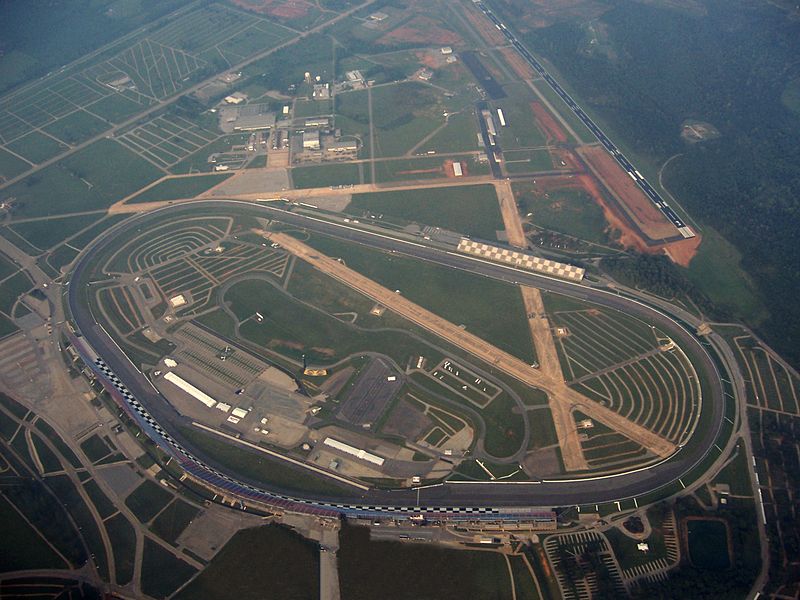
Aerial view of the Talladega Superspeedway, 2007, by AuburnPilot. Courtesy of Wikipedia.

Stories reveal that the spit of land where the track now sits was cursed. Many tales lay the blame for that curse on the Muscogee Creek people who were forced from this area in the 1830s. These tales are usually the result of romantic, overactive imaginations of white settlers.

Nonetheless, there have been some deaths here starting in 1973 when driver Larry Smith was killed after his car hit the outside concrete wall. Besides a handful of other drivers who have lost their lives here, several freakish accidents have claimed a few more lives. Several drivers on the course have reported hearing voices while racing. Stories of the “Talladega Jinx” became so common that in 2009 the president of NASCAR brought in a Muscogee Creek medicine man to “restore balance to the land.” There is no word if that has worked.

Sources

  • Crider, Beverly. Legends and Lore of Birmingham and Central Alabama. Charleston, SC: History Press, 2014.
  • Estes, Cary. “Talladega Superspeedway.” Encyclopedia of Alabama. 28 October 2008.
  • Hinton, Ed. “They’re hearing voices at Talladega.” com. 22 April 2009.

Tallapoosa County

Tallassee Community Library
99 Freeman Avenue
Tallassee

In a 2008 Tallassee Tribune article, the librarian of the Tallassee Community Library, calls them her “ghostly patrons.” She continues, “When I get here every morning between 7:30 and 8 a.m. and open the door, for about the rst ve seconds, I hear music, laughter, and children.” During times when she is alone in the building, she will hear movement and the peculiar sound of pages being turned coming from one corner. And she is not the only one to have this experience, other employees and patrons have their own stories.

When this unassuming small-town library was featured on an episode of the Biography Channel show My Ghost Story the librarian described how she will often be re-shelving books only to have a force push back against the book. She mentions that at times, entire shelves of books will be found to have been turned around when she opens the library in the morning. The activity eventually got to the point where the librarian asked a paranormal investigation team to look into what may be going on here. Enter David Higdon, an investigator with the Tuscaloosa Paranormal Research Society and co-author (with Brett J. Talley) of two books on the ghosts of Tuscaloosa and the Black Belt.

The first time Higdon entered the children’s section of the library, he recalls that he felt that, “something just ain’t right in this room.” Later asking for a sign of a presence he heard two loud, distinct knocks, knocks that he found to be very disturbing. After asking for another sign, the investigators were met with a loud crash as the grating over the replace came crashing down. The startled investigators quickly left the room.

The group also investigated the basement of the library, where the librarian reported she heard growls as well as the voices of a group of people in conversation. It was here that a startling EVP was captured; after the spirit was asked for a name, a response was recorded saying, “You may address me as Sergeant Fuller.” From this, investigators believe that at least one of the spirits may be a soldier who died at the field hospital located near here during the Civil War. The children that are heard throughout the building may date to the building’s original use as a clubhouse for local children. As well as the living, the library continues to be patronized by spectral children and soldiers.

Sources

  • Higdon, David and Brett J. Talley. Haunted Alabama Black Belt. Charleston, SC: History Press, 2013.
  • My Ghost Story, Episode 3.3. Biography Channel. 29 October 2011.
  • “Paranormal group visits local library.” Tallassee Tribune. 11 April 2011.

Tuscaloosa County

Little Roundhouse
Campus of the University of Alabama
Tuscaloosa

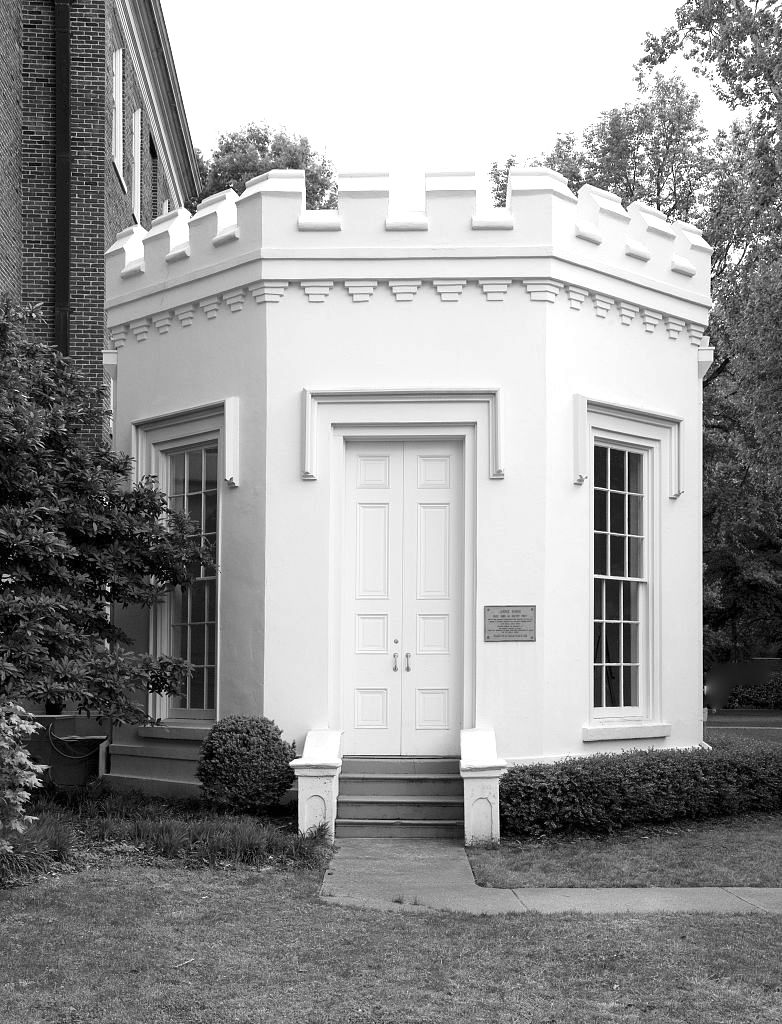
On April 4, 1865, as much of the rest of the university was blazing under orders from Union General John T, Croxton, this small sentry house—the only actual military building on campus—received little damage. This crenelated Gothic Revival building was constructed in 1860 as the university moved to a military system in hopes of restoring order and discipline. The octagonal building provided shelter for students as they endured guard duty.

Tradition holds that though most students had left campus to help defend the Confederate cause, two eager students remained to “kill Yankees.” As the campus was burning, a Union soldier stumbled upon one of the remaining students asking if there was whiskey on campus.

Little Round House, 2010, by Carol M. Highsmith. Courtesy of the George F. Landregger Collection of Alabama Photographs in Carol M. Highsmith’s America. Courtesy of the Library of Congress, Prints and Photographs Division.

He was directed to the guardhouse where his companion lay in wait to ambush the thirsty soldiers. By the end of the night, several Union troops lay dead in the Little Round House. While this is a marvelous story, there does not appear to be any truth behind it.

The legend continues that if one puts their ear to the door of the Little Round House, one can hear the sounds of the thirsty Yankees still searching for their whiskey.

Sources

  • Center, Clark E. “University of Alabama (UA).” Encyclopedia of Alabama. 12 September 2009.
  • Crider, Beverly. “Crimson Hauntings: The Ghosts of UA.” com. 10 May 2012.
  • Floyd, W. Warner & Janice P. Hand. National Register of Historic Place Nomination Form for the Gorgas-Manly Historic District. 2 June 1971.
  • Higdon, David and Brett J. Talley. Haunted Tuscaloosa. Charleston, SC: History Press, 2012.
  • “Question of Shape: Little Round House, A.” Dialog (UA faculty newsletter). 9 November 2009.
  • Windham, Kathryn Tucker. Jeffrey’s Latest 13: More Alabama Ghosts. Tuscaloosa, AL: University of Alabama Press, 1982.

Walker County

Franklin Ferry Bridge
Franklin Ferry Road over the Black Warrior River
Adger

This bridge over the Black Warrior River plays host to the spirit of an angry motorist who supposedly throws sticks and stones at eighteen-wheelers as they pass over the bridge. An article in the Birmingham News mentions this as a legend told among truckers passing through the region. Perhaps this is a spectral case of road rage?

Sources

  • MacDonald, Ginny. “Boootiful Alabama: Don’t let night catch you driving alone.” Birmingham News. 31 October 2002.

Washington County

St. Stephens Historical Park
2056 Jim Long Road
St. Stephens

Occupying a bluff above the Tombigbee River, settlement here precedes the creation of the state of Alabama. In the years following the American Revolution, Spain built a fort atop this bluff, naming it Fort San Esteban. Their stay, however, was temporary, and they lost the fort in the 1795 Treaty of San Lorenzo, which redrew the boundary lines. In 1799, the fort was occupied by American forces. The establishment of a trading post for trade with local Native Americans attracted frontiersmen to the area and St. Stephens began to grow as a town.

With the creation of the state of Mississippi in 1817, the rapidly growing town of St. Stephens was named as the territorial capital of the Alabama territory. When the territorial government created the state of Alabama in 1819, political wrangling led to Cahaba being named as state capital. St. Stephens’ importance diminished by the capital move, the town slowly withered over the next few decades. By the Civil War, the original town had mostly vanished with the establishment of a new town of St. Stephens several miles away.

An article in a 1928 edition of the Birmingham News relates a legend about St. Stephens. According to the legend, St. Stephens, at its height, was an “ungodly place,” lacking a house of worship. An itinerant preacher wanting to hold religious services asked if he could use a local saloon to that purpose. His suggestion was met with ridicule and the preacher was ordered out of town. As he was forced out he cursed the town with disaster and ruin.

Stories of the prosperous town destroyed after being cursed by a holy man exist throughout Southern folklore. Some sources on this story argue that the holy man in the St. Stephens story is none other than famed Methodist preacher Lorenzo Dow. It is known that Dow passed through the area during St. Stephens’ most prosperous era. While nothing remains of the old St. Stephens above ground, in accordance with the curse, archaeological excavation has slowly begun to uncover the foundations and cellars of this most historic town.

Sources

  • Higdon, David & Brett Talley. Haunted Alabama Black Belt. Charleston, SC: History Press, 2013.
  • Lewis, Herbert J. “Old St. Stephens.” Encyclopedia of Alabama. 4 September 2008.
  • Stockham, Richard J. “The Misunderstood Lorenzo Dow.” Alabama Review. January 1963.

Wilcox County

GainesRidge Dinner Club
933 AL-10
Camden

The owner of the GainesRidge Dinner Club does not describe her paranormal experience as a “ghost story” but rather as a “ghost truth.” While in the restaurant one evening preparing for the next day with the cook, the owner went upstairs to retrieve a pot. While upstairs, she heard a voice calling her to come quickly downstairs. The owner raced down the stairs and found the cook in the kitchen calmly preparing food. The cook looked up and said that she had not called the owner, nor did she know who did. After a fruitless search for someone else in the restaurant, the owner and the cook fled the restaurant.

One of the oldest structures in the area, this house is believed to have been built in the 1820s. After the house was opened as a restaurant in 1985, the owners and staff have reported a variety of paranormal manifestations including the spectral crying of an infant and the shade of a tall bearded man. Author Beverly Crider relates in her Legends and Lore of Birmingham and Central Alabama that a very young relative she took to dinner here saw a spectral dog and later a little boy, neither of which were seen by the adults present.

Sources

  • Alabama Ghost Trail. “Gaines Ridge.” YouTube. 6 July 2009.
  • Brief History of GainesRidge.” GainesRidge Dinner Club. Accessed 7 June 2015.
  • Crider, Beverly. Legends and Lore of Birmingham and Central Alabama. Charleston, SC: History Press, 2014.

Winston County

AL-5
Between Nauvoo, Lynn, and Natural Bridge

The stretch of Alabama Highway 5 between Nauvoo, Lynn, and Natural Bridge is said to be haunted by the spirit of a young woman who met her death here. According to Barbara Duffey’s 1996 book, Angels and Apparitions, the young woman was killed along this section of highway in 1990. She and her boyfriend were driving a Buick when they began arguing and pulled off the road. After the boyfriend had assaulted his girlfriend, she fled towards the truck stop across the road. As she crossed the road, she was struck by an eighteen-wheeler. Since then, her desperate spirit has been encountered by motorists driving here after dark.

In her book, Trucker Ghost Stories, Annie Wilder includes a story from a Hamilton, Alabama resident. The version of this tale he relates specifies that the young woman was a high school student who had been attending her school’s prom. After a fight with her boyfriend, she asked that he put her out on the side of the road saying she would walk home. While walking down the side of the busy highway, she was hit and killed by a tractor-trailer. He continues, saying that the spirit will climb up on the step of trucks passing through and stare at the driver. This local relates an experience he had while traveling down this stretch of road one evening. He felt the sensation of a spirit’s presence, but he wouldn’t turn his head to see if anything was there.

Sources

  • Duffey, Barbara. Angels and Apparitions: True Ghost Stories from the South. Eatonton, GA: Elysian Publishing, 1996.
  • Wilder, Annie. Trucker Ghost Stories. NYC: TOR, 2012.