This article has been broken out into separate entries for Bourbon Street and Dauphine Street.
Street Guide to the Phantoms of the French Quarter—Royal Street
This article is part of my series, Street Guide to the Phantoms of the French Quarter, which looks at the haunted places of this neighborhood in a street by street basis. Please see the series main page for an introduction to the French Quarter and links to other streets.
Royal Street
Hotel Monteleone
214 Royal Street
This imposing hotel is the tallest building in the French Quarter and, at 600 rooms, among the largest. This building is a physical, literary, and paranormal landmark within the Quarter. When a lowly Sicilian cobbler, Antonio Monteleone, purchased a hotel in 1886, he probably did not imagine that it would be the beginning of a classic American rags-to-riches story. His hard work paid off and he acquired neighboring buildings and expanded his hotel. Since it opened its doors the hotel has attracted celebrities including numerous well-known writers who have mentioned the hotel in their works.

One of the more well-known features of the Monteleone is the Carousel Bar featuring an actual carousel that was assembled in the bar in 1949 and rotates slowly as patrons enjoy craft cocktails. While patrons revolve at the bar, spirits revolve around patrons and staff throughout the hotel. Spirits here range from a trusty engineer to a little boy who supposedly died of a fever while his parents were out. Others include the spirits of a few people who committed suicide by jumping from the roof. The International Society of Paranormal Research investigated the hotel in 2003 and concluded that there are 12 individual entities patrolling the halls and corridors of this hotel.
Sources
- Caskey, James. The Haunted History of New Orleans: Ghosts of the French Quarter. Savannah, GA: Manta Ray Books, 2013.
- “History.” Hotel Monteleone. Accessed 7 June 2016.
- Hudson, Shaney. “The Big Easy’s his haunt.” The Age (Melbourne, Australia). 27 February 2012.
- Mroch, Courtney. “Why Hotel Monteleone’s Haunted 14th Floor Isn’t What it Seems.” Haunt Jaunts. 25 March 2011.
Cafe Beignet
334 Royal Street
The spirit of a Native American woman is occasionally seen strolling through this restaurant that occupies an old carriage house. Most likely she remains here from the time prior to the city’s existence. She is most often seen towards closing time.
Sources
- Dwyer, Jeff. Ghost Hunters Guide to New Orleans. Gretna, LA: Pelican Publishing, 2007.
- Muro, Maria. “Haunted Eats.” New Orleans Living Magazine. 9 October 2012.
Louisiana Supreme Court Building
400 Royal Street
This monstrous white marble-clad building caused much controversy when the site was cleared starting in 1903. This block was originally a collection of 19th century buildings bisected by Exchange Alley which was lined with offices for architects, engineers, politicians and lawyers. The destruction that took place here contributed to the rise of preservation policies throughout the city. Upon completion of this building in 1910, the Louisiana Supreme Court, state Attorney General, and other courts moved in, though by 1934, the building was deemed inadequate. After years of deferred maintenance, the Supreme Court moved out in 1958. The building saw renovations starting in the 1990s and reopened in 2004 with the state Supreme Court returning to the building.
Rumors of the building being haunted began to arise during the building’s renovations. Author and researcher Victor C. Klein interviewed a construction supervisor and several workers and contractors who told similar tales of tools and equipment disappearing in the building. A number of them also encountered “a well dressed, middle age, white gentleman” whom they found looking out a window in the upper stories of the building. When confronted, the odd gentleman would disappear.
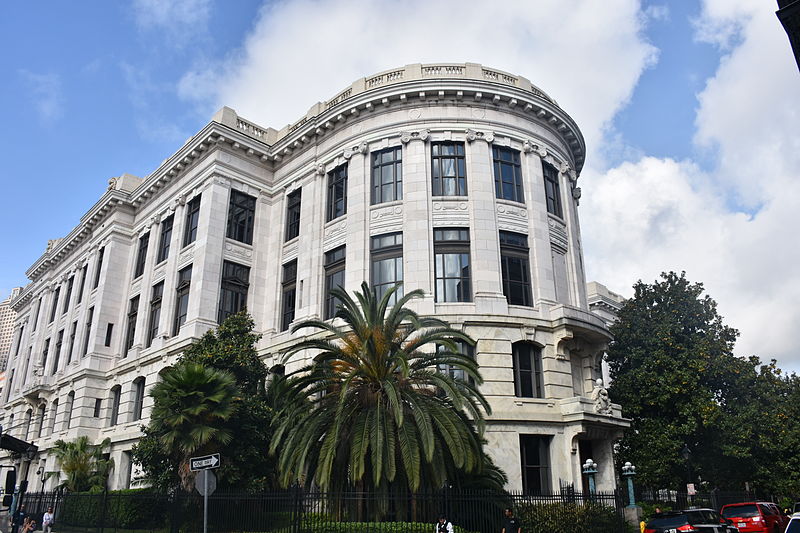
Klein continues by noting that guests of the Omni Royal Orleans Hotel on nearby St. Louis Street would report this man to the front desk staring intensely into their rooms. According to Klein, this was so frequent that the front desk had a scripted response to these calls, though they didn’t inform the guests that this gentleman is probably a ghost.
Jeff Dwyer remarks on several other spirits within the building including a pair of shooting victims who were supposedly gunned down in a courtroom during a Mafia trial in the 1930s and a panhandler who is sometimes seen just outside the building on Royal Street.
Sources
- “Current Building: The Building at 400 Royal Street.” Supreme Court of Louisiana Historical Society. Accessed 6 June 2016.
- Dwyer, Jeff. Ghost Hunters Guide to New Orleans. Gretna, LA: Pelican Publishing, 2007.
- Klein, Victor C. New Orleans Ghosts III. Metarie, LA: Lycanthrope Press, 2004.
- “Louisiana Supreme Court Building.” Tulane School of Architecture. Accessed 6 June 2016.
Brennan’s
417 Royal Street
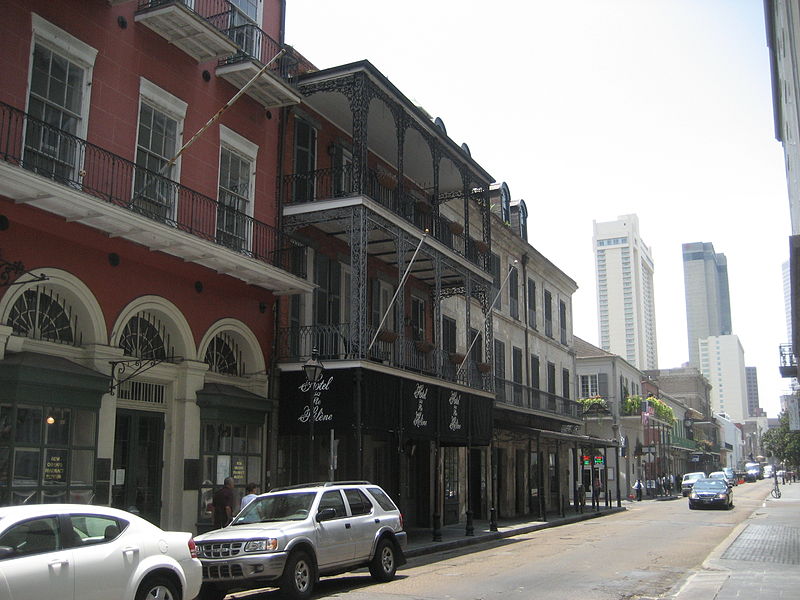
One of the more well-known and respected restaurants in the city, Brennan’s has made its home in this historic building since it opened in 1946. This 1795 structure once housed the Bank of Louisiana. Later on in the 19th century, Paul Morphy, one of the most famous chess players in the world lived and died here. He may be the apparition that is sometimes seen in the dining room.
Sources
- Dwyer, Jeff. Ghost Hunters Guide to New Orleans. Gretna, LA: Pelican Publishing, 2007.
- Taylor, Troy. Haunted New Orleans. Charleston, SC: History Press, 2010.

Court of the Two Sisters
613 Royal Street
One of the more romantic of New Orleans’ great restaurants, the Court of the Two Sisters possesses a number of legends including one about the gates through which patrons pass. The wrought iron gates are supposed to have been made in Spain where they were blessed by Queen Isabella with a charm that all those who touch them as they pass will be charmed. The restaurant occupies an 1832 building that housed a shop owned by two sisters, Bertha and Emma Camours. Apparently inseparable, the sisters operated a notions shop in this building for many years and, not being able to live without the other, died in 1944 two months apart.
The courtyard of this grand restaurant has a wishing well known as the “Devil’s Wishing Well” as it may have witnessed and been charmed by rites practiced here by Marie Laveau, the city’s great 19th century Queen of Voodoo. Until it was toppled by Hurricane Betsy in 1965, a willow tree grew here where pirate Jean Lafitte may have dueled with and killed three men. Those three men may be among the specters flitting throughout this courtyard. Enjoy one of the famous Jazz Brunches served here daily and be sure to pay homage to the sisters who may still be holding court.
Sources
- Dwyer, Jeff. Ghost Hunters Guide to New Orleans. Gretna, LA: Pelican Publishing, 2007.
- “Our History.” Court of the Two Sisters. Accessed 8 June 2016.
LaBranch Building
700 Royal Street
The delicate lacy ironwork of this large home hides one of crueler ghost stories in this city. In the early history of the city a system of plaçage was practiced by many of the wealthy white planters. This system, found in Spanish and French colonies, allowed these wealthy men to take on mistresses, often free women of color, whom they would support. Certainly such arrangements caused conflicts within the legal marriages of these men. Such a conflict is at the heart of the story here.
Upon the death Jean Baptiste LaBranche, who owned this home at one time, his wife, Marie, was able to find out the name of his mistress. She sent an invitation to the young woman inviting her to tea. When the unsuspecting mistress arrived, instead of exchanging pleasantries over tea, Marie LaBranche had the woman bound and chained to a wall in the attic where she was left to die a slow death from starvation. While this is a marvelously gory legend, it is clouded with a good deal of doubt. Occupants of this building have reported paranormal activity, however. Cold spots and feelings of panic have overtaken some working on the third floor, where the poor mistress supposedly met her untimely death.
Sources
- Dwyer, Jeff. Ghost Hunters Guide to New Orleans. Gretna, LA: Pelican Publishing, 2007.
- Taylor, Troy. Haunted New Orleans. Charleston, SC: History Press, 2010.
St. Anthony’s Garden
Behind St. Louis Cathedral across from Orleans Street
This meditative garden has existed here behind the cathedral since the establishment of the church. Located between two haunted alleys: Pere Antoine’s and Pirate’s Alleys, the garden is named in memory of Pere Antoine or Antonio de Sedella, whose spirit may haunt the alley named for him as well as St. Louis Cathedral. According to Jeff Dwyer, this garden was a popular place for duels in the mid-18th century. Some sensitives have detected wafts of smoke from those events.
Sources
- Dwyer, Jeff. Ghost Hunters Guide to New Orleans. Gretna, LA: Pelican Publishing, 2007.
734 Royal Street
Just like the story of the LaBranche Building, the story from this classic New Orleans town house involves a mistress, in this case she was an octoroon (she was 1/8th black) and her name was Julie. She was kept by a wealthy young man who was officially unattached in a well-furnished apartment here. Despite her pleas to her lover to marry her, he could not do so without losing his social standing and perhaps his fortune with it. Carelessly, in order to appease her frequent requests for marriage, the young man said he would marry Julie if she spent the coldest night in December nude on the roof. On the coldest night in December she undressed and crawled onto the roof. Her lover discovered her lithe corpse frozen not long after.
Since that time, Julie’s nude form has been seen on the roof of this building on the coldest night in December. During the remainder of the year Julie lingers in the warmth of the building’s interior. The Bottom of the Cup Tearoom once occupied the ground floor of this building (it moved to 327 Chartres Street) where the shop offered tea and psychic readings. Many of the psychics working here noted Julie’s shade and they believe she may have moved with the shop to Chartres.
Sources
- Dwyer, Jeff. Ghost Hunters Guide to New Orleans. Gretna, LA: Pelican Publishing, 2007.
- Smith, Katheine. Journey Into Darkness: Ghosts and Vampires of New Orleans. New Orleans, LA: De Simonin Publications, 1998.
Cornstalk Hotel
915 Royal Street
This intimate boutique hotel occupies a mansion with a unique cast-iron fence featuring stalks of corn. Legend relates that the fence was commissioned to comfort the Iowa-born wife of a former resident by reminding her of the cornfields of home. Once the home of Judge François Xavier Martin, he may be one the spirits that still stalks the halls with his footsteps, rattling door knobs. The sounds of children have also been heard here.
Sources
- Brown, Alan. The Haunted South. Charleston, SC: History Press, 2014.
- Dwyer, Jeff. Ghost Hunters Guide to New Orleans. Gretna, LA: Pelican Publishing, 2007.

Andrew Jackson Hotel
917 Royal Street
A tragedy on this site more than 200 years ago may still continue to resonate today. A boarding school or orphanage (sources differ) stood here that was destroyed by fire. Five young boys lost their lives and they still play throughout the courtyard and hallways of this hotel. Sheila Turnage notes the experience of a night manager who was diligently working at his desk when he realized he was being watched. Looking up he saw the heads of a group of children trying to peer above the top of his desk. The children vanished moments later.
Sources
- Asfar, Dan. Ghost Stories of Louisiana. Auburn, WA: Lone Pine Publishing, 2007.
- Dwyer, Jeff. Ghost Hunters Guide to New Orleans. Gretna, LA: Pelican Publishing, 2007.
- Taylor, Troy. Haunted New Orleans. Charleston, SC: History Press, 2010.
- Turnage, Sheila. Haunted Inns of the Southeast. Winston-Salem, NC: John F. Blair, 2001.
Starling Magikal Occult Shop
1022 Royal Street
If you care to test drive any of the ghost hunting equipment available for sale here, the Starling Magikal Occult Shop offers its own ghosts. In a 2015 article, the shop’s co-owner Claudia Williams noted that staff and patrons of the shop hear disembodied voices and feel the touch of invisible fingers. Objects occasionally move around on their own accord as well.
Sources
- Lopez, Kenny. “Want to hunt ghosts? Here are the tools you’ll need…” 26 October 2015.
LaLaurie House
1140 Royal Street, private
Of the myriad haunted houses throughout the South, few have captured the public’s attention more than the hulking LaLaurie Mansion that looms over the intersection of Royal and Nicholls Streets. While the structure itself is significant historically and architecturally, it’s the legends of the atrocities that took place here and the ghosts from those events that draw crowds of tourists. Though the house is not open to the public, the legend still draws people here.
In 1831 this property was purchased by Delphine LaLaurie, the wife of Dr. Leonard Louis LaLaurie. Madame LaLaurie had been married and widowed twice before her marriage to the good doctor and she had five children by her previous husbands. After construction of the mansion in 1832, LaLaurie took up residence and became a central pillar to New Orleans society.

The legend goes back to a fateful report of a fire in the kitchen here April 10, 1834. Firefighters arrived to discover the kitchen in flames and an elderly slave cook chained to the stove. She admitted to setting the fire as a suicide attempt to prevent her being sent to attic from which she said no one ever escaped. A mob that had gathered broke their way into the slave quarters and soon discovered the mutilated remains of “seven slaves, more or less horribly mutilated … suspended by the neck, with their limbs apparently stretched and torn from one extremity to the other” as the New Orleans Bee described the events the next day. While the mob remained to destroy the house and grounds in anger, Madame LaLaurie and her family fled the city. No one ever faced justice for the cruelties inflicted on the slaves here. While this is the most commonly related legend about the house, there is quite a bit of controversy.
As the story has captured the imagination of many, it has found its way into books dating back to the late 19th century, film, television and even video games. Most recently, the legend of Madame LaLaurie was woven into the plethora of local legends in the story arc of American Horror Story: Coven. Portrayed by Kathy Bates, Madame LaLaurie is a simpering racist weighted down with a curse of immortality placed upon her by the immortal Voodoo Queen, Marie Laveau. Researchers looking into the legend in recent decades have revealed that Delphine LaLaurie’s reputation may have been targeted as part of a smear campaign.
Do the spirits of slaves still stalk this lovely mansion? Legends relate that former residents here encountered some horrific spirits, though there are few recent stories. Writer and psychic Kala Ambrose tried to commune with the spirits while standing outside of the house recently. While she stood there a number of curious tourists inquired if this was the famous LaLaurie House. A short time later when she placed her hand on the wall of the house a passing ghost tour group took photographs of her. She didn’t contact anything out of the ordinary, perhaps the house is now just haunted by tourists.
Sources
- Ambrose, Kala. Spirits of New Orleans. Cincinnati, OH: Clerisy Press, 2012.
- Caskey, James. The Haunted History of New Orleans: Ghosts of the French Quarter. Savannah, GA: Manta Ray Books, 2013.
- Delphine LaLaurie. Wikipedia, the Free Encyclopedia. Accessed 10 June 2016.
Street Guide to the Phantoms of the French Quarter—Chartres Street
N.B. This article was edited and revised 30 April 2020.
This article is part of my series, Street Guide to the Phantoms of the French Quarter, which looks at the haunted places of this neighborhood in a street by street basis. Please see the series main page for an introduction to the French Quarter and links to other streets.
Chartres Street
Chartres Street, which is often pronounced CHAR-terz or CHAR-trez, was named for the Duc de Chartres in 1724 and is among several of the earliest streets in town. Initially, Chartres only ran from Canal Street to Jackson Square. From Jackson Square to Esplanade, the street was called Condé.
Mahogany Jazz Hall Burlesque and Absinthe House
125 Chartres Street

This 19th century building served as a boarding house for many years during which two tenants committed suicide. In 1892, a laborer was shot to death in front of the building with his murderer escaping into the dark of night. These deaths may contribute to the building’s haunted reputation with patrons and staff witnessing shadowy figures, hearing disembodied whispers, and feeling the cold touch of hands from the other side.
Sources
- “Murder in New Orleans.” The Daily Commercial Herald. 22 November 1892.
- Pinheiro, Maria. “Four little-known paranormal hotspots in New Orleans.” Malay Mail Online. 11 October 2016.
204 Chartres Street

Formerly the home to Crescent City Books, one of the more prominent second-hand bookstores in the city, this late 19th century commercial building is apparently haunted by ghosts on every floor, including the specter of a young boy on the first floor. An investigation by the New Orleans based International Society for Paranormal Research (ISPR) identified a number of children’s spirits on the first and second floor as spirits that may also haunt Le Petite Theatre de Vieux Carré on St. Peter Street. Other spirits were discovered on the third floor and attic.
Sources
- Dwyer, Jeff. Ghost Hunter’s Guide to New Orleans, Revised Edition. Gretna, LA: Pelican, 2016.
- Montz, Larry and Daena Smoller. ISPR Investigates the Ghosts of New Orleans. Atglen, PA: Schiffer, 2000.
W New Orleans – French Quarter
316 Chartres Street
Formerly the Hotel de la Poste, the W Hotel is made up of a collection of old buildings many of which are occupied by their own collections of spirits. ISPR investigated the hotel in July of 1996. On the second floor of the hotel, investigators encountered the spirit of a white woman in her 30s who may be causing some activity there. In another section of the building which may have once held slave quarters, the spirits of three enslaved children were discovered. A middle-aged enslaved man, Gerald, was found by the group near the hotel’s parking garage, which may have been the site of stables were this man labored.
Sources
- Duplechien, Brad. “Haunted Louisiana Honorable Mentions Part 2.” Haunted Nation. 5 November 2016.
- Montz, Larry and Daena Smoller. ISPR Investigates the Ghosts of New Orleans. Atglen, PA: Schiffer, 2000.
The Bottom of the Cup Tearoom
327 Chartres Street
Since 1929, The Bottom of the Cup Tearoom has served as one of New Orleans’ psychical landmarks. The tearoom popularly featured psychics who would read the tea leaves left at the bottoms of customers’ teacups. Over time, the shop has added other forms of divination and psychic readings including tarot cards to its menu. While the shop’s second location (open from 1972-2003) at 734 Royal Street possessed the well-known spirit of Julia, there are no documented ghost stories associated with this building, though Jeff Dwyer has noted that the spirit may have moved to the shop after the closure of the Royal Street location. A quote from the shop’s manager indicates there may be some activity there, telling Country Roads Magazine, “There’s a lot of history ground into this neighborhood. Each decade leaves its traces and emotional resin, which helps us tune into the intuitive mind.”
Sources
- Dwyer, Jeff. Ghost Hunter’s Guide to New Orleans, Revised Edition. Gretna, LA: Pelican, 2016.
- McGunnigle, Nora. “The Bottom of the Cup.” Country Roads Magazine. 21 September 2018.
Williams Research Center
410 Chartres Street
The Williams Research Center occupies one of three campuses that houses parts of The Historic New Orleans Collection, which preserves and collects historic items and archives covering the history of the city and the region. The largest items in this collection are a number of historic properties including the building that houses the research collection. Built in 1915, this Beaux-Arts structure originally housed the Second City Criminal Court and the Third District Police Station. The Historic New Orleans Collection purchased the building in 1993 after it had been vacant for many years.
The renovation of this structure required gutting the interior at which time construction workers began to have odd experiences. These included hearing the slamming of cell doors, despite the doors having been removed, and seeing apparitions of police officers in old-fashioned uniforms.
Sources
- “Chartres Street Campus.” Historic New Orleans Collection. Accessed 14 January 2020.
- Montz, Larry and Daena Smoller. ISPR Investigates the Ghosts of New Orleans. Atglen, PA: Schiffer, 2000.
Napoleon House
500 Chartres Street

Built in 1797, this home was significantly expanded for early mayor, Nicholas Girod, who served from 1812-15. According to local lore, offered it as a refuge for Napoleon after he was exiled from France. While he died before he could travel, the house still bears his name. In 1834, some thirteen years after Napoleon’s death, his former physician, Dr. Antommarchi, opened a free clinic in the building, thus continuing its association with the deposed emperor. During the Civil War, wounded soldiers were treated in a hospital that operated on the second floor. In 1914, the Impastato family acquired the property and opened the restaurant and bar that remains in operation.
The over 200-year old history of the building has left spiritual activity. Some stories speak of a Confederate soldier who is seen to stroll the Chartres Street balcony before vanishing or hiding. Another story tells of an old lady who is spotted sweeping on the second floor. While yet others have witnessed the apparition of an enslaved woman in the courtyard.
Over the years, guests and staff have been surprised by lights turning off and on, sometimes on request. During a renovation of the building in the mid-1990’s the spirits expressed their displeasure with a heavy and oppressive feeling throughout. Bartenders also reported that bottles would occasionally fall from their perch behind the bar during this time. A paranormal group that investigated the building recently noted several entities on the property including a young lady in the courtyard who may have died in an accident and an old sailor who drinks at the bar late at night.
Sources
- Bailey, Shan. “Strange ghosts: Drinking sailor, sweeping lady haunt the Napoleon House.” NOLA Weekend. No Date.
- Brown, Alan. The Haunted South. Charleston, SC: History Press, 2014.
- Duplechien, Brad. “Napoleon House Bar – New Orleans, LA (A Ruler’s Hideout).” Haunted Nation Blog. 26 September 2016.
- Dwyer, Jeff. Ghost Hunter’s Guide to New Orleans, Revised Edition. Gretna, LA: Pelican, 2016.
- Montz, Larry and Daena Smoller. ISPR Investigates the Ghosts of New Orleans. Atglen, PA: Schiffer, 2000.
- “Napoleon House Historic Past.” Napoleon House. Accessed 2 June 2016.
New Orleans Pharmacy Museum (La Pharmacie Francais)
514 Chartres Street
When Louis Dufilho opened his pharmacy here in 1823, this was the first licensed pharmacy established in the country. Dr. Dufilho operated his business here for some 35 years before retiring and selling his business to Dr. Joseph Dupas. Many sources suggest that Dupas performed medical experiments on slaves, especially pregnant slave women.
Tour guide Katherine Smith suggested in her book, Journey Into Darkness: Ghosts and Vampires of New Orleans, that Dupas also treated wounded soldiers here during the Civil War. Perhaps the pain and death from the medical experiments and the soldiers being treated have left a mark on the energy of this building. Some visitors have reported being suddenly overcome with nausea while others have encountered a figure in a brown suit and white lab coat that may be the spirit of Dr. Dupas.
Sources
- Dwyer, Jeff. Ghost Hunter’s Guide to New Orleans. Gretna, LA: Pelican Publishing, 2007.
- Oldfield, Eileen. “Things that go bump in the haunted pharmacy.” Pharmacy Times. 30 October 2014.
- Smith, Katherine. Journey Into Darkness: Ghosts & Vampires of New Orleans. New Orleans, LA: De Simonin Publications, 1998.
Chartres House (Gally House)
540 Chartres Street
The large building occupying this corner of Chartres and Toulouse Streets is sometimes known as Keuffers Building. Built sometime after 1830, the building was intended to house businesses on the first floor with apartments on the second and third floors. If you walk alongside the building on Toulouse Street, you can see the separate slave quarters at the back of the building. Some passersby have noticed a young lady peering from the upper windows on this side of the building, despite the fact that these rooms were vacant at the time. Venture into the parking lot off Toulouse Street and look at the first small window. Tour guides will point out this window and encourage visitors to plunge their hand in. Some visitors have felt the feeling of their hands being grasped by small hands. Jeff Dwyer notes that these hands may belong to slave children who were housed in this room.

Recently, the Chartres House restaurant, which opened originally in the former Reynes Mansion (see below) across the street, relocated into the majestic Gally House.
Sources
- Dwyer, Jeff. Ghost Hunter’s Guide to New Orleans. Gretna, LA: Pelican Publishing, 2007.
- History. Chartres House. Accessed 30 April 2020.
Reynes Mansion (formerly the Chartres House)
601 Chartres Street
Originally built as a residence for the Reynes family following the Great Fire of 1788, this home was eventually occupied by the popular Victor’s Café in the late 19th century. Known as a hangout for artists and bohemians, Victor’s was a favorite of the writer William Faulkner.
An apartment located on the second-floor was the scene of a shooting death in the 1970s. The young man who lived there is supposed to have been involved in drugs. Following his death, the building’s owners had trouble renting the apartment as prospective tenants often detected bad energy and some became physically ill while touring the apartment.

This building was occupied by the Chartres House restaurant until it relocated across the street to the Gally House (see above).
Sources
- “Chartres House’s French Quarter History.” Chartres House. Accessed 2 June 2016.
- Muro, Maria. “Haunted Eats.” New Orleans Living. 9 October 2012.
Bosque House
617 Chartres Street, private

This classic late 18th century Creole townhouse was built to replace a home destroyed in the Great Fire of 1788. Legend holds that this fire started on this site. Don Vicente Jose Nuñez, the army treasurer, owned the house at this site where curtains caught fire from a candle on the family’s personal altar on Good Friday. Tradition prohibited the ringing of bells on this most holy day and the priests of St. Louis Church would not allow the church’s bells to be rung to alarm the citizens. The fire eventually destroyed the church and nearly 900 other buildings in the city. Residents of this private home have heard the sounds of muffled bells. Perhaps better late than never?
Sources
- Klein, Victor C. New Orleans Ghosts III. Metarie, LA: Lycanthrope Press, 2004.
- Smith, Katherine. Journey Into Darkness: Ghosts & Vampires of New Orleans. New Orleans, LA: De Simonin Publications, 1998.
The Cabildo
701 Chartres Street
The younger twin of The Presbytère, The Cabildo was constructed to replace the city hall that was destroyed in the Great Fire of 1788. Of all the buildings in this city, this building has witnessed more important historic events than any other. Within the walls of the Cabildo the Louisiana Purchase was finalized in 1803. During the building’s time housing the Louisiana Supreme Court, the case of Plessy v. Ferguson was heard before it headed to the U.S. Supreme Court where it enshrined the concept of “separate but equal” into American racial law. The building became a part of the Louisiana State Museum in 1908.
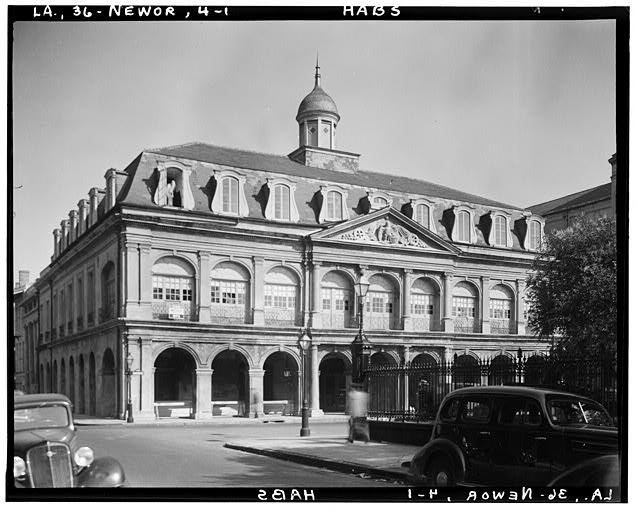
Buildings Survey (HABS). Courtesy of the Library of Congress,
Prints and Photographs Division.
While this building served as a seat of government for many years, a prison once stood behind it (see my entry on Pirate Alley for more information on this structure) which may explain the presence of a young soldier. Legend holds that the young man was imprisoned in the prison and, after a trial before a military tribunal, was summarily executed in the courtyard. Some of the museum’s staff and visitors have felt the sensation of someone rushing past them. Others have seen the pathetic form of a soldier in a ragged uniform.
Sources
- The Cabildo. Louisiana State Museums. Accessed 2 June 2016.
- Dwyer, Jeff. Ghost Hunter’s Guide to New Orleans. Gretna, LA: Pelican Publishing, 2007.
St. Louis Cathedral
Jackson Square

Courtesy of the Carol M. Highsmith Archive, Library of Congress, Prints and Photographs Division.
The Grande Dame of New Orleans, St. Louis Cathedral has stood at the sacred heart of this city since the construction of the first church on this site in 1718. The current building was originally constructed between 1789 and 1794 and heavily reconstructed in the mid-19th century. Legend holds that the black-robed form of Father Antonio de Sedella, often known by his French moniker, Père Antoine, appears during the Christmas Midnight Mass. The specter of this most beloved of curates appears to the left of the altar holding a candle.
Sources
- Brown, Alan. The Haunted South. Charleston, SC: History Press, 2014.
- “Our History.” Cathedral Basilica of Saint Louis. Accessed 2 June 2016.
The Presbytère
751 Chartres Street

The Presbytère is one of the pair of buildings flanking St. Louis Cathedral. Originally constructed in 1791 to match The Cabildo, this structure was known as “Casa Curial” or “Ecclesiastical House,” and provided housing for the Capuchin monks who ran the cathedral. In 1911, the building was taken over to house the Louisiana State Museum. The museum houses two permanent exhibits: one commemorating Hurricane Katrina and the other celebrating the city’s Mardi Gras traditions. While visiting the museum should you see a tall and slim maintenance man in a dark uniform with curly brown hair, be assured that you have just seen a ghost.
Sources
- Dwyer, Jeff. Ghost Hunter’s Guide to New Orleans. Gretna, LA: Pelican Publishing, 2007.
- The Presbytère. Louisiana State Museums. Accessed 2 June 2016.
Muriel’s Jackson Square
801 Chartres Street
Originally built as a grand residence for the noted Destrehan family (who also owned haunted Destrehan Plantation found along the famed River Road), the building that now houses Muriel’s partially burned in the Great Fire of 1788 that ravaged the city. Supposedly, the burned house was purchased by Pierre Antoine Lepardi Jourdan who restored the home but sadly lost it in a card game. Not willing to simply leave the home, he quietly resigned to the second floor where he committed suicide in what is now known as the Séance Lounge.

At least this is the story that is commonly told about this building. It is even included on the restaurant’s website. According to a 2013 blog post entitled, “The ‘Ghost’ of Muriel’s Restaurant,” this story is partially bunk. The blog notes that the current building was constructed sometime around the turn of the 20th century after the house on that site was torn down. While the history may not match up to the legend, there still may be paranormal activity with staff and visitors hearing knocking from inside the brick walls of the Séance Lounge, and disembodied voices, while encountering shadowy figures throughout the building. In order to keep some of the activity at bay, the restaurant maintains a special table for the ghost of Monsieur Jourdan.
Sources
- Brown, Alan. The Haunted South. Charleston, SC: History Press. 2014.
- Dwyer, Jeff. Ghost Hunter’s Guide to New Orleans. Gretna, LA: Pelican Publishing, 2007.
- “The ‘Ghost’ of Muriel’s Restaurant.” Myth Busters! 4 July 2013.
- “Our Ghost.” Muriel’s Jackson Square. Accessed 2 June 2016.
- Tipping, Joy. “Ghost trails and Halloween haunts in New Orleans.” Dallas Morning News. 23 October 2008.
Hotel Provincial
1024 Chartres Street

Like many hotels throughout the quarter, this hotel consists of an amalgam of different buildings, each with different histories. The 500 building seems to be the one with activity. The building was constructed on a site that was originally occupied by an Ursuline Hospital. It was here that the wounded from the 1814 Battle of New Orleans were treated. During the Civil War the buildings on the site were commandeered for use as a military hospital. That building burned and was replaced by the current structure. Guests and staff have, according to tradition, encountered bloodstains that disappear before their eyes, wounded soldiers in the rooms and corridors, doctors and nurses in bloodstained clothing, and one unlucky security guard using an elevator had the doors open to reveal the scene of a Civil War era surgery.
Sources
- Brown, Alan. The Haunted South. Charleston, SC: History Press. 2014.
- Dwyer, Jeff. Ghost Hunter’s Guide to New Orleans. Gretna, LA: Pelican Publishing, 2007.
- “The Hauntings of the Provincial Hotel.” Ghost Eyes Blog. 20 August 2009.
Old Ursuline Convent
1100 Chartres Street
One of the oldest buildings in New Orleans, the old Ursuline Convent has survived hurricanes, fires, and the nuns have provided aid during plagues and epidemics. It’s no surprise that their old convent would house spirits. According to Jeff Dwyer, the spirits of Ursuline sisters have been seen gliding throughout the building while the spirit of a Civil War era soldier has been seen in the garden. (For a couple photos of the Old Ursuline Convent see my entry here.)
Sources
- Dwyer, Jeff. Ghost Hunter’s Guide to New Orleans. Gretna, LA: Pelican Publishing, 2007.
Beauregard-Keyes House
1113 Chartres Street
See my entry, “Creepiness on Chartres Street,” for an in depth look at the history and hauntings of this famous home.
Le Richelieu Hotel
1234 Chartres Street
Housed in two buildings, one dating from 1845, the other from 1902, the Le Richelieu Hotel occupies the site where five French patriots were executed in the late 18th century. The spirits of these five men may still reside here. For further pictures see, “A Handful of Haunts—Photos from New Orleans.”
Sources
- “A Brief History.” Le Richelieu. Accessed 3 June 2016.
- Smith, Katherine. Journey Into Darkness: Ghosts & Vampires of New Orleans. New Orleans, LA: De Simonin Publications, 1998.
The Battlefield on Chartres Street
Beauregard-Keyes House
1113 Chartres Street
New Orleans, Louisiana
N.B. This article was edited and updated 8 August 2019.
For information on neighboring spirits see my Chartres Street guide and the main page for my Phantoms of the French Quarter series.
The sunny, yellow façade of the Beauregard-Keyes House on a relatively quiet section of Chartres Street does not belie the sometimes tragic history that has taken place within its walls. That quiet demeanor is shattered frequently by tour guides, with gawking tourists in tow, intoning one of the many “legends” about this house as they pass. According to their spiels, the house is inhabited by a pantheon of shades, some quite famous.

General Pierre Gustave Toutant-Beauregard, who occupied the house for about three years following the Civil War, was supposedly haunted by his defeat at the Battle of Shiloh. “…it’s General Beauregard whose presence at 1113 Chartres Street, and whose ghost seems obsessed with returning to the bloody scene of battle that traumatized him for the rest of his life—and beyond.”
Mary Beth Crain in her 2008 book, Haunted U.S. Battlefields continues, “In 1893, the year of the general’s death, people walking by the house late at night reported hearing ‘the voice.’ Someone seemed to be gasping ‘Shiloh…Shiloh’ over and over in a raspy chant that sounded as if it were coming from a great distance…Who else could ‘the voice’ belong to but General P.G.T. Beauregard, the man who throughout his life was haunted by the demons of the battle he needlessly lost? …There was terror in that one word, a sense of horror that was so convincing, those who heard it bolted as fast as they could.”

A Haunting Battle
For a name that is Hebrew for “place of peace,” Shiloh, Tennessee is associated with the stench of death and quite possibly haunted Beauregard after his defeat there. The battle, fought in early April, 1862, is often described as the first of the many bloody battles that would be fought during the Civil War.
Union troops under General Ulysses S. Grant were encamped on the banks of the Tennessee River near Pittsburg Landing, Tennessee, while some twenty-odd miles away Confederate troops under General Albert Sidney Johnston and Beauregard, his second in command, were camped at Corinth, Mississippi. Union reinforcements under General Don Carlos Buell were expected to arrive from Columbia, Tennessee after which Grant would sweep down into Mississippi to begin slow disemboweling the Confederacy. Johnston, over Beauregard’s objections, aimed at attacking Grant’s forces before Buell’s arrival. Beauregard bowed to Johnston’s commands and prepared a battle plan along the lines of Napoleon’s advance at the Battle of Waterloo. Coincidently, Beauregard, due to his short stature and French heritage was known as “The Little Napoleon.”
The first assault hit the Union camps around 9:30 on the morning of April 6. Union troops were taken by surprise in the middle of breakfast as Confederate troops charged into their camps bearing the red battle flag emblazoned with the blue, starred St. Andrews Cross that had been designed by Beauregard. Many troops on both sides along the three-mile battle line were still green, and scared by the ferocity of battle, fled, with many of the Union troops fleeing towards the safety of the Tennessee River where they cowered under the bluffs. But one Union line held: composed mainly of Illinois and Iowa farmers. This line, along a sunken road through thick woods and a peach orchard under the command of Brigadier General Benjamin M. Prentiss, kept the Confederates at bay for some six hours. They endured charge after charge and almost point blank artillery fire. General Johnston led the final Confederate charge when a bullet severed his femoral artery from which he died a short time later. Command then passed to Beauregard.

Prentiss’ division maintained their position along the sunken road where the ferocity of fighting was dubbed “The Hornet’s Nest.” Confederates surrounded the area on three-sides and they massed artillery onto the position, pouring volley upon volley of cannon-fire onto the Union troops. At 5:30 in the afternoon, Prentiss and his remaining 2,200 troops surrendered. The remaining Yankees had been pushed back to the Tennessee. Surveying the situation, Beauregard surmised that he could easily wipe out the remaining troops the following morning.
The sun rose the next day on a Federal force of nearly 50,000 as Buell’s reinforcements had arrived during the night. This huge force now faced Beauregard’s 30,000 troops. Slowly but surely, Union forces sliced into the Confederates with the troops falling back all the way to Corinth, Mississippi. The battlefield was thoroughly littered with the dead and dying, more than had ever been killed in any war previously fought by the United States: some 3,477 dead with some 23,000 wounded.
Historian Shelby Foote described the battle as “a disorganized, murderous fistfight of one hundred thousand men slamming away at each other.” It was this murderous and costly battle that sickened Beauregard so that he took immediately sick leave without permission of Jefferson Davis, who demoted him. Grant’s responsibility in the blood bath led to his being replaced by General Henry Wager Halleck.
Beauregard’s Haunting Legacy
After losing his military rank, Beauregard’s rank was restored and he went on to serve admirably through the end of the war. He retired to the house in New Orleans that now bears his name where his lived quietly for three years. Over time, legend has risen speaking of a more sinister legacy left by Beauregard in the house. Some tenants of the house have spoken of hearing the sounds of battle, perhaps from Shiloh, within and without the house. Even more interesting is the story that tenants being awakened by the sound of battle have stepped into the ballroom only to walk into the midst of the battlefield of Shiloh. While perhaps the story of the battlefield appearing in the ballroom may be only the product of the story passing through a “multi-generational telephone game.”

House, 2011. Photo by Benjamin Lewis,
all rights reserved,
Of course the lone, contemplative shade of Beauregard has also been reported throughout the house. Jeff Dwyer in his Ghost Hunter’s Guide to New Orleans reports that the General’s spirit has been seen peering out the home’s windows, even seen waltzing with a female, most likely his second wife (his first wife, Marie, died in 1850), Caroline. Interestingly, Beauregard and his wife, Caroline, never lived in the house together. The dashing military man and his bride married in 1860 on the eve of the war. The young couple spent much of the war apart and Caroline died in New Orleans in March of 1864 while it was under Union occupation. After receiving news of his wife’s passing, the stunned Beauregard continued to carry out his duties.
Following the war, without a job, money, or a wife, a chastened Beauregard refused to take the loyalty oath until after he was counseled to do so by his former Confederate peers, Generals Robert E. Lee and Albert Sidney Johnston. He took the oath before the mayor of New Orleans around the time he took up residence in the elegant house on Chartres Street. He was offered positions in the militaries of Brazil, Romania and Egypt but refused the offers saying, “I prefer to live here poor and forgotten, than be endowed with honor and riches in a foreign country.” Perhaps he spent his time in the house in Chartres pining for his darling Caroline and regretting his military blunders, but that is only speculation. Novelist Frances Parkinson Keyes, who lived in the house in the mid-20th century promulgated this mythos in her 1962 novel, Madame Castel’s Lodger. The novel portrays a defeated Beauregard looking back over the remains of his life.
History of 1113 Chartres
Besides it’s three-year occupation by Beauregard, the home possesses quite an illustrious history. Built by Joseph Le Carpentier, an auctioneer, the house was designed by Francois Correjolles incorporated elements of Roman and Greek architecture. Le Carpentier is said to have started his business selling goods for the pirate, Jean Lafitte (who, incidentally, figures into many local ghost stories and legends), and was also grandfather to the master chess player Paul Morphy, who was born in the house.
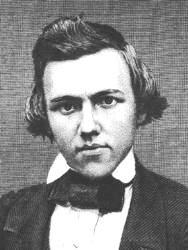
A few writers mention Morphy among the pantheon of spirits in the house, though much of their information appears to be incorrect. Mary Beth Crain refers to Morphy as “Paul Munni,” though I can’t discern why. It states that he went insane while living in the house. While I have been able to determine that Morphy was in fact born in the house, his mother was Le Carpentier’s daughter, I can find nothing about his residency in the house as an adult. He returned to New Orleans towards the latter part of his life and “retired” from chess, having been victorious over all the world’s chess masters. While I’ve yet to find anything that specifically states that Morphy lost his sanity, he did live his life in seclusion. Morphy died at his home, which is now Brennan’s Restaurant at 417 Royal Street (which has a number of spirits, possibly even Morphy’s), after taking his usual afternoon constitutional and then taking a cold bath.
After leaving the hands of the Le Carpentier family, the house passed through a number of hands including those of Swiss Consul, John A Merle, whose wife created the garden surrounding the house. As the owners changed, the neighborhood changed; filling with Italian immigrants towards the end of the nineteenth century. The house was bought by Sicilian wine merchant, Pietro Giacona in 1904.

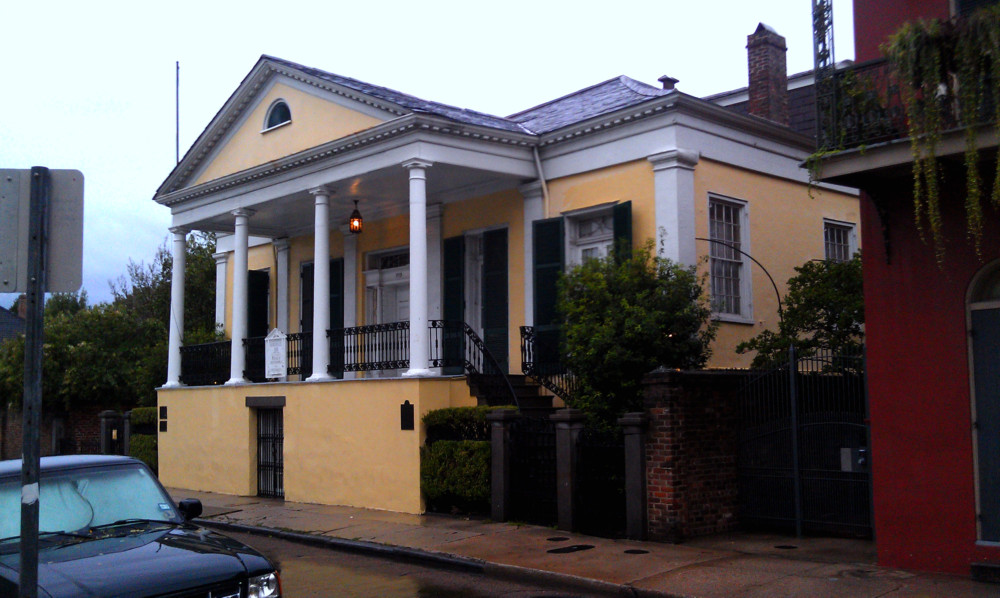
Keyes House, 2011. Photo by Benjamin Lewis, all rights reserved.
The Battle of Chartres Street
The Black Hand or La Mano Nero was an extortion racket commonly used among Italians and Italian Americans throughout the nineteenth and into the early part of the twentieth century, when the Mafia took on subtler methods of crime. New Orleans had already seen the tragic effects of such crime in 1890 with the assassination of police chief David Hennessy. The most common modus operandi for The Black Hand was to send the victims a letter, signed with a black handprint, threatening harm unless a specific amount of money was paid.
The Giacona family while living here found themselves victims of The Black Hand, in 1908, after receiving a letter demanding payment of $3000 or certain death. Events reached a zenith in the early morning hours of June 17. When Commander Thomas Capo of the Third Precinct Station arrived at the house around 2:45 AM, he witnessed everything in confusion:
I saw the old man standing on the gallery with the shotgun in his hand, while his son stood almost in the doorway with a rifle in his hands. On the gallery, two of the men were stretched out in death. Their shirts were covered with blood. In the yard, at the foot of the stairs, another man was lying. From its position in the yard, I judged that he was shot while running down the stairs, and had rolled to the ground. The table around which the men were seated before the shooting commenced was littered with watermelon rind and egg shells. Some half-filled wine goblets were also on the table.
A trail of blood led from the yard, over a wall and up and down a number of streets in the area. The trail led to Francisco Vitale who was found wounded at Bourbon and Ursulines Streets.
Pietro Giacona, his son Corrado, and a nephew, Pietro Bellonde, were all arrested for the murders of the Barraca brothers, Giovanni and Nuncy, and Cero Cusimano. Eventually, the Giaconas and the nephew were released. Upon their return, it is said that the house was turned into a fortress. The events of that early June morning were not easily forgotten and may continue to be re-enacted. Reports from people passing the house late at night have included the sounds of gunfire and shouting, the acrid smell of gunpowder and shadowy figures flitting around the fountain in the garden.

When the house was sold in 1925, Antonio Mannino, the new owner considered demolishing the house for either a warehouse or a macaroni factory. This possibility riled local preservationists who were disturbed by the loss of such a landmark. Beauregard House Inc. took over the house and in 1944, the group rented the house to novelist Frances Parkinson Keyes who occupied the house for some 25 years. During this time, she spearheaded a major renovation of the house while writing novels that included the house and former residents. She also created the Keyes Foundation which bought and now operates the house as a museum.
Spiritual remnants from this era may include Mrs. Keyes’ beloved cocker spaniel, Lucky. The dog died only a few days after his mistress’ death. Stories also tell of a large cat that is seen darting through and around the house but then disappearing. The cat is likely the shade of Caroline, a cat that took up in the house museum’s garden. Guests and guides in the house have felt a feline rubbing against their legs.
Though the current directors of the Beauregard-Keyes House deny the existence of spiritual activity in the house, it apparently hosts a legion of spirits. These denials keep investigators at bay, though the city’s many tour operators still walk and drive tourists past the house spinning creepy, and somewhat fictional tales battles on Chartres Street.
Sources
- Battle of Shiloh. Wikipedia, the Free Encyclopedia. Accessed 2 December 2010.
- Bruno, Stephanie. “A House Where the Tall-Tales Are True.” The Times-Picayune. 5 March 2005.
- Crain, Mary Beth. Haunted U. S. Battlefields. Guilford, CT: Globe Pequot Press, 2008.
- “Death of Paul Morphy.” The Daily Picayune. 11 July 1884.
- Dwyer, Jeff. Ghost Hunter’s Guide to New Orleans. Gretna, LA: Pelican Press, 2007.
- Frances Parkinson Keyes. Wikipedia, the Free Encyclopedia. Accessed 23 May 2016.
- “Giacona hearing fixed for Thursday.” The Daily Picayune. 7 July 1908.
- “Giaconas held, but allowed bail.” The Daily Picayune. 10 July 1908.
- “Giaconas held without bond.” The Daily Picayune. 19 June 1908.
- Klein, Victor C. New Orleans Ghosts. Chapel Hill, NC: Professional Press, 1993.
- Paul Morphy. Wikipedia, the Free Encyclopedia. Accessed 2 December 2010.
- G. T. Beauregard. Wikipedia, the Free Encyclopedia. Accessed 2 December 2010.
- Sillery, Barbara. The Haunting of Louisiana. Gretna, LA: Pelican Publishing, 2001.
- Ward, Geoffrey C., Ric Burns and Ken Burns. “A Bloody Affair (1862). The Civil War. American Documentaries, Inc. 1990.
- Ward, Geoffrey C., Ric Burns and Ken Burns. The Civil War: An Illustrated History. NYC: Knopf, 1990.
A Southern Feast of All Souls—Feast Wrap Up
The feast is done, the table has been cleared, the guests have left, the spirits have quietly returned to their rest, and the veil between our world and the next has been restored. This season has been great for articles about the haunted South so, I’m wrapping up this Southern Feast of All Souls with a look at some of the new (to me) haunted places that were covered in the news media.
Colby Building
191 North Foster Street
Dothan, Alabama
An investigator from Circle City Ghost Hunters said of the Colby Building in downtown Dothan, “Somebody once upon a time put their heart and soul in the building.” Perhaps that soul is still here. According to an October 29th article in the Dothan Eagle, this group investigated the building after numerous reports of paranormal activity in the building surfaced.
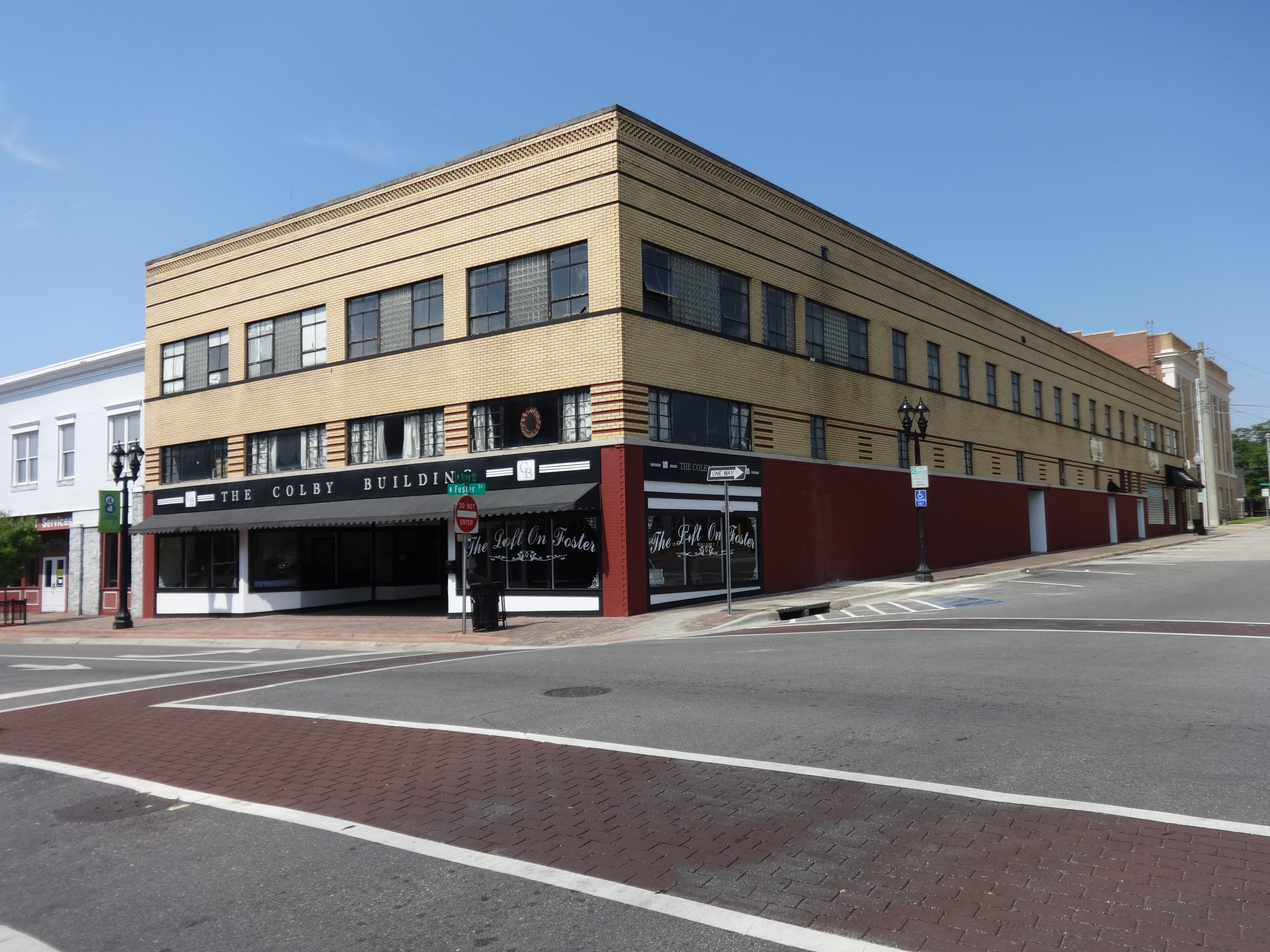
While working on my recent book about haunted Alabama, I had a heck of a time trying to find anything on the Dothan area. As the seventh largest city in the state by population, there should be more information on hauntings in the area, sadly there was nothing reliable. Therefore, I was rather excited to see this article appear. The Colby Building was built in 1938 as a J.C. Penney’s Department Store and has since hosted a number of businesses. The building was redeveloped by a private/public partnership in 2008 and currently houses two restaurants, Colby’s on North Foster Street and Bella’s in the back of the building on West Troy Street.
Employees and guests have had experiences in the building including things moving on their own and seeing figures. Others have had their names called and the employees have nicknamed the spirit “’Rachel’ because all kinds of crazy stuff happened.” (I’m presuming this a reference to the television show Friends.) The owner of the restaurants was delighted to host an investigation when Circle City Ghost Hunters inquired about investigating there. The article notes that the activity is explained by a story involving the death of a young woman on the building’s third floor in the 1950s.
N.B. As of 2019, it appears that Colby’s has closed, though Bella’s remains open.
Sources
- Ingram, Debbie. “Plans unveiled for $2.4 million Penney building project.” Dothan Eagle. 18 August 2008.
- Sailors, Jimmy. “Circle City Ghost Hunters conducting investigation in downtown Dothan.” Dothan Eagle. 29 October 2015.
Suntan Arts Center (Don Vicente Building)
3300 Gulf Boulevard
St. Pete Beach, Florida
Adjoining the Don CeSar Beach Resort, a palatial pink Jazz Age dream, is the Don Vicente Building which was built just prior to the grand hotel to serve as offices during the construction. Over the years, the building has seen many incarnations serving as offices for the hotel, a bank, and even a firehouse. The building has housed the 50 year old Suntan Arts Center for many years. The center provides classes and support for the local arts community.
The center hosted a ghost tour this year highlighting the paranormal activity that has been experienced in the building. For many years people here have encountered the spirit of a man in a white suit. As this building did serve as an office for Thomas Rowe, the hotel’s founder, this spirit has been identified as him. During an investigation of the building in 2013 by SPIRITS of St. Petersburg, the group got a response when Rowe’s name was mentioned. Besides Mr. Rowe’s white-suited spirit there may be other spirits here as well.
Sources
- “Self-guided ghost tour departs from Suntan Arts Center.” TBN Weekly. 28 September 2015.
- SPIRITS of St. Petersburg Paranormal Investigation Group. “Report for Suntan Arts Center.” Accessed 8 November 2015.
Porter Hall
Mercer University
Macon, Georgia
Porter Hall, a residence hall on the campus of Mercer University, one of the oldest private universities in Georgia, possibly has something mysterious residing on its fourth floor. One student reported that she “heard things like chairs being dragged across the pine, like a hard pine floor.” The fourth floor is not accessible to students and used for storage. Reportedly, only the dorm’s resident advisor has access. When students complain of noise from that floor, the resident advisor will check it out and find the floor empty of living beings.
Sources
- Kachinsky, Noelle. “Mercer University has its share of haunted locations across campus.” 30 October 2015.
- “Top 5 Hauntings of Mercer University.” Gateway Macon. Accessed 23 October 2015.
Westover Terrace (private)
905 West Main Street
Richmond, Kentucky
When the current owners of Westover Terrace began restoration on the house after they acquired it in 1995, the house was severely dilapidated and vandals had defaced parts of the interior. A pentagram had been painted upstairs, walls and windows had been smashed, and the mantelpieces and radiators had been stolen. Local kids occasionally prowled the creepy house in search of ghosts in this former funeral home. The new owners did not realize they acquired ghosts with this magnificent 1881 home.
As work progressed, the owners and contractors began to have odd experiences including loud crashes and bangs that sounded like sledge hammers being used and heavy furniture being moved. The voice of a little girl was heard asking workers what they were doing and warning them on occasion. While doing repair work on a staircase, one particular board was removed several times. After the owner used a hydraulic nail gun to attach the it, the board disappeared entirely. When the owners finally moved into the home in 2005, the activity seemed to quiet down. Evidently, the ghosts are pleased with the renovations. This is a private home, please respect the owners’ privacy and observe the house from the street.
Sources
- King, Critley. “The haunted history of Richmond.” Richmond Register. 29 October 2015.
Green Light Bridge
Green Light Road
Winnsboro, Louisiana
An article about Louisiana hauntings from the Shreveport Times highlighted this very interesting location near Winnsboro in Franklin Parish in the northeast portion of the state. The origin of the road’s odd name has been lost to history, but is possibly related to the paranormal green light that is supposed to emanate from underneath the bridge and along the banks of the stream here. The article does not name the creek, but after looking at Google maps, it seems that the road only crosses one stream, Turkey Creek, in its course from LA-15 to its termination at Dummy Line Road.
The possible reasons for the odd green light are varied. A church once existed on one side of the creek and sometime in the mid-20th century a man was hung from a tree in front of the church. A fatal car accident that occurred here may be related to the activity as well. A woman lost her life when her car crashed into a tree. There is also speculation that the woman was frightened by the mysterious green light.
Sources
- “’Haunted’ Louisiana: Tales of Terror from Shreveport and beyond.” Shreveport Times. 30 September 2015.
Glen Burnie Regional Library
1010 Eastway
Glen Burnie, Maryland
Librarians at the Glen Burnie Regional Library have been spooked by something within this 1969 library for many years. Odd sounds have been heard by staff when they have closed the building at night while books have been pushed to the floor by unseen hands. Staff called in the Maryland Ghost Trackers to investigate. During the investigation, the investigators made contact with a number of male spirits who are apparently hanging around and enjoy making a bit of trouble now and then.
Sources
- Bottalico, Brandi. “Glen Burnie library resource for all—even ghosts.” Capital Gazette. 23 October 2015.
- “Maryland Ghost Trackers called to Glen Burnie Library.” 28 October 2015.
Ole Tavern on George Street
416 George Street
Jackson, Mississippi
There are several ghosts still patronizing the Ole Tavern on George Street according to a Halloween article from Jackson, Mississippi news station, WAPT. The article highlights a recent investigation of this establishment by the Mississippi Paranormal Research Institute. Employees of the popular eatery have had several eerie encounters with a few possible spirits here.
One employee saw a woman sitting at the bar one morning as he opened up. He had just removed the padlock from the door when he saw the woman. Realizing that no one was in the building, the employee returned to his car until someone else arrived. This spirit is believed to be the spirit of a prostitute who once worked in the building and committed suicide here in the 1970s. The investigation produced evidence that this woman may remain in the building with some other spirits.
Sources
- “Ghost hunters seek answers from ‘Bitter Hooker.’” 31 October 2015.
A Southern Feast of All Souls—Passover
Happy Halloween and a Blessed Samhain!
N. B. This article was updated 27 May 2023 to reflect new information.
Haunted Hotel
623 Ursulines Street
New Orleans, Louisiana
Exodus, Chapter 12
King James Version
21 Then Moses called for all the elders of Israel, and said unto them, Draw out and take you a lamb according to your families, and kill the passover. 22 And ye shall take a bunch of hyssop, and dip it in the blood that is in the basin, and strike the lintel and the two side posts with the blood that is in the basin; and none of you shall go out at the door of his house until the morning. 23 For the Lord will pass through to smite the Egyptians; and when he seeth the blood upon the lintel, and on the two side posts, the Lord will pass over the door, and will not suffer the destroyer to come in unto your houses to smite you.
A dark lord passed over New Orleans on the night of March 18th, 1919. Instead of a demand that each home’s occupants paint their doors with lamb’s blood, he ordered that a jazz band be at full swing within each home. At fifteen minutes past midnight on this Tuesday night the city’s dance halls were filled to capacity while the strains of jazz poured out of homes throughout the city. Clarinets wailed while trombones tramped up and down scales stomping the precious blue notes that flavored this music. Crooners of all colors sang of love lost and regained against a backdrop of banjos, trumpets and tubas. Thousands of feet kicked up in time to the syncopated rhythms. This was a city at its most alive fearing the shroud of death that was lurking somewhere with axe and razors at the ready. Death did not sting that night. The dark lord would return in August to continue his spree.
The mysterious Axeman of New Orleans was never caught. Between May 1918 and October 1919, at least twelve people were attacked and killed at the hands of this heinous killer. As most of the victims were of Italian origin, many suspected that the crimes were associated with the Mafia that was active in the city. Someone claiming to be the killer wrote to The Times-Picayune:
Hell, March 13, 1919
Esteemed Mortal:
They have never caught me and they never will. They have never seen me, for I am invisible, even as the ether that surrounds your earth. I am not a human being, but a spirit and a demon from the hottest hell. I am what you Orleanians and your foolish police call the Axeman.
When I see fit, I shall come and claim other victims. I alone know whom they shall be. I shall leave no clue except my bloody axe, besmeared with blood and brains of he whom I have sent below to keep me company.
If you wish you may tell the police to be careful not to rile me. Of course, I am a reasonable spirit. I take no offense at the way they have conducted their investigations in the past. In fact, they have been so utterly stupid as to not only amuse me, but His Satanic Majesty, Francis Josef, etc. But tell them to beware. Let them not try to discover what I am, for it were better that they were never born than to incur the wrath of the Axeman. I don‘t think there is any need of such a warning, for I feel sure the police will always dodge me, as they have in the past. They are wise and know how to keep away from all harm.
Undoubtedly, you Orleanians think of me as a most horrible murderer, which I am, but I could be much worse if I wanted to. If I wished, I could pay a visit to your city every night. At will I could slay thousands of your best citizens, for I am in close relationship with the Angel of Death.
Now, to be exact, at 12:15 (earthly time) on next Tuesday night, I am going to pass over New Orleans. In my infinite mercy, I am going to make a little proposition to you people. Here it is:
I am very fond of jazz music, and I swear by all the devils in the nether regions that every person shall be spared in whose home a jazz band is in full swing at the time I have just mentioned. If everyone has a jazz band going, well, then, so much the better for you people. One thing is certain and that is that some of your people who do not jazz it on Tuesday night (if there be any) will get the axe.
Well, as I am cold and crave the warmth of my native Tartarus, and it is about time I leave your earthly home, I will cease my discourse. Hoping that thou wilt publish this, that it may go well with thee, I have been, am and will be the worst spirit that ever existed either in fact or realm of fancy.
The Axeman
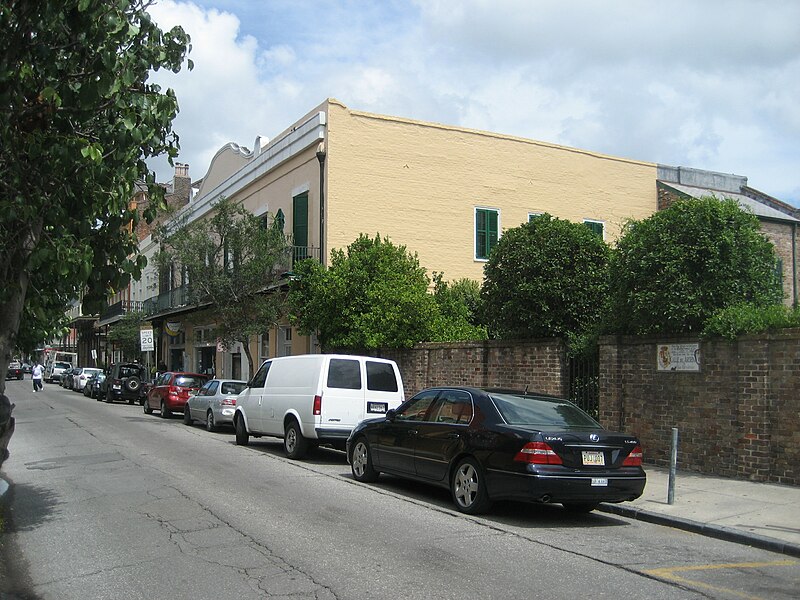
An article from the New Orleans ABC affiliate, WGNO, highlighted the possible, albeit tenuous, connection between the axe murderer and the Haunted Hotel. The hotel, which bills itself as the city’s “oldest and best-known Haunted Hotel” claims that the infamous axeman lived here during his murder spree, though his identity is unknown. During renovations, a bloody axe was found on the premises that may have been the weapon in one of the murders. The article’s sources is provided by a ghost tour company, which are often not reliable. In this case, the hotel was apparently investigated and something indicated that a particular corner of the courtyard had paranormal activity. The readings somehow indicated that the spirit may have killed someone and hid in that particular corner.

The 1919 map of the killings doesn’t show any murders taking place in the French Quarter, so there’s really nothing to connect the Axeman with this particular building, other than the bloody axe and some anomalous readings during a paranormal investigation. Ursulines Avenue, however, boasts a fairly unique roster of spirits as it slices through the famous French Quarter. As you stroll these ancient streets, think what it must have been like on the night of the Axeman’s Passover with jazz spilling from every open window warding off an axe bearing dark lord as he passes over.
Sources
- “1919: A serial killer had New Orleans on edge.” The Times-Picayune. 23 October 2011.
- Axeman of New Orleans. Wikipedia, the Free Encyclopedia. 31 October 2015.
- About Us. Haunted Hotel. Accessed 27 May 2023.
- Taylor, Troy. “The Axeman’s Jazz.” Prairie Ghosts.
- Thomas, Jabari. “New Orleans ax serial killer still haunts hotel in the French Quarter.” 27 October 2015.
A Southern Feast of All Souls—A Soul on the Stairs
The Myrtles
7747 US Highway 61
St. Francisville, Louisiana
Despite my own misgivings (see my entry here) about the stories that have been told for years about The Mytles, which is often described as “America’s most haunted house,” I still believe there is an excess of paranormal activity here. In conversation with a friend last night, she sent me two very interesting photos that she took.

My friend, Lyna Howells, loves visiting haunted places and took a trip in June of 2012 with friends to check out The Mytles. During their tour of the house the group saw the famous mirror in the home’s foyer. Howells took a series of pictures of the mirror. After the group returned to the hotel, she was shocked to discover that someone appeared sitting on the stairs. The first photo shows the empty stairs, while the second photo, taken from a different angle, shows a woman sitting on the stairs.
Howells stated that the stairs were roped off to keep visitors off them while none of the group members were dressed like the mysterious figure on the stairs. When asked if there was anything at the time that could have indicated the presence of a spirit, Howells replied that the lights in the foyer were flickering.


one of the host of spirits who inhabit The
Myrtles? All rights reserved.
A Southern Feast of All Souls—“Hellish Paradises”
My earlier articles on the haunted plantations of Louisiana’s River Road are among the most visited articles on my blog. Therefore, I’ve decided to revisit and update some of these articles.
The plantation is one of the most iconic images of historical South and Louisiana has preserved many of these cherished places. Some of these grand homes are run as museums while others host guests as bed and breakfasts. Others still have been reduced to ruins.
What is often forgotten, however, is that these plantations were built on the backs of enslaved labor, mostly African. While these grand estates served as paradises for the ruling class—which in Louisiana included people of French and Spanish origin as well as occasionally mixed race people and even freedmen—these same estates were often pure hell for the enslaved. It’s no wonder that these hellish paradises have been imprinted by all the tragedy and triumph they have been witness to. These are some of their stories.
Oak Alley Plantation
3645 Louisiana Highway 18
Vacherie
Of Louisiana’s plantations, Oak Alley is certainly the most iconic with its alley of 14 majestic oaks that frame the view of the house from the river. When viewed from the river, the main house appears tiny, but up close, the home’s 28 peripteral columns seem to translate the trunks of the oaks into classical architectural terms. The oak alley was planted some years prior to the construction of the grand, colonnaded house which was begun in 1837 and was completed two years later. Jacques Telesphore Roman, for whom the house was constructed, owned the house until 1866 when it was sold and passed through the hands of a number of landowners. When Andrew and Josephine Stewart purchased the property in 1925, the house was in a state of serious decay. With the help of architect, Richard Koch, the house was returned to its former glory. It was the restoration of this plantation that started the movement to preserve other plantations in the area.
The house and its majestic grounds have been used in a number of films including 1964’s Bette Davis thriller, Hush…Hush Sweet Charlotte, Interview with a Vampire and Primary Colors. Additionally, the music video for Beyoncé’s 2006 song, “Déjà Vu,” shows the singer dancing under the canopy of the oaks in front of the house.

Among the shadows of the oaks and the house’s massive colonnade numerous spirits have been reported. At least two female spirits have been seen in and around the house including one that appeared in a photograph in 1987. A couple from Texas was taking pictures in the master bedroom of the house. A dress form that stands in that room appeared in one of the photographs to have a head on it. Oddly, the “head” is not reflected in a nearby mirror. Perhaps, Monsieur Roman’s wife, Celine has returned to have her photograph made.
Jeff Dwyer in his 2007, Ghost Hunter’s Guide to New Orleans, describes the sound of a carriage, complete with the rattle of chains and the neighing of horses, has been heard on the drive leading to the house. The Oak Alley website features a page of ghost stories including a note from a pair of tour guides who recall witnessing billowing dust and sound of horse’s hooves upon the gravel driveway when there was nothing to be seen.

One of the home’s staff members related a story to author Jill Pascoe which she included in her 2004 book, Louisiana’s Haunted Plantations. The staff member had begun securing the house for the night and was waiting on the final tour to finish. She took a seat in the parlor to wait. As she was sitting there she saw a woman dressed entirely in black and wearing a black veil approach the bottom of the staircase. The staff member stood to confront this visitor when the figure turned towards her and disappeared.
Investigations by Louisiana Spirit Paranormal Investigators have produced EVPs and many recorded personal experiences. In 2008, Oak Alley was investigated by the The Atlantic Paranormal Society (TAPS) as part of the Syfy Channel series, Ghost Hunters. The investigators came up with some interesting evidence. One piece of thermal imaging video shows something with a heat signature moving outside of a window. When Jason Hawes asked Grant Wilson (the main investigators) to step outside on the veranda outside of the window, nothing can be seen. Other evidence include a flashlight coming on by itself and hits on a K2 meter in response to questions.
Sources
- Dwyer, Jeff. Ghost Hunter’s Guide to New Orleans. Gretna, LA: Pelican Publishing, 2007.
- Episode 408, “Oak Alley Plantation.” Ghost Hunters. Syfy Channel. Originally aired 8 October 2008.
- “Ghost Tales.” Oak Alley Plantation. Accessed 31 January 2015.
- Goeldner, Paul. National Register of Historic Places nomination form for Oak Alley Plantation. 3 July 1974.
- Louisiana Spirits Paranormal Investigations. Investigation Report for Oak Alley Plantation. Accessed 7 September 2010.
- Louisiana Spirits Paranormal Investigations. Investigation Report for Oak Alley Plantation, Follow Up. Accessed 7 September 2010.
- National Park Service. “Oak Alley Plantation.” Southeastern Louisiana: A National Register of Historic Places Travel Itinerary. Accessed 6 September 2010.
- Oak Alley Plantation. Wikipedia, the Free Encyclopedia. Accessed 30 Janurary 2015.
- Pascoe, Jill. Louisiana’s Haunted Plantations. Gilbert, AZ: Irongate Press, 2004.
- Sillery, Barbara. The Haunting of Louisiana. Gretna, LA: Pelican Press, 2001.
San Francisco Plantation
2646 Louisiana Highway 44
Garyville
It’s not hard to imagine that San Francisco Plantation was designed by a deranged carnival clown. The house is representative of Steamboat Gothic architecture, a style the National Park Service describes as a “potpourri of architectural designs.” A dozen highly skilled slaves were purchased to aid in the construction of this brightly painted home. The immense cost of the house’s construction in 1849, may have led to the name of the house, a bastardization of “saint-frusquin” or “without all that one possesses.” Edmond Marmillion started off in enormous debt after he purchased the land from a free man of color, Elisée Rillieux, for nearly $100,000, a huge sum of money in the early 19th century.

Marmillion created an extensive sugar plantation and eventually found financial success in the 1850s. But a pall of sickness hung over this successful period. Marmillion’s wife contracted tuberculosis and died in 1843. The couple’s eight children also contracted the dread disease and six of them died over a period of about 20 years. The marvelous plantation remained in the family until the late 19th century when it passed out of the family. Following the disastrous Great Mississippi Flood of 1927, many riverside plantations, including San Francisco, were threatened with destruction as the Army Corps of Engineers constructed a levee to contain the river. Some plantations were saved and the levee was rerouted to save San Francisco. The house remains, though a massive petroleum plant looms behind the house museum.

With the dearth of complex and rich history at San Francisco, it is surprising that descriptions of the plantation’s spirits only amount to a few paragraphs. Most sources mention that the spirit of Charles Marmillion, one of Edmond’s sons, has been seen in the house. Psychics with one investigation team noted his sickly form in the office and one of the bedrooms. The apparitions of two young girls have been encountered playing under the trees around the house.
Sources
- Brown, Alan. The Haunted South. Charleston, SC: History Press, 2014.
- Dwyer, Jeff. Ghost Hunter’s Guide to New Orleans. Gretna, LA: Pelican Publishing, 2007.
- Goeldner, Paul. National Register of Historic Places nomination form for San Francisco Plantation. 17 January 1974.
- Malone, Paul and Lee. The Majesty of River Road. Gretna, LA:Pelican Publishing, 1991.
- National Park Service. “San Francisco Plantation House.” Southeastern Louisiana: A National Register of Historic Places Travel Itinerary. Accessed 6 September 2010.
- “Plantation History.” San Francisco Plantation. Accessed 31 January 2015.
- Sexton, Richard. Vestiges of Grandeur: The Plantations of Louisiana’s River Road. San Francisco, CA: Chronicle Books, 1999.
The Cottage Plantation
River Road at Duncan Point
Baton Rouge
On the 18th of February 1960, firefighters battling the lightning-caused blaze that destroyed The Cottage Plantation reported that they saw a man looking out one of the upper windows of the grand home. The firefighters yelled at him trying to encourage the gentleman to jump, but the man didn’t seem to notice the firefighters on the lawn or the flames that were engulfing the house in which he stood. Shortly after the man’s appearance, the roof collapsed. Human remains were not found in the smoldering ruins of The Cottage. Perhaps this may have been the same man whose visage was captured on film just ten years earlier peering out of the moldering house through a broken window.
Only forlorn columns standing in a weedy privately owned field mark the site of The Cottage alongside River Road just south of Baton Rouge. The home was constructed in 1824 as a wedding gift from Colonel Abner Duncan to his daughter, Frances and her husband, Frederick Daniel Conrad. It was under Conrad’s ownership that a certain Ezra Holt was brought to work at the plantation, though stories differ as to what his function was. All stories, however, point to Mr. Holt’s dedication to the Conrad family and The Cottage Plantation.
Legend speaks of Mr. Holt returning to the house after the Civil War to maintain it for the Conrad family. Living alone in the huge house, Holt became a recluse and is said to have grown a long, white beard. After he passed, he was buried in a family cemetery on the site, though stories emerged describing his spirit as continuing to wander the house and grounds. There is some indication that these stories may have been produced to keep vandals and curiosity-seekers away from the decaying house. The house was restored by members of the Conrad family in 1920 and was used as a museum, even appearing in a few films including the 1957 Clark Gable vehicle, Band of Angels.
Even before it was destroyed by fire, visitors and staff reported seeing a man with a long beard wandering the halls of the house. Even now, many years after its destruction, stories of a man seen among the ruins persist. Some, who have trespassed beyond the electric fence that now surrounds the ruins (I cannot recommend anyone breaking the law to see the ruins up close), have reported hearing voices and the sounds of a spectral party among the decrepit columns of the once grand home.
Sources
- Duvernay, Adam. “Several Baton Rouge sites said to be haunted.” The Daily Reveille. 27 October 2009.
- Dwyer, Jeff. Ghost Hunter’s Guide to New Orleans. Gretna, LA: Pelican Publishing, 2007.
- Franklin, Wade. “Ghostly Thought—Haunted House Tour.” Waukesha Daily Freeman (Waukesha, WI). 21 April 1977.
- Pascoe, Jill. Louisiana’s Haunted Plantations. Gilbert, AZ: Irongate Press, 2004.
- Steed, Bud. Haunted Baton Rouge. Charleston, SC: History Press, 2013.
- Stefko, Jill. “Haunted Cottage Plantation: One Ghost is Mr. Holt.” Suite 101. 21 October 2011.
- Taylor, Troy. “The Cottage Plantation.” Ghosts of the Prairie. 1999.
Phantoms of the Operas, Y’all—13 Haunted Southern Theatres
N.B. This page was edited and revised 26 May 2020.
Among theatre folks there’s an old saying, “no good theatre, worth its salt, will be without a ghost.” The South is not immune to this phenomenon and its landscape is dotted with many theatres claiming to be haunted. The variety of theatres is astonishing; from 1920s-era movie palaces, to opera houses to performance spaces that have been created out of old buildings, and even cinemas, so many of these sites have wonderful and creepy stories to tell.
Mary G. Hardin Center for Cultural Arts
501 Broad Street
Gadsden, Alabama
This prominent corner of Broad and 5th Streets has witnessed much of Gadsden’s history. A home stood on this corner until 1860 when the First Baptist Church erected a church here with a graveyard surrounding the building. Around the turn of the 20th century, the church was sold and the graves—most of them—were relocated to nearby Forrest Cemetery. A furniture store operated on the site until the building of the Imperial Theatre which opened in 1920. The theatre changed hands a few years later, was extensively remodeled and reopened as the Princess Theatre in 1926. The Princess—a vaudeville and motion picture house—provided the citizens of Gadsden the utmost in comfort and technology until it’s destruction by fire in 1963.

The starkly modern Mary G. Hardin Center for Cultural Arts now occupies the corner. Within its modern corridors, galleries, studios and performance spaces there are spirits. Betty McCoy reports that two visitors encountered the spirit of a child who was apparently quite confused. The spirit of a young girl appeared at the Princess Theatre just after it opened in 1920 and many patrons encountered the young and quite curious entity. The identity of this young entity has always been a mystery. Was she attached to one of the graves formerly on the site? Is she one of the spirits in the modern arts center? As long as spirits linger, the questions will remain.
Sources
- Goodson, Mike. Haunted Etowah County, Alabama. Charleston, SC: History Press, 2011.
- Hardin Center for Cultural Arts. “About the Center for Cultural Arts.” Accessed 18 March 2013.
- McCoy, Betty S. Haints, Haunts and Hullabaloos: Etowah and Surrounding Counties. CreateSpace, 2011.
H Street Playhouse
1365 H Street, Northeast
Washington, D.C.
Things have a strange way of disappearing at the H Street Playhouse. Some believe that these odd disappearances may be linked to a spirit within the old theatre, besides, these disappearances are truly strange. Take for instance, the matter of the disappearance of the theatre’s router from the office during a meeting. Members of one of the theatre companies that uses the theatre were meeting in the building when the Wi-Fi suddenly went out. Heading back to the office, which was only accessible through the room where the meeting was being held, the router seems to have completely vanished.

Costumes pieces and props also have a tendency to disappear right before performances. A t-shirt hanging on a rack disappeared without a trace while prop money seemed to have departed briefly from the bag it was stored in during the show. As money was required during the scene, the actors pulled together what bills they had on them to use, though when the props master opened the bag to dole out money for the upcoming scene, the prop money had reappeared.
If the kleptomaniac of the H Street Playhouse is, in fact, a spirit, then there is the question of identity. Tour guide and author Tim Krepp speculates that the spirit may either be the shade of Bruce Robey, who founded the H Street Playhouse with his wife, or perhaps the spirit of a young boy who was severely burned in a fire across the street in 1905. But, perhaps the spirit lies somewhere in the playhouse’s marvelous history.
The Romanesque Revival-styled building was built in 1928 as an automobile showroom. At the time, this particular stretch of H Street boasted so many dealerships it was called “Autombile Row.” This building served as a showroom until 1942 when the building was renovated for use as a cinema for the African-American community that occupied this area. As the social upheavals of the mid-20th century led to the neighborhood’s decline, the building was used for a variety of purposes until its conversion to a live theatre in 2002.
The H Street Playhouse closed in 2012. A gym currently occupies the building.
Sources
- Bell, T. David. National Register of Historic Places nomination form for Plymouth Theatre. December 2003.
- Krepp, Tim. Capitol Hill Haunts. Charleston, SC: History Press, 2012.
Coconut Grove Playhouse
3500 Main Highway
Miami, Florida
The Coconut Grove Playhouse is like a famous actor in a vegetative state. The doctors are faced with a hard choice: unplug him from life-support to let him die or revive him with an expensive, experimental treatment and hope that he makes a full recovery. As of now, the doctors are still arguing over the best course to take.
This most famous of Florida theatres went suddenly into a vegetative state in 2006 under mounting debt. Since the theatre company’s closure, the theatre has been embroiled in mounting drama between a cast of politicians, preservationists, thespians and developers. Occupying a prominent corner on Main Highway at Charles Avenue, the location has developers salivating over the money that could come from a luxury condominium development on the site. Some government officials, preservationists and thespians would reopen the playhouse as a theatre and hopefully revive its cherished name. Before its closure, the theatre was a major economic driver in the Coconut Grove, one of the oldest neighborhoods in the city.

As the drama fills courtrooms, offices and boardrooms outside of the theatre, faces have been seen peering from the buildings upper windows: spiritual guardians of this 1927 edifice. Ghost tours pass by the site regularly as the Mediterranean Revival structure sits forlornly with its doors locked. The theatre opened gloriously as the Player’s State Theatre on New Year’s Day 1927—a jewel in the Paramount crown. All the amenities of the best theatres were incorporated here including a huge Wurlitzer Concert Grand Organ and air conditioning. Riding high on the great Florida Land Boom of the 20s, the theatre’s fortunes ran out when the real estate bubble burst. The theatre closed in the early 1930s. It was not until 1955 that it would resume use as a theatre, but only after being transformed for use as a live-performance venue.
It struggled even as a legitimate theatre, though it did host a grand assortment of prominent actors and productions on its boards. Samuel Becket’s Waiting for Godot had its American premiere here and the stage has seen the work of such noted thespians as Jose Ferrer, Hume Cronyn, Jessica Tandy, and Ethel Merman. But, until the actors in the current drama come to a resolution, the theatre and the spirits peering from its windows will continue to wait for Godot’s eminent arrival.
Sources
- Bandell, Brian. “Coconut Grove Playhouse hit with foreclosure.” South Florida Business Journal. 17 January 2013.
- Feldman, Hal. “Do ghosts walk among us?” Pinecrest Tribune. 28 June 2012.
- Uguccioni, Ellen and Sarah E. Easton. Designation Report: Coconut Grove Playhouse. City of Miami. 2005.
- Viglucci, Andres. “Coconut Grove Playhouse board decides not to fight imminent state takeover.” Miami Herald. 2 October 2012.
- Viglucci, Andres. “Plan for larger theatre at coconut Grove Playhouse remains alive.” Miami Herald. 12 March 2015.
- Viglucci, Andres. “State says shuttered Coconut Grove Playhouse could be sold to private bidders.” Miami Herald. 14 December 2012.
- Viglucci, Andres. and Christine Dolan. “FIU, Miami-Dade in possible deal to save Grove Playhouse.” Miami Herald. 13 March 2013.
Springer Opera House
103 10th Street
Columbus, Georgia
As a kid, the Springer Opera House was the first local haunting I was familiar with. I recall the intense jealousy I felt when my sister got invited to a birthday party at the Springer and I wasn’t allowed to tag along to “see the ghost.” As a theatre major at Columbus State University, I visited the Spring a number of times and saw a few performances, though still I was distracted by the fact that there may be ghosts wandering about the antique promenades and still taking their seats in the boxes on either side of the stage.
In school, I also began to hear stories from my friends who had worked in the old theatre. Some of the experiences seemed incredible—like the story of a sound technician being levitated in the booth—while others seemed quite credible—a friend’s encounter with a little girl in a hallway who seemingly wanted to play tag but disappeared. When I got hired to work on a book about this theatre, I was excited to possibly experience the spirits there myself.

I was asked by F. Clason Kyle to work as an editor on his book, In Order of Appearance, a history of the theatre and the many famous personalities—Edwin Booth and John Philip Sousa to Minnie Maddern Fiske and Burt Reynolds—to have trod its boards. Mr. Kyle and I first began by organizing much of the archival material the theatre had. We had our own little room stuffed with boxes of old programs, promotional materials, business papers and the occasional artifact. Among the artifacts was a beaded purse once owned by famed Polish actress, Helena Modjeska. We weren’t sure where the purse was, so we went looking for it.
Before we left the archives room, Mr. Kyle and I had been sorting through the various boxes. We returned to the room after a search of about an hour and I walked straight back to the box I had been searching through. There, sitting on top of the papers within the box was an antique purse. While it was not the Modjeska purse, almost as a consolation prize, an antique pocket watch had been placed on top of the purse. Obviously, if the purse had been there as we were discussing the Modjeska purse I would have asked about it. But to appear after we returned from the search was very odd. Perhaps the Springer’s ghost is similar to the H Street Playhouse’s kleptomaniac spirit.
During my two years working on the book, I also heard footsteps on the second floor and a door slamming shut by itself during a rehearsal. But many others have had more spectacular experiences. The educational director whose office was located on the second floor regularly saw a man walking past her doorway. She also felt a strong bond, motherly really, towards the spirit of a little girl that had been reported throughout the building as well.
There is apparently a host of spirits within the 1871 building, though it seems that the male spirit and the little girl may be the more active. The theatre’s artistic director, Paul Pierce, wrote a book about many of the experiences in the Victorian theatre including his own experience. Pierce had arrived at the theatre early one morning to open the tool room for technicians who were setting up for an event. As he walked through the scene shop, Pierce realized there was a man walking next to him. “Slight of build, he was a young gentleman with a thin, unruly, Van Dyke beard and wearing an ill-fitting tweed suit.”
Pierce walked through the shop with this figure playfully mirroring his stride through the room. They turned a corner and the figure walked behind a screen leaning against the wall. The figure did not emerge from the other side.
Sources
- Kyle, F. Clason and Lewis O. Powell, IV, editor. In Order of Appearance: Chronicling 135 Years on America’s Most Celebrated Stage. Columbus, GA: Communicorp, 2006.
- Pierce, Paul. The Springer Ghost Book. Columbus, GA: Communicorp, 2003.
Paramount Arts Center
1300 Winchester Avenue
Ashland, Kentucky
The Paramount Arts Center gained its ghost fairly early in the theatre’s history when, as legend holds, a worker somehow became entangled in the rigging above the stage and died. If this act was an accident or suicide is unknown, but strange things began to be reported in the building. Over time, theatre staff members dubbed the entity “Paramount Joe.”
Just seven months after the Ashland Opera House was destroyed by fire in 1931, the Paramount Theatre opened as a movie palace for the citizens of the city. When the Art Moderne style theatre closed its doors in 1971, locals purchased the building as a performing arts center.

In 1992, local musician Billy Ray Cyrus (father of Miley Cyrus) chose the theatre for the filming of the video of his hit song, “Achy Breaky Heart.” While there, he was told the story of “Paramount Joe,” and Cyrus claimed that he spoke with the spirit during a break and signed a poster for Paramount Joe. Some years later when an executive removed the poster from its place in the box office the staff returned the next day to find all the pictures had fallen from the walls some having their glass and frames broken. After Paramount Joe’s signed poster was restored, all has returned to normal in terms of the pictures.
Sources
- Ball, Linda Larimore. National Register of Historic Places Nomination Form for the Paramount Theatre. October 1975.
- Brown, Alan. Haunted Kentucky. Mechanicsburg, PA: Stackpole Books, 2009.
- Conley, Caitlin. “Paranormal activity at the Paramount Theatre. The Parthenon. 27 October 2011.
- Brown, Alan. Stories from the Haunted South. Jackson, MS: University Press of Mississippi, 2004.
- Starr, Patti. Ghosthunting Kentucky. Cincinnati, OH, Clerisy Press, 2010.
Abbey Players Theatre
200 South State Street
Abbeville, Louisiana
The Abbey Players had its founding in 1976 when a small group of thespians staged a successful production of Neil Simon’s Last of the Red Hot Lovers. The theatre company was incorporated the next year with the intention of presenting quality theatre to the region. After spending a few years staging shows at various venues throughout town, the group began renting an old building on South State Street. Previously housing the Reaux Lumber Company, the building dates to 1908 and was originally opened as a saloon.
After adapting the building for use as an arena stage, the company settled in and now produces 3-4 shows per season as well as children’s productions. Additionally, company members have had experiences in the building that may be paranormal. These include the shade of an elderly woman and the voice of a young girl among other unexplained noises. An investigation by Louisiana Spirits Paranormal Investigations captured a number of personal experiences for the team as well as EVPs.
A couple of these experiences are highlighted in Chere Coen’s Haunted Lafayette, Louisiana. During the investigation, Louisiana Spirits discovered a cold spot that seemed to move around a dressing room. The investigators also heard a disembodied voice greet them with a “hi.”
Sources
- Coen, Chere Dastugue. Haunted Lafayette, Louisiana. Charleston, SC: History Press, 2013.
- “Finding a Home: Beginnings.” Abbey Players. Accessed 3 March 2013.
- Louisiana Spirits Paranormal Investigations. Investigation Summary Report: Abbey Players, Abbeville, LA. Accessed 27 February 2013.
Patapsco Female Institute
3655 Church Road
Ellicott City, Maryland
The immortal words of Shakespeare have been uttered within the walls of the Patapsco Female Institute for almost two centuries. Even with only the exterior stone walls remaining, the ruins now provide a perfect backdrop for productions by the Chesapeake Shakespeare Company. Shakespeare’s numerous ghosts may even provide a camouflage for the ghosts that reside among the romantic ruins.
The Patapsco Female Institute opened in 1837 as an elite finishing school for young women. Among some of the more well known alumnae is Winnie Davis, daughter of Confederate President Jefferson Davis. Sally Randolph, the great granddaughter of Thomas Jefferson, served as a headmistress. It was during this time in the balmy days leading up to the Civil War that a daughter of a Southern planter was enrolled here.

The young girl hated the school, longed for home and her father would not allow her to return home. The student contracted pneumonia and her body left the school in a coffin. The student’s spirit, however, has remained to wander the ruins of her former school.
The school closed its doors in 1891 and throughout the 20th century the building served as variety of uses including a convalescent home after World War I, a private residence and a theatre. After local officials condemned the building in the late 1950s, the owner gutted the building of its woodwork leaving just the yellow-tinted local stone walls standing. The space is now owned and operated by the Howard County Government as a historic site and an events space.
The white-gowned apparition of the former student still wanders the grounds.
Sources
- Hannon, Jean O. Maryland Historic Trust Worksheet for Patapsco Female Institute. January 1978.
- Hirsch, Rona S. “Ghostly images, spirited debate.” Baltimore Sun. 31 October 2001.
- Norotel, Russ. Ellicott City’s Guide to Haunted Places. Cosmic Pantheon Press, 2008.
- Okonowicz, Ed. Haunted Maryland. Mechanicsburg, PA: Stackpole Books, 2007.
Cinemark Movies 8
Mall at Barnes Crossing
1001 Barnes Crossing Road
Tupelo, Mississippi

Any location can be haunted. While most people would not expect to encounter a spirit within a fast food restaurant, big-box retailer (like Wal-Mart or Toys R Us) or a recently constructed building, it does happen. In some cases, recent tragic events may spur such a haunting, but other times, there is no obvious reason at all. Such is the case of this haunted multiplex theatre. According to CinemaTreasures.org, this theatre was opened in 1992, seating 1920 people and a couple spirits. A female spirit, nicknamed Lola, quite mischievously moves things and has been seen peering into the break room trashcan. She apparently gets the brunt of the blame when things go wrong or missing. A male spirit seems to be more elusive and sticks to the projection room.
Sources
- Cinemark Movies 8. CinemaTreasures.org. Accessed 27 March 2013.
- Steed, Bud. The Haunted Natchez Trace. Charleston, SC: History Press, 2012.
Mountainside Theatre
688 Drama Drive
Cherokee, North Carolina
Part of my own heart lies in the mountains of Western North Carolina around Cherokee. While I was in college I spent the three greatest summers of my life working on the historical drama, Unto These Hills, which has been performed at the Mountainside Theatre since 1950. It’s a humbling experience to be able to tell the story of the Cherokee people who have existed in this area for millennia. Even more humbling is being able to tell that story surrounded by the spirits of the characters and their living descendants.
The theatre is truly a sacred space where we can commune with the spirits of the past, both figuratively and literally. From my first day here, we were always made aware of the presence of spirits in this enormous amphitheatre. Among the host of spirits are Cherokee, sacred spirits from Cherokee mythology (see my entry on my own experience with the Cherokee little people) and former cast members. Some of these spirits can be truly frightening while others provide comfort.

In recent years, the Cherokee Historical Association—which operates the drama as well as the Oconaluftee Indian Village (it’s also haunted)—has operated a “Haunted Village” attraction around Halloween. This includes a ghost walk through the theatre and cast housing. In 2013, a zombie run was held at the theatre. During this event participants were chased through the theatre complex and cast housing by a variety of zombies. This included an area just behind the theatre called the ready room. This space is a partially enclosed area where actors may wait once they have put on their costumes. On the wall here is an old pay phone.

I was told this story last summer when I was working in Cherokee. One evening in 2013, an hour or so after the zombie run the local police department received a panicked phone call from the Mountainside Theatre. A terror-filled voice begged for help from the theatre. The Cherokee Police Department responded and sent police up the driveway behind the theatre. The theatre complex was quiet and empty without a living soul to be found. The call had been traced to the theatre pay phone. It was discovered, however, that the phone was disconnected.
This is one of countless stories that have been told about the theatre.
Sources
- Connor, William P., Jr. History of the Cherokee Historical Association 1946-1982. Cherokee, NC: Cherokee Historical Association, 1983.
- Powell, Lewis O., IV. “Getting Personal—Cherokee, North Carolina.” Southern Spirit Guide. 7 September 2012.
- Powell, Lewis O., IV. “Mountainside Theatre—A Personal Experience.” Southern Spirit Guide. 10 May 2011.
Dock Street Theatre
135 Church Street
Charleston, South Carolina
St. Philip’s Episcopal Church aggressively pushes itself into Church Street. Its columned porches thrust out so far that the street must curve to accommodate it. Above the street, the tremendous spire rises like an upright, moral finger, a reminder of the moral duties of the citizens of The Holy City. In the next block south of the church and within the shadow of the spire sits the Dock Street Theatre grinning garishly with its whimsical columns at St. Philip’s and the stringent Gothic Revival face of the French Huguenot Church directly across Church Street.
Theatre has always thumbed its nose at the self-righteous morality of good, church-going folk while often lampooning their foibles and failures on its boards, pulling down the saints from their lofty niches. In turn, the righteous have worked to reign in and silence the heckling theatre. This certainly was the case in Colonial America, a place still reeking of the Puritanism and strict morality that afflicted and bound the earliest settlers. Theatre most certainly struggled to gain a foothold on this steep religious mountain. The original Dock Street Theatre opened its doors in 1736 as, quite possibly, the second oldest edifice devoted to theatrical performance in the colonies.
As a part of a city in its early evolution, the original structure lasted a little less than two decades before that spark of a city’s growth, fire, reduced it to a hollowed shell of brick. The theatre was rebuilt and remained a theatre through the remainder of the 18th century. In 1809 the structure became home to the Calder House Hotel (later known as the Planter’s Hotel) run by Alexander Calder—an ancestor of the 20th century American artist of the same name—to serve wealthy visitors to the city. During the Great Depression, the Works Progress Administration cobbled together the collection of old buildings on this site into the current reincarnation of the Dock Street Theatre which incorporates an 18th century styled theatre and possibly a few brick walls dating to the original 1736 theatre.

The building incorporates a certain spiritual fabric within its aged physical fabric. Most sources refer to two spirits who reside within the old theatre, though I venture that with the Dock Street Theatre’s long history, there’s also quite a good bit of residual energy manifesting itself.
One of the spirits has been identified as the great British thespian, Junius Brutus Booth. Renowned for his portrayals of Shakespearean characters, Booth fathered three sons who were also destined for the stage: Junius Brutus Jr., Edwin and John Wilkes, three thespians who left their mark on the theatrical world and one who would leave a mark upon the world stage. Edwin followed in his father’s footsteps to become one of the greatest tragedians of his day whilst Junius Jr. found better success in the managing of theatres. John Wilkes earned his notoriety as Abraham Lincoln’s assassin.
According to numerous—mostly paranormal in nature—sources, Booth the elder did stay in the Planter’s Hotel and that the well-dressed gentleman’s spirit seen in and around the theatre is his shade. Though it does ask the question of why would Booth haunt this hotel of all the numerous hotels where he stayed? According to the managing director of the theatre Booth was an alcoholic and possibly mentally unstable. During a stay in Charleston Booth allegedly beat his manager with a fire iron. Just as modern actors and performers are prone to bouts of bad behavior, so were the actors and performers of old. It seems this may belong to the phenomenon of historic landmarks picking among their most famous patrons or residents in order to identify their spirits.
Nevertheless, the spirit is still seen within the theatre. A man in a tall hat and overcoat is sometimes seen in the balcony and may sit in on rehearsals. In her Ghosts and Legends of Charleston, Denise Roffe reports on a young woman who saw this gentleman standing in the balcony when she visited.
Though, other stories center on a spirit known as “Netty” or “Nettie.” Likely dating to the same time as the gentleman’s spirit, legend has it that Nettie was a “working girl” who provided entertainment to the gentlemen who patronized the hotel. The legend continues with her dying a violent death on the balcony of the hotel, just above the entrance. While she was out on the balcony one evening, the steel beam supporting the balcony was struck by lightning and she was electrocuted. According to author Terrance Zepke, her spirit form has been observed by passersby and also captured on film. Additionally, she lingers in the second floor backstage hall where she apparently appears to be walking on her knees as the floor was raised during the building’s renovations in the 1930s. Netty is still walking on the original floors.
Sources
- Bull, Elias B. National Register of Historic Places nomination form for the Dock Street Theatre. 2 January 1972.
- Macy, Ed and Geordie Buxton III. Haunted Charleston: Stories from the College of Charleston, the Citadel and the Holy City. Charleston, SC: History Press, 2004.
- Poston, Jonathan H. The Buildings of Charleston. Columbia, SC: U. of SC Press, 1997.
- Roffe, Denise. Ghosts and Legends of Charleston, South Carolina. Atglen, PA: Schiffer, 2010.
- Zepke, Terrance. Best Ghost Tales of South Carolina. Sarasota, FL: Pineapple Press, 2004.
Paramount Center for the Performing Arts
518 State Street
Bristol, Tennessee
In 1991 at the age of 60 the Paramount Theatre, run down and virtually abandoned, rose like its “Mighty Wurlitzer” organ once did from the depths to be reborn as the Paramount Center for the Performing Arts. Opened in 1931, the theatre was meant as a cinema and its small stage had to be enlarged to accommodate live performance in the modern day. Sitting proudly on State Street not far from the Tennessee/Virginia state line, which divides this city, the theatre continues to attract people from all over the region.

According to a 2009 article from the Bristol Herald Courier, the site of the Paramount Theatre was previously haunted. On that site, Bristol’s first hospital stood, a building that had previously been a hotel. During its time as a hotel, a man was shot and killed there. After that, the hotel had trouble renting his room after that as patrons reported hearing and feeling odd things in that room. There is a spirit still hanging around the theatre, though no indication it is the same from the old hotel. The Executive Director has reported that footsteps are still heard in the empty building with the sound of doors opening and closing as well.
Sources
- Netherland, Tom. “A Timeless Stage: Memories of the Paramount Center.” Originally published in Bristol Herald Courier, 17 February 2009. Republished in A! Magazine for the Arts, March 2013.
- Paramount Center for the Arts. CinemaTreasures.org. Accessed 5 March 2013.
Cameo Theatre
703 State Street
Bristol, Virginia
State Street divides city of Bristol and marks the state line between Tennessee and Virginia. The Cameo Theatre, on the north side of the street, is in Virginia while the Paramount Center for the Performing Arts, just a few blocks down, sits on the south side of the street in Tennessee. The division between the theatres also marks a gulf of fortunes between them as well. While the Paramount Theatre remains open as a performing arts center the Cameo is currently for sale. Two years older than the Paramount, the 1925 theatre was opened as a vaudeville house and recently served as an arts facility, hosting arts classes for children. Sadly, finances did not allow that to continue and the theatre was put up for sale in 2010.
According to V.N. Phillips’ book, Ghosts of Bristol: Haunting Tales from the Twin Cities, the Cameo replaces The Black Shawl, Bristol’s most infamous brothel. Pocahontas Hale, the establishment’s madam, is said to notoriously patrol the sidewalk in front of the Cameo Theatre. Her shade has been spotted wearing the black clothes and wrapped in the black shawl that she always wore in life.
Sources
- McGee, David. “Cameo Theatre annex’s inventory being sold off to make way for new owner.” Bristol Herald Courier. 16 June 2010.
- Phillips, V.N. Ghosts of Bristol: Haunting Tales from the Twin Cities. Charleston, SC: History Press, 2010.
Old Main
Campus of Marshall University
Huntington, West Virginia
With a cornerstone laid in 1869—just 32 years after the founding of Marshall Academy on the same spot—Old Main continues to carry Marshall University towards the horizon of the future. The structure’s nomination form for the National Register of Historic Places contains the sentimental statement that “alumni consider Old Main and school itself to be identical. Old Main is Marshall University and Marshall University is Old Main.” Not only does this monumental Tudor structure carry students and faculty forward as a university centerpiece and administration building, but it carries a spirit or two as well.

Old Main embodies the history of the school itself in its walls. It is not actually a single building, but five buildings that have been joined over time. Originally one of these building contained an auditorium, though the space has been unused since 1990. School legend relates that a well-dressed man was sometimes seen back stage during performances. Actors and crew back stage would see the man who would be gone with a second glance. This man was identified as a theatre director from the 1920s. The director supposedly disappeared after it was discovered he had embezzled money from the school.
Sources
- Bleau, Edward R. National Register of Historic Places nomination form for Old Main—Marshall University. 28 December 1972.
- Bozzoli, Carlos. “Old Main Building.” Marshall University Architectural Guide. Accessed 14 March 2013.
- Donahue, Kelly. “Untitled article.” The Parthenon. 29 October 1996.
13 More Southern Rooms with a Boo
This is the second half of my two-part article on Haunted Hotels and Inns of the South that I created just after the blog was first posted in 2010. It was my first really big (almost too big) article and I have attempted over the years to revisit it with the hope of updating, revising and completing it (I originally left off Virginia and West Virginia when I got tired of writing). This article with my article, 13 Southern Rooms with a Boo, is the replacement.
This article is just a sampling (2 from each of the 13 states that I cover here) of the vast array of haunted lodgings throughout the South. My article, “Dining with Spirits” is a companion piece to this article. Enjoy!
Tutwiler Hotel
2021 Park Place
Birmingham, Alabama
The Tutwiler Hotel, like a ghost, has risen from the dead, almost. When it opened in 1914, the Tutwiler was the finest hotel in the city and was at the heart of its social scene hosting events such as actress Tallulah Bankhead’s wedding reception. The hotel was originally constructed to serve visiting steel company executives in this city that was built on the steel industry. When the industry began to die in the second half of the twentieth century, the hotel fell into disrepair and the 450-room landmark with its 1000-seat ballroom was imploded a year after closing its door in 1972.

With the recovery of Birmingham’s economy, the need for a luxury hotel again arose. Investors purchased the Ridgeley Apartments, a large brick building on Park Avenue that had been constructed by Major Tutwiler at the same time his grand hotel had opened. The apartment building was restored and refurbished into the new Tutwiler Hotel. Not only has the hotel returned from oblivion, but some of its former residents have returned as well. A spiritual knocker raps on the doors of the hotel’s sixth floor late at night. Of course, when the door is answered, no one is seen. Jessica Penot in her Haunted North Alabama tells of the spirit of a young girl who is also seen on the sixth floor and may be the cause of the knocking.
According to Alan Brown, the bartender of the hotel had issues with the lights in the dining room. He would turn them off and leave for the night only to find them on in the morning. After coming in one morning to discover a fully cooked feast laid out on the table, the bartender began saying goodnight to Major Tutwiler upon leaving at night. The lights have remained off. “Good night, Major Tutwiler.”
Sources
- Brown, Alan. “Knocking at the Tutwiler Hotel.” WierdUS,com. Accessed 28 October 2010.
- Lewis, Herbert J. “Birmingham.” Encyclopedia of Alabama. 8 January 2008.
- Penot, Jessica. Haunted North Alabama. Charleston, SC: History Press, 2010.
The Hay-Adams
800 16th Street, Northwest
Washington, D.C.
Marian Adams, known by her nickname, “Clover,” is at the center of two ghost stories. One tale concerns her tragic spirit haunting the fourth floor of the Hay-Adams Hotel and the other concerns her eerie grave at Rock Creek Cemetery. Clover was the socialite wife of historian and writer Henry Adams whose autobiography, The Education of Henry Adams, won the 1919 Pulitzer Prize but omitted his late wife.
The December 10, 1885 edition of the Washington paper, The Critic, briefly notes Marian Adams’ funeral: “The funeral of Mrs. Marian Adams of 1607 H Street, wife of Mr. Henry Adams, took place from her late residence yesterday. The certificate of Dr. Hagner, filed in the Health office, was to the effect that the deceased died of paralysis of the heart superinduced by an overdose of potassium.” Mrs. Adams was an amateur photographer and used potassium cyanide in developing her photographs. It was believed that she had committed suicide, though rumors swirled throughout the city as to why and even if she had possibly been murdered.

The H Street home where Adams had met her death was being rented by the Adams from art collector W. W. Cochran. The couple had been renting the house while an H. H. Richardson-designed home was being built for them on 16th Street. The home was being built next door to the home of John and Clara Hay, close friends of the Adams. Following his wife’s death, Henry Adams moved into the new house and stories came out of the couple’s old house on H Street where residents witnessed mysterious knocking and the ghost of a “sad-eyed lady.”
To mark his wife’s grave, Henry Adams commissioned the sculptor Augustus Saint-Gaudens to create a fitting memorial that was not “intelligible to the average mind.” The sculptor created a bronze figure that sat atop the grave shrouded in cloth. The figure’s face is hidden under a hood and is hidden in shadow. Though neither Saint-Gaudens or Adams called it such, the creepy statue became known as “Grief.” Over the years, tales have been spun to explain the statue’s effect on people and some have reported that the figure has supernatural powers.
Adams passed away in 1918 and the graceful pair of Richardsonian mansion that had been home to Adams and his friends the Hays became the victims of “progress” in 1927. A developer demolished the homes and constructed a large Italian Renaissance-styled hotel which he named for the former owners of the property. At some point, the hotel gained a permanent guest in the form of the shade of Marian “Clover” Adams.
Clover has apparently taken over the hotel’s fourth floor. Maids in unoccupied rooms on that floor have reported hearing the sounds of a woman sobbing, asking “what do you want?” and calling their name. The hotel’s Wikipedia page cites a source as saying that the spirit of Clover Adams is accompanied by the faint smell of almonds. Potassium cyanide is extracted from almonds.
Sources
- Alexander, John. Ghosts: Washington Revisited. Atglen, PA: Schiffer, 1998.
- “Funeral of Mrs. Adams.” The Critic. 10 December 1885.
- Hay-Adams Hotel. Wikipedia, the Free Encyclopedia. Accessed 5 March 2015.
- Rooney, E. Ashley and Betsy Johnson. Washington, D.C.: Ghosts, Legends and Lore. Atglen, PA: Schiffer, 2008.
- Smith, Terry L. and Mark Jean. Haunted Inns of America. Crane Hill Publishers, 2003.
The Don CeSar
3400 Gulf Boulevard
St. Pete Beach, Florida
Facing the sapphire waters of the Gulf of Mexico stands Thomas Rowe’s palatial pink dream, The Don CeSar. Opened in 1928, the resort was, for a time, the heart of the Jazz Age social scene in Florida, hosting luminaries ranging from novelist F. Scott Fitzgerald to baseball legend, Lou Gehrig. The resort survived the tumult of the Great Depression but with Thomas Rowe’s death in 1940, the hotel passed into the hands of his ex-wife. When Rowe died, he had been in the process of changing his will to write out his former spouse, but as this new will remained unsigned at the time of death, the old will was executed. The ex-wife, Mary, was not a business woman and the hotel began to fall into disrepair and was taken over by the government for back taxes.
The immense hotel was transformed by the government into a veteran‘s hospital, stripped of its Old World splendor. Following World War II, the building remained in government hands and served as offices for the Veteran’s Administration and later for other agencies. In 1967, the structure was abandoned and left to the elements. Vagrants, vandals and mice roamed the graffiti painted and trash-strewn corridors. During this time, stories began to circulate of Jazz Age phantoms roaming the beach near the resort and the sound of parties echoing from the ruined patios and terraces.
With the looming threat of demolition, a citizens group banded together to save the pink landmark. The hotel was reopened in 1973 and renovation starting in the early 1980s restored and expanded the resort. Renovations and work in old structures often tends to stir up spiritual activity and such was the case at the Don CeSar. The figure of a man in a tan suit and Panama hat began to be seen poking around the building. Sometimes alone and sometimes seen with a beautiful woman, the man has been identified as Thomas Rowe.

The woman is connected with the legend of the hotel. According to the story, Rowe built this pink palace as a monument to his first love, an opera singer. The couple was not allowed to marry and when Rowe built the hotel, he named it Don CeSar for the male lead in Wallace’s opera, Maritana. Supposedly, Rowe’s lady love was an opera singer whom he spotted first playing the female lead in the opera. Perhaps Rowe and his love have finally found the solace in death that they could ill afford in life.
Sources
- 1935 Labor Day hurricane. Wikipedia, the Free Encyclopedia. Accessed 29 October 2010.
- Don CeSar. Wikipedia, the Free Encyclopedia. Accessed 28 October 2010.
- Jenkins, Greg. Florida’s Ghostly Legends and Haunted Folklore, Volume 1, South and Central Florida. Sarasota, FL: Pineapple Press, 2008.
- Lapham, Dave. Ghosthunting Florida. Cincinnatti, OH: Clerisy, 2010.
- Powell, Jack. Haunting Sunshine: Ghostly Tales from Florida’s Shadows. Sarasota, FL: Pineapple Press, 2001.
Riverview Hotel
105 Osborne Street
St. Marys, Georgia
The verandas of the Riverview Hotel have faced the waters of the St. Marys River for nearly 100 years inviting visitors to stay and “set a spell.” This family-owned hotel has been operated by the Brandon family since the 1920s and has seen the likes of Marjorie Kinnan Rawlings, Admiral Chester Nimitz and Senator Richard Russell. Something, possibly not of this world, seems to occupy Room 8, even when the guest register shows it to be vacant. Innkeeper Jerry Brandon is quoted by Sheila Turnage in her Haunted Inns of the Southeast as saying that a male apparition has been spotted outside of Room 8 and people staying in that room have been touched by an unseen presence. He continues that during a power outage, the lights in the room stayed on. In St. Marys, the spirit world still leaves the light on for you.

Sources
- Hampton, Liz. “Living history at the Riverview.” The Florida Times-Union. 21 February 2004.
- Reddick, Marguerite. Camden’s Challenge: A History of Camden County, Georgia. St. Marys, GA: Camden County Historical Society, 1976.
- Turnage, Sheila. Haunted Inns of the Southeast. Winton-Salem, NC: John F. Blair, 2001.
Maple Hill Manor
2941 Perryville Road
Springfield, Kentucky
Some paranormal researchers speculate that ghosts may see a location as they once knew it rather than what exists now. Despite this speculation, I can imagine the ghosts looking out of the windows of Maple Hill Manor would be confused by the flocks of alpacas and llamas grazing outside. The current innkeepers, Todd Allen and Tyler Horton, raise the alpacas and llamas for their wool which may be used to make clothing, jewelry, and even teddy bears.
In addition to these exotic animals, the innkeepers appear to have a number of spirits on hand in this historic home built between 1848 and 1851. It was the home of Thomas and Sarah McElroy, their children (a few of whom died in infancy) and the family’s slaves. Some of the spirits that are still encountered may be family members, including a son who plunged to his death when a railing on the stairway gave way and the spirits of the McElroy’s slaves including “Mammy Anne” who has been seen sitting in her former room. These spirits are joined by the apparitions of soldiers who were wounded in the Battle of Perryville, fought nearby. The innkeepers have reported that activity, especially in Harriet Beecher Stowe room where the soldiers were treated, tends to spike around October 8, the anniversary of the battle.
Sources
- Brown, Alan. Haunted Kentucky: Ghosts and Strange Phenomena of the Bluegrass State. Mechanicsburg, PA: Stackpole, 2009.
- Starr, Patti. Ghosthunting Kentucky. Cincinnatti, OH: Clerisy Press, 2010.
T’Frere’s House Bed and Breakfast
1905 Verot School Road
Lafayette, Louisiana
During an investigation of T’Frere’s House Bed & Breakfast, Smoke and Mirrors Paranormal captured an EVP of a male voice whispering very gruffly, “that’s it, I want them out!” The spirits here speak a great deal in both English and French. An exterminator was working in the home’s attic when he encountered a small woman who asked him to “viens voir,” or come see. Not wanting to actually see what the mysterious woman wanted to show him, the exterminator fled.
Oneziphore Comeaux, the youngest of seven children, nicknamed T’Frere, meaning “little brother,” built his home in Lafayette in 1880. When the home’s owner, Peggy Moseley decided to open the home as a bed and breakfast in 1986, the name T’Frere’s was perfectly suited for it. When the Pastor family bought the bed and breakfast in 1994, they also didn’t realize their purchase included a ghost.
As the Pastors were moving in the family took a load of things to the house for the night. Their son had forgotten a paper needed for his math homework. He was worrying about it in his room when the sheet suddenly floated down from the ceiling. An investigation of the room did not reveal any reason that the missing paper could have just appeared.
Legend speaks of a young schoolteacher, Amelie, who died when she went to wash her face and fell in the well. When the Catholic Church judged her death a suicide, she was denied burial in the consecrated ground of the cemetery. Amelie’s spirit has been encountered throughout the house, with her mostly making her presence known by rattling pots and pans, turning lights off and on and other mischievous activity.
Sources
- Coen, Chere. “Ghost hunters search for inn’s oldest ‘resident.’”IND Monthly. 18 August 2014.
- Coen, Chere. Haunted Lafayette, Louisiana. Charleston, SC: History Press, 2013.
- Ponseti, Valerie. “Ghost Hunt at T-Frere’s.”KATC. 17 August 2014.
- Rose, Christopher. “Minding her manor.” The New Orleans Times-Picayune. 19 April 1992.
- “T’Frere’s House, Lafayette, LA.” Smoke and Mirrors Paranormal Investigators. Accessed 5 March 2015.
- Turnage, Sheila. Haunted Inns of the Southeast. Winton-Salem, NC: John F. Blair, 2001.
The Wayside Inn
4344 Columbia Road
Ellicott City, Maryland
The massive three-story granite Wayside Inn on the Columbia Turnpike outside of Ellicott City can claim that “George Washington slept here,” it can also claim a ghost. While the early history of the inn is lost in the shadows, it is known that Washington, as well as other colonial luminaries passed through the area. Most likely, they would have stayed in one of the inns that lined the Old Columbia Turnpike, between Washington, D. C. and Baltimore. Little has been written on the female ghost that haunts the premises, though an article written around the time of the inn’s reopening in 2004, mentions that a friend of the innkeepers heard a door open followed by footsteps to discover that no one was present.
Sources
- History. WaysideInnMD.com. Accessed 29 October 2010.
- Schissler, Eleanor. “B&B’s renovation doesn’t quiet talk of reputed ghost.” Howard County Times. 3 June 2004.
Cedar Grove Mansion Inn & Restaurant
2200 Oak Street
Vicksburg, Mississippi
Cedar Grove is a house built for love. Built by John Klein as a wedding gift to his bride, Elizabeth Bartley Day, Cedar Grove was completed in 1852 following a grand tour of Europe with her. With the start of the Vicksburg Campaign during the Civil War, the house was one of the first houses in Vicksburg hit by the Union shelling of the city, in fact, a cannonball is still lodged in the wall of the parlor. Mrs. Klein, a native of Ohio, was also a relative of Union General William Tecumseh Sherman who had been a guest in the house. Sherman gave personal assurances to the Kleins that their home would be spared and he personally escorted the family to safety. Following the Kleins evacuation, the house was used by Union forces until after the fall of Vicksburg.

When the Kleins returned to the city after the war, they were met as traitors with turned backs and averted eyes. When the house was purchased in 1983 and conversion into a bed and breakfast began, the Klein’s proud house had fallen into disrepair. The owners have fully restored the house and included homes across the street as cottages including the cottage that John Klein used while the main house was under construction.
I’ve found two main sources on this inn. While there is no confusion about the history, the sources differ on the spiritual guests. Sheila Turnage mentions two spirits, a male spirit, possibly Mr. Klein, whose pipe smoke appears in the gentlemen’s parlor and a female spirit who has been heard and seen on the stairs. Interestingly, my other source, Sylvia Booth Hubbard’s Ghosts! Personal Accounts of Modern Mississippi Hauntings, provides more spirits. Hubbard mentions the possible spirit of Mr. Klein, but also includes the sounds of children playing and an infant crying. She continues by mentioning that a later owner of the home had a sister who committed suicide in the ballroom and that the sounds of a gunshot and a crash are sometimes heard there. Hubbard also indicates that the spirit of a tour guide who lead tours of the hours during the annual pilgrimage has been seen in the house as well. Nonetheless, it seems Cedar Grove has no shortage of history, charm or ghosts.
Sources
- “Cedar Grove History.” CedarGroveInn.com. Accessed 31 October 2010.
- Hubbard, Sylvia Booth. Ghosts! Personal Accounts of Modern Mississippi Hauntings. Brandon, MS: Quail Ridge Press, 1992.
- Kermeen, Frances. Ghostly Encounters: True Stories of American’s Haunted Inns and Hotels. NYC: Warner Books, 2002.
- Turnage, Sheila. Haunted Inns of the Southeast. Winton-Salem, NC: John F. Blair, 2001.
The Omni Grove Park Inn
290 Macon Avenue
Asheville, North Carolina
Throughout ghost literature there are tales of female wraiths. Over time many of these female spirits have acquired nicknames, usually relating to the color of their clothing: “White Lady” and “Grey Lady” being the most common. Of course, they do appear in other colors; Huntingdon College in Montgomery, Alabama, for instance, has a “Red Lady, but I know of only one spirit that appears in that most feminine of colors, pink, and Asheville’s Grove Park Inn is her home.
The legend is almost typical in ghostlore: a young flapper in the 1920s plunged to her death from a fourth or fifth floor railing and her spirit has been seen ever since. Time has kept her anonymity, though I’m curious if a close scan of local papers might reveal her identity. Anonymous she may be, though, the details of her activity seem to be well known. People staying in rooms 545, 441, 448 and even 320 have experienced a variety of strange activity including the appearance of a young woman wearing a pink dress. A North Carolina police chief staying in room 448 felt someone sit on the edge of his bed while a female journalist staying in 441 the same night had doors in her room open and close mysteriously.

Courtesy of the Library of Congress, Prints and Photographs Division.
The Inn brought in writer and investigator Joshua Warren to investigate the legend of the Pink Lady in 1996. His results, published in his book Haunted Asheville, include some photographic anomalies, but also a number of personal experiences. The Pink Lady still walks this 1913 edifice.
Sources
- “History.” GroveParkInn.com. Accessed 1 November 2010.
- Kermeen, Frances. Ghostly Encounters: True Stories of American’s Haunted Inns and Hotels. NYC: Warner Books, 2002.
- Turnage, Sheila. Haunted Inns of the Southeast. Winton-Salem, NC: John F. Blair, 2001.
- Warren, Joshua P. Haunted Asheville. Johnson City, TN: Overmountain Press, 1996.
Rice Hope Plantation Inn
206 Rice Hope Drive
Moncks Corner, South Carolina
Rice Hope Plantation’s resident spirit, Mistress Chicken, certainly ranks among the more amusing spirit names. She was born Catherine Chicken and her grandfather, James Child had founded the nearby community of Childsbury, which no longer exists. Captain George Chicken, Catherine’s father, had been a member of the Goose Creek militia and had been involved in the Yamassee War which helped to exterminate and exile the Yamassee people from the Low Country of South Carolina.
Catherine Chicken’s tale has been told for centuries in this region. After Catherine’s father’s death, her mother remarried and Catherine was placed in a boarding school in Childsbury under the care of Monsieur and Madame Dutarque. Catherine was a sensitive child who bore the strain of the Dutarque’s strict disciplinary methods and she was often punished for minor infractions. Little Catherine had been given some sewing as punishment, but as children are wont to do, she was distracted. Despite the Dutarque’s decree that no student shall possess pets, Catherine Chicken had brought a small pet turtle with her. While she sewed, the turtle had wandered away and Little Mistress Chicken dropped her sewing to pursue it.
Upon finding that the little girl had disappeared, the Dutarques were enraged and Monsieur began to search feverishly for the child. He found her and her small pet and decided to teach the child a lesson with a rather unusual punishment. The child was tied to a tombstone while the cruel schoolmaster threw the small turtle against a stone, killing it before the child’s eyes.
As darkness descended on the tombstones of Strawberry Chapel where the child had been left, the girl grew weary of struggling to cry out and free herself. A slave, out past curfew found her and alerted the locals who found the child limpid with terror and exhaustion. Her limp form was taken to her home where there was a fear she might not awaken. After discovering the culprits behind this travesty, the townsfolk considered hanging for the cruel schoolmasters. Little Mistress Chicken did awaken and exclaimed that she hoped nothing would happen to Monsieur Dutarque. The Dutarques were exiled from the settlement.

Catherine never quite recovered from her ordeal, though she lived a long and fruitful life. Luckins Plantation, where young Catherine had spent happy days before her father’s death eventually became Rice Hope Plantation according to some sources. Joseph S. Freylinghausen, a former senator from New Jersey, purchased the plantation in the early 1920s and remodeled the house there in 1929. It is this house where Catherine is supposed to return to the Heron Room where she rocks in the rocking chair there. Her forlorn spirit is also occasionally heard still crying for help at Strawberry Chapel as well.
Sources
- Chandler, Andrew W. et al. National Register of Historic Places Nomination Form for the Cooper River Historic District. Listed 5 February 2003.
- Orr, Bruce. Ghosts of Berkeley County, South Carolina. Charleston, SC: History Press, 2011.
- “Rice Hope Plantation—Moncks Corner—Berkeley County.” South Carolina Plantations. Accessed 7 March 2015.
- Turnage, Sheila. Haunted Inns of the Southeast. Winton-Salem, NC: John F. Blair, 2001.
Magnolia Manor Bed & Breakfast
418 North Main Street
Bolivar, Tennessee
I am certain that one of the first things the citizens of Bolivar, Tennessee would like you to know is how to pronounce their name. While it is named for the South American revolutionary, Simon Bolivar, the town’s name is pronounced to rhyme with “Oliver,” Though I cannot be completely certain, I’m sure the second thing the citizens would want you to know is that Magnolia Manor has wonderful legends associated with it and quite possibly a few ghosts as well.
Just before the Battle of Shiloh, which took place just two counties over, four Union generals: Logan, Sherman, Grant and McPherson, supposedly planned the battle in the Gentleman’s Parlor. (It should be noted, however, that the battle was the result of a surprise attack by Confederate forces.) But the legend continues with the ill-mannered William Tecumseh Sherman making a very disagreeable and telling remark during a meal in suggesting that all Southerners: men, women and children, should be exterminated.
Magnolia Manor’s hostess, Mrs. Miller, the wife of Judge Austin Miller, the home’s builder, excused herself immediately left the room in tears. Ulysses Grant furiously ordered Sherman to apologize. He did so begrudgingly and stormed up the staircase afterwards slashing the banister with his saber. Mrs. Miller was the first of a long line of strong women to oversee this manse and leave a spiritual mark as well—one of Mrs. Miller’s grand-daughters would become the first woman elected to the Tennessee state legislature.
Activity in the 1849 home is at such a level that paranormal investigators have been at work in the house regularly for a number of years. Therefore, being certified as haunted is really just a formality for Memphis Mid-South Ghost Hunters who have been working in the house for quite some time.
The activity in the house ranges from full apparitions to the movement of objects. Guests in the home have witnessed a woman descend the staircase and others have been touched by a female spirit in their rooms while still others have reported a woman pulling the covers from them as they slept.
Sources
- Brown, Alan. Haunted Tennessee: Ghosts and Strange Phenomena of the Volunteer State. Mechanicsburg, PA: Stackpole, 2009.
- Ferree, Lyda Kay. “Magnolia Manor Bed & Breakfast to host ghost tours.” The Jackson Sun. 27 September 2014.
- Phillips, Bianca. “Bumps in the Night.” Memphis Flyer. 12 July 2007.
- Turnage, Sheila. Haunted Inns of the Southeast. Winston-Salem, NC: John F. Blair, 2001.
1797 Wayside Inn
7783 Main Street
Middletown, Virginia
This building essentially sits at the center of history for this small town. The motley of old buildings forming the tavern were built over a period ranging from the 18th century through to the late 19th century. The oldest portion of the building, that containing Larrick’s Tavern, is considered the oldest portion and may have been constructed around 1750. The road in front was once part of the Great Wagon Road—the road that helped settle the American “backcountry.” The road here, through the Shenandoah Valley, which enters the valley in Winchester, was originally a Native American trail called the Great Indian Warpath, a trail used by the multitude of Native American tribes—including the Cherokee—throughout this region.
In 1797, this collection of buildings became an inn for the many travelers passing on the road. Leo Bernstein, the garrulous personality who took over the inn the latter half of the 20th century, would always claim that this inn was the oldest continuously operating inn in the nation. There does seem to be a good deal of truth behind his claim. It is known that this inn was in operation as war raged up and down the valley during the Civil War and that the inn served both sides.

Like most buildings in the area, the inn has a number of Civil War related spirits, though there is the possibility that the inn may have been haunted by the time the war rolled through the region. Lord Fairfax, who had been given much the land in the area, did live nearby and died in Winchester (he’s buried at Christ Episcopal Church) is claimed as the spirit that moans on a nightly basis in the oldest portion of the inn. Bernstein describes the space in Sheila Turnage’s Haunted Inns of the Southeast, “Upstairs is about a three foot space. There was a set of steps going up there. The straw is still there.” Bernstein would like to believe that Lord Fairfax is the source of the moan, who may have been a guest here with his young surveyor, George Washington, in tow. The loft is located just above one of the bars and Turnage mentions that people gather to listen for the moan at 11:30 PM nightly.
Besides odd moans, the inn is home to numerous other spirits and employees and guests have witnessed much activity. Objects have moved on their own accord, a dishwasher had his apron untied repeatedly by unseen hands, and full apparitions have been seen including those of Civil War soldiers. Paranormal investigations have captured much evidence including EVPs of horses whinnying and photographs featuring specters.
Sources
- Ash, Linda O’Dell. “Respect the spirits, ‘Ghost Hunters International’ star Dustin Pari tells Wayside Inn paranormal investigators.” The Northern Virginia Daily. 7 November 2011.
- Daly, Sean. “In Strasburg, a Medium Well Done.” The Washington Post. 31 July 2002.
- Middletown Heritage Society. National Register of Historic Place nomination form for Middletown Historic District. 7 May 2003.
- Turnage, Sheila. Haunted Inns of the Southeast. Winston-Salem, NC: John F. Blair, 2001.
- Varhola, Michael J. Ghosthunting Virginia. Cincinnati, OH: Clerisy Press, 2008.
General Lewis Inn
301 East Washington Street
Lewisburg, West Virginia
Last August the General Lewis Inn was purchased by a young couple who remarked that it felt surreal owning “the iconic center of Lewisburg.” The new owners are quoted in a Charleston Gazette-Mail article as saying, “quirkiness is what makes the Inn the Inn. It’s unique; it’s not like staying in a Days Inn or a Hampton Inn.” Most certainly, that quirkiness involves the spirits of the General Lewis Inn as well. When questioned about the inn’s haunted reputation, one of the innkeepers responded, “I haven’t met the ghost. Having them or not having them is fine with me.”
The inn’s history has many layers which have contributed spirits to the site. The oldest portion of the inn was originally constructed as a residence for James Withow in 1834. It is from sometime after this time that one of the inn’s spirits, a slave, comes. Legend speaks of a slave named Reuben who was sold after showing disrespect to an overseer. As punishment, he was sold to another plantation nearby. His new owner promised to free all his slaves upon his death, so Reuben hatched a plan to murder him and make it look like an accident. He killed his new master, but was caught and returned to his former owners in Lewisburg. They opted to execute him by hanging him in one of the outbuildings.
The old Withow house was remodeled and added to in the 1920s to create the General Lewis Inn. The new addition was constructed with beams from some of the outbuildings that stood behind the Withow house, those beams included the beam from which Reuben was hung. Reuben’s shade is joined by a black-clad woman who occasionally strolls into the restaurant and takes a seat. When she is approached by a server, she vanishes. A gingham-clad little girl who may have died in the 1850s also plays throughout the inn. She enjoys stealing socks from guests among other antics and it is believed she enjoys rocking in the lobby’s rocking chairs.
Strange sounds are sometimes heard emanating from Room 206. Ghastly moans have been heard by guests both in and out of the room while guests in Room 208 have encountered a female entity.
Sources
- Gutman, David. “New owners, but same (haunted?) history for the General Lewis Inn.” Sunday Gazette-Mail. 31 August 2014.
- Kermeen, Frances. Ghostly Encounters: True Stories of American’s Haunted Inns and Hotels. NYC: Warner Books, 2002.
- Richmond, Nancy, Tammy Workman and Misty Murray Walkup. Haunted Lewisburg, West Virginia. Privately Published, 2011.