Haunted theatres figure into two newsworthy haunts this evening.
Valrico, Florida’s JAMES McCABE THEATRE (506 5th Street) has recently been the scene of a fund-raising investigation by two paranormal groups, Fire and Ice Investigations and Plant City Paranormal. With the recent recession and many arts groups and historic sites hurting for funds many have tried using their ghosts to help raise money. In conjunction with local paranormal organizations, they will put on ghost hunts where participants can pay a fee for ghost tours and helping with a paranormal investigation. This is what this historic theatre has done while raising money to restore and renovate this more than century old building.
Built in 1915 as the Valrico Civic Center, the building served as the home to a woman’s club later. The building was repossessed in the late 1970s and The Village Players, a community theatre group, was allowed to use the structure. The building was deeded to the theatre in 1994. Over the years, local thespians have noticed odd occurrences in the building including many odd noises and the occasional apparition. The June 16th investigation uncovered a few interesting pieces of evidence including some EVPs
Sources
About. James McCabe Theatre. Accessed 24 June 2012.
The second theatre in the headlines is the RICE THEATRE (323 North Parkerson Avenue) in downtown Crowley, Louisiana. This location is one of two being investigated by Louisiana Spirits Paranormal Investigations though, according to the article, neither location has a reputation of being haunted. The theatre was built by The Southern Amusement Company in 1940, but its opening was delayed by damage done by a hurricane. It opened in 1941 with the film This Thing Called Love. Sold to the City of Crowley in 1986, the building now serves as the Rice City Civic Center.
The Rice Theatre in downtown Crowley. Photo 2003 by Falcanary, courtesy of Wikipedia.
Also up for being investigated is CROWLEY CITY HALL (425 North Parkerson Avenue) just down the street. There are, however, a few tales of ghosts from city employees. A freight elevator has been known to function on its own accord, something that, according to a city hall staffer, is impossible. Another employee has seen shadow figures and heard voices. This 1920 structure was not built as a government building but as a car dealership and later served as a recording studio before becoming city hall.
I’m starting a new regular segment where I’ll briefly highlight hauntings or haunted places in the news and in some of the regular blogs I read.
The NIKAWSI MOUND (Nikwasi Lane), an ancient Native American mound in Franklin, North Carolina, is still stirring up controversy a few thousand years after it was built. The City of Franklin, which owns the mound that is still considered sacred to the local Cherokee people, recently sprayed herbicide on the mound. The herbicide was sprayed because mowing of the mound has lead to some deterioration of it. Local Cherokee, however, are not pleased with the actions, have expressed their opinions and demanded an apology from the city.
The mound’s builders are not known, but scholars believe that it was built by one of the early Mississippean peoples. The Cherokee utilized the site and it became part of Cherokee mythology as one of the locations where the Nunne’hi lived. This was a mythical race of beings that lived underground. Nineteenth century anthropologist James Mooney recorded a story that during a battle near the site, the Nunne’hi emerged to defeat the Cherokee’s enemy. Roger Manley records in Weird Carolinas that the Nunne’hi may have also guarded the town during the Civil War when a contingent of Federal troops attempted to the seize the Confederate stronghold. The Federal troops retreated when they saw a huge number of troops when in actuality there were only a few Confederates guarding the town. Manley also notes that some claim to hear drumbeats within the mound.
The mound is listed on the National Register of Historic Places, but there has been controversy about its preservation. Some have considered creating a park, but there is contention as to who will pay for it and control it. Hopefully, the herbicide will not adversely affect this place where the heartbeats and drumbeats of Native America may still be heard.
Sources
Dalrymple, Maria. “Nikwasi Mound deed could be transferred to create park.” Macon County News. 3 September 2009.
McKie, Scott. “Chief: Tribe wants apology on Nikwasi Mound issue.” Cherokee One Feather. 21 May 2012.
Mooney, James. History, Myths, and Sacred Formulas of the Cherokees. Asheville, NC: Bright Mountain Books, 1992.
Nikwasi. Wikipedia, the Free Encyclopedia. Accessed 21 May 2012.
In Chesterfield, Virginia, the Chesterfield Historical Society has announced that they will be hosting ghost tours of MAGNOLIA GRANGE (10020 Ironbridge Road). The magnificent Federal plantation, one among the many famous James River Plantations, was constructed in 1821 and named for the circle of magnolia trees that once, with formal boxwoods, constituted its formal gardens. These gardens were destroyed after the Civil War.
Magnolia Grange, 2012, by James Shelton32. Courtesy of Wikipedia.
The home is now owned by the county and administered by historical society. The ghost tours are being conducted by Spirited History, a local paranormal group that is working to help local historical sites with funding by investigating and educating the public about the sites’ paranormal history. Among the activity that has been reported in the house is the appearance of a beautiful, blond woman seen standing on the steps. A photographer taking wedding pictures in the house some years ago encountered her and mentioned the woman he had seen in period clothing to the staff. The staff informed him that no one was working in period clothing. Investigations of the house have also yielded a number of EVPs.
Sources
Gregory, Donna C. “The past lives on at Magnolia Grange.” The Chesterfield Observer. 26 October 2011.
“Historical Society to host ‘Spirited History’ at Magnolia Grange May 19.” Midlothian Exchange. 17 May 2012.
National Park Service. “Magnolia Grange” James River Plantations. Accessed 21 May 2009.
Virginia Historic Landmarks Commission Staff. National Register of Historic Places nomination form for Magnolia Grange. November 1979.
Over at the “eco-gossip” blog, Ecorazzi, two locations in the South have been featured in a list of the top 10 “naturally haunted” places in the world. While I give little credence to such lists (so many of them are just silly, unsubstantiated fluff), I was excited to see these two places in the list.
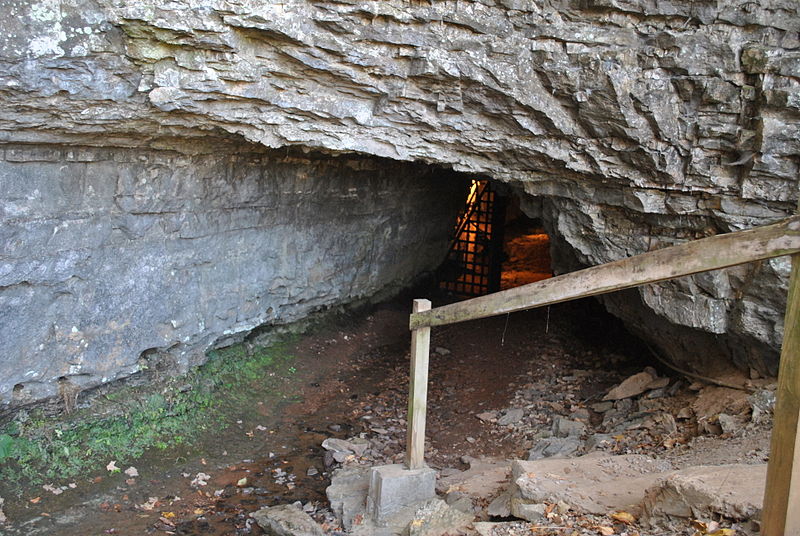
Inside the Bell Witch Cave, 2010, by Www78. Courtesy of Wikipedia.
Adams, Tennessee’s BELL WITCH CAVE (430 Keysburg Road) is probably the most well-known of the two locations. Located on property once owned by the Bell family, the cave is believed to be the current residence of the famous Bell Witch who terrorized the Bell family in the early 19th century. Of the spirits in the American South, this spirits is perhaps the most well-known and certainly one of the most publicized spirits having a number of books written solely on the subject as well as a recent feature film, An American Haunting. Visitors to the cave have had a variety of experiences in and around it. The cave is privately owned and tours are given.
On the western shores of Louisiana’s Lake Pontchartrain, near New Orleans is MANCHAC SWAMP, home to ghosts and the French Creole werewolf, the Loup-Garou. It was here that a number of small towns were wiped off the map in the New Orleans Hurricane of 1915. Tours now travel through this haunted wetland at night by torchlight scaring up alligators and the spirits of the victims of the hurricane.
While I’ve been spending time working on a revision of my entry on Columbus, Mississippi, I decided to take a break and write a little something about another city. The basis of this came from a single 2009 article from The Daily Reveille, the student newspaper of Louisiana State University. Other than that article, and a few scattered references, there’s not much on the ghosts of Baton Rouge.
The name, Baton Rouge, “red stick” in French, refers to a red cypress pole festooned with bloody animals that French explorer Sieur d’Iberville, the founder of the Louisiana colony, encountered in the area. It was placed there to mark the boundary between the hunting grounds of the Houma and the Bayou Goula peoples of the region. Research and archaeological evidence reveal that the area now occupied by Baton Rouge has been inhabited since roughly 8000 BCE. These indigenous peoples have left the area dotted with mounds and other landmarks.
The city was incorporated in 1817 and made state capital in 1849. Architect James Dakin departed from the usual designs for state capitols which paid homage to the U.S. Capitol building in Washington and designed the building in a Neo-Gothic style complete with turrets, towers and crenellations. The site chosen for this grand castle, overlooking the Mississippi River, is believed to be the location of the red stick that Sieur d’Iberville named the city for.
Since its construction, the OLD LOUISIANA STATE CAPITOL BUILDING (100 North Boulevard), has had a busy and somewhat tragic history. During the Union occupation of the city, the building was used as a prison and a garrison for African-American troops. The building caught fire twice and by the end of the war was left a hulking, gutted ruin. The building was restored in 1882 and at this time much of the building’s noted stained glass was added. The legislature used the building until 1932 when a new, modern, art deco styled state capitol was opened. The building underwent full restoration in the 1990s and is now open as a museum of political history.
Old State Capitol, 2009, by Avazina. Courtesy of Wikipedia.
There is one particularly enduring legend about this Gothic edifice involves a late legislator. Pierre Couvillion, a representative of Avoyelles Parish had a heart attack amid a passionate debate. Though he was buried near his home in Marksville, he spirit may still reside within the halls and chambers of the old building. Staff members and visitors have reported odd occurrences. One security guard watched as movement detectors were set off through a series of rooms while nothing was seen on the video.
Two organizations investigated the building in 2009 and uncovered much evidence. Louisiana Spirits Paranormal Investigations picked up a number of interesting EVPs including someone singing the old song, “You Are My Sunshine.” Everyday Paranormal, in their investigation had a few encounters in the basement of the building, the area used as a prison during the Union occupation. It seems that there are many spirits within the crenellated walls of the Old Capitol.
Many spirits, of the ghostly and liquor kind reside in an old bar on the waterfront. The building that now houses THE SPANISH MOON (1109 Highland Road) served as a temporary morgue for victims of the flooding that ravaged the area in the early 20th century. The spirit of a young girl who legend holds was trampled by horses in the building may also reside within the creepy structure.
Another spirit among spirits may be found at WILLIE’S ON THE RIVER (140 Main Street), so named for its resident spirit. Legend holds that Willie was crushed by a falling wall here sometime in the 19th century. Staff members have reported that the spirit is fond of billiards and balls were seen moving by themselves.
Also on the riverfront is the U.S.S. KIDD VETERANS MEMORIAL (305 River Road South), a ship named as a memorial to Rear Admiral Isaac C. Kidd, the highest-ranking officer to die during the Japanese bombing of Pearl Harbor in 1941. This memorial ship now serves as a memorial to Louisiana’s World War II veterans.
U.S.S. Kidd, 2013, by Niagara, courtesy of Wikipedia.
This Fletcher-class destroyer saw a great deal of action in the Pacific during World War II and the Korean War as well as serving admirably during the Cold War. It was during service in the campaign for Okinawa that the ship was struck by a kamikaze resulting in the deaths of 38 and 55 wounded. It is perhaps this single event that has left a spiritual impression on the now museum ship. Visitors have encountered various apparitions onboard including the images of a single arm or leg moving as if still attached to a human being.
Along the famous River Road which stretches from New Orleans to Baton Rouge that is lined with many historical and haunted plantations are the ruins of THE COTTAGE PLANTATION (River Road at Duncan Point) just south of the city. Though now reduced to ruined columns forlornly sitting in a private field by the roadside, these ruins were once part of a grand plantation home until a lightning strike and fire reduced it to rubble in 1960. Legend speaks of a man seen wandering the ruins who is believed to be the specter of Angus Holt who served as a personal secretary to Frederick Conrad. Conrad owned the plantation during the Civil War and died before war’s end. Holt returned to run the plantation until his death in 1880. His spirit still lingers to check on the ruins of the mighty manse.
This handful of spirits is most likely just the beginning of the mélange of spirits still dancing about The Red Stick.
Labor Day Weekend was wild and wooley for New Orleans with Tropical Storm Lee hitting the city at the same time as numerous revelers for Southern Decadence and other events. A friend of mine, Benjamin Lewis, was able to take pics of a handful of haunted sites and I’m most grateful to him for these marvelous images!
Beauregard-Keyes House 1113 Chartres Street
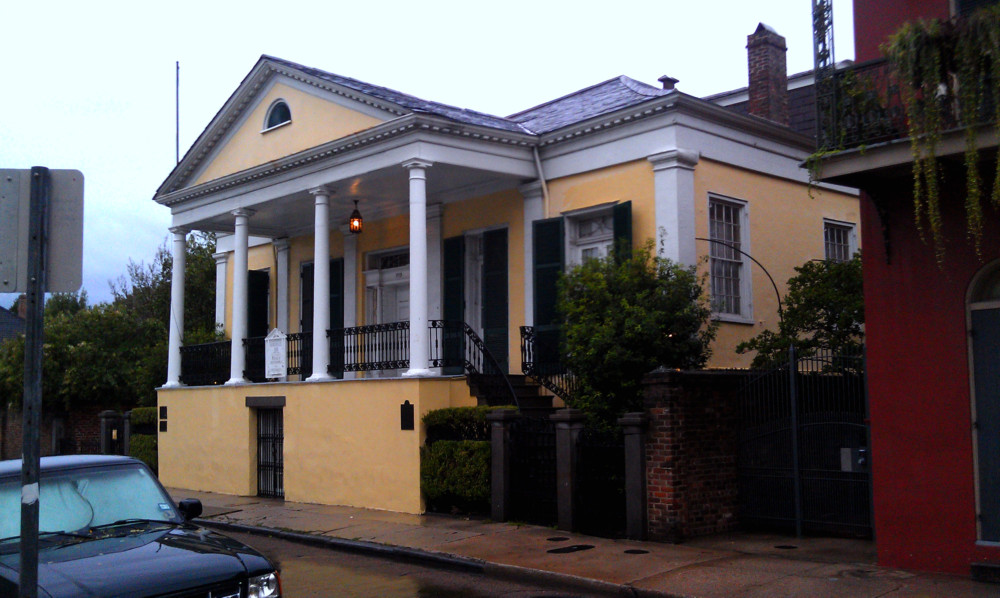
A bright spot of sunshine on a dreary day, the Beauregard-Keyes House, 2011. Photo by Benjamin Lewis, all rights reserved.
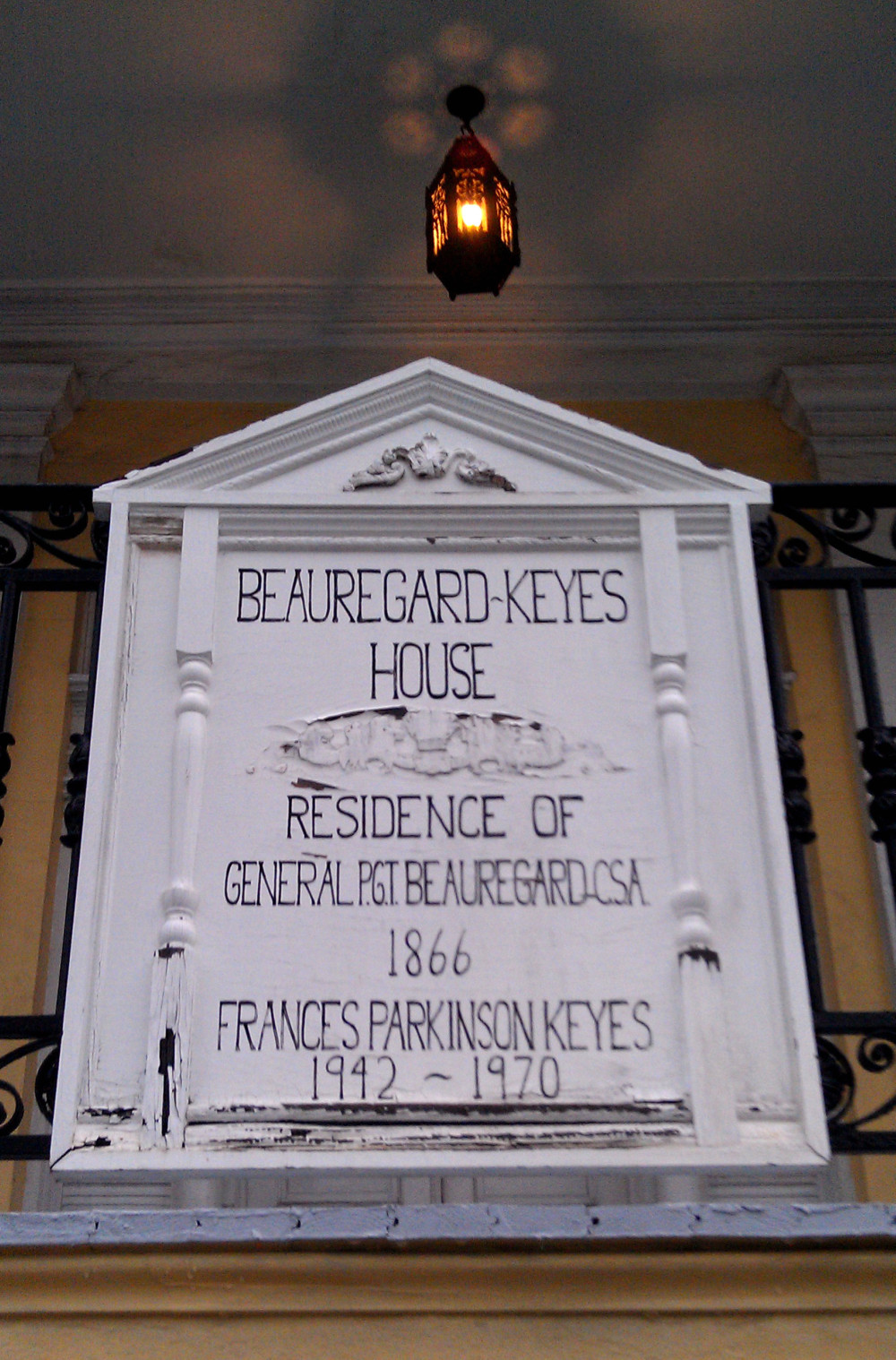
One of the most famous homes in the city, the Beauregard-Keyes House has served as the residence for a number of famous names including Confederate General P. T. G. Beauregard, chess master Paul Morphy and novelist Frances Keyes. Events in this house have ranged from glittering balls to a bloody Sicilian mafia massacre in the early 20th century. Gun shots from the massacre are still heard, a waltzing couple seen inside while some have heard the name of General Beauregard’s Waterloo, Shiloh, being repeated over and over again. One resident even claimed to have encountered the battle of Shiloh being fought in the ballroom. I’ve covered this site in depth here.
Sign at the front of the Beauregard-Keyes House, 2011. Photo by Benjamin Lewis, all rights reserved,
Le Richelieu 1234 Chartres Street
Front entrance to Le Richelieu, 2011. Photo by Benjamin Lewis, all rights reserved.
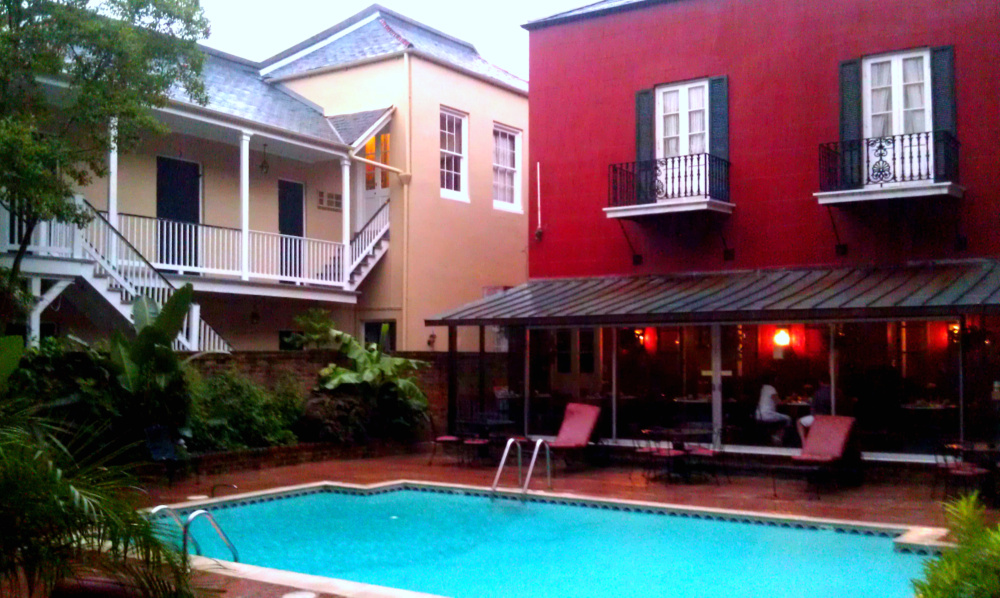
Housed in two buildings, one dating from 1845, the other from 1902, the Le Richelieu Hotel occupies the site where five French patriots were executed in the late 18th century. The spirits of these five men may still reside here.
Housed in two buildings, one dating from 1845, the other from 1902, the Le Richelieu Hotel occupies the site where five French patriots were executed in the late 18th century. The spirits of these five men may still reside here.
The two buildings that comprise Le Richelieu, 2011. Photo by Benjamin Lewis, all rights reserved.A view of Le Richelieu from Barracks Street, 2011. Photo by Benjamin Lewis, all rights reserved.Looking down this hallway at Le Richelieu one can almost imagine the Shining Twins appearing here. Photo by Benjamin Lewis, all rights reserved.Courtyard and pool where a group of Spanish soldiers may have been executed. Do their spirits still wander here? Photo by Benjamin Lewis, all rights reserved.
Old United States Mint 400 Esplanade Avenue
Front entrance to the old US Mint, now the Louisiana State Museum, 2011. Photo by Benjamin Lewis, all rights reserved.
From 1838 to 1909, this building housed the New Orleans Mint, producing currency in all denominations. Since its closure as a mint, the building served a variety of functions until 1981 when it became a part of the State Museum of Louisiana, the capacity in which it functions today. In the second floor gallery a man in blue coveralls has been seen rolling a cigarette. He then places the cigarette into his mouth and walks into a nearby wall.
View down the length of the facade, 2011. Photo by Benjamin Lewis, all rights reserved.The massive old mint, 2011. Photo by Benjamin Lewis, all rights reserved.The rear of the old mint building, 2011. Photo by Benjamin Lewis, all rights reserved.
Old Ursuline Convent 1100 Chartres Street
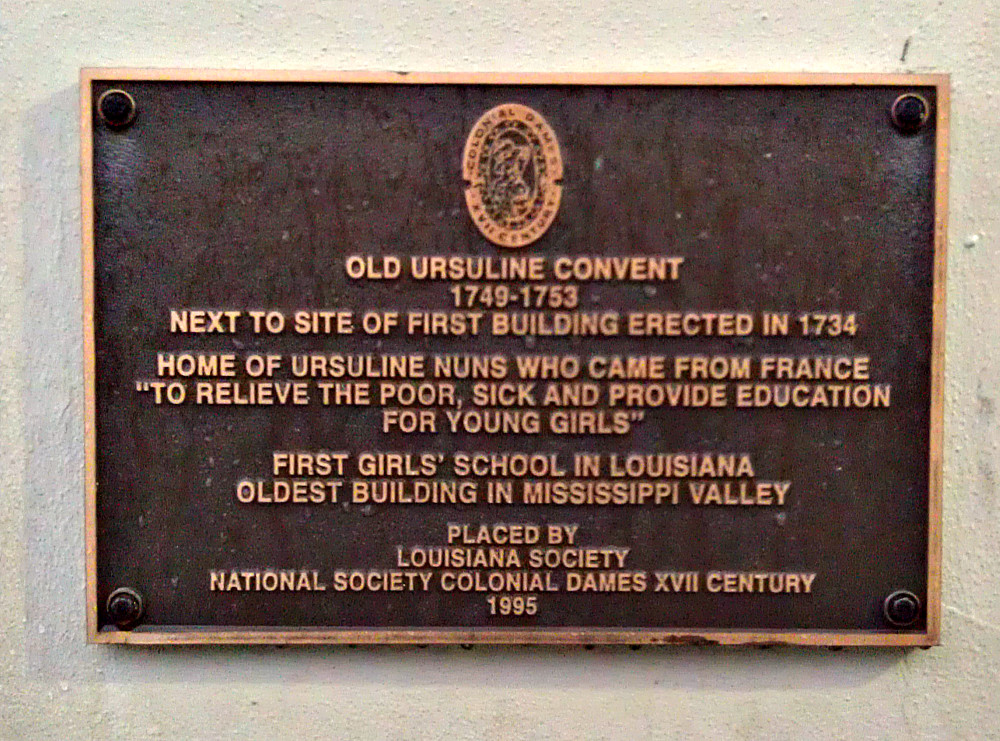
Plaque on the old convent, 2011. Photo by Benjamin Lewis, all rights reserved.
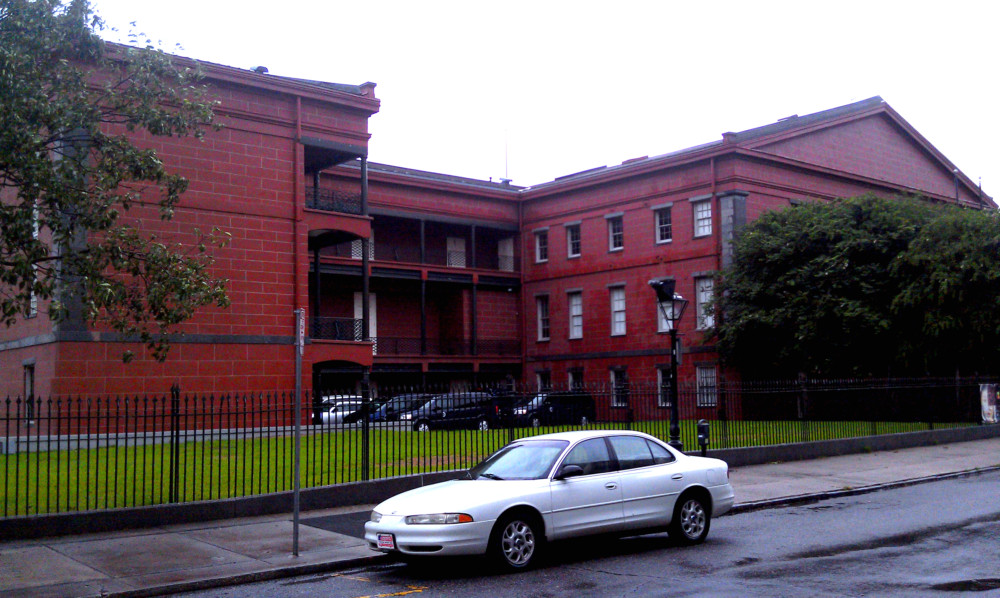
One of the oldest buildings in New Orleans, the Old Ursuline Convent has survived hurricanes, fires and the nuns have lent aid during plagues and epidemics. It’s no surprise that their old convent would house spirits. According to Jeff Dwyer, the spirits of Ursuline sisters have been seen gliding throughout the building while the spirit of a Civil War era soldier has been seen in the garden.
A brooding sky over the Old Ursuline Convent, 2011. Photo by Benjamin Lewis, all rights reserved.
Sources
Dwyer, Jeff. Ghost Hunter’s Guide to New Orleans.Gretna, LA: Pelican Press, 2007.
New Orleans Mint. Wikipedia, the Free Encyclopedia. Accessed 10 September 2011.
Powell, Lewis IV. “Beauregard-Keyes House, Part I.” Southern Spirit Guide.3 December 2010.
Powell, Lewis IV. “Beauregard-Keyes House, Part II.” Southern Spirit Guide.6 December 2010.
Smith, Katherine. Journey Into Darkness…Ghosts and Vampires of New Orleans. New Orleans: De Simonin Publications, 1998.
We fired our guns and the British kept a’comin.
There wasn’t nigh as many as there was a while ago.
We fired once more and they began to runnin’ on
Down the Mississippi to the Gulf of Mexico. — from “The Battle of New Orleans” by Jimmie Driftwood, recorded by Johnny Horton in 1959.
Jean Lafitte National Historic Park and Preserve 8606 West St. Bernard Highway Chalmette, Louisiana
A Haunted Southern Book of Days–8 January
This article is a part of an occasional blog series highlighting Southern hauntings or high strangeness associated with specific days. For a complete listing, see “A Haunted Southern Book of Days.”
The Battle of New Orleans by American painter, Thomas Moran, 1910.
Situated a few miles southeast of the city of New Orleans, the Chalmette Battlefield is the site of America’s greatest victory in the War of 1812. The British first threatened the city with the arrival of a flotilla just off of Lake Pontchartrain. The Americans attempted to block the British from landing but were defeated in the brief Battle of Lake Borgne on December 18, 1814. An attack by the Americans on the British position, once they landed on the 23rd, was successful only in keeping the British on their toes, though their maintained their position. General Andrew Jackson’s American troops dug in and created earthworks on Chalmette Plantation right along the Rodriguez Canal and bounded on both sides by cypress swamps and the Mississippi River that became known as “Line Jackson.”
Undated map of the battle line and line of attack. Courtesy of Wikipedia.
At the Ursuline Convent in New Orleans (see my entry on the convent here), prayers were raised by the sisters to the Virgin Mary to ensure an American victory and protect the city. The sisters had prayed a few years earlier in 1812 when fire ravaged the city. Miraculously, the flames were swept away from the convent by a sudden change in direction. The sisters’ prayers were answered on the morning of January 8th when the British launched their main attack in darkness and heavy fog. Perhaps as an answer to the sisters’ prayers, the fog lifted to reveal the troops marching towards the American’s fortifications. Exposed to brutal artillery fire, the British lost many of their senior officers quite early on leaving the soldiers in the field without direction. Despite being outmanned by British forces, the Americans held their ground and incurred few losses. The British, on the other hand, lost 291 soldiers including two generals with over 1,200 wounded and nearly 500 captured or missing.
This decisive American victory served as the final engagement of the War of 1812, despite its occurrence after the end of the war. The war officially ended in Belgium with the signing of the Treaty of Ghent on Christmas Eve, 1814, some two weeks previous to the battle. Following the tumult of battle, the site returned to its agrarian origins and the Beauregard House was built on part of the battlefield around 1830. The entrenchments, especially those in the area around the National Cemetery, were reused by Confederate and later, Union, forces during the Civil War. Towards the end of the war, a national cemetery was established for the burial of Union troops who had died in the area. The cemetery has seen over 15,000 burials and is now closed. Attempts to memorialize the site date to 1855 when construction began on a marble tower on the battlefield which was completed in 1908.
Modern photo of the battlefield with the remains of the “Line Jackson” earthworks, battle monument and the Beauregard House. From the National Park Service.
The Battlefield and National Cemetery now comprise a unit of the Jean Lafitte National Historic Park and Preserve, which preserves a series of cultural and natural resources that represent the rich history and ecology of the region. The park is named for the nineteenth century pirate, Jean Lafitte, who worked in some of the areas preserved in the park and who also came to the aid of the American’s before and during the battle. The spirit of Lafitte is one of the spirits that is said to haunt Destrehan Plantation which I wrote about in the entry on the River Road plantations of Louisiana.
Battlefields appear frequently in paranormal literature. Seemingly, the more important the battle, the more haunted the battlefield and the Chalmette Battlefield is no exception. Though finding good information on the haunting of this battlefield is not as easy. There are two primary sources for information on the ghosts of the battlefield: Jeff Dwyer’s excellent Ghost Hunter’s Guide to New Orleans and a blog from the Southern Area Paranormal Society. Outside of these sources, there is information on the haunted, but its validity is questionable.
Jeff Dwyer’s book provides good information on the battle, but he doesn’t say too much about what supernatural elements have been experienced there. He states that cold spots have been felt and that sensitive people have felt a “pulling sensation as if gravity has increased many times.” My skeptical side is apt to not usually believe “feelings” that people may get in a location, especially if that’s the only indication of paranormal activity.
The other main source for what is taking place in the battlefield involves a good deal more information. The Southern Area Paranormal Society discusses the battlefield and two nearby forts in their blog. Activity they mention on the battlefield include apparitions and voices. They also mention that activity has been reported in the Beauregard House including the sound of footsteps and possible shadow people.