Vinoy, Women and Song—Vinoy Renaissance Hotel

Vinoy Renaissance Hotel
501 Fifth Avenue Northeast
St. Petersburg, Florida

Big news! Tween idols Justin Bieber and Selena Gomez actually stayed in a hotel somewhere!

Even bigger news! The hotel was the haunted Vinoy Renaissance Hotel in St. Petersburg, Florida!

Evidently, this is what passes for news on celebrity gossip sites. But it’s enough for me to write a Haunt Brief on it.

Lately, my concentration has been drawn to Florida and I’ve noticed that much of Florida’s haunted history lies in its hotels. From wooden edifices in small towns like Apalachicola’s Gibson Inn to St. Augustine’s monstrous monuments to the Gilded Age in the forms of the Hotel Ponce de Leon, Hotel Alcazar and Hotel Cordova; all the way to the towering grandeur of the grand hotels of the 1920s such as the Biltmore in Coral Gables and the Vinoy, all of these are haunted by a myriad of spirits.

The Vinoy Renaissance, 2008, by Ebyabe. Courtesy of Wikipedia.

Of the grand resort hotels from the 1920s, many have very similar histories. These hotels were built to take advantage of Florida’s burgeoning reputation as a vacation spot, a trend started by Henry Flagler in the latter days of the nineteenth century. These resorts attracted many of the great names of the period ranging from silent film stars to politicians to sports heroes. Many hotels experienced issues during the Great Depression and some were purchased by the military for use as hospitals during World War II. Some, like the Biltmore, lingered as hospitals for a while after the war. Those that reopened as hotels after the war had difficulty competing with the motels springing up to take advantage of auto traffic and the state’s new draw, Walt Disney World. Most hotels spent some time abandoned and during that stage paranormal activity was noticed in the empty structures. Recently, most of the grand palaces have been restored and returned to service as first-class luxury hotels.

Bieber and Gomez are just the most recent in a long and varied list of celebrities that have stayed in the Vinoy’s storied halls, a list that includes Calvin Coolidge, Herbert Hoover, Jimmy Stewart and Babe Ruth. In fact, this hotel figures into baseball history as hosting the St. Louis Browns in the 1920s when they trained in nearby Tarpon Springs. Nowadays, the hotel hosts Major League Baseball teams in the area to play the Tampa Bay Rays. Among some of these players, there are stories of the hotel’s darker reputation.

Just last year when the Florida Marlins were in town to play the Rays, relief pitcher Steve Cishek reported on his Twitter feed, “Currently crapping my pants…can’t sleep…my room is def haunted.” He later said he heard a thump in the bathroom that sounded like a bar of soap falling, though nothing was out place when he checked.

One of the first and most widely reported stories dates to 2003 when relief pitcher Scott Williamson, who was playing for the Cincinnati Reds at the time, claimed to have had a bizarre experience in his room. He awoke to see an odd light coming from the pool outside. He then experienced an odd tingling sensation. Rolling onto his stomach he said he felt that someone sat on his back, making it hard for him to breathe. He rolled back onto his back and saw a man in period clothing standing near the window. “he was just looking right at me. It was almost like he was trying to get a point across to me or something. I jumped up and turned on the lights but he was gone.”

The Pittsburgh Pirates were the next team in town to stay at the hotel. It was strength coach Frank Velasquez’s turn to experience a figure in his room. He heard and sound and looked up to see a man standing near the window of his room “just staring” at him. The coach turned his head and closed his eyes, but the figure was still standing there when he looked again. On that same trip, two other Pirates coaches had odd experiences: the hitting coach awoke to find that the door to his room was standing wide open after he had closed and locked it while the bullpen coach reported an old dime falling out of the ceiling while he showered.

In 2008, the TAPS team from TV’s Ghost Hunters investigated. Staying mostly on the fifth floor where the activity seems to be concentrated, they uncovered some haunting evidence. One of the most interesting pieces of evidence came from a room where one of the investigators slept overnight. Just after setting up cameras throughout the hotel including one in that particular room, the closet door opened by itself. The investigators made a priority of investigating this phenomena and discovered that the closet door did not open with ease, so there was no obvious explanation to the event. Even more haunting was what happened after the investigator, Jason Hawes, went to bed for the night. He was later awakened by a loud male voice demanding that he “just get out.” Hawes awoke after the voice called out which was all caught on tape. About 20 seconds later the voice again demanded that he get out.

These events are only a small part of the record of activity within the hotel. In fact, one article on the hotel mentioned that the activity was minor but quite frequent.

There are some legends that have surfaced to explain the activity. A female spirit in the hotel has been identified as the spirit of the wife of the hotel’s founder. One male spirit is said to be that of a businessman who killed himself in the wake of the 1929 stock market crash. Needless to say, there are spirits in this celebrity hideaway.

Big news! Justin Bieber and Selena Gomez may not have had any experiences within this hotel!

Oh well…

Sources

  • Baxter, Kevin. “Dodgers Report: Hotel isn’t one of their favorite haunts.” Los Angeles Times. 25 June 2007.
  • Ekberg, Aida. “Justin Bieber and Selena Gomez’s Florida Hotel is Haunted?” com. 11 March 2012.
  • Jenkins, Greg. Florida’s Ghostly Legends and Haunted History, Volume 3: The Gulf Coast and Pensacola. Sarasota, FL: Pineapple Press, 2007.
  • Klinkenburg, Jeff. “Renaissance Vinoy Resort marks 85 years of history.” Petersburg Times. 17 December 2010.
  • Kruse, Michael. “St. Petersburg’s Vinoy hotel haunted, major-league baseball players say.” Tampa Bay Times. 29 February 2012.
  • Rebman, Kimberly P. Haunted Florida: A Guide to the Departed Soul. Bloomington, IN: Authorhouse, 2008.
  • Strikler, Lon. “A History of Hauntings at St. Petersburg’s Renaissance Vinoy.” Phantoms and Monsters Blog. 20 June 2011.
A Historic Playhouse–Photos from Fort Clinch

Fort Clinch State Park
2601 Atlantic Avenue
Fernandina Beach, Florida

N.B. This article was edited 26 June 2019.

I’ve finally made it to North Florida and seen Fort Clinch! I’d known about the fort for some years before I wrote my article in November of 2010. That article, “Spectral humor–Fort Clinch,” has since been edited and re-posted.

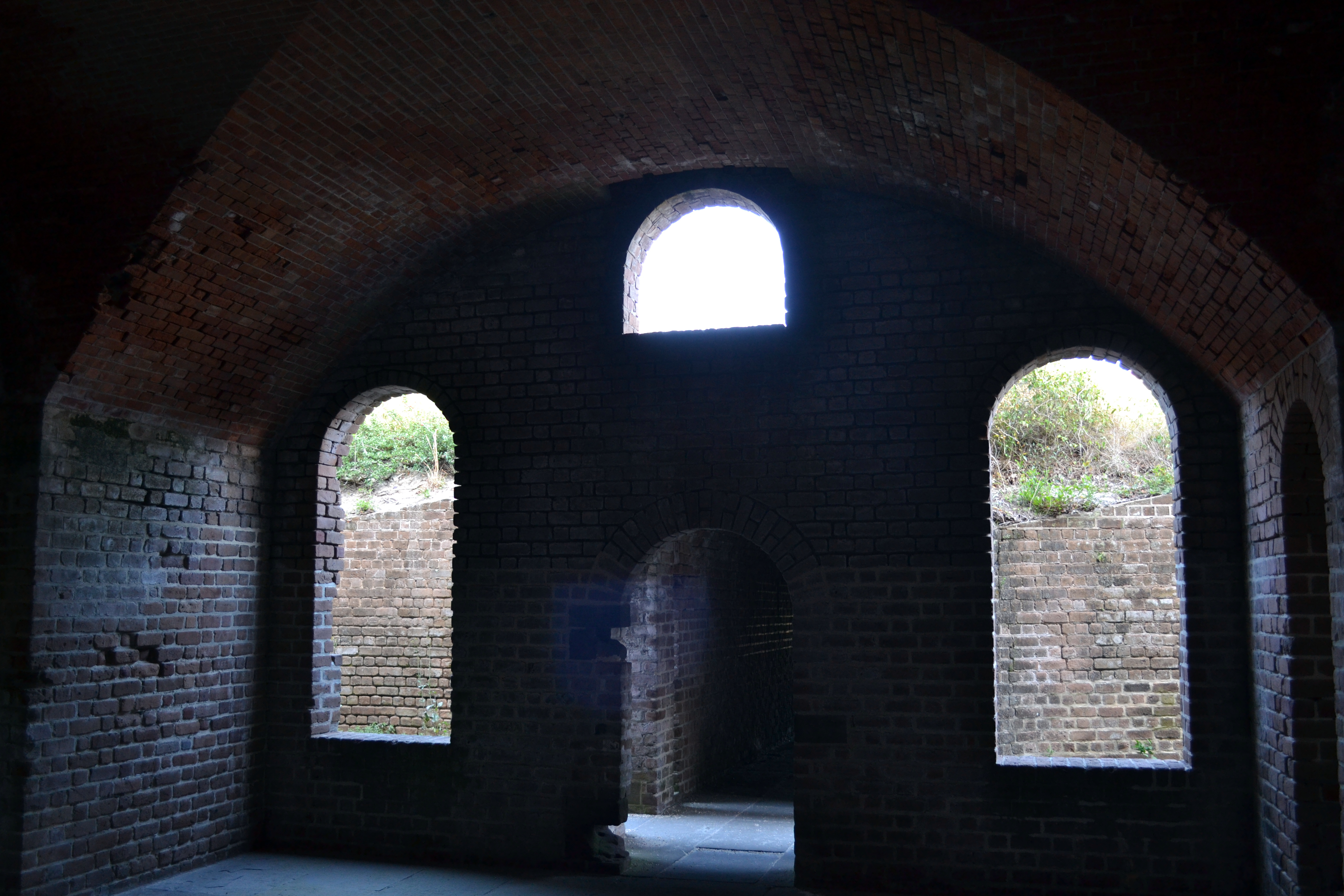
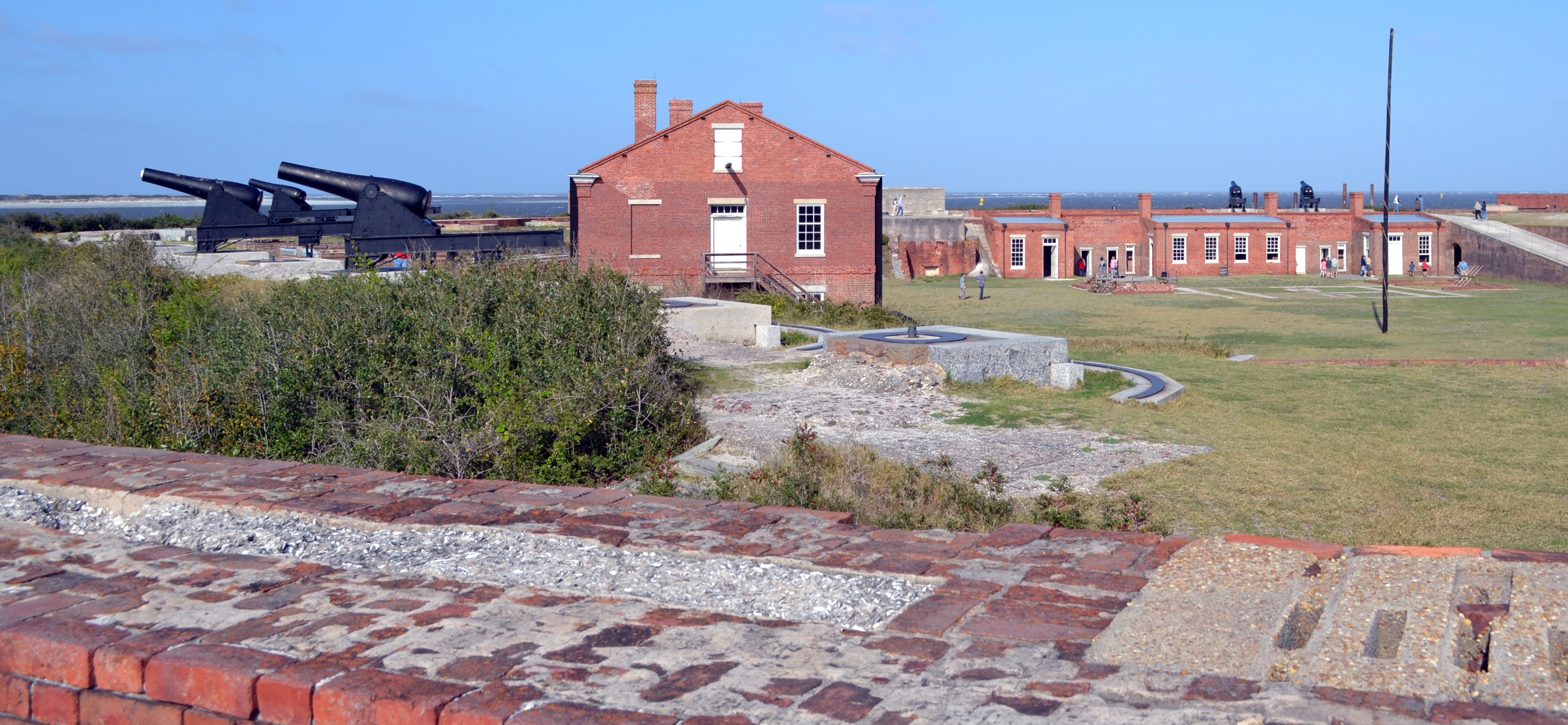
Exploring the fort is an utterly delightful experience. It’s like a huge playhouse with tunnels, towers, turrets, corridors, odd little rooms, and staircases to explore. Unlike so many historic sites now, the fort is not littered with interpretive signs that you feel guilty for not reading, it’s just open for exploration. Rooms within the interior buildings have been furnished and recreated as they would have appeared during the Civil War, otherwise, the fort is a huge, empty edifice. I was there last Saturday when there was a wind advisory. The wind blowing through and around the structure created a haunting, mournful tone. Other than that, I didn’t see or feel any spirits. Though, I can imagine the place grows creepier after dark.

The fort does appear to need work. Even with massive cuts to the state budget, I hope that those in charge are seeing to the needs of this marvelous place. Certainly with visitors comes some income and I would encourage all my readers to check out this marvelous piece of our past.

sally port Fort Clinch Fernandina Beach Florida ghosts haunted
The sally port. Photo 2012, by Lewis Powell IV, all rights reserved.
ramparts Fort Clinch Fernandina Beach Florida ghosts haunted
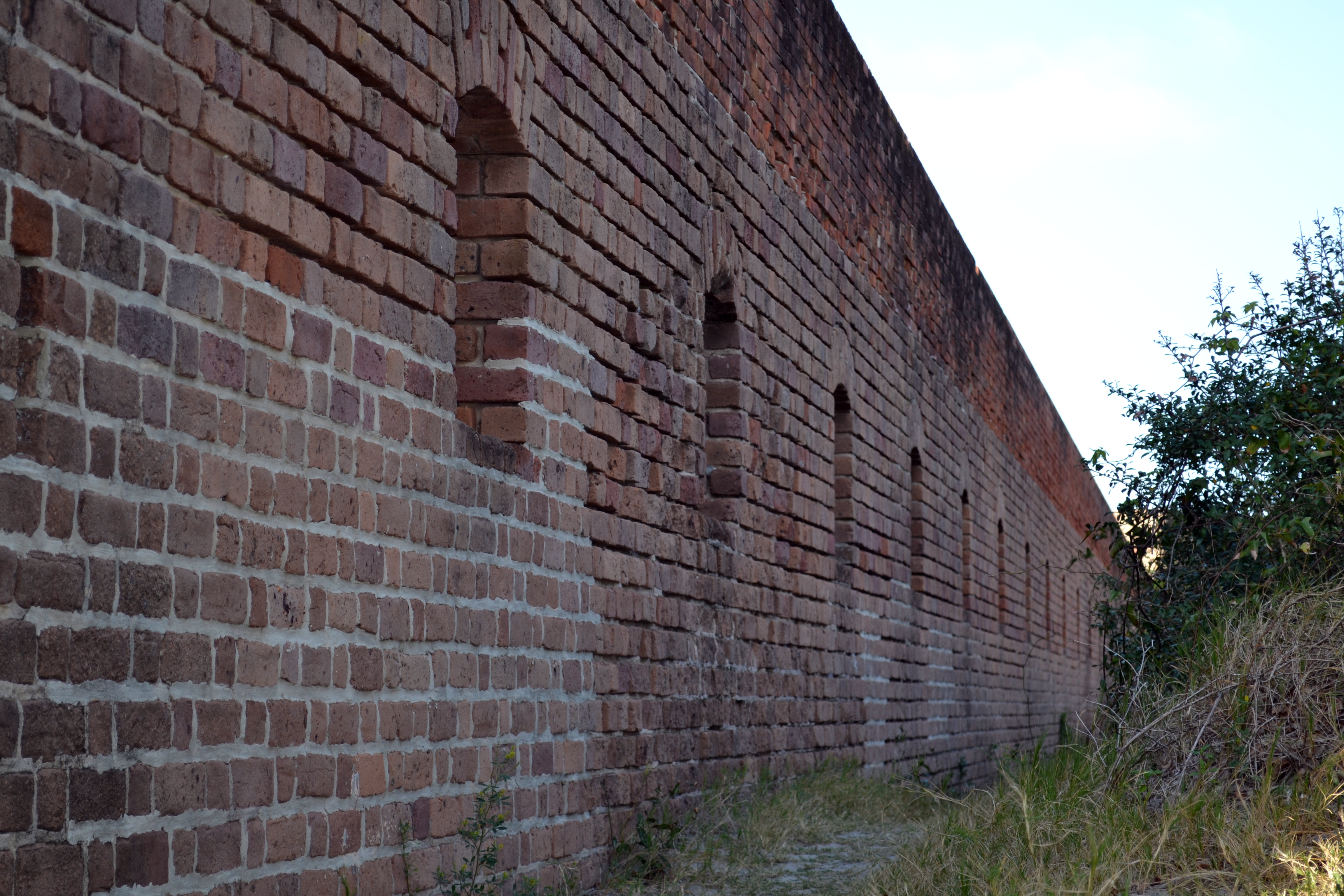
The ramparts from the outside. Photo 2012, by Lewis Powell IV, all rights reserved.
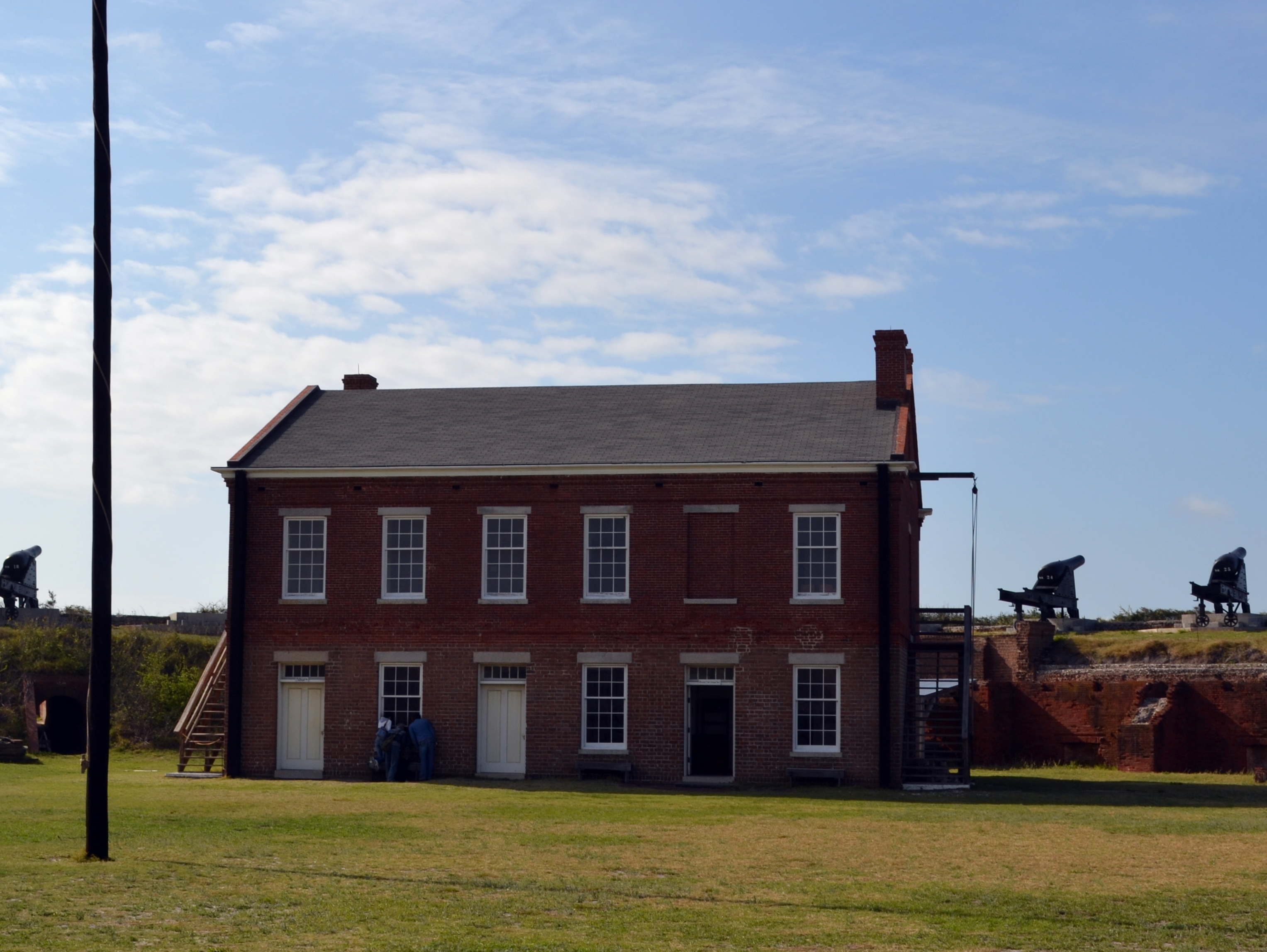
barracks building Fort Clinch Fernandina Beach Florida ghosts haunted
One of the remaining barracks buildings. Photo 2012, by Lewis Powell IV, all rights reserved.
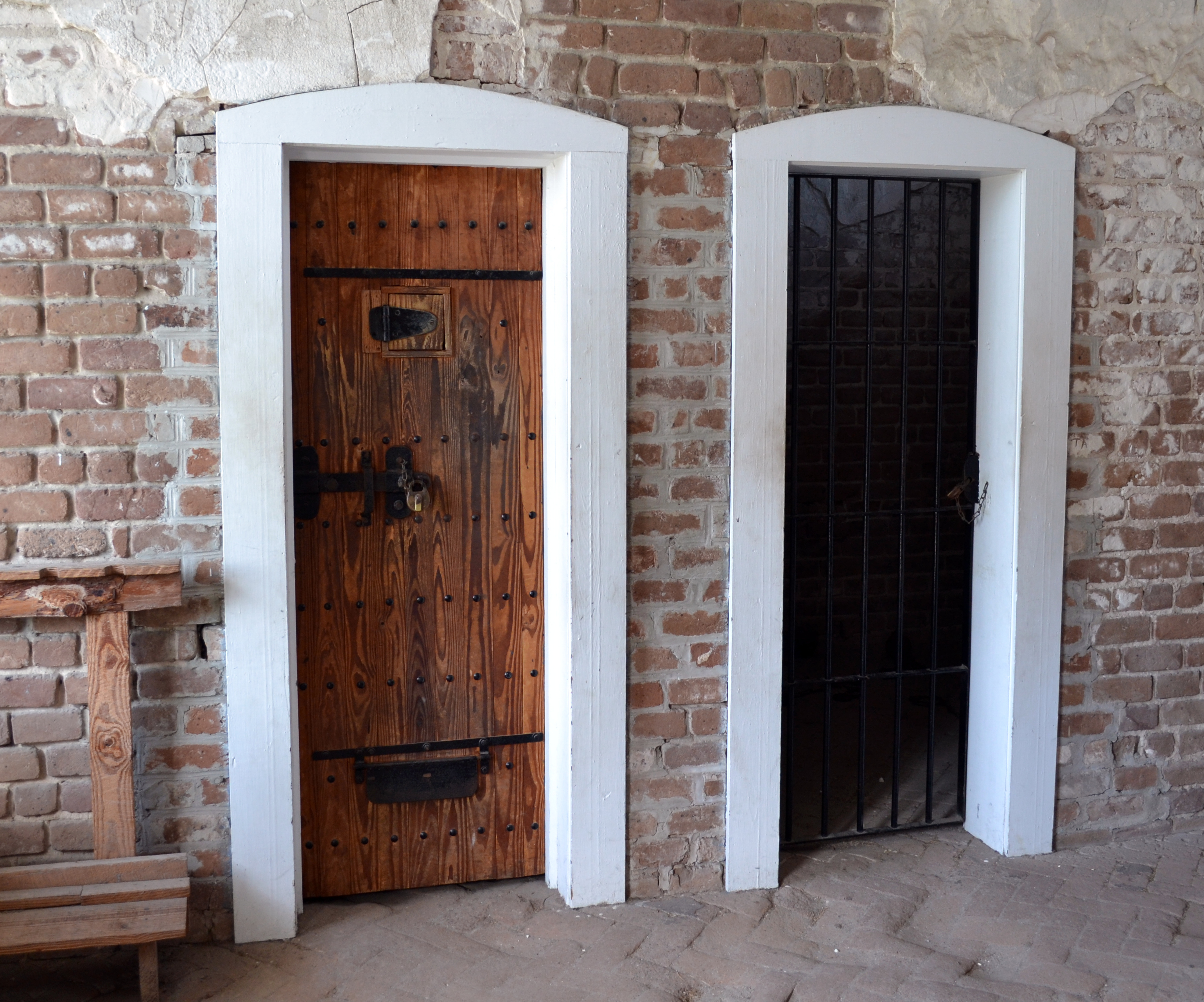
brig Fort Clinch Fernandina Beach Florida ghosts haunted
Doors to the jail cells in the fort’s brig. Photo 2012, by Lewis Powell IV, all rights reserved.
barracks Fort Clinch Fernandina Beach Florida ghosts haunted
The back of one of the barracks buildings. Photo 2012, by Lewis Powell IV all rights reserved.
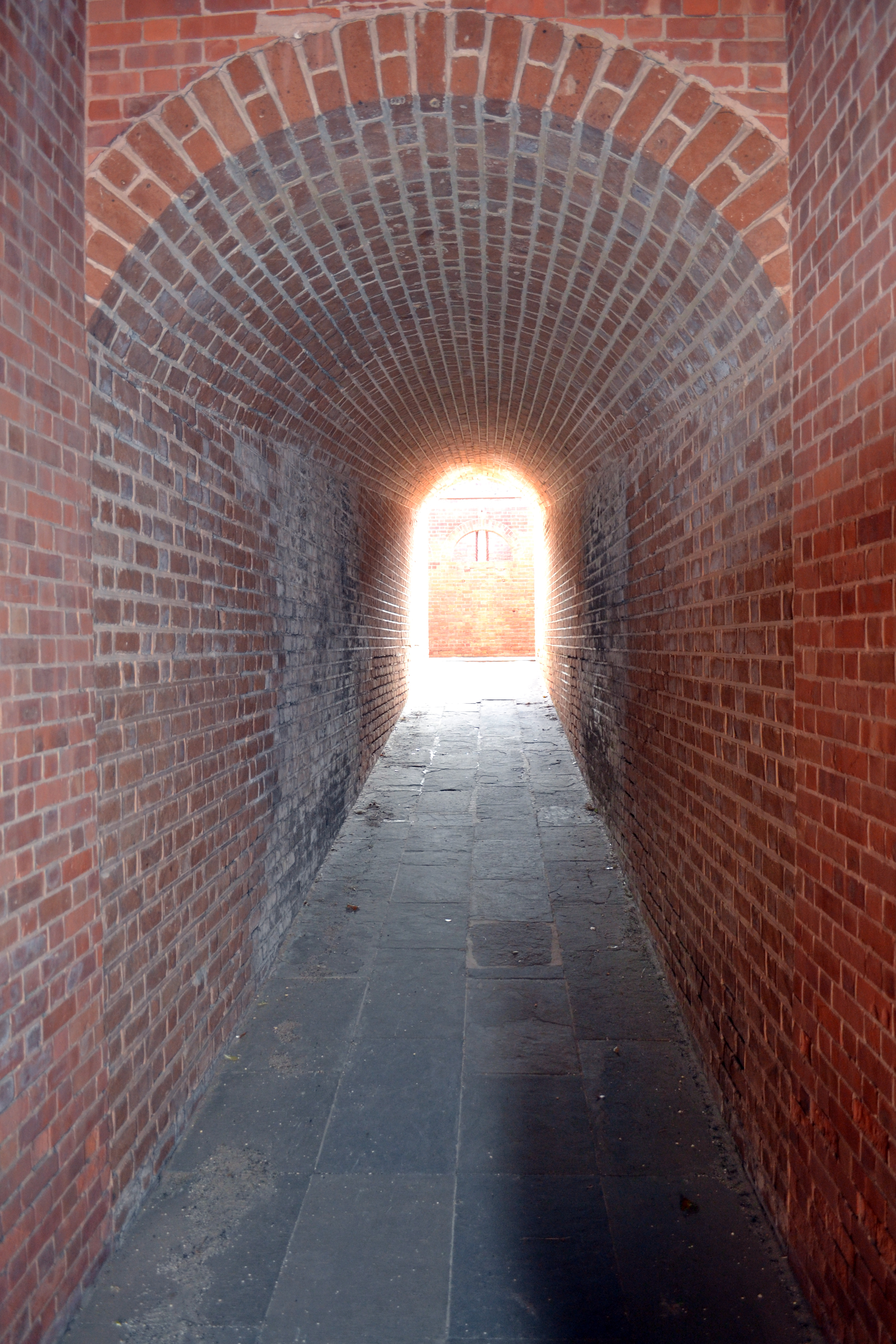
tunnel Fort Clinch Fernandina Beach Florida ghosts haunted
Looking down one of the tunnels leading towards the parade ground. Photo 2012, by Lewis Powell IV, all rights reserved.
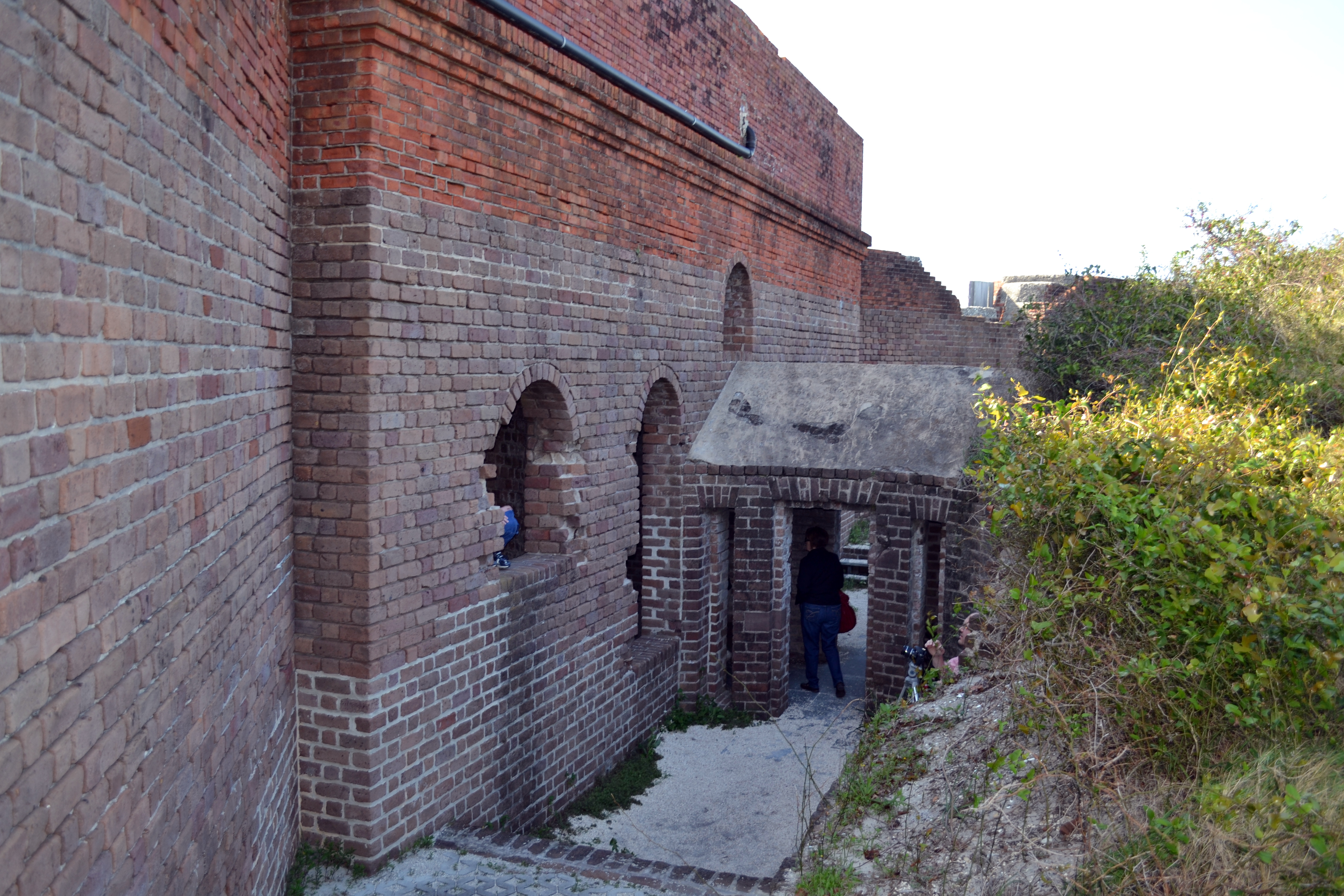
bastion Fort Clinch Fernandina Beach Florida ghosts haunted
My mother enters one of the fort’s bastions. Photo 2012, by Lewis Powell IV, all rights reserved.
bastion windows Fort Clinch Fernandina Beach Florida ghosts haunted
Looking out of one of the bastions. Photo 2012, by Lewis Powell IV, all rights reserved.
parade grounds Fort Clinch Fernandina Beach Florida ghosts haunted
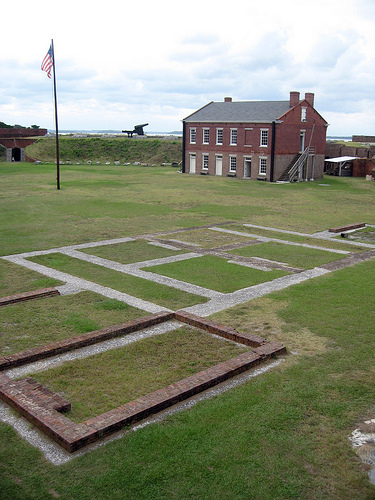
View of the parade ground from the ramparts. Photo 2012, by Lewis Powell IV, all rights reserved.
ramparts Fort Clinch Fernandina Beach Florida ghosts haunted
One of the rampart walls from the inside. Photo 2012, by Lewis
Powell IV, all rights reserved.
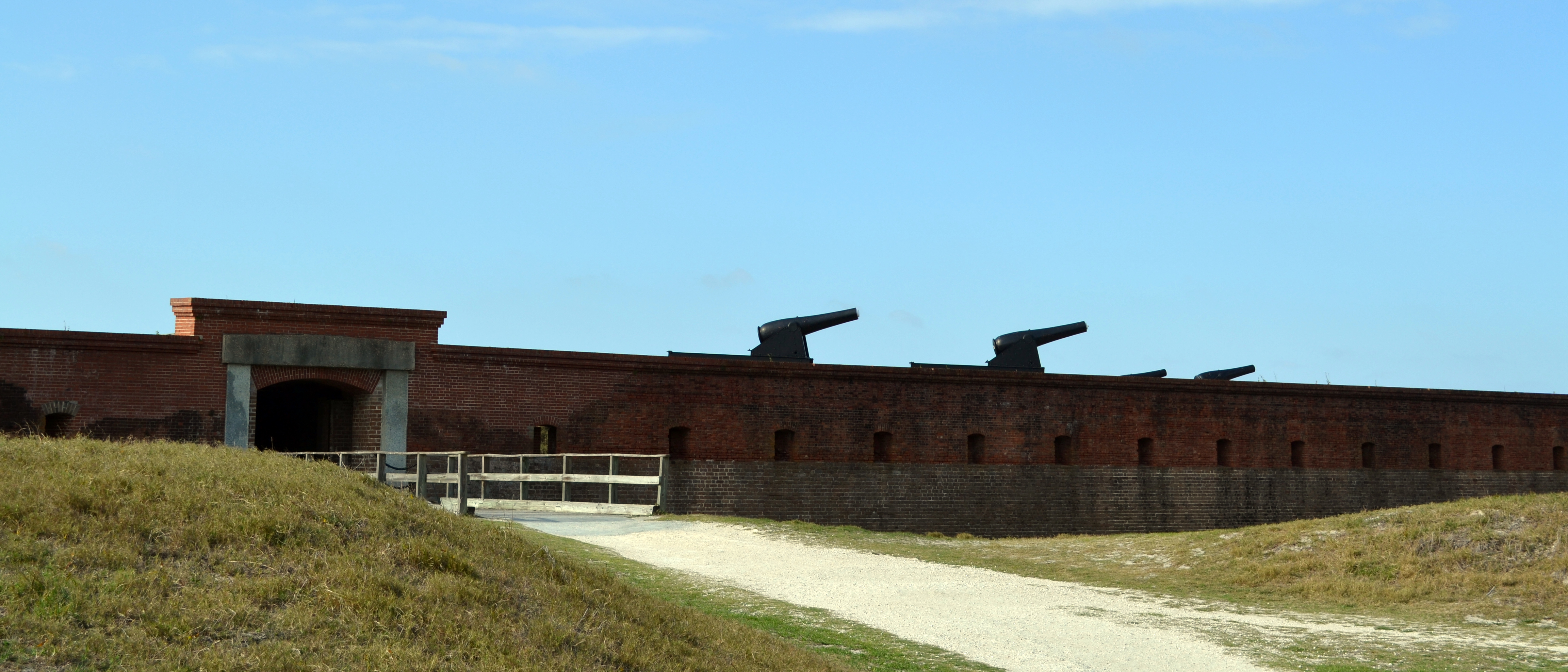
guns Fort Clinch Fernandina Beach Florida ghosts haunted
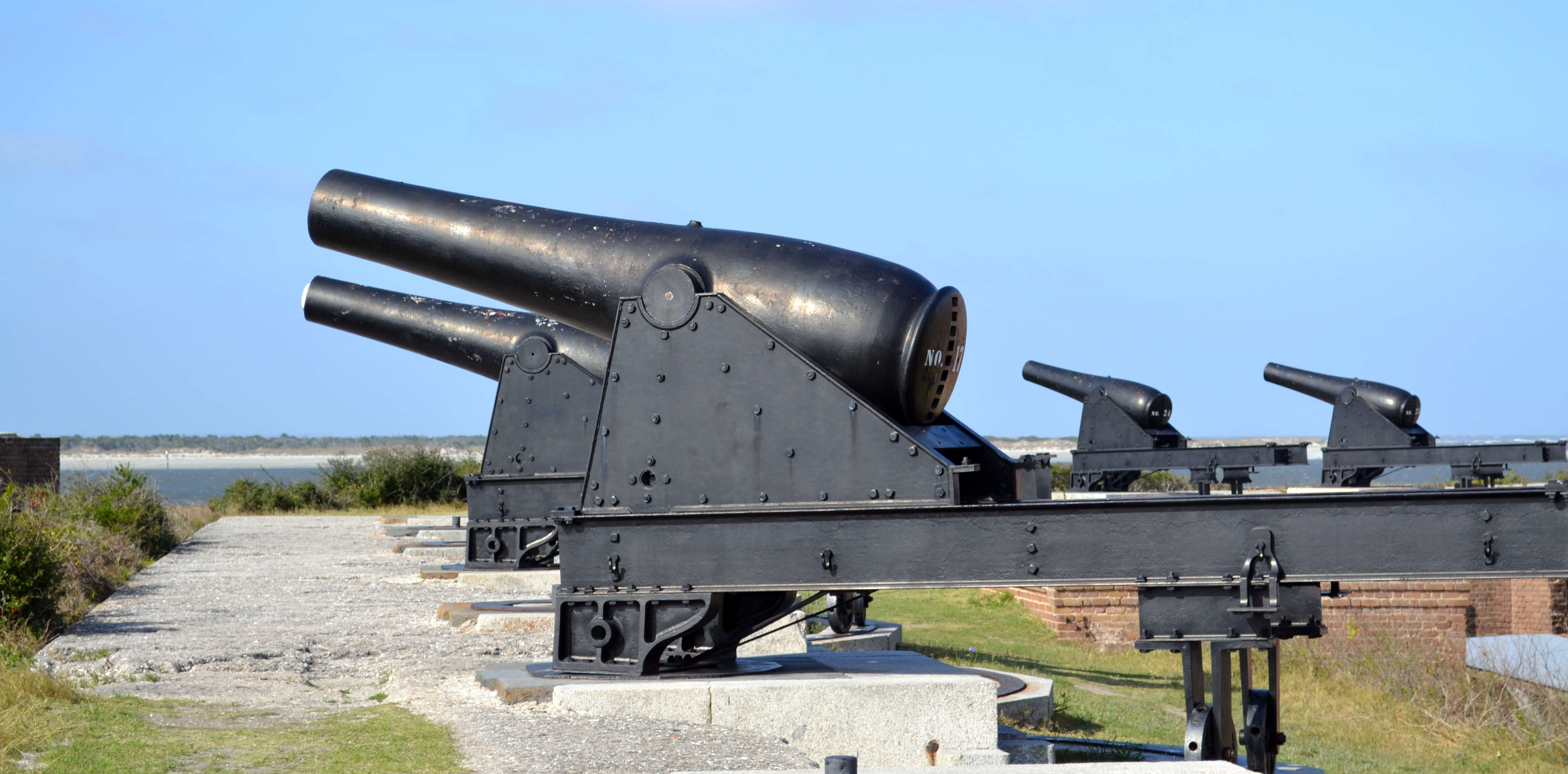
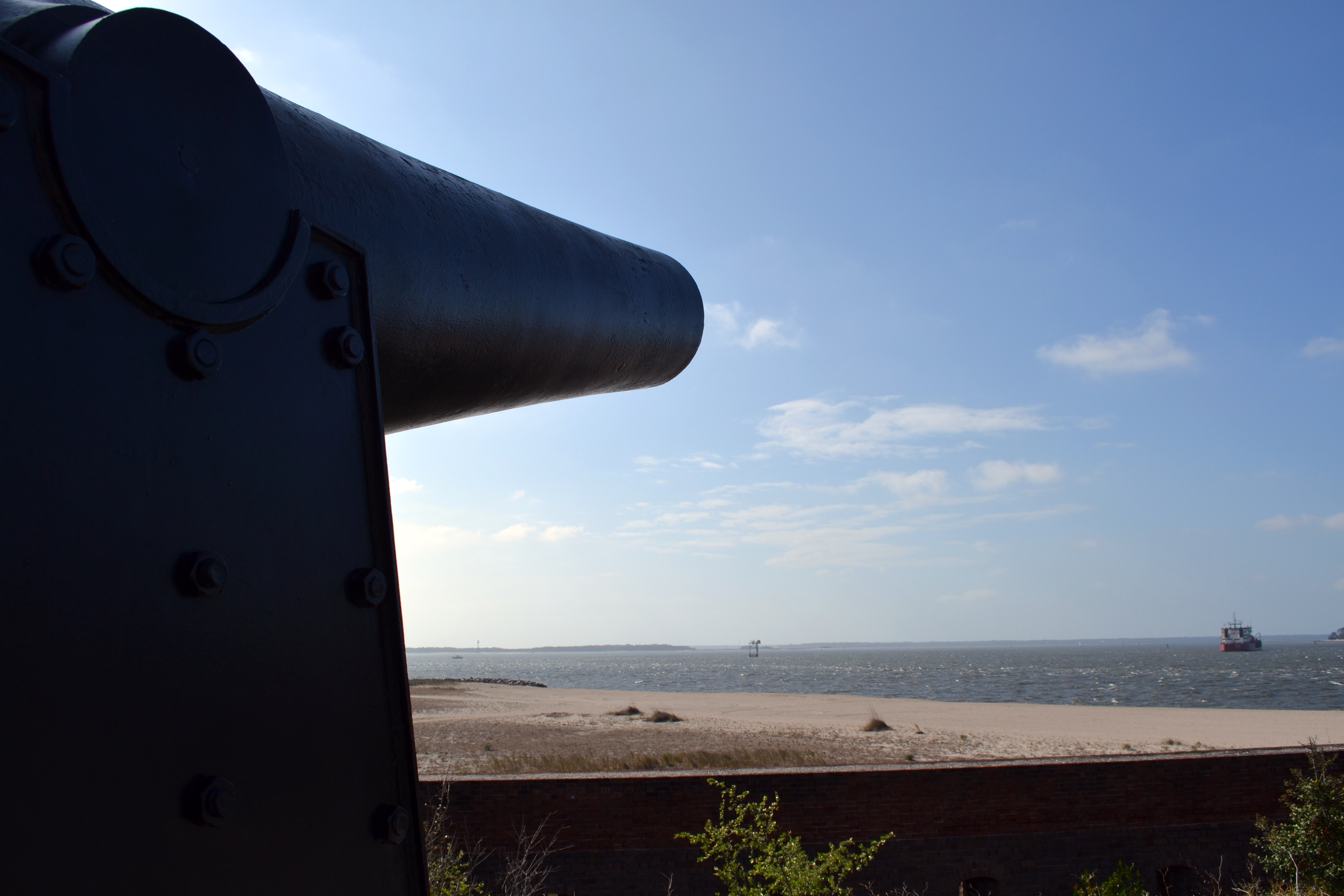
A number of guns still guard the fort. Photo 2012, by Lewis Powell IV all rights reserved.
St. Marys River Fort Clinch Fernandina Beach Florida ghosts haunted
Looking out towards the St. Marys River from the gun emplacements. Photo 2012, by Lewis Powell IV, all rights reserved.
gun port Fort Clinch Fernandina Beach Florida ghosts haunted
Photo 2012, by Lewis Powell IV, all rights reserved.

A Mansion in Marianna, Florida

Joseph Russ Jr. House
310 West Lafayette Street
Marianna, Florida

One of the issues I consistently encounter in researching the South is the lack of resources on hauntings in the rural South. Many major Southern cities have at least some resource on their ghosts, but beyond those city limits, the resources become fewer. Florida is fairly well covered in its well populated areas, particularly Southern Florida, but its northern section is not so well covered. The Panhandle is very sparsely covered and in my list of hauntings, I have no locations listed in Jackson County…until now.

Sitting just below the line separating Alabama and Georgia, Jackson County, Florida is a reminder of Florida before the building booms of the 20th century. The county seat, Marianna, “The City of Southern Charm,” was founded in 1828 and is currently home to around 6200 people. I’ve just realized that I passed through Marianna on the way to nearby Florida Caverns a few years ago. I remember the town being a very pleasant and typical small southern town, but I certainly would have paid more attention had I known of the ghosts.

The home to Marianna’s Chamber of Commerce, the magnificent Joseph W. Russ Jr. House, is apparently haunted. Appearing today in the Jackson County Floridian is a nice article recounting an investigation of the Russ House. As is typical in these types of stories, a reporter tagged along while a group of paranormal investigators, Emerald Coast Paranormal Concepts from Panama City in this case, investigate a local landmark. The reporter describes how the ghost hunters investigate, their beliefs about ghosts and may briefly describe the investigation itself. This article, however, spends a bit more time discussing the investigation and some of the activity the group encountered.

The Russ House’s unusual porch is the first thing that draws visitors. Fanning out from the main house, the porch is supported by Corinthian columns and topped with a cupola. This porch is part of an extensive remodel of the house that took place in 1910. The home was originally built in the Queen Anne style between 1892 and 1895. The property on which the house was built had been owned by the Russ family since they first settled in Marianna and family constructed homes around this house. The home remained in the family for many years. Parts of the property were sold off when the family’s fortunes soured after the Crash of 1929 including part of the front yard which served as a gas station and a series of businesses.

The Russ House, 2007, by Ebyabe. Courtesy of Wikipedia.

Still, the house attracted visitors. Merritt Dekle, a descendant of Joseph Russ, writes of his grandmother dealing with visitors who would pull over and knock on the door of the intriguing house. Sometimes they would just ask of its history, but other times they would beg for a tour, to which she would decline politely with “I’m sorry, there’s sickness in the family.” By the time the house passed out of the family, much of it had been neglected. The house was deeded to the Marianna Chamber of Commerce in 1996 and has since been renovated for that purpose.

Employees and visitors to the house have reported a variety of odd phenomena. Footsteps, objects apparently moving on their own accord and the voices of children have been heard. According to the article, the house has been investigated by three other groups, though “minimal spirit activity” was reported. In his history of the house, Merritt Dekle mentions that the house has been considered haunted by locals for many years. He recalls staying in the house as a child and later as an adult and while the house was creepy, he didn’t have any unusual experiences.

During the investigation last Saturday, the group had a few odd experiences. Among the more unusual occurrences were a scraping sound and the word “help” being uttered both heard by the reporter and an investigator. A few other odd incidents were reported and the investigators will review the evidence captured during the evening.

Stay tuned for the results!

Sources

Spectral Humor–Fort Clinch, Fernandina Beach, Florida

Fort Clinch State Park
2601 Atlantic Avenue
Fernandina Beach, Florida

N.B. This article was edited 26 June 2019.

For my own photos from Fort Clinch, please see my article, “A historic playhouse–Photos from Fort Clinch.”

Fort Clinch is a popular place. This state park offers camping, wildlife, fishing and swimming as well as what the park website describes as “one of the most well-preserved 19th century forts in the country.” The fort is also popular with historic re-enactors, those people who enjoy spending time living in a different era.

During a historic encampment one July weekend, two re-enactors sitting on the porch of one of the barracks witnessed four spectral soldiers. The soldiers emerged from one of the bastion tunnels wearing Civil War era uniforms, crossed the parade ground, marched up the ramp, and disappeared. The following year during the same encampment, the re-enactors took their seats again on the barracks porch to see if the specters returned. Sure enough, three uniformed ghosts emerged from the tunnel and began making their way across the parade ground. One of the witnesses called out, “There were four of you last year, where’s the fourth man?” One of the ghosts responded, “He’s sick tonight, couldn’t come.” The spectral trio continued up the ramp and disappeared.

This story amuses me greatly. So often in dealing with ghost stories, we are dealing with sometimes horrible deaths involving war, murder, or pestilence, that we forget that these spirits have a sense of humor. I recall an episode of Ghost Hunters where the TAPS team was investigating the well house of a farm that was known to have a prankster ghost. The ghost turned on the investigator’s flashlight upon request and later analysis revealed an EVP of a man laughing at the time. Ghosts DO have a sense of humor!

This story, however, has become one of the most enduring legends surrounding the fort. I’ve seen this story retold in a few different sources and each includes different details. Maggie Carter-de Vries, a local author, includes the story in her 2008 book, Ghosts of Amelia and Other Tales. She does provide a date for this story, 1952, and includes that the witness was a park ranger.

Aerial view of Fort Clinch Fernandina Beach Florida ghosts haunted
Aerial view of Fort Clinch, 2003, by Fl295. Courtesy of Wikipedia.

Of course, Fort Clinch is hardly a place for much sadness. The fort has never seen military action; only the ennui that accompanies waiting for such action to occur. The site of the fort, at the northern end of Amelia Island on the northern Atlantic coast of Florida, has been occupied by various military installations since 1736, all guarding the St. Marys River from attack.

Construction on the fort commenced in 1847 as part of the federal government’s plan to fortify the American coast. By the outbreak of the Civil War in 1861, the fort was only partially constructed with only two bastions facing the river and two walls connecting them as well as other necessary buildings in different stages of completion. At the time of the bombardment of Fort Sumter by Confederate forces in April of that year, guns had yet to be placed within the fort. It was not until the Confederacy took control that guns were installed. The fort aided blockade runners running supplies into the port of St. Marys, Georgia on the other side of the river.

By 1862, many of the neighboring islands had been captured by Union forces leaving Amelia Island and Georgia’s Cumberland Island (a barrier island to the north) isolated. General Robert E. Lee gave orders for troops to abandon the fort. On March 3rd, as the last of the Confederate troops left the fort, Union gunboats arrived and immediately took control of the fort. The First New York Volunteer Engineers company was brought in to resume construction on the fort. Work continued through the war and was halted in 1867 when the construction was deemed obsolete and the fort was placed under the eye of a caretaker.

guns Fort Clinch Fernandina Beach Florida ghosts haunted
The fort’s guns, 2004, by Sir Mildred Pierce. Released under a Creative Commons License.

The forgotten fort was briefly returned to military usage in 1898 during the Spanish-American War, but in September of that year was again deemed obsolete and closed. The decaying ramparts remained desolate until 1926 when the site was offered for sale. The state of Florida purchased the site in 1935 and the Civilian Conservation Corps began work restoring it. Fort Clinch State Park opened as the first park in Florida’s state park system in 1938. During World War II, with German U-boats patrolling off the coast and sinking vessels within sight of land, the fort was reactivated for surveillance.

parade ground Fort Clinch Fernandina Beach Florida ghosts haunted
View across the parade ground, 2009, by mediafury. Released under a Creative Commons License.

The past is still very much with us at Fort Clinch, not only literally, but spiritually as well. Re-enactors operate at the site regularly, demonstrating the harsh realities of military life during the Civil War. These same re-enactors seem to also witness the spiritual realities as well. Author Jack Powell in his Haunting Sunshine: Ghostly Tales from Florida’s Shadows, notes that there is a surprising amount of interaction between the ghosts of Fort Clinch and the re-enactors, rangers, and the occasional visitor. People staying in the barracks have been awakened by the clomping steps of booted feet and the appearance of a woman with a lantern who may possibly be a nurse still checking on patients.

Another interesting interaction involved this same female spirit. A female volunteer was looking for something in a darkened barracks room. The female spirit passed through with her lantern and the woman, not realizing the lantern-bearing woman was not another volunteer, asked her to hold up the lantern while she continued to search. The woman stopped, held the lantern aloft while the volunteer searched. She found what she needed and the other woman left the room. The volunteer approached a woman outside who she believed to have helped her and thanked her, only to discover that she hadn’t been walking around with a lantern, nor had any other women present.

corridor Fort Clinch Fernandina Beach Florida ghosts haunted
View of one the Fort Clinch’s many corridors.

In their book, Ghost Stories of the Civil War, Dan Asfar and Edrick Thay includes a marvelous story from 1999. A family taking a candlelight tour of the fort at night was greeted by a Union officer standing in a window of the Officer’s Quarters. The man looked at them, doffed his cap in acknowledgement, and vanished. After seeking out the guide, the family learned that they were not the first to see the officer, nor were they the only members of that particular tour group to see him.

Not all of the spirits roaming the fort are martial in nature, staff and visitors have reported the sound of a baby crying in the southwest tunnel. There’s speculation that the baby’s spirit may remain from the time when, while abandoned, the fort was home to a homeless family. The family is said to have had a baby that died. It seems that both military and civilian life continue at Fort Clinch.

Sources

  • Asfar, Dan and Edrick Thay. Ghosts Stories of the Civil War. Auburn, WA: Ghost House Books, 2003.
  • Carter-de Vries, Maggie. Ghosts of Amelia & Other Tales. Bloomington, IN: Author House, 2008.
  • Fort Clinch. Wikipedia, the Free Encyclopedia. Accessed 11 August 2010.
  • Fort Clinch State Park. Wikipedia, the Free Encyclopedia. Accessed 11 August 2010.
  • Moore, Joyce Elson. Haunt Hunter’s Guide to Florida. Sarasota, FL: Pineapple Press, 1998.
  • Powell, Jack. Haunting Sunshine: Ghostly Tales from Florida’s Shadows. Sarasota, FL: Pineapple Press, 2001.

Oldest Spirits–González-Alvarez House

González-Alvarez House
14 St. Francis Street
St. Augustine, Florida

N.B. This entry was originally posted October 13, 2010. Since I now have many more sources at my disposal, I tried to add to the research I’ve presented here, but no further sources could be immediately found, so I’m reposting this with only minor changes. It’s interesting to note that this location is not found in most books on the ghosts of St. Augustine. I still find the video that inspired this post absolutely fascinating. Regular readers may also recognize my “most haunted” rant here, as well.

It is said that St. Augustine, Florida is the most haunted city in America, at least according to a number of authors. As I mentioned in this blog’s very first entry, I find this description to be somewhat distasteful. On one count, the term “haunted” really can’t be any further qualified. Something is either haunted or it isn’t; it’s like death: one is either dead or alive not “more dead” or “more alive.” Therefore, a location either has spiritual activity or not. Certainly, what authors mean is that St. Augustine has more spiritual activity and that may be the case.

Taking this further, though, the phrase “most haunted” is tossed around easily. When cities or locations are rated or ranked as “most haunted,” the basis for this conclusion is often not presented. What makes New Orleans more haunted than Savannah? Why is St. Francisville, Louisiana’s The Myrtles the most haunted place in the nation? Based on what? Granted, a good deal has been published on all three locations, but what criteria make them “more haunted?” Certainly, these locations may have a number of spirits and be very spiritually active, but they are no more haunted than any other location.

González-Alvarez House, 2008, by Ebyabe. Courtesy of Wikipedia.

Additionally, there’s also the issue of research and documentation. Of the three previously mentioned locations, all of them have been well researched and documented, but does that make them any “more haunted” than a location that is not well documented. That’s one of the goals of this blog: to document Southern locations that may be quite active, though perhaps not as well documented. In addition, I’m also adding to the scholarship on locations that are well documented by synthesizing the available information.

The González-Alvarez House is called “The Oldest House” in America and is located in America’s “Oldest City.” The only part of that statement that bears even partial truth is the fact that St. Augustine is the oldest continuously inhabited European settlement in the continental United States. There are Native American cities, notably the Acoma and Taos Pueblos in New Mexico that are far older, but St. Augustine is the oldest European settlement. The González-Alvarez House is not the oldest house in America by any stretch of the imagination. There are far older houses in New England and even as far south as Virginia, but the house sits on a site with far more history than its early 18th century walls can attest to. In fact, this house may not even be the oldest house in St. Augustine. The moniker dates to a time when the house was believed to date to the 16th century.

While the location of the González-Alvarez House may have been inhabited as far back as the initial founding of the city in 1565, archaeologists can only prove inhabitants at the site as far back as the early 17th century. Regardless, the centuries of hope, despair, madness, birth, death, pain and joy have left both physical and spiritual scars on the house.

I was first acquainted with “The Oldest House” on a visit to St. Augustine as a child. An avid collector of travel brochures, seeing racks of brochures in a hotel lobby would give me heart palpitations and soon my little fist would be clutching a stack to take home. Among the brochures I gathered on this trip was one from “The Oldest House.” We didn’t visit, but I was certainly fascinated by the numerous “oldest” places throughout the city.

That memory wasn’t jarred until I came across this video on YouTube one evening. The video’s creator doesn’t provide much information on the video itself, but I found it to be quite intriguing. The first part of the video shows a series of haunted locations in the city including “The Oldest House.” The second part of the video (starting around 3:35) is from a camera placed in a room of one of the houses on the site (there is a handful of buildings located on the site) where supposedly some 50 people were slaughtered by the Spanish, though I can find no reference to this event in any materials I have found). The piece of video, taken during the day, shows what appears to be the shadowy figure of a man, with his hands behind his back, walking through doorway on the right and disappearing into the other room. What I find remarkable is the fact that the figure, unlike an actual shadow, does not fade when it walks into the sunlight in the next room. Perhaps this video is faked, I don’t think so and it’s an excellent fake if it is.

Postcard, c. 1914.

In his marvelous guide to haunted America, Haunted Places: The National Directory, Dennis William Hauck presents some of the activity that has been witnessed in the house. According to him, objects move about the house on their own accord specifically in Maria’s Room. This report is backed up by Dave Lapham in his Ancient City Hauntings. Lapham reports that objects throughout the house move according to one long-time staff member. Hauck also includes strange lights seen in various rooms and the experience of a tourist whose poodle was upset inside the house. Apparently, once the dog was taken outside it was fine. It is believed that animals can sense spirits and may sometimes be upset by them. Interestingly, none of the accounts of spiritual activity include figures such as the one in the video, though there are relatively few accounts of activity that I could find.

As stated earlier, the site of the house had been inhabited for some time when the existing house was constructed. The date of construction, however, is in question and could be anytime between 1703 and 1727. Documentary evidence indicates that this house was home to Tomàs Gonzàlez y Hernàndez and his wife, Maria Francisca Guevara y Domínguez. Gonzàlez was a Canary Island-born sailor who served as a soldier. When Spain ceded Florida to the English in 1763, the Gonzàlez family fled the city and the house stood vacant until 1775 when Englishman Major Joseph Peavett purchased the house. Peavett enlarged the house and following his death in 1786, the house was acquired by a Spaniard, Gerònimo Àlvarez. The Àlvarez family owned the house for nearly a century and in 1884, the house was purchased by dentist, Dr. C. P. Carver who began opening the house for tours and who also began calling the house, “The Oldest House.” The house came under the ownership and operation of the St. Augustine Historical Society in 1918 and has been operated as a museum ever since.

The Gonzàlez-Alvarez House was named a National Historic Landmark, 15 April 1970.

Sources

  •  Gonzàlez-Alvarez House. Wikipedia, the Free Encyclopedia. Accessed 12 October 2010.
  • Hauck, Dennis William. Haunted Places: The National Directory: Ghostly Abodes, Sacred Sites, UFO Landings, and Other Supernatural Locations, 2nd Edition. NYC: Penguin, 2002.
  • Lapham, Dave. Ancient City Hauntings: More Ghosts of St. Augustine. Sarasota, FL: Pineapple Press, 2004.
  • Oldest buildings in the United States. Wikipedia, the Free Encyclopedia. Accessed 12 October 2010.
  • Snell, Charles. National Register of Historic Places Nomination Form for The Gonzàlez-Alvarez House. Listed 15 April 1970.

“That divine rendezvous”—the Biltmore Hotel, Coral Gables

N.B. This article has been revised and edited 24 September 2019.

Dear, when in your arms I creep,
That divine rendezvous,
Don’t wake me if I’m asleep,
Let me dream that it’s true.
–“How Long Has This Been Going On?” (1928) by George and Ira Gershwin

Biltmore Hotel
1200 Anastasia Avenue
Coral Gables, Florida

When grandmama whose age is eighty
In nightclub’s gettin’ matey
With gigolos,
Anything goes!
–“Anything Goes” from the musical, Anything Goes (1934) by Cole Porter

N.B. Thank you for taking time to read through this experimental entry. I have a great love for music of the 1920s and 1930s and decided to see how much they could contribute to the narrative of this entry.

Biltmore Hotel Coral Gables Florida ghosts haunted
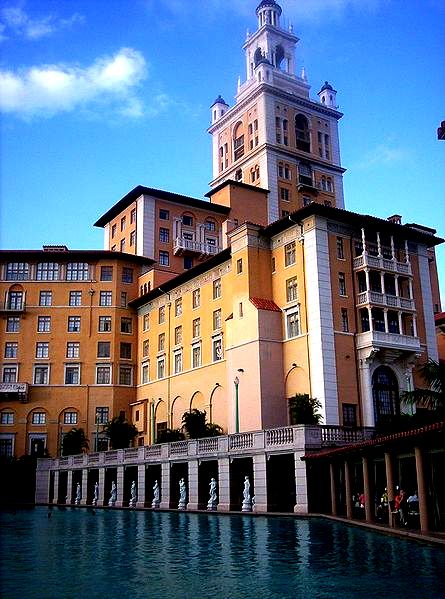
Biltmore Hotel by Milan Boers, 2009. Licensed under Creative Commons.

The cover of Leslie Rule’s Coast to Coast Ghosts, a marvelous collection of ghost stories from across America, features a lovely and haunting black and white photo of a colonnaded balcony. A door is open and the wind is pulling the sheer, white curtains outward. This photograph of a balcony at the Biltmore Hotel was shown by Rule to a psychic who exclaimed, “There has been a lot of raunchy activity here! A couple was murdered here. They were having an affair and were shot by the woman’s husband.” The psychic continued saying that the woman was naked except for her jewelry.

Biltmore Hotel Coral Gables Florida ghosts haunted
Photo by eflon, 2009. Licensed under Creative Commons.

In the mornin’, in the evenin’,
Ain’t we got fun?

Night or daytime, it’s all playtime,
Ain’t we got fun?
Hot or cold days, any old days,
Ain’t we got fun?
–“Ain’t We Got Fun?” (1921) by Richard A Whiting, Raymond B. Egan, and Gus Kahn

Biltmore Hotel Coral Gables Florida ghosts haunted
Photo by eflon, 2009. Licensed under Creative Commons.

The Biltmore Hotel, in picturesquely named Coral Gables, was built as a beacon for fun and sumptuous pleasure at the height of the Roaring Twenties. With its Mediterranean Revival tower modeled on the Giralda Tower on Seville, Spain’s cathedral it featured the largest swimming pool in the world, containing 1,250,000 gallons of water, where synchronized swimmers and alligator wrestlers entertained guests. Johnny Weismuller, who would go on to portray Tarzan on the silver screen, taught and showed off his aquatic prowess in the gigantic pool. Luminaries gathered in the hotel’s ballrooms where they enjoyed top tier entertainment and even illegal gambling under the watchful eyes of gangsters Al Capone and Thomas “Fatty” Walsh. Popular bands of the era pumped out popular tunes with upbeat tempos, catchy lyrics, and jaunty tunes while couples danced foxtrots, the Charleston, tangos, and the Black Bottom under blazing chandeliers or glowing stars.

Biltmore Hotel Coral Gables Florida ghosts haunted
Photo by Averette, 2007. Courtesy of Wikipedia.

Stars fade but I linger on, dear…
–“Dream a Little Dream of Me” (1931) by Fabian Andre, Wilbur Schwandt and
Gus Kahn

The hotel’s beauty began to fade when the United States War Department commandeered the hotel in 1942 for use as a convalescent hospital. Hotel rooms became rooms for patients and offices for doctors while public spaces became surgical suites. The floors were covered with linoleum, original furnishings were thrown out or painted over, windows were sealed with concrete, while the interior was painted a dismal, antiseptic green. Following the end of World War II, the hotel became an Army General Hospital and was later taken over by the Veterans Administration. Despite its utilitarian garb and atmosphere, the hospital attracted popular entertainers who performed for the patients. During its tenure as a VA hospital, the University of Miami established its medical school in the building. The grand hotel served as a hospital until 1968 when it was abandoned.

Sometimes I wonder why I spend
The lonely nights
Dreaming of a song.
The melody haunts my reverie
And I am once again with you.
–“Stardust” (1927) by Hoagy Carmichael and Mitchell Parish

The now crumbling hotel sat abandoned while the City of Coral Gables attempted to save it as a historic structure. The city finally succeeded in 1973, but the building continued to sit empty while the city decided how best to utilize it. While empty, the building was used as a backdrop for the horror film, Shock Waves and can be seen briefly in the trailer. It also attracted attention for odd activity. In fact, Dennis William Hauck’s Haunted Places: the National Directory, states that, “Townspeople congregated on the golf course to observe the strange lights and eerie sounds coming from the empty building at night.”

The song is ended
But the melody lingers on
You and the song are gone
But the melody lingers on.
–“The Song is Ended” (1927) by Irving Berlin and Beda Loehner

Biltmore Hotel Coral Gables Florida ghosts haunted
Photo by tabitum, 2008. Licensed under Creative Commons.

While the locals who observed the activity in the abandoned building would often hear lingering melodies, that’s only part of the activity they witnessed. Greg Jenkins in his masterful three-volume series, Florida’s Ghostly Legends and Haunted Folklore, notes the witnesses as seeing windows opening and closing, figures within the building, and crashing sounds. The activity was so pronounced that in the summer of 1979 a team of policemen stormed the building in search of drug dealers and other malcontents believed to be hiding within. Their search turned up no one. When the humans failed to find anyone, a pair of police dogs was brought in only to have them flee after just five minutes, tails between their legs. After restoration began in the early 1980s, the activity increased.

Looking everywhere,
Haven’t found him yet.
–“Someone to Watch Over Me” (1926) by George and Ira Gershwin

Biltmore Hotel Coral Gables Florida ghosts haunted
Photo by Marc Kevin Hall, 2009. Licensed under Creative Commons.

A team of psychics and investigators visited the empty hulk in 1978. The psychics picked up on many energies throughout the building especially on the 13th floor and around the elevators. A recording device that was running during the investigation picked up a loud tapping that was not noticed by anyone present. Many of the psychics remarked that that floor possibly contained hundreds of spirits. Another group investigating in 1979 recorded the sounds of heavy breathing and a sigh. Could this be related to a tragedy from the hotel’s early years?

We lived our little drama…
–“Stars Fell on Alabama” (1934) by Frank Perkins and Mitchell Parish

O, show us the way to the next whiskey bar.
O, don’t ask why.
–“Alabama Song” (1930) by Kurt Weill and Bertolt Brecht

In the late 1920s, a local gambler, Edward Wilson, rented out the suite on the 13th and 14th floors of the hotel and opened a speakeasy, This was a place where wealthy locals could drink and gamble away from the eyes of the law. Wilson became acquainted with New York mobster Thomas “Fatty” Walsh and his friend, Arthur Clark. Both had left the city to avoid an investigation in the death of an associate.

One evening in March of 1929, Wilson and Walsh began to argue in the speakeasy with nearly a hundred patrons in black-tie. Wilson pulled a gun and shot Walsh to death. When Clark rushed to his friend’s side, he was wounded. Police rushed to the hotel but it took some time to reach the murder scene. Once there, the room had been “cleaned” of any evidence of a speakeasy. Modern researchers believe the lack of police records on this event to be evidence of a police cover-up.

Now that I have found you,
I must hang around you.
Though you may refuse me…
–“He Loves and She Loves” (1927) by George and Ira Gershwin

One popular tale about the suite on the 13th and 14th floor involves the private elevator leading to it. A young couple exploring the hotel somehow stumbled into the private elevator and was whisked to the dark, uninhabited suite though guests must have a key to operate the elevator. The young woman stepped off and the doors quickly shut behind her, leaving her husband wildly punching buttons as the elevator quickly descended to the lobby. The husband found a bellhop who used his passkey to get them back up to the empty suite. There they found the man’s wife standing in the dark, scared and befuddled. 

Biltmore Hotel Coral Gables Florida ghosts haunted
Photo by eflon, 2009. Licensed under Creative Commons.

You must realize
When your heart’s on fire
Smoke gets in your eyes…

Now, laughing friends deride
Tears I cannot hide.
–“Smoke Gets in Your Eyes” from the operetta, Roberta (1933) by Jerome Kern and Otto Harbach

The young woman stated that when the doors closed behind her, she began walking through the silent suite calling, “Hello?” She heard the sound of distant conversation and occasionally people laughing. The sounds of things hitting the floor echoed from around her but nothing was out of place when she turned. She also remarked that there was the strong smell of cigar smoke with her throughout this experience. The elevator is still said to rise up to the suite on its own accord on a regular basis. This luxury suite (I checked the price and it’s around $1800 a night) is often used by celebrities, and President Bill Clinton stayed here in 1994. A number of sources note that he had troubled getting TV reception for a ball game he wanted to watch. His aides were unable to find a reason why the TV would not work properly.

It was just one of those nights,
Just one of those fabulous flights,
A trip to the moon on gossamer wings,
It was just one of those things.
–“Just One of Those Things” (1935) by Cole Porter

The apparition of a lady in white is also a part of the hotel’s folklore. According to legend, a couple was staying in the hotel with their young and very curious son. The child somehow made its way onto one of the hotel’s elaborate balconies and the child’s mother, fearing disaster, ran towards him. Unfortunately, she lost her balance reaching for her son and her body hurled over the railing towards certain death. Her spirit has been seen silently racing towards the balcony and at other times walking through nearby guest rooms. 

Biltmore Hotel Coral Gables Florida ghosts haunted
Photo by Milan Boers, 2009. Licensed under Creative Commons.

There were chills up my spine
And some thrills I can’t define.
–“How Long Has This Been Going On?” (1928) by George and Ira Gershwin

There’s so much more still going on in the Biltmore Hotel. Numerous apparitions, often seen momentarily and disappearing, have been reported including a dancing couple in period attire, World War II era soldiers, and a man playing the piano in a top hat. The hotel actually employs a storyteller to keep up with the hotel’s histories: recorded, legendary, and paranormal. Perhaps the spirits have finally found their own, sumptuous heaven.

Biltmore Hotel Coral Gables Florida ghosts haunted
Photo by Ebyabe, 2011, courtesy of Wikipedia.

Heaven, I’m in heaven
And my heart beats so that I can hardly speak
And I seem to find the happiness I seek
When we’re out together dancing cheek to cheek.
–“Cheek to Cheek” (1935) by Irving Berlin

Sources

  • Coral Gables Biltmore Hotel. Wikipedia, the Free Encyclopedia. Accessed 11 October 2011.
  • Hauck, Dennis William. Haunted Places: the National Directory. NYC: Penguin, 2002.
  • Jenkins, Greg. Florida’s Ghostly Legends and Haunted Folklore: Vol. 1 South and Central Florida. Sarasota, FL: Pineapple Press, 2005.
  • Lapham, Dave. Ghosthunting Florida. Cincinnati, OH: Clerisy Press, 2010.
  • Moore, Joyce Elson. Haunt Hunter’s Guide to Florida. Sarasota, FL: Pineapple Press, 1998.
  • Preira, Matt. “Spooky Hotel: Biltmore Hotel Haunted by Gangsters and WWII Soldiers.” Miami New Times. 6 October 2011.
  • Rennella, Cecilia and Carolyn Pitts. National Historic Landmark Nomination form for Miami-Biltmore Hotel and Country Club. 8 December 1994.
  • Rule, Leslie. Coast to Coast Ghosts: True Stories of Hauntings Across America. Kansas City: MO: Andrew McMeel Publishing, 2001.

Haunted Southern College & University Buildings – Alabama and Florida

In looking back over my previous entries, I’ve come across entries that need revamping. As I revamp some of the older entries, the original versions will be removed and completely updated. This entry, originally posted on September 27 of last year and published as a single entry, will be broken into smaller pieces. In addition to reformatting, I’m adding information from newer sources and adding a few new locations. 

Auburn University Chapel
Auburn University
Auburn, Alabama

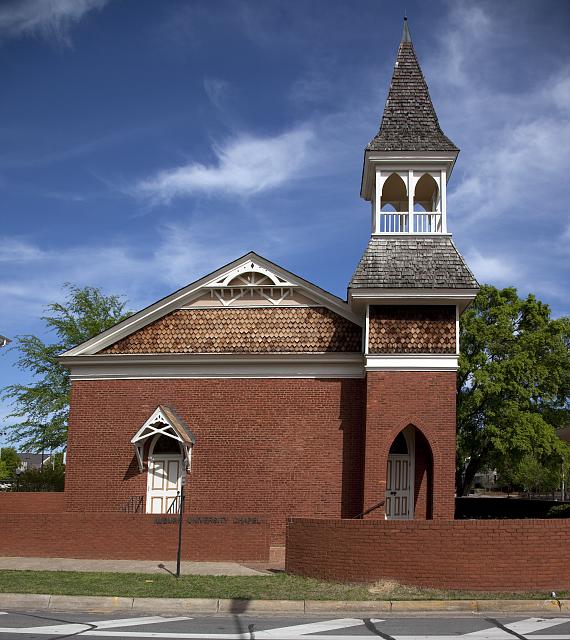
Originally constructed as a Presbyterian Church in 1851, this building served as a hospital during the Civil War and it was during this time that a legend was born. A young Englishman, Sydney or Sidney Grimlett, who fought for the Confederacy, died and his body buried nearby. Following the war, the building returned to its sacred purpose and was used as a church and also held classes after a fire in the main building of the college in 1887. When the church moved to new quarters, the building briefly served as a YMCA center before becoming home to the Auburn Players in 1927. 

Auburn University Chapel, 2010. Photo by Carol M. Highsmith, courtesy of  The George F. Landegger Collection of Alabama Photographs in Carol M. Highsmith’s America, Library of Congress, Prints and Photographs Division.

Perhaps something during the building’s conversion to a theatre awakened Sydney’s spirit. The spirit returned to the theatre where he made his presence known with spectral sounds and the occasional appearance. According to Kathryn Tucker Windham, his name and story was discovered by students using a Ouija board in the theatre during the 1960s. When the theatre moved to new quarters in 1973, the spirit was invited to move with them and has supposedly taken up residence in the new building, the Telfair Peet Theatre. The building was renovated for use as the university chapel and now serves as a non-denominational chapel for students.

Mrs. Windham’s version of the story reveals some of the cracks in the story. First, there is some question as to when Sydney’s ghost first appeared, some sources believe he showed up when the building became a theatre, others say that he appeared in the 1960s or 70s. Even the history seems questionable. A good deal seems to be known about Sydney. In a 1998 article, the university’s reference archivist states that it is believed that Sidney served with the Sixth Virginia Cavalry and was wounded in Atlanta in 1864. Ten years later, a paranormal investigator investigating the chapel states that Sydney belonged to a Texas regiment.

Regardless, students apparently still have the occasional run-in with Mr. Grimlett in the Telfair Peet Theatre and in the University Chapel. Students during productions may have equipment fail, props disappear and they leave M&Ms candies to appease the mischievous spirit. The Alabama Paranormal Research Team investigated the chapel in 2008 and experienced some odd occurrences in the ladies restroom. Perhaps Sydney is spending his time between the theatre and the chapel where he died so many years ago.

Founders Hall
Athens State University
Athens, Alabama

Where Indian hunter had pursued the panting deer, and, gazing on the same moon that smiles for us, wooed his dusky bride, now arose a building of purest ionic architecture, devoted to female education. – Robert Anderson McClellan

Founders Hall, 1934. Photograph by W.N. Manning for the Historic American Buildings Survey (HABS), courtesy of the Library of Congress, Prints and Photographs Division.

Founders Hall, with its four columns called Matthew, Mark, Luke and John, was constructed between 1842 and 1845 (most sources are incorrect). This four-columned edifice replaced a small four room house where the female academy had originally been founded in 1822. The school became affiliated with the Methodist Church around the time Founders Hall was constructed. In 1931, the school began accepting male students and in 1975 the school became a state school.

Under the leadership of President Jane Hamilton Childs, the school survived the turbulent period during the Civil War. Union forces under the leadership of Russian native, Colonel John B. Turchin terrorized and sacked the town. An anecdote tells of President Childs confronting troops advancing towards her female academy. Producing a letter supposedly from Abraham Lincoln, she handed it to Col. Turchin. He was apparently satisfied by the contents of the letter and saved the school from the raping and pillaging that might have occurred. The story makes clear that the letter was a forgery.

The Athens State University campus has a handful of haunted structures including McCandless Hall and Brown Hall, but writers have noted that Founders Hall seems to have the most activity. One legend holds that a female student was killed when her hair caught fire from the candles she a friend were holding while trying to sneak out after curfew. Her spirit is blamed for disembodied footsteps, lights turning off and on by themselves, cold spots and a phantom figure seen at the building’s windows. This is the most common story told.

Jessica Penot’s Haunted North Alabama documents the legend of a stable boy named Bart who apparently worked for President Childs. This young man, fancied by many of the young woman at the school, was kicked in the head and killed by a horse. His mischievous spirit may still linger with that of one of the workers who helped build the hall. The worker, who was a bit of a tippler, lost his jug of whiskey in one of the columns. One version of the story has him dropping his jug inside the column when his supervisor approached. In another version, the worker left his jug sitting on a column and went to lunch. When he returned, the column had been built up encasing the jug for posterity.

Annie Pfeiffer Chapel
Florida Southern College
Lakeland, Florida

Few schools can offer the tremendous collection of architecture that Florida Southern College can offer with its collection of nine Frank Lloyd Wright designed buildings collectively called, “Child of the Sun,” the largest concentration of Wright’s buildings in the world. Like many much larger schools, though, Florida Southern has also attracted an impressive amount of folklore, some of which is associated with the Wright buildings of West Campus. Among those buildings that have acquired stories is the chapel, the first of Wright’s visionary structures to be constructed.

Known at the time as Southern College, the school suffered a great deal during the Great Depression. The school’s president, Dr. Ludd Spivey, approached Wright with the chance to design a campus for the school. Wright embraced the idea wholeheartedly and began work. The school lacking in funds but wealthy in enthusiasm used the labor of students and professors to construct many of the buildings. In the Annie Pfeiffer Chapel, legend has it that the choir screen was incorrectly installed, which has given rise to one of the legends.

Outside of Daniel W. Barefoot’s marvelous Haunted Halls of Ivy, much campus lore throughout the South and the country has been left undocumented, except that of Florida Southern. Dr. Alexander M. Bruce, an English professor and Assistant Dean of Academic Affairs at the school at the time of publication, documented the school’s legends and lore in his 2003 book, The Folklore of Florida Southern College. Not only documenting ghost stories, this book records the stories about the school’s and Dr. Spivey’s relationship with Wright, lore surrounding the construction of the buildings and stories about campus issues like hazing. 

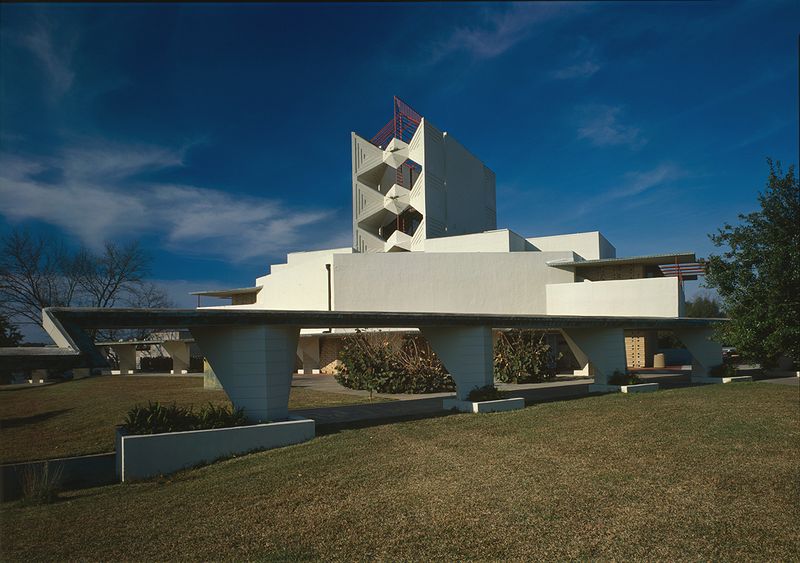
The Annie Pfeiffer Chapel with Frank Lloyd Wright’s Esplanade, a covered walkway, in the foreground. Photograph for the Historic American Buildings Survey (HABS), courtesy of the Library of Congress, Prints and Photographs Division

Having discovered this book after writing the original version of this article, I was excited to read the ghost stories surrounding the Annie Pfeiffer Chapel. Barefoot records that the spirit of Wright had been reported in the chapel, still contemplating the wrongly installed choir screen. Dr. Bruce states that the story is pure bunk, but he proceeds to record ghostly tales from many of the other campus buildings including dormitories like Joseph Reynolds and Allan Spivey Halls.

While the story isn’t true, it does gloss over some very important history of this architectural masterpiece.

Ponce de Leon Hall
Flagler College
St. Augustine, Florida

Florida Southern College isn’t the only school with an architectural masterpiece, Flagler College in St. Augustine. Ponce de Leon Hall, the centerpiece of the campus, is an early Moorish Revival masterpiece from the architectural team of John Carrère and Thomas Hastings, leaders in the Beaux-Arts Movement. Constructed by Henry Flagler as the Hotel Ponce de Leon in 1888, this opulent hotel featured intricate woodwork and some of the earliest works by stained glass master Louis Comfort Tiffany. The hotel served many wealthy guests until the mid-60s when competing roadside motels sent its finances plummeting.

In the court of the Hotel Ponce de Leon during its halcyon days as one of Florida’s premier resort hotels. Photograph, circa 1905, published by the Detroit Publishing Company,
courtesy of the Library of Congress, Prints and Photographs Division.

In 1968, the hotel began restoration and renovation to convert it into Flagler College, a private, four-year, liberal arts school. The development was lead by Lawrence Lewis, Jr., Henry Flagler’s grandson and the school has expanded by purchasing other historic structures for restoration as college buildings. The school is now ranked by the Princeton Review in the top tier of southeastern colleges.

Ponce de Leon Hall, 2005, by Flonight. Courtesy of Wikipedia.

While college students now roam the halls where America’s elite of the Gilded Age once walked, the occasional specter from the past still appears. The stories and legends of Ponce de Leon Hall are numerous and include not only anonymous hotel guests but the shades of the hotel’s visionary founder, Henry Morrison Flagler and two of his three wives. Legend holds that the first mysterious phenomena occurred just after Flagler’s death in 1913. He died after a fall in his home, Whitehall (which is also haunted), in Palm Beach. His body was returned to St. Augustine where his vision for Florida as a vacationer’s paradise first began to take shape. A public viewing was set in the hotel’s rotunda and while mourners stood by the massive oak doors slammed themselves shut. Shortly after the funeral, a small tile on the floor was discovered that bore a resemblance to Flagler. Students have reported run-ins with a spirit believed to be that of Flagler.

Among the more anonymous spirits are the “Lady in Blue” and the spirit of a young boy. The legend behind her sad spirit tells of a young woman having an affair with a married man. When he refused to divorce his wife to marry her she began to race up the staircase to pack her things. His foot caught on the hem of her long skirt and she tumbled down the stairs breaking her neck. The spirit of the little boy has been encountered in the hallways where he asks if students are able to come and play with him. Like the Lady in Blue, it can be assumed he was likely a hotel guest, but their identities are unknown. Then again, the phantom footsteps, spectral music and disembodied voices heard throughout the hotel simply serve to remind the modern day of the college’s Gilded Age history.

Sources

  • Auburn University Chapel. Wikipedia, the Free Encyclopedia. Accessed 13 May 2011.
  • Barefoot, Daniel W. Haunted Halls of Ivy: Ghosts of Southern Colleges and Universities. Winston-Salem, NC: John F. Blair, 2004.
  • Bruce, Alexander M. The Folklore of Florida Southern College: A look at the history and mystery of Florida Southern College. Chula Vista, CA: Avetine Press, 2003.
  • Cook, Sandra. “Founders Hall.” Alabama Ghostlore. Accessed 19 April 2011.
  • Easterling, Bill. “Legend says Matthew hid the jug.” The Huntsville Times. 23 February 1995.
  • Flagler College. Wikipedia, the Free Encyclopedia. Accessed 15 May 2011.
  • Fritze, Ronald H., Robert Burkhardt, Sean Busick and Sara Love. “Athens State University.” Encyclopedia of Alabama. 30 November 2010.
  • Graham, Thomas. Flagler’s St. Augustine Hotels. Sarasota, FL: Pineapple Press, 2004.
  • Graham, Thomas. National Historic Landmark Nomination form for the Hotel Ponce de Leon. 7 July 2005.
  • Haunted Schools: Athens State College.” Ghost Eyes Blog. Accessed 19 April 2011.
  • Jenkins, Greg. Florida’s Ghostly Legends and Haunted Folklore, Vol. 2, North Florida and St. Augustine. Sarasota, FL: Pineapple Press, 2005.
  • Murphree, Jennifer. “For AU’s Rebel Ghost, The Play’s the Thing: Some believe Confederate soldier haunts the quarters of University’s student thespians.” Birmingham News. 31 October 1998.
  • Paysinger, Christopher B. “Sack of Athens.” Encyclopedia of Alabama. 28 October 2008.
  • Penot, Jessica. Haunted North Alabama. Charleston, SC: History Press, 2010.
  • Schmidt, Greg. “Athens.” Encyclopedia of Alabama. 15 June 2010.
  • Whitley, Brittany. “Paranormal research team investigates AU Chapel.” Opelika-Auburn News. 30 October 2008.
  • Windham, Kathryn Tucker. Jeffrey’s Latest 13: More Alabama Ghosts. Tuscaloosa, AL: U. of Alabama Press, 1982.

Mysteries of Pinewood Cemetery–Florida

N.B. This articles was revised 3 June 2020.

Pinewood Cemetery
Erwin Road
Coral Gables, Florida

It’s hard to imagine among all the modernity that is South Florida that this area has been settled for many centuries. Native Americans lived here until pressure from the government and white settlers began forcing them out starting in 1822, just after Florida became a state. With most of the Native Americans gone white settlers began building cabins and farming, some with slaves. The area would remain a quiet backwater until Henry Flagler began shaping Florida’s new image in the latter part of the century and speculators and developers began buying land.

Bit by bit, the old Florida succumbed to developers’ vision and disappeared under new construction.  Pinewood Cemetery, a piece of Old Florida, disappeared in a forest with its tombstones and graves weathering then later broken and vandalized by hoodlums in search of a thrill. The cemetery was forgotten by most of the living and left for some time to the vigilant care of the cemetery’s own spirits.

Pinewood Cemetery’s air of desolation and dereliction has spawned mysterious stories and legends. A 2006 article on the cemetery in The Miami Herald mentions that neighbors have spoken of midnight burials in the cemetery. Ghost tales have also emerged telling of shadow people, strange noises and, more commonly, odd feelings. One paranormal investigation discovered a large cleared circular patch where nothing was growing, possible evidence that late night rituals may also be held there. The group’s psychic investigators felt that some animal sacrifices may have been conducted there. Regardless, according to evidence gathered by investigators, most of the spirits in the cemetery seem to simply be curious residents intending no harm to the living.


Pinewood Cemetery Coral Gables Florida
Graves in the forest at Pinewood Cemetery. Photo 2007, by Deathbecomezher, courtesy of Find-A-Grave.

Before the establishment of the large City Cemetery (which may also be haunted) in Miami and the city’s official incorporation in 1896, Pinewood was the main cemetery south of the Miami River. Once the city cemetery established, most of the burials north of the river were removed there, while Pinewood remained quietly in its forest home. Some legends speak of the Pinewood site as originally a burial ground for the area’s Tequesta Indians, though there’s no hard evidence of this. The first pioneer burials are said to have occurred around 1855 and included some of the area’s earliest settlers. The cemetery’s “official” history does not appear in the historical record until the land was deeded to the Trustees of Pinewood Cemetery in 1897.

Over the next 30 or so years the cemetery accepted burials. Included among those buried during this time were Dora Perry Suggs, a young mother who disappeared during a walk from the local general store. Her body was discovered in deep woods by a search party and she was interred in Pinewood in 1905. The cemetery was cleaned up following the great 1926 Miami hurricane, a category four storm that did considerable damage and caused between 250 and 350 deaths. Over time, the cemetery was neglected and trees and legends grew up around it.

Monument in Pinewood Cemetery Coral Gables Florida
Monument erected to the unknown dead of Pinewood Cemetery. Photo 2007, by Deathbecomezher, courtesy of Find-A-Grave.

Some notice was taken of the cemetery’s plight in the 1960s, but no action was taken. Development also began to encroach on the 4 acre cemetery. Stories have appeared of construction workers finding bones as they dug foundations adjacent to the cemetery. At the time, only a small portion of the possibly 250 burials in the cemetery were even marked, many tombstones having been stolen or broken. In 1983, the City of Coral Gables created an advisory board to oversee the cemetery and steps have been taken to preserve and restore the cemetery. Headstones have been erected to replace missing stones. Interestingly, current plans leave the cemetery in its wooded, natural state rather than clearing it. This preserves the more park-like setting and creates a place where local students and residents can explore nature and Old Florida history side by side.

Sources

  • 1926 Miami hurricane. Wikipedia, the Free Encyclopedia. Accessed 26 March 2011.
  • Bonawit, Oby. “History of Pinewood (Cocoplum) Cemetery.” Tequesta: The Journal of the Historical Association of Southern Florida. Vol. 1, No. 38. 1978.
  • Del Marmol, Sebastian. “Spend a Spooky Morning at Pinewood Cemetery for Pioneer Day This Saturday.” Miami New Times. 18 March 2011.
  • Herrera, Ana I. “Pioneers remembered at Pinewood Cemetery celebration.” GablesHomepage.com. 20  March 2011.
  • History of Florida. Wikipedia, the Free Encyclopedia. Accessed 24 March 2011.
  • League of Paranormal Investigators, Inc. Investigation Report for Pinewood Cemetery, October 2008. Accessed 25 March 2011.
  • McGrory, Kathleen. “Pioneering Spirits.” The Miami Herald. 27 August 2006.
  • Miami. Wikipedia, the Free Encyclopedia. Accessed 25 March 2011.