Savannah’s Haunted Historic District – Reynolds Ward

After Oglethorpe’s establishment of the first four wards Reynolds and Anson Wards were created to expand the city. The ward was laid out in 1734, just a year following the city’s founding. It did not acquire its current name until the 1750s, when it was named in honor of John Reynolds (c. 1713 – 1788), the fifth Royal Governor of the Province of Georgia.

Until its destruction by fire just prior to 1850, the northeast Trust Lot was occupied by a filature house, once useful in silk making, one of the industries that Oglethorpe hoped would make Georgia unique among colonies. This structure was the first large building built in the colony and the long rooms were needed for unwinding the filament of the cocoons of silkworms to weave into silk cloth. The silk industry did not survive for long in the nascent colony. Eventually, the building was frequently used for meetings, and in 1791, George Washington was fêted here.

Planters Hotel seen from Reynolds Square, by Ken Lund, 2011. Courtesy of Wikipedia.

A large bronze statue of John Wesley memorializes the founder of Methodism, who was asked by Oglethorpe to minister to the local citizenry between 1735 and 1737 and had a home within the ward.

Sources

  • Fertig, Barbara C. City of Savannah Tour Guide Manual: Manual for the Instruction and Licensing of Tour Guide in the City of Savannah. Savannah, GA: Tourism and Film Services, City of Savannah, 2006.
  • John Wesley. Wikipedia, the Free Encyclopedia. Accessed 28 September 2025.
  • Reynolds Square (Savannah, Georgia). Wikipedia, the Free Encyclopedia. Accessed 28 September 2025.

Haunted locations

Olde Pink House (23 Abercorn Street)The light pink colonial home fronting Reynolds Square is the former mansion of the Habersham family. A restaurant since 1968, this home has been serving up top-notch food and spirits (both the alcoholic type and the spiritual type) since that date. A number of ghosts are known to be in residence here, including James Habersham, who may be the spirit a bartender followed one night to Colonial Park Cemetery. See my post on this incident here.

Planters Inn (29 Abercorn Street)According to James Caskey, this hotel is haunted by a female spirit who casually straightens pictures on the wall then disappears.

Sources

  • Caskey, James. Haunted Savannah: The Official Guidebook to Savannah Haunted History Tour, 2008. Savannah, GA: Bonaventure Books, 2008.

Lucas Theatre for the Arts (32 Abercorn Street) Opening on the day after Christmas, 1921, the Lucas Theatre was built by Georgia theater impresario, Arthur Lucas, who owned several dozen theaters throughout the state. It was in operation as a theatre until 1976. After it closed, the building was used as a comedy club and a restaurant for a few years. After years of abandonment and decay, it was saved from demolition by local historic preservationists. The building is now a part of the Savannah College of Art and Design.

Lucas Theatre in 2025, by Lewis O. Powell, IV, all rights reserved.

Ghost stories have been told about the theatre since at least the mid-20th century. According to James Caskey, a story has long been told involving a drive-by shooting in front of the theatre in the late 1920s where a ticket seller was killed. However, no documentation has surfaced regarding this incident. People inside the building have heard a projector running in the projection booth, despite the projector having been removed, while others have heard ghostly applause in the empty theatre.

Sources

  • Caskey, James. Haunted Savannah: The Official Guidebook to Savannah Haunted History Tour, 2008. Savannah, GA: Bonaventure Books, 2008.
  • Lucas Theatre. Wikipedia, the Free Encyclopedia. Accessed 25 September 2025.

East Bay Inn (225 East Bay Street) Often businesses shun the haunted spotlight, though in places like Savannah, they may proclaim that they are haunted on their websites. Contained within an Antebellum structure, the East Bay Inn is one of these sorts of places, talking about their ghost “Charlie.” Details on Charlie’s antics are not revealed, however.

Sources

Realty Building, 2021, by JeffersonLH, courtesy of Wikipedia.

Realty Building (24 Drayton Street) Just beyond Reynolds Square is the city’s tallest building, the Realty Building, built in 1921 (or 1924, sources differ). A legend haunts these premises that may just be folklore told to scare maintenance employees. The story begins on the evening of Black Tuesday, October 29, 1929, after the stock market crashed. A businessman working on the top floor and having lost everything in the crash, ended it all by jumping out a window. In 1969, a member of the night cleaning crew working on the top floor was startled to see a man emerge from an empty office, walk to a window and jump. After he called the police, no body or evidence of the jumper was discovered.

Sources

  • Caskey, James. Haunted Savannah: The Official Guidebook to Savannah Haunted History Tour, 2008. Savannah, GA: Bonaventure Books, 2008.

O’Connell’s Irish Pub (42 Drayton Street)While so many of Savannah’s haunted sites have been well documented, there are others where the specifics of their ghost stories have not been disclosed. A review of this Irish pub on Tripadvisor notes a ghost tour stopping at the pub to talk about its ghosts, though the particulars are not revealed.

Sources

17 Lincoln Street about 1870, showing the proprietors of the saloon standing in the doorway. Courtesy of the Metropolitan Planning Commission Instagram page.

Abe’s on Lincoln (17 Lincoln Street)Occupying the basement of 226 East Bryan Street, Abe’s on Lincoln’s front door faces Lincoln Street, given it a different address. This basement has hosted bars since shortly after the house was built in 1852. This bar is also a stop on a haunted pub tour, though the details of the haunting are unknown.

Sources

Statue of John Wesley in Reynolds Square, 2025, by Lewis O. Powell, IV, all rights reserved.

Reynolds SquareLocal folklore states that this square was used to burn bodies used during one of the many epidemics to strike the city in the 19th century. Perhaps this this reason why photographs taken of John Wesley’s statue in the center of the square are distorted or show orbs that may be paranormal in nature.

Sources

Savannah’s Haunted Historic District – Derby Ward

Like Decker Ward, Derby Ward is one of the first wards laid out when Savannah was created in 1733. It is named for James Stanley, Tenth Earl of Derby, while its central square is named for Robert Johnson, Royal Governor of South Carolina at the time Georgia was settled. The large monument at the center of Johnson Square was erected to the memory of General Nathanael Greene, a hero of the American Revolution.  Savannah is frequently described as a city built on top of the dead. This is a fact for this scenic square as the probable remains of General Greene, who died near Savannah, are buried beneath the monument.

The fountain in Johnson Square, 2021, by Seasider53, courtesy of Wikipedia.

Sources

  • Fertig, Barbara C. City of Savannah Tour Guide Manual: Manual for the Instruction and Licensing of Tour Guide in the City of Savannah. Savannah, GA: Tourism and Film Services, City of Savannah, 2006.
  • Johnson Square (Savannah, Georgia). Wikipedia, the Free Encyclopedia. Accessed 8 September 2025.
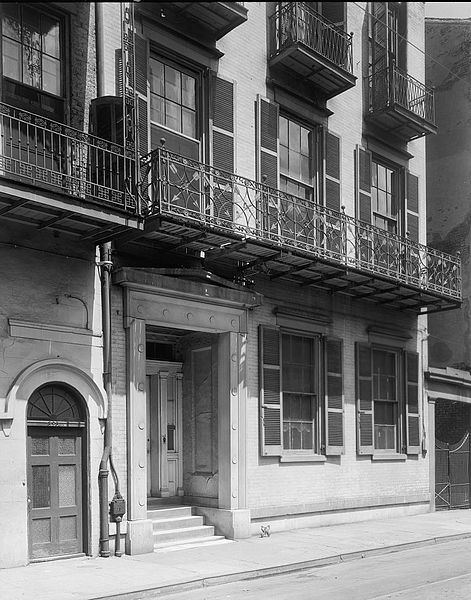
Tondee’s Tavern (7 East Bay Street)This mid-19th century building once housed a bank and the offices of a slave dealer. Spirits continue to occupy the building once even saving the lives of two servers sleeping in the basement by alerting them to a fire in a planter box affixed to the front façade. This location has been covered in a separate entry.

Churchill’s Pub (13 West Bay Street)This British-style pub originally opened at 9 Drayton Street (now occupied by The Fitzroy, seer below) that is haunted only to love into another haunted location. Investigator and author Ryan Dunn frequented this bar for many years before asking one of the bartenders if it was haunted. A couple weeks later, he arrived with two other investigators to explore it after hours. Hearing that many patrons had experiences in the ladies’ room in the basement, Dunn focused his investigative efforts there, coming away with a decent amount of evidence that spirits are still lurking.

Sources

  • Dunn, Ryan. Savannah’s Afterlife II: More True Tales of a Paranormal Investigator. Atglen, PA: Schiffer Publishing, 2018.
The infamous basement of the Moon River Brewing Company, 2019. Photo by Lewis O. Powell, IV, all rights reserved.

Moon River Brewling Company (21 West Bay Street)Of the many haunted locations in Savannah, perhaps the Moon River Brewing Company has gained the most notoriety. Nearly every book and article on the city’s hauntings written in the last twenty years includes this location, and it has drawn tourists, paranormal investigators, and the just plain curious in hopes that they may experience something unworldly here.

Opening as the City Hotel in 1821, this mostly unremarkable building has seen a little more than two centuries of activity played out in its rooms and corridors. While many have had chilling experiences in the basement and the upper floors of the building, patrons and staff have had encounters throughout the building.

Sadly, the brewery served its last drinks just last year. While the business has closed, I’m certain that the spirits remain.

Sources

View of the former site of the Pulaski Hotel at left, with City Hall in the background. Photo 2025, by Lewis O. Powell, IV, all rights reserved.

Regions Bank (formerly Piccadilly Cafeteria on Pulaski Hotel Site) (15 Bull Street)Built on the former site of the large, antebellum Pulaski House Hotel, this site supposedly remains the playground for six-year-old Gracie Watson. The child, the only daughter of W. J. Watson and Margaret Frances Waterman, was often given the run of the hotel where her father was the resident manager. When little Gracie died of pneumonia at the age of six, her parents buried her in Bonaventure Cemetery, marking her grave with a marble likeness.

Before the hotel’s demolition in 1957, staff continued to hear a child laughing and playing. These sounds have continued to be heard after the construction of this modern structure, while witnesses also report seeing the apparition of a little girl.

Sources

  • Caskey, James. Haunted Savannah: The Official Guidebook to Savannah Haunted History Tour, 2008. Savannah, GA: Bonaventure Books, 2008.
  • Gracie Perry Watson (1882-1889). Find-A-Grave. Accessed 16 September 2025.
  • Gracie Watson. Wikipedia, the Free Encyclopedia. Accessed 16 September 2025.
9 Drayton Street, 2017, by Seasider53, courtesy of Wikipedia.

The Fitzroy (9 Drayton Street)Built in 1853, this building is believed to have housed saloons and restaurants throughout its 172 years of existence. One legend states that a man died here during a boxing match and instead of alerting authorities to the man’s death, his body was walled up. Churchill’s Pub occupied this space before moving to Bay Street.

Sources

  • 9 Dayton Street. Wikipedia, the Free Encyclopedia. Accessed 16 September 2025.
  • Cobb, Al. Savannah’s Ghosts II. Atglen, PA: Schiffer Publishing, 2007.

Circa 1875 (48 Whitaker Street)According to the authors of the blog, Eat It & Like It, the owners of this French restaurant and gastropub began experiencing paranormal activity in the building shortly after it opened. After problems with lights being mysteriously turned off, the owners locked the electrical box. Despite the lock, they continued having issues.

A sensitive visited, informing them that the spirits were of enslaved people who had been held on the premises in the Antebellum era. They wanted confirmation that the new owners would not use the building for enslavement. In an effort to appease the spirits, the owners drew up an agreement and hung it in the wine cellar.

Sources

Savannah’s Haunted Historic District – Decker Ward

Named for Sir Matthew Decker (1679 – 1749), who at the time of Georgia’s founding was a Director for the British East India Company, Decker Ward is one of the four original wards laid out by General James Edward Oglethrope, the colony’s founder. At the heart of the ward, Decker Square was laid out. The square’s name was changed to honor Sir Henry Ellis, the colony’s sixth royal governor sometime later.

Perhaps it’s not a coincidence that the square was renamed for Ellis as before he was appointed royal governor, he earned money as a slave trader. As the square was the location of the City Market and a place known for its trade in enslaved Africans. The exact date of the slave market here is unknown, though when General Sherman captured the city in December 1864, the market was still here. With the awful emotions experienced by the enslaved here, this may be Savannah’s most haunted square. Interestingly, reports of paranormal activity in this ward are only confined to a single building.

Sam Cooley’s photograph of the City Market in Ellis Square near the end of the Civil War in 1865. While the market building was demolished in 1954, the buildings in the background are still standing. Courtesy of the Library of Congress, Prints and Photographs Division.

In 1954, the square and the city market hall was sacrificed to America’s love affair with the automobile when it was demolished and replaced with a parking garage. It is this moment, accompanied by the planned or actual destruction of Savannah’s historical treasures, that spurred the community into preservation. The deep regret of having lost the original square, led the city to redeem itself with the restoration of the square shortly after its lease expired in 2004.

Sources

B & D Burgers (209 West Congress Street)This 19th century commercial building harbors ghosts, spirits, and more than just those served with its gourmet burgers. This location has been covered in a separate entry.

Savannah’s Haunted Historic District – Franklin Ward

The city of Savannah created Franklin Ward in 1791, naming it for Benjamin Franklin, on land that was part of the city’s West Common. It was here in 1820, that one of Savannah’s most infamous fires began in a livery stable near Franklin Square. The fire destroyed around 500 buildings and is considered the worst conflagration in the city’s history.

In 1853, a water tower was located on Franklin Square that was eventually replaced by a large tank. In 1935, when US 17 was routed down Montgomery Street, Franklin Square was not spared as the street barreled directly through it. Only after the highway was rerouted around the historic district was the square restored. Now, under the shade of oak trees, the square features a monument honoring Haitians who fought under Casimir Pulaski during the siege of Savannah in the American Revolution.

Sources

Garibaldi Savannah, 2025. Photo by Lewis O. Powell, IV, all rights reserved.

Garibaldi Savannah (315 West Congress Street)Originally constructed for the Germania Fire Company, this elegant 1871 building now houses an equally elegant restaurant. Architectural historian Jonathan Stalcup reports that a large Neoclassical ballroom is behind the Palladian windows on the second floor.

During renovations a server regularly heard footsteps on the second floor when no one was up there. One evening she went out with a friend, and they decided to return to the restaurant to check on a friend who was working. The restaurant was closed by the time they arrived, though looking through a window they spied a woman walking down a hallway. Thinking it to be their friend, they tapped on the window to no avail. They phoned their friend only to discover that she was already home and that the restaurant had closed early after a slow night.

Sources

  • Caskey, James. Haunted Savannah: The Official Guidebook to Savannah Haunted History Tour, 2008. Savannah, GA: Bonaventure Books, 2008.
  • Stalcup, Jonathan E. Savannah Architectural Tours. Atglen, PA: Schiffer Publishing, 2008.

The Rail Pub (405 West Congress Street)In 2010, The Rail Pub brought Northeast Florida Paranormal Investigations in to investigate this 1870 building. Investigators walked away having experienced the odor of perfume and flickering lights.

Sources

  • About.” The Rail Pub. Accessed 4 September 2025.
Congress Street Social Club (formerly B & B Billiards) (411 West Congress Street)Partially hidden behind a beer garden, this large commercial building is believed to have been constructed in 1860, though James Caskey writes that it may be older, or at least built on a much older foundation. Over the more than 150 years this building has been standing, it has seen a variety of uses including a warehouse, grocery store, carriage shop, and even a rumored shooting range.

The first ghost stories emerged from this building after B & B Billiards opened around 2001. Staff regularly saw a man “sitting at the bar, wearing a wide-brimmed hat, a tan shirt and pants, and boots,” who disappeared when he was approached. Both staff and patrons had experiences throughout the building, but especially in the ladies room. While cleaning the restroom, one staff member was shocked to see the toilet paper roll quickly unspooling itself.

Investigator Ryan Dunn explored the building with his paranormal team and collected some Class-A EVPs, including several from the infamous ladies room. One EVP caught the sound of a woman groaning, while another captured a man’s voice asking for help. While the team captured scant evidence, much of it was high quality.

Sources

  • Caskey, James. Haunted Savannah: The Official Guidebook to Savannah Haunted History Tour, 2008. Savannah, GA: Bonaventure Books, 2008.
  • Dunn, Ryan. Savannah’s Afterlife II: More True Tales of a Paranormal Investigator. Atglen, PA: Schiffer Publishing, 2018.
Corleone’s Trattoria, 2025. Photo by Lewis O. Powell, IV, all rights reserved.
Corleone’s Trattoria (44 Martin Luther King Jr. Boulevard)According to writer and investigator Tobias McGriff, this Italian eatery has a haunted basement.

Sources

  • McGriff, Tobias. Savannah Shadows: Tales from the Midnight Zombie Tour. Savannah, GA: Blue Orb Publishing, 2012.

Savannah’s Haunted Historic District – New Franklin Ward and Wharf Lots

Situated between Yamacraw Bluff and the Savannah River is this narrow ward that is now an entertainment or tourist district. It was here in 1733, that the first settlers stepped off the Anne under the leadership of General James Edward Oglethorpe, to create a new colony with Savannah as its capitol. Over time, enslaved Africans were unloaded here providing labor for the nascent city and as warehouses were constructed, this area became a place where they lived, worked, and died, leaving their spirits and energies to permeate the atmosphere.

Monument on River Street honoring the enslaved of Savannah. Photo by Lewis O. Powell, IV, 2025, all rights reserved.

This ward incorporates all the buildings and warehouses from the north side of East Bay Street to the river. Due to the location of these buildings between streets and with different elevations, some of these locations may have up to three different addresses, depending on where their entrances are located.

View down Bull Street towards Savannah’s gold domed city hall. Photo by Lewis O. Powell, IV, 2025, all rights reserved.

Savannah City Hall (2 East Bay Street)In an article in the Savannah Morning News regarding recent renovations, Savannah’s mayor, Van Johnson, remarked on hearing “strange noises, sounds of ghosts,” within the 1904 building.

Sources

24 East Bay StreetWhen Circa Savannah opened at this address in 2011, a press release was issued stating that paranormal investigators discovered a “major ghost portal” being used by a wide array of spirits from the city’s past. The store’s owner noticed paranormal activity as soon as he began opening the store including the sounds of parties and large groups in parts of the seemingly empty building, disembodied footsteps, and objects moving on their own volition.

Sources

  • Preston, Michael. “A Major Ghost Portal Discovered at the Historic Storefront of Circa Savannah.” PR Web. 26 September 2011.

Vic’s on the River (26 East Bay Street)Occupying a warehouse dating to the end of the Antebellum era, Vic’s on the River is believed to be haunted by a French mariner whose love life was anything but lucky. Some years ago, a wedding cake brought in for a wedding the following day was found on the floor. Seeking the culprit, staff looked at security video to find that it slid off around 3:30 in the morning without the aid of anyone, or anything, living. The restaurant’s paranormal hotspot is the fifth floor, where the mariner’s spirit is most active.

Sources

Two Cracked Eggs Café (202 East Bay Street)This warehouse building, once the home to Melonie’s Antiques, is home to several active spirits. While interviewing store staff, author and investigator James Caskey had something tugging at his glasses. When he took them off, he discovered that one lens was loose and the screw holding the lens in place was missing. He later discovered it in his shirt pocket.

The shop’s owner had numerous items fling themselves off the shelves and damaged once they hit the floor. In addition, a woman in blue appeared and would disappear within the shop. In one case, she walked in the front door ahead of an employee but vanished inside the store.

Sources

  • Caskey, James. Haunted Savannah: The Official Guidebook to Savannah Haunted History Tour, 2008. Savannah, GA: Bonaventure Books, 2008.

208-230 East Bay Street (Lower Stoddard Range)Construction on this large warehouse began in 1858 when it was built for local businessman John Stoddard on the foundations of several older warehouses. Today, this building houses several businesses and restaurants, including the Boar’s Head Tavern (see below).

Sources

The Chart House, 2025, by Lewis O. Powell, IV, all rights reserved.

Chart House Restaurant (202 West Bay Street)Reports of paranormal activity in this restaurant date to its opening in 1979 when a group of employees encountered the apparition of a little girl one evening after close. Over time, staff and customers have seen the apparitions of a woman and a “blue man,” as well as experiencing the feeling of being watched and poltergeist activity. The building may be one of the oldest buildings in the ward, dating to at least 1818.

Sources

  • Dunn, Ryan. Savannah’s Afterlife: True Tales of a Paranormal Investigator. Atglen, PA: Schiffer Publishing, 2014.

East Broad Street RampAccording to author and tour guide Robert Edgerly, a well-known fisherman in this area was attacked by an alligator crushing his head in its jaws. The man’s headless spirit has been seen lurking and has been blamed for tripping people as they ascend the steep staircase to Bay Street.

Sources

  • Edgerly, Robert. Savannah Hauntings! A Walking Tourist Guidebook. Savannah, GA: Bonaventure Books, 2005.

Jere’s Antiques (9 North Jefferson Street)According to author and investigator Al Cobb, phantom children haunt this antique store.

Sources

  • Cobb, Al. Danny’s Bed: A Tale of Ghosts and Poltergeists in Savannah Georgia. Atglen, PA: Schiffer Publishing, 2000.
Factor’s Walk near the Olde Harbour Inn, by Lewis O. Powell, IV, 2025, all rights reserved.

Factor’s WalkThis street between warehouses and the bluff long saw the brutal employment of enslaved people who have left their spiritual mark here. 

Sources

  • Cobb, Al. Savannah’s Ghosts II. Atglen, PA: Schiffer Publishing, 2007.
On my visit to the Graveface Museum recently, this clown was chattering his teeth at me. Photo by Lewis O. Powell, IV, 2025, all rights reserved.

Graveface Museum (410 East Lower Factors Walk)The Graveface Museum is an oddities museum providing a “glimpse into the human condition through actual artifacts and decades worth of research on topics ranging from true crime, cults, sideshow history, 1950s roadside attractions, secret societies, and the occult.” Housed in an old, haunted warehouse, the museum displays items from notorious serial killers like Ed Gein and John Wayne Gacy, as well as objects that may come with spirit attachments, creating an atmosphere that is buzzing with spirits and paranormal activity. In fact, visitors can book an after-hours tour of the museum seeking chills and spirits.

Sources

The back of the Olde Harbour Inn on River Street. Photo by Lewis O. Powell, IV, 2019, all rights reserved.

Olde Harbour Inn (508 East Factor’s Walk)A fire that damaged this building either in 1892 or 1907 (sources differ) killed a man named Hank. His spirit is perhaps the most active spirit here messing with doors, faucets, and even laying down in beds with guests.

Sources

  • “The 6 Most Haunted Hotels in Savannah GA.” The Tatted Nomad. 11 October 2022. https://tattednomad.com/the-6-most-haunted-hotels-in-savannah-ga/.
  • Caskey, James. Haunted Savannah: The Official Guidebook to Savannah Haunted History Tour, 2008. Savannah, GA: Bonaventure Books, 2008.
  • Cobb, Al. Savannah’s Ghosts II. Atglen, PA: Schiffer Publishing, 2007.
The Boar’s Head Tavern, 2019. Photo by Lewis O. Powell, IV, all rightsd reserved.

Boar’s Head Grill & Tavern (1 Lincoln Street, in the Lower Stoddard Range)As with other businesses in this building, staff and patrons of this popular eatery have encountered apparitions, spirits that like to play with the faucets in the restrooms, disembodied footsteps, and a spirit that will tell exiting diners to “have a good night!”

Sources

  • Dunn, Ryan. Savannah’s Afterlife: True Tales of a Paranormal Investigator. Atglen, PA: Schiffer Publishing, 2014.
Interior of the Cotton Exchange Tavern looking towards the table next to the door. It was here that a manager was surprised to find someone sitting after he opened. Photo by lewis O. Powell, IV, 2025, all rights reserved.

Cotton Exchange Tavern (201 East River Street)Some years ago, a manager arrived one morning at this restaurant to open for the day. He entered the only door at the front and headed straight for the bar to turn on lights when he noticed someone sitting at the table just to right of the door. The shadowy figure rose from the table and walked into the dining room. As he peeked into the room, the figure had become a large orb drifting through the air. He quickly fled into the street where he waited for the other employees to arrive. 

Sources

  • Edgerly, Robert. Savannah Hauntings! A Walking Tourist Guidebook. Savannah, GA: Bonaventure Books, 2005.
The Shrimp Factory, 2025. Photo by Lewis O. Powell, IV, all rights reserved.

Shrimp Factory (313 East River Street)This Savannah institution located within an Antebellum warehouse, boasts the spirit of an enslaved man in one of its storerooms. Nicknamed “Ol’ Joe,” the spirit is harmless and has been heard rattling around in the room. He has also been accused of occasionally drinking from the beer kegs store there.

Sources

  • Minor, Elliott. “Georgia Ghosts.” Athens Banner-Herald. 28 August 1995.

Sea Cabins (423 East River Street)This inn which formerly occupied this address, was known to have a mischievous entity that removed lightbulbs from guestrooms. 

Sources

  • Edgerly, Robert. Savannah Hauntings! A Walking Tourist Guidebook. Savannah, GA: Bonaventure Books, 2005.
503 East River Street, 2025. Photo by Lewis O. Powell, IV, all rights reserved.

503 East River Street (formerly Savannah Harley-Davidson)Like most buildings along this street, this building was constructed as a warehouse for George Kollock in 1854. The Kollock family not only operated a business here but had a family home in the upper stories where George passed away in 1889. Standard Oil occupied the structure for many years before it was returned to its original function as a warehouse. In the late 1970s, the building was the home to the Ships of the Sea Maritime Museum before it moved to the William Scarborough House in 1996. Following the museum’s move, Harley-Davidson of Savannah took over the building installing a dealership here.

It was during the time this building hosted Harley-Davidson that the spirits began to make themselves known. Staff members frequently heard odd noises throughout the building including the laughter of children in the upstairs portion. In 2011, a sensitive visited stating that there was a portal behind the bathroom wall upstairs. Apparitions of a woman in a lacy dress and a man in a suit with a wide-brimmed hat have also been encountered here.

Sources

  • Dunn, Ryan. Savannah’s Afterlife: True Tales of a Paranormal Investigator. Atglen, PA: Schiffer Publishing, 2014.

Kevin Barry’s Irish Pub (117 West River Street)Opening in 1981, Kevin Barry’s Irish Pub was a Savannah institution until its closure in 2019. Tourists and locals alike crowded this friendly pub Irish to raise a pint while taking in traditional Irish music in the music room. Inside this old warehouse, elements attesting to the building’s dark past involving enslaved laborers remain on the walls. Spirits also remain here including a mischievous entity that once threw bricks at a customer.

Sources

  • Caskey, James. Haunted Savannah: The Official Guidebook to Savannah Haunted History Tour, 2008. Savannah, GA: Bonaventure Books, 2008.
  • Dunn, Ryan. Savannah’s Afterlife II: More True Tales of a Paranormal Investigator. Atglen, PA: Schiffer Publishing, 2018.

River House Seafood (125 West River Street)During an evening at Kevin Barry’s in 2019, I asked the bartender about ghosts in the pub and in the area. He mentioned that he had friends working at River House who had multiple encounters with ghosts and spirits.

Street Guide to the Phantoms of the French Quarter—Conti Street

This article is part of my series, Street Guide to the Phantoms of the French Quarter, which looks at the haunted places of this neighborhood in a street by street basis. Please see the series main page for an introduction to the French Quarter and links to other streets.

Conti Street

Conti Street French Quarter New Orleans
Conti Street sign, 2019 by Infrogmation, courtesy of Wikipedia.

According to historian Stanley Clisby Arthur, Bourbon Street was initially called Conti Street for the Princess Conti. When Bourbon Street was renamed, this street was renamed Conti.

Sources

  • Arthur, Stanley Clisby. Walking Tours of Old New Orleans. Gretna, LA: Pelican Publishing, 1990. Originally published in 1936.

700 Block Conti Street

Throughout its history, the French Quarter has been no stranger to violence. In the early morning hours of 21 March 2015, gunshots rang out in this block of Conti Street. In the aftermath, two young men in their 20s lay wounded. One of them died on the scene, while the other died at the hospital a short time later.

Conti Street, French Quarter, New Orleans
A view of the 700-block Conti Street looking towards Bourbon Street. Photo 2019, by Infrogmation, courtesy of Wikipedia.

Part of this spectacle may replay itself. Investigator and author Jeff Dwyer explains that witnesses have seen “the ghostly images of a young man who appears lifelike but quickly becomes transparent as he runs a distance of about 50 feet and then vanishes.” Others have heard “muted gunshots” as they have seen this horrible image.

Sources

  • Dwyer, Jeff. Ghost Hunter’s Guide to New Orleans: Revised Edition. Gretna, LA: Pelican Publishing, 2016. 

Prince Conti Hotel
830 Conti Street

The Prince Conti Hotel’s bar, The Bombay Club, is apparently haunted by the spirit of a madam who once operated on the premises before the hotel was opened. She has been dubbed Sophie by staff members who have encountered her in the kitchen, bar, and at Booth 3.

Bar Bombay Club Prince Conti Hotel, French Quarter, New Orleans
The bar of The Bombay Club in the Prince Conti Hotel, 2010. Photo by Gary J. Wood, courtesy of Wikipedia.

Sources

  • Gardner, James. Professor’s Guide to Ghosts of New Orleans. CreateSpace, 2020. Kindle Edition.

917 Conti Street (formerly Musee Conti Wax Museum), private

The idea for the Musee Conti Wax Museum came to Ben Weil after a visit to London’s famous Madame Tussaud’s while on a trip to Europe. He quickly imagined a similar counterpart in New Orleans illustrating scenes from local history. The museum opened in 1964 with figures created by a Parisian mannequin maker. The figures of Napoleon, Andrew Jackson, Madame LaLaurie, Marie Laveau, and Jelly Roll Morton were shipped to the city on a Pan Am jet, where some of the figures were seated in the cabin among actual human passengers. The wax museum quickly became a major tourist attraction in the French Quarter. Legions of school children visited among the silent and still figures to learn the weird and wacky and violent history of the city.

Conti Street, French Quarter, New Orleans
917 Conti Street, the building that once held the Musee Conti Wax Museum, is the grey building on the right of this photo. Photo 2021, by Infrogmation, courtesy of Wikipedia.

Over time, stories began to spread of spirits among the wax figures. Staff and guests have heard disembodied voices within the museum and others have seen shadow figures moving about amongst the stationary figures. Others have felt the eyes of the figures follow them around the space. The museum has undergone investigations by a number of paranormal investigators who have uncovered a great deal of evidence alluding to the presence of spirits here.

Sadly, the Musee Conti Wax Museum closed in 2016 and the building was sold. Developers transformed the building into high-end private condos. Since the building’s redevelopment, it is unknown if the spirits remain here.

Sources

Wallace Parlour House
1026 Conti Street, private

In a city chock full of irascible characters, Norma Wallace is amongst the pantheon. For decades, she was one of the most well-known doyennes of the city’s pleasure palaces. She was the last, and perhaps the most upstanding and respectable, of many madams who operated throughout this city’s vice-ridden history. From this innocuous address she operated one of the city’s most famous brothels, a place where the patriarchs of prominent families brought their sons as a rite of coming of age. A place where wanted criminals might rub shoulders with the judges who might one day sentence them. Business leaders, bureaucrats, political leaders, entertainers, law enforcement, and diplomats all came to indulge in Norma Wallace’s court of young women. For a time, couples might visit to observe some of New Orleans’ first sex shows given in Norma Wallace’s parlor.

Born into a poverty-stricken family, Wallace had aunts engaged in prostitution. At a young age, she learned that she could earn a living with her womanly charms, though she quickly grew tired of actually selling herself. Within a short time, she began overseeing other ladies of the evening and quickly learned how to finesse law enforcement and the justice system to protect her business interests. With the election of increasingly conservative crime-fighting district attorneys who vowed to fight corruption, she was forced to close her house and business. In her later years, she was able to transform her infamy into fame and her name was celebrated, though she quickly grew bored. In 1974 she took her life at her home in rural Mississippi.

This infamous address fell into disrepair and decay following Wallace’s ownership. Recently, a developer purchased the home and restored it, dividing the house into condos. It is said that the odor of cigars is still smelled here accompanied by the clinking of glasses and the sound of a woman’s husky laugh. Perhaps Norma Wallace is reliving the best years of her life?

Sources

  • Gardner, James. Professor’s Guide to Ghosts of New Orleans. CreateSpace, 2020. Kindle Edition.
  • Wiltz, Christine. The Last Madam: A Life in the New Orleans Underworld. NYC: Open Road Integrated Media, 2000. Kindle Edition.

Street Guide to the Phantoms of the French Quarter—Bourbon Street

This article is part of my series, Street Guide to the Phantoms of the French Quarter, which looks at the haunted places of this neighborhood in a street by street basis. Please see the series main page for an introduction to the French Quarter and links to other streets.

Bourbon Street

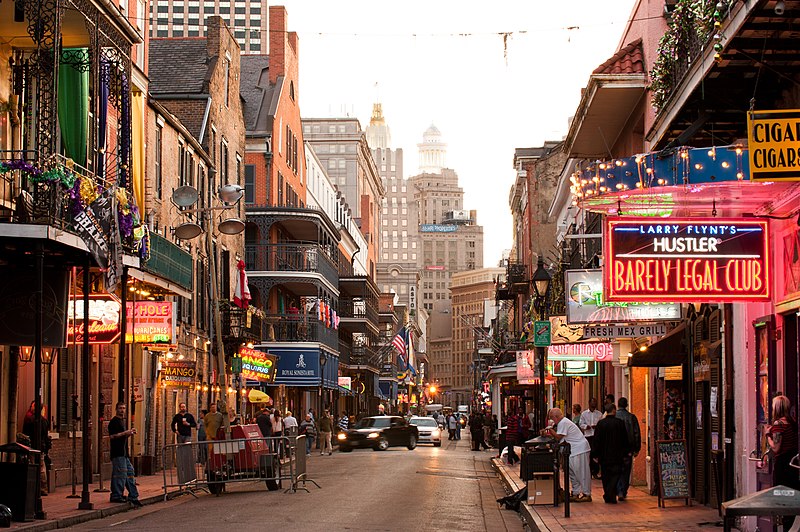
Named for the House of Bourbon, the ruling family of France in the 18th century, Bourbon Street has earned a reputation as the place to party in The Big Easy. Prior to the turn of the 20th century, it was one of the premiere addresses in the city. Its fortunes declined a bit with the establishment of Storyville above the French Quarter. This notorious red-light district attracted prostitution and gambling to much of the French Quarter. This street has attracted many businesses catering to an adult audience. Even with the presence of these businesses, the street is the focus of the city’s many tourists.

Bourbon Street French Quarter New Orleans
A view of the 400 block of Bourbon Street looking towards the Central Business District, 2012. Photo by Chris Litherland, courtesy of Wikipedia.

Sources

  • Bourbon Street. Wikipedia, the Free Encyclopedia. Accessed 22 April 2023.

Old Absinthe House
240 Bourbon Street

Occupying a corner of Bourbon and Bienville streets, the Old Absinthe House also occupies position in both the alcoholic and paranormal history of the city. Built in 1806, this structure was originally a business and dwelling house for a pair of Spanish importers, Pedro Font and Francisco Juncadella. Eventually, noted local bartender Cayetano Ferrer took out a lease on the building and began serving absinthe, renaming it The Absinthe Room.

Old Absinthe House Bourbon Street French Quarter New Orleans
The Old Absinthe House, 1937, by Frances Johnston. Courtesy of the Library of Congress, Prints and Photographs Division.

Legend holds that before the Battle of New Orleans, the infamous pirate Jean Lafitte, met with General Andrew Jackson here to arrange for his help in the defense of the city against British attack during the War of 1812. Jackson agreed to Lafitte’s services in exchange for a pardon on the charges leveled at him for his pirate and smuggling operations.

While there is little evidence that this meeting actually occurred within the walls of the Old Absinthe House, owners over the years have continued to support this legend. Indeed, they have also attributed paranormal activity here to the dashing shade of Lafitte, despite the claims of his spirit haunting many other places throughout the city and the state. Perhaps Lafitte is as busy in the afterlife as he was during his existence in this plane.

Old Absinthe House French Quarter New Orleans
Old Absinthe House in 2012. Photo by Infrogmation, courtesy of Wikipedia.

Several sources note the presence of unexplained activity throughout the old building including doors opening and closing by themselves, and glassware and chairs moving on their own accord.

Sources

  • Duplechien, Brad. “Old Absinthe House—New Orleans, LA (The Green Fairy).” Haunted Nation Blog. 27 September 2016.
  • Dwyer, Jeff. Ghost Hunter’s Guide to New Orleans, Revised Edition. Gretna, LA: Pelican Publishing, 2016.
  • “Old Absinthe House: Legend says Jackson, Lafitte met here in French Quarter.” The Daily Advertiser. 4 March 1959.
  • Taylor, David. “Museum solves problem of Absinthe House secret floor.” The Daily Advertiser. 15 October 1950.
  • Taylor, Troy. Haunted New Orleans. Charleston, SC: History Press, 2010.

327 Bourbon Street
(formerly Temptations Gentlemen’s Club)

The elegant townhouse at this address is still (as of March 2022) boarded up with graffiti and slowly decaying. The building has being sitting in this sad state since early 2018 when Temptations was shut down permanently after the city cited the business with numerous code violations and found evidence that prostitution was taking place on the premises.

This home was built in 1835 by Judah P. Benjamin, a brilliant young Jewish lawyer who married the young daughter of a private family. While he was successful as a lawyer and planter, his wife separated from him and moved with their young daughter to Paris. In 1852, Benjamin was elected to the US Senate and he served in that capacity until Louisiana seceded from the Union in 1861. Impressed by him, Jefferson Davis appointed him as attorney general, then to Secretary of War for the Confederacy, and ultimately to Secretary of State. With the end of the war, he fled to London where he served as a barrister for the remainder of his life.

327 Broubon Street French Quarter New Orleans
327 Bourbon Street around 1937 or 1938 by Frances Benjamin Johnston.

This lovely home remained a private residence for many years following Benjamin’s ownership and may have served as a brothel at some point in more recent history. By the mid-2010s, the building had been transformed into Temptations. The owners had left much of the historic interiors intact and had also renovated the slave quarters in the back for private encounters with the club’s female employees.

Paranormal investigator Brad Duplechien toured in the building around this time and documented stories from various members of the staff. They spoke of encountering a lady in white in the main house and spoke of a certain VIP room as having an oppressive atmosphere. In the old slave quarters, they experienced doors opening, closing, and locking on their own.

Sources

  • Duplechien, Brad. “Temptations Gentlemen’s Club – New Orleans, LA (The Haunted Strip Club).” Haunted Nation. 5 October 2016.
  • Judah P. Benjamin. Wikipedia, the Free Encyclopedia. 23 April 2023.
  • Litten, Kevin. “Temptations strip club owners give up on F. Q. property; club shut down permanently.” New Orleans Times-Picayune. 30 January 2018.

Bourbon Heat
711 Bourbon Street

The carriageway at the Tricou House, now Bourbon Heat nightclub. Photo by Frances Johnston, 1937, courtesy of the Library of Congress, Prints and Photographs Division.

The spirit of a young woman who died in a fall on the stairs here is supposed to remain in this nightclub. Built in 1832 by Dr. Joseph Tricou, this former private residence has been a bar for many years. The doctor’s niece Penelope supposedly lost her footing on the stairs and tumbled to her death. Staff and patrons have heard disembodied footsteps throughout the building. A statue in the club’s courtyard is also said to move on its own volition.

Sources

  • Klein, Victor C. New Orleans Ghosts. Chapel Hill, NC: Professional Press, 1993.
  • Smith, Katherine. Journey Into Darkness: Ghosts and Vampires of New Orleans. New Orleans, LA: De Simonin Publications, 1998.

Bourbon Pub and Parade
801 Bourbon Street

Bourbon Pub Bourbon Street
The Bourbon Pub decked out in Pride regalia for one of the city’s many pride celebrations, 2016. Photo by Tony Webster, courtesy of Wikipedia.

The Bourbon Pub and Parade is the largest gay bar in New Orleans and one of the premier sites for partying during the annual Southern Decadence, a six-day gay and lesbian festival held over Memorial Day weekend. Patrons here have seen, heard, and occasionally felt spirits throughout the bar area. Some patrons have been surprised by the hollow sound of a thud accompanied by the inexplicable sensation of a cane hitting the bottom of their shoe.

Sources

  • Summer, Ken. Queer Hauntings: True Tales of Gay and Lesbian Ghosts. Maple Shade, NJ: Lethe Press, 2009.

Café Lafitte in Exile
901 Bourbon Street

Cafe Lafitte in Exile New Orleans
Doorway of the Cafe Lafitte in Exile, 2016. Photo by Tony Webster, courtesy of Wikipedia.

Opened in 1933, at the end of Prohibition, the Café Lafitte in Exile is now known as the oldest continuously operating gay bar in the United States. Two of the café’s most famous patrons, writers Tennessee Williams and Truman Capote, are believed to revisit this, one of their favorite haunts. While neither writer died in New Orleans, they have been seen within the walls of the café. Ken Summers notes that another, rather frisky spirit, known as Mister Bubbles, is known to pinch some patrons’ posteriors. 

Sources

  • Richardson, Joy. “New Orleans’ Café Lafitte Haunted by Two Literary Greats.” com. 12 July 2010.
  • Summer, Ken. Queer Hauntings: True Tales of Gay and Lesbian Ghosts. Maple Shade, NJ: Lethe Press, 2009.

Lafitte’s Blacksmith Shop
941 Bourbon Street

See my coverage of Lafitte’s Blacksmith Shop in “Encounter with a Gentleman—New Orleans.”

Lafitte Guest House
1003 Bourbon Street

Housed in an old mansion overlooking Bourbon Street and the historic and haunted Lafitte Blacksmith Shop across the street, the Lafitte Guest House is home to a handful of spirits. Some years ago, the inn’s owners were planning on going on a cruise. As they discussed the plans for the cruise, soot blew down the chimney of the room where they sat and spelled out the words “No Voyage” on the floor.

The spirit of a little girl has been seen by guests in the mirror of the second floor balcony. Guests will look at themselves in the mirror and see a little girl crying behind them. She may be the young daughter of the Gleises family who resided here in the mid-19th century. It is believed that she died during one of the many yellow fever epidemics that swept through New Orleans in the 1850s. The spirit of an anguished woman is believed to be the spirit of this little girl’s mother.

Sources

  • Kermeen, Frances. Ghostly Encounters: True Stories of America’s Haunted Inn and Hotels. NYC: Warner Books, 2002.
  • Sillery, Barbara. The Haunting of Louisiana. Gretna, LA: Pelican Publishing, 2001.
  • Turnage, Sheila. Haunted Inns of the Southeast. Winston-Salem, NC: John F. Blair, 2001.

Street Guide to the Phantoms of the French Quarter—Dauphine Street

N.B. This article was originally published 15 June 2016 with Bourbon Street.

This article is part of my series, Street Guide to the Phantoms of the French Quarter, which looks at the haunted places of this neighborhood in a street by street basis. Please see the series main page for an introduction to the French Quarter and links to other streets.

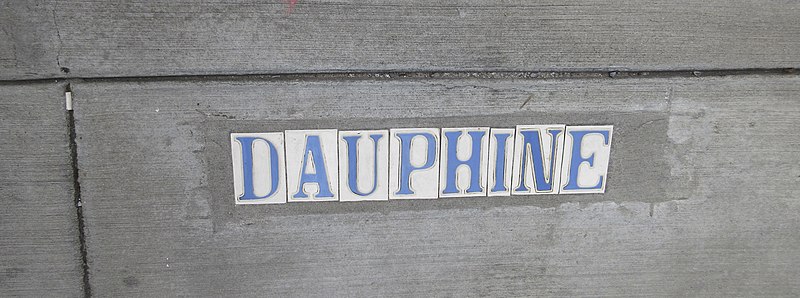
Dauphine Street

Dauphine Street New Orleans
Tile street name set into the sidewalk. Photo by Infrogmation, 2019, courtesy of Wikipedia.

Originally the Rue de Vendome, this street was renamed Dauphine Street not long after. According to John Chase’s Frenchmen, Desire, Good Children…and other Streets of New Orleans, there is no certainty as to who this street is named for, though it was likely named for the Dauphin of France, the heir apparent to the French crown.

Sources

  • Chase, John. Frenchmen, Desire, Good Children…and other Streets of New Orleans. Gretna, LA: Pelican Publishing, 1949.

Museum of Death
227 Dauphine Street

This plain building houses a remarkable collection of artifacts relating to death in its myriad of ways such as murder, suicide, executions. Several visitors have reported feeling weird energy upon entering the museum. See my article, “Death in a sunny clime–New Orleans,” for further details.

Dauphine Orleans Hotel
415 Dauphine Street

Like so many French Quarter hotels, the Dauphine Orleans comprises a number of buildings with varying histories and spirits. On the west side of Dauphine Street is a small group of old cottages, some dating to at least 1775. Among these buildings is the Audubon Cottage, one of several buildings where artist John James Audubon lived for a time. Another cottage was once occupied by one of the city’s infamous bordellos in the 19th century, a bawdy house under the watchful eye of May Bailey. This building is now the hotel’s bar, May Bailey’s Place.

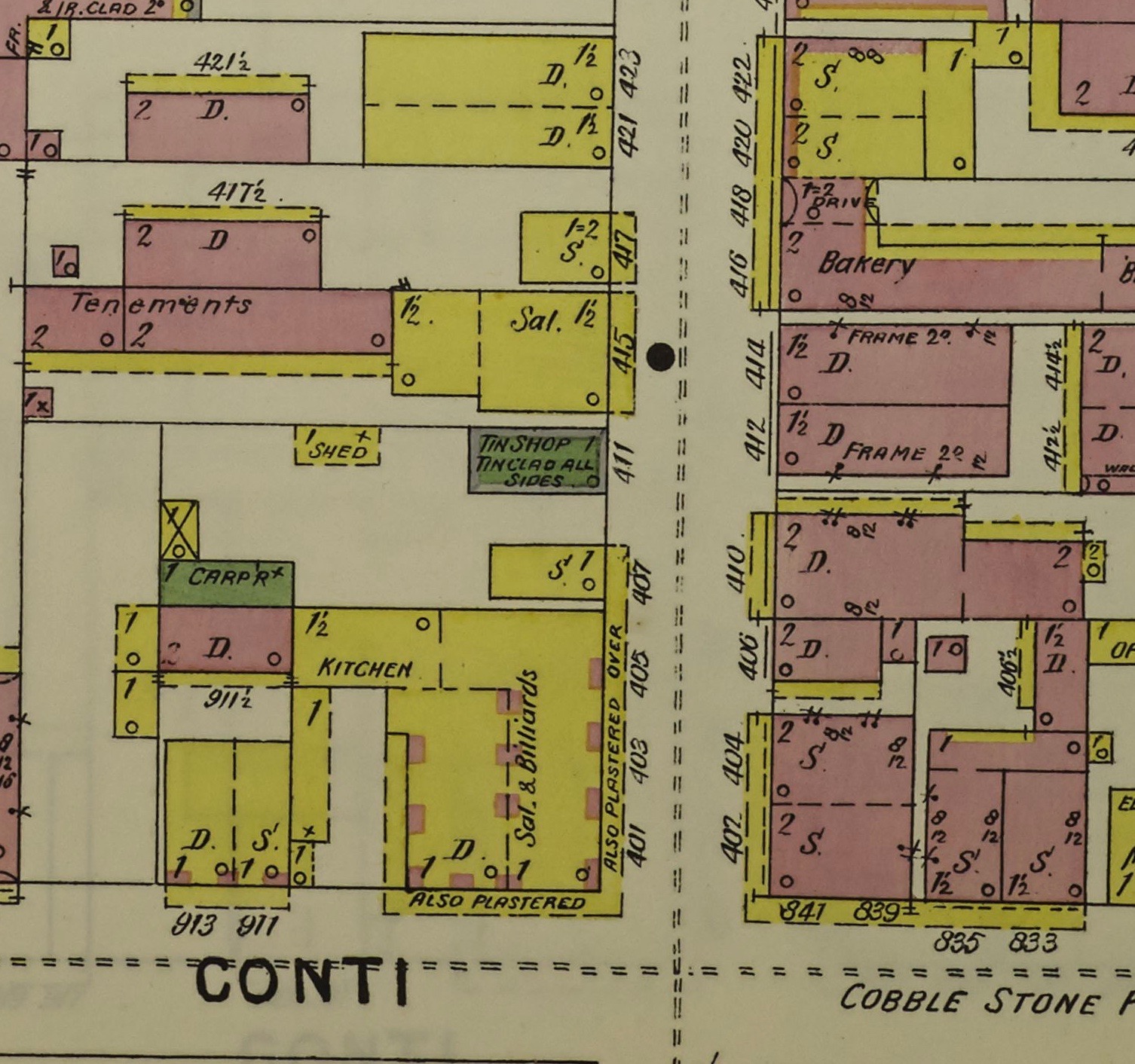
Sanborn map 1895 of New Orleans French Quarter
The 1895 Sanborn Fire Insurance Map of the corner of Dauphine and Conti Streets where the Dauphine Orleans Hotel is now located. Most of the cottages and buildings on this corner now comprise the hotel.

In 1834, merchant Samuel Hermann built a large home just across the street from the cottages. This building now houses the hotel’s offices. After these buildings were renovated, the Dauphine Orleans Hotel opened in 1971.

Investigations conducted in the 1990s by the International Society for Paranormal Research (ISPR) reported the presence of a number of spirits including a soldier’s spirit in the pool area, and several former ladies of the evening, possibly associated with May Bailey.

Sources

  • Brown, Alan. The Haunted South. Charleston, SC: History Press, 2014.
  • “The Dauphine Hotel is really haunted.” WGNO. 30 October 2015.
  • Montz, Larry and Daena Smoller. ISPR Investigates The Ghosts of New Orleans. Atglen, PA: Schiffer, 2000.
  • Oswell, Paul. New Orleans Historic Hotels. Charleston, SC: History Press, 2014.

Gardette-LePretre House
715 Dauphine Street, private

Gardette-LePretre Mansion French Quarter New Orleans
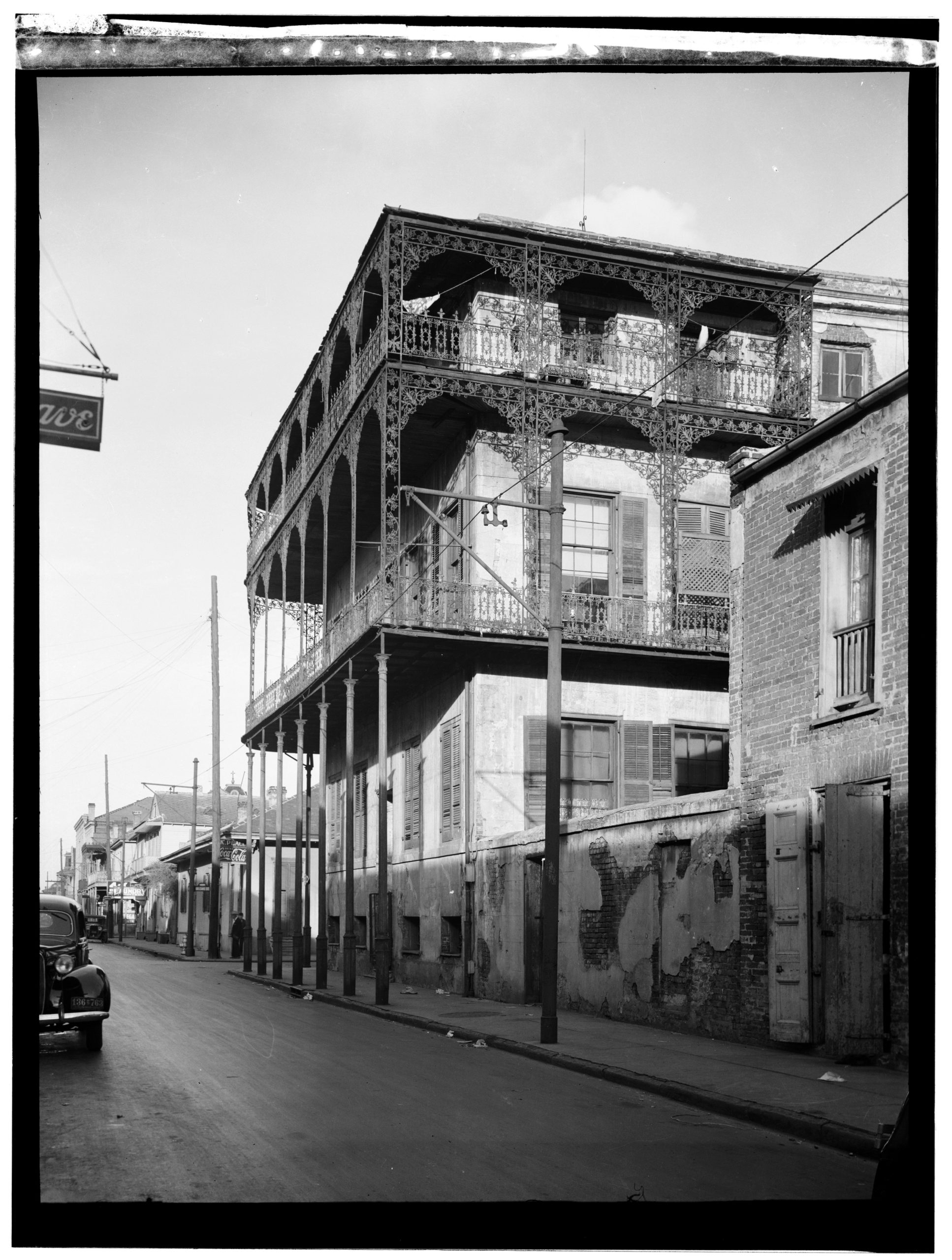
The Gardette-LePretre House in January 1958. This photo was taken by Richard Koch for the Historic American Buildings Survey (HABS), courtesy of the Library of Congress Prints and Photographs Division.

Sometimes known as the “Sultan’s Retreat” this private residence is home to a popular legend. At some point in the early 19th century, a deposed potentate from the east took up residence here. Accompanied by scimitar-wielding guards, a harem, eunuchs and servants, the potentate rented the home and turned it into an Eastern-styled pleasure garden. One morning passersby noticed that everything had suddenly gone quiet. Ominously, and in testament to the horrors within, a small trickle of blood dripped from underneath the front door. When the police broke in to investigate they discovered all the home’s residents had been massacred in an orgy of blood and violence. Since that time, residents have supposedly dealt with odd sounds, disembodied screams, and mysterious apparitions. Sadly, there’s no evidence that these events actually occurred or that the building may be haunted.

Sources

  • Ambrose, Kala. Spirits of New Orleans. Cincinnati, OH: Clerisy Press, 2012.
  • Caskey, James. The Haunted History of New Orleans. Savannah, GA: Manta Ray Books, 2014.

Dauphine House Bed & Breakfast
1830 Dauphine Street

The Dauphine House is located about a block outside of the French Quarter in Faubourg Marigny, but I think it’s close enough to include in this look at French Quarter haunts.

This small inn, built in 1860 as a private residence, hosts several spirits. Not long after the owner purchased the home she encountered a spectral couple on the stairs, “they wore clothes from the end of the 1800s…they were standing there smiling.” She thanked them for their home and explained that she would take care of the house and the couple disappeared. A guest at the inn who was distraught over a breakup reportedly saw the couple a few times during her visit and felt they were attempting to comfort her.

Sources

  • “Haunts of the Dauphine House.” Ghost Eyes Blog. 15 January 2010.
  • Smith, Terry L. and Mark Jean. Haunted Inns of America. Crane Hill Publishers, 2003.
  • Turnage, Sheila. Haunted Inns of the Southeast. Winston-Salem, NC: John F. Blair, 2001.

Street Guide to the Phantoms of the French Quarter—Wilkinson Street

This article is part of my series, Street Guide to the Phantoms of the French Quarter, which looks at the haunted places of this neighborhood in a street by street basis. Please see the series main page for an introduction to the French Quarter and links to other streets.

Wilkinson Street

Also known as Wilkinson Alley, this street runs for a block between Decatur Street and Chartres Street. It was cut through this block in 1816 and named Jefferson Street, though the name was later changed to honor General James Wilkinson (1757-1825), who was appointed by Thomas Jefferson as the first territorial governor of Louisiana.

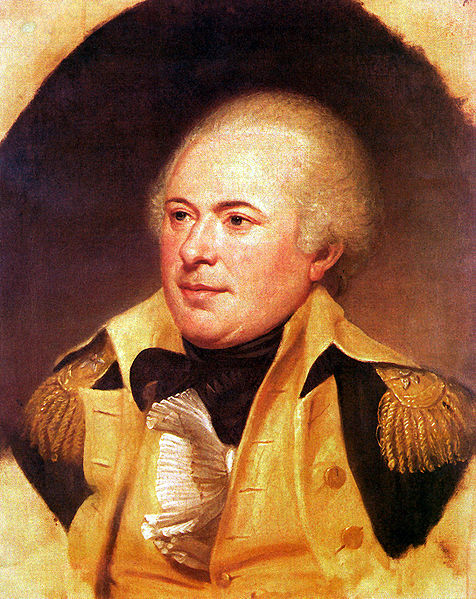
James Wilkinson by Charles Willson Peale, 1797
James Wilkinson by Charles Willson Peale, 1797.

Wilkinson is quite a controversial figure in American history. He served the Patriot cause during the American Revolution, though he involved himself in a myriad of political intrigues and scandals throughout much of his life. Some years after his death, a scholar uncovered evidence that Wilkinson had been a spy for Spain.

Sources

  • Chase, John. Frenchmen, Desire, Good Children…and other Streets of New Orleans. Gretna, LA: Pelican Publishing, 1949.
  • James Wilkinson. Wikipedia, the Free Encyclopedia. Accessed 15 April 2023.

535 Wilkinson Street

About two decades ago, this address, originally constructed around 1895 as a warehouse for Jackson Brewery, was occupied by Shalimar Indian Cuisine. During that time, Ghost Expedition tours frequently took guests to the restaurant in search of a male spirit that was reported there. Described as a man in traditional Sikh clothing consisting of long robes, a turban, and wielding a scimitar, the spirit was believed to be a protective entity watching over the family who owned the establishment.

Wilkinson Street New Orleans
Shalimar Indian Cuisine once occupied the far left bay in the white warehouse building in the center of this photograph. Photo by Infrogmation, 2019, courtesy of Wikipedia.

The entity was frequently encountered on the second floor, where people felt sudden temperature changes and would hear the sound of heavy furniture being dragged across the third floor.

During one Ghost Expedition visit in 1997, the entity made its presence abundantly clear. As the guide was speaking with her guests on the restaurant’s second floor, a large shadow appeared and “superimposed” itself on the guide. Feeling threatened, she began to back up, eventually making her way to a far wall with the shadow still on her. Upset, several guests screamed and fled the building. Once the guide was able to regain her voice, she apologized to the spirit and the shadow disappeared.

It is unknown if the spirit has remained on the premises since the Indian restaurant has closed.

Sources

  • Montz, Larry and Daena Smoller. ISPR Investigates The Ghosts of New Orleans. Atglen, PA: Schiffer, 2000.

Spectral strangers in our midst—New Orleans

Café Sbisa
1011 Decatur Street
New Orleans, Louisiana

The building that is now occupied by the Café Sbisa was originally a ship’s chandlery in 1820, where crews of ships berthed at the wharves and docks along the river could purchase supplies. As was typical in this time period, the first floor was used as retail space with the upper floors serving as a residence for the store’s owner and his family. Over the time, the building continued to serve seamen as a banking operation and a saloon with a brothel on the upper floors.

In 1899, the Sbisa family purchased the building and opened a respectable café in it. Over the years, the café has garnered a reputation for its food, drinks, and conviviality, so much so that New Orleans artist George Dureau (1930-2014) captured it in a triptych painting that hangs above the bar. The work celebrates patrons, employees, and the artist himself all within a fantastical vision of the restaurant called “Strangers in our midst: Café Sbisa, New Orleans.”

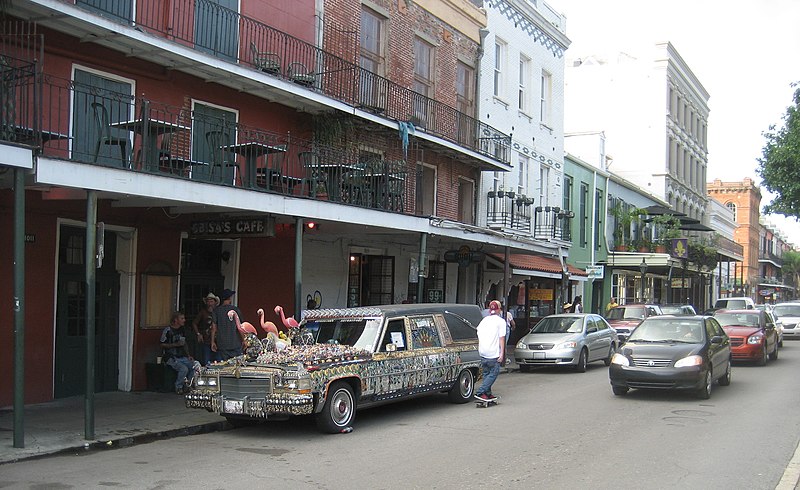
Cafe Sbisa New Orleans 2008
A highly decorated art car is parked just outside Cafe Sbisa on the afternoon of 2 August 2008. Photo by Infrogmation, courtesy of Wikipedia.

At times, amidst the bustle of staff and patrons, spectral strangers may make their way through the restaurant. These strangers date to the building’s notorious era during the 19th century. A tale has emerged concerning a young girl sold into prostitution by her father to pay his debts. The young girl believed that she could work to repay the debt and would then be freed. Unfortunately, she became pregnant and was shocked to learn that the debt had been compounded with charges for room, board, and clothing, thus keeping her against her will for her entire life. After giving birth, the distraught girl drowned her infant in courtyard’s fountain and hanged herself. These tragic deaths have left spiritual imprints on the space.

Patrons and staff have reported feeling their clothes tugged at by unseen hands as well as gentle shoves in the second-floor dining area. Others have watched as the chandelier has begun swinging on its own. Is this activity a sign of spectral strangers in our midst?

Sources

  • Gardner, James. Professor’s Guide to Ghosts of New Orleans. Amazon, 2020.
  • A Ghost Tour of the Most Haunted City in the USA.” Uncover Travel. Accessed 9 April 2023.
  • Maitland, Brenda. “Café Sbisa.” Country Roads Magazine. 1 December 2008.
  • Quackenbush, Jannette. Ghost Stories and Tales of New Orleans. 21 Crows Dusk to Dawn Publishing, 2021.