B & D Burgers 209 West Congress Street Savannah, Georgia
N.B. This article was edited and revised 15 September 2019.
In a city like Savannah with so much of the original built environment still intact, it can be expected that much of the spiritual realm will be intact as well. Even in places whose histories are not marked with tragic events, there still may be residual energy left from the many souls using these places over decades and centuries. Apparently, this may be the case of B&D Burgers, a gourmet burger joint.
According to two recent stories from Savannah ABC affiliate, WJCL, the B&D Burgers location on West Congress Street, well inside the large Savannah Historic District, may have some spirits lingering about it premises. The Savannah Historic District is a National Historic Landmark District, a recognition afforded to only around 2,500 sites in the nation, and even fewer historic districts.
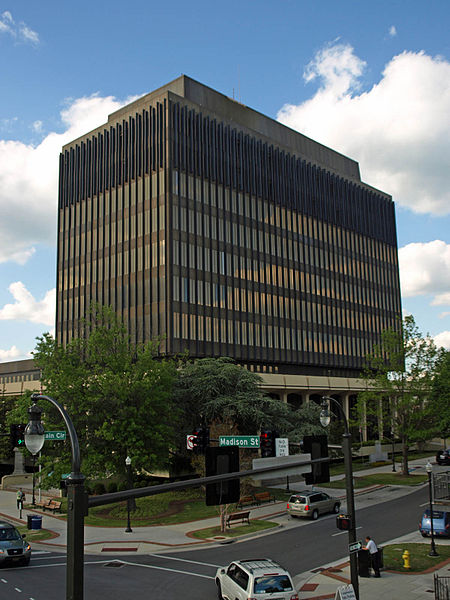
B & D Burgers, 2017, by Michael Rivera. Courtesy of Wikipedia.
The plain, mid-19th century commercial building located on Congress Street looks out onto Ellis Square, one of the original squares laid out by General James Oglethorpe—the founder of Savannah and the Colony of Georgia—in 1733. The square and the market building within it were demolished in the mid-20th century and replaced by a not so glorious parking garage.
Spurred by this sad fate, locals began to band together to preserve the history that was being demolished around them. When the lease on the parking garage expired almost 50 years later, the city did not renew it and took over the square again with plans to renew the streetscape. The garage was demolished and replaced with underground parking while the square was recreated and reopened in 2010. All this has been witnessed by the little brick building on Congress Street.
For some time, the employees of the burger joint have thought the building to be haunted. One manager reported having had his name called when no one was present. Others have felt uncomfortable in the building’s basement. All of these things are classic signs of a haunting, but it wasn’t until surveillance video revealed some odd occurrences that a paranormal team was called in to investigate.
One video shows an odd light moving around the busy bar area and then seeming to hover. Another video shows a stack of plastic glass pallets toppling over on their own accord. Granted, these odd videos themselves do not preclude the presence of paranormal activity, though when combined with reports from the restaurant’s staff, paranormal activity becomes quite a bit more evident.
Paranormal investigators from 3D Ghost Hunters, did pick up on some spiritual energy within the building. Accompanied by a local psychic, the preliminary investigation of the building produced some high EMF readings and personal experiences for the investigators. A woman’s perfume was smelled, though none of those present were wearing any. Interestingly, when a brothel was mentioned, the odor of perfume got stronger. All of this evidence, coupled with the video and employee experiences appear to be enough to bring the investigators back for a full investigation.
WJCL included the surveillance videos on their website, but they do not appear to be working.
Sources
Colwell, Josh. “B&D Burgers Ghost Hunt.” WJCL. 1 May 2013.
Colwell, Josh. “Ghost Busters Anyone?” WJCL. 30 April 2013.
Early in this blog’s history I explored (or tried to) the ghosts of Huntsville, Alabama. The problem was that there was very little available. I found a few poorly written and unsourced articles that basically just repeated each other in terms of information. Besides those articles, there was very little, or so I thought. Just days before I posted the entry, Jessica Penot’s marvelous Haunted North Alabama had been released and in it, there were good, reliable information on a number of Huntsville’s hauntings plus information on locations that were not included in the few articles on the subject. After getting my copy of Ms. Penot’s book, I also began reading her blog which has included more locations in Huntsville. Since, I’ve kept an eye out for articles relating to Huntsville. In my usual search through Google News, I was surprised to find two articles about Huntsville tonight.
The first article, from the local ABC station, WAAY, concerns a business located on courthouse square, Huntsville’s historic heart. In many towns and cities in the South (and really throughout the nation), the courthouse or main square is also ground zero for hauntings, often due to the historic fabric that may be intact there. Huntsville is no exception, with a starkly modern courthouse sitting amid historic commercial buildings. The business is a pizzeria, SAM & GREG’S PIZZERIA AND GELATERIA (119 North Side Square), which is located in one of those historic commercial buildings.
The pizzeria’s website describes the building as having been built in the early nineteenth century and being one of the original buildings on the square. It continues by saying that the building has served as a general store, a dress shop and a gallery before becoming a pizzeria. The article states that the main floor of the pizzeria is quite normal, but it’s the large, unrestored room upstairs that has activity. The building was recently investigated by the Alabama Paranormal Association who certified the building as haunted.
The pizzeria’s location reminded me of an article from Jessica Penot’s blog, Ghost Stories and Haunted Places, regarding the MADISON COUNTY COURTHOUSE (100 North Side Square). A brief internet search does not reveal the history of the current courthouse building, but I would assume from the architecture that it was built anytime between the 1960s and the 1980s. I did discover, however, that the building sits on the site of the original courthouse that was constructed in 1818. According to the blog’s entry, apparitions have been seen in the building along with orbs and odd sounds and lights. One of the spirits may be that of Horace Maples, an African-American who was lynched by a mob on the courthouse lawn.
Madison County Courthouse, 2011, by Spyder_Monkey. Courtesy of Wikipedia.
The second article I stumbled across concerns an upcoming investigation at the VETERANS MEMORIAL MUSEUM (2060 Airport Road, SW) a museum displaying memorabilia from wars dating back to the American Revolution. Interestingly, the article points out that the investigation will not be in search of spirits that haunt the museum, but those attached to the artifacts within, specifically those from World Wars I and II. While it has been known that spirits may attach themselves to objects, interest in this has increased in the paranormal community, especially with the recent television show, Haunted Collector. The show features investigator John Zaffis who investigates a variety of hauntings usually centered on a specific object.
Tucked away in my files on the paranormal South is another article on an investigation at another Huntsville location, MERRIMACK HALL PERFORMING ARTS CENTER (3320 Triana Boulevard). Opened in 2007, the performing arts center is located in an 1898 structure that once served as the company store for the mill village serving Merrimack Mills. This building and some 200 mill houses are all that remain of this important textile hub.
The investigation, conducted by the Alabama Paranormal Society, appears to have uncovered some interesting evidence. Among the evidence mentioned in the article, odd bangs heard in response to questions, a mysterious drop in temperature in the theatre and orbs are seen on video wheeling about the building. According to the article, the building may be inhabited by multiple spirits.
I imagine this is just the tip of the iceberg of haunted Huntsville.
While I’ve been spending time working on a revision of my entry on Columbus, Mississippi, I decided to take a break and write a little something about another city. The basis of this came from a single 2009 article from The Daily Reveille, the student newspaper of Louisiana State University. Other than that article, and a few scattered references, there’s not much on the ghosts of Baton Rouge.
The name, Baton Rouge, “red stick” in French, refers to a red cypress pole festooned with bloody animals that French explorer Sieur d’Iberville, the founder of the Louisiana colony, encountered in the area. It was placed there to mark the boundary between the hunting grounds of the Houma and the Bayou Goula peoples of the region. Research and archaeological evidence reveal that the area now occupied by Baton Rouge has been inhabited since roughly 8000 BCE. These indigenous peoples have left the area dotted with mounds and other landmarks.
The city was incorporated in 1817 and made state capital in 1849. Architect James Dakin departed from the usual designs for state capitols which paid homage to the U.S. Capitol building in Washington and designed the building in a Neo-Gothic style complete with turrets, towers and crenellations. The site chosen for this grand castle, overlooking the Mississippi River, is believed to be the location of the red stick that Sieur d’Iberville named the city for.
Since its construction, the OLD LOUISIANA STATE CAPITOL BUILDING (100 North Boulevard), has had a busy and somewhat tragic history. During the Union occupation of the city, the building was used as a prison and a garrison for African-American troops. The building caught fire twice and by the end of the war was left a hulking, gutted ruin. The building was restored in 1882 and at this time much of the building’s noted stained glass was added. The legislature used the building until 1932 when a new, modern, art deco styled state capitol was opened. The building underwent full restoration in the 1990s and is now open as a museum of political history.
Old State Capitol, 2009, by Avazina. Courtesy of Wikipedia.
There is one particularly enduring legend about this Gothic edifice involves a late legislator. Pierre Couvillion, a representative of Avoyelles Parish had a heart attack amid a passionate debate. Though he was buried near his home in Marksville, he spirit may still reside within the halls and chambers of the old building. Staff members and visitors have reported odd occurrences. One security guard watched as movement detectors were set off through a series of rooms while nothing was seen on the video.
Two organizations investigated the building in 2009 and uncovered much evidence. Louisiana Spirits Paranormal Investigations picked up a number of interesting EVPs including someone singing the old song, “You Are My Sunshine.” Everyday Paranormal, in their investigation had a few encounters in the basement of the building, the area used as a prison during the Union occupation. It seems that there are many spirits within the crenellated walls of the Old Capitol.
Many spirits, of the ghostly and liquor kind reside in an old bar on the waterfront. The building that now houses THE SPANISH MOON (1109 Highland Road) served as a temporary morgue for victims of the flooding that ravaged the area in the early 20th century. The spirit of a young girl who legend holds was trampled by horses in the building may also reside within the creepy structure.
Another spirit among spirits may be found at WILLIE’S ON THE RIVER (140 Main Street), so named for its resident spirit. Legend holds that Willie was crushed by a falling wall here sometime in the 19th century. Staff members have reported that the spirit is fond of billiards and balls were seen moving by themselves.
Also on the riverfront is the U.S.S. KIDD VETERANS MEMORIAL (305 River Road South), a ship named as a memorial to Rear Admiral Isaac C. Kidd, the highest-ranking officer to die during the Japanese bombing of Pearl Harbor in 1941. This memorial ship now serves as a memorial to Louisiana’s World War II veterans.
U.S.S. Kidd, 2013, by Niagara, courtesy of Wikipedia.
This Fletcher-class destroyer saw a great deal of action in the Pacific during World War II and the Korean War as well as serving admirably during the Cold War. It was during service in the campaign for Okinawa that the ship was struck by a kamikaze resulting in the deaths of 38 and 55 wounded. It is perhaps this single event that has left a spiritual impression on the now museum ship. Visitors have encountered various apparitions onboard including the images of a single arm or leg moving as if still attached to a human being.
Along the famous River Road which stretches from New Orleans to Baton Rouge that is lined with many historical and haunted plantations are the ruins of THE COTTAGE PLANTATION (River Road at Duncan Point) just south of the city. Though now reduced to ruined columns forlornly sitting in a private field by the roadside, these ruins were once part of a grand plantation home until a lightning strike and fire reduced it to rubble in 1960. Legend speaks of a man seen wandering the ruins who is believed to be the specter of Angus Holt who served as a personal secretary to Frederick Conrad. Conrad owned the plantation during the Civil War and died before war’s end. Holt returned to run the plantation until his death in 1880. His spirit still lingers to check on the ruins of the mighty manse.
This handful of spirits is most likely just the beginning of the mélange of spirits still dancing about The Red Stick.
Southside Saloon and Bistro 1301 Chestnut Street Chattanooga, Tennessee
Until quite recently, Chattanooga was a city whose ghosts were ill documented. Jessica Penot and Amy Petulla’s recent book, Haunted Chattanooga, has helped to fix that. I’ve only just gotten my copy of the book and will review it as soon as I’ve finished reading it. It doesn’t seem to include this location, though it’s noted that many stories were not included in this book due to space constraints. Therefore, I’m also quite happy to see this recent article. Adding locations to my list always is a joy!
The Southside Saloon and Bistro is located in an unassuming brick building in downtown Chattanooga. A bit over a century old, the building was built initially as a saloon while the upstairs included cubicles for use as a brothel. Over the decades, the building has seen a number of other uses including use as a bottling company. Some spirits still linger here as well. The article mentions three ghosts believed to remain in the building including a man whom the staff has nicknamed George. Activity has included apparitions, swinging pots and other moving objects.
So, next time you’re in Chattanooga, check out the Southside Saloon and Bistro for good food and a variety of spirits.
In early America, life was generally centered on a handful of places including the local tavern. Serving as the social and governmental center, the tavern often was the ersatz community center, especially in sparsely inhabited areas. Residents of far-flung farms and plantations could meet other locals, find solace from the ennui of rural life, hear the news, pick up mail, or conduct government business in places where courthouses were unavailable. Travelers could find a drink, meal or sometimes a place for the night as well as possibly hear warnings of Indian movements in the region. Throughout the South, the seeds of many small towns and communities were planted by taverns.
In urban areas, the tavern was one of the primary settings for meeting people, doing business, or hearing and discussing the news of the day. In fact, much of the early work in the founding and building of this country was done in taverns; therefore, it’s no surprise that the tune for our national anthem, “To Anacreon in Heaven,” is an English drinking song. The First Continental Congress conducted much of its business in Philadelphia’s City Tavern and other drinking establishments around the city. The seeds of discontentment that would blossom into the American Tree of Liberty were watered with the beer, coffee, and spirits of taverns.
St. Anne’s Episcopal Church in the center of Church Circle. A number of streets radiate from this point. Photo taken 1906, for the Detroit Publishing Company. Courtesy of the Library of Congress, Prints & Photographs Collection.
In Annapolis, long considered one of the most beautiful, cultured and cultivated cities in the colonies, many taverns took root, some of which are still in operation today. The city was incorporated in 1708 but its origins dated to some fifty years earlier with the founding of a small village by the Puritans. Governor Sir Francis Nicholson moved the colony’s government to this small settlement in 1694 from heavily Catholic St. Mary’s City. In planning the city, London-born Nicholson modeled it on Sir Christopher Wren’s designs for London after the Great Fire of 1666. He utilized Wren’s Baroque design for the city streets, with important places, like churches and houses of government, set within it with streets projecting out like spokes.
Reynolds Tavern 7 Church Circle
One of these circles surrounds St. Anne’s Episcopal Church, on its third building built in 1858. Facing the church is Reynolds Tavern, a fine example of an urban tavern. The building was constructed around 1747 to face the first St. Anne’s Church that was around 40 years old when the tavern was constructed. The structure was built by William Reynolds as a private residence and hat shop. At some point in the early history, part of the building was opened as the “Beaver and Lace’d Hat,” a tavern (I would presume the name is a reference to beaver felt which was prized for use in waterproof hats).
The license for the tavern was taken out by Mary Funnereau, who may have later married William Reynolds. The establishment was highly regarded as evidenced by the legend that George Washington was a frequent guest. One story tells of him professing his love to Mrs. Reynolds only to be pursued by Mr. Reynolds out of the building and down the street. More in line with the historical record, the Corporation of the City of Annapolis and the Mayor’s Court met in the tavern. The tavern operated until the building passed into the hands of William Reynolds’ son-in-law who used the building briefly as a boarding house. In 1812, the former tavern was taken over by the Farmers Bank of Maryland. When the bank realized the building was ill-suited as a banking house, a building for that purpose was constructed next door and the house renovated as a private house for the Cashier of the Bank.
Reynolds Tavern, 1960. Photograph by Jack Boucher for the Historic American Buildings Survey (HABS). Courtesy of the Library of Congress, Prints & Photographs Division.
The bank owned the edifice until 1932. Standard Oil considered tearing down the landmark for a service station but local citizens saved the house and it became a library. In the early 1970s, it returned to its roots and became a tavern and inn. With so many souls passing over its threshold, from slaves to servants, private citizens to future presidents, it’s no surprise that the tavern has paranormal activity.
The tavern hosted an investigation in 2004 that caused quite a stir. The Maryland Ghost and Spirit Society under the leadership of sensitive, Beverly Litsinger, held an overnight investigation that uncovered evidence of what Litsinger claimed was not one (as was previously believed), but five spirits in the structure. An account of the investigation in The Sun notes that activity was picked up by a bevy of monitors throughout the building and a dish was mysteriously broken in the kitchen. According to an article in The Capital, the owners were exhausted by all the commotion stirred up by the investigation and decided not to publicize any further paranormal investigations.
Staircase of the Reynolds Tavern, 1960, during its time as a library. Photograph by Jack Boucher for the Historic American Buildings Survey (HABS). Courtesy of the Library of Congress, Prints & Photographs Division.
The owners, however, did find enough evidence of spiritual activity within the landmark. One of the most convincing pieces of evidence was human-shaped indentions in one of the upstairs beds. Numerous experiences had led up to the investigation including objects moving on their own volition, voices including one singing Christmas carols and human-shaped indentions appearing in an upstairs bedroom. The spirit was assumed to be that of Mary Reynolds, who had run the tavern after her husband, William’s, death. While the owners have discontinued investigations, stories are still told about the tavern and it can be assumed that the spirits continue to make their home within the brick walls of the Reynolds Tavern.
Middleton Tavern 2 Market Place
Looking out towards Annapolis harbor and built to serve many of the seamen coming into the city is the Middleton Tavern. The exact date for the building’s construction seems to be a point of contention, the form on the building for the Maryland Historical Trust estimates the building’s construction at around 1754, though the current owners of the tavern provide that the tavern was established in 1750. It is possible that the tavern predated the building, but no evidence is provided by the Trust. The site, however, was occupied by a ship carpenter’s yard as well as a dwelling and garden.
Middleton Tavern, 1964. Photograph for the Historic American Buildings Survey (HABS). Courtesy of the Library of Congress, Prints & Photographs Division.
It is known that the building was constructed by Horatio Middleton as a dwelling house and at that time or soon thereafter opened as a tavern for seafaring men. Throughout its history, it did attract a notable clientele which may have included George Washington as well as Thomas Jefferson and James Monroe. The building remained a tavern until it was converted into the Marx Hotel around the time of the Civil War. After almost a century of use as a tavern and inn, the building fell into disuse in the late 19th century and served a variety of commercial ventures. In 1968, the building underwent restoration and reopened as Middleton’s Tavern. The building was gutted by fire in 1970 and then 1973, but the shell of the building has been restored with a modern interior.
Like its older sister establishment, the Reynolds Tavern, the Middleton’s illustrious history has left a spiritual residue. In my research, I have not located any information on investigations, though the spiritual activity seems fairly well known. According to the Ghost Eyes – Most Haunted Places in America blog, there are three spirits witnessed in and around the tavern: a Revolutionary War soldier and a shadowy form are seen flitting throughout the first floor dining room while outside the tavern a gentleman in 18th century seaman’s attire has been seen staring out to sea.
Rams Head Tavern 33 West Street
While the building at 31-33 West Street that houses the Rams Head dates to around 1831, the site’s history is associated with Annapolis tavern history that stretches into the 18th century. Located just down the street from the Reynolds Tavern, the site was home to the “Crown and Dial” which opened in 1792 and two years later the “Sign of the Green Tree.” The site was utilized as a variety of businesses and the 31-33 West Street building also housed residences. The Rams Head Tavern opened in the building. The business has since expanded with locations opening throughout the region.
The site’s history as the site of historic taverns has given rise to the legend of “Amy.” The legend speaks of a young woman employed to “entertain” tavern guests who may have died while actually plying her trade, so to speak. In fact, what is said to be the bedpost of her bed still survives in the downstairs bar.
31-33 West Street, 1964. Photograph by Jack Boucher for the Historic American Buildings Survey (HABS). Courtesy of the Library of Congress, Prints & Photographs Division.
While the story has little historical evidence to prove it to be less than fiction, the stories of tavern employees are most definitely non-fiction. Servers have run into Amy’s apparition while Beverly Litsinger (who investigated the Reynolds Tavern above) captured her supposed shadowy image in a photograph. Another spirit mentioned as residing in the tavern is that of an elderly woman. Yet one other spirit is said to rattle the chain-link of the bar’s liquor cage. Among other activity, the staff finds silverware turned upside down and have drinks turned over. Perhaps these are spirits of temperance?
Other Haunted Taverns
A few other haunted taverns have popped up on my radar while doing the research for this article. Beverly Litsinger mentioned O’Briens at 113 Main Street as being “so haunted it’s ridiculous.” The Drummers Lot Pub at 16 Church Circle, the same street as the Reynolds Tavern is on the haunted pub tour, though I cannot find any other information regarding it. But if you’re in Annapolis, raise a glass of spirits to the spirits that may be all around you.
Sources
Annapolis, Maryland. Wikipedia, the Free Encyclopedia. Accessed 5 June 2011.
City Tavern. Wikipedia, the Free Encyclopedia. Accessed 5 June 2011.
Gary, Nancy. “Annapolis stories: Ghost tales haunt Annapolis’ past.” The Capital. 3 November 2008.