Newsworthy Hauntings 5/23/2012

I’m starting a new regular segment where I’ll briefly highlight hauntings or haunted places in the news and in some of the regular blogs I read.

The NIKAWSI MOUND (Nikwasi Lane), an ancient Native American mound in Franklin, North Carolina, is still stirring up controversy a few thousand years after it was built. The City of Franklin, which owns the mound that is still considered sacred to the local Cherokee people, recently sprayed herbicide on the mound. The herbicide was sprayed because mowing of the mound has lead to some deterioration of it. Local Cherokee, however, are not pleased with the actions, have expressed their opinions and demanded an apology from the city.

The mound’s builders are not known, but scholars believe that it was built by one of the early Mississippean peoples. The Cherokee utilized the site and it became part of Cherokee mythology as one of the locations where the Nunne’hi lived. This was a mythical race of beings that lived underground. Nineteenth century anthropologist James Mooney recorded a story that during a battle near the site, the Nunne’hi emerged to defeat the Cherokee’s enemy. Roger Manley records in Weird Carolinas that the Nunne’hi may have also guarded the town during the Civil War when a contingent of Federal troops attempted to the seize the Confederate stronghold. The Federal troops retreated when they saw a huge number of troops when in actuality there were only a few Confederates guarding the town. Manley also notes that some claim to hear drumbeats within the mound.

The mound is listed on the National Register of Historic Places, but there has been controversy about its preservation. Some have considered creating a park, but there is contention as to who will pay for it and control it. Hopefully, the herbicide will not adversely affect this place where the heartbeats and drumbeats of Native America may still be heard.

Sources

  • Dalrymple, Maria. “Nikwasi Mound deed could be transferred to create park.” Macon County News. 3 September 2009.
  • Manley, Roger. Weird Carolinas. NYC: Sterling, 2007.
  • McKie, Scott. “Chief: Tribe wants apology on Nikwasi Mound issue.” Cherokee One Feather. 21 May 2012.
  • Mooney, James. History, Myths, and Sacred Formulas of the Cherokees. Asheville, NC: Bright Mountain Books, 1992.
  • Nikwasi. Wikipedia, the Free Encyclopedia. Accessed 21 May 2012.


In Chesterfield, Virginia, the Chesterfield Historical Society has announced that they will be hosting ghost tours of MAGNOLIA GRANGE (10020 Ironbridge Road). The magnificent Federal plantation, one among the many famous James River Plantations, was constructed in 1821 and named for the circle of magnolia trees that once, with formal boxwoods, constituted its formal gardens. These gardens were destroyed after the Civil War.

Magnolia Grange, 2012, by James Shelton32. Courtesy of Wikipedia.

The home is now owned by the county and administered by historical society. The ghost tours are being conducted by Spirited History, a local paranormal group that is working to help local historical sites with funding by investigating and educating the public about the sites’ paranormal history. Among the activity that has been reported in the house is the appearance of a beautiful, blond woman seen standing on the steps. A photographer taking wedding pictures in the house some years ago encountered her and mentioned the woman he had seen in period clothing to the staff. The staff informed him that no one was working in period clothing. Investigations of the house have also yielded a number of EVPs.

Sources

  • Gregory, Donna C. “The past lives on at Magnolia Grange.” The Chesterfield Observer. 26 October 2011.
  • “Historical Society to host ‘Spirited History’ at Magnolia Grange May 19.” Midlothian Exchange. 17 May 2012.
  • National Park Service. “Magnolia Grange” James River Plantations. Accessed 21 May 2009.
  • Virginia Historic Landmarks Commission Staff. National Register of Historic Places nomination form for Magnolia Grange. November 1979.


Over at the “eco-gossip” blog, Ecorazzi, two locations in the South have been featured in a list of the top 10 “naturally haunted” places in the world. While I give little credence to such lists (so many of them are just silly, unsubstantiated fluff), I was excited to see these two places in the list.
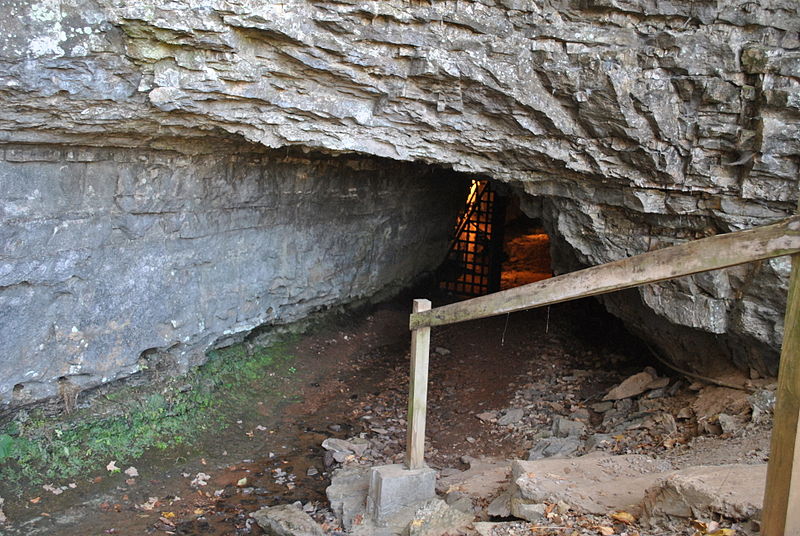
Inside the Bell Witch Cave, 2010, by Www78. Courtesy of Wikipedia.

Adams, Tennessee’s BELL WITCH CAVE (430 Keysburg Road) is probably the most well-known of the two locations. Located on property once owned by the Bell family, the cave is believed to be the current residence of the famous Bell Witch who terrorized the Bell family in the early 19th century. Of the spirits in the American South, this spirits is perhaps the most well-known and certainly one of the most publicized spirits having a number of books written solely on the subject as well as a recent feature film, An American Haunting. Visitors to the cave have had a variety of experiences in and around it. The cave is privately owned and tours are given.

On the western shores of Louisiana’s Lake Pontchartrain, near New Orleans is MANCHAC SWAMP, home to ghosts and the French Creole werewolf, the Loup-Garou. It was here that a number of small towns were wiped off the map in the New Orleans Hurricane of 1915. Tours now travel through this haunted wetland at night by torchlight scaring up alligators and the spirits of the victims of the hurricane.

Sources

  • 1915 New Orleans hurricane. Wikipedia, the Free Encyclopedia. Accessed 23 May 2012.
  • Bell Witch Cave. Wikipedia, the Free Encyclopedia. Accessed 23 May 2012.
  • Coleman, Christopher K. Ghosts and Haunts of Tennessee. Winston- Salem, NC: John F. Blair, 2011.
  • Freeman, China Despain. “The 10 Naturally Creepiest Places on Earth.” 23 May 2012.
  • Smith, Katherine. Haunted History Tours Presents Journey Into Darkness…Ghosts and Vampires of New Orleans. New Orleans: De Simonin Publishing, 1998.

The Grand “Fighting Lady”—Photos from the USS Yorktown

Patriot’s Point
40 Patriot’s Point Road
Mount Pleasant, South Carolina

I never quite felt comfortable aboard the USS Yorktown. I’m not a small guy and my height (6’2”) required that I ducked my head quite a bit as I moved through the passages of the ship and the camera bag hanging around my neck did not facilitate easy movement either. But there was also a feeling of never being alone on this fighting lady as well. There was a constant stream of visitors through the ship, but at moments when I found myself alone, I felt uncomfortable.

This is evidently not an uncommon experience aboard the ship. Last Wednesday evening as I was heading towards Charleston, a new episode of Ghost Hunters was airing revealing their extraordinary investigation of the ship. Having only read about the episode, I’ll refrain from commenting further on it. Before hearing of their investigation, I’d only read a bit about ghosts aboard the ship and had not pursued any other information.

The USS Yorktown in service sometime in the early 1960s. Photo by the US Navy, courtesy of Wikipedia.

According to a Charleston Post & Courier article about the investigation, this show was really used as a platform for revealing the ship’s hauntings to the paranormal world. There seem to have been many staff and visitors to the ship who have had a variety of experiences. Primarily, these experiences tend to be aural: including voices and footsteps. But there are also reports of shadow figures and full bodied apparitions.

The ship was laid down on December 1, 1941, just days before the bombing of Pearl Harbor. She was named for the USS Yorktown which was lost in the Battle of Midway in 1942. She entered service in 1943 and served admirably in the Pacific throughout the remainder of World War II. Following the war she patrolled the West Coast and served in the Vietnam War. She was retired in 1973 before being donated to Patriot’s Point.

Approach to the ship at Patriot’s Point. Photo 2012, by Lewis Powell IV, all rights reserved.
Part of the engine room. One of the docents mentioned that this is where a mechanic was scalded to death by steam. Photo 2012, by Lewis Powell IV, all rights reserved.
One of the bunk rooms. Photo 2012, by Lewis Powell IV, all rights reserved.
One of the labyrinthine passages running throughout the ship. Photo 2012, by Lewis Powell IV, all rights reserved.
The “island” rises above the deck. Photo 2012, by Lewis Powell IV, all rights reserved.
The ship’s bridge. Photo 2012, by Lewis Powell IV, all rights reserved.

Sources

  • USS Yorktown(CV-10). Wikipedia, the Free Encyclopedia. Accessed 10 May 2012.
  • Warren L. “SyFy’s ‘Ghost Hunters’ explore paranormal side of Yorktown.” Charleston Post & Courier. 2 May 2012.

See the Maco Light, Onstage!

Maco Light
Seen near the old Atlantic Coast Line Railroad Tracks
Maco, North Carolina

N. B. This entry was revised 6 January 2024.

A Haunted Southern Book of Days–4 January

This article is a part of an occasional blog series highlighting Southern hauntings or high strangeness associated with specific days. For a complete listing, see “A Haunted Southern Book of Days.”


The influence of the Southern folklore extends tremendously beyond the South as evidenced by Bekah Brunstetter’s play Take Her to See the Maco Lights that premiered in Chicago in 2012. According to the notice on Broadwayworld.com, the play “follows a pair of young lovers along a dark railroad track where the past and future converge. [… the story] weaves a ghostly love story with characters who are on a crash course to a certain stretch of overgrown railroad tracks in North Carolina.” Indeed, a special May 17th performance was preceded by a local walking tour hosted by paranormal researcher and writer Ursula Bielski, whose haunted Chicago books I would highly recommend.

The play’s climax occurs on at a legendary spot just outside the small community of Maco in Brunswick County, North Carolina. For more than a century and a half, the railroad tracks attracted the curious to see the famous Maco Light. Legend holds that on the evening of 4 January 1867 a train passing on the then Wilmington and Manchester line near Maco Station had its caboose come uncoupled. The caboose had a lone crewman, Joe Baldwin, asleep inside. When the car slowed down and stopped, he was awakened. Shortly, he was horrified to hear an approaching train and fearing calamity, he grabbed a lantern and stood on the back of the caboose swinging it wildly to alert the oncoming locomotive. That train did not slow down and plowed into the caboose crushing and decapitating the unfortunate crewman. His body was recovered, though his head was not found.

Train brakeman
An 1890 engraving of a brakeman at work. Joe Baldwin was likely a brakeman.

According to some sources, strange lights were first seen in the area just days after the accident. They were a popular attraction for locals and gained some fame from a presidential sighting in 1889. Grover Cleveland told his story in Washington after seeing the lights from his presidential Pullman car. Tony Reevy recounts in his Ghost Train! American Railroad Ghost Legends what most viewers witnessed:

Viewers who saw the light always reported the same thing: the light flared up way down the track, crept towards the observer, then speeded up and began swinging side-to-side. Finally, the light stopped abruptly, hovered for a minute, retreated back to where it started from and vanished. The light always appeared three feet above the left rail, facing east. It was sometimes so distinct that you could see the metal guards of a railroad hand lantern. The light didn’t appear every night. It seemed to appear randomly according to old Joe’s whims.

The tracks were a part of the Wilmington and Manchester Railroad which was acquired not long after the accident by the Atlantic Coast Line Railroad. The line later became the Seaboard Coast Line. Later mergers added the line to the thousands of miles of rail owned by CSX which took up these tracks in 1977. Sightings of the light reportedly ceased around that time.

But have they? A North Carolina paranormal investigation group, NC HAGS (North Carolina Haints, Apparitions, Ghosts and Spirits) investigated the area in 2007. Following up on recent reports of people seeing the light, the group investigated and captured an odd image. While most photographs taken that evening turned out quite dark with little to be seen, one photograph taken just after an investigator asked Joe Baldwin to appear shows a series of lights that seem to resemble the silhouette of a man. Is Joe Baldwin still stalking the site of the old Maco tracks? At least for now you may have to either venture out to the bug-ridden coastal piney woods of North Carolina or you may sit in an air-conditioned theatre in Chicago to answer that question.

Sources

“Lord willing and the creek don’t rise!”—Lake Washington, Mississippi

The marvelous phrase, “Lord willing and the creek don’t rise,” occurs frequently in Southern dialogue with some changes (i.e. “God” or “Good Lord” instead of just “Lord” and sometimes plural creeks or “Creek” capitalized). Initially, this phrase did not refer to “creek” as in a body of water, but to the Creek People (now known as the “Muscogee”). According to Google Knol, this phrase originated with the great Indian Agent, Benjamin Hawkins, in the 18th century when he responded to a presidential request to travel to Washington with, “God willing and the Creek don’t rise.”

In a recent news piece from WLBT News, the NBC station in Jackson, Mississippi, a mistake in the spelling of a word made me think of this wonderful turn of phrase. A reporter from the station spent an evening investigating one of the historic showplaces on Lake Washington. He described the group as hearing “a few knocks and creaks downstairs,” though the article reads “a few knocks and creeks downstairs.” It certainly made me chuckle.

The group was investigating the exceedingly atmospheric Susie B. Law House. Neglected for quite some time, this house now hides under a shroud of vines. Underneath this organic, house-shaped shroud is a two-story, white Greek revival house with a columned portico extending from the front. Barbara Sillery in her magisterial The Haunting of Mississippi (which I reviewed here), mentions that a smaller version of the house exists as a playhouse not far from the main house and crushed by a tangle of vines. The house’s appearance has led to its use as a filming location twice, though I cannot find the identities of either film.

Vines cover the portico of the Susie B. Law House. Photo 2010 by Tinkerbrad. Released under a Creative Commons License.

The reporter, Walt Grayson, and the paranormal team, Delta Paranormal, investigating the house recently encountered more than groans and creaks from downstairs. An upstairs door closed itself and was moments later caught on tape opening and closing. The proprietor of a local bait shop, Bait n’ Thangs, who is interviewed in the video also appears in Sillery’s book. He had an odd experience while passing by the Law House a few years ago before the house became so covered in vines. He saw a light in the empty house and as he got closer witnessed a little old lady in a white nightgown ascending the staircase with an oil lamp in her hand. He considered calling the sheriff, but he knew the house was empty and something just wasn’t right. After reporting the woman to descendants of the Law family, he discovered that he’d seen the apparition of Susie B. Law.

The house is one of the showplaces built near Lake Washington, considered the “most beautiful lake in the world.” In the early 19th century many families were attracted to the oxbow lake and built magnificent mansions on its shores along East Lake Washington Road in the hamlet of Glen Allan. Among the most important homes was the Italianate red-brick house, MOUNT HOLLY. It was important enough that the 1938 WPA guide to the state devotes a paragraph to describing the home’s “walls […] 2 feet thick and the ceilings 14 feet high.” It goes on to note the “rosewood staircase, rounded niches for statuary, frescoes, walnut woodwork and great oven.” The circa 1856 home was placed on the National Register of Historic Places in 1973, but more recently, it has become known for its ghosts.

Mount Holly, 2010, by Tinkerbrad. Released under a Creative Commons License.

Like the nearby Law House, Mount Holly sits derelict. It is here that the bait shop owner also had a bizarre experience. Whilst showing a couple historians through the house, the local fishing guide had a door slammed in his face. Moments later, he witnessed a figure running away from the door. Evidently, spirits in both houses enjoy their door closing abilities.

Neglect shows on both of these magnificent homes. Neither is currently open to the public so I have not added addresses to this entry. In the video, the bait shop owner mentions that he hopes paranormal investigations could provide the money to at least stabilize the Law House. Mount Holly needs just as much work and could also benefit from paranormal investigations. It’s also noted in the video that the area has received a great deal of rain recently; rain that can cause damage to both edifices. Lord willing and the creeks don’t rise these houses can be saved.

Sources

Weekend Pics from North Carolina

Last weekend was spectacular, thanks for asking!

My family rented a cabin just outside of Lake Lure, NC. My mother had actually gotten the idea of going there from me after I talked about the area while writing my two articles about the area (the one on Chimney Rock that I just reposted and one on the two haunted hotels there). Lake Lure and Chimney Rock are almost adjoining. Judging from the signs, they are really only feet apart. Both hamlets spread out on either side of U.S. Route 64 as it winds (and I do mean it’s a very winding road) through the Hickory Nut Gorge. Both Lake Lure and the town of Chimney Rock sit under the sentinel of the actual Chimney Rock.

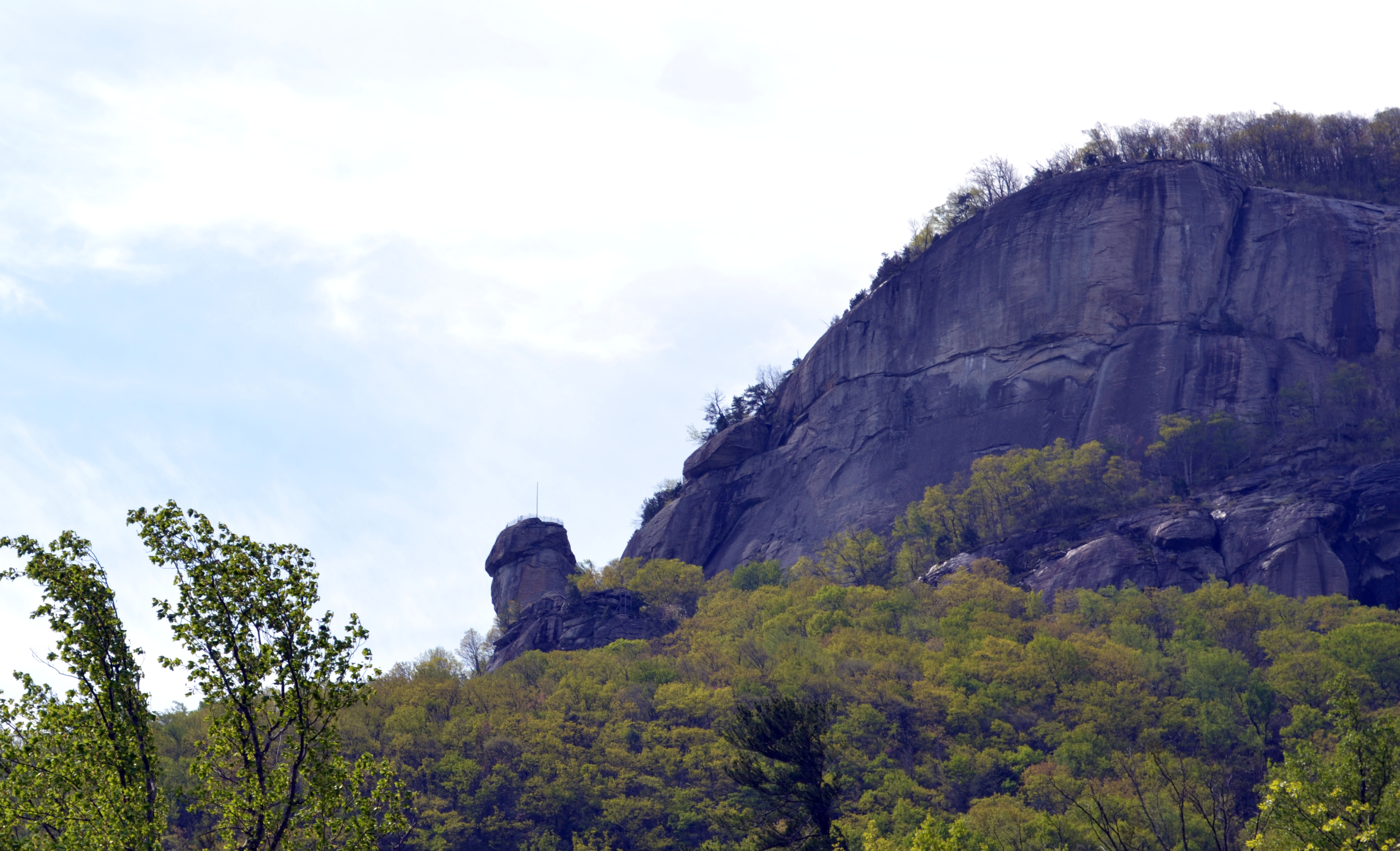
Chimney Rock extends, thumb-like, from Chimney Mountain. Taken from just off of US 64. Photo 2012, by Lewis Powell IV, all rights reserved.
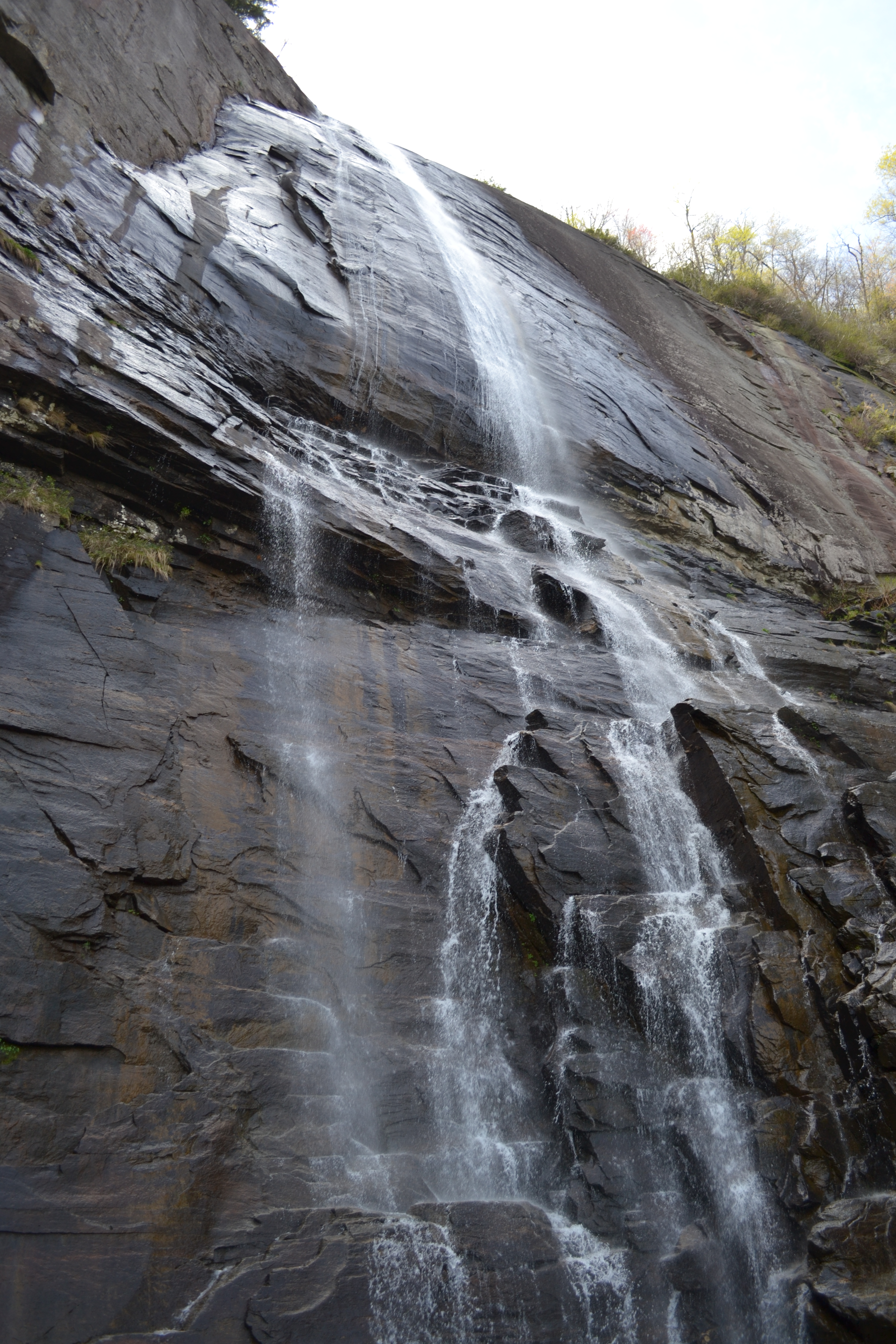
Hickory Nut Falls appears above the trees. Photo 2012, by Lewis Powell IV, all rights reserved.


Chimney Rock rises on the left and Hickory Nut Falls appears on the right. This is the view from “downtown” Chimney Rock. Photo 2012, by Lewis Powell IV, all rights reserved.

Chimney Rock (the rock) juts out from Chimney Mountain and has served as a landmark for centuries. It was here in early years of the nineteenth century that some locals witnessed a host of being ascending into the air from this rock. Just west of Chimney Rock, Hickory Nut Falls descends towards the Rocky Broad River which runs along the floor of the gorge. Chimney Rock Park (which encompasses the falls) was owned by a single family for most of the 20th century and was just recently acquired by the state of North Carolina as a state park in 2007. At the moment, there is still construction going on to rehabilitate the access to the rock itself, so it was closed. But we did get to the parking lot below it and had some spectacular views of the gorge from that point. In addition, the trail to Hickory Nut Falls was open and we hiked to see it. It’s amazing!

Chimney Rock from the visitors’ center parking lot, the closest I could get, unfortunately. Photo 2012, by Lewis Powell IV, all rights reserved.
The view of the Hickory Nut Gorge and Lake Lure from the base of Chimney Rock with the intrepid Southern Spirit Guide. Photo 2012, by Lewis Powell IV, all rights reserved.
Hickory Nut Falls from the base of the falls. Photo 2012, by Lewis Powell IV, all rights reserved.

I was excited to see the Lake Lure Inn as well! When Dr. Lucius Morse dreamed of a lakeside mountain resort in the early days of the 20th century, he envisioned something that was European in style. The Inn’s architecture is vaguely European and the whole scene of the Inn and the mountains and the lake creates a view that is definitely European in feel. I had to remind myself that I was in North Carolina and not somewhere in the Alps. The area is just absolutely lovely. I’m excited to return very soon!

The 1927 Lake Lure Inn. Photo 2012, by Lewis Powell IV, all rights reserved.


“One of Nature’s sublimest poems”—Chimney Rock, North Carolina

Chimney Rock State Park
431 Main Street
Chimney Rock, North Carolina

N.B. Since I’m headed up here tomorrow for the weekend, I figured it would be nice to repost this entry. My writing about the area has inspired my dad to rent a cabin for the family for a nice weekend getaway. Thus, I’d like to dedicate this entry to my parents and my sisters. And I can’t forget Patrick, my sister’s husband who has recently joined the family. Thank y’all for dealing with me and accepting my eccentricities. I’m proud to be apart of such a loving, upstanding and interesting family.

Originally published 5 May 2011.

My mind has been stuck in Western North Carolina recently. Since I wrote the last entry on Lake Lure, I stumbled on some interesting information on Chimney Rock, the granite large granite monolith towering above Hickory Nut Gorge and Lake Lure. In the entry on Lake Lure, I described the history of the area which is interwoven with the history of Chimney Rock itself.

Briefly, Chimney Rock was purchased in 1870 by Jerome B. Freeman with the intention of creating a tourist attraction and he opened the park to the public in 1885. The park was purchased by Dr. Lucius Morse and his brothers in 1902. It was Morse who dreamed of creating a mountain resort town based around a mountain lake. His dreams came to fruition in the 1920s with construction of a dam to create Lake Lure and the building of the Lake Lure Inn. Morse’s family owned the park until 2007 when it was sold to the state of North Carolina as a state park. At least that is the “white man’s history.”

Chimney Rock with Lake Lure in the background. Photo by Jmturner, 2008. Courtesy of Wikipedia.

This area has always contained a certain mystique. The Cherokee and the Catawba, the primary native peoples in the area, considered Hickory Nut Gorge sacred. The land beyond the stone pillar of Chimney Rock was called Suwali-nuna. This was part of a trading path that followed the Swannanoa River and then snaked through the gorge to the lands of the Catawaba and Sara in the east. This path was also used in search of tsa’lu or tobacco.

Suwali-nuna was inhabited by mythic beasts and spirits, but most notably, the Yun’wi Tsundsdi or “Little People.”  James Mooney, a nineteenth century ethnographer who recorded much of the Cherokee mythology, history and lore in his History, Myths and Sacred Formulas of the Cherokees, describe them as thus:

There is another race of spirits […] who live in rock caves on the mountain side. They are little fellows, hardly reaching up to a man’s knee, but well shaped and handsome, with long hair falling to the ground. They are great wonder workers and are very fond of music, spending half their time drumming and dancing.  They are helpful and kind-hearted, and often when people have been lost in the mountains, especially children who have strayed away from their parents, the Yun’wi Tsundsdi have found them and taken them back to their homes. […] the Little People do not like to be disturbed at home, and they throw a spell over the stranger so that he is bewildered and loses his way…

In Suwali-nuna, however, these benevolent beings are not so forgiving. They were guardians of the sacred tsa’lu, or tobacco, which they kept there and took harsh action against anyone trespassing in the gorge in search of it. In the beginning of the world, there was a single tsa’lu plant for all creatures but it had been used up. In one version of the story, the plant was stolen by geese and swiftly carried to a place in the south. Nonetheless, without the power of tsa’lu men grew weak and death was imminent. Swift warriors and powerful shamans sent into the gorge in search of the sacred medicine were crushed by boulders toppled by the Yun’wi Tsundsdi. The strong winds blowing through the stone hollow would sometimes throw these braves into the turbulent waters of the river and they would never be seen again.

One young man, worried by the impending death of his father for lack of tsa’lu, traveled to Suwali-nuna in search of it. Reaching the mountains that border the gorge, the young man opened his medicine bag and brought out the skin of a hummingbird. Placing the skin over himself he transformed into the swift bird and flew, undetected into the heart of the gorge. Quickly, he gathered a few leaves of tsa’lu with some seeds and slipped, unseen, out of the gorge. Returning home he found his father very weak but with one draw from the pipe, he regained strength. The Cherokee planted the seeds and have had tsa’lu ever since.

During his explorations throughout the Southeast, Spanish explorer Hernando de Soto may have passed under the watchful pillar of Chimney Rock, a sign of the deluge of white men that would flood the gorge in the late eighteenth and nineteenth centuries. The gorge became part of Rutherford County, named for General Griffith Rutherford, a military leader who led American forces against Chief Dragging Canoe and the Cherokee during the Chickamauga Wars. As settlers poured into the gorge they were awed by the Cherokee’s mystical land.

In 1806, an account appeared in the papers of the period describing an extraordinary vision witnessed by a family living near Chimney Mountain. On July 31st, an eight year old named Elizabeth Reaves spotted a man on the mountain. She brought this to the attention of her eleven year old brother, Morgan, and told him that she saw the man rolling rocks and picking up sticks. Incredulous, her brother went to where she had seen this sight and he was greeted by the sight of “a thousand things flying in the air.” They were joined by their fourteen year old sister, “a Negro woman” and their mother who also witnessed the spectacle.

The mother described a host of beings of a variety of sizes that were rising off of the side of the mountain and collecting at the top of Chimney Rock. After gathering at the rock, three appeared to lift off and rise towards the heavens. Summoning Robert Siercy, a neighbor, they all witnessed the sight together watching as the crowd eventually vanished.

Five years after the Reaves spectral vision in 1811, an elderly couple witnessed a different, though still extraordinary vision. Late one afternoon the couple, who lived near Chimney Rock Falls, witnessed the battle of a spectral army mounted on winged horses. The armies clashed and the couple heard the ping of steel upon steel and saw the glint of the weapons in the sunlight. After a battle of about ten minutes, one army was defeated and withdrew to the victorious cheers of the remaining army. It was also reported that other “respectable men” in the area witnessed the winged warriors, though not engaged in combat.

In the two hundred years since these amazing visions, there are no further reports of such astounding sights, these stories do set the stage for the hauntings at the Lake Lure Inn and the Lodge at Lake Lure. I suspect there are further spirits walking the scenic shores of Lake Lure and floating about Chimney Mountain’s stone spire. Silas McDowell, who recorded the testimony of the witnesses to the 1811 vision described Chimney Rock as “one of Nature’s sublimest poems, where objects are so weird, beautiful and grand that words cannot translate them, and they can only be seen and felt when we look, wonder and admire in dumb amazement.”

Sources

  • Carden, Gary and Nina Anderson. Belled Buzzards, Hucksters & Grieving Specters: Appalachian Tales: Strange, True & Legendary. Asheboro, NC: Down Home Press, 1994.
  • Chickamauga Wars (1776-1794). Wikipedia, the Free Encyclopedia. Accessed 5 May 2011.
  • Mooney, James. History, Myths, and Sacred Formulas of the Cherokees. Asheville, NC: Bright Mountain Books, 1992.
  • Russell, Randy and Janet Barnett. Mountain Ghost Stories and Curious Tales of Western North Carolina. Winston-Salem, NC: John F. Blair, 1988.
  • Rutherford County, North Carolina. Wikipedia, the Free Encyclopedia. Accessed 5 May 2011.

“There’s a light”—Christ Church, Frederica

Christ Church
6329 Frederica Road
St. Simons Island, Georgia

In the velvet darkness
Of the blackest night
Burning bright
There’s a guiding star
No matter what or who you are
There’s a light.
–“Over at the Frankenstein Place” from The Rocky Horror Show music and lyrics by Richard O’Brien

Christ Church lies some distance from the hubbub that is the southern portion of Georgia’s Saint Simon’s Island. The past few decades have turned this quiet, island retreat into a vacation mecca. I’ve been coming here since I was young and I’ve watched with sadness as the island has been developed. Quiet marshes have become condo developments and gated communities. Restaurants and shopping centers have replaced forests of palmetto and live oak. Though, with the masses that arrive from all over the region to relax at the beach, the roads have not been widened to maintain the stately oaks lining them.

Christ Church, 2012, by Lewis Powell IV, all rights reserved.

The further north you travel, the development becomes more and more sparse. Interestingly, the Frederica area, the first area settled by Europeans, is not as well developed. This leaves the remains of Fort Frederica and Christ Church in far more bucolic settings. Though, some years ago I was heartbroken when a residential subdivision sprung up behind the church’s fabled cemetery. This place is one of my favorite places on earth. The beauty, history and mystery of this place provides me with solace. When I “go to a happy place” in my mind this is it.

Cycads grow in this Edenic cemetery. Photo 2012, by Lewis Powell IV, all rights reserved.

Underneath the sprawling, moss-laden ancient oaks, this church and cemetery bear witness to a marvelous history. Fort Frederica, a fortified town a short distance down the road from the church was first ministered to by the inimitable Wesley brothers, John and Charles, in 1736, only three years after the founding of the colony of Georgia. John Wesley, General Oglethorpe’s Secretary on Indian Affairs and Chaplain, worked tirelessly to plant the seeds of faith among the rowdy bands who populated this most Southern of the colonies. Wesley would go to found a religious sect that would take the name of Methodists for the methodical way they led their lives.

Fort Frederica was mostly a ghost town by the American Revolution when the island began to be divided into plantations. In 1808 a small, clapboard building was erected within a small cemetery. The cemetery actually pre-dates the church by about five years. Over time, the cemetery became the burial sites for many of the families in the island’s plantations. It is from this pastoral period on the island that the legend of the Christ Church cemetery comes to us.

The azaleas are now blooming in the cemetery at Christ Church. Photo 2012, by Lewis Powell IV, all rights reserved.

The story has been passed around so frequently that there are numerous variations, but the basic premise remains the same. At some point during the antebellum years a young woman was buried in the cemetery. Her husband began a tradition of leaving a candle on her grave at night and even after his death, the candle still appeared. For years, island locals and visitors would see a light within the cemetery at night. Some versions of the tale tell of a young woman tormented by stories that had been told her by her Caribbean-born (hence a possible voudou connection) nurse. She was so afraid of the dark that she became adept at candle-making and some versions blame her early death on an infected wax burn. Regardless, this beautiful legend of undying love comes down to us to explain the mysterious light.

Alas, the march of progress has obliterated views of the light. A brick wall was built along Frederica Road some time ago. At night, large spotlights shine on the church and there are no modern reports that I can find of the light. Though, it’s not hard to imagine other spirits having the desire to return to this Eden, even in the moss-shrouded velvet darkness of night.

Sources

  • History of Christ Church, Frederica. Christ Church, Frederica Website. Accessed 20 March 2012.
  • Killion, Ronald G. and Charles T. Waller. A Treasury of Georgia Folklore. Atlanta, GA: Cherokee Publishing, 1972.
  • Vanstory, Burnette. Ghost Stories and Superstitions of Old St. Simons. Simons Island, GA: Coastal Georgia Historical Society. No date.
  • Wangler, Chris. Ghost Stories of Georgia: True Tales of Ghostly Hauntings. Auburn, WA: Lone Pine Publishing, 2006.
  • Windham, Kathryn Tucker. 13 Georgia Ghosts and Jeffrey. Tuscaloosa, AL: U. of Alabama Press, 1973.

Vinoy, Women and Song—Vinoy Renaissance Hotel

Vinoy Renaissance Hotel
501 Fifth Avenue Northeast
St. Petersburg, Florida

Big news! Tween idols Justin Bieber and Selena Gomez actually stayed in a hotel somewhere!

Even bigger news! The hotel was the haunted Vinoy Renaissance Hotel in St. Petersburg, Florida!

Evidently, this is what passes for news on celebrity gossip sites. But it’s enough for me to write a Haunt Brief on it.

Lately, my concentration has been drawn to Florida and I’ve noticed that much of Florida’s haunted history lies in its hotels. From wooden edifices in small towns like Apalachicola’s Gibson Inn to St. Augustine’s monstrous monuments to the Gilded Age in the forms of the Hotel Ponce de Leon, Hotel Alcazar and Hotel Cordova; all the way to the towering grandeur of the grand hotels of the 1920s such as the Biltmore in Coral Gables and the Vinoy, all of these are haunted by a myriad of spirits.

The Vinoy Renaissance, 2008, by Ebyabe. Courtesy of Wikipedia.

Of the grand resort hotels from the 1920s, many have very similar histories. These hotels were built to take advantage of Florida’s burgeoning reputation as a vacation spot, a trend started by Henry Flagler in the latter days of the nineteenth century. These resorts attracted many of the great names of the period ranging from silent film stars to politicians to sports heroes. Many hotels experienced issues during the Great Depression and some were purchased by the military for use as hospitals during World War II. Some, like the Biltmore, lingered as hospitals for a while after the war. Those that reopened as hotels after the war had difficulty competing with the motels springing up to take advantage of auto traffic and the state’s new draw, Walt Disney World. Most hotels spent some time abandoned and during that stage paranormal activity was noticed in the empty structures. Recently, most of the grand palaces have been restored and returned to service as first-class luxury hotels.

Bieber and Gomez are just the most recent in a long and varied list of celebrities that have stayed in the Vinoy’s storied halls, a list that includes Calvin Coolidge, Herbert Hoover, Jimmy Stewart and Babe Ruth. In fact, this hotel figures into baseball history as hosting the St. Louis Browns in the 1920s when they trained in nearby Tarpon Springs. Nowadays, the hotel hosts Major League Baseball teams in the area to play the Tampa Bay Rays. Among some of these players, there are stories of the hotel’s darker reputation.

Just last year when the Florida Marlins were in town to play the Rays, relief pitcher Steve Cishek reported on his Twitter feed, “Currently crapping my pants…can’t sleep…my room is def haunted.” He later said he heard a thump in the bathroom that sounded like a bar of soap falling, though nothing was out place when he checked.

One of the first and most widely reported stories dates to 2003 when relief pitcher Scott Williamson, who was playing for the Cincinnati Reds at the time, claimed to have had a bizarre experience in his room. He awoke to see an odd light coming from the pool outside. He then experienced an odd tingling sensation. Rolling onto his stomach he said he felt that someone sat on his back, making it hard for him to breathe. He rolled back onto his back and saw a man in period clothing standing near the window. “he was just looking right at me. It was almost like he was trying to get a point across to me or something. I jumped up and turned on the lights but he was gone.”

The Pittsburgh Pirates were the next team in town to stay at the hotel. It was strength coach Frank Velasquez’s turn to experience a figure in his room. He heard and sound and looked up to see a man standing near the window of his room “just staring” at him. The coach turned his head and closed his eyes, but the figure was still standing there when he looked again. On that same trip, two other Pirates coaches had odd experiences: the hitting coach awoke to find that the door to his room was standing wide open after he had closed and locked it while the bullpen coach reported an old dime falling out of the ceiling while he showered.

In 2008, the TAPS team from TV’s Ghost Hunters investigated. Staying mostly on the fifth floor where the activity seems to be concentrated, they uncovered some haunting evidence. One of the most interesting pieces of evidence came from a room where one of the investigators slept overnight. Just after setting up cameras throughout the hotel including one in that particular room, the closet door opened by itself. The investigators made a priority of investigating this phenomena and discovered that the closet door did not open with ease, so there was no obvious explanation to the event. Even more haunting was what happened after the investigator, Jason Hawes, went to bed for the night. He was later awakened by a loud male voice demanding that he “just get out.” Hawes awoke after the voice called out which was all caught on tape. About 20 seconds later the voice again demanded that he get out.

These events are only a small part of the record of activity within the hotel. In fact, one article on the hotel mentioned that the activity was minor but quite frequent.

There are some legends that have surfaced to explain the activity. A female spirit in the hotel has been identified as the spirit of the wife of the hotel’s founder. One male spirit is said to be that of a businessman who killed himself in the wake of the 1929 stock market crash. Needless to say, there are spirits in this celebrity hideaway.

Big news! Justin Bieber and Selena Gomez may not have had any experiences within this hotel!

Oh well…

Sources

  • Baxter, Kevin. “Dodgers Report: Hotel isn’t one of their favorite haunts.” Los Angeles Times. 25 June 2007.
  • Ekberg, Aida. “Justin Bieber and Selena Gomez’s Florida Hotel is Haunted?” com. 11 March 2012.
  • Jenkins, Greg. Florida’s Ghostly Legends and Haunted History, Volume 3: The Gulf Coast and Pensacola. Sarasota, FL: Pineapple Press, 2007.
  • Klinkenburg, Jeff. “Renaissance Vinoy Resort marks 85 years of history.” Petersburg Times. 17 December 2010.
  • Kruse, Michael. “St. Petersburg’s Vinoy hotel haunted, major-league baseball players say.” Tampa Bay Times. 29 February 2012.
  • Rebman, Kimberly P. Haunted Florida: A Guide to the Departed Soul. Bloomington, IN: Authorhouse, 2008.
  • Strikler, Lon. “A History of Hauntings at St. Petersburg’s Renaissance Vinoy.” Phantoms and Monsters Blog. 20 June 2011.

A Historic Playhouse–Photos from Fort Clinch

Fort Clinch State Park
2601 Atlantic Avenue
Fernandina Beach, Florida

N.B. This article was edited 26 June 2019.

I’ve finally made it to North Florida and seen Fort Clinch! I’d known about the fort for some years before I wrote my article in November of 2010. That article, “Spectral humor–Fort Clinch,” has since been edited and re-posted.

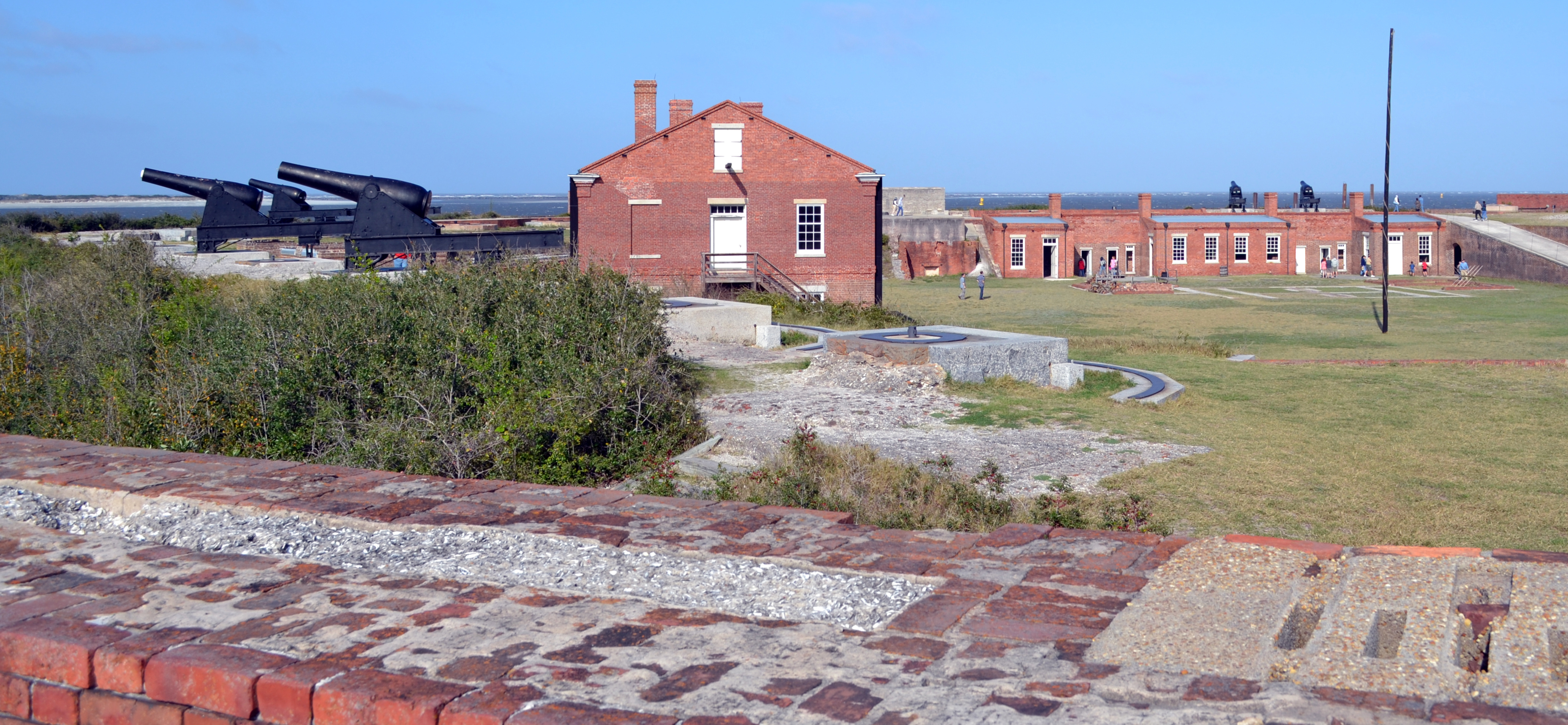
Exploring the fort is an utterly delightful experience. It’s like a huge playhouse with tunnels, towers, turrets, corridors, odd little rooms, and staircases to explore. Unlike so many historic sites now, the fort is not littered with interpretive signs that you feel guilty for not reading, it’s just open for exploration. Rooms within the interior buildings have been furnished and recreated as they would have appeared during the Civil War, otherwise, the fort is a huge, empty edifice. I was there last Saturday when there was a wind advisory. The wind blowing through and around the structure created a haunting, mournful tone. Other than that, I didn’t see or feel any spirits. Though, I can imagine the place grows creepier after dark.

The fort does appear to need work. Even with massive cuts to the state budget, I hope that those in charge are seeing to the needs of this marvelous place. Certainly with visitors comes some income and I would encourage all my readers to check out this marvelous piece of our past.

sally port Fort Clinch Fernandina Beach Florida ghosts haunted
The sally port. Photo 2012, by Lewis Powell IV, all rights reserved.
ramparts Fort Clinch Fernandina Beach Florida ghosts haunted
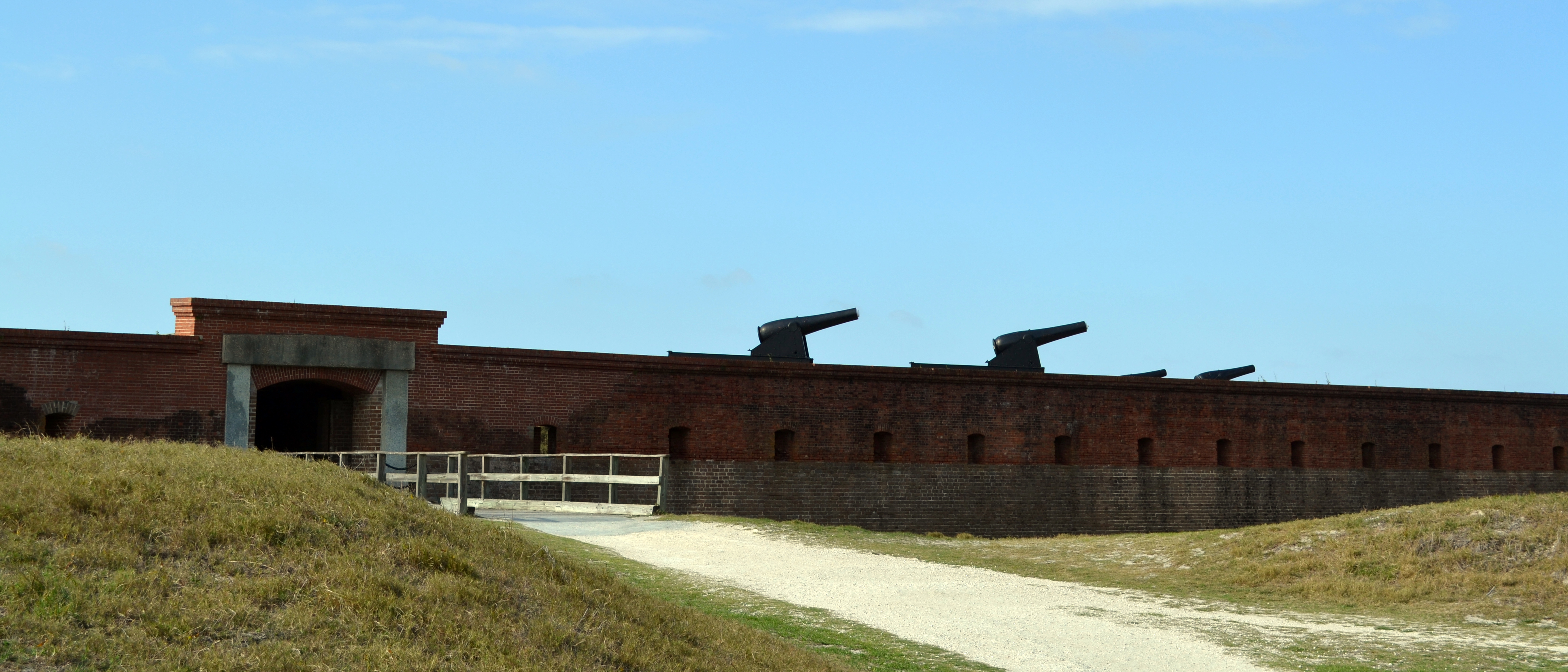
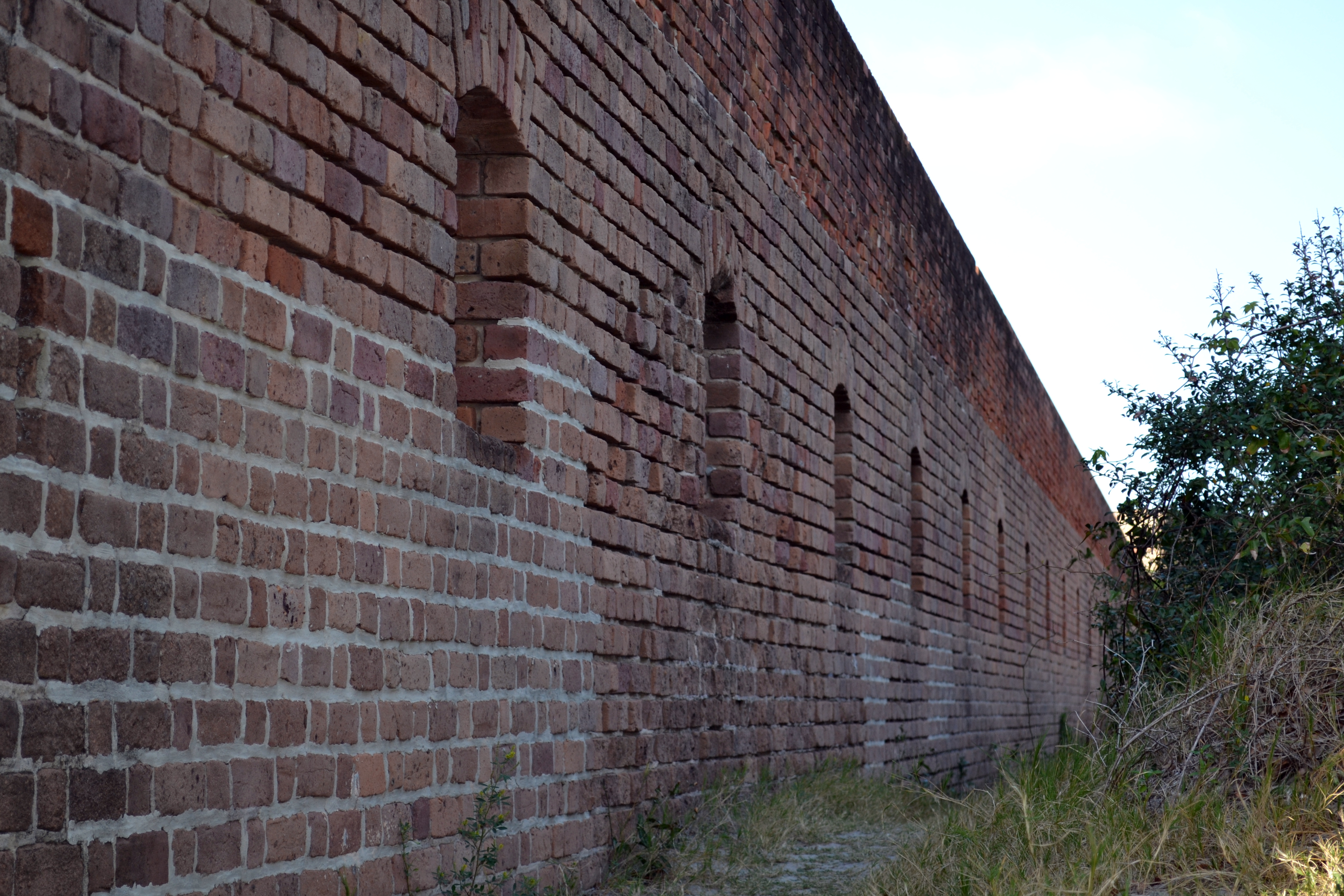
The ramparts from the outside. Photo 2012, by Lewis Powell IV, all rights reserved.
barracks building Fort Clinch Fernandina Beach Florida ghosts haunted
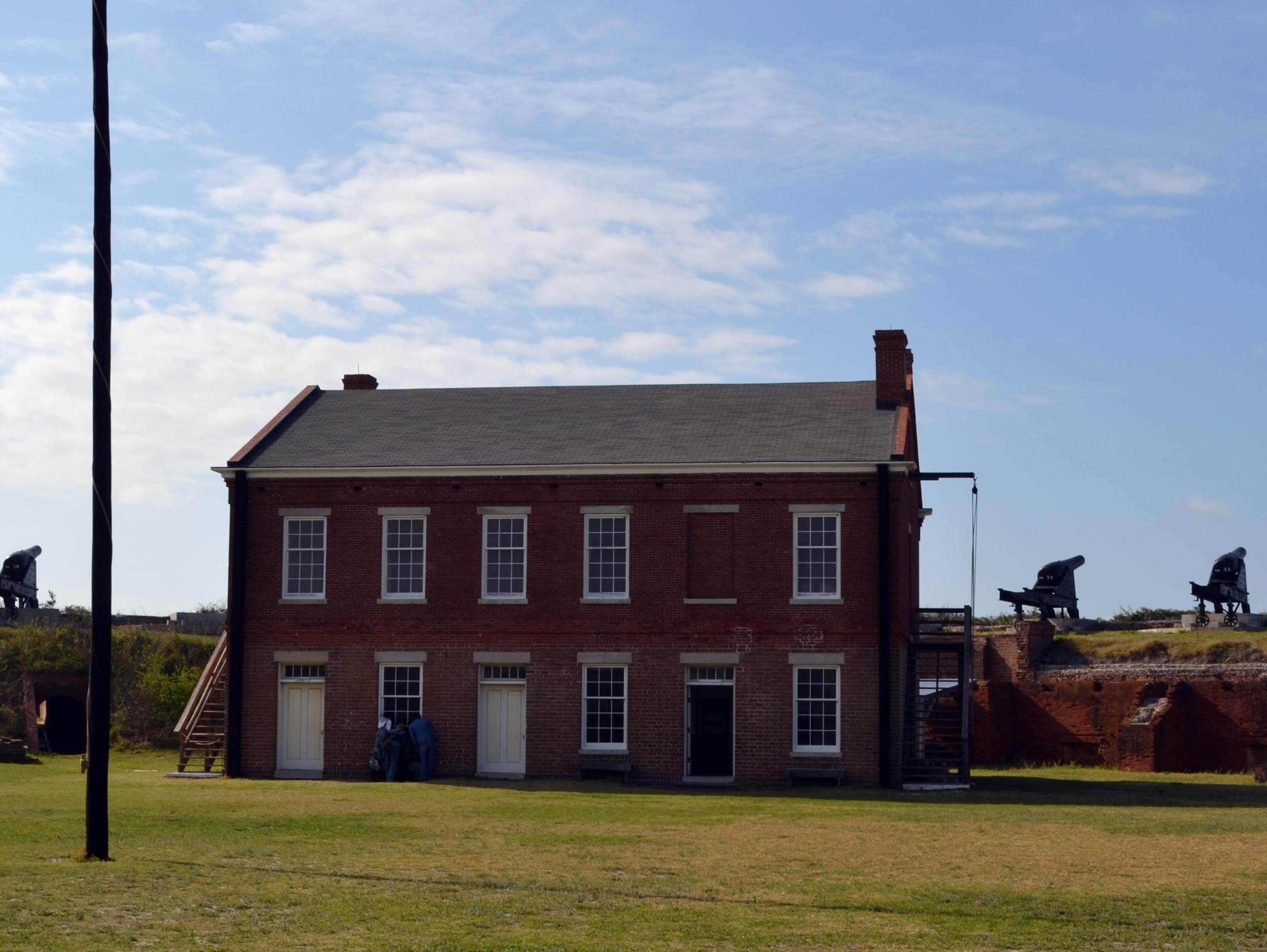
One of the remaining barracks buildings. Photo 2012, by Lewis Powell IV, all rights reserved.
brig Fort Clinch Fernandina Beach Florida ghosts haunted
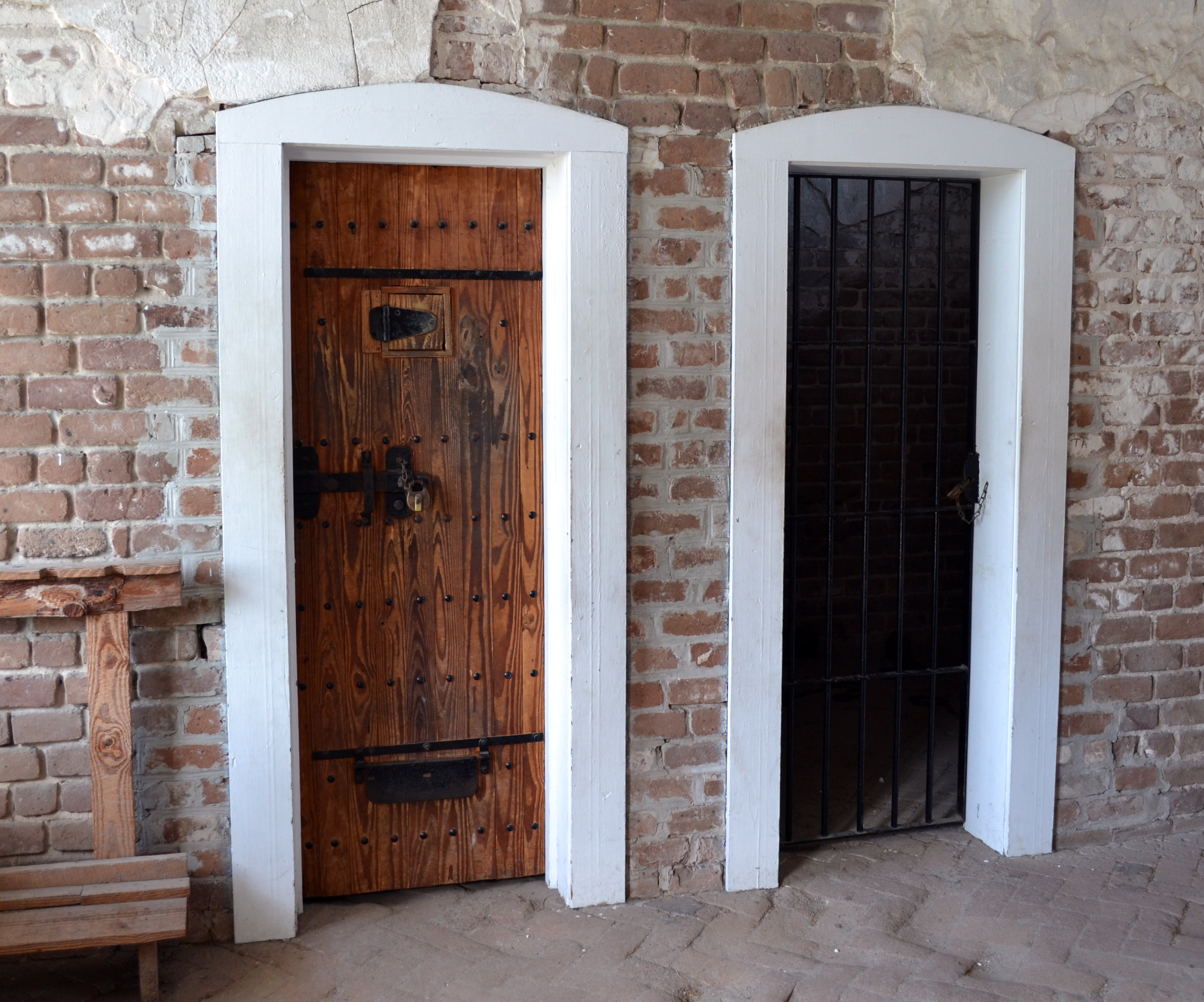
Doors to the jail cells in the fort’s brig. Photo 2012, by Lewis Powell IV, all rights reserved.
barracks Fort Clinch Fernandina Beach Florida ghosts haunted
The back of one of the barracks buildings. Photo 2012, by Lewis Powell IV all rights reserved.
tunnel Fort Clinch Fernandina Beach Florida ghosts haunted
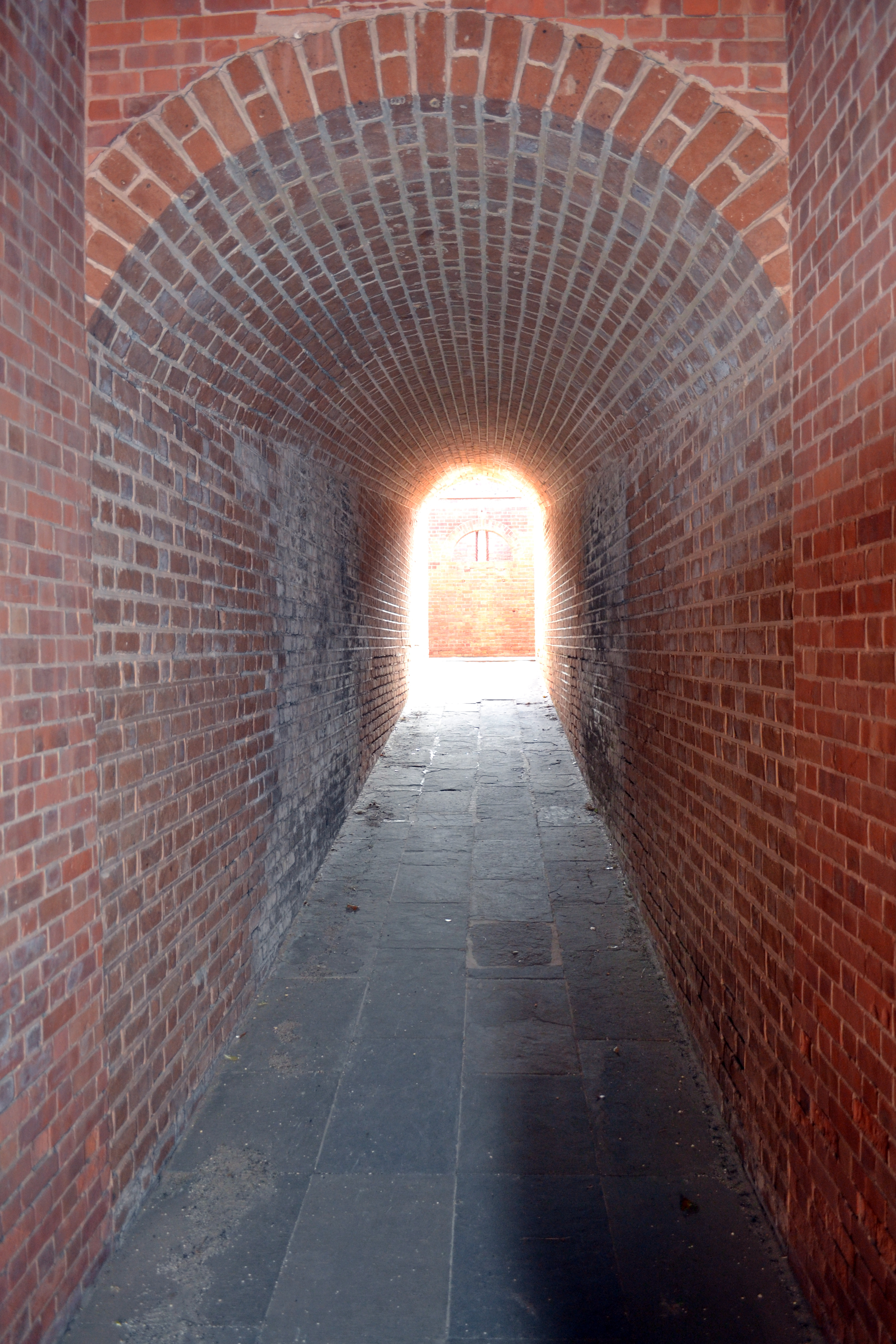
Looking down one of the tunnels leading towards the parade ground. Photo 2012, by Lewis Powell IV, all rights reserved.
bastion Fort Clinch Fernandina Beach Florida ghosts haunted
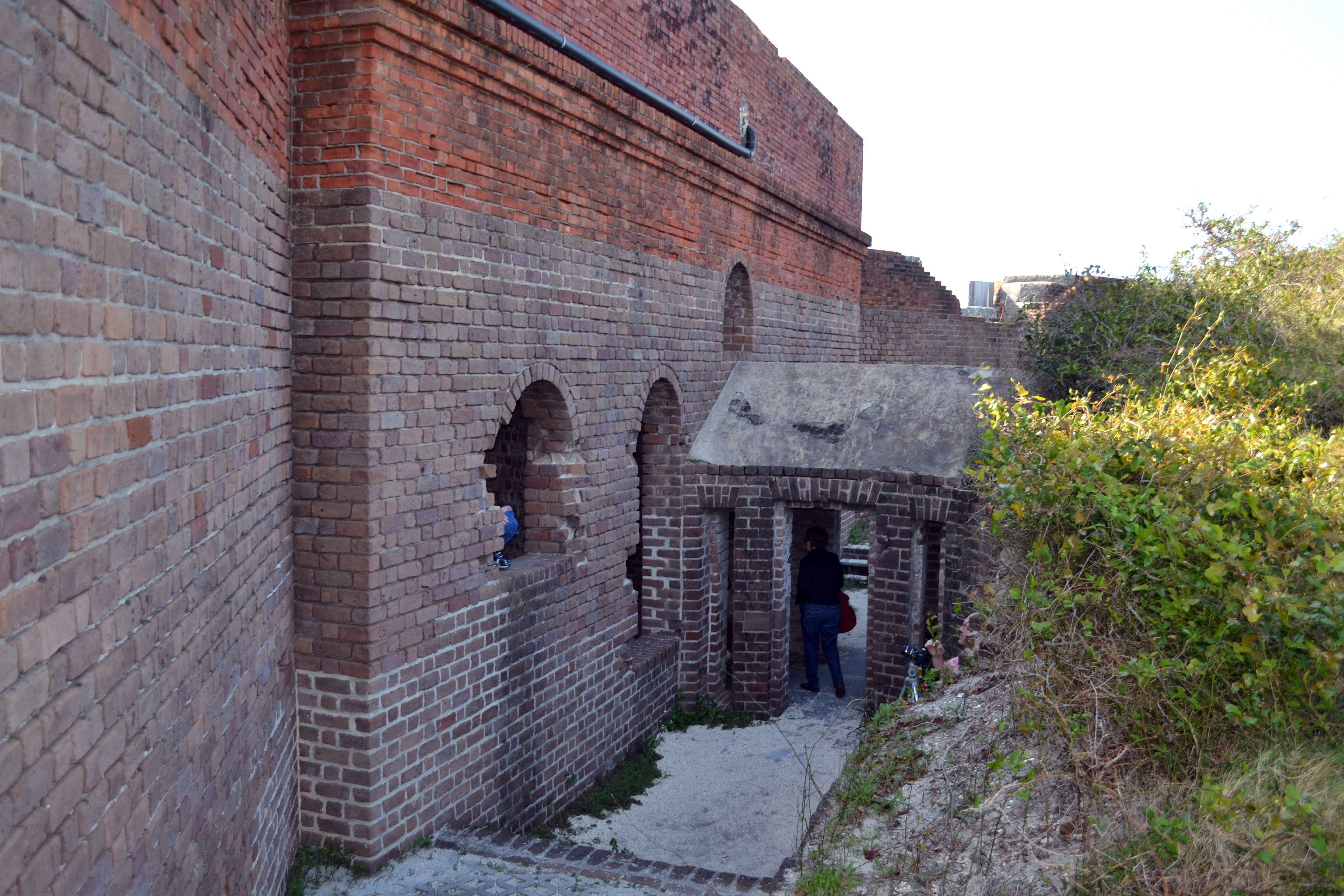
My mother enters one of the fort’s bastions. Photo 2012, by Lewis Powell IV, all rights reserved.
bastion windows Fort Clinch Fernandina Beach Florida ghosts haunted
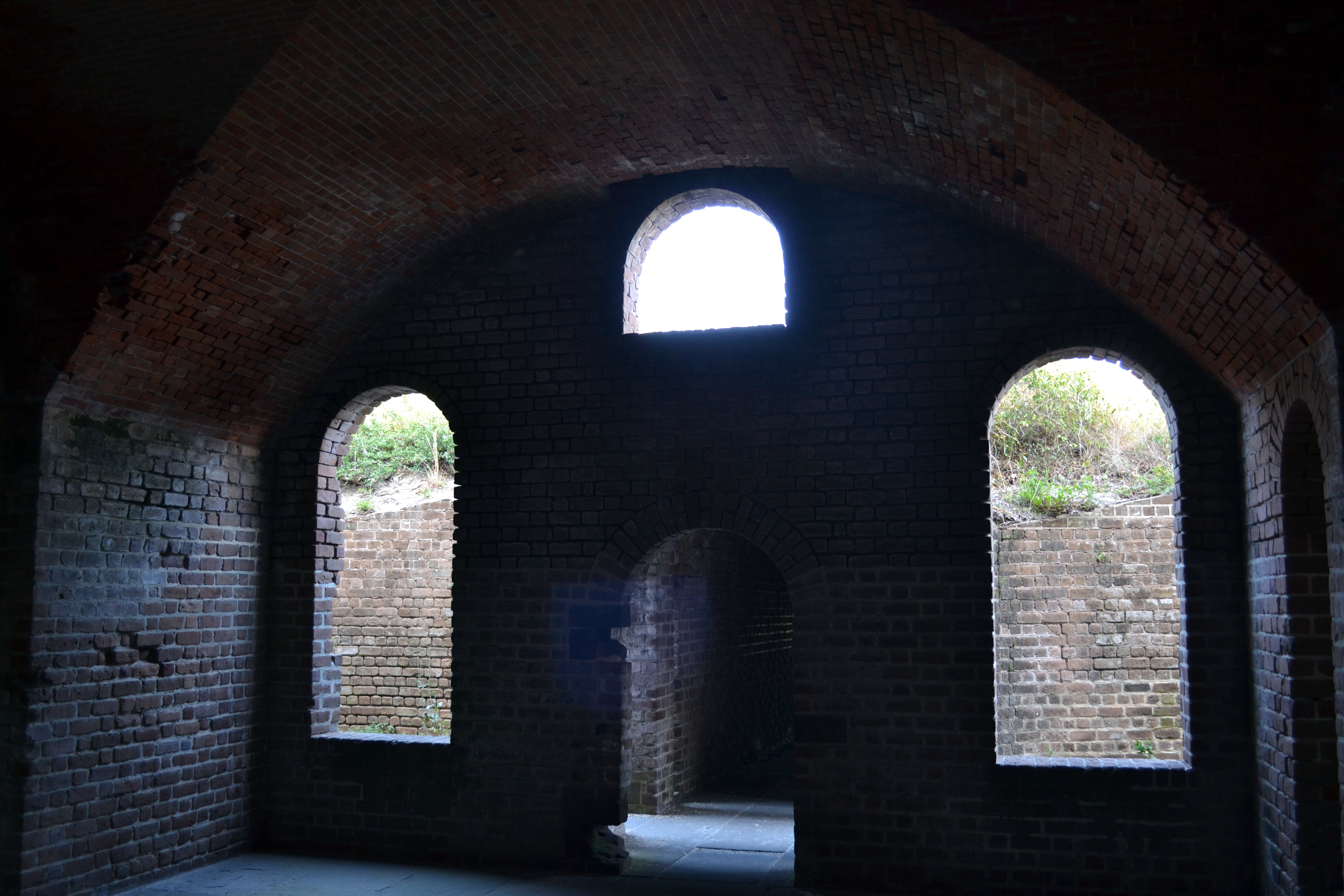
Looking out of one of the bastions. Photo 2012, by Lewis Powell IV, all rights reserved.
parade grounds Fort Clinch Fernandina Beach Florida ghosts haunted
View of the parade ground from the ramparts. Photo 2012, by Lewis Powell IV, all rights reserved.
ramparts Fort Clinch Fernandina Beach Florida ghosts haunted
One of the rampart walls from the inside. Photo 2012, by Lewis
Powell IV, all rights reserved.
guns Fort Clinch Fernandina Beach Florida ghosts haunted
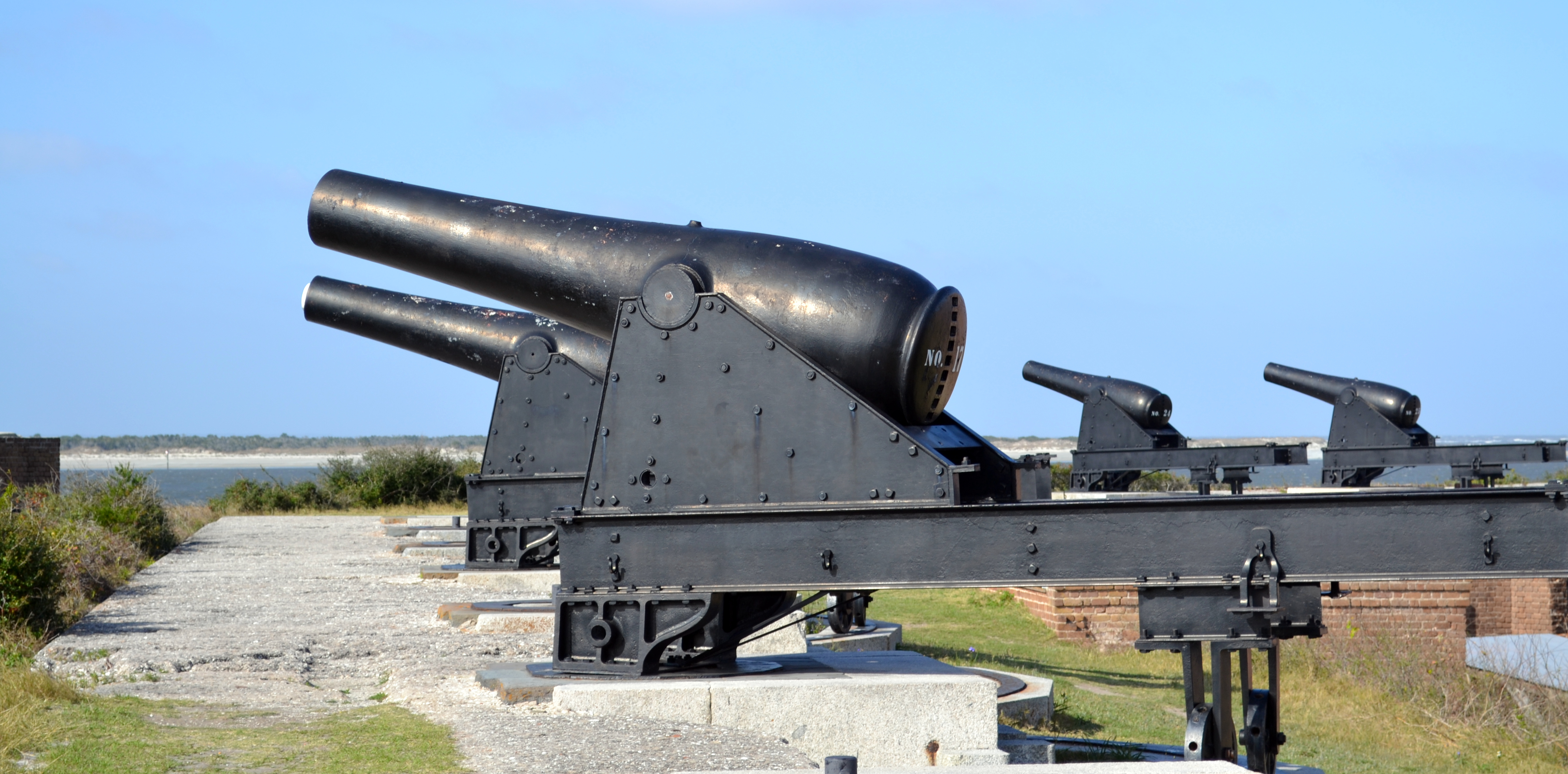
A number of guns still guard the fort. Photo 2012, by Lewis Powell IV all rights reserved.
St. Marys River Fort Clinch Fernandina Beach Florida ghosts haunted
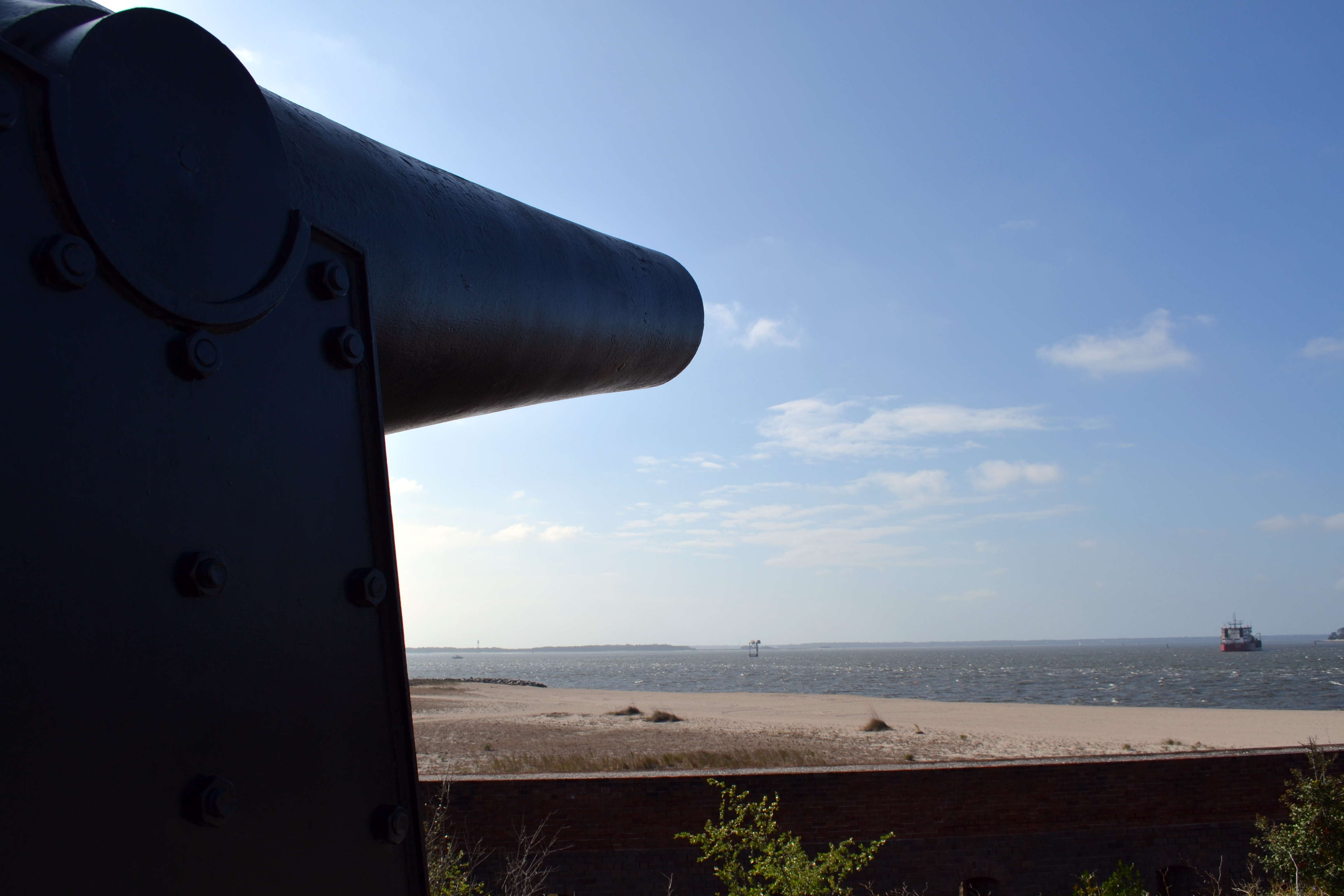
Looking out towards the St. Marys River from the gun emplacements. Photo 2012, by Lewis Powell IV, all rights reserved.
gun port Fort Clinch Fernandina Beach Florida ghosts haunted
Photo 2012, by Lewis Powell IV, all rights reserved.

A Mansion in Marianna, Florida

Joseph Russ Jr. House
310 West Lafayette Street
Marianna, Florida

One of the issues I consistently encounter in researching the South is the lack of resources on hauntings in the rural South. Many major Southern cities have at least some resource on their ghosts, but beyond those city limits, the resources become fewer. Florida is fairly well covered in its well populated areas, particularly Southern Florida, but its northern section is not so well covered. The Panhandle is very sparsely covered and in my list of hauntings, I have no locations listed in Jackson County…until now.

Sitting just below the line separating Alabama and Georgia, Jackson County, Florida is a reminder of Florida before the building booms of the 20th century. The county seat, Marianna, “The City of Southern Charm,” was founded in 1828 and is currently home to around 6200 people. I’ve just realized that I passed through Marianna on the way to nearby Florida Caverns a few years ago. I remember the town being a very pleasant and typical small southern town, but I certainly would have paid more attention had I known of the ghosts.

The home to Marianna’s Chamber of Commerce, the magnificent Joseph W. Russ Jr. House, is apparently haunted. Appearing today in the Jackson County Floridian is a nice article recounting an investigation of the Russ House. As is typical in these types of stories, a reporter tagged along while a group of paranormal investigators, Emerald Coast Paranormal Concepts from Panama City in this case, investigate a local landmark. The reporter describes how the ghost hunters investigate, their beliefs about ghosts and may briefly describe the investigation itself. This article, however, spends a bit more time discussing the investigation and some of the activity the group encountered.

The Russ House’s unusual porch is the first thing that draws visitors. Fanning out from the main house, the porch is supported by Corinthian columns and topped with a cupola. This porch is part of an extensive remodel of the house that took place in 1910. The home was originally built in the Queen Anne style between 1892 and 1895. The property on which the house was built had been owned by the Russ family since they first settled in Marianna and family constructed homes around this house. The home remained in the family for many years. Parts of the property were sold off when the family’s fortunes soured after the Crash of 1929 including part of the front yard which served as a gas station and a series of businesses.

The Russ House, 2007, by Ebyabe. Courtesy of Wikipedia.

Still, the house attracted visitors. Merritt Dekle, a descendant of Joseph Russ, writes of his grandmother dealing with visitors who would pull over and knock on the door of the intriguing house. Sometimes they would just ask of its history, but other times they would beg for a tour, to which she would decline politely with “I’m sorry, there’s sickness in the family.” By the time the house passed out of the family, much of it had been neglected. The house was deeded to the Marianna Chamber of Commerce in 1996 and has since been renovated for that purpose.

Employees and visitors to the house have reported a variety of odd phenomena. Footsteps, objects apparently moving on their own accord and the voices of children have been heard. According to the article, the house has been investigated by three other groups, though “minimal spirit activity” was reported. In his history of the house, Merritt Dekle mentions that the house has been considered haunted by locals for many years. He recalls staying in the house as a child and later as an adult and while the house was creepy, he didn’t have any unusual experiences.

During the investigation last Saturday, the group had a few odd experiences. Among the more unusual occurrences were a scraping sound and the word “help” being uttered both heard by the reporter and an investigator. A few other odd incidents were reported and the investigators will review the evidence captured during the evening.

Stay tuned for the results!

Sources