Shushing rumors—Albertville Public Library

Albertville Public Library
200 Jackson Street
Albertville, Alabama

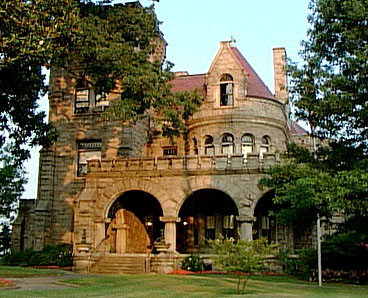
One of the classic library images is the bespectacled librarian shushing anyone making noise within the solemn and sacrosanct confines of the building. In the case of the librarian at the public library in the small, north Alabama town of Albertville, she’s trying to shush rumors of the library being haunted.

“I find the whole thing embarrassing,” she told a local reporter in 2007. It seems the story started as a joke a few years previous but has taken on a life of its own. I even covered it in an entry called “Some Alabama Hauntings, Briefly Noted,” from January 16 of this year. This is what I wrote:

Should my spirit remain on this plane after my death, it’s my sincere wish that I would remain in a library. The public library in Albertville, a small town in the north east part of the state, is typical of small town libraries throughout the country, but on one account is not so typical: it may be haunted. Built in 1964, the building replaced a much older home. Local legend indicates that spirits from that home may have taken residence in the library building. Apparently harmless, the spirits make their presence known by turning faucets on and playing on the elevator.

In 2010, Albertville was devastated by an EF3 tornado which damaged the library. I can find no word if the spirit remained after repairs.

I have discovered that ghost stories are like a garden, they must be regularly tended. They are forever growing and needing to be weeded. While digging around through newspaper archives, I uncovered a few articles about the library’s ghost.

Of course it’s a bit disappointing to find that there’s no ghost behind the legend, though I’m happy to be able to post a correction. The story also gives us a view into how some folklore is created. According to the librarian, the rumors started when a local television news station ran a story about local businesses and institutions celebrating Halloween. “We were dressed up for Halloween and during the interview some of the girls up front started joking around about the library being haunted. Saying any time a book fell the ghost did it. Just joking around,” the library director continued.

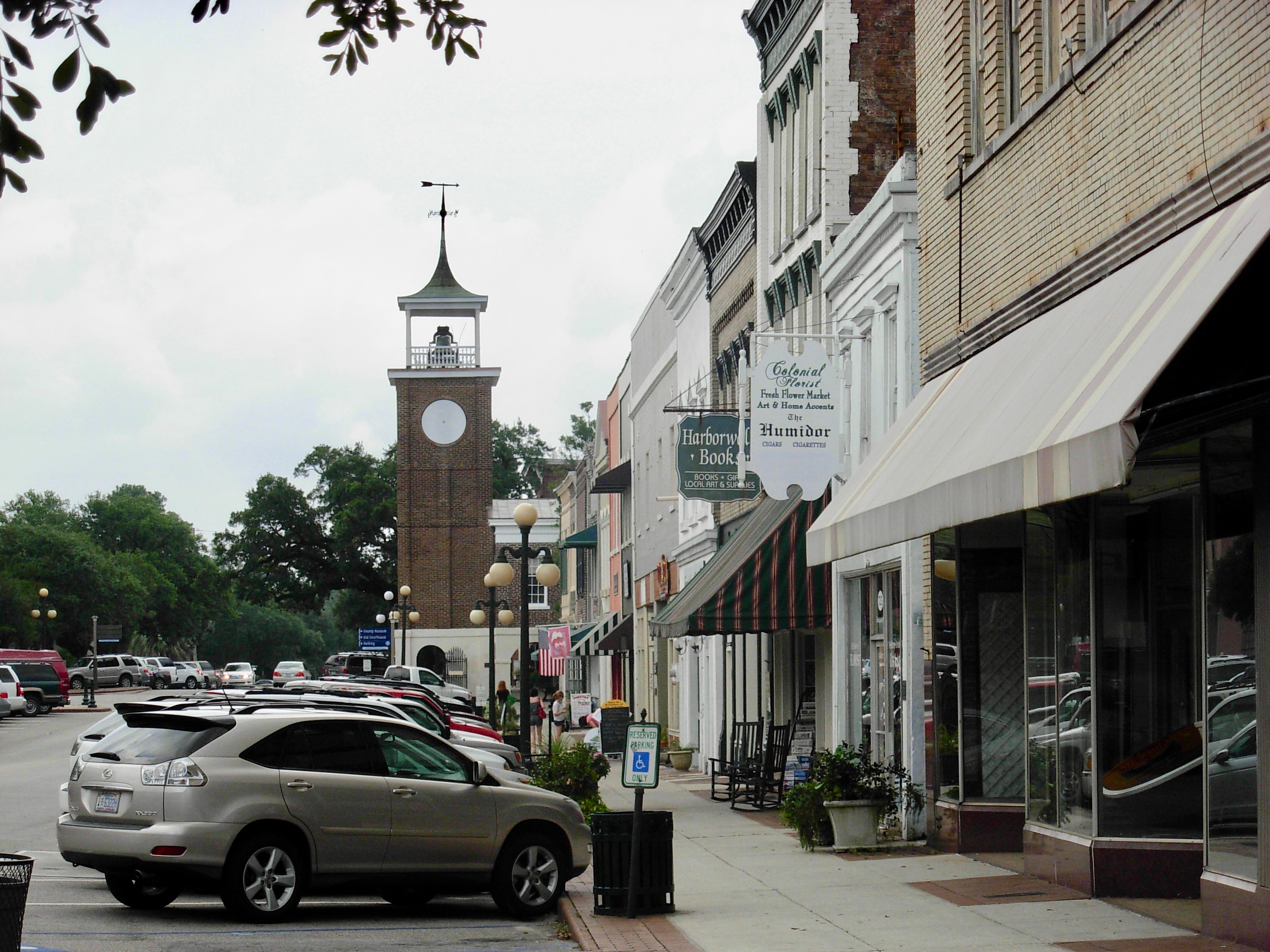
Main Street Albertville Alabama
Main Street, Albertville, 2012, by Rivers Langley. Courtesy of Wikipedia.

From that local interview, the story has grown legs and made its way throughout the internet. The listing of the library on the haunted places list on the infamous site, Shadowlands, has most certainly helped give movement and credence to the rumor. The problem with Shadowlands is that the site is almost entirely user submitted, with none of the information being properly vetted before it’s posted. While there is some truth to some of the entries, many of them are a chaotic jumble of fact and fiction, or just pure fiction. I’ve seen Shadowlands credited in everything from blog posts to books and it’s given rise to many ghost stories and legends.

Possibly using Shadowlands as a source, the library was listed in a 2006 article in the Sand Mountain Reporter, the local paper. The article by Charlotte Christopher lists a number of haunted locations throughout north Alabama. An article detailing the fact that the library is haunted appeared in the same paper in 2007.

In 2008, the library was listed as part of an entry in the Encyclopedia Brittanica Blog listing haunted libraries throughout the United States. With the name as respected as the Encyclopedia Brittanica behind the listing, it must be true, right?

The story was picked up on by Jessica Penot in her excellent Haunted North Alabama, published in 2010. Just after the book’s publication, an article appeared in the Sand Mountain Reporter discussing the library’s inclusion in the book and quoting both Penot and the librarian. “With all ghost stories, there is the possibility they are as much legend as fact,” Penot says in the article.

One of the issues she encountered in researching the library was the large tornado that struck the town in 2010. The damaged library was closed for repairs, and she couldn’t find a proper contact to confirm the legends.

She continues in the article, “The fact that a legend surrounds a location like the library only underlines its importance in the community. Places that are central to communities are often the first to have ghost stories spread about them. Because people love these places, the stories spread more quickly.”

Sources

  • Albertville, Alabama. Wikipedia, the Free Encyclopedia. Accessed 16 January 2013.
  • Christopher, Charlotte. “Haunted sightings in Northern Alabama.” Sand Mountain Reporter. 26 October 2006.
  • Eberhart, George. “Library Ghosts: Southern U.S.” Encyclopedia Britannica Blog. 29 Oct 2008.
  • Green, Lionel. “Albertville Public Library earns chapter in new book about haunted locations.” Sand Mountain Reporter. 1 October 2010.
  • Haunted Places in Alabama. Shadowlands. Accessed 15 December 2013.
  • Leak, Clay. “A ghost in the library? Perish the thought.” Sand Mountain Reporter. 31 March 2007.
  • Penot, Jessica. Haunted North Alabama. Charleston, SC: History Press, 2010.
“But a walking shadow”—Birmingham, Alabama

N.B. This article replaces the 4 October 2010 article about the Alabama Theatre.

Life’s but a walking shadow, a poor player
That struts and frets his hour upon the stage
And then is heard no more.
—Williams Shakespeare, Macbeth, Act V, Scene 5

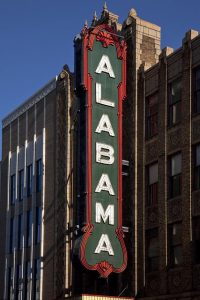
Sign for the Alabama Theatre,
Photo by Carol Highsmith, 2010. Courtesy of the Library of Congress.

The theatre world is full of superstition and spirits. In nearly every theatre I have worked, there are stories of ghosts. The theatre world is filled with mystery and mysticism, especially when it comes to actors. There is a ritual in preparing a character for his hour of strutting and fretting upon the stage before they are banished back to the world of fiction. Perhaps that may be a clue to why theatres are haunted.

While many haunted places may be locations of tragedy and death, that’s not always the case with theatres. As most theatre people are passionate about their profession, it’s not unheard of to imagine that they remain to rekindle that passion. In his Ghost Hunter’s Guide to New Orleans, Jeff Dwyer contends that one can be almost certain that a theatre will be haunted.

There are few certainties in ghost hunting. But when it comes to haunted places, ships and theaters offer ghost hunters the greatest opportunities for encounters with the spirit world. Theaters often harbor the ghosts of actors, writers, musicians and directors because something about their creative natures ties them to the place where they experienced their greatest successes or failures. Stagehands and other production staff may haunt backstage areas where they worked and, perhaps suffered a fatal accident. They may also be tied to room where props are stored. The ghosts of patrons remain long after death because they love the theater or, more likely, they loved an actor who performed regularly at that location.

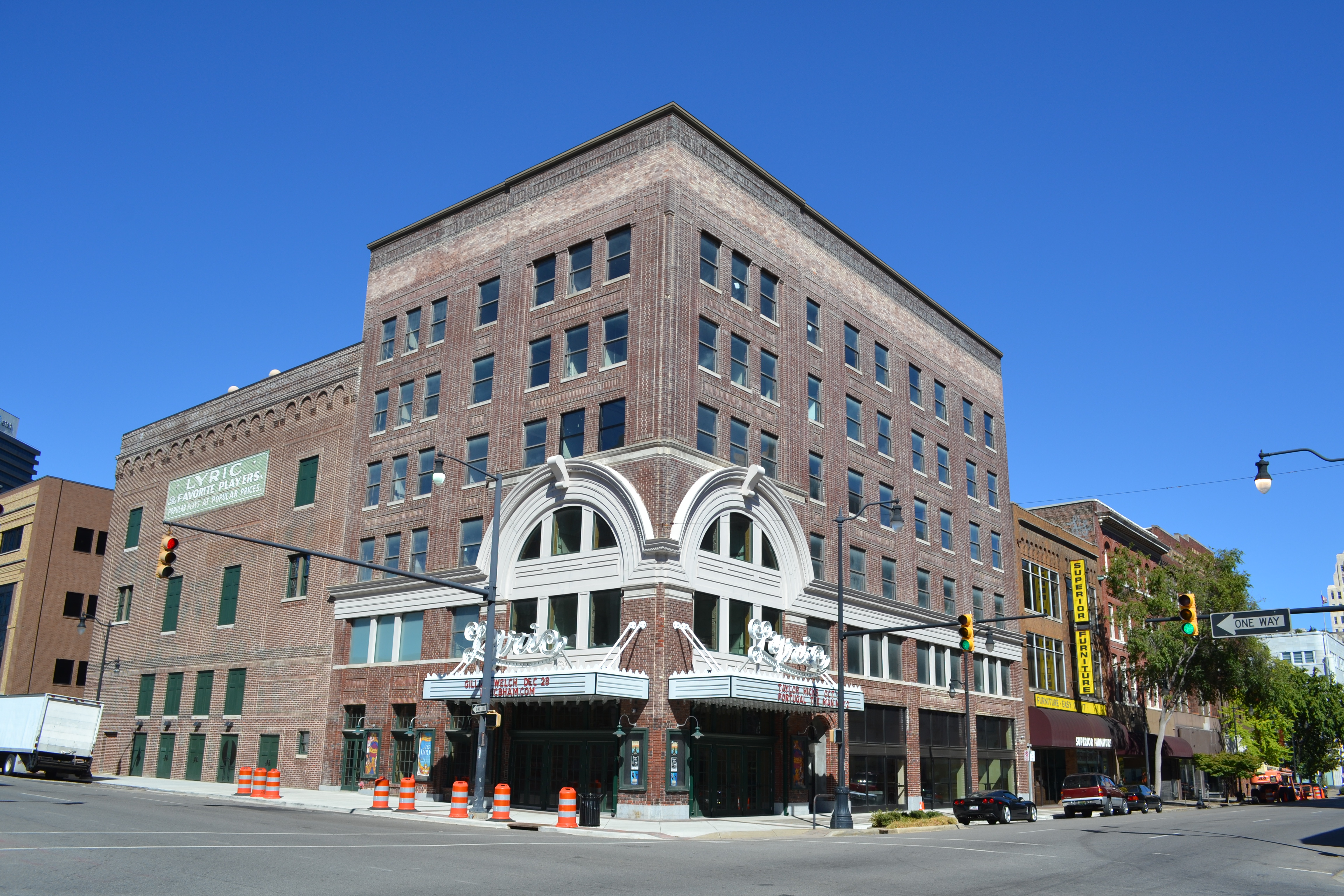
Lyric Theatre, 2016, by Lewis O. Powell IV. All rights reserved.

I can agree with some of this. Yes, the creative natures of thespians, writers, musicians, directors and other members of the creative staff may cause them to linger in the places where they happily created their art. As for stagehands and other members of the production staff, with the higher rate of accidents for such people, there are cases where their deaths have left them in limbo within the theatre. The haunting of the Wells Theatre in Norfolk, Virginia comes to mind. One of the spirits in this 1913 theatre may be that of a careless stagehand who became entangled in the hemp rope-operated fly system (a system that is still in use) and accidentally hung himself.

Within a modern theatre, I do have an issue with Dwyer’s contention that spirits may be connected to props rooms. Most modern theatres serve mostly as general performing arts spaces and unless they have a theatre company attached, they are not likely to have props storage. In my research, I cannot recall any stories of haunted props storage spaces.

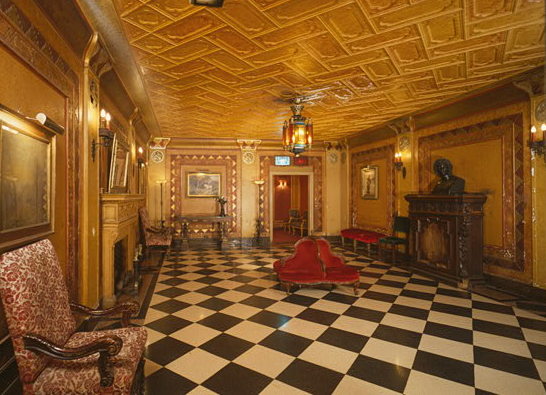
The Alabama Theatre’s Spanish Lounge. Photo taken for the Historic American Buildings Survey (HABS), courtesy of the Library of Congress.

As for lingering spirits of theatre patrons, there are a few love stories involving patrons and performers, though it does seems that most of the hauntings by members of the audience are apparently residual in nature with phantom laughter and applause sometimes being heard.

Contributing to theatres’ haunted natures, I would add the fact that theatres are often created in old buildings. These repurposed buildings may already be haunted and the spirits adapt to the new use of the location. Among the numerous examples of these types of theatres are the Baltimore Theatre Project in Maryland in an old building originally constructed for a men’s fraternal organization and the Hippodrome State Theatre in Gainesville, Florida, formerly a post office and courthouse.

Balconies of the Lyric Theatre. Photo by Andre Natta, 2006, courtesy of Flickr.

Regardless, some of these assertions can be seen in play with two haunted theatres in Birmingham, Alabama. Theatres that happen to be located directly across the street from each other, though they have wildly differing histories: the Lyric and the Alabama Theatres, located on 3rd Avenue, North.

Standing in the shadow of the Alabama Theatre, its well-restored, gaudier and haunted sister across the street, the LYRIC THEATRE (1800 3rd Avenue) is finally coming into her own after many years of neglect. The Lyric opened in 1914 at the height of American vaudeville. Upon its now dusty boards passed many of the top headliners of B.F. Keith’s vaudeville circuit: the curvaceous and naughty humor of Mae West; the last Red Hot Mama, Sophie Tucker; the Marx Brothers with their goofily brilliant brand of comedy; Buster Keaton and his family of acrobats; and legions of hoofers, singers, comedians and other weird and wonderful vaudevillians.

With the opening of the nearby Ritz Theatre in 1926, big time vaudeville departed the Lyric leaving its stage to second and third tier performers. Films were shown, but even these were overshadowed by the Alabama Theatre. The theatre limped on until 1958 when its doors were shut. In the 1970s under the flashy name, the Roxy, the grand lady became an adult theatre. Legend holds that the last film shown was the infamous “Deep Throat,” after which the projectionist was arrested. The theatre closed its doors to sit quietly and crumble for a few decades.

Efforts to revive the Lyric have reached a fever pitch and activity now hums in its once forlorn halls. Soon, it’s expected that the Lyric will stand proudly across the street from the Alabama Theatre again. And the ghosts of vaudeville will have found a new life.

There’s no question why the vaudeville performers of old would want to continue gracing the stage of the Lyric. It may be one of the best preserved vaudeville houses in the nation and it is also known for its superb acoustics. Those same acoustics and its remarkably well-preserved interior are the very reasons that local arts groups are clamoring to see the theatre restored for live performance.

On recent investigations of the Lyric, paranormal investigators have witnessed much activity that can possibly be traced to the ghosts of vaudeville. A reporter observing an investigation in 2012 saw what she believed to be a man with a cane move across the empty theatre’s stage. The figure stood in the wings for a few moments before disappearing. Another group of investigators smelled the distinct odors of lit matches and cigar smoke.

The crown jewel of Birmingham, the ALABAMA THEATRE (1817 3rd Avenue), was opened as the southeastern flagship theater for the Paramount-Publix chain in 1927. This most exuberant of theatrical monuments was named the Historic State Theatre of Alabama in 1993 and continues to serve the citizens of Birmingham and the region.

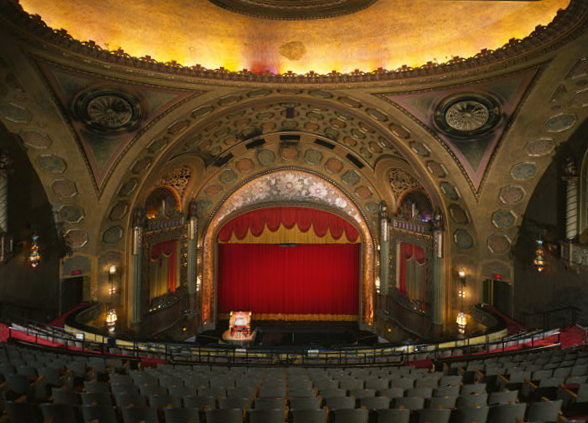
Interior of the Alabama Theatre before restoration. Photo taken for HABS, courtesy
of the Library of Congress.

Designed by the Chicago architectural firm of Graven and Mayger, the Alabama Theatre is one of only two extant theatres they designed, the other being Knoxville’s Tennessee Theatre which opened a year after its Alabama counterpart. The first air-conditioned building in the state of Alabama, the theatre features an opulent interior in the Spanish Colonial style that has wowed patrons for almost 90 years. A booming Wurlitzer organ still graces the auditorium and is featured in concerts and sing-alongs.

The theater served as a movie house until the owners declared bankruptcy in 1981. The theater had been sitting empty when Birmingham Landmarks, Inc. purchased the theater as a performing arts center. The theater edifice was fully restored in 1998 and hosts a wide array of events throughout the year.

Since reopening as a performing arts center, the Alabama Theatre has had varied reports of ghostly activity. One legend remembers a construction worker falling to his death during construction who allegedly haunts the balcony. A theatre staff member in the balcony checking sightlines did watch as a seat near her lowered by itself—the seats are spring-loaded to pop back up. Perhaps the construction worker enjoys watching the activity onstage?

HABS photo of the Alabama Theatre’s exterior. Courtesy of the Library of
Congress.

Southern Paranormal Researchers were granted permission to investigate the theatre in 2006. They encountered a variety of activity. As one investigator ascended the stairs to the balcony, they encountered a force that pushed them down. While investigating the film room shortly after that two investigators heard something descending a staircase.

According to Dr. Alan Brown, the now retired, long time theatre organist Cecil Whitmire told of many encounters in the building. While rehearsing with a singer in 1986, Mr. Whitmire reported that the singer watched a shadowy figure emerge from behind the edge of the curtain just offstage and disappear. He believes the spirit may be that of one of the former theatre organists. The extravagant theatre and its “walking shadows” still surprise and delight theatre patrons and visitors today.

Sources

  • Alabama Theatre. Accessed 8 March 2013.
  • Brown, Alan. Haunted Birmingham. Charleston, SC: History Press, 2009.
  • Brown, Alan.Stories from the Haunted South. Jackson, MS: University Press of Mississippi, 2004.
  • Dobrinski, Rebecca. “Wandering the Lyric at midnight.” Weld for Birmingham. 17 September 2012.
  • Dwyer, Jeff. Ghost Hunter’s Guide to New Orleans. Gretna, LA: Pelican, 2007.
  • “Haunted Places: the Lyric Theatre in Alabama.” The Most Haunted Places in America Blog. 21 April 2011.
  • The Heritage of Jefferson County, Alabama. Clanton, AL: Heritage Publishing, 2002.
  • Huebner, Michael. “Birmingham’s Lyric Theatre: Heightened anticipation for long-awaited restoration.” The Birmingham News. 29 Spetember 2012.
  • Seale, Kathy. “Happy Haunting!” Birmingham News. 29 October 2006.
  • Southern Paranormal Researchers. Investigation Report for Alabama Theatre. 24 November 2006.
  • Underwood, Madison. “Lyric Theatre set to host its ‘first concert in the 21st’”AL.com. 26 September 2012.

A Blow to Identity–LeBeau House

Last month, a group of seven men dealt a heavy blow to Southern identity and to the reputation of paranormal investigation. In search of ghosts, these men broke into the historic LeBeau House in Arabi, Louisiana. Apparently frustrated by the lack of paranormal activity provided by the home’s resident spirits, they set fire to the ancient structure. By the early morning hours of November 22, a small piece of Southern identity lay in ashes, the reputation of paranormal investigation lay open to derision and seven suspects were in jail with their futures in question.

In an article following the fire in The Times-Picayune, Richard Campanella remarked on the “exceptional nature” of the LeBeau House in Arabi, Louisiana. Architecturally, the home was a treasure that showed the mélange of influences at work—French, Creole, American—in the region at the time. But also in terms of identity, the house served as an identifying feature of Arabi and extending further afield to St. Bernard Parish, the New Orleans metro area, the state of Louisiana and the South as a whole. 

The LeBeau House in 2006. Photo by Infrogmation, courtesy of Wikipedia.

Campanella continues, “the identity and economy of our region rest on the aged timbers and piers of our historical structures.” Indeed, the identity of the South rests on the many historic structures that dot the landscape like tombstones or mile markers to our history. While some of these places are protected, there are still many places like the LeBeau House that are unprotected and desolately waiting for a savior.

Though, it was not just the South’s identity that took a blow in the early morning hours of November 22, the pursuit of paranormal investigation also received a blow from a group of so-called “ghost hunters.” As the news of the home’s spectacular loss was splashed across newspapers from coast to coast some authors looked to blame paranormal investigation itself as one of the reasons for the home’s destruction.

Allegedly, a group of seven men broke into the LeBeau House in search of the home’s storied ghosts. Some of the men had been smoking marijuana and alcohol may have also been involved. An officer from the St. Bernard Parish Sheriff’s office remarked that the men became frustrated trying to summon spirits and decided to set the house ablaze. Within minutes, the 10,000 square foot mostly wood frame structure became fully involved and by sunrise had been reduced to smoldering ashes.

Though they had already broken the tenants of responsible paranormal investigation by breaking into the secured house for an unauthorized investigation, their abject stupidity led them further to destroy the landmark. Even if the fire was set without the intent to destroy the home, the men were obviously too dense to think through the possible consequences of doing such a thing in an old wood structure.

The circa 1854 home was one of the largest unrestored antebellum structures in the New Orleans Metropolitan area. The Mereaux Foundation, which owned the property, had been looking for ways to preserve the home and had done basic work to shore up the decaying structure. They’d also secured the structure with a chain-link fence and by boarding up the windows and doors.

According to the St. Bernard Parish Sheriff, Jimmy Pohlmann, “we all heard ghost stories [about the LeBeau House] while growing up.” Those same stories drew the seven suspects to the house where they may have tried provoking the spirits before destroying the house. Most stories involve a very typical woman in white who is seen within the ancient structure.

In an article from Mother Nature Network, the author derides paranormal investigation by describing it as “harmless (and fruitless) fun,” that can have a “dark, dangerous side.” It continues by recounting a few recent incidents where ghost hunters have been injured or even killed while pursuing ghosts. Among them, a 2010 incident where a ghost hunter was killed by a train while investigating Bostian Bridge near Statesville, North Carolina, the scene of a tragic, 19th century rail disaster.

These seven men—it’s interesting that they come in a sacred number—have, with their selfish actions, wounded the reputation of paranormal investigation as well. Granted, the reputation was not the greatest to begin with, but as this story has spread the reputation has been furthered sullied.

To hopefully begin the process of repairing our public image I have two proposals.

First, there is a need to rebrand ourselves a bit. To accomplish this there is a need for us to retire the phrase “ghost hunting” in describing what we do. It’s an issue of implications. By describing what we do as “investigating,” we are implying a methodical, organized search that may involve evidence—exactly what a detective does. “Hunting” on the other hand, implies seeking out and killing, certainly the opposite of what we’re intending to do. Therefore, “paranormal investigation” is the best choice. We’re seeking to understand spirits, not destroy them.

Second, there is a need for a code of conduct. I would suggest an oath similar to the Hippocratic Oath taken by health professionals. There are a number of points I think should be included:

  • “First, do no harm.” The Latin phrase primum non nocere does not actually appear in the Hippocratic Oath, though often it is thought to be adapted from it. Most certainly, this sums up in four words what paranormal investigators need to consider: the further implications of what they do. There should be no harm to the locations, the spirits, the property owners or the investigators. Hikers often use the phrase “leave no traces, only footprints.” This is much along the same lines.
  • Respect above all. This is respect for everyone and everything. While we’re trying to protect everything and do no harm, holding everyone and everything in high regard is also important. This includes not provoking the spirits. If we hold them in high regard then bullying them should be out of the question. But also respect for other investigators and their findings.
  • Pay heed to cultural norms. Investigators may often encounter cultural and religious norms that may be opposite of or contradict their own staunchly held beliefs. If we are to respect everyone, spirits included, there is a need to understand and tolerate these differences in others.
  • Respect for history. Not only is it important to be respectful of history in its physical sense, but being respectful of historical facts. Do the research and have respect for the sources. Too often legends are taken at face value while actual historical facts are ignored. Historical research is not a simple task and does not end once the investigation begins. It is an ongoing process.
  • Keep an open mind. Not only that, but keep what a friend of mine called the “Eleventh Commandment: Do not take thyself so f—ing seriously.”

This is a rough outline. If something else should be added, please let me know.

Of course, I understand that an oath does little to prevent people from straying, it does instill a sense of honor, something that will help immensely with creating a cohesive sense of identity.

Sources

  • Alexander-Bloch, Benjamin. “Seven suspects in LeBeau Plantation fire were looking for ghosts, sheriff says.” Times-Picayune. 22 November 2013.
  • Campanella, Richard. “In LeBeau House’s ashes, a lesson in carpe diem.” Times- Picayune. 25 November 2013.
  • Monteverde, Danny. “Historic LeBeau Plantation in Arabi burns to the ground.” New Orleans Advocate. 27 November 2013.
  • Radford, Benjamin. “Ghost hunters burn historic mansion near New Orleans.” Mother Nature Network. 2 December 2013.

The Angels of Engel—Chattanooga, Tennessee

Engel Stadium
1130 East Third Street
Chattanooga, Tennessee

N.B. This article was revised 10 March 2019.

Despite its name—“engel” is German for “angel”—Engel Stadium was not likely built with the spiritual in mind. Though, according to a recent article from the Chattanooga-area news blog, Nooga.com, there may be spiritual activity here.

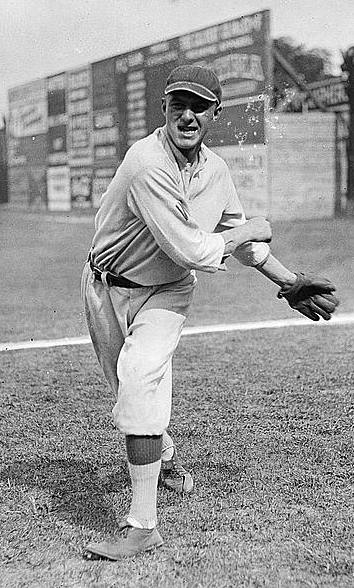
Following a career as a pitcher with the Washington Senators, Joe Engel worked as a promoter for the
Chattanooga Lookouts. Photo courtesy of the Library of Congress, Prints and Photographs Division.

In the context of baseball stadiums throughout the country, Engel Stadium could be considered hallowed ground. This stadium has heard the crack from the holy bats of baseball saints such as Babe Ruth, Lou Gehrig, Satchel Paige, and Willie Mays. It bears the name of Washington Senators pitcher, Joe Engel. Engel served as a recruiter and promoter following his Senators career and took over the Chattanooga Lookouts after it was purchased by the Senators’ owner, Clark Griffith.

Engel immediately embarked on a plan to build one of the finest minor league ballparks in the country. Ground was broken for Engel Stadium in 1929 and the 12,000-seat park opened the next year. Engel’s zealous and raucous promotion of the park led to his being nicknamed “the Barnum of Baseball.” He would remain with the Lookouts for 34 years.

The stadium was used as a minor league stadium until 1999, when it was turned over to the University of Tennessee, Chattanooga. In 2009 the Engel Foundation was formed to help preserve and restore the old park.

Recently, the park was investigated by Stones River Paranormal (SRP) out of Murfreesboro, Tennessee, a location known for a plethora of spiritual activity, mostly centered on the Stones River Battlefield. The team, in an effort to explore places in Chattanooga that may be haunted, approached the executive director of the Engel Foundation and was granted permission to explore the stadium for paranormal activity.

Engel Stadium, 2010. Photo by Andrew Jameson, courtesy of Wikipedia.

The group split up into various teams and they explored different sections of the park with a variety of investigative techniques. John McKinney, leader of the newly form Chattanooga branch of SRP, stated that the group found possible activity in a number of places throughout the park. “Definitely, the home locker was more active than I thought it would be at first,” he said. He continued by saying that “the entire right side was active” as well as the baseball diamond. While in the press box, the group believes it may have made contact with the spirit of Joe Engel himself.

The final results of the investigation will be revealed in a few weeks.

Perhaps the Engel has angels after all.

Sources

Spirits on the Bay of the Holy Spirit—Richards DAR House

Richards DAR House
256 North Joachim Street
Mobile, Alabama

The figure appears to me to be a man wearing a frock coat. An image was captured during a recent investigation of the Richards DAR House in Mobile. It was taken in one of the bedrooms and includes the image of a man with his back to the camera. The figure is only partial, definitely a head, shoulder, arm and torso are visible, but not much else is visible. It could be a woman, for all we know.

The Richards DAR House is one of those fascinating places where the paranormal appears to be very much in evidence. The Daughters of the American Revolution chapter who operates the home has recently begun allowing investigators to scour the house for evidence of the paranormal and they have found a great deal.

“Every time we end up going into that location, we end up with evidence of some sort,” says one of the investigators from the Alabama chapter of the Delta Paranormal Project who sponsored a public investigation of the house.

As it came into being, the city of Mobile endured very violent labor pains. The area was originally occupied by native people who called themselves the Mauvila. It was these people who met the Spanish who first explored the area in 1519 under Alonzo Alvarez Pineda naming Mobile Bay the “Bay of the Holy Spirit” or “Bahia Espirito Sancto.” While the first Spanish approached the natives peacefully, the second encounter under Henando de Soto a few decades later, was wracked with violence.

Often, places like this that produce a plethora of evidence tend to be the scene of tragedy, the Richards DAR House goes against the grain: it appears to have been a very happy home. The house has quite a cheerful appearance from the street.

The Richards DAR House, 2010, by Carol M. Highsmith. Courtesy of the Carol M. Highsmith Collection, Library of Congress Prints and Photographs Division.

Ralph Hammond in his 1951 Ante-Bellum Mansions of Alabama, notes that the home has the some of the finest ironwork in the city of Mobile. Lacey grillwork surrounds the first floor porch with a similarly decadent iron fence running along the sidewalk in front. The National Register of Historic Places nomination form for the De Tonti Square Historic District, of which the Richards House is a contributing structure, notes that the ironwork depicts the four seasons and is the most elaborate in the city. The rest of the house is far simpler: it’s a brick townhouse with a few fanciful, Italianate decorative touches.

The home was completed around 1860 for Charles G. Richards as a family home for his wife, Caroline Elizabeth Steele, and their many children. In total, the couple had twelve children, though a few did not make it past childhood as was common in the era. Caroline Richards lived in the home for seven years before dying in childbirth. Her husband did not remarry, which, according to the president’s of the home’s executive board, indicates that “there was a lot of love in that family.”

The home remained in the family for a few further generations until passing into the hands of the owners of a cement company. Luckily, the cement company owners were dedicated to preserving the house that served as their offices. When the building outlived its usage as an office, it was turned over to the city in excellent condition.

Quickly, the DAR members became aware of the spirits in residence. “There are times when you hear—when you first go in, after opening up—you’ll hear young children. It sounds like children playing on the stairs or right at the top of the stairs,” one of the ladies told author Elizabeth Parker.

In an effort to contact the children, a recent investigation introduced marbles with the promise that if they were moved, the children could keep them. Later in the investigation, the marbles were found to have moved.

Apparently, there are adults watching over the children. Definitely the person who appeared in the photograph, but also the woman who is seen staring out the window of the red bedroom may be watching over the children. In fact, one guide entered the home one morning and she and the guests with her clearly heard the sound of a woman scolding children.

According to the president of the home’s board, “We just feel like it might be Captain Richards and his wife and children. They’re just happy that we’re taking care of the house so well, and letting others enjoy the house.”

Sources

  • Floyd, W. Warner & Thomas St. John, Jr. National Register of Historic Places Nomination Form for De Tonti Square Historic District. 29 December 1971.
  • Hammond, Ralph. Ante-Bellum Mansions of Alabama. NYC: Bonanza Books, 1951.
  • Kirkland, Scotty. “Mobile.” Encyclopedia of Alabama. 25 September 2008.
  • Paker, Elizabeth. Haunted Mobile: Apparitions of the Azalea City. Charleston, SC: History Press, 2009.
  • Sharp, John. “Ghost hunters make haunting discoveries at Richards DAR House.” com. 10 September 2013.
  • Vargas, Lauren. “Ghost Hunting at Richards DAR House.” WKRG News 5. 22 February 2012.

Newsworthy Florida–October 2013

There are articles about hauntings blooming all around the South for the Halloween season. Florida, the floral state, is at full bloom. Here’s an overview of recently reported Florida hauntings.

St. Cloud Greater Osceola Chamber of Commerce
1200 New York Avenue
St. Cloud

The Southern literary magazine, The Oxford American, explores Southern culture. As ghosts, ghostlore and ghost hunting (Southerners love their hunting) have permeated Southern culture in recent decades, it’s appropriate that the magazine would publish an article about it. An article by Chantel Tattoli explores this through the experiences of GhostStop, a St. Cloud business specializing in ghost hunting equipment. They also conduct investigations and the St. Cloud Chamber investigation included the article’s author.

According to the investigation team she was working with, the building dates to 1910, when it opened as a bank. One major robbery occurred in the building as well as, if local lore is accurate, a double homicide. The activity in the building includes the requisite footsteps in conjunction with what the author describes as “shadows, rattles and whistles.”

The article ends with the author wistfully asking, “What is a ghost but a smear in the air? A memory, willful and invincible, determined to keep living its life.” I really like that statement.

Source

Florida Theatre
128 East Forsyth Street
Jacksonville

When the Florida Theatre opened in 1927, it was the fifteenth movie palace in the city, but definitely the most lavish. The Mediterranean revival-style architecture was very popular throughout Florida throughout that decade. The grand theatre served the citizens of Jacksonville very well for more than five decades even as many other glorious movie palaces and other theatres were shuttered and demolished.


The marquee of the Florida Theatre, 2008, by Craig O’Neal. Courtesy of Wikipedia.

It was here in 1956 that a young singer named Elvis Presley performed. Seated among the screaming fans in the audience was a juvenile court judge to monitor Presley’s notorious hips for movements that were deemed “too suggestive.”

The theatre closed in 1980, but efforts were quickly underway to revive the grand dame. In October of 1983, the theatre opened its doors once again as a performing arts center, a use that has kept the marvelous building open for three decades.

A press release from PR Newswire announces that the theatre will be the scene of a paranormal investigation on Halloween night. The press release includes a remark from the theatre’s house manager that recounts her experience with a strange humming in the theatre. “I’ve heard a strange humming sound that made the hair on the back of my neck stand up. I thought it was a bar refrigerator, so I unplugged it, but the humming noise continued.”

The ghosts of the Florida Theatre are fairly well documented, especially after an investigation in 2010 captured the image of someone sitting in a seat in the balcony.

An article in the Florida Times-Union from July recounts the experience. The crew was filming with infrared cameras when they began to detect movement in the balcony. “The cameras captured something in Seat E2, Section 500, up in the balcony, where the original 1927 seats are still in place.” The video captured what appears to be someone sitting in the seat and moving their arm.

Perhaps the figure will make an appearance on Halloween.

Sources

The Petite Boutiques
1002 East New Haven Avenue
Melbourne

The Petite Boutiques describes themselves as an “upscale mini-mall” that “hosts a collection of small retail businesses located inside a historic landmark.” The landmark building was once the Brownlie-Maxwell Funeral Home which moved to new location some years ago. After the building’s conversion to retail space, people working in the building began experiencing odd activity including Christmas trees in the Christmas shop being rearranged.

A member of the family who owns the building was quoted in Florida Today speaking about the Christmas trees. “Every morning, I would come into find a bird on one of our trees that was upside down, and I would have to rearrange it. It happened all the time. Then one night, I closed and knew the bird was on the tree right side up. But when I got there the next morning, it was upside down again.”

The article mentions that various customers have picked up on various entities within the building.

Sources

Eau Gallie Cemetery
Intersection of Avocado Avenue and Masterson Street
Melbourne

Eau Gallie was an independent city until 1969 when it merged with Melbourne. The name may be a reference in French to the salt water found around the town.

In the Eau Gallie Cemetery sleep many of Eau Gallie’s founding and prominent family. But, their rest may not be so easy. The cemetery has been rumored for years as being haunted and has been investigated by Florida Unknown, a local paranormal investigation team.

According to an article from Florida Today, the team did succeed in capturing a female voice responding to a direct question.

Sources

Crooked Mile Cemetery
aka Georgiana Cemetery
Crooked Mile Road
Merritt Island

It appears that the Crooked Mile Cemetery may be quite a bit more active than the Eau Gallie Cemetery. Indeed, the cemetery plays a part in one of the area’s most well-known ghost stories—the haunting of Ashley’s Restaurant in nearby Rockledge.

On November 21, 1934, the badly mutilated and decomposing body of a young woman was found near the river. Nineteen year old Ethel Allen had been seen just a few days before when she stopped at a local packing house to say goodbye to a friend. Ethel was leaving to visit her mother. She may have also stopped by her favorite local hangout, Jack’s Tavern, now Ashley’s of Rockledge. The Tudor style restaurant, on U.S. 1, still has activity, which has been attributed to Ethel Allen.

The gentleman with whom Ms. Allen was travelling was identified, but never questioned. Ms. Allen was laid to rest in the Crooked Mile Cemetery where she continues to interact with the living. In yet another article from Florida Today, the Brevard Ghost Hunters report that they received an EVP saying “yes” at the grave of Ethel Allen. The investigators had asked if Ms. Allen was present.

Within the moss-draped graveyard, others have reported seeing and hearing apparitions, but scarier still, hands have been known to reach out of graves here.

Sources

Pritchard House
424 South Washington Avenue
Titusville

It is said that Lola Pauline Smith Pritchard, known as Miss Lovie, never liked people in her house. Perhaps it is she who is upset about tourists regularly visiting her magnificent Queen Anne-style house.


Pritchard House, 2012, by Jigar,brahmbhatt. Courtesy of Wikipedia.

As of late, Florida Today has been ramping up on paranormal articles. Interestingly, the reporter interviewed Michael Boonstra whose blog I used for information concerning Ethel Allen’s murder in the above location. As the director and archivist for the Brevard County Historical Commission, he was invited on an investigation two years ago of the Pritchard House.

Recently restored, the home has been returned to its original color scheme, an orange color with coral colored trim. Captain James Pritchard, a businessman important in the development of the area, built the home in 1891. Until Brevard County purchased the home in 2005, it had remained in the Pritchard family.

The investigation uncovered evidence that members of the Pritchard family may still remain in the house. Voices were heard, a light turned on by itself and a grandfather clock that was not in working order was heard pinging.

Sources

Apparitions of Atlanta

N.B. Last Thursday, I did a presentation on Atlanta ghosts for the Atlanta History Center’s event, Party with the Past. The presentation began with the 1908 New York Times story of a ghost in the governor’s mansion. This has since been broken out into its own article here.

Atlanta doesn’t have a very good record of preserving its historic environments. Historic preservation not only preserves the historic fabric of a location, but the spiritual fabric as well. That can most certainly explain cities such as Savannah, New Orleans, Charleston, SC and St. Augustine—cities known for their ghosts.

Disturbances in the historic fabric of a location can also uncover spirits. This is evident throughout the Atlanta area as the sacred ground where many gave their lives during the Civil War is developed. One of the better documented occurrences of this phenomenon took place on a development called Kolb Creek Farm in Marietta, just north of here.

Valentine Kolb House, 2011, Photo by Lewis O. Powell IV, all rights reserved.

This house and a small family cemetery on Powder Springs Road in Marietta are all that remain of the Valentine Kolb farm where a minor battle was fought June 22, 1864, a battle leading up to the vicious Battle of Kennesaw Mountain which would be fought a few days later.

Behind this house, the farm fields have been developed into subdivisions. A couple, James and Katherine Tatum, purchased a home in the neighborhood in 1986. After a quiet first year in the house, the couple began to experience unexplained activity. The television show Unsolved Mysteries publicized their story and they were interviewed by Beth Scott and Michael Norman, interviews that were included in their 2004 book, Haunted America.

The first encounter occurred early one morning. “My husband and I had gotten up to go to the bathroom at the same time, about 2:30 AM. Our bedroom is upstairs. My husband used the bedroom bath and I went into the hall bath. The bathroom door was open. I saw a man walking down the hall in front of the open bathroom door. I assumed it was my husband looking for me since I was not in bed.”

After calling out to her husband with no response, Mrs. Tatum returned to the bedroom where she found her husband and asked if he’d been in the hall. He had not and he was disturbed by the idea that someone else might be in the out. Climbing out of bed, he retrieved his gun and searched the house to no avail, no one else was there.

Mrs. Tatum realized that the figure she had seen was wearing a hat and a coat. “I came to realize that when the man walked past me there had been no sound, as you would normally hear whenever someone is walking down the hall.”

For the Tatums, this would begin a series of odd events including something playing with an electric drill, pocket change on a dresser jingling on its own accord and a small bell ringing by itself.

Sources

  • Battle of Kolb’s Farm. Wikipedia, the Free Encyclopedia. Accessed 28 October 2013.
  • Scott, Beth and Michael Norman. Haunted America. NYC: Tor, 2004.

Apparently, this isn’t the only modern house with spiritual residue possibly left over from the war, homes and businesses throughout the area have activity as well.

Among the multiple stories coming out of the area, one recent story stands out.

On the night of October 8, 2007, a gentleman and his teenage son were driving across one of the many roads that cross the battlefield at Kennesaw Mountain. They spotted something about to cross the road and were amazed to see a horse with a Union cavalry officer upon it appear in their headlights.

“I quickly locked on my brakes as the horse proceeded to come right in front of us,” the anonymous driver told 11 Alive News, an Atlanta news station. The father and son watched in awe as the figure moved across the road and through a fence opposite before fading into the night.

Keep in mind, as you traverse Atlanta’s battlefield, keep on the lookout for ghosts.

Sources

  • Crawley, Paul. “Ghost rider at Kennesaw Mtn.?” 11 Alive News. 1 November 2007.

The Civil War left a heavy, spiritual pall around the city, a pall that has been detected by visitors to Atlanta’s great necropolis, Oakland Cemetery.

[I have covered Oakland in depth here]

[the section that once covered the Ellis Hotel, formerly the Winecoff, has been broken out into its own article.]

Moving on to a happier place on Peachtree in Midtown, we find ourselves at the Fabulous Fox which may possess a handful of “phantoms of the opera.” When this building opened, Christmas Day, 1929, one of the local papers called it “a picturesque and almost disturbing grandeur beyond imagination.” The grandeur, however did not last and the theatre floundered during the Depression. Under threat of demolition in the 1970s, Atlantans banded together to save the theatre and it has since been restored.

Fox Theatre, 2005. Photo by Scott Ehardt, courtesy of Wikipedia.

Some of the mysteries among the minarets include the holy grail of ghost hunting, a full body apparition seen by an investigator. An investigator with the Georgia Ghost Hounds, Denise Roffe (who, incidentally, wrote a book on the ghosts of Charleston, SC), had to use the restroom during an investigation. In the dark she found her way to the ladies restroom and upon entering a stall was shocked to see a young woman. “She was just standing there wearing a long, period dress and a hat.”

Startled, she screamed and other members of the group quickly joined her but the image was gone.

Another popular story involves a man hired to stoke the theatre’s furnaces. He lived down in the basement with a cot and his few, meager possessions. After his death, he has possibly continued to stay in the basement. He is said to like women and when they enter the basement they will, at times, detect a peaceful and relaxing atmosphere while men are sometimes harassed by the spirit.

Sources

  • Fox Theatre (Atlanta, Georgia). Wikipedia, the Free Encyclopedia. Accessed 28 October 2013.
  • Underwood, Corinna. Haunted History: Atlanta and North Georgia. Atglen, PA: Schiffer, 2008.

Just before Peachtree crosses over I-85, visitors to the city may be surprised to see what appears to be a castle looming above the road. Built with granite supplied from Stone Mountain, Rhodes Memorial Hall was constructed in 1904 for local furniture bigwig, Amos Rhodes. After serving as the home of the State Archives the building played a haunted house for a few years in the 1980s and 90s, despite actually being haunted.

Rhodes Hall in an undated photo from the Georgia Trust for Historic Preservation. Courtesy of Wikipedia.

The house was investigated by the Atlantic Paranormal Team from SyFy’s paranormal investigation show, Ghost Hunters. To aid in this endeavor, the show’s producers called in the Real Housewives of Atlanta to perhaps scare up a few ghosts with their attitudes and fashion sense. While some scant evidence was uncovered, Rhodes Hall got to show off its ghostly activity which includes the typical unexplained footsteps, doors opening and closing by themselves and apparitions, though with a sardonic sense of humor that includes a bouquet of dead flowers supposedly being left on the desk of a staff member in the house.

Sources

  • Merwin, Laura. “Ghost Hunters meet Real Housewives of Atlanta and nothing.” com. 2 December 2010.
  • Rhodes Hall. Wikipedia, the Free Encyclopedia. Accessed 28 October 2013.

In terms of Atlanta hauntings, these are just the very tip of the iceberg. While some of these hauntings have been documented, I believe there are many more that should be documented from private homes to office complexes. 

A MARTA train passes by Oakland Cemetery. Photo 2011, by Lewis Powell IV, all rights reserved.

I’d like to leave you with one final story. Ghosts do not just appear in old houses or buildings, but they’re also found in planes, trains and automobiles. Curt Holman in an article a few years ago from Creative Loafing Atlanta relates a story from MARTA, the Metro-Atlanta Rapid Transit Authority which operates a system of trains and buses throughout the city.

Holman relates that a young man riding on a nearly empty train on a winter’s afternoon. The young man was absorbed in the music he was listening to on his headphones and was startled to feel someone sit next to him. Looking at his reflection in the window, the young man saw a man in his 40s with dark hair and wearing a business suit sitting next to him.

Turning to speak to the man he found the seat empty.

Thank you very much and support your local ghosts!

Sources

  • Holman, Curt. “The hauntings of Atlanta.” Creative Loafing Atlanta. 27 October 2011.

Newsworthy Haunts 10/3—A haunted haunted house

‘Tis the month for reporting on the paranormal. In collecting articles about paranormal phenomena in the South, I shall be busy this month.

I find it rather amusing to find haunted attractions that are actually haunted. The phenomena seems to stem from the use of old buildings for many of these attractions.

The Haunted Barn
426 Beauregard Street
Charleston, West Virginia

The Haunted Barn did not start in Charleston, WV, it started in an actual barn in the small, nearby town of Winfield. The barn was damaged in last year’s June derecho and the barn’s operators decided to move the attraction to Charleston.

Originally housed in a 5,000 sq. ft. barn, the owners found a derelict warehouse in the city’s East End district to expand their operation. The nearly century old Coca-Cola warehouse was also used as a warehouse for SportMart and provides two floors for thrills. “We’re looking at 10,000 square feet upstairs,” one of the owners told the Charleston Gazette last year, “which makes us the largest haunted house in West Virginia—haunted house, not haunted attraction, but haunted house.”

Since opening in the new location last year, the owners have started opening themed haunted houses for a variety of holidays. An article in the same paper from earlier this year noted that the building may actually have some activity. “You’d have to be made of stern stuff to spend odd hours working in a dark, creepy place,” the article argues.

“We’ve heard a couple of things,” one of the owners says, “we’ve heard what sounds like footsteps upstairs when there’s nobody supposed to be up there.”

He continued, “I don’t want to say it’s haunted because I have to work here.”

Well, he may know a bit more about the hauntings around Halloween this year. An article from WCHSTV notes that Country Roads Paranormal Investigations out of Nicholas County will be performing an investigation. It’ll be interesting to see if the source of those mysterious footsteps can be tracked down.

Sources

  • Cart, Kallie. “Haunted Barn unveils two floors of fright.” WCHSTV. 2 October 3,
  • Fallon, Paul. “East End’s Haunted Barn is scary and merry.” Charleston Daily Mail. 5 December 2012.
  • Kersey, Lori. “East End Haunted Barn to open this weekend.” Charleston Gazette. 30 September 2012.
  • Lynch, Bill. “Haunted Barn offers bloody good Valentine’s bash.” Charleston Gazette. 6 February 2013.

History in Flames—Georgetown, South Carolina

N.B. This article was revised 14 July 2019.

For a look at Georgetown’s ghosts, see my 2011 article.

As I’ve been working on this blog, I’ve started to get to know a variety of cities and small towns in the South. Among them, Georgetown, SC has become one of my favorites. I met native son and ghost tour guide extraordinaire, William Goins, earlier this year and began to delve into the city’s glorious past and even more glorious ghosts.

A view of the block that burned this morning. The SC Maritime Museum in the foreground, sustained some damage, while the buildings towards the Rice Museum were gutted by the early morning fire. 2011, by Lewis O. Powell IV, all rights reserved.

The stillness of downtown Georgetown was broken early this morning as flames devoured a block of Georgetown’s history. The block of commercial buildings with residential space above them at the core of the historic district between the Rice Museum and the South Carolina Maritime Museum sustained massive damage. The Rice Museum which is not connected was spared, though the Maritime Museum, according to the Georgetown Times, received some damage to its upper floors.

William Goins’ tour began at a bar, Limpin Jane’s, which is where the fire may have started. That building was entirely destroyed along with Harborwalk Books, located a few doors down, which had a marvelous selection of books on local folklore and ghosts.

Most of these buildings dated to the 19th century and had survived the terrible damage inflicted on the city during Hurricane Hugo, the monster hurricane that slammed into the South Carolina coast in 1989. Downtown Georgetown was flooded by the storm surge.

Front Street Georgetown South Carolina historic commercial buildings destroyed by fire in 2013by
The fire may have started in Limpin’ Jane’s in the green building. All the buildings in this picture were mostly destroyed. This photo was taken earlier this year. Lewis O. Powell IV, all rights reserved.

Like the many of the surrounding buildings in the historic district there, this block did contain some ghosts. During my ghost tour earlier this year, I inquired if Limpin’ Jane’s had any activity and Goins replied that some possible activity had been observed in the upper areas of the building. There are questions as to if the spiritual fabric of a location is damaged during events like this.

Most certainly the fire may create some spiritual fabric itself. People in buildings that have burned may sometimes smell smoke or, even worse, the odor of burned flesh. There may be spirits at the location of those who died in the fire. In the case of the Monumental Church in Richmond, Virginia, the fire’s victims are now believed to haunt the building. The church was constructed to the memory of the victims of the 1811 Richmond Theatre fire. The building stands on the site of the theatre and entombs the remains of the victims.

Thankfully, no one was killed in today’s fire in Georgetown. I fully expect that the block will be reconstructed incorporating surviving original elements and I hope to see the block to return in even better condition.

N.B. The buildings that were gutted by fire were torn down later in 2013. The South Carolina Picture Project has a page of photographs of the fire.

Sources

  • “A block of history destroyed.” Georgetown Times. 25 September 2013.
  • Harper, Scott and Clayton Stairs. “Fire in Georgetown: History up in flames.” Georgetown Times. 25 September 2013.

A rose from a ghost–Elizabeth City, North Carolina

N.B. The section on the Lowe Hotel in Point Pleasant, WV that was originally published here has been moved to my article, “13 Southern Rooms with a Boo.”

Museum of the Albemarle
501 South Water Street
Elizabeth City, North Carolina

Preserving and interpreting the history and archaeology of the thirteen northeastern counties of North Carolina, the Museum of the Albemarle hosted a different type of digging last weekend. NC Paranormal Research was digging for ghosts within the museum. While the article, appearing in Popular Archaeology, doesn’t present exactly what kinds of activity are happening at the museum, a bit of sleuthing uncovered a couple articles discussing activity.

Museum of the Albemarle Elizabeth City North Carolina haunted ghost
Museum of the Albemarle, 2006 by Ajsanjua. Courtesy of Wikipedia.

The museum is the northeast branch of the North Carolina Museum of History and has been open since 1967. Originally housed within an old state highway patrol station, the museum recently constructed a new building adjacent to the waterfront. It also is next to a cemetery. Combined with the mass of antiques and artifacts housed within the museum, this may be to blame for the activity within the building.

Fred Fearing was a local historian and raconteur. In retirement he’d created an organization called the Rose Buddies, which hosted small parties for boaters visiting the port where he’d present a rose to each woman visiting. A museum supporter, he spent a great deal of time at the museum where he reminded the staff that they would not have to spend money after his death. After his burial in the adjoining Christ Episcopal Church Cemetery, he would haunt the museum and protect the museum and many of the items he’d donated.

Not long after Fearing’s death, a visitor to the museum encountered a gentleman at the museum. He was holding a rose and told her stories from the town’s history. After speaking to her, he turned, walked down the hallway and disappeared. Other times, a gentleman has been seen within the museum. An article from the Norfolk, Virginia, Virginian-Pilot reveals that some evidence was uncovered by the investigators, but doesn’t reveal specifics.

Sources