A Tasteful Spirit—Greensboro, North Carolina

Guilford County Sheriff’s Office
400 West Washington Street
Greensboro, North Carolina

 In a recent article about the strange goings-on at the Guilford County Sheriff’s Office, the niece of Otto Zenke reported that his spirit may not approve of the vertical blinds used throughout the building. “He would never have approved of all those vertical blinds,” Ginia Zenke responded. “Not when his workrooms churned out beautiful draperies and furnishings for decades.” The sheriff’s office occupies a building that once served as noted interior designer Otto Zenke’s showroom and residence in his final years.

Brooklyn-born Otto Zenke arrived in Greensboro in 1937 to work for a furniture store. After going into business for himself with his brother in 1946, Zenke made a name for himself as one of the leading interior designers of the day as he worked on projects for wealthy clients in the area. He collected fine antiques and acquired the delicate, Italianate-styled Eugene Morehead House at 215 South Eugene Street which he turned into a local showplace. In the European style, the home’s library featured murals and paneling. The exquisitely executed gardens surrounding the house became a noted feature on the tours of local garden clubs. Sadly, city officials didn’t see this home as a treasure in their city.

In the 1960s as Greensboro began to execute a plan for “urban development” Zenke’s magnificent home and gardens sat smack dab in the middle of a proposed government center. The property was seized under eminent domain in 1968 and replaced with a Brutalist monstrosity by Argentine modernist Eduardo Catalano. The delicate cottage was razed over two days and the unadorned cast concrete walls of the government center rose over the next few years in its place. While the city did well in hiring a noted architect for the design, the bold architectural lines have always stood very harshly against the more classically based traditional architecture of the city; so much so that Preservation Greensboro remarked in its blog that the style, “has never been at ease” in the city.

Zenke, never one to back down from a challenge, moved across the street into the series of buildings that housed his showrooms and workshops. There, he created a fine residence that rivaled any in the city, though his heart still longed for the delicate cottage that he had lost. Otto Zenke died of cancer in 1984. Not long after his death, when the city bought Zenke’s last residence and converted it to the sheriff’s office, locals noted the irony of the situation.


The building behind the trees with the chimney is the sheriff’s office, formerly Otto Zenke’s residence.

Otto Zenke has a good reason to stalk the halls of the sheriff’s office and he seems to be particularly active. Law enforcement officials and staff have reported having items on their desks and in their offices rearranged, perhaps to suit Mr. Zenke’s taste. Some employees have had their names called by a male voice while working in the building after hours. Others have heard distinct footsteps rambling through empty rooms and hallways. While the spirit may not be malevolent, it does seem he may be a bit judgmental. If you work in the Guilford County Sheriff’s Office, you may want to keep your office tidy.

Sources

  • Associated Press. “Could ‘weird things’ at Guilford County Sheriff’s Office be a ghost?” Burlington Times-News. 13 September 2015.
  • Bishir, Catherine W. and Michael T. Southern. A Guide to the Historic Architecture of Piedmont North Carolina. Chapel Hill NC: University of North Carolina Press, 2003.
  • Zenke, Ginia. “Lost to progress: The Otto Zenke Buildings.” Let me get this straight… 25 March 2012.

Resting high on that mountain—Helen’s Bridge, Asheville

Helen’s Bridge
Over College Street between
Windswept Drive and Beaucatcher Road
Asheville, North Carolina

I know your life on earth was troubled
And only you could know the pain.
You weren’t afraid to face the Devil
You were no stranger to the rain.
Go rest high on that mountain…
 –“Go rest high on that mountain,” Vince Gill (1995)

The city drops away quickly as you drive up Beaucatcher Mountain from downtown Asheville. College Street—a main thoroughfare through the heart of downtown, forming one side of Pack Square—suddenly becomes a mountain road. As it dizzily traverses the side of the mountain, the road enters a gap spanned by a lonely, primeval bridge. Something about the patina of the stone and the flora growing around the bridge, make it appear to be a natural part of the landscape, as if it’s always been there. In truth, it has been here for a little more than a hundred years, enough time for the bridge to settle into the landscape and become ensconced in legend and lore. You have arrived at Helen’s Bridge.

Helen’s Bridge, October 2012, by Lewis O. Powell IV. All rights reserved.

The temperature here seems chillier; perhaps it’s the geography or perhaps it’s the wandering spirit of Helen; it’s hard to tell. While many are drawn to the bridge’s stark beauty it is the legend and lore that draws others. The legend speaks of a woman named Helen who lived near the bridge with her beloved daughter. After losing her daughter in a fire, the distraught Helen hung herself from the bridge. Some versions associate Helen with the nearby estate of Zealandia, where she was supposed to have been a mistress to one of the estate’s owners, and after becoming pregnant, hung herself in anguish. Researchers have found nothing to document the existence of an actual Helen, although author Alan Brown relates that some of the owners of Zealandia encountered the apparition of a woman on the stairs that they identified as Helen.

Teens have taken to trying to summon Helen by visiting the bridge at night and calling her name three times. It is reported that she will sometimes appear as a light or as an apparition. Others have reported that this ritual will sometimes cause car problems, ranging from odd mechanical issues to dead batteries. Florida author, Jamie Roush Pearce experienced problems with her car’s automatic locks after visiting the bridge and attempting to summon the sad spirit. Pearce briefly glimpsed a figure near her car and discovered the problem with the locks after leaving the site. After dealing with the issue for a week, she returned and asked Helen to leave her car alone. The lock problem has not reoccurred.

The bridge is immortalized in Thomas Wolfe’s 1929 novel, Look Homeward, Angel, when the main character, Eugene Gant walks with his girlfriend up Beaucatcher Mountain:

They turned from the railing, with recovered wind, and walked through the gap, under Philip Roseberry’s great arched bridge… As they went under the shadow of the bridge Eugene lifted his head and shouted. His voice bounded against the arch like a stone. They passed under and stood on the other side of the gap, looking from the road’s edge down into the cove.

Though Wolfe attempted to draw a thin veil over his hometown by renaming it Altamont, it was clear to the Ashevillians that he was depicting them in his novel. So much so that he is reported to have received death threats and did not return to the city for several years after the novel’s publication.

This rustic stone bridge was constructed as a carriageway for the Zealandia Estate in 1909. It was designed by R. S. Smith, who worked as an architect on the building of the nearby Biltmore Estate and was obviously fluent in the languages of Gothic, Tudor, and Elizabethan architecture.  In 1889, the same year that George Vanderbilt began construction on his magnificent manse that he would call Biltmore, John Evans Brown, who had spent his formative years in Asheville, began to build his estate here on Beaucatcher Mountain. Brown had left the city in 1849 to pursue his dreams of striking gold in the Golden West. When those dreams failed to pan out (pun intended), Brown set out for the green mountains of New Zealand where he found fortune in sheep and politics. He returned to his hometown with fortune in hand in 1888 and began construction on his estate.

Helen’s Bridge, December 2015, by Lewis O. Powell IV. All rights reserved.

Brown enjoyed his stately, mountainside view of Asheville for a few scant years before his death in 1895. The estate was purchased by Australian native Philip S. Henry in 1903 and this intellectual, art collector, and diplomat set about fashioning the estate into a showplace in this aristocratic resort community. Hiring architect R. S. Smith, Henry began to transform the lofty estate into a European-styled castle in the Tudor style. The carriageway with its notable bridge was constructed during this period. In 1924, Henry opened his estate for the public to see his art collection. Upon Henry’s death in 1933, the estate passed to his daughters and remained in the family until 1961.

When construction began on the nearby Interstate 240 corridor, plans originally called for slicing through part of Beaucatcher Mountain. Local preservationists quickly formed the Beaucatcher Mountain Defense Association to argue for the mountain’s preservation and even more specifically for the protection of Zealandia. A tunnel through the mountain was proposed instead. Though the state department of transportation tore down Philip Henry’s museum in 1976, the estate was named to the National Register of Historic Place in 1977 and was left alone. During the tunneling blasting supports were added to protect the bridge. In 1998 with the supports still in place and stones falling from the looming structure, the city considered demolishing the structure. Local history buffs and preservationists won the fight and the supports were carefully removed. The bridge was structurally sound and it has recently been bought by the city to use as part of a proposed greenway.

Helen’s Bridge, December 2015, by Lewis O. Powell IV. All rights reserved.

If you choose to visit Helen, be cautious as the area does have some traffic. There is a dirt turnout off Beaucatcher Road a few yards past the bridge ideal for parking. The top of the bridge is still closed off and Zealandia is private, so please confine your ramblings to the public thoroughfare underneath the bridge. Summoning spirits is never encouraged, especially if you wish to avoid car problems and please be kind to Helen, she’s been through a lot.

Helen’s Bridge, October 2012, by Lewis O. Powell IV. All rights reserved.

Sources

  • Bishir, Catherine W., Michael T. Southern, & Jennifer F. Martin. A Guide to the  Historic Architecture of Western North Carolina. Chapel Hill, NC: University of North Carolina Press, 1999.
  • Bordsen, John. “Find the most haunted place in these Carolina towns.” Dispatch-Argus. 31 October 2010.
  • Brendel, Susanne & Bettu Betz. National Register of Historic Places nomination form for Zealandia. 12 January 1977.
  • Brown, Alan. Stories from the Haunted South. Jackson, MS: University Press of Mississippi, 2004.
  • Burgess, Joel. “City acquires historic bridge.” Asheville Citizen-Times. 25 November 2009.
  • “Death of Col. J. Evans Brown.” Asheville Citizen-Times. 9 July 1895.
  • Interstate 240 (North Carolina). Wikipedia, the Free Encyclopedia. Accessed 30 December 2015.
  • “Saving Helen’s Bridge.” Asheville Community News. 1999.
  • Pearce, Jamie Roush. Historic Haunts of the South. Jamie Roush Pearce, 2013.
  • Tomlin, Robyn. “Zealandia Bridge Repairs Completed; Fixing historic bridge cost much less than originally forecast.” Asheville Citizen-Times. 1 June 1999.
  • Warren, Joshua. Haunted Asheville. Johnson City, TN: Overmountain Press, 1996.

A Living Cemetery—Colonial Park Cemetery, Savannah

Colonial Park Cemetery
Corner of Abercorn and Oglethorpe Streets
Savannah, Georgia

N.B. This entry is comprised of information from two previous blog entries: “Colonial Park Cemetery (Newsbyte)” from 26 November 2010 and “A Figure in Colonial Park Cemetery” from 8 February 2013. The article was edited and revised 15 September 2019.

 It’s an odd thing to think of a cemetery as a living thing, but in Savannah, a city that luxuriates in its historic spaces, Colonial Park Cemetery is very much alive. Locals and visitors alike still crowd the paths and open expanses of green grass between the crumbling monuments, markers, and vaults. The cemetery itself is verdant and spreads out under many old trees. Even spiritual activity shows that the dead residents are, in a way, still residing among us at their burial ground.

The city’s oldest extant cemetery, this space has served as a park since 1895 when the city took over control from Christ Church. In her 1999 history of the cemetery, Elizabeth Carpenter Piechocinski alludes to children once playing within some of the old family vaults that still contained the dusty bones of former Savannahians. The image of children happily playing among bones certainly supports the idea of this cemetery being alive and a place where life and death joyfully intermingle with the ghost stories and occasional evidence also providing tangible support. With the addition of a playground on the East Perry Street side of the cemetery, this becomes even more evident.


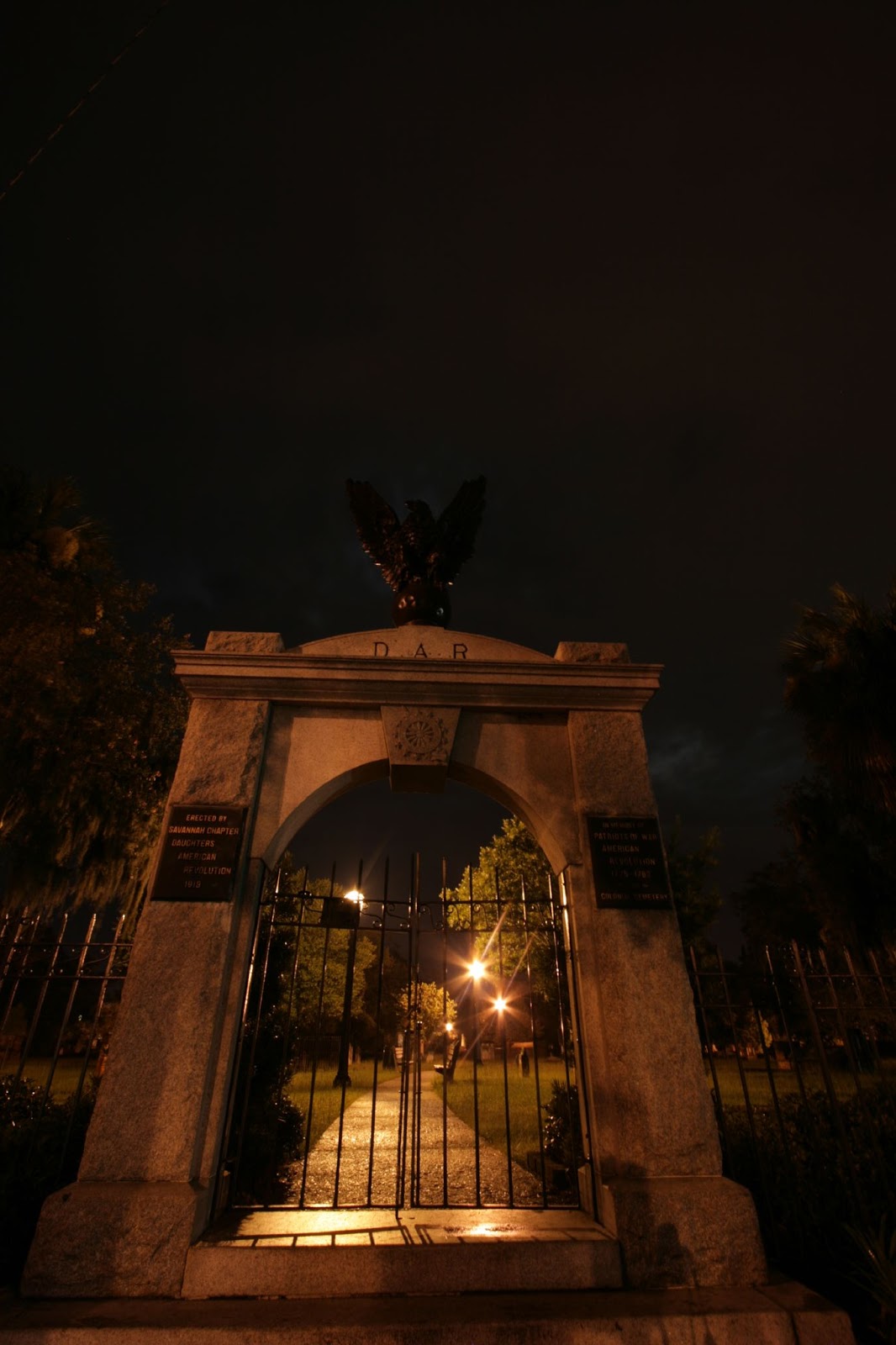
gates of Colonial Park Cemetery Savannah Georgia ghosts haunted
The entrance to Colonial Park Cemetery by Eric Fleming, 2007. Released under a Creative Commons License on Flickr.

Piechocinski’s history, The Old Burying Ground: Colonial Park Cemetery, Savannah, Georgia, 1750-1853, does make a statement about ghosts within Colonial Park: “There are no documented ghosts associated with Colonial Cemetery. Perhaps all the moving and removing of bodies thoroughly disoriented them, and they remain safely interred.” In 2000, a year after her book was released, Piechocinski made a disturbing discovery in the cemetery. She discovered the remains of a bound goat with its throat slashed. Not far away the goat’s heart was found on a piece of aluminum foil with a coconut and burned candle. It’s unknown if this was the remains of a religious ceremony or a gruesome prank. Nonetheless, perhaps the souls of the dead are not as safely interred as Piechocinski believes. Since the writing of her book, quite a bit has been written about the spirits that still walk here.

In 2010, I wrote about a video that was taken by a tourist in the cemetery. The video, taken on 1 December 2008, shows what appears to be a small child and another figure. The child is seen running in the background and then the figures appear to possibly fly up into a tree then come down a moment later. Investigation by a film special effects crew hired by Cleveland, Ohio news station, WJW Fox News 8 (see their story here), determined that the video is not a hoax and the ghostly figures are inconclusive.

Personally, I would have to side with the special effects crew. Yes, the figures are strange, but the young man with the video camera did not investigate the figures any more closely, especially after something fell out of the tree. The video shows the cemetery is also full of people, so a small child running along is not that unusual. I’ve visited the park myself a few times and have noted the many palm trees. To me, the falling object at the end of the video appears to be a palm branch. However fake or real, this video does provide a good reason to discuss the ghosts of Colonial Park Cemetery.

If anything, this cemetery most certainly should be haunted. While it is not the first cemetery established in Savannah, it is the oldest extant cemetery. When the city was laid out in 1733 by General James Oglethorpe, the founder of the city and colony of Georgia, a burial ground was established in 1750 at a site between York, Bull, Oglethorpe, and Whitaker Streets, a location that is a few blocks west of Colonial Park. That cemetery was closed after only seventeen years of use and a cemetery was established at the site of Colonial Park. At the time, this location was outside the city’s walls. Eight years later, the cemetery ownership was given to Christ Church. The cemetery was expanded and opened for the burial of all Christians regardless of denomination. A wall was constructed to surround the cemetery in 1791.

Nearly a hundred years after the cemetery was first established in 1750, the city dedicated space on the newly acquired Springfield Plantation as Laurel Grove Cemetery and closed the South Broad Street Cemetery (as it was known) to burials. Families with members buried in the old cemetery were encouraged to re-inter their loved ones in Laurel Grove. According to records, some 600 burials were transferred to the new cemetery. Others were removed to the newly opened Evergreen-Bonaventure and the Catholic cemeteries as well. For many year, the old cemetery sat lifeless.

On Christmas Day 1864, General William Tecumseh Sherman sent a telegraph to President Abraham Lincoln stating, “I beg to present you as a Christmas gift the City of Savannah, with one hundred and fifty guns and plenty of ammunition, also about twenty-five thousand bales of cotton.” Union soldiers, weary from their destructive march across the state from Atlanta, needed a place for quarters within Savannah. The old cemetery grounds proved useful and horses were quartered here. Soldiers also took up residence in some of the old vaults and mausolea. Bored soldiers are noted to have altered some of the tombstones while other stones were moved from their original locations. After the soldiers left, the old cemetery lay neglected for almost 30 years when the city attempted to acquire the space from Christ Church.

Worried that the cemetery would be destroyed, Christ Church sued the city to prevent the sale, but acquiesced when the city assured the church that the cemetery would not be harmed. After some work to restore the cemetery, the site was opened as Colonial Park. In 1998, an archaeological team located some 10,000 grave sites within the cemetery using ground penetrating radar. Only about 600 of these graves are marked with monuments or tombstones.

Edward Malbone marker Colonial Park Cemetery Savannah Georgia ghosts haunted
The historic marker at the grave of artist Edward Malbone. Photo 2011, by Ebyabe, courtesy of Wikipedia.

In addition to the somewhat questionable 2008 ghost video, there are other reports of paranormal phenomena here. James Caskey of the Savannah Haunted History Tour in his book, Haunted Savannah, does provide one personal story. While conducting a tour in November of 2001, Caskey noticed that some of the people in his group had odd expressions on their faces while he talked just outside the cemetery. Turning around, he saw an odd mist near the grave of Edward Malbone which is located just off the main entry path into the cemetery and is perhaps 50-60 feet inside, if I remember correctly. This grave is particularly identifiable as it has a historical marker (one of many in the cemetery) next to it. This mist rose about five and a half feet off the ground and then dissipated.

Another tour guide and paranormal investigator, Tobias McGriff, writes in his 2012 Savannah Shadows: Tales from the Midnight Zombie Tour of the “Red Girl,” a red-hued young girl’s image that has been captured in photographs taken by ghost tour participants. She is often captured as she kneels at a grave though one intrepid boy saw and communicated with the red waif. As the tour group began to leave, the child inquired why the little girl was in the cemetery and said that the girl had asked him to remain moving the guide and others in the group to tears.

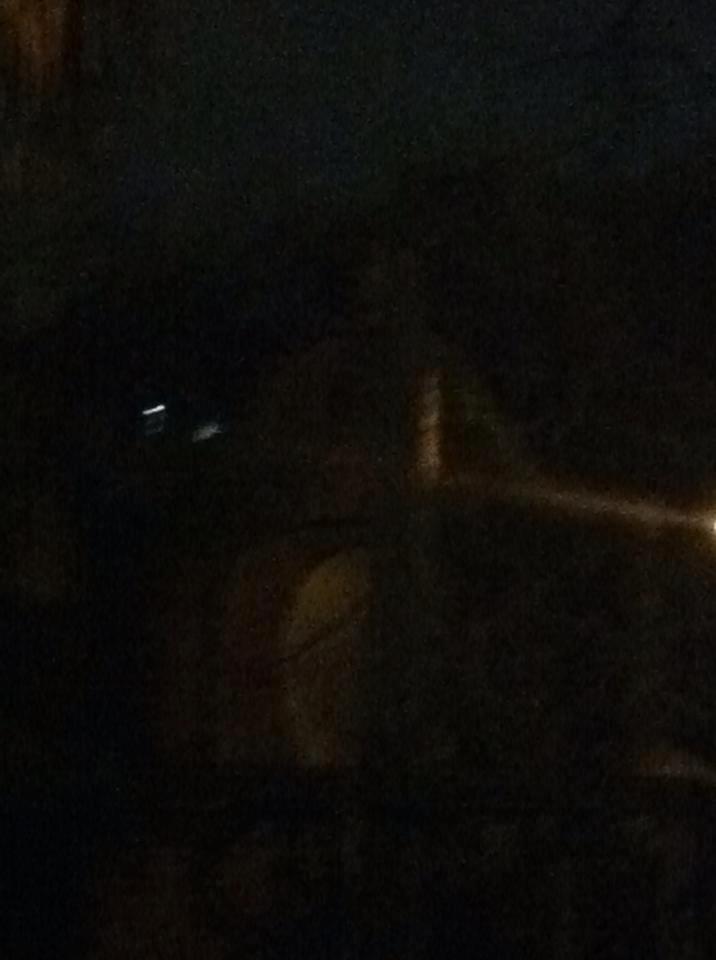
ghost photo Colonial Park Cemetery Savannah Georgia unedited
Kady Heard’s unedited photo, 2013. All rights reserved.
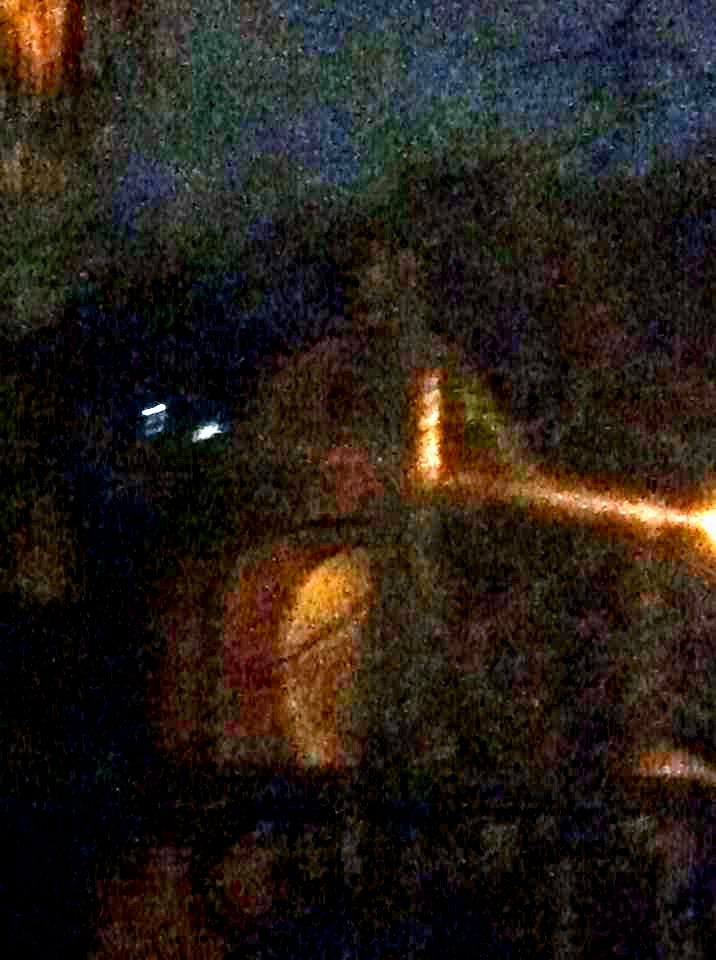
ghost photo Colonial Park Cemetery Savannah Georgia lightened
Kady Heard’s photo after I lightened it. All rights reserved.

Three close friends of mine have captured some intriguing images in and around the cemetery. In 2013, my friends Troy and Kady Heard were visiting Savannah on their honeymoon. An alumni of the Savannah College of Art and Design, Troy had worked as a ghost tour guide and was giving his wife an impromptu tour. Passing Colonial Park, Kady spotted an owl perched on one of the crypts. She snapped a picture on her smartphone and posted it on Facebook. When I saw the picture I immediately wondered if she had taken a creepy picture of her husband lost in the shadows, though after talking to Troy, I discovered the picture was looking into the locked cemetery. Apparently, the owl is the roundish figure in the lower center of the photo, but what is particularly odd is the human shaped figure above that. I figure that the very bright lines are reflections from the iron fence. I can’t say that this photograph is conclusive evidence of anything, though it is intriguing that it may show something.

ghost photo Colonial Park Cemetery Savannah Georgia
Celeste Warlick’s photograph of the playground, 2012. All rights reserved.

Another friend of mine snapped another intriguing photo at Colonial Park. While passing the playground located at the back of the cemetery on East Perry Lane, Celeste Warlick snapped this photograph in 2012. You can see the playground equipment blurred behind a flurry of orbs. While the orbs themselves are often debated as they can be caused by dust, water vapor, or insects, there are three brightly colored orbs in this photograph. According to an internet meme, orange orbs indicate a healing, protective energy. Perhaps that is what appears here. Perhaps the air is full of water vapor or dust or perhaps Celeste captured another piece of evidence of the living energy that still surrounds Colonial Park Cemetery.

Sources

  • Caskey, James. Haunted Savannah: The Official Guidebook to the Savannah Haunted History Tour, 2008. Savannah, GA: Bonaventure Books, 2008.
  • “Fox 8 Exclusive: Video Proof of Afterlife?” WJW Fox 8 News. 15 November 2010.
  • McGriff, Tobias. Savannah Shadows: Tales from the Midnight Zombie Tour. Savannah, GA: Blue Orb Publishing, 2012.
  • Piechocinski, Elizabeth Carpenter. The Old Burying Ground: Colonial Park Cemetery, Savannah, Georgia, 1750-1853. Savannah, GA: Oglethorpe Press, 1999.
  • Stratford, Suzanne. “Do you believe? Experts analyze teen’s ghost video.” WJW Fox 8 News. 23 February 2011.

” As the Georgia moon sends ghastly shafts”—Albany, Georgia

N.B. This article was edited and revised 20 May 2020.

In searching through some old Alabama newspapers, I stumbled across this fascinating article from Albany, Georgia. Located in southwest Georgia, Albany ranks as the 8th largest city in the state, though its distance from major interstates has limited its growth. It should also be noted that a non-Georgian can easily be  identified by how they pronounce the name Albany. Most Georgian’s know that the town’s name is pronounced as AWL-benny rather than ALL-bany.

In addition to being a damn good ghost story, this article provides fascinating historical details. The article begins by calling on Sir Arthur Conan Doyle, the great Scottish writer and physician who created the great Sherlock Holmes. Sir Conan Doyle had a fascination with spiritualism and was active in the British spiritualism movement. This article does comment somewhat on the spiritual movement that was sweeping America at this time, particularly with its description of locals gathering to hear these spirit voices.

birds eye view of Albany Georgia 1885
A birds-eye view of Albany, Georgia, 1885.

It should be noted that this article is a product of the Jim Crow South. I do not personally condone this racist ideals or language that permeate this article.

For a glimpse at the lives of African-Americans in Albany at this time, Wikipedia provides a summary of African-American writer W.E.B. Du Bois’s  1903 description of the city is his book, The Souls of Black Folk:

He described it as a typical African-American majority-populated rural town in the Deep South. Du Bois discussed the culture, agribusiness, and economy of the region. Du Bois described Albany as a small town where local sharecroppers lived. Much of the soil had been depleted of nutrients because of intensive cotton cultivation, and people found it hard to make a living. Once a bustling small city with an economy dependent on cotton, it had numerous cotton gins. The planters were dependent on slave labor and Albany had declined steadily in the late 19th century. After the disruption of the Civil War and poor economy of the late nineteenth century, the local agricultural economy suffered. Du Bois wrote that Dougherty County had many decaying one-room slave cabins and unfenced fields. Despite the problems, local folklore, customs, and culture made Albany a notable small city in the South.

The Anniston Star
Anniston, Alabama

Page 1
9 June 1922

Page Sir Conan, Georgia City is Haunt of Ghost

Spirit of a Hanged Negro is Making Folk Uncomfortable in Albany, Ga.

ALBANY, Ga., June 9.—(United Press)—Call for Sir Conan Doyle! Call for Mr. Doyle!

Albany has a “spirit” he may commune with to his heart’s content, if he isn’t too high toned a spiritualist to attend the same séance with the ghost of a hanged negro.

Z. T. Pate and his family live in what used to be the Warden’s quarters of an old abandoned jail here. The rear of the building, where years ago, prisoners waited their fate, is now but a shell, but the ancient warden’s quarter’s [sic] make a comfortable home for the Pates.

Recently while in the rear of his house, Pate said he heard a voice—a negro’s voice—speak clear and distinctly out of nowhere—“Boss, dis rope aroun’ mah neck shore do hurt.”

Pate was startled, but interested. He told others about it but got the usual answer—a skeptical laugh.

Then he invited in a few of his neighbors. They sat in the back room and listened. Nothing happened until they became quiet, the [sic] again the voice from nowhere saluted them.

Now it’s one of Albany’s chief places of interest.

Each night as the Georgia moon sends ghastly shafts throughout the broken windows of the old jail a party of Albanites gather in the Pate’s home and listen. They have not been disappointed yet, Pate says.

The voices will not answer a question. It will ask them and comment upon things said in the room. A person, in a whisper, will say something as a test to one sitting by him. Although no other person in the room can hear what has been said, the strange voice comments intelligently upon what the whisperer has told or asked his neighbor.

The building has been examined throughout for wires and none have been found. Nothing that could be used for a radio receiving set is in the building. Tests have been made to see if a ventriloquist is responsible and the theory abandoned.

Recently two gentlemen of color were taken in the ghost chamber.

“Who is them niggers, Mr. Pate?” the voice demanded.

With terror gripping the negroes, [sic] Pate answered giving their names. The building seemed about to collapse according to those present. Sounds of breaking woodwork of falling furniture and breaking glass were heard. The negro visitors lost only a few seconds in decamping.

There are many here who laugh at Pate’s ghost as it is called but none have solved the mystery of the strange voice yet, and they still come nightly to “listen in.”

A search for other newspaper accounts and the exact location of this jail has been fruitless.

Sources

  • Albany, Georgia. Wikipedia, the Free Encyclopedia. Accessed 6 December 2015.
  • “Page Sir Conan, Georgia City is Haunt of Ghost.” Anniston Star. 9 June 1922. Page 1.

Some Alabama Hauntings, Briefly Noted

This entry was originally posted 16 January 2013, it has been edited and expanded a bit.

Bama Theatre
600 Greensboro Avenue
Tuscaloosa

Architect David O. Whilldin employed a theme of simplicity versus the exotic in his design for the Bama Theatre. The façade of the theatre utilizes limestone (a stone that may conduct paranormal energy) cut in the simplified geometry of Art Deco and Moderne lines. Step into the lobby, and a patron will find themselves immersed in the exuberance of an Italian Renaissance courtyard modeled on that of the Davanzati Palace in Florence. Perhaps Whilldin’s theme was meant to illustrate the condition of so many Americans during the Great Depression: leading simple and austere lives on the outside while their inner selves are vivacious, imaginative and highly cultured. Opening in 1938 and built with funds from the Works Progress Administration, the Bama Theatre can be considered one of the last of the great American atmospheric movie palaces.

Marquee of the Bama Theatre, 2010, by Carol M. Highsmith. Courtesy of the George F. Landegger Collection of Alabama Photographs in Carol M. Highsmith’s America, Library of Congress, Prints and Photographs Division.

The identities of the spirits at the Bama Theatre are unknown. While research into the theatre’s past has revealed no deaths to link to the haunting, this may be a case of residual energy remaining after years of audiences and performers in the theatre. One particularly interesting story involves an employee who arrived early one morning. As he was making coffee, he heard the elevator moving. He stood at the doors expecting to greet the passenger, but when the doors opened, a blast of icy air greeted him, this is perhaps the most chilling of the paranormal events in this building.

Others working in the building have reported shadow figures, odd lights, and the distinct feeling of being watched. The building was probed by the Alabama Paranormal Research Team in recent years, though little evidence to support a haunting was uncovered.

Sources

  • Alabama Paranormal Research Team. Investigation Report on The Bama Theatre, Tuscaloosa, AL. Accessed 29 November 2012.
  • Higdon, David & Brett J. Talley. Haunted Tuscaloosa. Charleston, SC: History Press, 2012.
  • “History.” The Bama Theatre (bamatheatre.org). Accessed 4 March 2013.

Bluff Hall
405 North Commissioners Avenue
Demopolis

The fortunes of Demopolis’ Lyon family reflect the rise and fall of the entire state during the 19th century. While the family owned a large plantation, Bermuda Hill, outside of town, it required a home in town for business and social functions. This home, Bluff Hall, was constructed in 1832 by Allen Glover for his daughter Sarah and her husband, Francis Strother Lyon.

Bluff Hall, 2008, by Altairisfar. Courtesy of Wikipedia.

The revised WPA guide to the state describes the house as “fortress-like in its strength and severity,” an apt description for the magnificently sited home. Occupying one of the bluffs above the Tombigbee River, the home illustrates the Lyon family’s remarkable and powerful position in the region. Francis Lyon, the home’s first owner, served in the Alabama State Senate, the U.S. House of Representatives, and the Confederate Congress, all the while running his plantation at Bermuda Hill. The home remained in the Lyon family until just after the turn of the 20th century when another family purchased it as a residence. The Marengo County Historical Society purchased the home in 1967 and restored it to its antebellum glory.

Since its purchase by the historical society, evidently no one had stayed the night in the home until 2003. A group of people staying overnight encountered odd sounds during the evening. When the President of the local Chamber of Commerce went to investigate, she was confronted with the apparition of a child on the stairs. Local historians have suggested that the child was the spirit of Leonidas Mecklenburg “Merk” Polk, Francis Lyon’s grandson and grandson to Confederate General Leonidas Polk, who passed away in the home of scarlet fever in 1877.

Sources

  • “Area rich in ghost stories, folk lore.” Demopolis Times. 30 October 2008.
  • Bluff HallWikipedia, the Free Encyclopedia. Accessed 14 December 2012.
  • Francis Strother Lyon. Wikipedia, the Free Encyclopedia. Accessed 14 December 2012.
  • Hendrix, Barry H. “Image may have been real.” Demopolis Times. 5 November 2003.
  • Walker, Alyce Billings. ed. Alabama: A Guide to the Deep SouthNew Revised Edition. NYC: Hastings House, 1975.

Interstate 65
Between Evergreen and Greenville

This roughly 40-mile stretch of I-65 between Evergreen, in Conecuh County, and Greenville, in Butler County, is the setting for a legend. Like much of the state of Alabama, this area was initially part of the vast nation of the Muscogee, or Creek, people. After Alabama’s creation in 1819, land-hungry white pioneers flooded the area and tensions rose as the Muscogee watched the theft and degradation of their homeland. Skirmishes between the two groups brought violence and orders of removal from Washington. Thousands of Muscogees were forcibly removed from their rich and fertile homeland and resettled in the dry and barren Oklahoma territory.

The Muscogee left behind villages, farmland, hunting grounds, trails, and the bones of their ancestors. According to legend, I-65 cuts a swath through part of this sacred Muscogee territory and, as a result, this section of interstate is cursed. One commonly quoted statistic on this stretch of road states that “between 1984 and 1990, there were 519 accidents, 208 injuries, and 23 deaths on this 40-mile stretch of highway, though the road is straight, even, and well maintained.”

Many of these accidents are supposedly caused by something, possibly a human figure, darting across the road. A 2002 Birmingham News article says that Native American spirits have been seen in this area, “some as tall as 50 feet, towering over the pine trees in the interstate median.” Other reports involve mysterious, bright lights temporarily blinding drivers. Then again, this may just be another old Indian curse legend.

Sources

  • Granato, Sherri. “Haunted America: Interstate 65 in Evergreen, Alabama.” Yahoo Voices. 24 October 2011.
  • Hauck, Dennis William. Haunted Places: The National Directory. NYC: Penguin, 2002.
  • Haveman, Christopher. “Creek Indian Removal.” Encyclopedia of Alabama. 23 February 2012.
  • MacDonald, Ginny. “Boootiful Alabama: Don’t let night catch you driving alone.” Birmingham News. 31 October 2002.

A Southern Feast of All Souls—Feast Wrap Up

The feast is done, the table has been cleared, the guests have left, the spirits have quietly returned to their rest, and the veil between our world and the next has been restored. This season has been great for articles about the haunted South so, I’m wrapping up this Southern Feast of All Souls with a look at some of the new (to me) haunted places that were covered in the news media.

Colby Building
191 North Foster Street
Dothan, Alabama

An investigator from Circle City Ghost Hunters said of the Colby Building in downtown Dothan, “Somebody once upon a time put their heart and soul in the building.” Perhaps that soul is still here. According to an October 29th article in the Dothan Eagle, this group investigated the building after numerous reports of paranormal activity in the building surfaced.

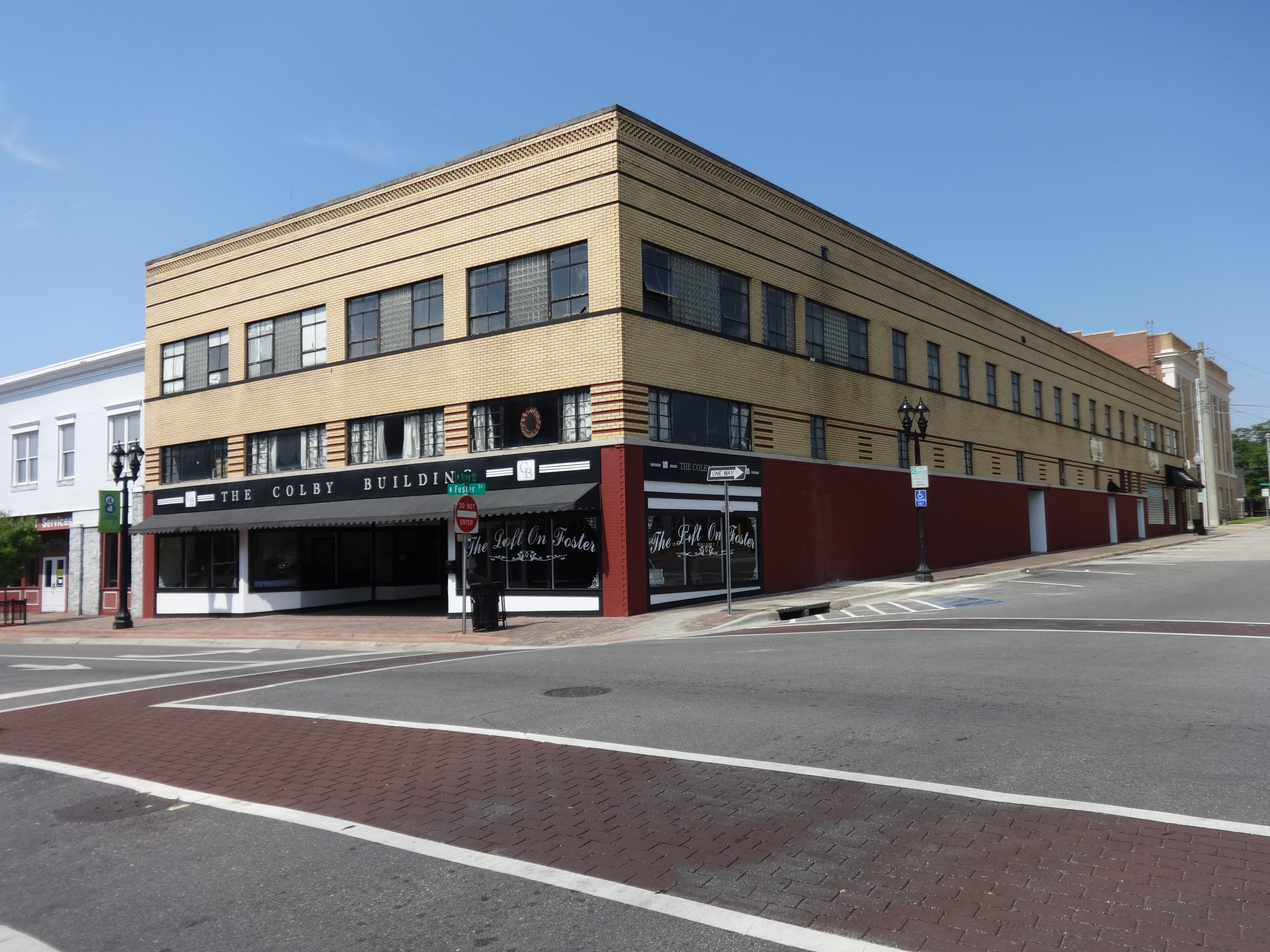
Colby Building Dothan Alabama ghosts haunted
The Colby Building, 2015, by Michael Rivera. Courtesy of Wikipedia.

While working on my recent book about haunted Alabama, I had a heck of a time trying to find anything on the Dothan area. As the seventh largest city in the state by population, there should be more information on hauntings in the area, sadly there was nothing reliable. Therefore, I was rather excited to see this article appear. The Colby Building was built in 1938 as a J.C. Penney’s Department Store and has since hosted a number of businesses. The building was redeveloped by a private/public partnership in 2008 and currently houses two restaurants, Colby’s on North Foster Street and Bella’s in the back of the building on West Troy Street.

Employees and guests have had experiences in the building including things moving on their own and seeing figures. Others have had their names called and the employees have nicknamed the spirit “’Rachel’ because all kinds of crazy stuff happened.” (I’m presuming this a reference to the television show Friends.) The owner of the restaurants was delighted to host an investigation when Circle City Ghost Hunters inquired about investigating there. The article notes that the activity is explained by a story involving the death of a young woman on the building’s third floor in the 1950s.

N.B. As of 2019, it appears that Colby’s has closed, though Bella’s remains open. 

Sources

Suntan Arts Center (Don Vicente Building)
3300 Gulf Boulevard
St. Pete Beach, Florida

Adjoining the Don CeSar Beach Resort, a palatial pink Jazz Age dream, is the Don Vicente Building which was built just prior to the grand hotel to serve as offices during the construction. Over the years, the building has seen many incarnations serving as offices for the hotel, a bank, and even a firehouse. The building has housed the 50 year old Suntan Arts Center for many years. The center provides classes and support for the local arts community.

The center hosted a ghost tour this year highlighting the paranormal activity that has been experienced in the building. For many years people here have encountered the spirit of a man in a white suit. As this building did serve as an office for Thomas Rowe, the hotel’s founder, this spirit has been identified as him. During an investigation of the building in 2013 by SPIRITS of St. Petersburg, the group got a response when Rowe’s name was mentioned. Besides Mr. Rowe’s white-suited spirit there may be other spirits here as well.

Sources

  • “Self-guided ghost tour departs from Suntan Arts Center.” TBN Weekly. 28 September 2015.
  • SPIRITS of St. Petersburg Paranormal Investigation Group. “Report for Suntan Arts Center.” Accessed 8 November 2015.

Porter Hall
Mercer University
Macon, Georgia

Porter Hall, a residence hall on the campus of Mercer University, one of the oldest private universities in Georgia, possibly has something mysterious residing on its fourth floor. One student reported that she “heard things like chairs being dragged across the pine, like a hard pine floor.” The fourth floor is not accessible to students and used for storage. Reportedly, only the dorm’s resident advisor has access. When students complain of noise from that floor, the resident advisor will check it out and find the floor empty of living beings.

Sources

Westover Terrace (private)
905 West Main Street
Richmond, Kentucky

When the current owners of Westover Terrace began restoration on the house after they acquired it in 1995, the house was severely dilapidated and vandals had defaced parts of the interior. A pentagram had been painted upstairs, walls and windows had been smashed, and the mantelpieces and radiators had been stolen. Local kids occasionally prowled the creepy house in search of ghosts in this former funeral home. The new owners did not realize they acquired ghosts with this magnificent 1881 home.

As work progressed, the owners and contractors began to have odd experiences including loud crashes and bangs that sounded like sledge hammers being used and heavy furniture being moved. The voice of a little girl was heard asking workers what they were doing and warning them on occasion. While doing repair work on a staircase, one particular board was removed several times. After the owner used a hydraulic nail gun to attach the it, the board disappeared entirely. When the owners finally moved into the home in 2005, the activity seemed to quiet down. Evidently, the ghosts are pleased with the renovations. This is a private home, please respect the owners’ privacy and observe the house from the street.

Sources

Green Light Bridge
Green Light Road
Winnsboro, Louisiana

An article about Louisiana hauntings from the Shreveport Times highlighted this very interesting location near Winnsboro in Franklin Parish in the northeast portion of the state. The origin of the road’s odd name has been lost to history, but is possibly related to the paranormal green light that is supposed to emanate from underneath the bridge and along the banks of the stream here. The article does not name the creek, but after looking at Google maps, it seems that the road only crosses one stream, Turkey Creek, in its course from LA-15 to its termination at Dummy Line Road.

The possible reasons for the odd green light are varied. A church once existed on one side of the creek and sometime in the mid-20th century a man was hung from a tree in front of the church. A fatal car accident that occurred here may be related to the activity as well. A woman lost her life when her car crashed into a tree. There is also speculation that the woman was frightened by the mysterious green light.

Sources

  • “’Haunted’ Louisiana: Tales of Terror from Shreveport and beyond.” Shreveport Times. 30 September 2015.

Glen Burnie Regional Library
1010 Eastway
Glen Burnie, Maryland

Librarians at the Glen Burnie Regional Library have been spooked by something within this 1969 library for many years. Odd sounds have been heard by staff when they have closed the building at night while books have been pushed to the floor by unseen hands. Staff called in the Maryland Ghost Trackers to investigate. During the investigation, the investigators made contact with a number of male spirits who are apparently hanging around and enjoy making a bit of trouble now and then.

Sources

Ole Tavern on George Street
416 George Street
Jackson, Mississippi

There are several ghosts still patronizing the Ole Tavern on George Street according to a Halloween article from Jackson, Mississippi news station, WAPT. The article highlights a recent investigation of this establishment by the Mississippi Paranormal Research Institute. Employees of the popular eatery have had several eerie encounters with a few possible spirits here.

One employee saw a woman sitting at the bar one morning as he opened up. He had just removed the padlock from the door when he saw the woman. Realizing that no one was in the building, the employee returned to his car until someone else arrived. This spirit is believed to be the spirit of a prostitute who once worked in the building and committed suicide here in the 1970s. The investigation produced evidence that this woman may remain in the building with some other spirits.

Sources

  • “Ghost hunters seek answers from ‘Bitter Hooker.’” 31 October 2015.

A Southern Feast of All Souls—Passover

Happy Halloween and a Blessed Samhain!

N. B. This article was updated 27 May 2023 to reflect new information.

Haunted Hotel
623 Ursulines Street
New Orleans, Louisiana

Exodus, Chapter 12
King James Version

21 Then Moses called for all the elders of Israel, and said unto them, Draw out and take you a lamb according to your families, and kill the passover. 22 And ye shall take a bunch of hyssop, and dip it in the blood that is in the basin, and strike the lintel and the two side posts with the blood that is in the basin; and none of you shall go out at the door of his house until the morning. 23 For the Lord will pass through to smite the Egyptians; and when he seeth the blood upon the lintel, and on the two side posts, the Lord will pass over the door, and will not suffer the destroyer to come in unto your houses to smite you.

A dark lord passed over New Orleans on the night of March 18th, 1919. Instead of a demand that each home’s occupants paint their doors with lamb’s blood, he ordered that a jazz band be at full swing within each home. At fifteen minutes past midnight on this Tuesday night the city’s dance halls were filled to capacity while the strains of jazz poured out of homes throughout the city. Clarinets wailed while trombones tramped up and down scales stomping the precious blue notes that flavored this music. Crooners of all colors sang of love lost and regained against a backdrop of banjos, trumpets and tubas. Thousands of feet kicked up in time to the syncopated rhythms. This was a city at its most alive fearing the shroud of death that was lurking somewhere with axe and razors at the ready. Death did not sting that night. The dark lord would return in August to continue his spree.

The mysterious Axeman of New Orleans was never caught. Between May 1918 and October 1919, at least twelve people were attacked and killed at the hands of this heinous killer. As most of the victims were of Italian origin, many suspected that the crimes were associated with the Mafia that was active in the city. Someone claiming to be the killer wrote to The Times-Picayune:

Hell, March 13, 1919

Esteemed Mortal:

They have never caught me and they never will. They have never seen me, for I am invisible, even as the ether that surrounds your earth. I am not a human being, but a spirit and a demon from the hottest hell. I am what you Orleanians and your foolish police call the Axeman.

When I see fit, I shall come and claim other victims. I alone know whom they shall be. I shall leave no clue except my bloody axe, besmeared with blood and brains of he whom I have sent below to keep me company.

If you wish you may tell the police to be careful not to rile me. Of course, I am a reasonable spirit. I take no offense at the way they have conducted their investigations in the past. In fact, they have been so utterly stupid as to not only amuse me, but His Satanic Majesty, Francis Josef, etc. But tell them to beware. Let them not try to discover what I am, for it were better that they were never born than to incur the wrath of the Axeman. I don‘t think there is any need of such a warning, for I feel sure the police will always dodge me, as they have in the past. They are wise and know how to keep away from all harm.

Undoubtedly, you Orleanians think of me as a most horrible murderer, which I am, but I could be much worse if I wanted to. If I wished, I could pay a visit to your city every night. At will I could slay thousands of your best citizens, for I am in close relationship with the Angel of Death.

Now, to be exact, at 12:15 (earthly time) on next Tuesday night, I am going to pass over New Orleans. In my infinite mercy, I am going to make a little proposition to you people. Here it is:

I am very fond of jazz music, and I swear by all the devils in the nether regions that every person shall be spared in whose home a jazz band is in full swing at the time I have just mentioned. If everyone has a jazz band going, well, then, so much the better for you people. One thing is certain and that is that some of your people who do not jazz it on Tuesday night (if there be any) will get the axe.

Well, as I am cold and crave the warmth of my native Tartarus, and it is about time I leave your earthly home, I will cease my discourse. Hoping that thou wilt publish this, that it may go well with thee, I have been, am and will be the worst spirit that ever existed either in fact or realm of fancy.

The Axeman


600-block of Ursulines
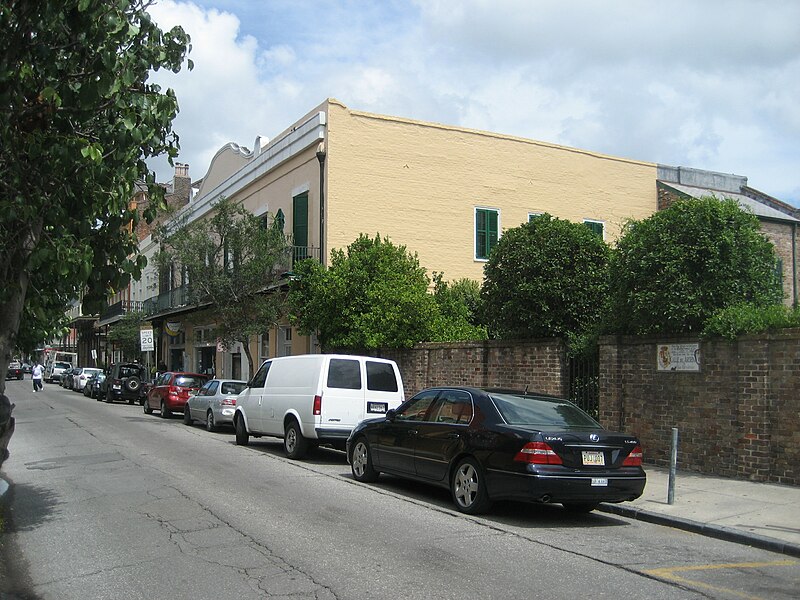
The 600-block of Ursulines Street looking towards the Haunted Hotel in 2008, to the left of the cream colored building in the middle. Photo by Infrogmation, courtesy of Wikipedia.

An article from the New Orleans ABC affiliate, WGNO, highlighted the possible, albeit tenuous, connection between the axe murderer and the Haunted Hotel. The hotel, which bills itself as the city’s “oldest and best-known Haunted Hotel” claims that the infamous axeman lived here during his murder spree, though his identity is unknown. During renovations, a bloody axe was found on the premises that may have been the weapon in one of the murders. The article’s sources is provided by a ghost tour company, which are often not reliable. In this case, the hotel was apparently investigated and something indicated that a particular corner of the courtyard had paranormal activity. The readings somehow indicated that the spirit may have killed someone and hid in that particular corner.

A 1919 newspaper map of the Axeman’s killings. Courtesy of Wikipedia.

The 1919 map of the killings doesn’t show any murders taking place in the French Quarter, so there’s really nothing to connect the Axeman with this particular building, other than the bloody axe and some anomalous readings during a paranormal investigation. Ursulines Avenue, however, boasts a fairly unique roster of spirits as it slices through the famous French Quarter. As you stroll these ancient streets, think what it must have been like on the night of the Axeman’s Passover with jazz spilling from every open window warding off an axe bearing dark lord as he passes over.

Sources

A Southern Feast of All Souls—Patient Souls at the Park

E. P. “Tom” Sawyer State Park
3000 Freys Hill Road
Louisville, Kentucky

 On a cool Sunday morning in Fall, like today, it’s not hard to imagine that E. P. “Tom” Sawyer State Park is teeming with life. Joggers, bikers, walkers, and families with children throng the paths, playgrounds and Activities Center in the park unknowing of the patient souls that still roam these grounds. Some of these souls may still suffer the effects of the mental illnesses that afflicted them in life. There is some indication that death may not end the mania, though I would prefer to believe that these poor patient’s souls have passed on leaving only the confused energy that they exuded in life.

One of the park’s paths. Photo 2008, by TeleD, courtesy of Wikipedia.

The grounds of this modest state park were home to Native Americans for centuries before the intrusion of white men into the utopian “Kaintuck” territory. The land was later settled by the Hite family. According to an article from Louisville TV station, WDRB, Isaac Hite died from injuries sustained in a Native American attack here.

In 1869 the state of Kentucky acquired the land and began construction on the State House of Reform for Juvenile Delinquents at Lakeland. This facility evidently went through a series of name and purpose changes with adults being moved to the facility. Around 1900, the facility became Central Kentucky Asylum for the Insane.

Throughout the 20th century, the hospital was investigated a number of times after allegations of corruption and abuse surfaced. The old hospital was closed in 1986 with patients being moved into a newer facility nearby. After sitting abandoned for a decade, the deteriorating hospital buildings were demolished by the state. The land near the old hospital that had once served as a farm was converted into a state park in 1974. The park was named for E. P. “Tom” Sawyer, distinguished local judge and county executive who was the father of journalist Diane Sawyer.

Main building of the Central State Hospital, ca. 1920. This is one of the buildings demolished in 1996. Courtesy of Asylum Projects.

While the park grounds were not actually the site of the hospital, they are still possibly occupied by the spirits of some of the patients who died there. Many of the graves of former patients are unknown and may be scattered throughout the park’s property. Paranormal investigators within the park have captured numerous EVPs, especially around the Sauerkraut Cave. Legend holds that patients who became pregnant were brought to the cave and some of those infants were possibly disposed of here. Others mention that the cave was also used by patients trying to escape the facility. For someone escaping through the cave without flashlights or other equipment, it is likely that the escapees got lost and died within the labyrinth.

Of the cave, an article on Louisville.com quotes the park’s naturalist as saying, “They say it’s kind of a sad place. There’s people trapped there, spirits trapped there. There’s a man who’s angry and they say he’s not letting any of the other spirits go.” Indeed, one recent paranormal investigation captured the image of a large burly man within the cave. Should you take some time to visit the park, be mindful of the patient and not so patient spirits of patients who still reside here.

Sources

A Southern Feast of All Souls—Encountering the Souls of Petersburg

Paranormal Petersburg, Virginia & the Tri-Cities Area Pamela K. Kinney
Schiffer Publishing, 2015

When the producers and designers for Steven Spielberg’s recent film Lincoln, were scouting for historic landscapes to use in the film, Petersburg, Virginia came in very high on the list. It can often be difficult to find cities where lines of historic buildings are uninterrupted by modern intrusions, though Petersburg has those. Along with these lines of historic structures the city also has ghosts, many of them and author Pamela Kinney set out recently to meet some of them.

Kinney is often very lucky in her investigations. She seems to be able to capture really great evidence often without the myriad equipment that other investigative teams often lug about. She’ll go into a location with a voice recorder, a camera, and perhaps a Ghost Box. After asking a few prescient questions, she’ll often leave with some interesting answers. While some authors, myself included, simply investigate from the comfort of their desk or a library table, Kinney does the footwork to personally meet many of the ghosts herself.

The range of sites covered in Paranormal Petersburg, Virginia & the Tri-Cities Area provides a unique view into the plethora of hauntings in Petersburg and the surrounding area including Colonial Heights, Dinwiddie, Hopewell, Chester and Ettrick-Matoaca. Included in this book are Civil War sites, historic churches, a sushi restaurant, theatres, an old motel, cemeteries, and a splendid collection of historic homes. Lavishly illustrated with color photographs, the book is a fun and informative guide to this most historic region of Virginia.

Copies of the book are available at the following sites:

Schiffer Publishing

Amazon

Barnes and Noble

I have reviewed several of Ms. Kinney’s books including Virginia’s Haunted Historic Triangle: Williamsburg, Yorktown, Jamestown, & Other Haunted Locations, 1st Edition and its 2nd edition

A Southern Feast of All Souls—Newsworthy Souls

A collection of hauntings from recent news.

Marty’s Blues Café
(formerly Brandi’s Blues Cafe)
424 West Beacon Street
Philadelphia, Mississippi

N.B. This location has been covered in more detail in “Death on the move–Philadelphia, Mississippi.

The chef at Brandi’s Blues Café was working in the kitchen early one recent morning. Startled by a loud bang he continued working until he heard water running in the sink. He walked over, turned the sink off and returned to his work. Glancing up he saw a figure standing near the kitchen door. It was “about 6 ft. It had a little pot belly. I saw it for three or four seconds.” Thinking it was a co-worker, the chef returned to work. After discovering he was alone in the building he began to hear footsteps and he left the building until his coworkers showed up.

After researching the history of the building and the area, it was discovered that a man was executed nearby in the 1940s. Paranormal investigators brought in to investigate did pick up an EVP response when they spoke the name of the man executed.

Sources

  • Gater, Harold. “Is this Mississippi blues café haunted?” The Clarion-Ledger. 24 September 2015.
  • Jennings, Lindsey. “Haunted Philadelphia Café Investigated.” 24 September 2015.

McRaven House
1445 Harrison Avenue
Vicksburg, Mississippi

The new owners of the McRaven House, often described as the most haunted house in the state, have been very busy restoring the historic house and mingling with the home’s famous ghosts. In one interaction, the new owners captured an EVP of a female’s voice saying, “That’s a funny old clock.” The house has a number ghosts covering nearly all periods of the home’s history from the late 18th century to the present day. McRaven is now open to visitors for history and haunted history tours.

McRaven House, 2016, by Zamburak. Courtesy of Wikipedia.

Sources

  • Norris, Alana. “McRaven House opens its doors Friday.” Vicksburg Post. 28 September 2015.

Old Chatham County Jail
145 Montgomery Street
Savannah, Georgia

The Savannah Ghost Research Society has recently deemed the Old Chatham County Jail to be “the most haunted place” in this paranormally active city. Ryan Dunn, founder and head of the society told the Savannah Morning News, “We came in with a lot of equipment and pretty much investigated the place. We caught a lot with audio. We did capture a couple with thermal imaging and thermal cameras.” Dunn notes that the group captured more audio evidence here than they have captured at any other investigation.

The old jail is a formidable modern building that stands out from the historic buildings which surround it within the venerable Savannah Historic District. In use as a detention facility until 1989, the building has since been used for storage of archival records and, for Halloween, the building is being used for a haunted house called “Panic in the Pen,” and hosting paranormal tours as a fundraiser by the Chatham County Sheriff’s Office. The sheriff called in paranormal investigators to help add some real life terror to this already terrifying building.

Employees in the old facility have noted paranormal activity here since the building’s retirement as a correctional facility. One of the sheriff’s deputies remarked that he remembers hearing doors slam and footsteps in the building at night.

Sources

  • Hoagland, Karen. “Old Chatham County Jail investigated for paranormal activity.” Savannah Morning News. 13 September 2015.
  • Ray, Brittini. “Investigators: Old Chatham County jail ‘’most haunted place in Savannah.” Savannah Morning News. 1 October 2015.