Feeling Umbrage for the Upstate—South Carolina

N.B. Edited 28 February 2019.

I’m feeling a bit of umbrage for the spirits of the Upstate region of South Carolina. A recent Halloween related article appeared on the website of a Charlotte, NC news station (I’d rather not just call them out) regarding haunted places in the region. Included with the article is a slideshow of 43 locations that are purported to be haunted. But that’s all that’s included: a slideshow. The slides show pictures of some of these haunted hotspots with a name and town, but no further information. While it’s all fine and good to say a place is haunted, it is a serious disservice to pronounce a place haunted but provide no further information regarding it.

There is a link within the article to a list of haunted places on the website of a local paranormal investigation organization. While it’s obvious that this list is the only source for the locations included in the slideshow, what I find so annoying is the fact that the organization’s source is the notorious Shadowlands Index of Haunted Places. After briefly comparing the lists, it became very clear that the paranormal organization’s list was simply cut and pasted from the Shadowlands list.

My problems with Shadowlands stems from the fact that it is made of user submitted entries. Someone, anyone, can go to the website and submit information on a haunted place. The information submitted is not checked or vetted, it is added to the list and readers often take this information as fact. It is such shoddy information gathering and publishing that I’m working hard to combat with this blog.

To post information about hauntings in such a willy-nilly manner is not just disrespectful for the spirits which may haunt these locations, but shows a lack of respect for the locations and their respective histories. Reputable sources on this region are not lacking and most are still in print. In fact, the article quotes the author of one of those primary sources. So, a much better list can be provided with a modicum of research.

While my coverage here is not as lengthy as the news station’s list, hopefully this article will help to provide a far better alternative. For your consideration, I’m presenting a few of the more interesting—and documented—stories from the Upstate region.

Abbeville County

Abbeville, the county seat and namesake for the county, is a fascinating town with a number of hauntings including its historic opera house which I covered a few years back.

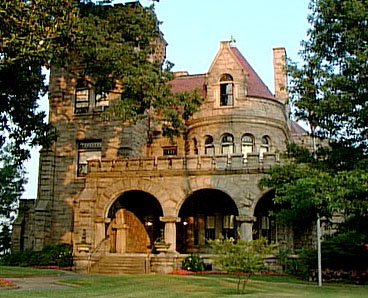
Burt-Stark Mansion
400 North Main Street
Abbeville

Sometimes called the “Grave of the Confederacy,” the Burt-Stark Mansion was the scene of the Confederacy’s final council of war; where Jefferson Davis met with some of his cabinet officials and generals following the fall of Richmond and General Lee’s surrender at Appomattox. The Confederate government was in disarray, and its officials on the run through the war-weary South.

Varina, Confederate President Jefferson Davis’ wife, had arrived at Major Armistead Burt’s elegant Abbeville home in mid-April with her family in tow. She stayed with the Burts for a little more than a week before continuing their journey into Georgia. On May 2nd, Jefferson Davis arrived in Abbeville. Stopping by a small cabin on the edge of town, Davis asked for a drink of water from the lady of the house. As he drank, a small child wandered across the porch towards him. The woman asked, “Ain’t you President Davis?” After he answered in the affirmative, the woman nodded at the child, “he’s named for you.”

Producing a small gold coin from his pocket, Davis handed it to the woman saying, “Please keep this for him and tell him about it when he’s old enough.” Davis whispered to Postmaster General John H. Reagan and told him that that was the last coin he had to his name.
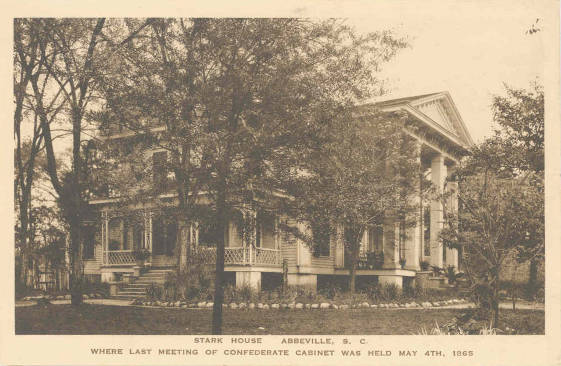
haunted Burt-Stark Mansion Abbeville South Carolina ghosts
Undated postcard image of the Burt-Stark Mansion. Published by the Echo Novelty Store, Albertype Company.

Soon after, Davis took up residence at the Burt home where his wife had stayed previously. Later that afternoon, the remaining cabinet met in the parlor. It was there that Davis responded, “all is indeed lost,” conceding to the loss of the Confederacy.

The mansion has been preserved as a museum, and due to the nature of the final meeting of the Confederate cabinet is now listed as a National Historic Landmark. Though very little paranormal activity had been witnessed in the mansion, due to the numerous other hauntings in Abbeville it was decided to allow a paranormal investigation team to investigate the home in 2007. According to John Boyanoski’s description of the investigation in his More Ghosts of Upstate South Carolina, the team came away with a great deal of evidence.

Members of the Heritage Paranormal team felt the presence of a man in the bedroom where Davis had slept. Moments later, one of the lead investigators witnessed the clear outline of a woman in period dress descending the staircase. Lending credence to his experience, the team’s equipment near the staircase registered some disturbances at the time the investigator saw the specter. In the separate kitchen building, the team detected two spirits, possibly those of slaves.

Sources

  • Bearss, Edwin C. National Historic Landmark nomination form for Burt-Stark Mansion. 28 April 1992.
  • Boyanoski, John. Ghosts of Upstate of South Carolina. Mountville, PA: Shelor & Son Publishing, 2006.
  • Burt-Stark Mansion. “About Us.” Accessed 13 October 2014.

Anderson County

Anderson Municipal Business Center
601 South Main Street
Anderson

Unlike the Burt-Stark Mansion with its flood of history, the Anderson Municipal Business Center is a rather utilitarian government building with little history. The building opened in August 2008 and odd events began to occur less than a year after it opened. The security person in charge of the building—a 15 year veteran of the local police department—began to notice odd things on the security monitor installed in the Anderson credit union office. A white blur appeared on the video and would flit around the room. It returned night after night.

The room was checked for bugs and the camera was cleaned, but the white blurs continued to return. Workers in the office reported hearing odd sounds after hours including knocking and the sounds of furniture being moved. A customer, who supposedly knew nothing of the activity, reported the feeling of being grasped by the shoulder. The activity lasted for a few months, but then petered out by late 2009.

The property has a fairly quiet history, certainly nothing that would explain the odd white blurs that appeared for a period.

Sources

  • “Ghostly images leave people wondering.” 30 October 2011.
  • Smith-Miles, Charmaine. “Anderson employee to appear on TV’s ‘My Ghost Story.’” Anderson Independent Mail. 13 April 2011.

Cherokee County

Ford Road Bridge
Ford Road at Peoples Creek
Gaffney

It was obvious that the killer wanted to play when he called reporter Bill Gibbons of The Gaffney Ledger on a day in early February 1968. He instructed the reporter to pull out three pieces of paper and then gave the reporter directions to find the bodies of two of his victims. The killer even provided the victims’ names. The reporter summoned the sheriff and traveled to the two sites provided by the caller, finding bodies at each location. The body of the third victim had been previously found, and the woman’s husband had been convicted of the murder. Gaffney woke to the fact that it had a serial killer on its hands.

The Gaffney Ledger headline, 9 February 1968.

The killer would kill once more before he was arrested. Lee Roy Martin, the killer, was found guilty and sentenced to four terms of life imprisonment. He was killed by another inmate in 1972.

Just below the lonely Ford Road Bridge over Peoples Creek, one of Martin’s victims was found. Her nude body lay on the creek bank with her face in the water. She had been raped and strangled with a belt. Over the years, locals have reported hearing a woman screaming and moaning below the bridge where the body was found. An investigation conducted as part of the filming of Haunted Echoes: The Gaffney Strangler, a documentary that was posted on YouTube, did not hear any screams, just the trilling of bullfrogs in the creek.

Sources

  • Dalton, Robert W. “Gaffney Strangler terrorized town 40 years ago, murdering 4 women.” Spartanburg Herald-Journal. 5 July 2009.
  • Gibbons, Bill. “Search underway here for slayer of 2 women; Tip to newsman leads officers to scene.” The Gaffney Ledger. 9 February 1968.
  • Haunted Echoes: The Gaffney Strangler, Episode 3.” Haunted Echoes: South Written and directed by Daljit Kalsi. Posted on YouTube 26 October 2013.
  • Johnson, Tally. Ghosts of the South Carolina Upcountry. Charleston, SC: History Press, 2005.

Greenville County

Herdklotz Park
126 Beverly Road
Greenville

Jason Profit, owner and operator of Greenville Ghost Tours, describes Herdklotz Park in his book, Haunted Greenville, South Carolina, as having “all the ingredients for an active paranormal soup.” This tranquil city park was once home to the Greenville Tuberculosis Hospital, which closed in the 1950s after operating for some 20 years. For some time, the building sat abandoned but was then reopened in the 1990s for a brief period of time as part of a prison work-release program.

As with many abandoned buildings of this nature, the building served as a playground for teens and the occasional vandal who would leave with stories of the supernatural there. Of course, the building also attracted the local homeless. It is believed that they may have accidentally caused the fire that destroyed the building in November of 2002. The remains of the building were demolished.

But, the spirits have remained. Jason Profit recounts an EVP session that he held on the steps of the old hospital (the building’s foundation remains intact) in 2008. He was able to capture the sounds of what he described as “a busy lunchroom. It sounded like the echoing of voices in a hallway or large room.” He reports that many residents of the neighborhood around the park have witnessed shadow people in their homes and in the area that may be related to the old hospital. In a 2009 report for the local CBS affiliate WSPA, Profit states, “I would have to say that beyond a shadow of a doubt that Herdklotz Park is one of the most haunted parks you’re going to find in Upstate South Carolina.”

Sources

  • Cato, Chris. “Greenville County Park Haunted by Hospital’s Ghosts?” WSPA. 31 October 2009.
  • Profit, Jason. Haunted Greenville, South Carolina. Charleston, SC: History Press, 2011.

Greenwood County

Ninety Six National Historic Site
1103 Highway 248
Ninety Six

Scholars still argue as to how Ninety Six got its odd name, some say it’s that the town was 96 miles from the Cherokee village of Keowee (which is incorrect) and some say that it’s a reference to the many creeks in the area. Nevertheless, this oddly named village was the scene of a siege during the American Revolution. General Nathanael Greene led his Patriot troops against loyalists entrenched in the village. Despite having far more troops, Greene’s 28-day siege failed to capture the village, and he withdrew his troops. Perhaps, though, he did leave some spirits behind. Residents living near the battlefield and re-enactors camping on the battlefield have heard voices throughout the site.

Sources

  • Ninety Six National Historic Site. Wikipedia, the Free Encyclopedia. Accessed 24 February 2011.
  • Siege of Ninety-Six. Wikipedia, the Free Encyclopedia. Accessed 24 February 2011.
  • Toney, B. Keith. Battlefield Ghosts. Berryville, VA: Rockbridge Publishing, 1997.

Pickens County

Colony Theatre
315 West Main Street
Easley

Ghost stories often grow out of odd bits of natural phenomena. That may just well be the story behind this small town movie theatre in the Upstate. A member of the family who built this theatre in 1948 and owned it until it closed claimed the “ghost” was simply the curtains in the projection room being blown by air from the projector. Though, locals have a different theory: it’s the ghost of a woman who hanged herself on this site before the building of the theatre.

In his marvelous collection of ghost stories from the Upstate region, Ghosts of Upstate South Carolina, John Boyanoski documents the story of a passerby who saw the spirit peering from a window of the empty theatre one night. While driving home to Greenville from a football game in Clemson one night in 1989, the driver slowed to admire the old, art moderne-style theatre. Looking up, he saw a woman staring out of one of the building’s second floor windows. She didn’t move and she appeared to have a faint glow about her. He continued driving and then turned around to catch a second glimpse. The theatre was quiet and dark. Nothing appeared in the windows. Even after parking and walking around the front of the building, nothing stirred.

At the time of this writing the theatre serves as a church and remains as a landmark along South Carolina Highway-93 through Easley. The theatre is owned by Robinson’s Funeral Home and it plans to maintain the theatre as a local landmark.

Sources

  • Boyanoski, John. Ghosts of Upstate of South Carolina. Mountville, PA: Shelor & Son Publishing, 2006.
  • Robinson, Ben. “Colony Theater not in danger from Robinson’s expansion.” Easley Progress. 16 December 2011.

Spartanburg County

Old Main Building
Campus of Wofford College
Spartanburg

Wofford College, a private, independent school associated with the Methodist Church, has about 130 faculty and staff members, 1,500 students, and more than a handful of ghosts. The old campus features some noted historic structures including the campus’ centerpiece, the Old Main Building which may have a few of its own spirits flitting about the halls. South Carolina folklorist, Tally Johnson, an alumnus of the school, witnessed Old Main’s legendary “Old Green Eyes” when he was a student. He and another student crept into the auditorium one night and witnessed the odd pair of lights that appear above the drapes over one of the auditorium’s windows. The “eyes” appeared and Johnson and his companion were unable to find a source for the lights.

Old Main Building, 2010, by PegasusRacer28, courtesy of Wikipedia.

The odd, green orbs have not been identified and there’s no apparent explanation. Regardless, that’s not the only odd activity. The blog of the college’s archives recounts that the spirit of Dr. James Carlisle—one of the first faculty members and president of the school for the latter half of the 19th century—has been seen and heard prowling the halls.

Sources

  • Brabham, William C. National Register of Historic Places nomination form for the Wofford College Historic District. 29 August 1974.
  • Johnson, Tally. Ghosts of the South Carolina Upcountry. Charleston, SC: History Press, 2005.
  • Stone, Phillip. “Are there ghosts at Wofford?” From the Archives. 31 October 2011.

Apparitions of Atlanta

N.B. Last Thursday, I did a presentation on Atlanta ghosts for the Atlanta History Center’s event, Party with the Past. The presentation began with the 1908 New York Times story of a ghost in the governor’s mansion. This has since been broken out into its own article here.

Atlanta doesn’t have a very good record of preserving its historic environments. Historic preservation not only preserves the historic fabric of a location, but the spiritual fabric as well. That can most certainly explain cities such as Savannah, New Orleans, Charleston, SC and St. Augustine—cities known for their ghosts.

Disturbances in the historic fabric of a location can also uncover spirits. This is evident throughout the Atlanta area as the sacred ground where many gave their lives during the Civil War is developed. One of the better documented occurrences of this phenomenon took place on a development called Kolb Creek Farm in Marietta, just north of here.

Valentine Kolb House, 2011, Photo by Lewis O. Powell IV, all rights reserved.

This house and a small family cemetery on Powder Springs Road in Marietta are all that remain of the Valentine Kolb farm where a minor battle was fought June 22, 1864, a battle leading up to the vicious Battle of Kennesaw Mountain which would be fought a few days later.

Behind this house, the farm fields have been developed into subdivisions. A couple, James and Katherine Tatum, purchased a home in the neighborhood in 1986. After a quiet first year in the house, the couple began to experience unexplained activity. The television show Unsolved Mysteries publicized their story and they were interviewed by Beth Scott and Michael Norman, interviews that were included in their 2004 book, Haunted America.

The first encounter occurred early one morning. “My husband and I had gotten up to go to the bathroom at the same time, about 2:30 AM. Our bedroom is upstairs. My husband used the bedroom bath and I went into the hall bath. The bathroom door was open. I saw a man walking down the hall in front of the open bathroom door. I assumed it was my husband looking for me since I was not in bed.”

After calling out to her husband with no response, Mrs. Tatum returned to the bedroom where she found her husband and asked if he’d been in the hall. He had not and he was disturbed by the idea that someone else might be in the out. Climbing out of bed, he retrieved his gun and searched the house to no avail, no one else was there.

Mrs. Tatum realized that the figure she had seen was wearing a hat and a coat. “I came to realize that when the man walked past me there had been no sound, as you would normally hear whenever someone is walking down the hall.”

For the Tatums, this would begin a series of odd events including something playing with an electric drill, pocket change on a dresser jingling on its own accord and a small bell ringing by itself.

Sources

  • Battle of Kolb’s Farm. Wikipedia, the Free Encyclopedia. Accessed 28 October 2013.
  • Scott, Beth and Michael Norman. Haunted America. NYC: Tor, 2004.

Apparently, this isn’t the only modern house with spiritual residue possibly left over from the war, homes and businesses throughout the area have activity as well.

Among the multiple stories coming out of the area, one recent story stands out.

On the night of October 8, 2007, a gentleman and his teenage son were driving across one of the many roads that cross the battlefield at Kennesaw Mountain. They spotted something about to cross the road and were amazed to see a horse with a Union cavalry officer upon it appear in their headlights.

“I quickly locked on my brakes as the horse proceeded to come right in front of us,” the anonymous driver told 11 Alive News, an Atlanta news station. The father and son watched in awe as the figure moved across the road and through a fence opposite before fading into the night.

Keep in mind, as you traverse Atlanta’s battlefield, keep on the lookout for ghosts.

Sources

  • Crawley, Paul. “Ghost rider at Kennesaw Mtn.?” 11 Alive News. 1 November 2007.

The Civil War left a heavy, spiritual pall around the city, a pall that has been detected by visitors to Atlanta’s great necropolis, Oakland Cemetery.

[I have covered Oakland in depth here]

[the section that once covered the Ellis Hotel, formerly the Winecoff, has been broken out into its own article.]

Moving on to a happier place on Peachtree in Midtown, we find ourselves at the Fabulous Fox which may possess a handful of “phantoms of the opera.” When this building opened, Christmas Day, 1929, one of the local papers called it “a picturesque and almost disturbing grandeur beyond imagination.” The grandeur, however did not last and the theatre floundered during the Depression. Under threat of demolition in the 1970s, Atlantans banded together to save the theatre and it has since been restored.

Fox Theatre, 2005. Photo by Scott Ehardt, courtesy of Wikipedia.

Some of the mysteries among the minarets include the holy grail of ghost hunting, a full body apparition seen by an investigator. An investigator with the Georgia Ghost Hounds, Denise Roffe (who, incidentally, wrote a book on the ghosts of Charleston, SC), had to use the restroom during an investigation. In the dark she found her way to the ladies restroom and upon entering a stall was shocked to see a young woman. “She was just standing there wearing a long, period dress and a hat.”

Startled, she screamed and other members of the group quickly joined her but the image was gone.

Another popular story involves a man hired to stoke the theatre’s furnaces. He lived down in the basement with a cot and his few, meager possessions. After his death, he has possibly continued to stay in the basement. He is said to like women and when they enter the basement they will, at times, detect a peaceful and relaxing atmosphere while men are sometimes harassed by the spirit.

Sources

  • Fox Theatre (Atlanta, Georgia). Wikipedia, the Free Encyclopedia. Accessed 28 October 2013.
  • Underwood, Corinna. Haunted History: Atlanta and North Georgia. Atglen, PA: Schiffer, 2008.

Just before Peachtree crosses over I-85, visitors to the city may be surprised to see what appears to be a castle looming above the road. Built with granite supplied from Stone Mountain, Rhodes Memorial Hall was constructed in 1904 for local furniture bigwig, Amos Rhodes. After serving as the home of the State Archives the building played a haunted house for a few years in the 1980s and 90s, despite actually being haunted.

Rhodes Hall in an undated photo from the Georgia Trust for Historic Preservation. Courtesy of Wikipedia.

The house was investigated by the Atlantic Paranormal Team from SyFy’s paranormal investigation show, Ghost Hunters. To aid in this endeavor, the show’s producers called in the Real Housewives of Atlanta to perhaps scare up a few ghosts with their attitudes and fashion sense. While some scant evidence was uncovered, Rhodes Hall got to show off its ghostly activity which includes the typical unexplained footsteps, doors opening and closing by themselves and apparitions, though with a sardonic sense of humor that includes a bouquet of dead flowers supposedly being left on the desk of a staff member in the house.

Sources

  • Merwin, Laura. “Ghost Hunters meet Real Housewives of Atlanta and nothing.” com. 2 December 2010.
  • Rhodes Hall. Wikipedia, the Free Encyclopedia. Accessed 28 October 2013.

In terms of Atlanta hauntings, these are just the very tip of the iceberg. While some of these hauntings have been documented, I believe there are many more that should be documented from private homes to office complexes. 

A MARTA train passes by Oakland Cemetery. Photo 2011, by Lewis Powell IV, all rights reserved.

I’d like to leave you with one final story. Ghosts do not just appear in old houses or buildings, but they’re also found in planes, trains and automobiles. Curt Holman in an article a few years ago from Creative Loafing Atlanta relates a story from MARTA, the Metro-Atlanta Rapid Transit Authority which operates a system of trains and buses throughout the city.

Holman relates that a young man riding on a nearly empty train on a winter’s afternoon. The young man was absorbed in the music he was listening to on his headphones and was startled to feel someone sit next to him. Looking at his reflection in the window, the young man saw a man in his 40s with dark hair and wearing a business suit sitting next to him.

Turning to speak to the man he found the seat empty.

Thank you very much and support your local ghosts!

Sources

  • Holman, Curt. “The hauntings of Atlanta.” Creative Loafing Atlanta. 27 October 2011.
Resurrection—Salem-Shotwell Covered Bridge

Salem-Shotwell Covered Bridge
Opelika Municipal Park
Park Road
Opelika, Alabama

Things looked bleak for the Salem-Shotwell Covered Bridge on June 5, 2005. Early that morning, a tree had fallen on part of this 105-year-old bridge. The damage was so severe that the entire bridge collapsed into Wacoochee Creek. Located in rural Lee County, Alabama, near the community of Salem, it appeared that this was the end for this last remaining covered bridge in the county. It was one of eleven covered bridges remaining in the state.

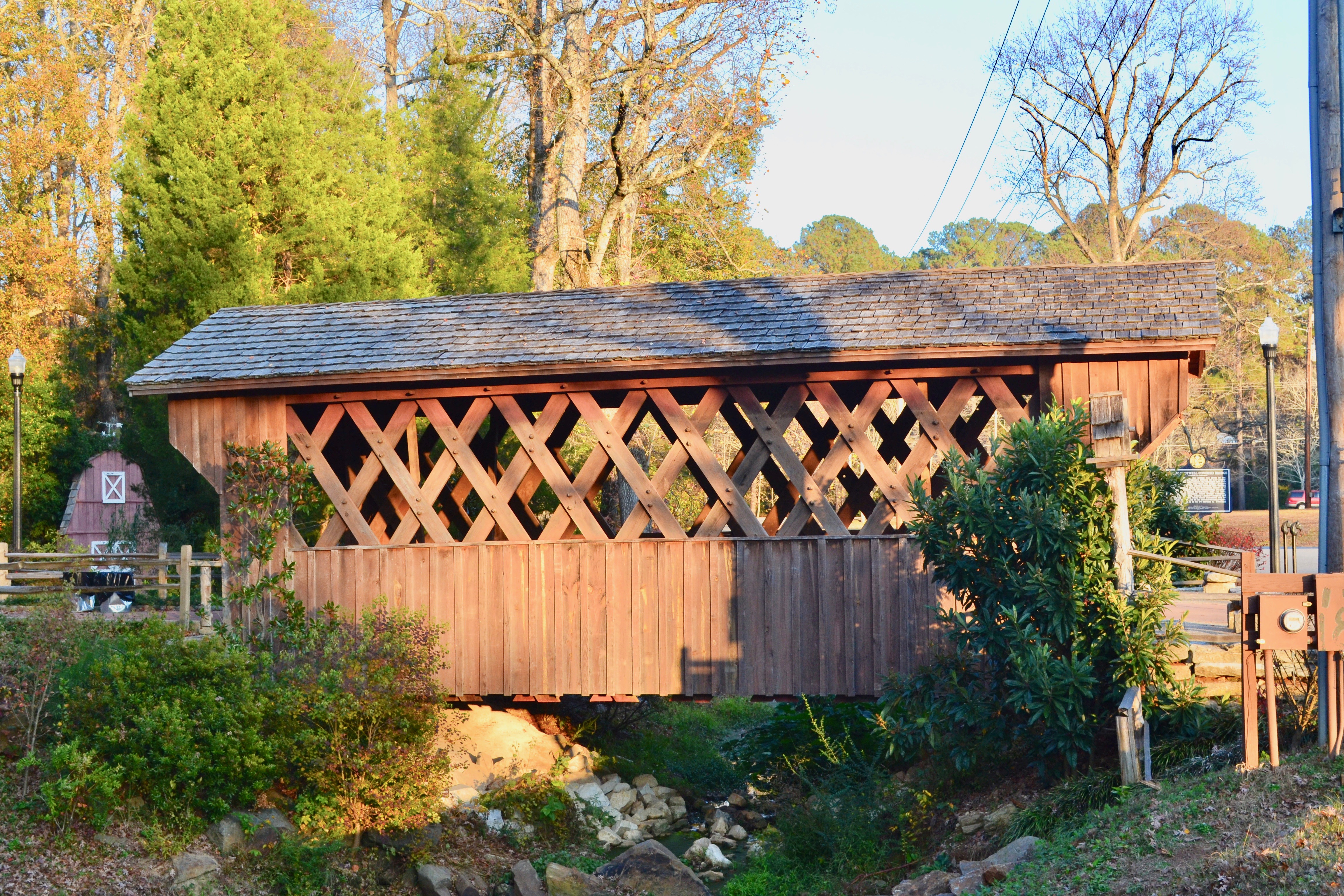
The Salem-Shotwell Bridge in its new location in Opelika Municipal Park. Photo 2012, by Lewis Powell IV, all rights reserved.

Concerned citizens in the area soon began to salvage the parts of the bridge and placed them in storage. Later on that year, ownership of the remains of the bridge were officially transferred to the City of Opelika who, with the help of the local Kiwanis Club and historical organizations, began a reconstruction of the bridge over Rocky Creek in Opelika Municipal Park. The bridge reopened to fanfare in 2007.

For years before it’s destruction and subsequent reconstruction, stories were told about this lonely bridge. Some of the first stories, according to Faith Serafin, Michelle Smith and Mark Poe in their recent book Haunted Auburn and Opelika, were told of Native American spirits reaching up from the waters of Wacoochee Creek towards unwary travelers crossing the bridge at night. Like so many lonely bridges, this bridge acquired a reputation for other spirits over time. (see my recent entry on Cry Baby Hollow in North Alabama)

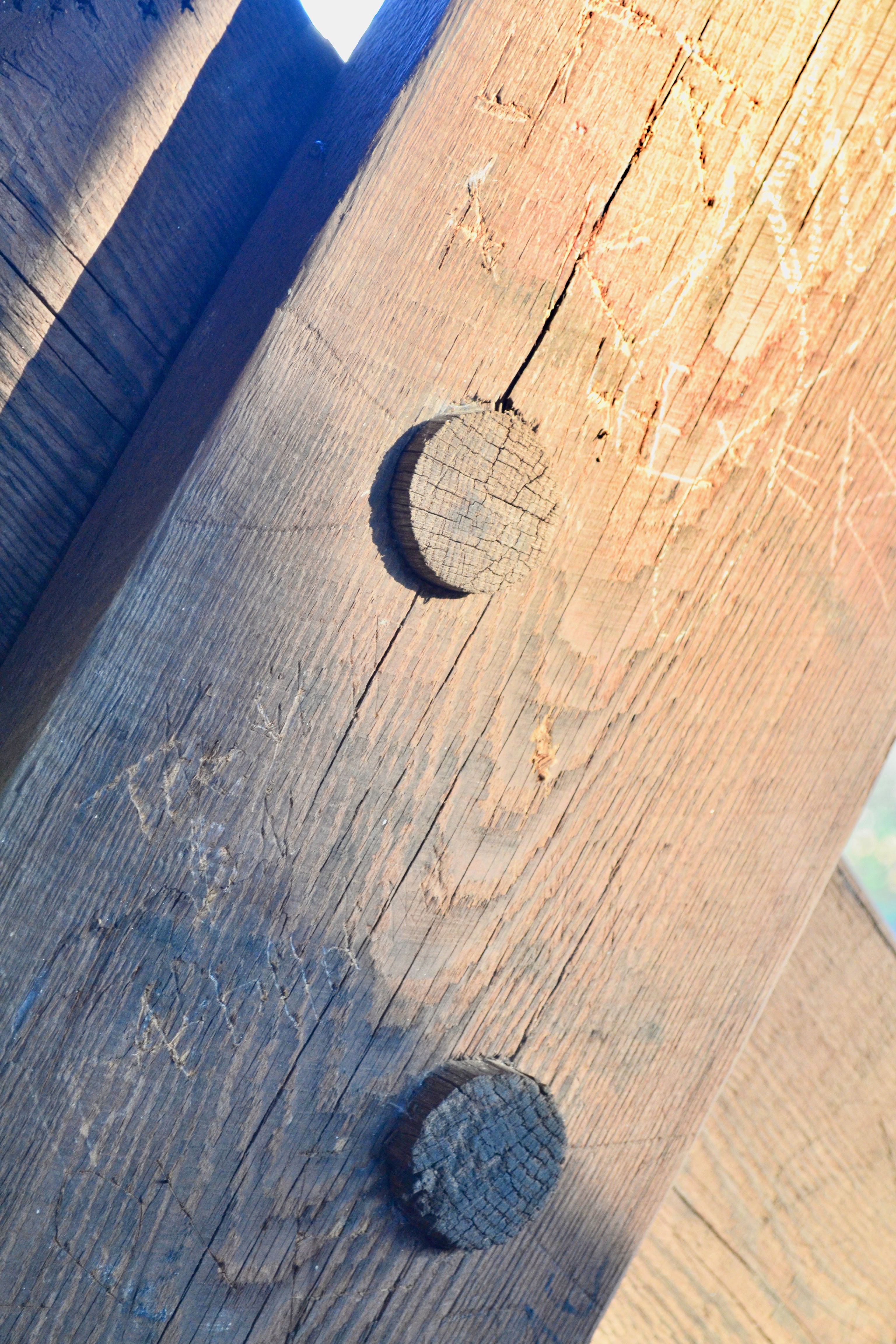
The bridge was constructed using wooden pegs, many of which were reused when the bridge was reconstructed. Photo 2012, by Lewis Powell, IV. All rights reserved.

Supposedly in the 1960s, a young woman was either strangled or hung herself on the bridge. One story involves the young woman asking a young man to meet her at the bridge for a late night tryst. When the young man didn’t show up, the young woman hung herself.

The death of another woman in a fatal car accident added yet another spirit to the bridge. In this tale a young woman is driving along the country road towards the bridge in a rain storm. As she rounded the curve in the road towards the bridge, the car skidded on the slick road and crashed into the turbulent, storm-riled waters below. Her spirit is said to drift along the stream banks accompanied by the smell of burning flesh. I have not yet been able to locate media coverage to corroborate these stories.

The reconstruction only rebuilt 43 feet of the original 76 feet of the bridge’s length. Photo 2012, by Lewis Powell, IV. All rights reserved.

Yet one more accident added a spirit to the bridge: that of a young boy. His pitiful spirit often attracted ghost hunters and curious legend trippers who would leave small toys and gifts behind for the child. It is possibly his spirit who has accompanied the bridge to its new location. The authors of Haunted Auburn and Opelika speak of children playing near the reconstructed bridge playing with a young boy that only they can see.

Sources

  • Salem-Shotwell Covered Bridge. Wikipedia, the Free Encyclopedia. Accessed 3 December 2012.
  • Serafin, Faith; Michelle Smith and Mark Poe. Haunted Auburn and Opelika. Charleston, SC: History Press, 2011.

Weekend Pics from North Carolina

Last weekend was spectacular, thanks for asking!

My family rented a cabin just outside of Lake Lure, NC. My mother had actually gotten the idea of going there from me after I talked about the area while writing my two articles about the area (the one on Chimney Rock that I just reposted and one on the two haunted hotels there). Lake Lure and Chimney Rock are almost adjoining. Judging from the signs, they are really only feet apart. Both hamlets spread out on either side of U.S. Route 64 as it winds (and I do mean it’s a very winding road) through the Hickory Nut Gorge. Both Lake Lure and the town of Chimney Rock sit under the sentinel of the actual Chimney Rock.

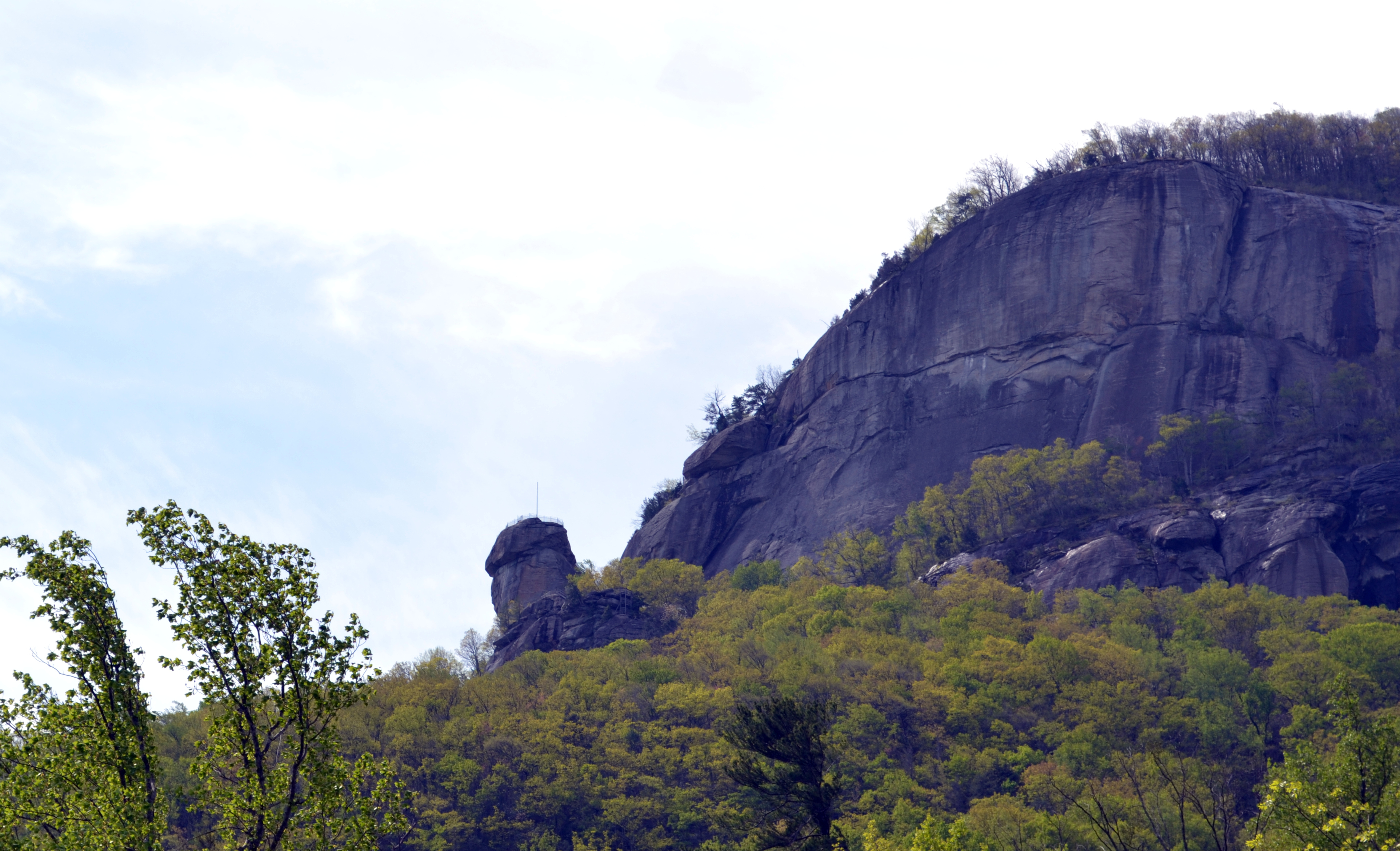
Chimney Rock extends, thumb-like, from Chimney Mountain. Taken from just off of US 64. Photo 2012, by Lewis Powell IV, all rights reserved.
Hickory Nut Falls appears above the trees. Photo 2012, by Lewis Powell IV, all rights reserved.


Chimney Rock rises on the left and Hickory Nut Falls appears on the right. This is the view from “downtown” Chimney Rock. Photo 2012, by Lewis Powell IV, all rights reserved.

Chimney Rock (the rock) juts out from Chimney Mountain and has served as a landmark for centuries. It was here in early years of the nineteenth century that some locals witnessed a host of being ascending into the air from this rock. Just west of Chimney Rock, Hickory Nut Falls descends towards the Rocky Broad River which runs along the floor of the gorge. Chimney Rock Park (which encompasses the falls) was owned by a single family for most of the 20th century and was just recently acquired by the state of North Carolina as a state park in 2007. At the moment, there is still construction going on to rehabilitate the access to the rock itself, so it was closed. But we did get to the parking lot below it and had some spectacular views of the gorge from that point. In addition, the trail to Hickory Nut Falls was open and we hiked to see it. It’s amazing!

Chimney Rock from the visitors’ center parking lot, the closest I could get, unfortunately. Photo 2012, by Lewis Powell IV, all rights reserved.
The view of the Hickory Nut Gorge and Lake Lure from the base of Chimney Rock with the intrepid Southern Spirit Guide. Photo 2012, by Lewis Powell IV, all rights reserved.
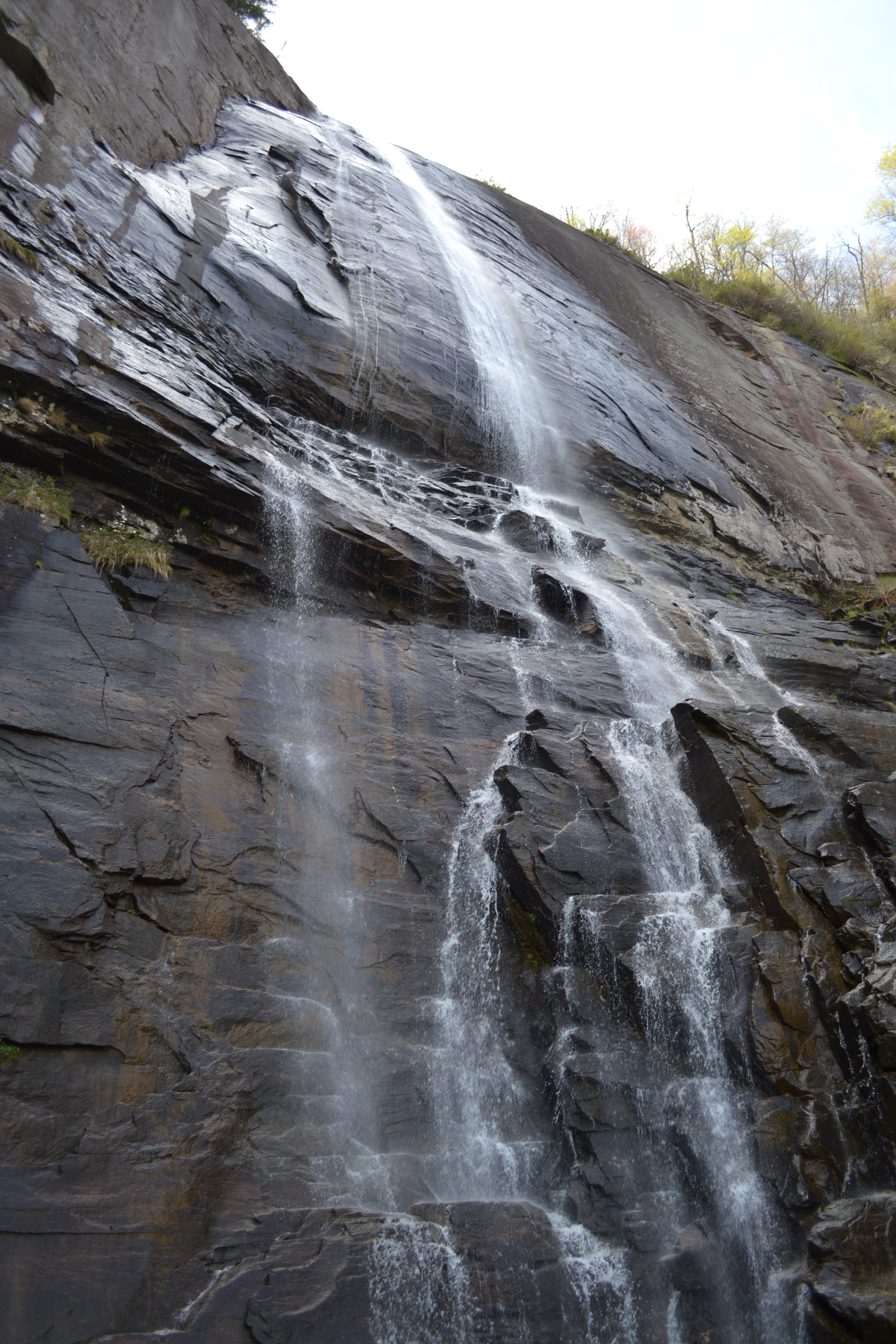
Hickory Nut Falls from the base of the falls. Photo 2012, by Lewis Powell IV, all rights reserved.

I was excited to see the Lake Lure Inn as well! When Dr. Lucius Morse dreamed of a lakeside mountain resort in the early days of the 20th century, he envisioned something that was European in style. The Inn’s architecture is vaguely European and the whole scene of the Inn and the mountains and the lake creates a view that is definitely European in feel. I had to remind myself that I was in North Carolina and not somewhere in the Alps. The area is just absolutely lovely. I’m excited to return very soon!

The 1927 Lake Lure Inn. Photo 2012, by Lewis Powell IV, all rights reserved.


“One of Nature’s sublimest poems”—Chimney Rock, North Carolina

Chimney Rock State Park
431 Main Street
Chimney Rock, North Carolina

N.B. Since I’m headed up here tomorrow for the weekend, I figured it would be nice to repost this entry. My writing about the area has inspired my dad to rent a cabin for the family for a nice weekend getaway. Thus, I’d like to dedicate this entry to my parents and my sisters. And I can’t forget Patrick, my sister’s husband who has recently joined the family. Thank y’all for dealing with me and accepting my eccentricities. I’m proud to be apart of such a loving, upstanding and interesting family.

Originally published 5 May 2011.

My mind has been stuck in Western North Carolina recently. Since I wrote the last entry on Lake Lure, I stumbled on some interesting information on Chimney Rock, the granite large granite monolith towering above Hickory Nut Gorge and Lake Lure. In the entry on Lake Lure, I described the history of the area which is interwoven with the history of Chimney Rock itself.

Briefly, Chimney Rock was purchased in 1870 by Jerome B. Freeman with the intention of creating a tourist attraction and he opened the park to the public in 1885. The park was purchased by Dr. Lucius Morse and his brothers in 1902. It was Morse who dreamed of creating a mountain resort town based around a mountain lake. His dreams came to fruition in the 1920s with construction of a dam to create Lake Lure and the building of the Lake Lure Inn. Morse’s family owned the park until 2007 when it was sold to the state of North Carolina as a state park. At least that is the “white man’s history.”

Chimney Rock with Lake Lure in the background. Photo by Jmturner, 2008. Courtesy of Wikipedia.

This area has always contained a certain mystique. The Cherokee and the Catawba, the primary native peoples in the area, considered Hickory Nut Gorge sacred. The land beyond the stone pillar of Chimney Rock was called Suwali-nuna. This was part of a trading path that followed the Swannanoa River and then snaked through the gorge to the lands of the Catawaba and Sara in the east. This path was also used in search of tsa’lu or tobacco.

Suwali-nuna was inhabited by mythic beasts and spirits, but most notably, the Yun’wi Tsundsdi or “Little People.”  James Mooney, a nineteenth century ethnographer who recorded much of the Cherokee mythology, history and lore in his History, Myths and Sacred Formulas of the Cherokees, describe them as thus:

There is another race of spirits […] who live in rock caves on the mountain side. They are little fellows, hardly reaching up to a man’s knee, but well shaped and handsome, with long hair falling to the ground. They are great wonder workers and are very fond of music, spending half their time drumming and dancing.  They are helpful and kind-hearted, and often when people have been lost in the mountains, especially children who have strayed away from their parents, the Yun’wi Tsundsdi have found them and taken them back to their homes. […] the Little People do not like to be disturbed at home, and they throw a spell over the stranger so that he is bewildered and loses his way…

In Suwali-nuna, however, these benevolent beings are not so forgiving. They were guardians of the sacred tsa’lu, or tobacco, which they kept there and took harsh action against anyone trespassing in the gorge in search of it. In the beginning of the world, there was a single tsa’lu plant for all creatures but it had been used up. In one version of the story, the plant was stolen by geese and swiftly carried to a place in the south. Nonetheless, without the power of tsa’lu men grew weak and death was imminent. Swift warriors and powerful shamans sent into the gorge in search of the sacred medicine were crushed by boulders toppled by the Yun’wi Tsundsdi. The strong winds blowing through the stone hollow would sometimes throw these braves into the turbulent waters of the river and they would never be seen again.

One young man, worried by the impending death of his father for lack of tsa’lu, traveled to Suwali-nuna in search of it. Reaching the mountains that border the gorge, the young man opened his medicine bag and brought out the skin of a hummingbird. Placing the skin over himself he transformed into the swift bird and flew, undetected into the heart of the gorge. Quickly, he gathered a few leaves of tsa’lu with some seeds and slipped, unseen, out of the gorge. Returning home he found his father very weak but with one draw from the pipe, he regained strength. The Cherokee planted the seeds and have had tsa’lu ever since.

During his explorations throughout the Southeast, Spanish explorer Hernando de Soto may have passed under the watchful pillar of Chimney Rock, a sign of the deluge of white men that would flood the gorge in the late eighteenth and nineteenth centuries. The gorge became part of Rutherford County, named for General Griffith Rutherford, a military leader who led American forces against Chief Dragging Canoe and the Cherokee during the Chickamauga Wars. As settlers poured into the gorge they were awed by the Cherokee’s mystical land.

In 1806, an account appeared in the papers of the period describing an extraordinary vision witnessed by a family living near Chimney Mountain. On July 31st, an eight year old named Elizabeth Reaves spotted a man on the mountain. She brought this to the attention of her eleven year old brother, Morgan, and told him that she saw the man rolling rocks and picking up sticks. Incredulous, her brother went to where she had seen this sight and he was greeted by the sight of “a thousand things flying in the air.” They were joined by their fourteen year old sister, “a Negro woman” and their mother who also witnessed the spectacle.

The mother described a host of beings of a variety of sizes that were rising off of the side of the mountain and collecting at the top of Chimney Rock. After gathering at the rock, three appeared to lift off and rise towards the heavens. Summoning Robert Siercy, a neighbor, they all witnessed the sight together watching as the crowd eventually vanished.

Five years after the Reaves spectral vision in 1811, an elderly couple witnessed a different, though still extraordinary vision. Late one afternoon the couple, who lived near Chimney Rock Falls, witnessed the battle of a spectral army mounted on winged horses. The armies clashed and the couple heard the ping of steel upon steel and saw the glint of the weapons in the sunlight. After a battle of about ten minutes, one army was defeated and withdrew to the victorious cheers of the remaining army. It was also reported that other “respectable men” in the area witnessed the winged warriors, though not engaged in combat.

In the two hundred years since these amazing visions, there are no further reports of such astounding sights, these stories do set the stage for the hauntings at the Lake Lure Inn and the Lodge at Lake Lure. I suspect there are further spirits walking the scenic shores of Lake Lure and floating about Chimney Mountain’s stone spire. Silas McDowell, who recorded the testimony of the witnesses to the 1811 vision described Chimney Rock as “one of Nature’s sublimest poems, where objects are so weird, beautiful and grand that words cannot translate them, and they can only be seen and felt when we look, wonder and admire in dumb amazement.”

Sources

  • Carden, Gary and Nina Anderson. Belled Buzzards, Hucksters & Grieving Specters: Appalachian Tales: Strange, True & Legendary. Asheboro, NC: Down Home Press, 1994.
  • Chickamauga Wars (1776-1794). Wikipedia, the Free Encyclopedia. Accessed 5 May 2011.
  • Mooney, James. History, Myths, and Sacred Formulas of the Cherokees. Asheville, NC: Bright Mountain Books, 1992.
  • Russell, Randy and Janet Barnett. Mountain Ghost Stories and Curious Tales of Western North Carolina. Winston-Salem, NC: John F. Blair, 1988.
  • Rutherford County, North Carolina. Wikipedia, the Free Encyclopedia. Accessed 5 May 2011.

A Historic Playhouse–Photos from Fort Clinch

Fort Clinch State Park
2601 Atlantic Avenue
Fernandina Beach, Florida

N.B. This article was edited 26 June 2019.

I’ve finally made it to North Florida and seen Fort Clinch! I’d known about the fort for some years before I wrote my article in November of 2010. That article, “Spectral humor–Fort Clinch,” has since been edited and re-posted.

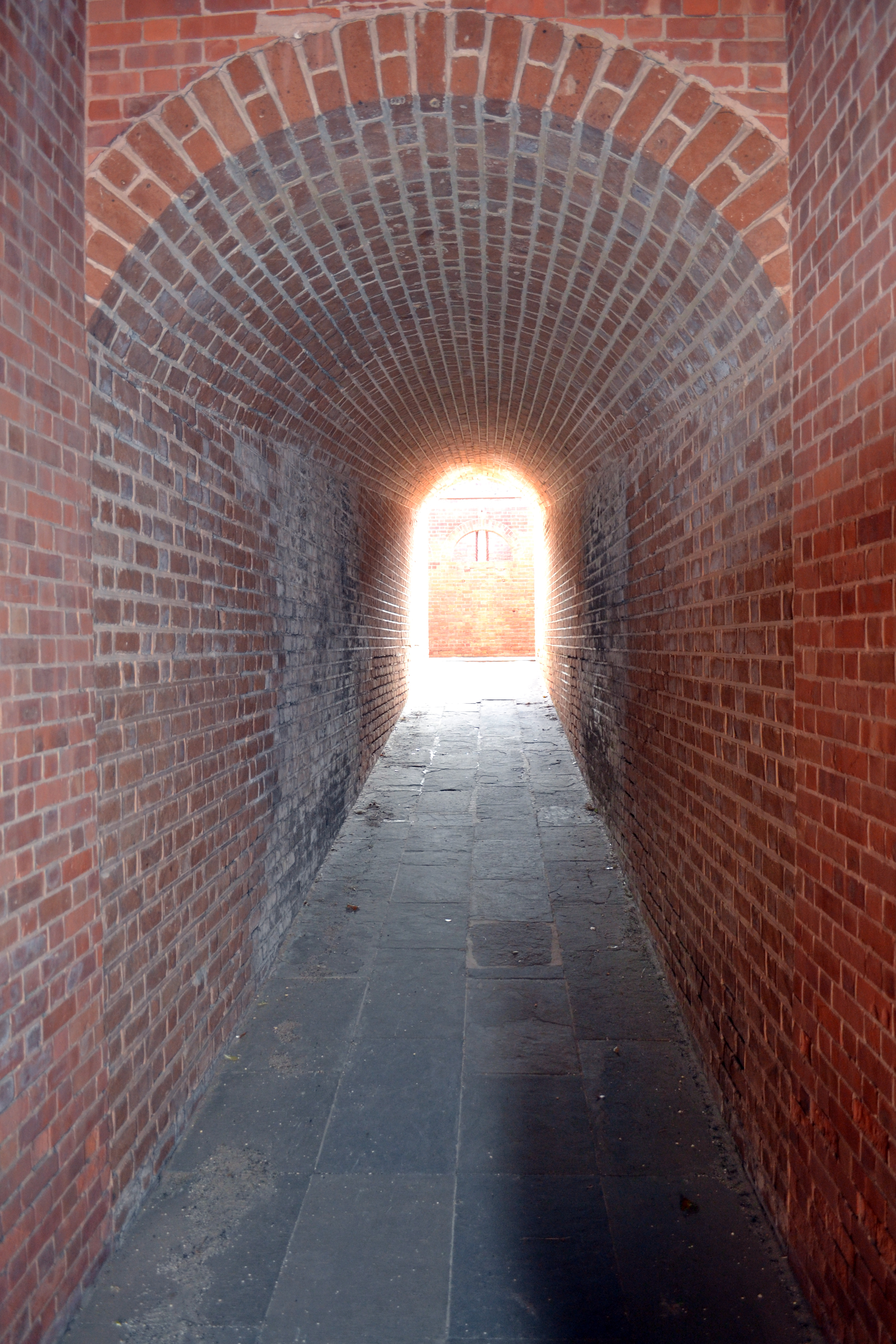
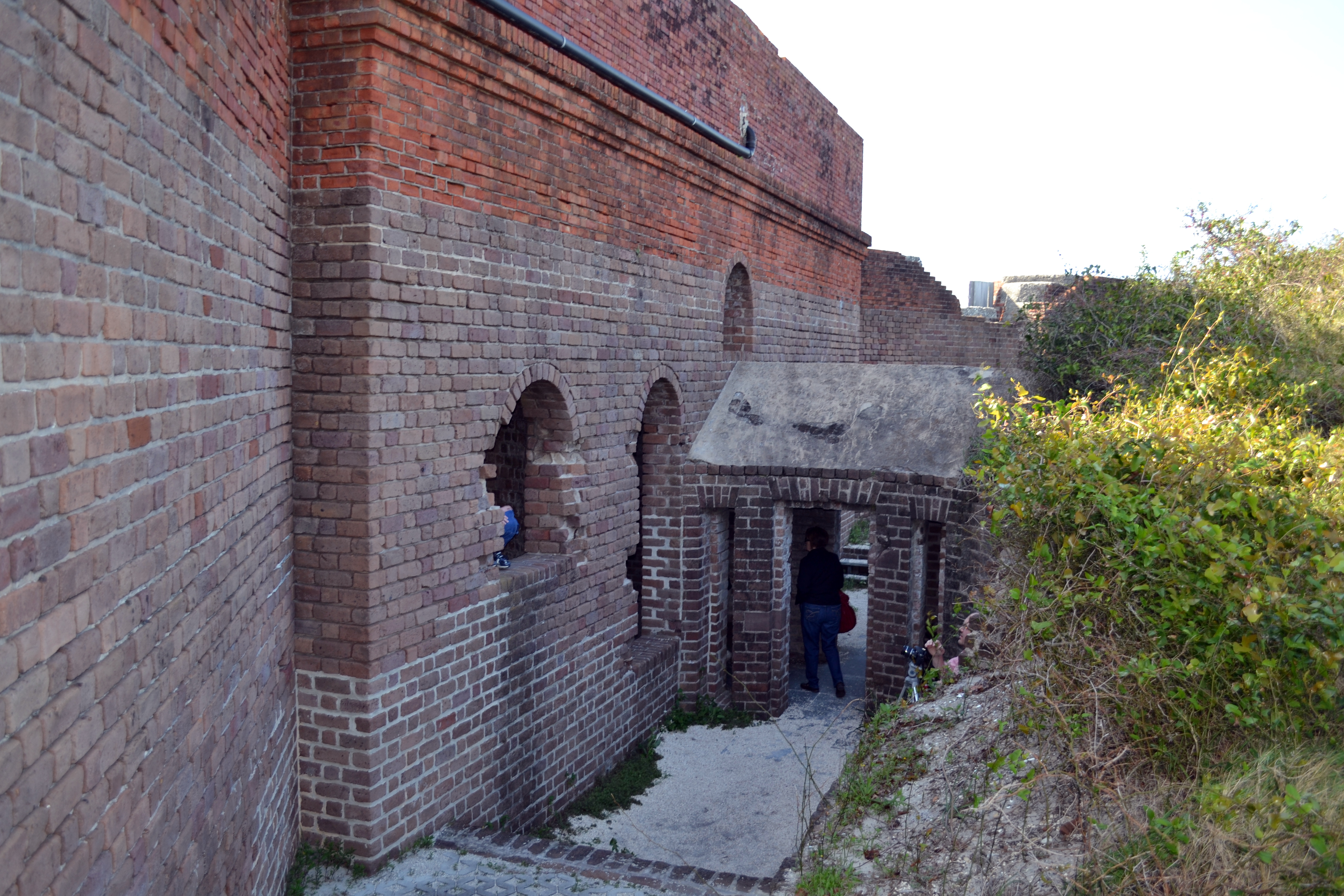
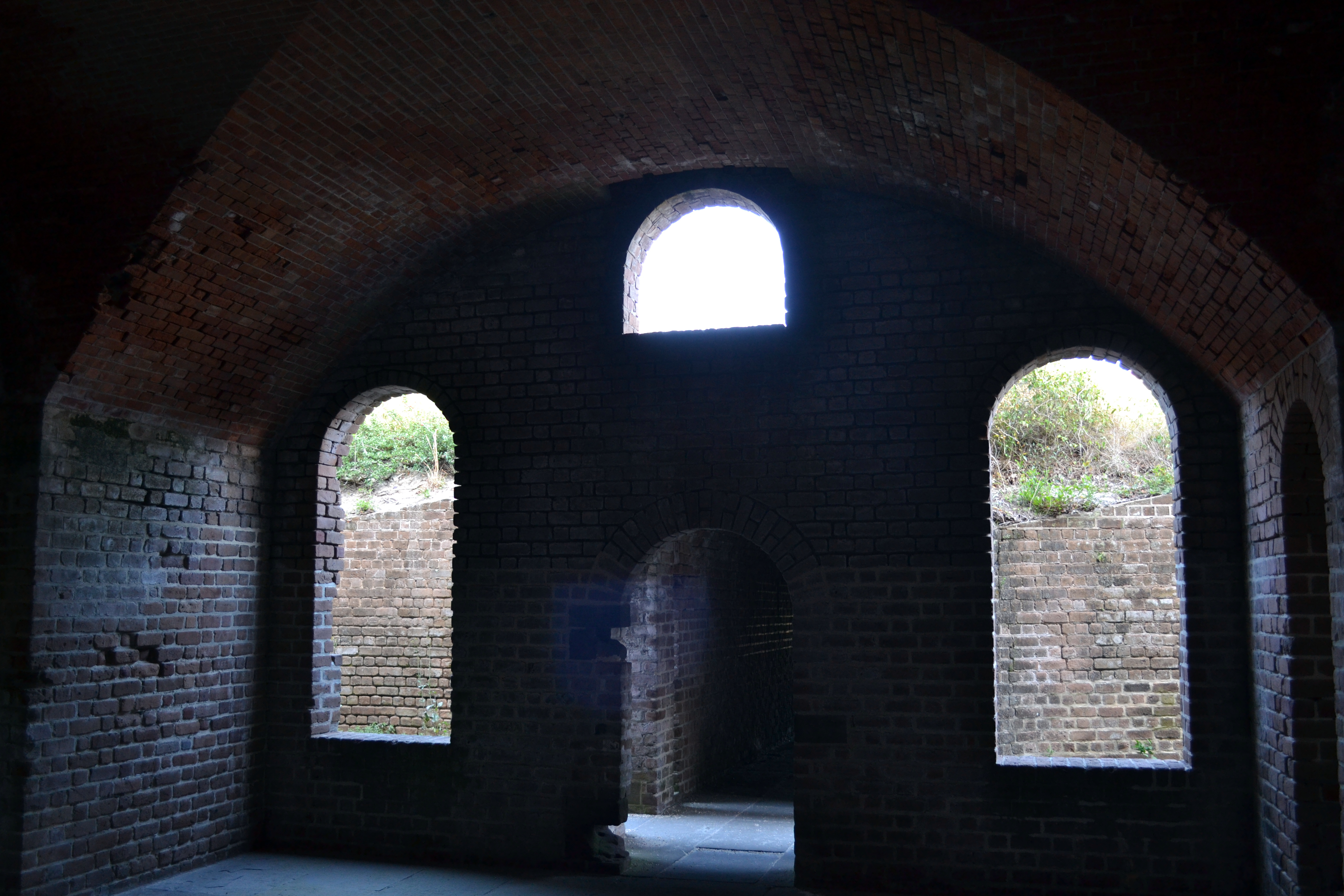
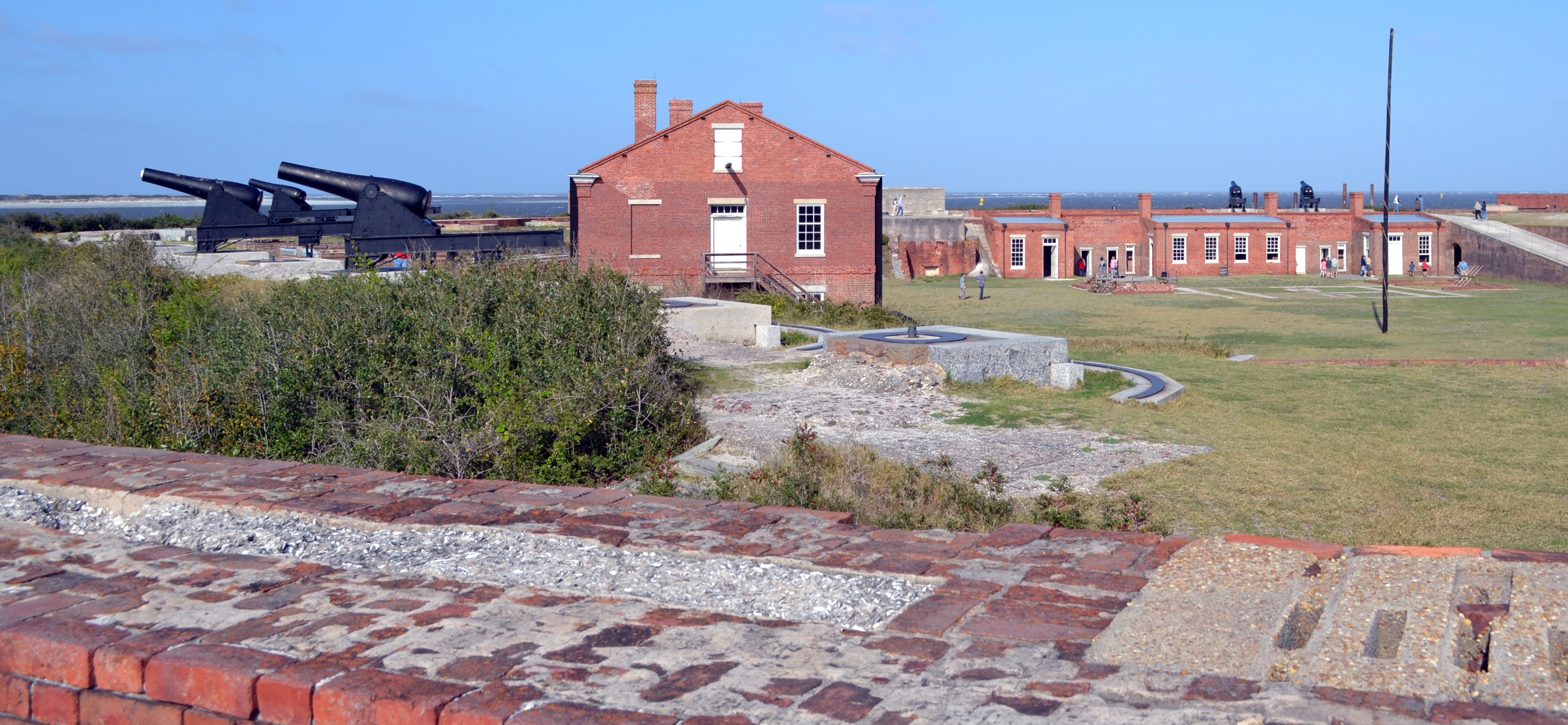
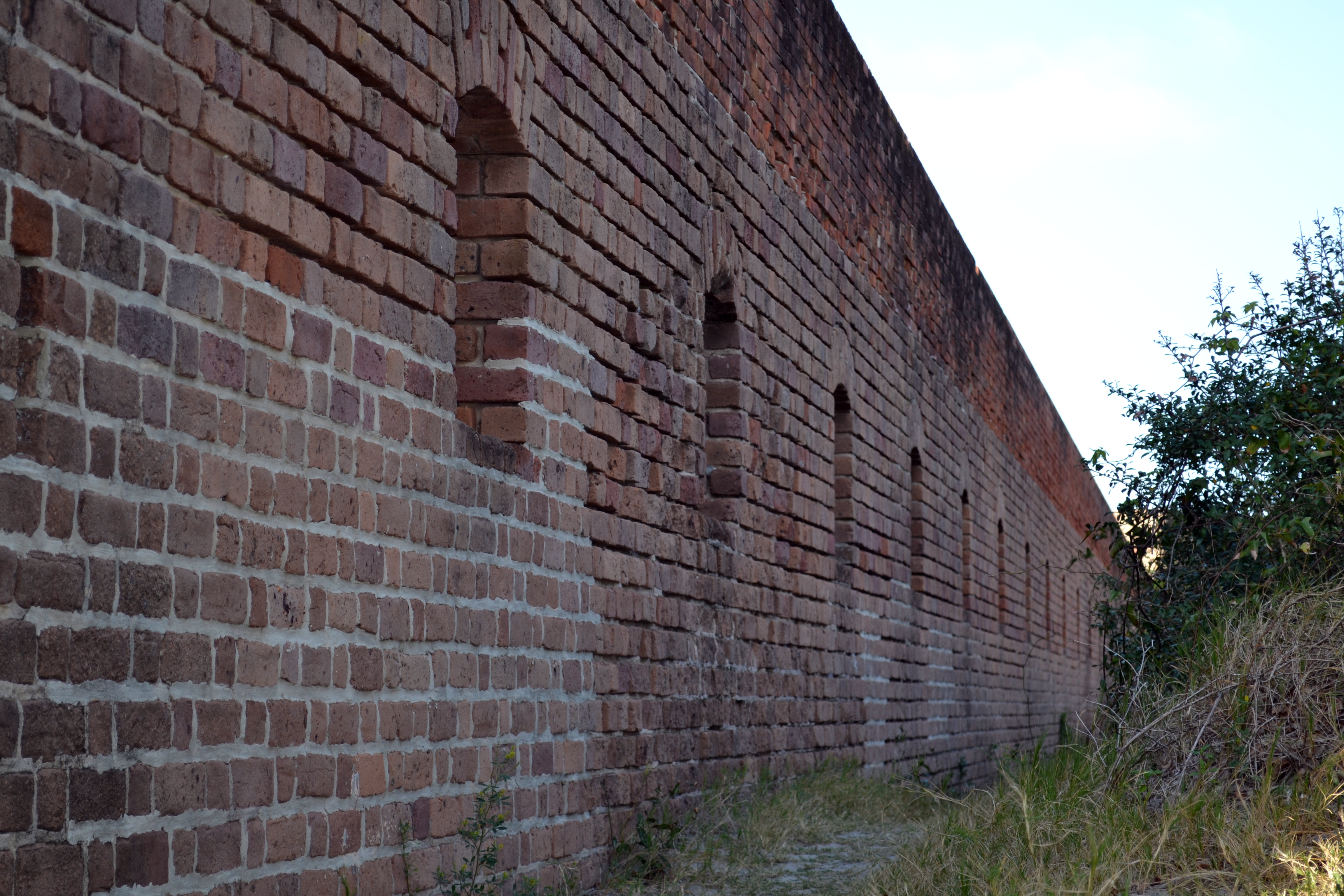
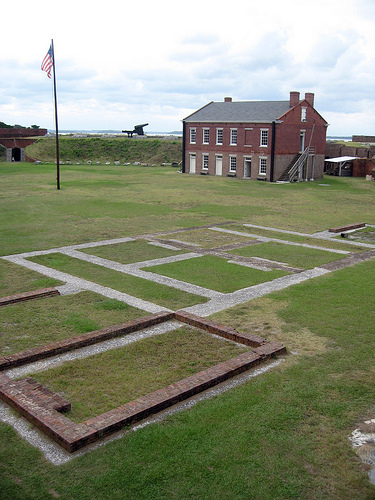
Exploring the fort is an utterly delightful experience. It’s like a huge playhouse with tunnels, towers, turrets, corridors, odd little rooms, and staircases to explore. Unlike so many historic sites now, the fort is not littered with interpretive signs that you feel guilty for not reading, it’s just open for exploration. Rooms within the interior buildings have been furnished and recreated as they would have appeared during the Civil War, otherwise, the fort is a huge, empty edifice. I was there last Saturday when there was a wind advisory. The wind blowing through and around the structure created a haunting, mournful tone. Other than that, I didn’t see or feel any spirits. Though, I can imagine the place grows creepier after dark.

The fort does appear to need work. Even with massive cuts to the state budget, I hope that those in charge are seeing to the needs of this marvelous place. Certainly with visitors comes some income and I would encourage all my readers to check out this marvelous piece of our past.

sally port Fort Clinch Fernandina Beach Florida ghosts haunted
The sally port. Photo 2012, by Lewis Powell IV, all rights reserved.
ramparts Fort Clinch Fernandina Beach Florida ghosts haunted
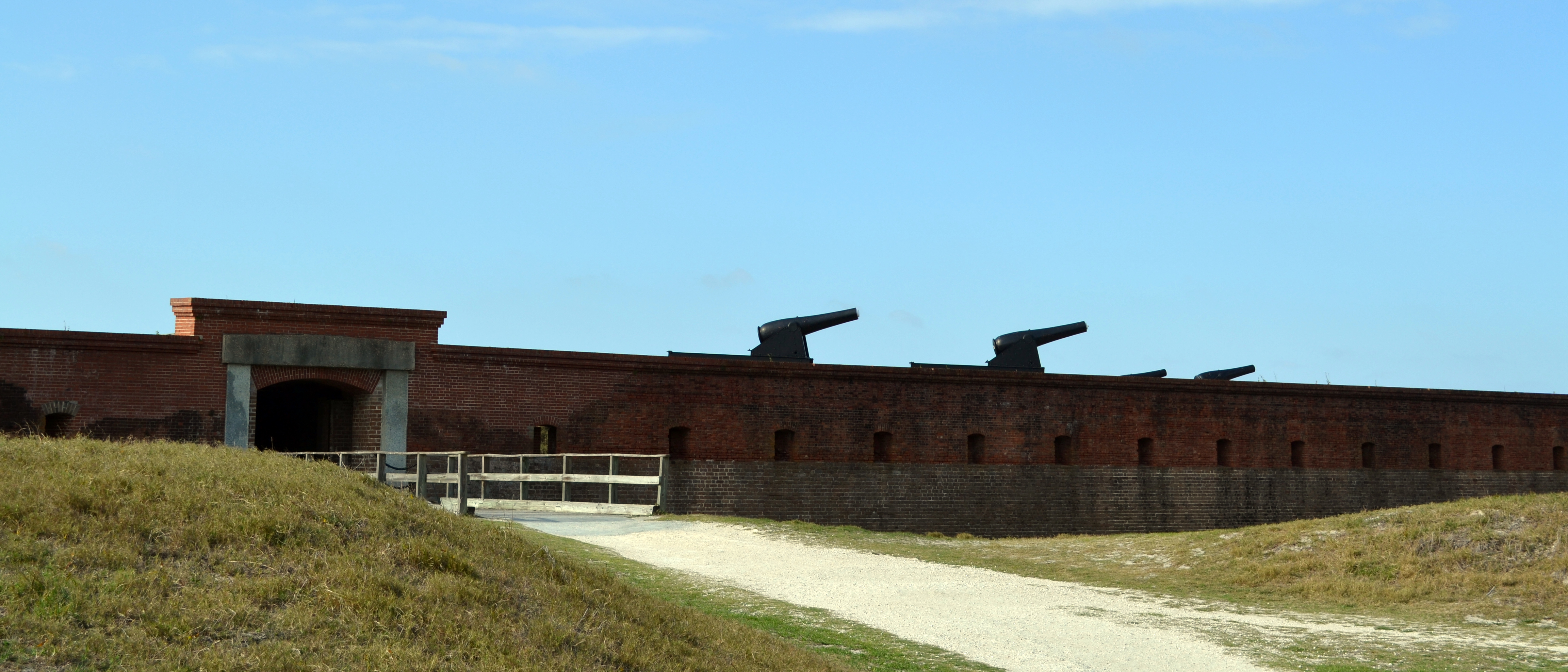
The ramparts from the outside. Photo 2012, by Lewis Powell IV, all rights reserved.
barracks building Fort Clinch Fernandina Beach Florida ghosts haunted
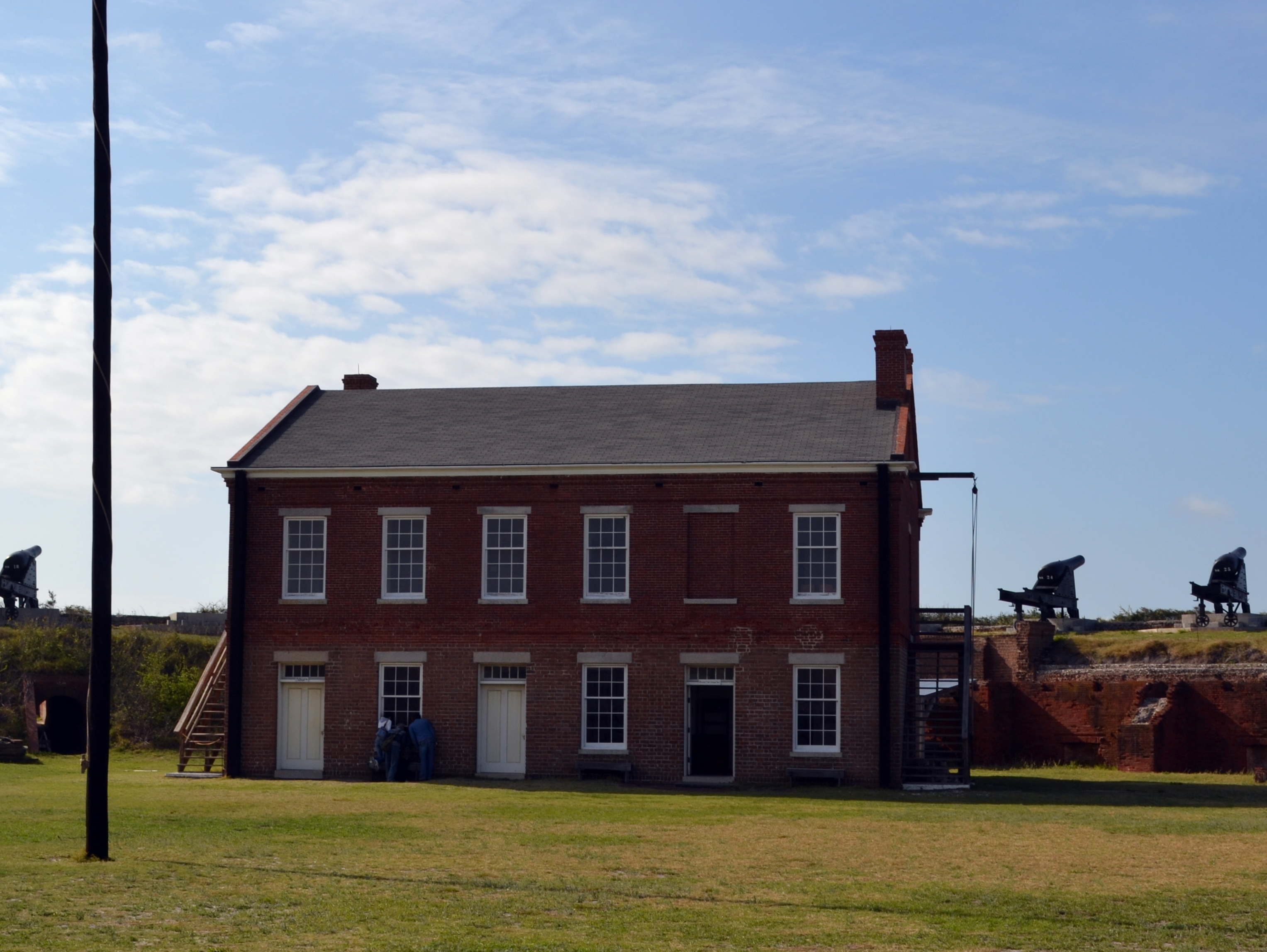
One of the remaining barracks buildings. Photo 2012, by Lewis Powell IV, all rights reserved.
brig Fort Clinch Fernandina Beach Florida ghosts haunted
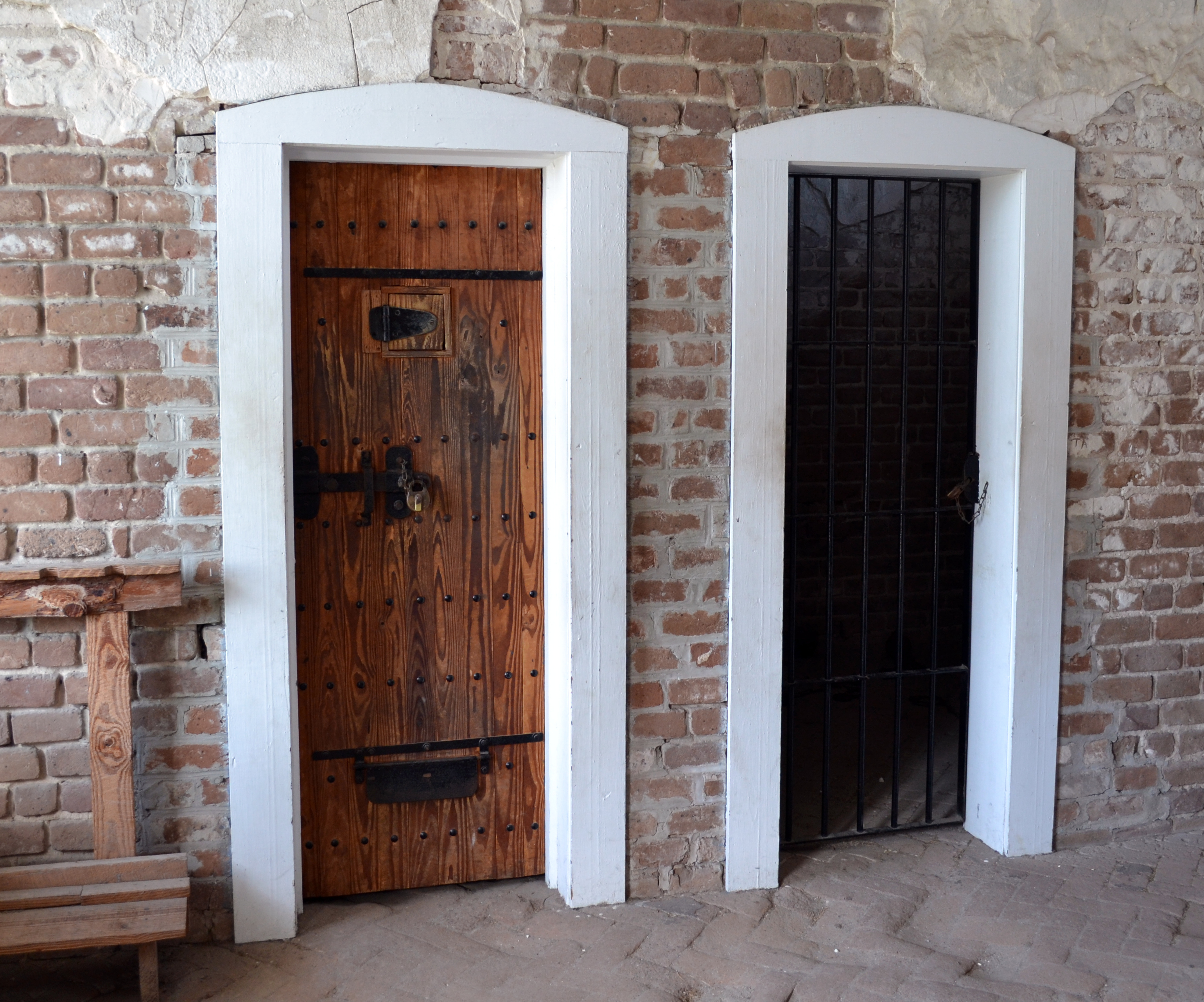
Doors to the jail cells in the fort’s brig. Photo 2012, by Lewis Powell IV, all rights reserved.
barracks Fort Clinch Fernandina Beach Florida ghosts haunted
The back of one of the barracks buildings. Photo 2012, by Lewis Powell IV all rights reserved.
tunnel Fort Clinch Fernandina Beach Florida ghosts haunted
Looking down one of the tunnels leading towards the parade ground. Photo 2012, by Lewis Powell IV, all rights reserved.
bastion Fort Clinch Fernandina Beach Florida ghosts haunted
My mother enters one of the fort’s bastions. Photo 2012, by Lewis Powell IV, all rights reserved.
bastion windows Fort Clinch Fernandina Beach Florida ghosts haunted
Looking out of one of the bastions. Photo 2012, by Lewis Powell IV, all rights reserved.
parade grounds Fort Clinch Fernandina Beach Florida ghosts haunted
View of the parade ground from the ramparts. Photo 2012, by Lewis Powell IV, all rights reserved.
ramparts Fort Clinch Fernandina Beach Florida ghosts haunted
One of the rampart walls from the inside. Photo 2012, by Lewis
Powell IV, all rights reserved.
guns Fort Clinch Fernandina Beach Florida ghosts haunted
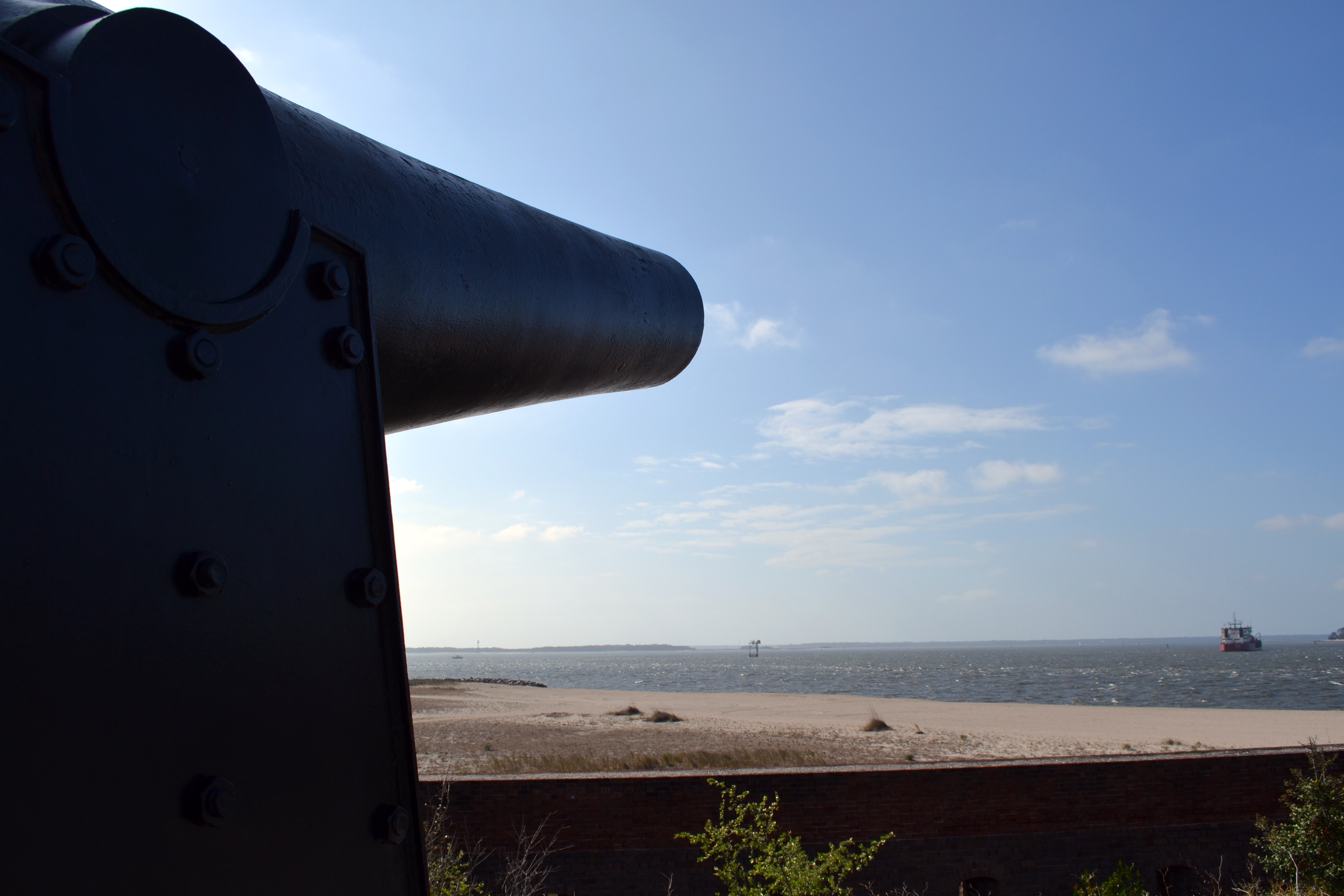
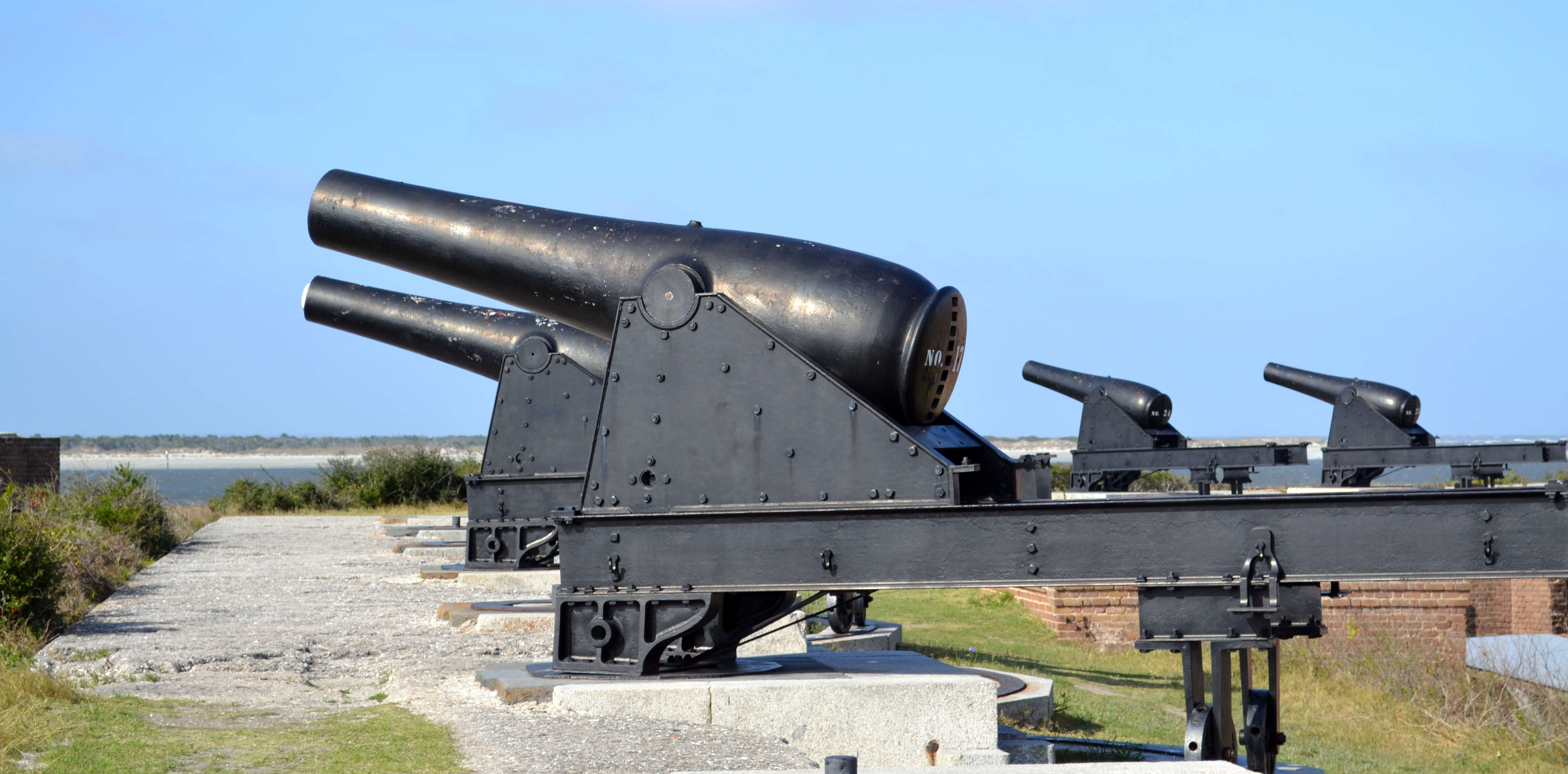
A number of guns still guard the fort. Photo 2012, by Lewis Powell IV all rights reserved.
St. Marys River Fort Clinch Fernandina Beach Florida ghosts haunted
Looking out towards the St. Marys River from the gun emplacements. Photo 2012, by Lewis Powell IV, all rights reserved.
gun port Fort Clinch Fernandina Beach Florida ghosts haunted
Photo 2012, by Lewis Powell IV, all rights reserved.

Spectral Humor–Fort Clinch, Fernandina Beach, Florida

Fort Clinch State Park
2601 Atlantic Avenue
Fernandina Beach, Florida

N.B. This article was edited 26 June 2019.

For my own photos from Fort Clinch, please see my article, “A historic playhouse–Photos from Fort Clinch.”

Fort Clinch is a popular place. This state park offers camping, wildlife, fishing and swimming as well as what the park website describes as “one of the most well-preserved 19th century forts in the country.” The fort is also popular with historic re-enactors, those people who enjoy spending time living in a different era.

During a historic encampment one July weekend, two re-enactors sitting on the porch of one of the barracks witnessed four spectral soldiers. The soldiers emerged from one of the bastion tunnels wearing Civil War era uniforms, crossed the parade ground, marched up the ramp, and disappeared. The following year during the same encampment, the re-enactors took their seats again on the barracks porch to see if the specters returned. Sure enough, three uniformed ghosts emerged from the tunnel and began making their way across the parade ground. One of the witnesses called out, “There were four of you last year, where’s the fourth man?” One of the ghosts responded, “He’s sick tonight, couldn’t come.” The spectral trio continued up the ramp and disappeared.

This story amuses me greatly. So often in dealing with ghost stories, we are dealing with sometimes horrible deaths involving war, murder, or pestilence, that we forget that these spirits have a sense of humor. I recall an episode of Ghost Hunters where the TAPS team was investigating the well house of a farm that was known to have a prankster ghost. The ghost turned on the investigator’s flashlight upon request and later analysis revealed an EVP of a man laughing at the time. Ghosts DO have a sense of humor!

This story, however, has become one of the most enduring legends surrounding the fort. I’ve seen this story retold in a few different sources and each includes different details. Maggie Carter-de Vries, a local author, includes the story in her 2008 book, Ghosts of Amelia and Other Tales. She does provide a date for this story, 1952, and includes that the witness was a park ranger.

Aerial view of Fort Clinch Fernandina Beach Florida ghosts haunted
Aerial view of Fort Clinch, 2003, by Fl295. Courtesy of Wikipedia.

Of course, Fort Clinch is hardly a place for much sadness. The fort has never seen military action; only the ennui that accompanies waiting for such action to occur. The site of the fort, at the northern end of Amelia Island on the northern Atlantic coast of Florida, has been occupied by various military installations since 1736, all guarding the St. Marys River from attack.

Construction on the fort commenced in 1847 as part of the federal government’s plan to fortify the American coast. By the outbreak of the Civil War in 1861, the fort was only partially constructed with only two bastions facing the river and two walls connecting them as well as other necessary buildings in different stages of completion. At the time of the bombardment of Fort Sumter by Confederate forces in April of that year, guns had yet to be placed within the fort. It was not until the Confederacy took control that guns were installed. The fort aided blockade runners running supplies into the port of St. Marys, Georgia on the other side of the river.

By 1862, many of the neighboring islands had been captured by Union forces leaving Amelia Island and Georgia’s Cumberland Island (a barrier island to the north) isolated. General Robert E. Lee gave orders for troops to abandon the fort. On March 3rd, as the last of the Confederate troops left the fort, Union gunboats arrived and immediately took control of the fort. The First New York Volunteer Engineers company was brought in to resume construction on the fort. Work continued through the war and was halted in 1867 when the construction was deemed obsolete and the fort was placed under the eye of a caretaker.

guns Fort Clinch Fernandina Beach Florida ghosts haunted
The fort’s guns, 2004, by Sir Mildred Pierce. Released under a Creative Commons License.

The forgotten fort was briefly returned to military usage in 1898 during the Spanish-American War, but in September of that year was again deemed obsolete and closed. The decaying ramparts remained desolate until 1926 when the site was offered for sale. The state of Florida purchased the site in 1935 and the Civilian Conservation Corps began work restoring it. Fort Clinch State Park opened as the first park in Florida’s state park system in 1938. During World War II, with German U-boats patrolling off the coast and sinking vessels within sight of land, the fort was reactivated for surveillance.

parade ground Fort Clinch Fernandina Beach Florida ghosts haunted
View across the parade ground, 2009, by mediafury. Released under a Creative Commons License.

The past is still very much with us at Fort Clinch, not only literally, but spiritually as well. Re-enactors operate at the site regularly, demonstrating the harsh realities of military life during the Civil War. These same re-enactors seem to also witness the spiritual realities as well. Author Jack Powell in his Haunting Sunshine: Ghostly Tales from Florida’s Shadows, notes that there is a surprising amount of interaction between the ghosts of Fort Clinch and the re-enactors, rangers, and the occasional visitor. People staying in the barracks have been awakened by the clomping steps of booted feet and the appearance of a woman with a lantern who may possibly be a nurse still checking on patients.

Another interesting interaction involved this same female spirit. A female volunteer was looking for something in a darkened barracks room. The female spirit passed through with her lantern and the woman, not realizing the lantern-bearing woman was not another volunteer, asked her to hold up the lantern while she continued to search. The woman stopped, held the lantern aloft while the volunteer searched. She found what she needed and the other woman left the room. The volunteer approached a woman outside who she believed to have helped her and thanked her, only to discover that she hadn’t been walking around with a lantern, nor had any other women present.

corridor Fort Clinch Fernandina Beach Florida ghosts haunted
View of one the Fort Clinch’s many corridors.

In their book, Ghost Stories of the Civil War, Dan Asfar and Edrick Thay includes a marvelous story from 1999. A family taking a candlelight tour of the fort at night was greeted by a Union officer standing in a window of the Officer’s Quarters. The man looked at them, doffed his cap in acknowledgement, and vanished. After seeking out the guide, the family learned that they were not the first to see the officer, nor were they the only members of that particular tour group to see him.

Not all of the spirits roaming the fort are martial in nature, staff and visitors have reported the sound of a baby crying in the southwest tunnel. There’s speculation that the baby’s spirit may remain from the time when, while abandoned, the fort was home to a homeless family. The family is said to have had a baby that died. It seems that both military and civilian life continue at Fort Clinch.

Sources

  • Asfar, Dan and Edrick Thay. Ghosts Stories of the Civil War. Auburn, WA: Ghost House Books, 2003.
  • Carter-de Vries, Maggie. Ghosts of Amelia & Other Tales. Bloomington, IN: Author House, 2008.
  • Fort Clinch. Wikipedia, the Free Encyclopedia. Accessed 11 August 2010.
  • Fort Clinch State Park. Wikipedia, the Free Encyclopedia. Accessed 11 August 2010.
  • Moore, Joyce Elson. Haunt Hunter’s Guide to Florida. Sarasota, FL: Pineapple Press, 1998.
  • Powell, Jack. Haunting Sunshine: Ghostly Tales from Florida’s Shadows. Sarasota, FL: Pineapple Press, 2001.

A Spiritual Treasure—Angel Oak

Angel Oak Park
3699 Angel Oak Road
John’s Island, South Carolina

N.B. This article was revised and updated 13 January 2019. I revisited the oak in 2019, read about my experiences

Angel Oak John's Island South Carolina ghosts haunted
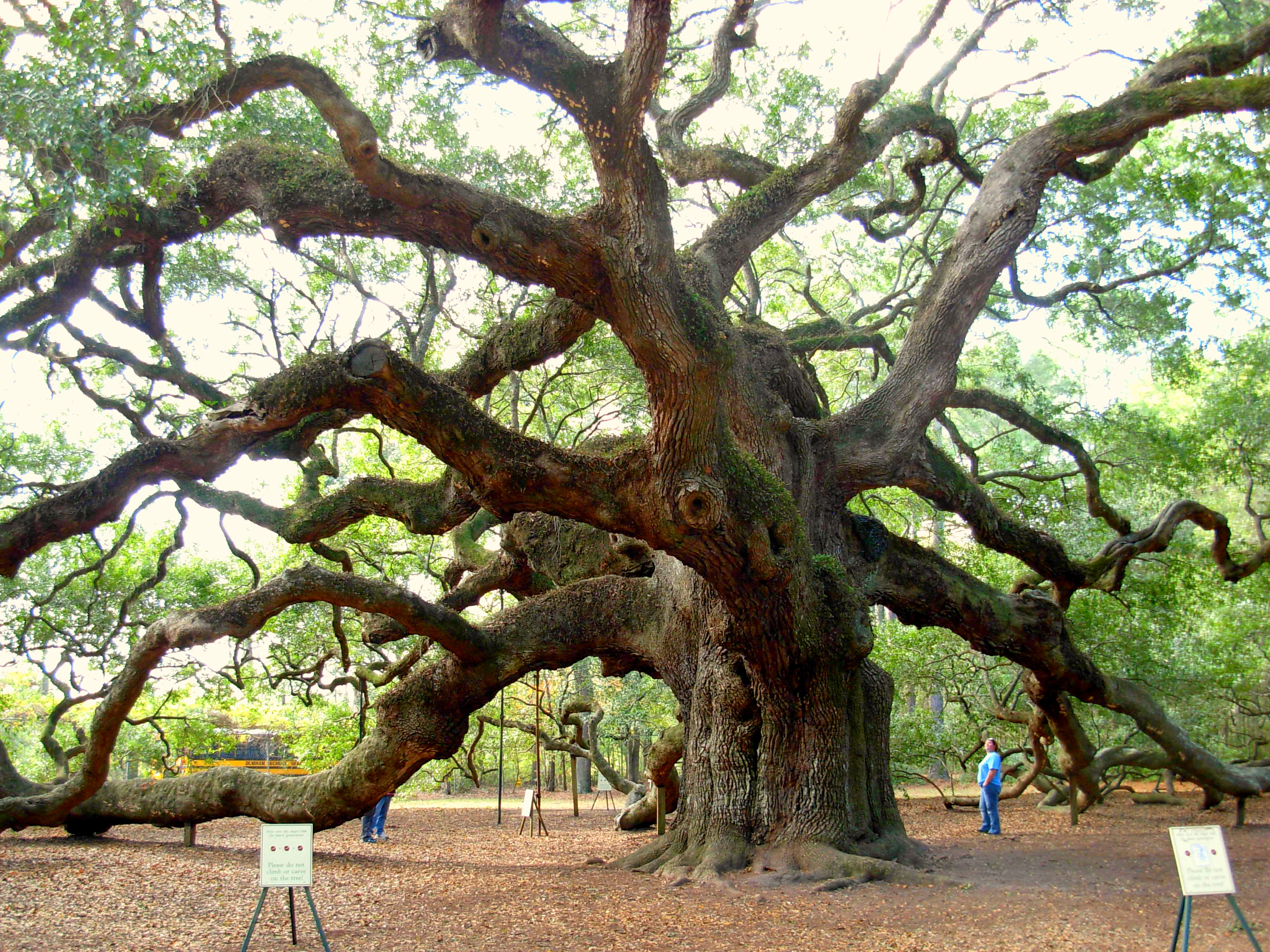
The massive Angel Oak. Photo 2011, by Lewis Powell IV, all rights reserved.

The city of Charleston incorporates not only the bustling peninsula where the city was originally built, but it now encompasses parts of some of the surrounding barrier islands like James and John’s Islands. Until fairly recently, John’s Island has been somewhat rural. Following the Civil War it was home to communities of freed slaves and their descendants, but developers have begun turning the island into a bedroom community for the city of Charleston. This has caused quite a stir among locals as the quiet nature of the island has rapidly changed with sprawling commercial and residential developments. The magnificent Angel Oak, whose leafy branches have provided shade and solace for centuries, is now at the center of one of the controversies over the island’s development.

Angel Oak John's Island South Carolina ghosts haunted
The massive limbs seem to reach out towards visitors. Photo 2011, by Lewis Powell IV, all rights reserved.
Angel Oak John's Island South Carolina ghosts haunted
Photo 2011, by Lewis Powell IV, all rights reserved.

Angel Oak is considered to be the oldest living thing east of the Mississippi. However, dating a living tree can be difficult. Signs posted around the tree give the age at between 300-400 years old, though many other sources estimate it to be in excess of 1500 years old. This tree has withstood hurricanes, war, pestilence and small, screaming children climbing its branches and yet continues to provide a gentle, loving embrace to thousands of visitors year after year.

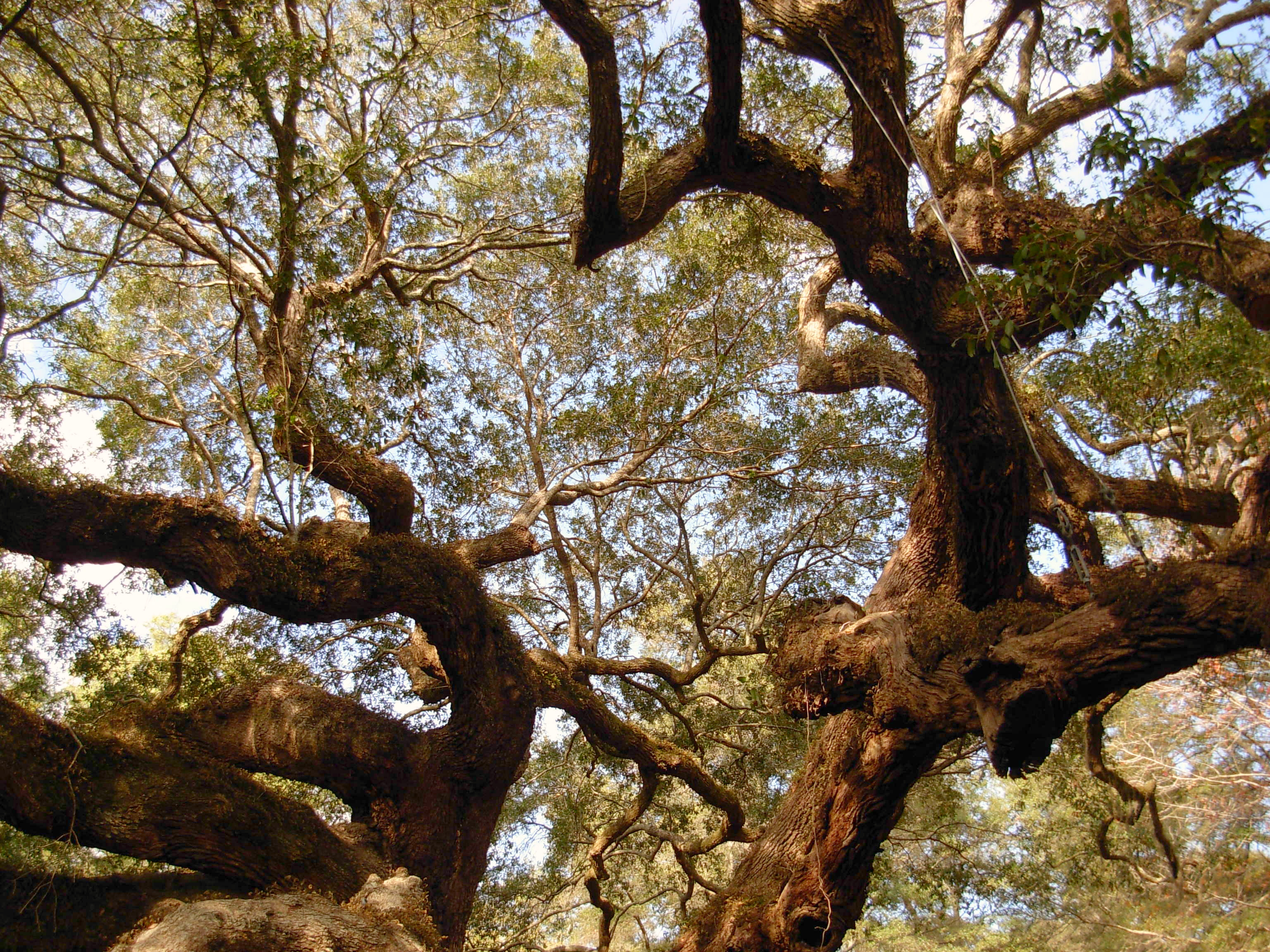
The tree is a remarkable sight. Southern Live Oaks (Quercus virginiana) are not known for their height–this tree is only 65 feet high–but for their sprawling branches, which, in this case, loll over an area of some 17,000 square feet. The massive trunk is over 25 feet in circumference with the largest branch being 11 feet in circumference. During a performance under the oak, the Charleston Ballet Company was able to fit its entire company, 19 dancers, behind the trunk. To prevent the massive limbs from breaking off, wooden and metal posts have been erected along with steel wires to help support some of the larger, more unstable branches. Walking near the tree and under its massive branches is a memorable experience. 

Angel Oak John's Island South Carolina ghosts haunted
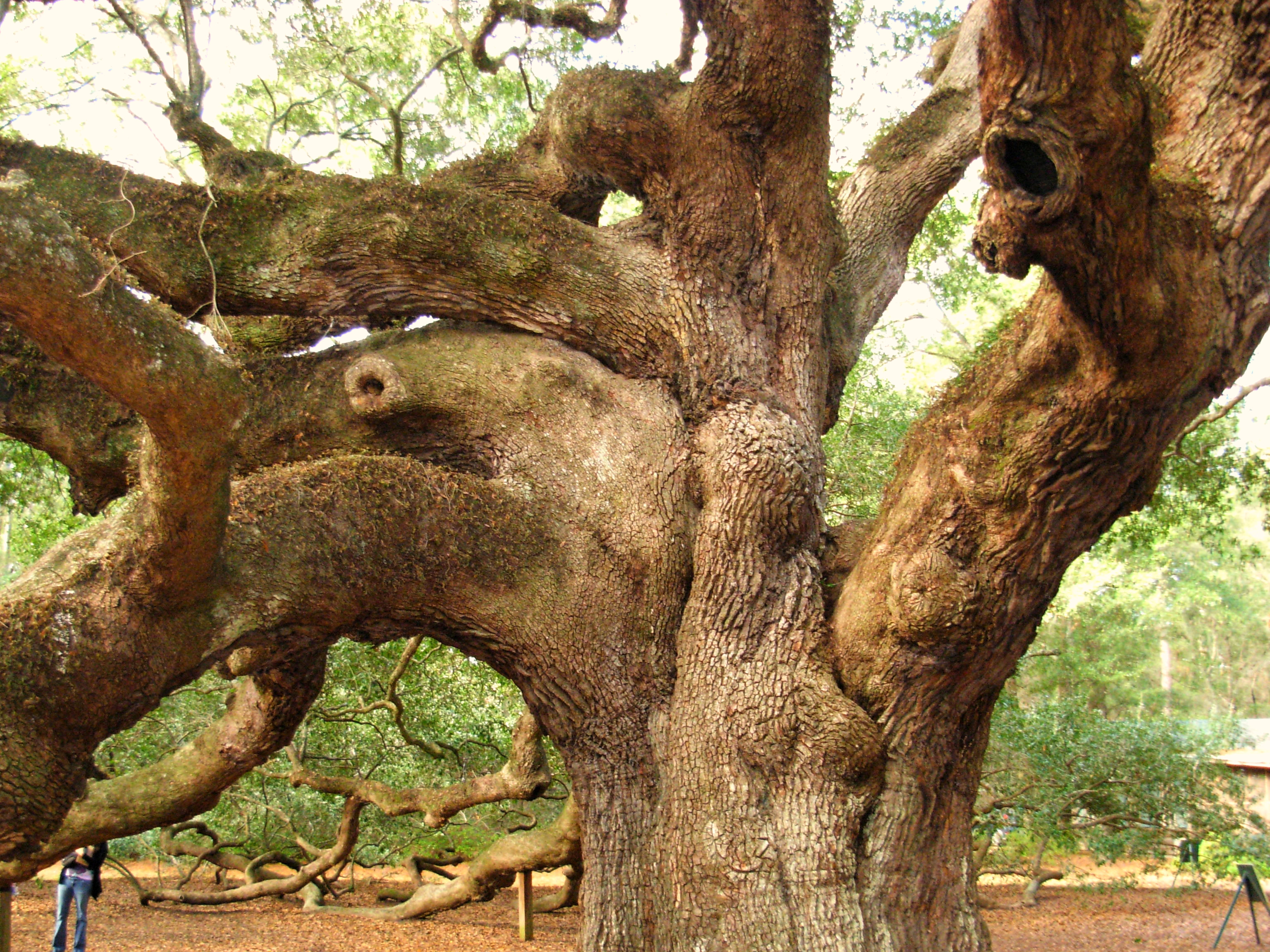
Centuries of branches rise out of the massive trunk. Photo 2011, by Lewis Powell IV, all rights reserved.
Angel Oak John's Island South Carolina ghosts haunted
Looking into the tree’s canopy. Note the steel wires supporting limbs on the right of the pic. Photo 2011, by Lewis Powell IV, all rights reserved.

There is a marvelous energy here. The atmosphere is calming and moving, like being in the presence of an enlightened being, I felt protected and supported by this massive thing, it’s almost god-like; it’s divine. The spiritual energy is just as strong. This spot naturally offers a plethora of legends and stories. The most common stories involve the spirits of slaves appearing among the leafy branches. It should be noted that the tree’s name is a reference to the Angel family who once owned the plantation that surrounded this massive treasure.

Author Denise Roffe in her Ghosts and Legends of Charleston, South Carolina, interviewed an elderly African-American woman who was descended from the slaves who once toiled on the island’s plantations before the Civil War. She recounted the legends of the tree including that the tree was once home to huge birds (probably vultures) who would feast on the bodies of slaves hung in there. The old woman continued saying that many people were buried under the tree including Native Americans who met under its shady branches before the area was settled by the white man. She stated that these spirits are still experienced around the oak and that they also work to protect the tree. Certainly if there are bodies under the soft ground around the tree, it’s not hard to imagine that the tree has fed off of the remains, adding to the tree’s allure.

Angel Oak John's Island South Carolina ghosts haunted
Branches, like fingers, intertwine. Photo 2011, by Lewis Powell IV, all rights reserved.

Besides the spirits there, the mission of protecting the tree has become part of the lives of many living beings who have organized to fight development of the area. The development threat does not directly affect the Angel Oak itself but the land surrounding Angel Oak Park. The park is owned by the City of Charleston, but outside of the few acres that comprise the park, the now wooded property is privately owned. Recently, a developer proposed constructing a residential development that would contain around 600 housing units, thus destroying the peaceful sylvan atmosphere of the area. The fear of many of those working to prevent this development is that while the oak is untouched, the destruction of the surrounding forest would eventually lead to the demise of the tree itself. The woods surrounding the tree are believed to be one of the reasons for the tree’s survival as it provides protection from high winds and destructive flooding. The fight is still being waged for this peaceful place with the spirits standing behind those of us who would see the tree protected for generations to come.

UPDATE: Preservationists with Save Angel Oak and the Lowcountry Open Land Trust purchased the surrounding 18 acres in 2014 sparing the tree from development.

 Angel Oak John's Island South Carolina ghosts haunted
The intrepid Southern Spirit Guide poses with the mighty trunk. Photo 2011, all rights reserved.
Angel Oak John's Island South Carolina ghosts haunted
All around the tree are posted signs in hopes of protecting the tree. Photo 2011, by Lewis Powell IV, all rights reserved.

Sources

  • Angel Oak. Wikipedia, the Free Encyclopedia. Accessed 14 December 2011.
  • Angel oak saved from development.” ABC News 4. 14 March 2014.
  • Jones, Jessica. “Exposing the Angel Oak in Charleston, South Carolina.” com. 29 May 2011.
  • Moore, Andrew. “Battle swirls around fate of the East Coast’s oldest tree.” Pittsburgh Post-Gazette. 17 April 2011.
  • Roffe, Denise. Ghosts and Legends of Charleston, South Carolina. Atglen, PA: Schiffer, 2010.
  • Save The Angel Oak. Savetheangeloak.com. Accessed 14 December 2011.

Photos of White Point Gardens, Charleston, South Carolina

My two-part trip this week has brought me back to Charleston. I spent some time at White Point Gardens since I wrote an entry about it a few months ago. It was quite lovely even on a day in early December.

haunted White Point Gardens Battery Charleston South Carolina pirate executions Stede Bonnet 1718 Southern ghosts
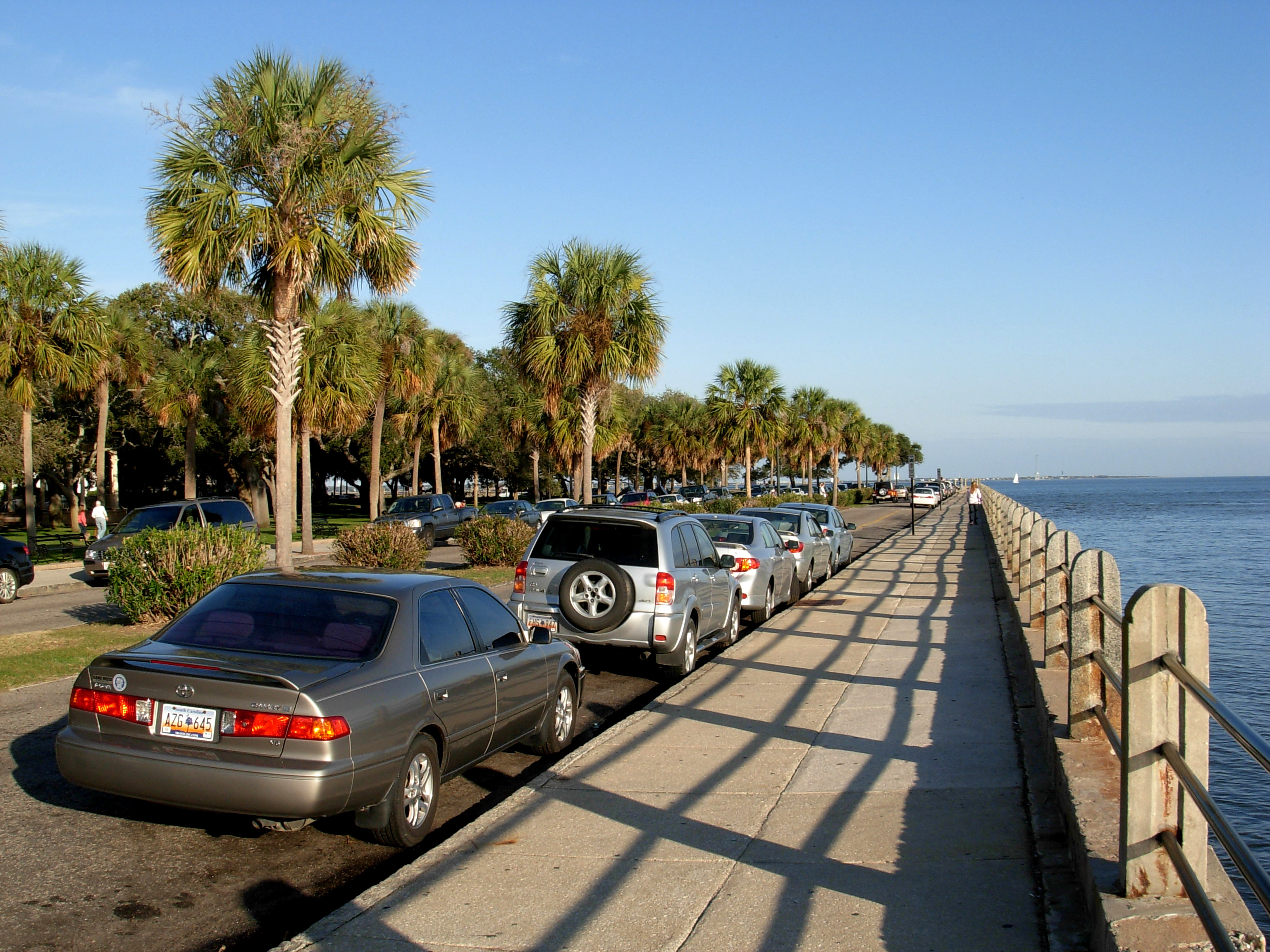
View of the walk along the Battery. Photo 2011, by Lewis Powell IV, all rights reserved.
haunted White Point Gardens Battery Charleston South Carolina pirate executions Stede Bonnet 1718 Southern ghosts
A barge passes by the Battery. Photo 2011, by Lewis Powell IV, all rights reserved.
haunted White Point Gardens Battery Charleston South Carolina pirate executions Stede Bonnet 1718 Southern ghosts
Houses overlooking the gardens. Photo 2011, by Lewis Powell IV, all rights reserved.
haunted White Point Gardens Battery Charleston South Carolina pirate executions Stede Bonnet 1718 Southern ghosts
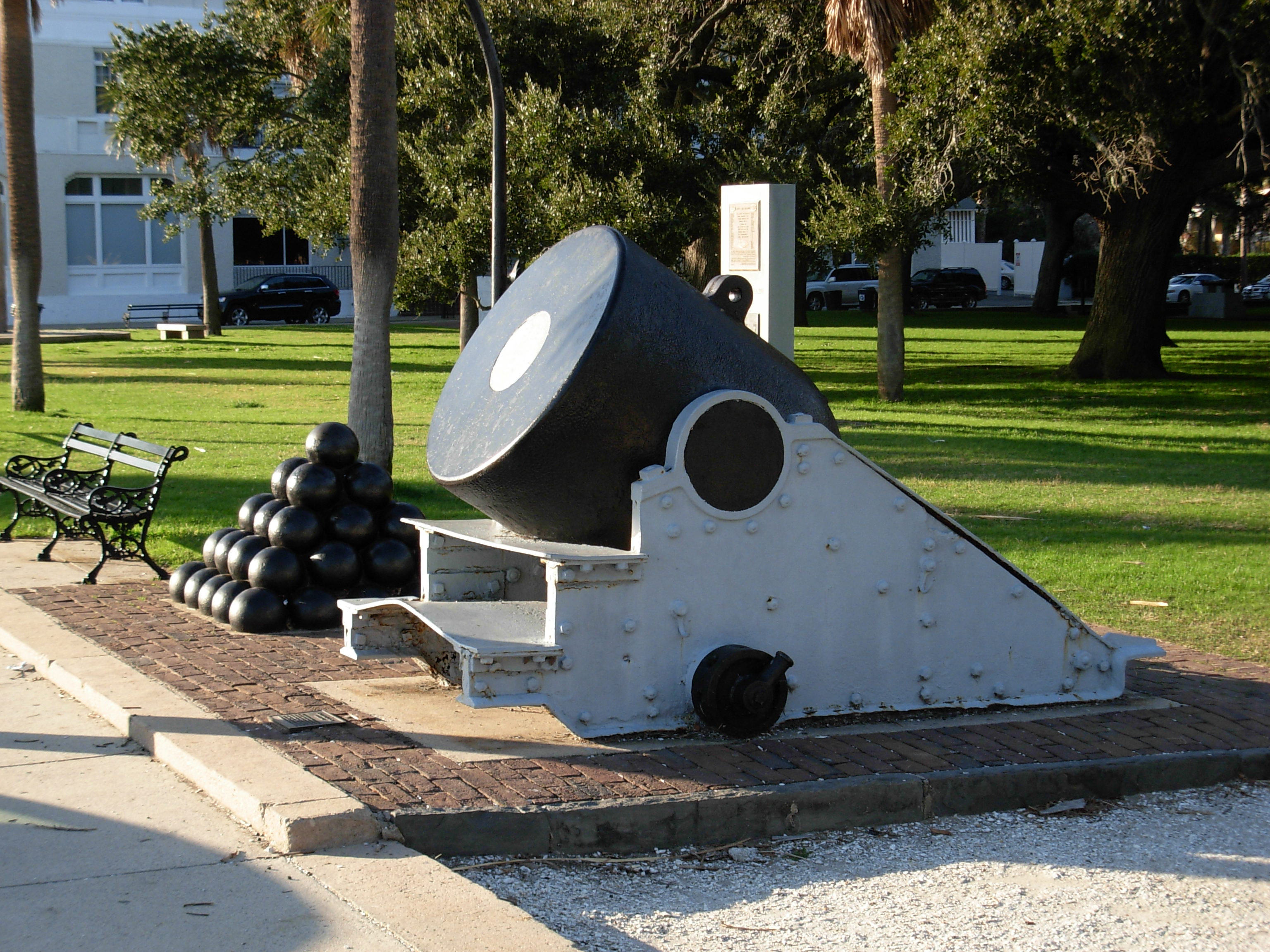
Artillery pieces like this mortar, line White Point Gardens as a reminder of the Battery’s martial function. Photo 2011, by Lewis Powell IV, all rights reserved.
haunted White Point Gardens Battery Charleston South Carolina pirate executions Stede Bonnet 1718 Southern ghosts
More of the heavy guns lining the gardens. Photo 2011, by Lewis Powell IV, all rights reserved.
haunted White Point Gardens Battery Charleston South Carolina pirate executions Stede Bonnet 1718 Southern ghosts
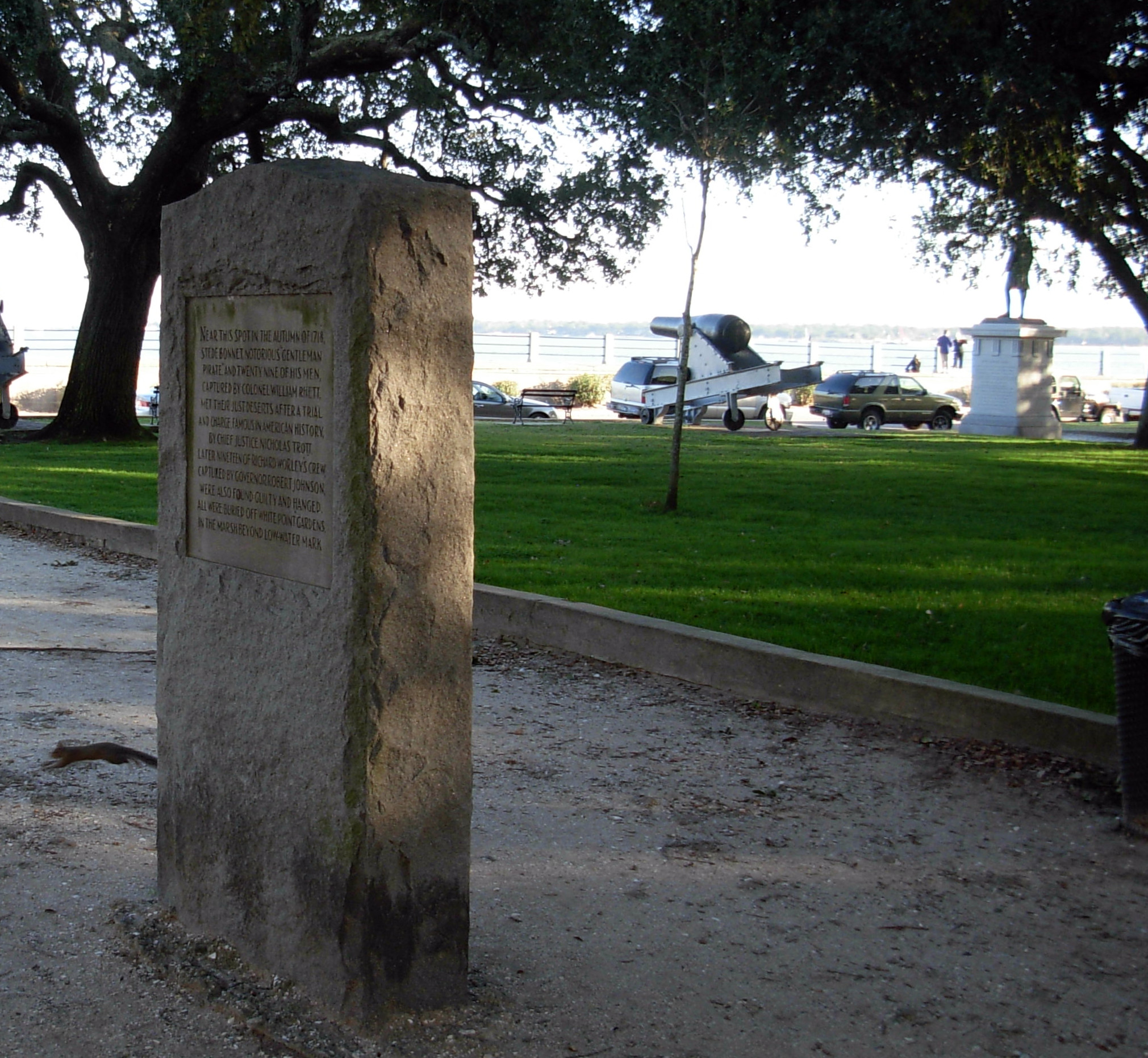
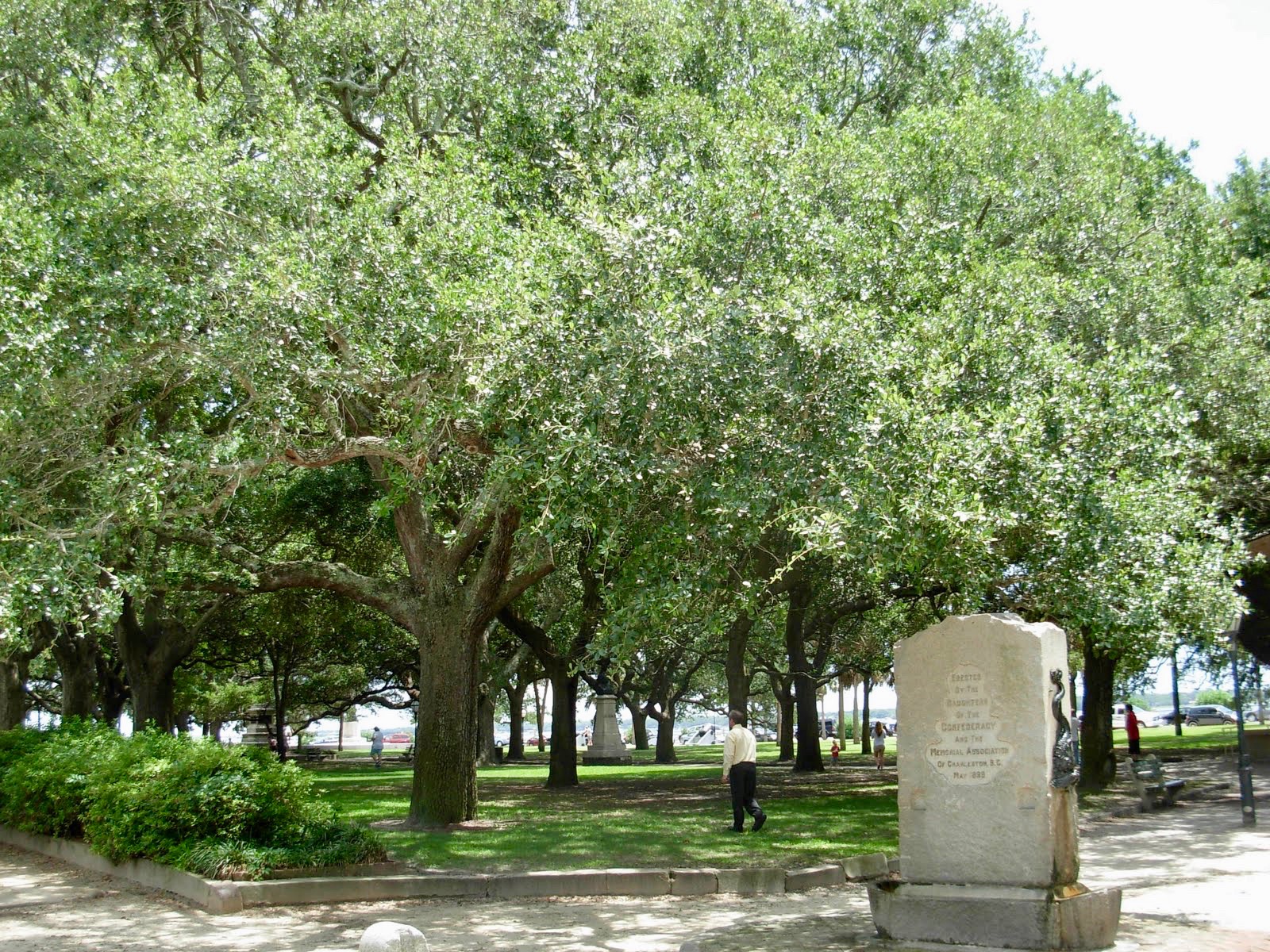
The stone marking the spot of Stede Bonnet’s execution. Photo 2011, by Lewis Powell IV, all rights reserved.
haunted White Point Gardens Battery Charleston South Carolina pirate executions Stede Bonnet 1718 Southern ghosts
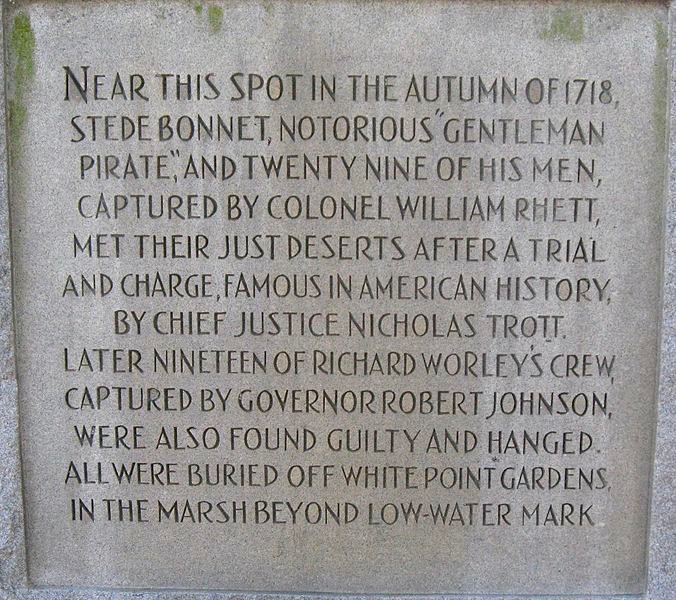
The inscription on the Stede Bonnet marker. Photo 2011, by Lewis Powell IV, all rights reserved.
haunted White Point Gardens Battery Charleston South Carolina pirate executions Stede Bonnet 1718 Southern ghosts
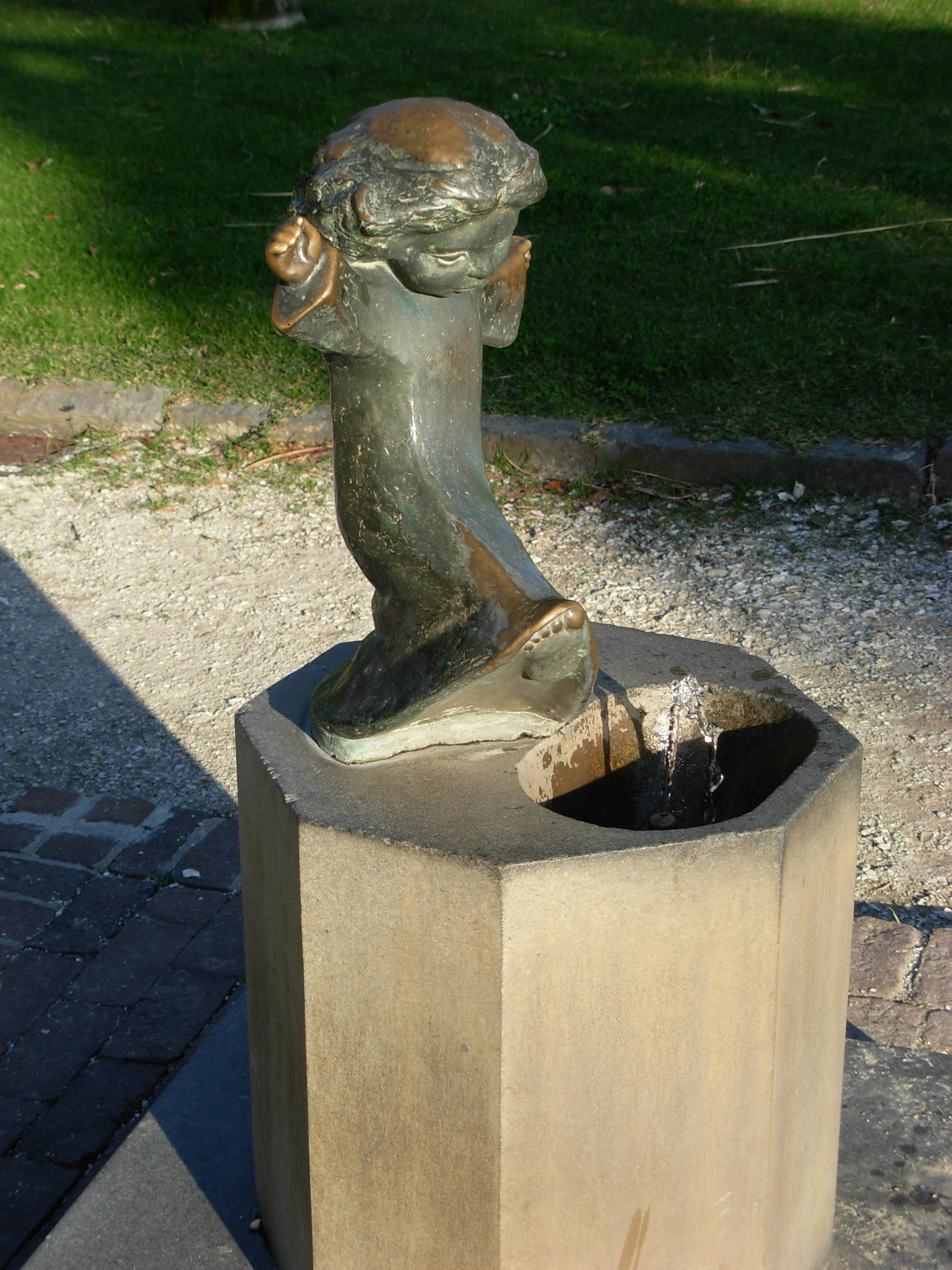
A whimsical sculpture greets visitors entering the gardens. Photo 2011, by Lewis Powell IV, all rights reserved.
haunted White Point Gardens Battery Charleston South Carolina pirate executions Stede Bonnet 1718 Southern ghosts
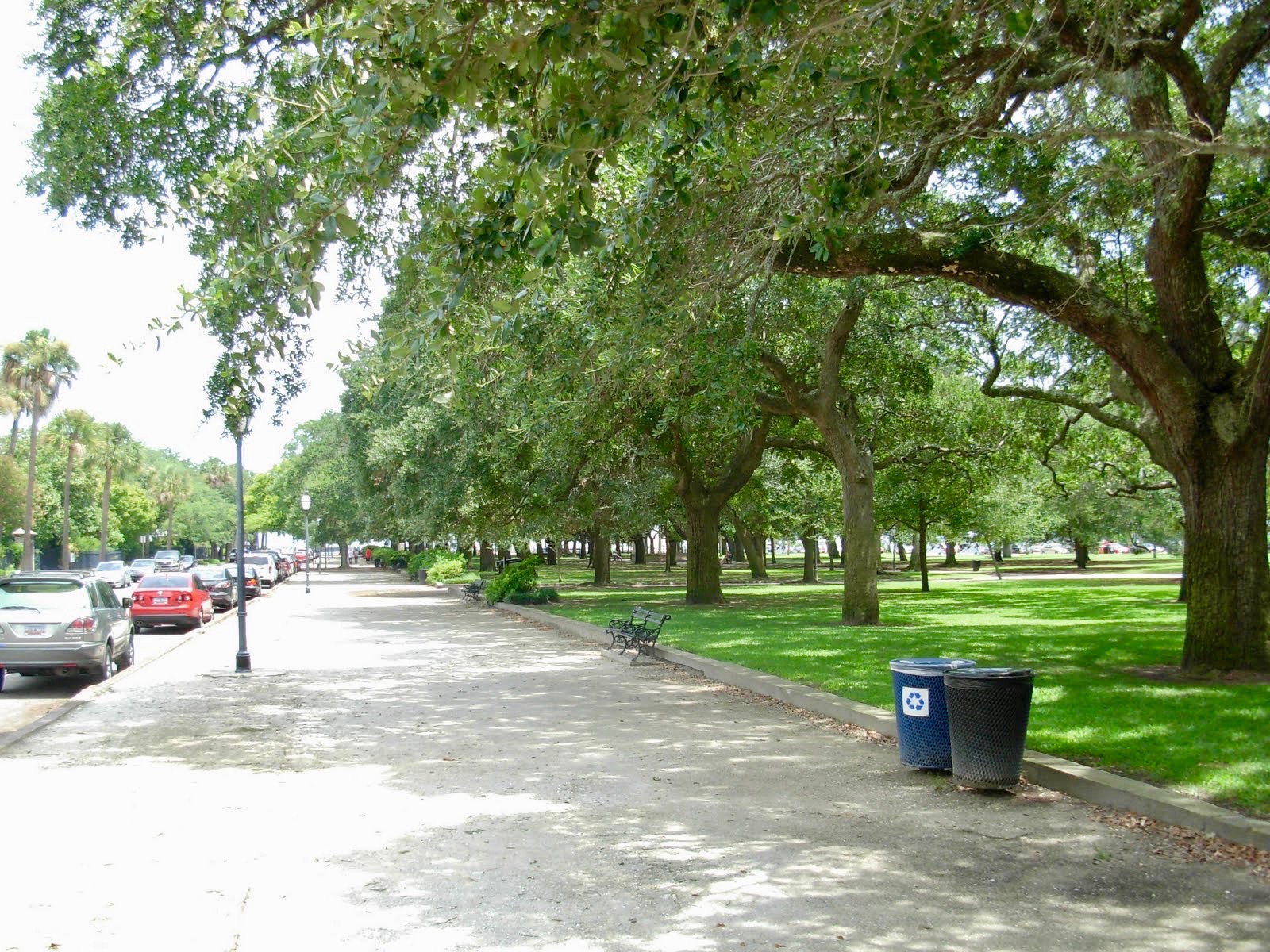
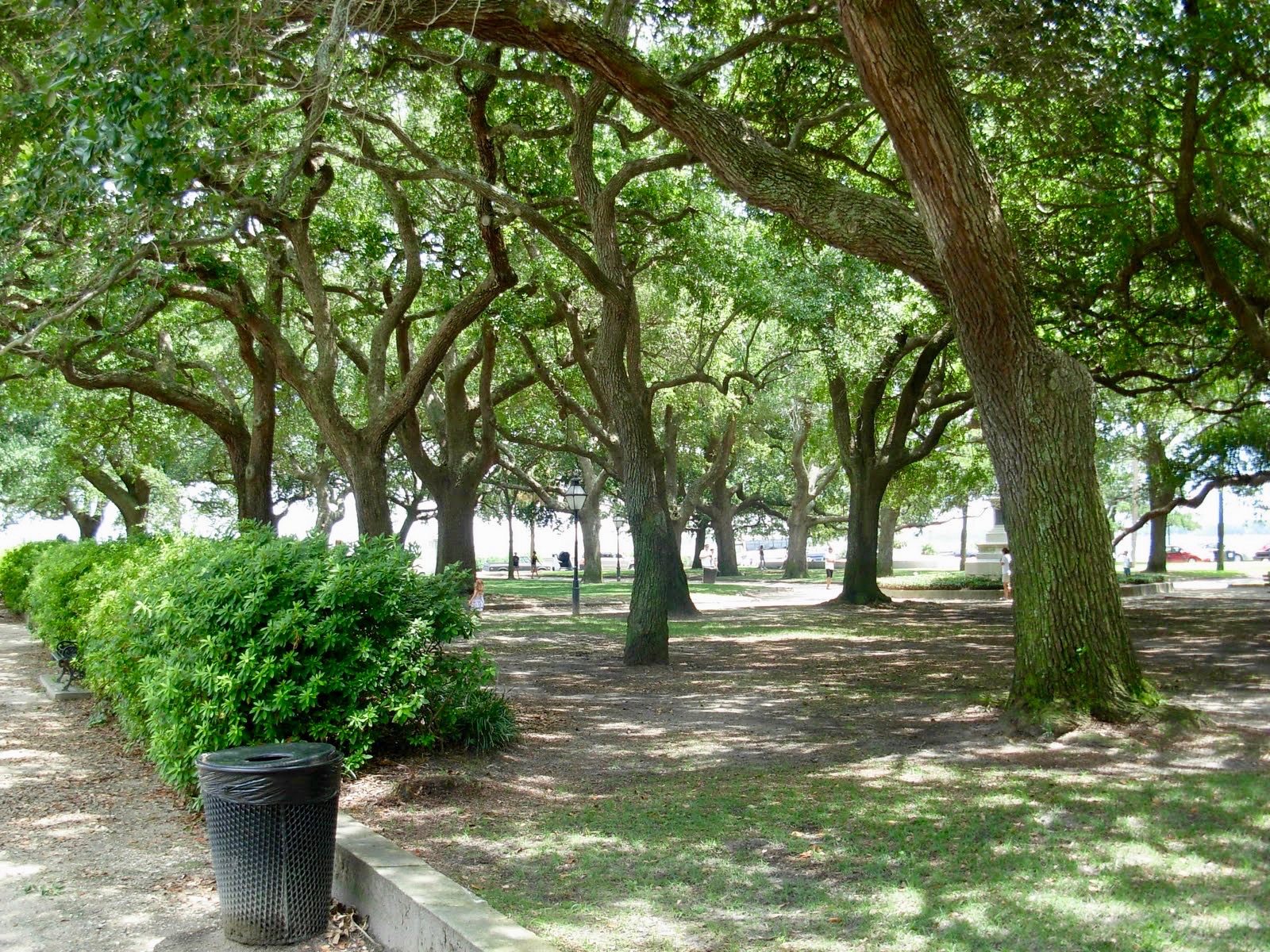
Looking towards the bandstand under the mighty oaks. Photo 2011, by Lewis Powell IV, all rights reserved.
haunted White Point Gardens Battery Charleston South Carolina pirate executions Stede Bonnet 1718 Southern ghosts
The sun filters through the trees. Photo 2011, by Lewis Powell IV, all rights reserved.
haunted White Point Gardens Battery Charleston South Carolina pirate executions Stede Bonnet 1718 Southern ghosts
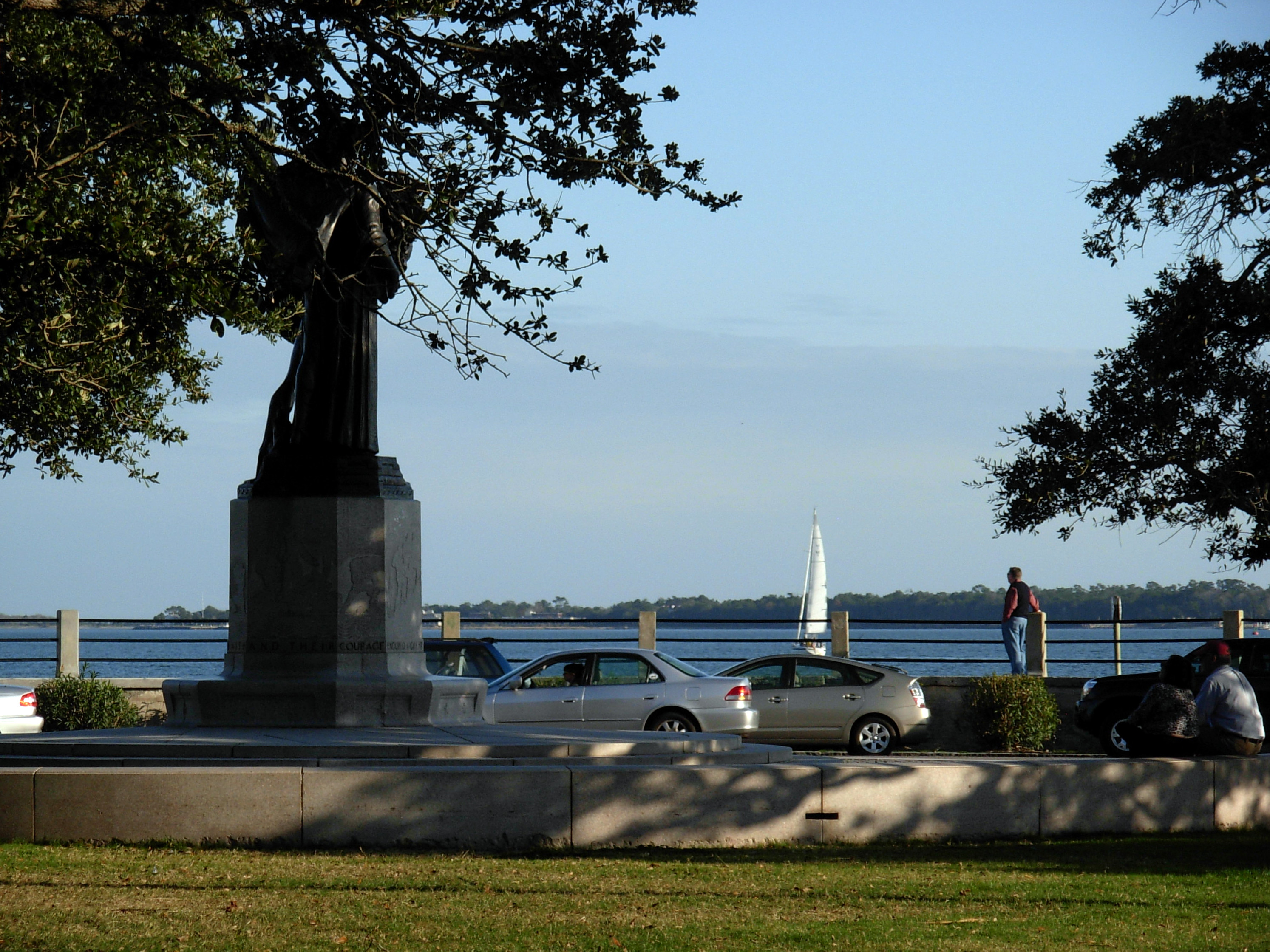
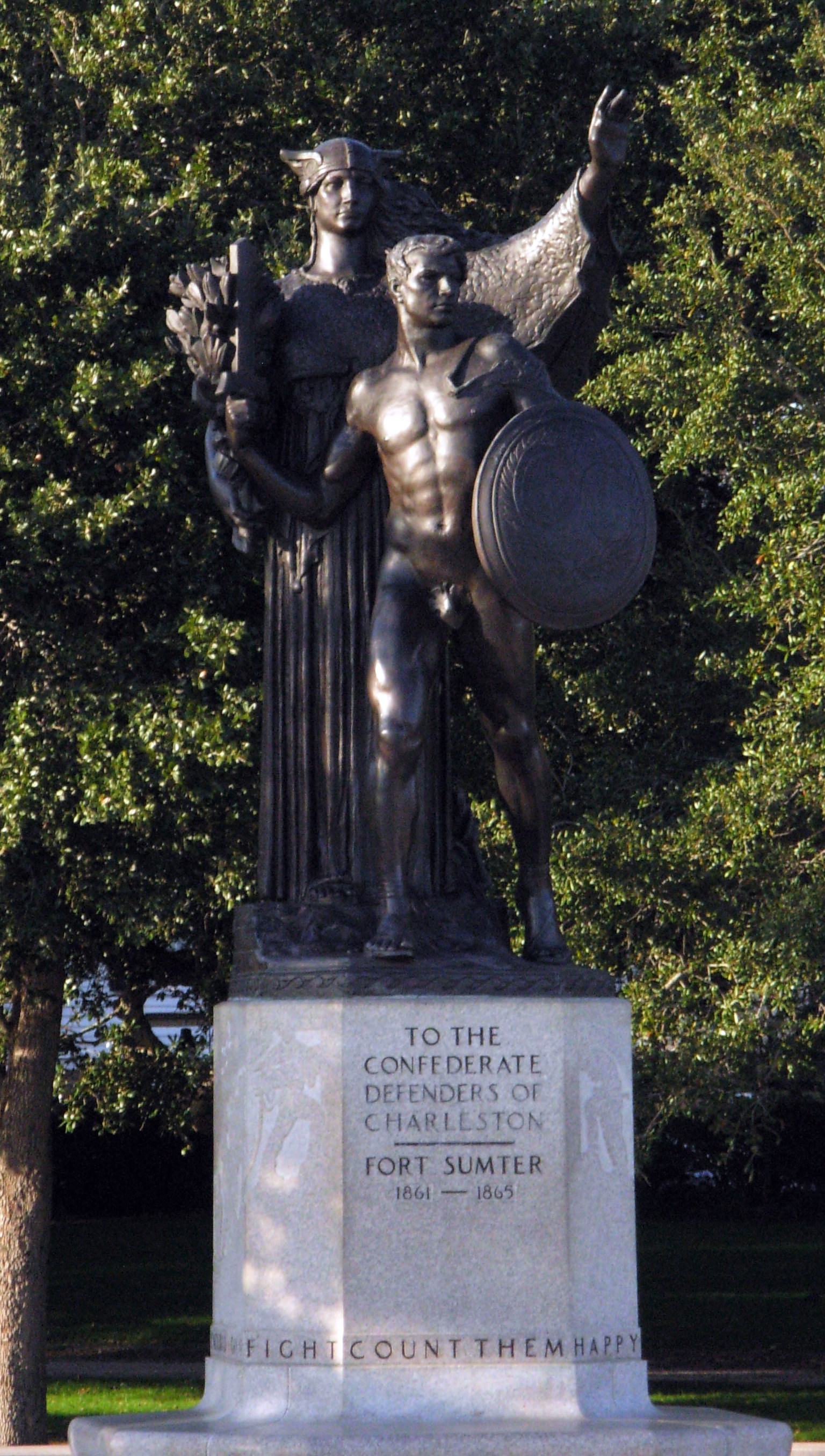
The Charleston defenders monument with a sailboat passing by. Photo 2011, by Lewis Powell IV, all rights reserved.
Confesderate monument haunted White Point Gardens Battery Charleston South Carolina pirate executions Stede Bonnet 1718 Southern ghosts
Monument to the Confederate defenders of Charleston. Photo 2011, by Lewis Powell IV, all rights reserved.

Pirates of the Point—the Battery and White Point Gardens

Battery Park and White Point Gardens
Bounded by East Battery, King Street, Murray Boulevard and South Battery
Charleston, South Carolina

N.B. This article was edited and revised 5 May 2019.

For more images of the lovely White Point Gardens, see my article of photographs.

haunted White Point Gardens Battery Charleston South Carolina pirate executions Stede Bonnet 1718 Southern ghosts
The view of White Point Gardens looking down South Battery towards East Battery. Photo 2011, by Lewis Powell, IV, all rights reserved.

Throughout the South history creates layers. In some places there are literal layers that an archaeologist may sift through, in other places those layers can be formed through names; names that may span the centuries from the present day to another historical layer many centuries earlier. The Charleston Battery is one of those places with a few layers of names. I’ve encountered so many different names for this location; I’m not sure which is really correct. Wikipedia calls it The Battery and says that White Point Gardens is a part of that. I’ll just stick with that. A Post & Courier article from 2001 adds that even the use of “Gardens” (plural) as opposed to “Garden” (singular) is inconsistent. Nevertheless, the jumble of names adds to the layers of history that have accrued here.

In April of 1670 when the 93 passengers aboard the Carolina first sailed into what would be called Charleston Harbor, they were greeted by the tip of a peninsula at the point where two mighty rivers came together. The ship’s captain knew one of the rivers as the Ashley, as he had accompanied the earlier expedition that had named the river for Lord Anthony Ashley Cooper, one of the colony’s Lord Proprietors. The local Native Americans called the river Kiawah (which is now applied to a barrier island south of the city), and the Spanish had called it the San Jorge. At the tip of this peninsula was a Native American oyster shell midden, or trash heap. Over time, this point would be called alternately Oyster Point, or White Point, for the sun-bleached oyster shells piled there.

Initially, the settlers landed and began to build their city, named for King Charles I, on the opposite bank of the Ashley River on what would later be called Old Town Creek. Colonel William Sayle, the colony’s first governor saw the strategic importance of the peninsula’s tip, however. “It is as it were a Key to open and shutt [sic] this settlement into safety or danger,” he stated in a letter to Lord Ashley, and he began to grant land to settlers in this area. In 1679, it was decided that Oyster Point and the Cooper River side of the peninsula was a much better place for a town.

haunted White Point Gardens Battery Charleston South Carolina pirate executions Stede Bonnet 1718 Southern ghosts
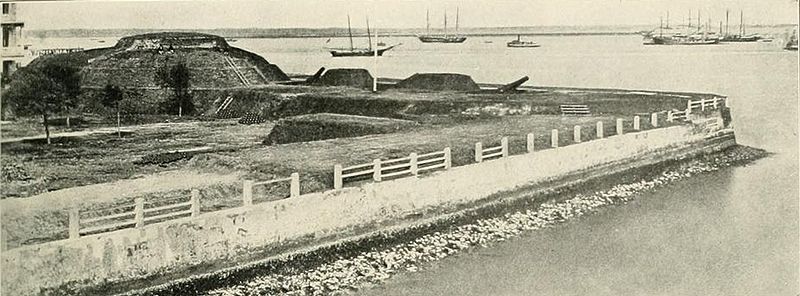
Guns and defenses on the Battery during the Civil War. This 1863 photo from The Photographic History of the Civil War (1911).

Throughout its three hundred some-odd years of existence, White Point Gardens has seen a variety of uses. It has been covered with shacks and tenements, served the defense of the city, been created as a pleasure park, and as a place for execution.  Walter Fraser, Jr. in his Charleston! Charleston! The History of a Southern City, describes a storm surge sweeping over White Point during the Hurricane of 1752, with the poor people escaping their shacks there for more substantial shelter.  Following the hurricane, the White Point remained “a desolate Spot” until 1770 when the low marshy areas were filled in and elegant homes began to be built there along with a sea wall on the eastern side created with palmetto logs. This held until 1804 when it was swept away by another hurricane and it was replaced with a wall of ballast stone.

It was in the space created here that open-air concerts were given during the summer months. When the British blockaded Charleston Harbor during the War of 1812, fifteen guns of large caliber were placed along the White Point aimed at the harbor and the point began to be known as The Battery.

haunted White Point Gardens Battery Charleston South Carolina pirate executions Stede Bonnet 1718 Southern ghosts
The ruins of houses along the Battery in 1865 by George N. Barnard.

Following the war, this pleasant point was planted with oaks and gained the name White Point Gardens during a major period of building in the late 1830s. When English actress Fanny Kemble, who married Georgia cotton planter Pierce Butler, visited the city she delighted in the promenade and the “large and picturesque old houses.” Fraser notes that in the 1840s, African-Americans were not allowed to use the park between five and ten in the evening.

From this promenade and roofs of the pretentious mansions lining the battery, the citizens of Charleston witnessed the first shots of the Civil War as Confederate attacked Fort Sumter in the harbor. Gunfire from ships during the war destroyed some of those mansions, but they were later rebuilt even more ostentatiously. The tradition of promenading along the seawall and under the sprawling live oaks continued into the 20th century. The 1941 Works Progress Administration guide to the state of South Carolina describes the scene of “Charleston children, guarded by white-turbaned Negro ‘maumas,’ play[ing] among monuments and guns that recall the city’s war-torn history of more than 250 years.”

haunted White Point Gardens Battery Charleston South Carolina pirate executions Stede Bonnet 1718 Southern ghosts
A monument under the cooling shade of the oaks. Photo by Brian Stansberry, 2010, courtesy of Wikipedia.

Today tourists stroll the Battery and under those oaks. They may pass a stone monument reminding them of the fact that they stand on an execution ground. In fact, this spot may still be haunted by those who hung here in 1718, when Charleston was still a small colonial port. Over the course of five weeks that year some 49 men were hung here for piracy.

As the colonies grew, piracy became a major problem for trade and many of the up and coming ports. Around late May or June of 1718, the notorious Edward Teach, or Blackbeard as he is more affectionately known, blockaded Charleston Harbor. Among the first ships he captured was a London-bound ship called the Crowley loaded with a number of prominent citizens. Word was sent to the Royal Governor that these people would be summarily executed unless the port offered up medical supplies. The governor complied and the citizens were released, though lightened of their purses, valuables, and even their clothes.

haunted White Point Gardens Battery Charleston South Carolina pirate executions Stede Bonnet 1718 Southern ghosts
Stede Bonnet from A General History of the Pyrates, c. 1725.

In response, Governor Robert Johnson asked the Lord Proprietors for assistance, but received no response. When pirates again appeared in the waters near Charleston in August, a group of local merchants banded together and under the command of William Rhett, they set out to stop this threat to their business. In the waters of North Carolina, they encountered pirate Stede Bonnet refitting his ship in the Cape Fear River.

Stede Bonnet wasn’t born into a life of crime. The son of a wealthy English family on the island of Barbados, Bonnet had had a fairly successful life which enabled him to buy his way into piracy. It was the usual custom for pirates to begin their work by seizing a ship that they then used to prey on other ships, Bonnet, however, bought his ship, the Revenge. He also hired his crew and paid them regular wages. Due to lack of experience in sailing or piracy, Bonnet had to hire someone to command his men. After terrorizing shipping off the Virginia coast, Bonnet sailed for the pirate’s paradise of Nassau in the Bahamas. There, he met Blackbeard and decided to join forces.

After a night of maneuvering sloops back and forth to gain advantage in battle, the sun rose on the morning of September 27, 1718 with Bonnet sailing his one sloop, he had combined all of his men into one ship from three, towards the three sloops under Colonel Rhett. Nearly all the ship ran aground during the battle with a rising tide eventually freeing Rhett’s vessels, while Bonnet’s sloop, the Royal James, remained stuck. The Royal James was quickly boarded by Rhett’s men who outnumbered the pirates. In a last ditch effort, Bonnet ordered his gunner to blow up the ship’s powder stores, but this suicidal act was prevented by Bonnet’s men who surrendered instead. Rhett returned triumphantly to Charleston with Bonnet and twenty-nine of his men in chains.

In Charleston, Bonnet’s men were imprisoned in the Half-Moon Battery where the Exchange and Provost Dungeon were later constructed, and still stands today. Because of his gentlemanly upbringing, Bonnet was imprisoned with his boatswain, Ignatius Pell, in the home of the town’s Provost Marshall. Shortly thereafter, Bonnet and Pell, accompanied by a slave and a Native American, escaped the house possibly disguised as women, at least according to legend. The group however, wasn’t able to go very far and had only gotten as far as Sullivan’s Island, north of the city, when they were captured. Bonnet and his men were put on trial before Vice-Admiralty judge, Nicholas Trott and found guilty.

haunted White Point Gardens Battery Charleston South Carolina pirate executions Stede Bonnet 1718 Southern ghosts
Monument in White Point Gardens near the spot of the pirate gallows. Photo courtesy of Wikipedia.

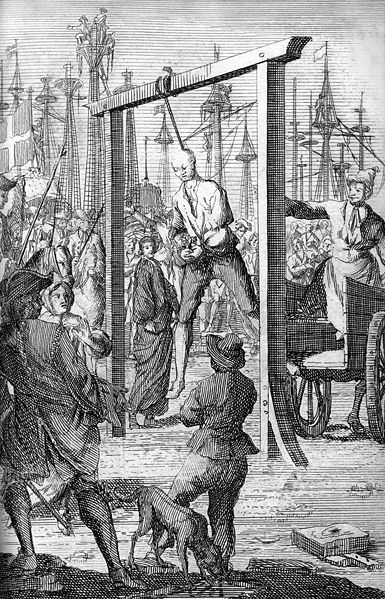
Bonnet’s own men were hung at White Point, two days before his trial, and their bodies left dangling from the gallows before the bloated, decaying corpses were cut down and unceremoniously dumped in the marsh just off the point. Those same marshes that would later be filled in for the building of homes. Reportedly, Bonnet begged for clemency and turned much of the Charleston female population to his side, so much so that the governor had to delay the execution seven times. Even Colonel Rhett offered help by escorting Bonnet to England for a new trial, but Judge Trott’s decision stood firm.

During the time between Bonnet being found guilty and his execution, 19 other pirates were found guilty and hung at White Point. Bonnet’s day of execution finally dawned on December 10. Walter Fraser describes the scene:

 …manacled and clutching a nosegay of wildflowers, [he] was taken in a hurdle to the place execution near White Point where the once bold pirate appeared terrified and near collapse. The executioner dropped the noose over his head and around his neck and then Bonnet was ‘swung off’ the cart. He died an agonizing death of strangulation, the invention of the gallows that would break the victim’s neck being years away.

His body was left hanging for a few days then unceremoniously dumped in the marsh with the remains of his men and his pirate brothers where they were eaten by crabs, riddled with maggots, and pecked by the gulls.

haunted White Point Gardens Battery Charleston South Carolina pirate executions Stede Bonnet 1718 Southern ghosts
The hanging of Stede Bonnet from the Dutch edition of A General History of the Pyrates,c. 1725.

Over the course of five weeks, forty-nine pirates swung from the gallows at White Point. Within a couple months, pirate Richard Worley and nineteen of his men met the same fate. While the leaves of White Point Gardens’ oaks calmly sway in the ocean breeze, their roots are feeding on the blood of pirates.

haunted White Point Gardens Battery Charleston South Carolina pirate executions Stede Bonnet 1718 Southern ghosts
The view from South Battery towards Charleston Harbor. Photo 2011, by Lewis Powell, IV, all rights reserved.

There is a legend that the spirits of these pirates still stalk Battery Park and White Point Gardens. Denise Roffe includes a story of a couple who encountered an apparition hanging in midair beneath the oaks of the park. Alan Brown mentions that the spirits have been witnessed standing under the oaks and screaming at passersby. He notes that if one looks out on the bay from the foot of Water Street, where Vanderhorst Creek once met the waters of the Cooper River, when the moon is high, they may see the bloated faces of the long dead pirates just under the water’s surface. Like so many Charleston ghost stories, this story may be mostly legend, but it is grounded in a marvelous history.

haunted White Point Gardens Battery Charleston South Carolina pirate executions Stede Bonnet 1718 Southern ghosts
Do pirate spirits still walk here? Photo 2011, by Lewis Powell IV, all rights reserved.
haunted White Point Gardens Battery Charleston South Carolina pirate executions Stede Bonnet 1718 Southern ghosts
In this sylvan landscape do pirate spirits hang midair? Photo 2011, by Lewis Powell IV, all rights reserved.

Sources

  • Battery Park (Charleston)Wikipedia, the Free Encyclopedia. Accessed 1 August 2011.
  • Blackbeard. Wikipedia, the Free Encyclopedia. Accessed 1 August 2011.
  • Brown, Alan. Haunted South Carolina: Ghosts and Strange Phenomena of the Palmetto State. Mechanicsburg, PA: Stackpole Books, 2010.
  • Fraser, Walter J., Jr. Charleston! Charleston! The History of a Southern City. Columbia, SC: U. of SC Press, 1989.
  • Hardin, Jason. “You can say it with an ‘S,’ but early documents show there is just one garden.” Post & Courier. 2 September 2001.
  • Richard Worley. Wikipedia, the Free Encyclopedia. Accessed 1 August 2011.
  • Roffe, Denise. Ghosts and Legends of Charleston, South Carolina. Atglen, PA: Schiffer, 2010.
  • Stede Bonnet. Wikipedia, the Free Encyclopedia. Accessed 1 August 2011.
  • Workers of the Writer’s Program of the Works Progress Administration in the State of South Carolina. South Carolina: A Guide to the Palmetto NYC: Oxford University Press, 1941.