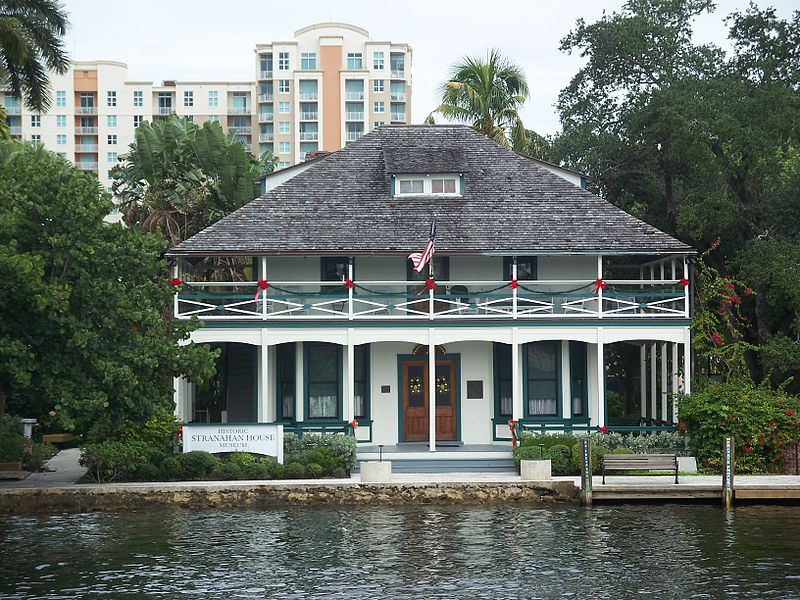
Haunted Virginia, Briefly Noted

Virginia possesses a vast history; subsequently, it could be described as one of the most paranormally active states in the country. This is a selection of some of the more interesting hauntings throughout the Old Dominion.

Aquia Church
2938 Jefferson Davis Highway
Stafford

Acquia Church Stafford Virginia ghost haunted
Aquia Church , photograph taken for the Historic American Buildings Survey (HABS), courtesy of the Library of Congress, Prints and Photographs Division.

As with many of Virginia’s great landmarks, Aquia Church has a ghost story attached. The legend tells of a young woman murdered in this National Historic Landmark church at some time in the eighteenth century and her body hidden in belfry. Accordingly, her spirit descends from the belfry at night and has been witnessed by many over the centuries. One caretaker also spoke of seeing shadowy figures among the tombstones in the graveyard. The current Aquia Church building was built in 1751 and destroyed by fire just before the construction was complete. Using the remaining brick walls, the church was rebuilt in 1757.

Sources

  • Driggs, Sarah S., John S. Salmon and Calder C. Loth. National Register of Historic Place Nomination form for Aquia Church. Listed 12 November 1969.
  • Lee, Marguerite DuPont. Virginia Ghosts, Revised Edition. Berryville, VA: Virginia Book Company, 1966.
  • Taylor, L. B., Jr. The Ghosts of Virginia. Progress Printing, 1993.

Assateague Lighthouse
Assateague Island

In terms of books documenting the spiritual residents of the state, Virginia has an embarrassment of riches. Marguerite DuPont Lee can be noted as one of the first authors to document many of Virginia’s ghosts in her 1930 book, Virginia Ghosts. More recently, L.B. Taylor, Jr. has published some 22 volumes covering the state. Most recently, Michael J. Varhola published his marvelous Ghosthunting Virginia and it is that book that documents the haunting surrounding the Assateague Island and its lighthouse.
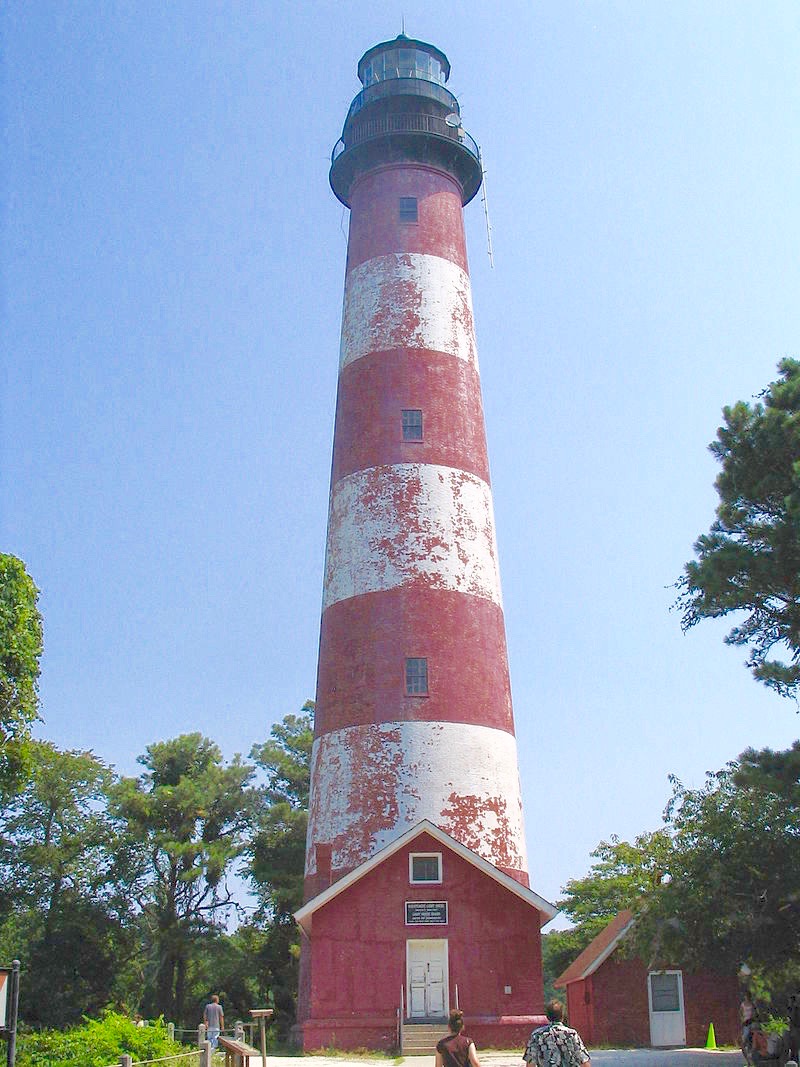
Assateague Island Lighthouse Virginia ghost haunted
Assateague Lighthouse, 2007, by DCwom, courtesy of Wikipedia.

Assateague Island is a barrier island along the coast of Maryland and Virginia. Much of the island is now Assateague Island National Seashore with parts of Assateague State Park and Chincoteague National Wildlife Refuge. The island is famous for its feral horses, descendants of the horses aboard the Spanish ship, La Galga, which wrecked just off the island in 1720. It is said the spirits of the humans who died in the wreck still comb the beach near the Assateague Lighthouse. The lighthouse, constructed in 1866 and first lit the following year to replace an earlier lighthouse from 1831, may also have some spiritual activity related to it. Varhola cites a National Park Service employee who tells of the door to the lighthouse being found mysteriously unlocked.

Sources

  • Assateague Island. Wikipedia, the Free Encyclopedia. Accessed 10 March 2011.
  • Varhola, Michael J. Ghosthunting Virginia. Cincinnati, OH, Clerisy Press, 2008.
  • Virginia Historic Landmarks Commission Staff. National Register of Historic Place Nomination form for Assateague Lighthouse. December 1972.

Bacon’s Castle
465 Bacon’s Castle Trail
Surry

Bacon's Castle Surry Virginia ghost haunted
Bacon’s Castle, 2006, by Yellowute, courtesy of Wikipedia.

Bacon’s castle ranks highly on a number of lists. It’s described as the only Jacobean house in America and one of three in the Western Hemisphere; one of the oldest buildings in the state of Virginia and the oldest brick home in the United States. Indeed, it may be one of the oldest haunted houses in the US as well. Researchers in 1999 dated tree rings on some of the home’s beams and determined the house was constructed around 1665. Originally called Allen’s Brick House, the house acquired its current name during Bacon’s Rebellion in 1676 when some of Nathaniel Bacon’s supporters took over the house. The house, which has survived and witnessed centuries of American history, is now a house museum.

As for the ghosts, this house may possess many. The final private owner of the house, Mrs. Charles Walker Warren, told many tales of the house involving doors opening and closing by themselves and footsteps that were heard. Certainly, the most well-known phenomena regarding Bacon’s Castle is the red fireball that has been seen rising from the house and disappearing in the churchyard of Old Lawne’s Creek Church nearby.

Sources

  • Barisic, Sonja. “Houses’ ‘Bones’ Yield Secrets of Its History.” The Richmond Times-Dispatch. 19 December 1999.
  • Brown, Beth. Haunted Plantations of Virginia. Atglen, PA: Schiffer, 2009.
  • Melvin, Frank S. National Register of Historic Place Nomination form for Bacon’s Castle. Listed 15 October 1966.
  • Taylor, L. B., Jr. The Ghosts of Virginia. Progress Printing, 1983.
  • Tucker, George. “Ghosts Long A Part of the Lore of Bacon’s Castle.” The (Norfolk, VA) Virginian-Pilot. 9 November 1998.

Belle Isle
Richmond

Originally called Broad Rock Island, Belle Isle was used for mostly industrial purposes in the nineteenth century. Mills, quarries and a nail factory appeared on the tranquil island in the James River. Notoriety came to the island in 1862 with the opening of a Confederate prisoner of war camp that was as notorious as Georgia’s dreaded Andersonville and with a huge influx of prisoners, the camp quickly descended into squalor. Prisoners lived in tents that provide little insulation from the bitter cold of Virginia winters or the heat of the summer sun and were offered little in the way of food. By 1865, most of the prisoners had been shipped to prison camps throughout the South and the island was returned to its more tranquil use as the site of a nail factory. The Old Dominion Iron and Nail works operated on the island until it closed in 1972 and many of its buildings demolished. The island became a park around that same time and has been a popular spot for hiking and jogging.
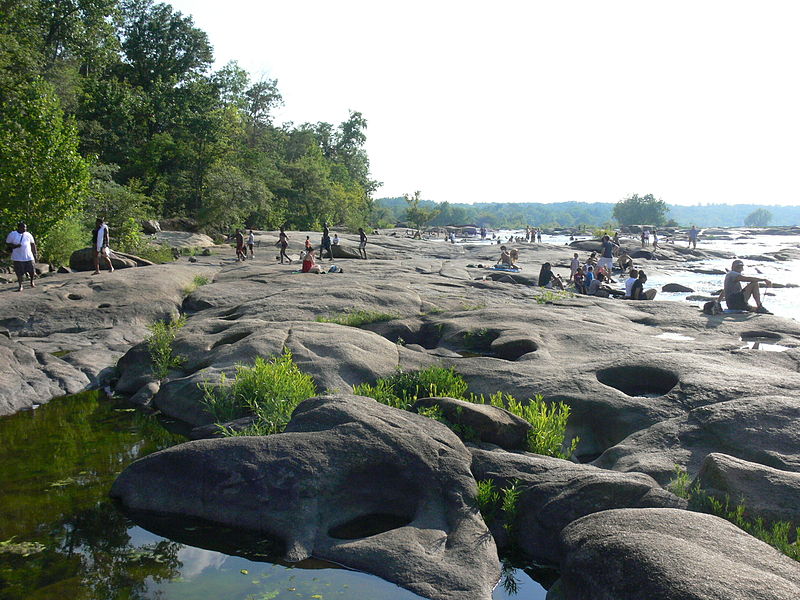
Belle Isle Richmond Virginia ghost haunted
Belle Isle, 2012, by Morgan Riley, courtesy of Wikipedia.

Still, remnants of the island’s past linger: the site of the prison camp is marked but little else remains while there are ruins of some of the old industrial buildings. Indeed, spirits from the islands past may also linger. There are reports from island visitors of shadow people, hearing footsteps on the trail behind them, lights in the woods at night and photographic anomalies. Author and investigator Beth Brown in her Haunted Battlefields: Virginia’s Civil War Ghosts conducted an investigation and picked up an EVP of a male voice clearly saying, “Where are we?”

Sources

  • Brown, Beth. Haunted Battlefields: Virginia’s Civil War Ghosts. Atglen, PA: Schiffer, 2008.
  • Dutton, David and John Salmon. National Register of Historic Place Nomination form for Belle Isle. Listed 17 March 1995.

Michie Tavern
683 Thomas Jefferson Parkway
Charlottesville

Michie Tavern Charlottesville Virginia ghost haunted
Michie Tavern, 2005, by Forestufighting, courtesy of Wikipedia.

My first introduction to the Michie Tavern came through the eyes of paranormal researcher and writer Hans Holzer. Among some of the first books about ghosts I read were some of Holzer’s books and I still vividly remember reading of some of his investigations. For his books, he traveled the world with a psychic medium in tow investigating haunted and historical locations such as the Morris-Jumel Mansion in New York City and the famous house at 112 Ocean Avenue in Amityville, New York, the basis for the “Amityville Horror.” On his travels through Virginia he visited the Michie Tavern and nearby Monticello and was able, through his medium Ingrid, to find spirits still partying in the ballroom of this 1784 tavern. Staff members have reported the sounds of a party in that very room late at night.

Sources

  • Holzer, Hans. Ghosts: True Encounters with the World Beyond. NYC: Black Dog & Leventhal, 1997.
  • Michie Tavern. Wikipedia, the Free Encyclopedia. Accessed 10 March 2011.

Monticello
931 Thomas Jefferson Parkway
Charlottesville

Monticello Charlottesville Virginia ghost haunted
Monticello, 2013, by Martin Falbisoner, courtesy of Wikipedia.

In 1928, a Charlottesville preservationist purchased the Michie Tavern, an 18th century tavern in nearby Earlysville and moved it near to Thomas Jefferson’s “little mountain,” Monticello. Jefferson, perhaps one of the country’s most brilliant, enigmatic and creative presidents, designed and built his home over many years at the end of the eighteenth century and into the early nineteenth century. Over the years that the house has been open as a museum, there have been a few reports of phantom footsteps and other minor incidents including the occasional sound of someone cheerfully humming.

Sources

  • Holzer, Hans. Ghosts: True Encounters with the World Beyond. NYC: Black Dog & Leventhal, 1997.
  • Monticello. Wikipedia, the Free Encyclopedia. Accessed 10 March 2011.
  • Varhola, Michael J. Ghosthunting Virginia. Cincinnati, OH, Clerisy Press, 2008.

Octagon House (Abijah Thomas House)
631 Octagon House Road
Marion
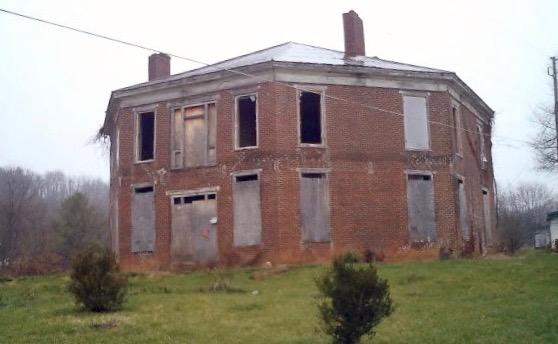
Abijah Thomas House Marion Virginia ghost haunted
Octagon House, 2007, by RegionalGirl137, courtesy of Wikipedia.

In a state of magnificently preserved historical homes, it is surprising to find a magnificent architectural gem like the Abijah Thomas House standing forlornly unrestored.  Neglect and vandalism by teenagers out for a “scare” have also taken their toll on this home. The octagon house style found prominence in the middle of the nineteenth century and currently only a few hundred to a few thousand (sources differ) survive. This particular house, described in its National Register of Historic Places nomination form as “the finest example in Virginia of a 19th-century octagonal house,” also has a number of legends about it. According to Michael Varhola, the internet is full of these legends that seem scary but are unlikely to be true. Certainly, this old house is creepy in its deteriorated state, but it really needs a professional investigation.

Sources

  • Octagon houses. Wikipedia, the Free Encyclopedia. Accessed 10 March 2011.
  • Varhola, Michael J. Ghosthunting Virginia. Cincinnati, OH, Clerisy Press, 2008.
  • Virginia Historic Landmarks Commission Staff. National Register of Historic Place Nomination form for Abijah Thomas House. Listed 28 November 1980.

Old 97 Crash Site
Riverside Drive (US 58) between Farrar Street and Highland Court
Danville

This site has been broken out into an all new article. See my entry, “What a jump he made”–Danville, Virginia.

Rosewell
5113 Old Rosewell Lane
Gloucester

Rosewell ruins Virginia ghosts haunted
Rosewell ruins, 2002, by Agadant, courtesy of Wikipedia.

The magnificent main house at Rosewell burned in 1916, but it is hardly a distant memory. The brick wall still stands, and archaeological excavations have uncovered the remains of items that were inside the house during the fire. Construction began in 1725 and the house was completed in 1738 for the powerful Page family. The power of the Page family extended into the nineteenth century and included friendships with people such as Thomas Jefferson who legend says drafted the Declaration of Independence within the walls of Rosewell. The ruins have been preserved as a historic site and still attract visitors and spirits. An old legend speaks of a woman in red seen running down the remains of the house’ front stairs with the sound of slaves singing has also been heard.

Sources

  • Brown, Beth. Haunted Plantations of Virginia. Atglen, PA: Schiffer, 2009.
  • Lee, Marguerite DuPont. Virginia Ghosts, Revised Edition. Berryville, VA: Virginia Book Company, 1966.

Alabama Hauntings—County by County Part VI

Alabama Hauntings–County by County landing page.

One of my goals with this blog is to provide coverage of ghost stories and haunted places in a comprehensive manner. Perhaps one of the best ways to accomplish this is to examine ghost stories county by county, though so far, researching in this manner has been difficult. In my 2015 book, Southern Spirit Guide’s Haunted Alabama, I wanted to include at least one location for every county, though a lack of adequate information and valid sources prevented me from reaching that goal. In the end, my book was published covering only 58 out of 67 counties.

Further research has uncovered information for a few more counties and on Halloween of 2017, Kelly Kazek published an article on AL.com covering the best-known ghost story for every county. Thanks to her excellent research, I’ve almost been able to achieve my goal for the state.

Montgomery County

Pratt Hall
Campus of Huntingdon College
Montgomery

Huntingdon College’s most famous spirit may have followed the college as it moved to Montgomery from Tuskegee. In the school’s original dormitories, the upper floors, known as “Sky Alley,” were supposed to have been haunted by a Red Lady. After the school’s move to its new campus and the construction of Julia A. Pratt Residence Hall in 1912, the Red Lady may have taken up residence on the third floor.

Students still tell the legend of the Red Lady. A young woman arrived at the school from New York. Very much out of place in this Southern school, the woman remained aloof and was shunned by the other students. Depressed, she committed suicide in her room. In life, this young woman had always favored red, and her lonely spirit is still seen drifting the corridors of Pratt Hall in her favorite color.

Sources

  • Enzwiler, Susan & Trina Brinkley. National Register of Historic Places Nomination form for Huntingdon College. August 1999.
  • Sellers, Shawn. Montgomery: A City Haunted by History. Shawn Sellers 2013.
  • Serafin, Faith. Haunted Montgomery, Alabama. Charleston, SC: History Press, 2013.
  • Windham, Kathryn Tucker and Margaret Gillis Figh. 13 Alabama Ghosts and Jeffrey. Tuscaloosa, AL: University of Alabama, 1969.

Morgan County

Old State Bank
925 Bank Street
Decatur

In 2015 a friend of author Jessica Penot was driving through downtown Decatur with her young daughter. As they passed the Old State Bank, the child asked, “Mommy, why was that lady in the black dress murdered?” The mother immediately asked her daughter what she meant, to which the child replied, “Can we quit talking about this now?” The mother did a bit of research and discovered that there are two female spirits associated with the old bank, one who is weeping and one in a black dress.

Old State Bank, 2010, by Chris Pruitt. Courtesy of Wikipedia.

Literally in “high cotton,” the Bank of the State of Alabama built this structure as a branch in 1833. Nearly a decade later, when the state legislature discovered corruption they refused to renew the bank’s charter, and the bank was shuttered. The building was requisitioned as a hospital during the Civil War as the city passed between control of Confederate and Union forces. At the end of the war, Decatur lay in ruins except for a few buildings including this one.

The identity of the two mysterious female entities is unknown, however. Perhaps they are the lady loves of soldiers who breathed their last here or maybe they are nurses who tended to the wounded. These spirits have been seen by visitors and staff alike, and investigations have uncovered evidence of their presence.

Sources

  • Floyd, W. Warner. National Register of Historic Places Nomination form for State Bank Building, Decatur Branch. 15 June 1971.
  • Langella, Dale. Haunted Alabama Battlefields. Charleston, SC: History Press, 2013.
  • Penot, Jessica. “The little girl who saw a ghost.” Ghost Stories and Haunted Places Blog. 28 April 2015.

Perry County

Marion Military Institute
1101 Washington Street
Marion

As the oldest military junior college in the country, Marion Military Institute traces its roots to the opening of Howard College in 1842. A Baptist institution, Howard College opened its doors as a school for boys. During the Civil War, when military training became necessary, the school added a military department. In 1863, the college’s chapel and Lovelace Hall were commandeered for use as a Confederate hospital. Operating as the Breckinridge Military Hospital, the military’s sick and wounded filled these school buildings for two years. The dead were buried behind the school’s chapel.

Howard College moved to Birmingham in 1887 and evolved into Samford University, and the Marion Military Institute was established on the legends-filled campus. Students have reported supernatural activity throughout the campus, though sources provide little detail.

Sources

  • Higdon, David and Brett J. Talley. Haunted Alabama Black Belt. Charleston, SC: History Press, 2013.
  • History.” Marion Military Institute. Accessed 5 July 2015.
  • Perry County Heritage Book Committee. The Heritage of Perry County, Alabama. Clanton, AL: Heritage Publishing Consultants, 1999.

Pickens County

Pickens County Courthouse
1 Courthouse Square
Carrollton

The north side of the late 19th century courthouse bears an arrow pointing towards the garret window at the top of the structure. This arrow points towards the ghostly window pane that is literally at the heart of Pickens County history and legend.

Twelve years after the first courthouse was burned during the Civil War, the second courthouse erupted in flames in 1877. Rumors spread that the courthouse was set alight by a freed slave, Henry Wells, who lived nearby. He was arrested, and a mob gathered on the courthouse lawn to mete out “justice.” Incarcerated in the attic of the building, Wells peered down on the mob screaming his innocence.

Pickens County Courthouse, 1998, by Calvin Beale for the U.S. Department of Agriculture.

A storm erupted, and a bolt of lightning struck nearby as Henry Wells was hung for his supposed crime, though proclaiming his innocence until the very end. Citizens passing the courthouse the next morning were shocked to see Wells’ visage etched into the pane of the window from which he had peered down on the mob. Frequent washing of the window has not been able to scrub the mysterious image.

As with many legends, there is a mix of fact and fiction at work here. While the image in the window pane is undeniable, the history is confused. Apparently, a lynch mob did gather on the courthouse lawn once, but for a murderer named Nathaniel Pierce. The mob succeeded in lynching Mr. Pierce. Henry Wells was arrested for the arson of the second courthouse, though he was not put to death by a mob. There are also questions as to the actual existence of the windows, which may have been added to the façade sometime after the deaths of both Pierce and Wells.

Sources

  • Higdon, David and Brett J. Talley. Haunted Alabama Black Belt. Charleston, SC: History Press, 2013.
  • Pearce, Jamie Roush. Historic Haunts of the South. Jamie Roush Pearce, 2013.
  • Windham, Kathryn Tucker and Margaret Gillis Figh. 13 Alabama Ghosts and Jeffrey. Tuscaloosa, AL: University of Alabama, 1969.

Pike County

Pace and Shackelford Halls
Campus of Troy University
Troy

Built in 1947 and 1930, respectively, these two residence halls have both been the scene of poltergeist activity. The activity in Shackelford Hall is explained as the product of a young female student’s suicide. Depressed over her fiancée’s death in a war, “Sally Shack,” as tradition identifies her, hanged herself in this building. Rumors state that two female students living here entered their dorm room to find two pens levitating. The incident led the young ladies to vacate their room the following day.

Pace Hall, 2017, by Kreeder13. Courtesy of Wikipedia.

In the 1990s, a few students in one of these dorms decided to play with a Ouija board in an attempt to contact the spirit in Pace Hall. The group succeeded in contacting something after which the terrified girls witnessed “a paper clip tapping on their window from the outside, and things moving around the room.” As a result, the university had the room cleansed to settle the activity, though students continue to encounter activity throughout the buildings.

Sources

  • Brown, Alan. The Haunting of Alabama. Gretna, LA: Pelican Publishing, 2017.
  • Ferrell, Mary. “Ghost stories on campus.” Tropolitan (Troy University). 30 October 2014.

Randolph County

McCosh Mill
McCosh Mill Road
Rock Mills

Though the location is a bit remote, the ruins of this mill have become a popular place for picnicking families and teenagers searching for a thrill. Located on the banks of Wehadkee Creek, this mill possibly dates to the early 1870s when it was constructed by James Eichelburger McCosh, grandson of local industrialist Jacob Eichelburger who built the cotton mills in Rock Mills. The mill, which ground corn into meal and wheat into our, operated until 1958. It was purchased by the U.S. Army Corps of Engineers in 1970 as part of the building of West Point Lake. According to the National Register of Historic Places nomination form, the mill remained standing until vandals set it ablaze. The stone foundation and the mill race are the only remaining features at this site.

The ruins of McCosh Mill, 2015. Photo by Lewis O. Powell, IV, all rights reserved.

This mill figures into lore on both sides of the state line, and there are many stories and much misinformation. A friend of mine, Celeste, and her husband Randy lived near the ruins until recently. The couple would often venture down to the site after dark to enjoy the quiet, and it is here that they have had a few experiences. Randy rode his four-wheeler down to the ru- ins one evening alone, and while he was there felt that something climbed onto the back of the vehicle with him. Fearing what was behind him, he started back home and never looked back. The unsettling feeling did not leave him until the next day.

A photographer and friend of Celeste’s took her children down to Wehadkee Creek to enjoy the water. As they played, the woman took video and photographs. At one point in the video, a woman appears near the children for a split second. After seeing the vid- eo, the startled mother looked over the photographs and saw the same woman in a few of the photographs seemingly watching from the treeline.

The ruins of the mill are located at the end of McCosh Mill Road which begins in Troup County, Georgia and eventually turns into a dirt road. Continue down this road to reach the mill; though proceed with caution as the road is heavily rutted and damaged from recent logging in the area. The site cannot be reached from Alabama.

Sources

  • Floyd, W. Warner & Ellen Mertins. National Register of Historic Places Nomination form for the McCosh Grist Mill. 27 May 1976.
  • Interview with Celeste P., LaGrange, GA. 23 July 2015.
  • Randolph County Heritage Book Committee. Heritage of Randolph County, Alabama. Clanton, AL: Heritage Publishing Consultants, 2000.

Russell County

Elite Café
1501 Fifth Avenue
Phenix City

The Elite Cafe with its infamous parking lot where Albert Patterson was shot. He died near where the historic marker now stands. By Lewis O. Powell IV, all rights reserved.

On the evening of June 18, 1954, as state attorney general nominee Albert Patterson walked to his car parked in the parking lot between the Coulter Building and the Elite Café (pronounced ee-light), he was shot three times. He was able to crawl towards the Coulter Building where he died on the sidewalk. The assailant was never apprehended, though he was most likely associated with the organized crime and the rampant corruption in Phenix City that Patterson had been fighting to destroy.

In the early 20th century, Phenix City had a reputation as the wickedest city in America. Fueled by the influx of soldiers to Columbus, Georgia’s Fort Benning, across the Chattahoochee River from Phenix City, the city had become a haven for prostitution, gambling, alcohol, and other forms of vice. Patterson, a successful lawyer and politician, campaigned on cleaning up the city. Sadly, it took Patterson’s death to spur these changes.

Higdon & Talley report that a gentleman in an old-fashioned suit has been seen in the parking lot and on the sidewalk around the Elite Café and the Coulter Building. Perhaps Patterson is still minding Phenix City hoping it will not return to its sinful ways.

Sources

  • Grady, Alan. “Albert L. Patterson.” Encyclopedia of Alabama. 24 July 2007.
  • Higdon, David and Brett J. Talley. Haunted Alabama Black Belt. Charleston, SC: History Press, 2013.
 

St. Clair County

St. Clair County remains the bane in my side. Despite all the searching, both online and in published sources, I cannot find an adequately sourced haunting within the county. Kelly Kazek describes the Flatwoods Community as “a settlement of freed slaves during Reconstruction” that “was later burned.” Nothing online or in the county heritage book provides information on this community. I have finally come across a haunting from this county! Please see my article on the roadside grave of William Gibson outside Springville.

Shelby County

Old Shelby County Courthouse
1854 Old Courthouse Circle
Columbiana

The oldest remaining courthouse in the state, the Old Shelby County Courthouse has seen a myriad of uses in its long existence. Constructed as a courthouse in 1854, miraculously, this building escaped being burned by Union raiders during the Civil War. The building was used by the county until 1908 when a new courthouse was built nearby. The building was put to use as a hotel and later a boarding house until around 1934 when the public library opened on the second floor. It now serves as a county museum.

Old Shelby County Courthouse, 2016. By Lewis O. Powell IV, all rights reserved.

A spirit reportedly dwells among the artifacts displayed within the old building. In a room on the second floor, the blinds are regularly adjusted by unseen hands. The same room often gives staff members a creepy feeling, and author Alan Brown reports that some workers in the building at night did see a spectral figure in this room. An investigation conducted in 2002 did not turn up any evidence of spiritual activity, though the investigators did have some strange personal experiences.

Sources

  • Brown, Alan. Haunted Birmingham. Charleston, SC: History Press, 2009.
  • Floyd, W. Warner. Nation Register of Historic Places Nomination Form for Columbiana City Hall. 19 July 1974.
  • Reed, Martin J. “Shelby County’s 1854 Old Courthouse in Columbiana gets new address, improvements.” com. 31 January 2013.
  • “Shelby County ghosts busted.” Shelby County Reporter. 24 July 2002.
 

Sumter County

Alamuchee-Bellamy Covered Bridge
Campus of the University of West Alabama
Livingston

The oldest remaining of Alabama’s covered bridges; the Alamuchee-Bellamy Covered Bridge may harbor the spirit of an outlaw. The bridge was originally constructed to span the Sucarnoochee River but was moved to the nearby Alamuchee Creek after its replacement by a concrete bridge. It served automobile traffic there until 1958. The Sumter County Historical Society acquired the bridge in 1971, restored it, and moved the bridge to the campus of the University of West Alabama.

Alamuchee-Bellamy Covered Bridge, 2007, by Mld74. Courtesy of Wikipedia.

The bridge figures into the story of notorious Sumter County Sheri Stephen S. Renfroe. Sometimes known as the “Outlaw Sheriff Renfroe’s notoriety comes from his involvement in murders, leadership in the local Ku Klux Klan, excessive drinking, and embezzlement while in office. Renfroe eventually fled the county, but when he returned he was apprehended by a mob of locals and was lynched either near or on this bridge. A dark shade seen pacing the length of the bridge is believed to be the Outlaw Sheriff Author Alan Brown, a professor at the university who has penned many books on Southern ghosts, stated in a 1994 article that he doesn’t believe the bridge to be haunted.

Sources

  • Alamuchee-Bellamy Covered Bridge. Wikipedia, the Free Encyclopedia. Accessed 16 May 2015.
  • “Bridge harbors legend: Serenity of covered bridge belies dark legend.” Mobile Register. 1 November 2004.

Columbia, South Carolina’s Haunted Five

The city of Columbia was born out of conflict over representation between small farmers in Upstate South Carolina and the wealthy planters of the Low Country. As a compromise, Columbia was founded in 1786 on the fall line near the center of the state. Over the following decades, the city developed from what George Washington described on his visit in 1791 as “an uncleared wood with very few houses in it,” into a wealthy, and bustling city by the middle of the 19th century.

As talk of secession began to circulate throughout the South, Columbia became a hotbed for pro-Secession sentiments and the first state Secession Convention was held here until it was forced to move to Charleston due to a smallpox epidemic. The city’s location in the interior of the Confederacy spared it the harsh realities of war until Sherman’s arrival on the city’s doorstep in February of 1865. During Union occupation, fires spread destroying a large portion of the city. Throughout the latter years of the 19th century, the city recovered its importance as an economic engine for the state with the building of textile mills.

As it moves from its industrial past, Columbia has continues in its role as an Upstate economic powerhouse and still crawls with ghosts of its past. 

Hampton-Preston House
1615 Blanding Street

During the 1982 Christmas Season, docents led visitors on candlelight tours of many Historic Columbia Foundation properties including the Hampton-Preston House. State law required the presence of a firefighter if open flame was used and, at the end of the night, the firefighter accompanied the docents as the candles were extinguished. One evening, after seeing that all the candles were out, locking up the house, turning on the security system accompanied by the firefighter, another docent was surprised to see flickering light in the windows of the Hampton-Preston House. Through the window, the docent could see all the candles in the sitting room were brightly burning and she called police. The police arrived to find that the house was still securely locked with the security system on, despite the blazing candles in the sitting room.

Hampton-Preston House, 2017, by Carol M. Highsmith. Courtesy of the Carol M. Highsmith Archive, Library of Congress, Prints and Photographs Division.

Built by merchant Ainsley Hall in 1818, this magnificent manse was purchased by General Wade Hampton, patriarch of the powerful Hampton family, who had fought in the American Revolution and the War of 1812. The purchase was carried out much to the chagrin of Hall’s wife, Sarah, who had been promised the house by her husband. In turn, Hall began work on a large house directly across the street, which is now called the Robert Mills House (see the entry further down the page). The house remained in the Hampton family until the Civil War. After barely escaping the burning of the city by Union forces, the house was saved by a nun from the nearby Ursuline convent who begged to use the house for refuge after the convent was burned. The house later became Chicora College and was restored and opened in 1970 as a house museum.

Docents, staff, and visitors have all reported encounters with possible spirits within the house. Some docents working in the house afterhours have reported a feeling of being watched and a general sense of uneasiness pervading the house.

Sources

  • Hook, Debra-Lynn B. “Spooky tales of South Carolina.” The State. 31 October 1991.
  • Kelly, Sharon. “’Ghost houses’ continuing to baffle Columbians.” The Times and Democrat (Orangeburg, SC). 1 January 1983.
  • Lister, Mrs. Toney J. National Register of Historic Places Nomination form for Hampton-Preston House. 29 July 1969.
  • Workers of the Writers’ Program of the WPA of SC. South Carolina: A Guide to the Palmetto State. NYC: Oxford University Press, 1941.

Olympia Mill
500 Heyward Street

Olympia Mill, 2014, by Batterup55. Courtesy of Wikipedia.

When Olympia Mill was constructed in 1899, it was called the largest cotton mill under one roof in the world. This massive mill continued under operation until it was closed in 1996. After sitting empty, it has recently been converted into loft apartments.

As was common at the time, the mill operated using the labor or children, as well as adults. Because of their small hands, children were ideal for certain tasks in keeping the looms running and, as a result, some children were killed or had arms and hands mangled by the high-speed machines. Roger Manley writes in Weird Carolinas that since the mill has been turned into lofts, residents have reported the sounds of children crying and have seen small handprints appear in fogged up windows.

Sources

  • Hamilton, Cynthia Rose. National Register of Historic Places Nomination form for Olympia Mill. Listed 2 February 2005.
  • Manley, Roger. Weird Carolina. NYC: Sterling Publishing, 2007.

Robert Mills House
1616 Blanding Street

The Robert Mills House, 1970. Photo by V.D. Hubbard for the Historic American Buildings Survey (HABS). Courtesy of the Library of Congress, Prints and Photographs Division.

Usually houses are named for former owners, but rarely for their designers. This home, however, is known for its architect, Robert Mills, one of the first great American architects known best for his designs for the Washington Monument. Mills designed the house for merchant, Ainsley Hall. Sadly, Mr. Hall did not have a chance to live in his new home as he died before it was completed. With the death of her husband and litigation over her husband’s estate, Mrs. Hall was forced to sell the incomplete house to the Presbyterian Church. It is believed to be her spirit that leaves impressions on the bed in one of the second-floor bedrooms.

Sources

  • Fant, Mrs. James W. National Register of Historic Places nomination form for the Ainsley Hall House. 16 May 1970.
  • Hook, Debra-Lynn B. “Spooky tales of South Carolina.” The State. 31 October 1991.

South Carolina State Museum
301 Gervais Street

South Carolina’s economy has been powered by textiles since the 18th century, so it’s no surprise that the state museum’s largest artifact is the Columbia Mills building that houses the museum itself. Built between 1893 and 1894, the Columbia Mills opened as the first totally electrically powered mill in the world. It remained running until it closed in 1981, and the building was donated to the state.

South Carolina State Museum, 2010, by Abductive. Courtesy of Wikipedia.

After the mill’s conversion to a museum, a ghost, nicknamed “Bubba,” was reported on the third floor. Witnesses have seen a man in overalls and boots wandering about the exhibits. Two visitors walking towards an elevator saw a man climb on just ahead of them. When they hurried to board the elevator before the doors closed, they discovered an empty car.

Author Tally Johnson posits that up to four spirits may haunt the museum. Johnson encountered one spirit near the museum’s replica of the CSS Hunley. Johnson had accompanied his god-daughter to the museum, and she had gotten away from him. Seeing a man standing near the replica, Johnson asked if he had seen the child. The man did not reply but turned and walked towards the replica where he vanished.

Sources

  • Brown, Alan. Haunted South Carolina: Ghosts and Strange Phenomena of the Palmetto State. Mechanicsburg, PA: Stackpole, 2010.
  • Johnson, Tally. Civil War Ghosts of South Carolina. Cincinnati, OH: Postmortem Press, 2013.
  • Johnson, Tally. Ghosts of the Pee Dee. Charleston, SC: History Press, 2009.
  • National Register of Historic Places Nomination form for Columbia Mills Building. Listed 24 May 1982.

Trinity Episcopal Cathedral Cemetery
1100 Sumter Street

Among the many historic churches in the state of South Carolina, Trinity Episcopal Cathedral ranks among the most important. Sitting just across Sumter Street from the state capitol, the church has had a seat front and center to the panoply of South Carolina’s history. Modeled on York Minster Cathedral, Charleston architect Edward Brickell White designed this edifice in 1840. Construction began in 1845 with additions added throughout the 19th century.

During General Sherman’s occupation of Columbia after its surrender in 1865, fires broke out throughout the city and quickly devoured much of it. The grand statehouse across the street withstood six artillery strikes and was soon alight. While some public buildings were “put to the torch” by Sherman’s troops, there is controversy as to how many of the fires started. Legend holds that to spare the church from destruction, all signs of the church’s Episcopal denomination were removed, and papier mache crosses placed on the roof to disguise the church as Roman Catholic. Supposedly, this spared the church the fate of its neighbors.

Trinity Episcopal Cathedral, 2018, by Farragutful. Courtesy of Wikipedia.

The church’s cemetery holds the graves of some of South Carolina’s elite of the including three Confederate generals, Wade Hampton I and his son and grandson (who occupied the Hampton-Preston House), poet Henry Timrod and assorted governors. According to Jody Donnelly of Spirits and Spectres of Columbia tours, there are also ghosts under the cemetery’s ancient oaks. He tells a story of a love triangle that ended when one man shot the other. The woman ended up nursing the man who was shot, and they fell madly in love. Both were buried here, but their grave is visited by the specter of the shooter.

Sources

Alabama Hauntings—County by County Part V

Alabama Hauntings–County by County landing page.

One of my goals with this blog is to provide coverage of ghost stories and haunted places in a comprehensive manner. Perhaps one of the best ways to accomplish this is to examine ghost stories county by county, though so far, researching in this manner has been difficult. In my 2015 book, Southern Spirit Guide’s Haunted Alabama, I wanted to include at least one location for every county, though a lack of adequate information and valid sources prevented me from reaching that goal. In the end, my book was published covering only 58 out of 67 counties.

Further research has uncovered information for a few more counties and on Halloween of 2017, Kelly Kazek published an article on AL.com covering the best-known ghost story for every county. Thanks to her excellent research, I’ve almost been able to achieve my goal for the state.

Lee County

Opelika Chamber of Commerce
601 Avenue A
Opelika

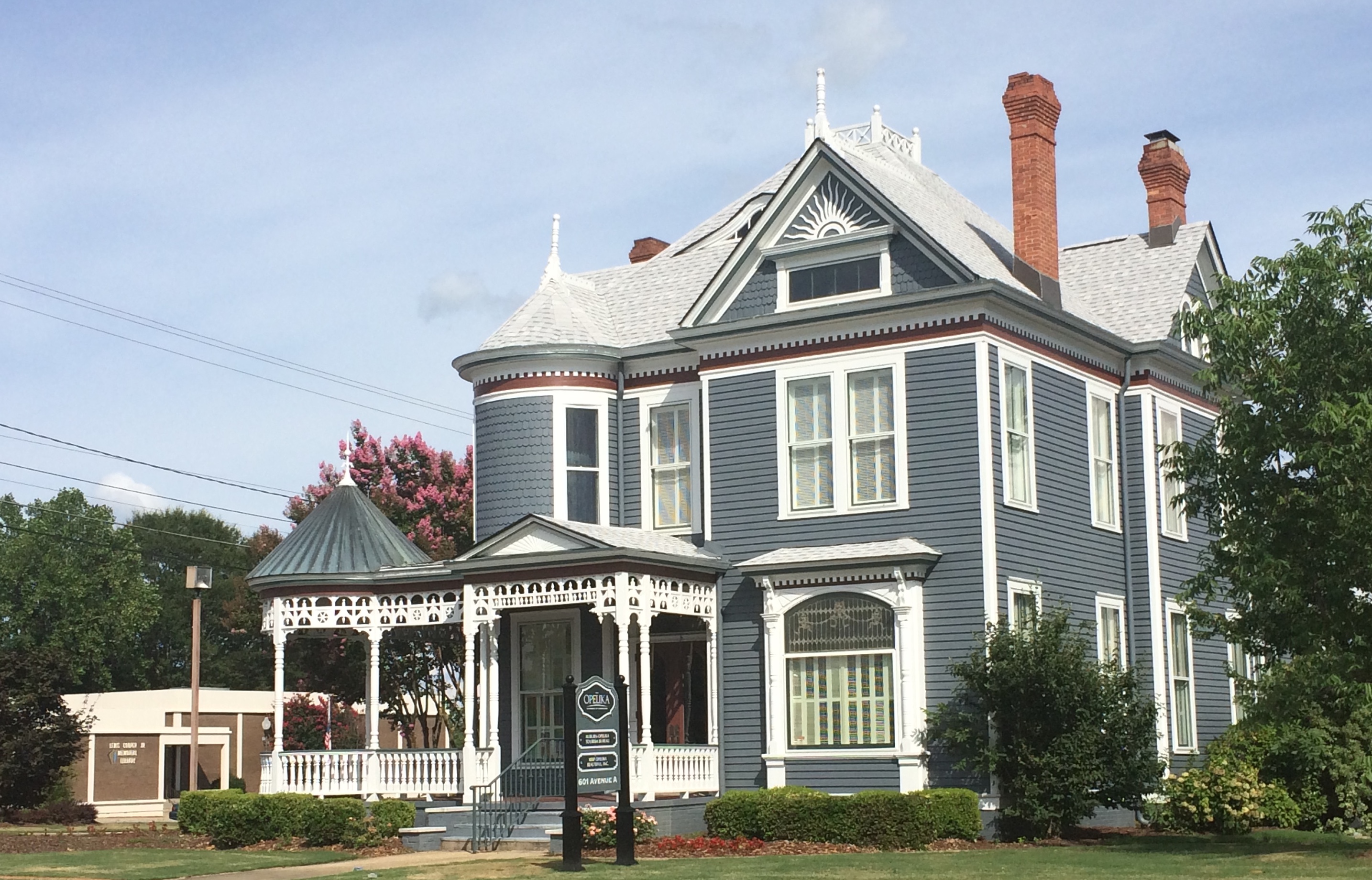
Known also as the Whitfield-Duke-Searcy House for the three families that called this place home, the Opelika Chamber of Commerce may remain the residence of a child’s spirit. Stories from family members reveal that a child may have died in the house in the early 20th century. Chamber staff believes the child may still be in this 1895 home.

Opelika Chamber of Commerce, 2016. Photo by Lewis O. Powell IV, all rights reserved.

Some years ago, three employees witnessed a “bright flash of light” descend the home’s front staircase. Another staff member noticed child-sized footprints in the carpet on the back staircase when no children had been in the house. Chairs and other objects here sometimes playfully move on their own accord.

Sources

  • Hines, Nikolaus. “A young ghost toyingly haunts an old house.” Auburn Plainsman. 17 October 2014.
  • Lee County Heritage Book Committee. Heritage of Lee County, Alabama. Clanton, AL: Heritage Publishing Consultants, 2000.
  • Mission and History.” Opelika Chamber of Commerce. Accessed 29 June 2015.

Limestone County

Houston Memorial Library
101 North Houston Street
Athens

On the morning of New Year’s Eve 1879, former governor George S. Houston awoke from sleep. At that time a senator representing Alabama in Congress, Houston called out, “John, bring me my shoes. I must return to Washington!” He then closed his eyes and passed away.

While Houston did not make it back to Washington, he is believed to remain in his former home. After Houston’s death, his wife lived here until her death in 1909. The house was turned over to the city for use as a library in 1936. One of the reminders that the library was once a former residence is the chiming of the grandfather clock. This chiming occurs on occasion though no grandfather clock exists in the building.

Governor Houston House, 1934, by W.N. Manning for the Historic American Buildings Survey (HABS). Courtesy of the Library of Congress, Prints and Photographs Division.

Two gentlemen within this building installing central air were bothered by something in the attic some years ago. As they worked, they continued to hear a rustling behind them. At one point both men saw something standing near them out of their peripheral vision. When they turned to look directly at the figure it vanished. Exasperated, the pair told the former governor firmly that they were doing no harm. The kindly spirit allowed them to continue unimpeded.

Sources

  • Black, Shane. Spirits of Athens: Haunting Tales of an Alabama Town. NYC: iUniverse. 2009.
  • Rogers, William Warren. “George S. Houston (1874- 78).” Encyclopedia of Alabama. 21 April 2008.

Lowndes County

Marengo
100 North Broad Street
Lowndesboro

Lowndesboro remains a sleepy town, lost in the haze of its past. North Broad Street, lined with historic structures, many of which date to before the Civil War, is, despite its name merely a country road passing through the community. Among those grand 19th century homes is a transplant, Marengo, which was originally built around 1835 in Autauga County but moved here sometime between 1843 and 1847. If local tradition is to be believed, Marengo’s second owner, Dr. Charles Edwin Reese, is responsible for this remarkable collection of antebellum structures surviving the Civil War.

As General Wilson and his Union troops swept through this part of Alabama destroying anything of military importance as well as other property, Dr. Reese met with the general urging him to spare the town as it was suffering an epidemic of smallpox. To provide proof, Dr. Reese brought a patient with a serious rash. Though it was all a ruse, the general was convinced and spared the town.

It seems, however, that despite the good doctor’s work in the community, his wife Sarah was fearful whenever her husband was called out to visit a patient. She never felt safe in her home, regardless of the large, brass lock that her husband had installed on the front door. Like Sarah Reese, the wife of Lindsay James Powell, Jr., a subsequent owner of the home, also felt unsafe in the house. Powell bought a gun for his wheelchair-bound wife Kathleen’s protection and peace of mind. When, in 1961, Powell discovered his wife shot to death in her bed with the same gun at her side. Kathleen Powell’s death was ruled a suicide while evidence pointed to a possible murder.

Marengo, 2012, by Rivers Langley. Courtesy of Wikipedia.

Owners of the home since that time have heard the sound of a woman laughing. A psychic visiting the home confirmed that one of the spirits is that of Kathleen. Another psychic flatly stated that no one that had lived in the home had been happy adding that an additional female spirit haunts the home. The house was donated to the Lowndesboro Landmarks Foundation in 1975 and has been used as an events space for many years.

Sources

  • Brown, Alan. Haunted Places in the American South. Jackson, MS: University Press of Mississippi, 2002.
  • Floyd, W. Warner. National Register of Historic Places Nomination form for Lowndesboro. 1 November 1973.
  • Higdon, David and Brett J. Talley. Haunted Alabama Black Belt. Charleston, SC: History Press, 2013.
  • Windham, Kathryn Tucker. Jeffrey’s Latest 13: More Alabama Ghosts. Tuscaloosa, AL: University of Alabama Press, 1982.

Macon County

Tuskegee National Forest

The smallest national forest in the country, Tuskegee National Forest was created from abused and eroded farmland purchased by the federal government at the height of the Great Depression. Consisting of nearly 11,000 acres, the forest provides recreational opportunities and conservation of natural habitat for the region.

During the Satanic worship scare of the 1980s, rumors spread that teens and young people were engaging in occult rituals deep in the forest here. Higdon and Talley note that some of the spirits raised by these rituals may remain in the more remote woods. Indeed, the forest may also be home to Sasquatch or Bigfoot, as well.

Sources

  • Higdon, David and Brett J. Talley. Haunted Alabama Black Belt. Charleston, SC: History Press, 2013.
  • Tuskegee National Forest.” USDA Forest Service. Accessed 14 June 2015.

Madison County

Huntsville Depot
320 Church Street, Northwest
Huntsville

Huntsville Depot, 2010. by Chris Pruitt. Courtesy of Wikipedia.

The Huntsville Depot has witnessed much of the panoply of railroad history in the area since its construction in 1860. The building has seen the tumult of the Civil War, and a changing transportation picture until its closure as a railroad depot in 1968. It now stands as a museum preserving one of the oldest rail depots in the nation.

As Union troops under Brigadier General Ormsby M. Mitchell swept through North Alabama in 1862, one of his primary objectives was Huntsville and its depot. With the city, Ormsby also captured some 200 ill and wounded Confederate troops. The soldiers were held on the depot’s third floor before being shipped to prisoner of war camps in the North. Graffiti covering the walls preserves some of the experiences of soldiers here.

Visitors and staff within the building have had a variety of experiences. A frequent visitor reported to Alan Brown that she felt a cold spot on the second-floor landing of the staircase. She also described how she and a group of reenactors watched an apparent Confederate soldier peer down at them from a third-floor window. Also on the third-floor, the bust of a Civil War soldier tends to turn on its own accord. A psychic passing through the building described a “cluster of ghosts” within the historic structure.

Sources

  • Brown, Alan. Stories from the Haunted South. Jackson, MS: University Press of Mississippi, 2004.
  • Gray, Jacquelyn Proctor. When Spirits Walk. Bloomington, IN: AuthorHouse, 2006.
  • Madison County Heritage Book Committee. Heritage of Madison County, Alabama. Clanton, AL: Heritage Publishing Consultants, 1998.
  • Penot, Jessica. Haunted North Alabama. Charleston, SC: History Press, 2010.

Marengo County

Gaineswood
805 South Cedar Avenue
Demopolis

Gaineswood can be considered a historical, architectural, and paranormal treasure. According to the home’s National Register of Historic Places nomination form, Gaineswood is considered by many authorities to be one of the grandest and most important American houses built in the antebellum era. Part of the home’s uniqueness is found in its innovative and extraordinary design, which was conceived and realized by the home’s owner and builder, Nathan Bryan Whitfield. A self-taught architect, Whitfield spent much of his time and energy constructing his magnificent Neo-Classical home starting in 1842 and finishing on the eve of the Civil War in 1861.

After having his fortunes nearly wiped out by war, Whitfield sold the home to his son who allowed it to deteriorate. During this time a tree took root in the floor of the dining room, and goats roamed the halls. The house was restored in the 1890s and passed through a few hands before being bought by the State of Alabama in 1966 and opened as a house museum in 1971. Gaineswood was designated as a National Historic Landmark in 1973.

Gaineswood, 1939, by Frances Benjamin Johnston for the Carnegie Survey of the Architecture of the South. Courtesy of the Library of Congress, Prints and Photographs Division.

Besides the architectural importance of Gaineswood, the house is home to a classic Alabama ghost story originally told by Kathryn Tucker Windham. Mrs. Windham contends that after Nathan Whitfield’s wife died, he engaged Evelyn Carter, the daughter of a U.S. Consul to Greece, to care for his children. The delightful young woman was educated, musically inclined, and added a cultural touch to the home and the children’s lives. Unfortunately, she was taken ill and died during a particularly harsh winter. Miss Carter had requested that her body be returned to Virginia where she could be buried in the family cemetery, yet the harsh winter weather would not allow that. Instead, her body was sealed in a wooden casket and placed underneath the stairs until it could be shipped home.

Soon after, Miss Carter’s unhappy spirit began to roam the house noisily expressing her displeasure. Eerie melodies were heard playing on the piano accompanied by the swish of rustling skirts and disembodied voices. Even after Miss Carter’s remains were returned to her home, the spirit has remained in residence, though sources argue if she may have finally left the house.

Sources

  • Hand, Janice P. National Register of Historic Places Nomination form for Gaineswood. 13 September 1971.
  • “The Haunts of Gaineswood Plantation.” Ghost Eyes Most Haunted Places in America <www.GhostEyes.com>. 4 August 2009.
  • Higdon, David and Brett J. Talley. Haunted Alabama Black Belt. Charleston, SC: History Press, 2013.
  • Norman, Michael and Beth Scott. Historic Haunted America. NYC: TOR, 1995.
  • Windham, Kathryn Tucker and Margaret Gillis Figh. 13 Alabama Ghosts and Jeffrey. Tuscaloosa, AL: University of Alabama, 1969.

Marion County

Pikeville
Intersection of CR-21, CR-31, and CR-470

Little remains of the town of Pikeville, a small town built alongside the Jackson Military Road. The town served as the county seat of Marion County from 1820 until 1882, when the seat was moved to nearby Hamilton. The old county courthouse still stands, though it is now a private residence, and the town’s cemetery continues to memorialize the dead of Pikeville. This ghost town may also be populated with ghosts.

Sources

Marshall County

Main Street
Albertville

On April 24, 1908, a tornado roared through northeast Alabama killing some 35 residents and destroying a portion of Albertville including much of Main Street. According to Faith Serafin, there has been quite a bit of paranormal activity reported along Main Street including the spirit of a young boy in khaki knee-pants, a white shirt, and suspenders who has been observed running down the street at night. Residents have seen children wearing period clothing playing on the street in the evenings while business owners have reported the front doors of their businesses opening and closing on their own accord.

Main Street, Albertville, 2012, by Rivers Langley. Courtesy of Wikipedia.

Sources

Mobile County

Phoenix Fire Museum
203 South Claiborne Street
Mobile

Originally located on Conti Street, the old Phoenix Volunteer Fire Company No. 6 building was a state of the art rehouse when it was constructed in 1858. Slightly more than a hundred years later, the neglected building faced demolition for the construction of the Mobile Civic Center. The building was saved by the Mobile Historic Preservation Society, dismantled, and moved to its current location where it now serves as a part of the Mobile Museum of History. Artifacts relating to the history of firefighting within the city are displayed here including antique firefighting vehicles. Not on display, but present within the old building, is a spirit that has been heard stomping around the second-floor and occasionally rifling through an antique secretary located there.

Sources

  • Parker, Elizabeth. Mobile Ghosts: Alabama’s Haunted Port City. Apparition Publishing, 2001.

Monroe County

Rikard’s Mill Historic Park
4116 AL-265
Beatrice

Fleeting shadow figures have been spotted at this mill established in 1845. While the original structure is gone, the current mill, built in the 1860s, has been preserved by the Monroe County Museum. The mill has been probed by paranormal investigators, though little evidence of paranormal activity was uncovered.

Sources

Alabama Hauntings—County by County Part IV

Alabama Hauntings–County by County landing page.

One of my goals with this blog is to provide coverage of ghost stories and haunted places in a comprehensive manner. Perhaps one of the best ways to accomplish this is to examine ghost stories county by county, though so far, researching in this manner has been difficult. In my 2015 book, Southern Spirit Guide’s Haunted Alabama, I wanted to include at least one location for every county, though a lack of adequate information and valid sources prevented me from reaching that goal. In the end, my book was published covering only 58 out of 67 counties.

Further research has uncovered information for a few more counties and on Halloween of 2017, Kelly Kazek published an article on AL.com covering the best-known ghost story for every county. Thanks to her excellent research, I’ve almost been able to achieve my goal for the state.

Geneva County

“Big Oak”
Robert Fowler Memorial Park
South River Street
Geneva

Big Oak, 2006, by AlabamaGuy2007. Courtesy of Wikipedia.

Before the establishment of Geneva County, early settlers gathered under the massive, leafy branches of what is now known as the Big Oak or Constitution Oak. This live oak’s age and size have led to its inclusion in the list of Alabama Famous and Historic Trees. Supposedly the huge branches of the tree have been used for hangings and the spirits of those who died here may continue to haunt this location.

Sources

Greene County

Oakmont Bed & Breakfast
107 Pickens Street
Eutaw

As workers were working on the restoration of Oakmont, a spirit in the house wanted more heat. After continuing to find a heater on in the home, construction workers taped the control knob so that the heat could not be turned on. However, the spirit thought otherwise and turned the heat on again.

Built in 1908 as a wedding gift for Mary Elizabeth and Charles Alexander Webb, it was not until Oakmont began the transformation into a bed & breakfast that the owners discovered that they might have to share the house with spirits. After the restoration, numerous spectral sounds began to be heard including tremendous crashes and disembodied footsteps. It doesn’t appear that this bed and breakfast is open any longer.

Sources

  • Smith, Terry L. and Mark Jean. Haunted Inns of America. Crane Hill Publishers, 2003.

Hale County

Moundville Archaeological Park
634 Mound State Parkway
Moundville

Between approximately 1120 C.E. and 1450 C.E., Moundville was the site of a large city inhabited by the Mississippian people, predecessors to the tribes that the Europeans would encounter when they began exploring the South about a century later. At its height, this town was probably home to nearly 1,000 inhabitants. Stretching to 185 acres, the town had 29 mounds of various sizes and uses: some were ceremonial while others were topped with the homes of the elite.

Visitors and staff have often mentioned a certain energy emanating from this site. A Cherokee friend of mine visited and while atop one of the mounds let out a traditional Cherokee war cry. Afterward, he noted that there was a palpable change in the energy. Dennis William Hauck speaks of the “powerful spirit of an ancient race” that “permeates this 317-acre site.” Southern Paranormal Researchers notes that park staff has witnessed shadow figures, odd noises, and doors opening and closing by themselves in the buildings on the site. Higdon and Talley add orbs and cold spots found throughout the location to the list of paranormal activity here.

Sources

  • Blitz, John H. “Moundville Archaeological Park.” Encyclopedia of Alabama. 26 February 2007.
  • Hauck, Dennis William. Haunted Places: The National Directory. NYC: Penguin, 2002.
  • Higdon, David and Brett J. Talley. Haunted Alabama Black Belt. Charleston, SC: History Press, 2013.
  • Southern Paranormal Researchers. Paranormal Investigation Report for Moundville Archaeological Park. 10 February 2007.

Henry County

Legend of Huggin’ Molly
Abbeville

For over a century, a legend has dwelled in the dark streets of Abbeville: the legend of Huggin’ Molly. This specter is thought to target children on the streets after dark. Most versions describe Molly as a large woman who prowls the dark streets in search of children walking alone. After pursuing a child, she would embrace them and scream in their ear. Most sources agree that this tale was perhaps created to frighten small children and keep them from staying out too late, though the story has remained. In fact, a restaurant named after the legendary figure has recently opened.

Sources

  • Legend of Huggin’ Molly.” Huggin’ Molly’s Restaurant. Accessed 13 July 2015.
  • Smith, Michelle. Legends, Lore and True Tales of the Chattahoochee. Charleston, SC: History Press, 2013.

Houston County

Columbia Manor
306 South Main Street
Columbia

During the Halloween season, this unassuming white frame house is home to nightmares of the fictional kind. However, this house is home to real nightmares as well. Built in 1864, this home has served several uses including serving as a hospital and later a sanitarium for those suffering from pellagra, a severe vitamin deficiency.

Following renovations to transform the house into a haunted attraction, the spirits have begun to act out. The owner of the house told the producers of the BIO Channel show, My Ghost Story, about tools that would go missing only to be found in their original location a short time later, mysterious footsteps, and the shade of an older gentleman that the owner and another volunteer saw standing in the house. He also mentioned the swinging of a chandelier in the foyer which a paranormal investigator has linked to the suicide by hanging of a nurse there.

Sources

  • “Enter at your own risk; they dare you.” Dothan Eagle. 18 August 2014.
  • “Haunting Columbia Manor.” Dothan Eagle. 19 October 2013.
  • My Ghost Story, Episode 3.3. Biography Channel. 29 October 2011. 

Jackson County

Russell Cave National Monument
3728 CR-98
Bridgeport

One of the most significant archaeological sites in the state, Russell Cave has revealed evidence that this site has been in use by humans for at least 8,000 years. That evidence includes human remains, pottery shards, spear points, arrowheads, and charcoal from ancient fires. The remains of various animals, including some prehistoric species, have also been unearthed here.

Entrance to Russell Cave, 2014, by Fredlyfish4. Courtesy of Wikipedia.

Within the cave, some visitors have experienced an uneasy feeling, sometimes even sensing ghostly presences while others have heard spectral sounds and seen apparitions. With thousands of years of human occupation, it’s no surprise that spirits remain here.

Sources

  • Kidd, Jessica Fordham. “Russell Cave.” Encyclopedia of Alabama. 22 September 2010.
  • Penot, Jessica. Haunted North Alabama. Charleston, SC: History Press, 2010.

Jefferson County

Bessemer Hall of History Museum
1905 Alabama Avenue
Bessemer

While the Bessemer Hall of History Museum displays an eclectic mix of items from Bessemer’s past, including a cell door from the local jail where Martin Luther King, Jr. was briefly incarcerated, it appears that a former exhibit may still be haunting this building. For many years, the museum displayed the mummy of a local woman who had taken her life in 1906. Hazel Farris shot and killed her husband during a domestic incident at their home in Louisville, Kentucky. After neighbors summoned the police, Farris shot and killed three of them and fled the state.

Beautiful Hazel settled in Bessemer and confessed her crimes to a man with whom she had fallen in love. He betrayed her to the police, and Hazel ingested arsenic, ending her life. Her corpse was sent to a local funeral home which only put the unclaimed body in storage where it mummified. The funeral home began to charge admission to view the grisly final remains of Miss Farris, and over the course of many years, the mummy was loaned to various exhibitors. In 1974, the museum borrowed the mummy as part of a fundraiser, and the museum displayed it for quite some time.

Southern Railway Depot (now home to the Bessemer Hall of History Museum), 1992, by Jet Lowe. Photo taken for the Historic American Buildings Survey (HABS), courtesy of the Library of Congress, Prints and Photographs Division.

After the mummy’s exhibition in 1981, the museum placed it in permanent storage. National Geographic produced a documentary about Hazel’s corpse in 2002 with various scientists examining it before it was eventually cremated. The old train depot that has housed the museum since 1994 has had some paranormal activity through the years, some of which has been attributed to Hazel. Lights turn off and on within the old building, and other odd sounds have been heard.

Sources

Lamar County

Old Stage Coach Inn
Jackson Military Road
Moscow

Also known as the Moore-Hill House, this circa 1834 stagecoach stop was the scene of a murder in 1881. A Mrs. Armstrong was killed by an African-American man with a grappling hook on a chain. After the gruesome killing, the cook ran out the back door and alerted the men working in the nearby fields. The supposed murderer was hunted down and lynched in the front yard. This event is believed to be the cause of paranormal activity in and around the house. Tradition speaks of a glowing orb that is seen in the front yard and the spirit of Mrs. Armstrong clanking down the stairs with the hook and chain that killed her.

When I initially wrote the above entry for my book way back in 2015, I struggled with how little information existed about this house and the grim murder that took place here. As I was visiting the library yesterday, I decided to take a second look at the research for this particular location. Evidently, I didn’t look hard enough the first time.

Situated on Andrew Jackson’s Military Road, a route constructed after the War of 1812 connecting Nashville, Tennessee with New Orleans, the Moore-Hill House was built for James Moore, an early politician in the state. For many years the house served as a stagecoach inn, but it was an incident in 1881 that gave the house a notorious reputation. According to family legend, a Mrs. Armstrong was killed by an African-American man with a grappling hook on a chain. After the gruesome killing, the cook ran out the back door and alerted the men working in the nearby fields. The supposed murderer was hunted down and lynched in the front yard. After consulting newspapers of the period, the events did not take place exactly as family memory recalls.

Two brief reports appearing in area newspapers in December of 1881 attest that the murder was bloodier that family legend recounts. An African-American man (described in one newspaper as a “crazy negro”) attempted to seize one of the Armstrong children. The child’s mother, Mrs. Winchester Armstrong, and her mother tried to wrestle the child away and both were killed. The newspaper reports that the child’s mother was struck in the head with an ax. Moments later, Mr. Armstrong approached and shot and killed the assailant.

Sources

  • “A heart-rending murder…” Pickens County Herald and West Alabamian (Carrollton, AL). 7 December 1881.
  • Hill, Beulah and Pat Buckley. “History.” Accessed 6 June 2015.
  • “Horrible murder of two women by a crazy negro.” The Marion Times-Standard. 14 December 1881.
  • Kazek, Kelly. “Few historic stagecoach inns and taverns survive across Alabama, take a tour.” com. 14 August 2014.
  • Lamar County Heritage Book Committee. Heritage of Lamar County, Alabama. Clanton, AL: Heritage Publishing Consultants, 2000.

Lauderdale County

Forks of Cypress
Jackson Road
Florence

Crowning a hill above Jackson Road are the skeletal remains of the graceful Forks of Cypress, built in the latter half of the 1820s. Until it burned in June 1966, the house was known as one of the grandest homes in the area. James Jackson, an Irish-born venture capitalist who moved to the area in 1818 and is considered the founder of the city of Florence, constructed the home.

Ruins of Forks of Cypress, 2010, by Carol M. Highsmith. Courtesy of the George S, Landreggar Collection of Alabama Photographs in Carol M. Highsmith’s America, Library of Congress, Prints and Photographs Division.

Even before a conflagration destroyed the house, it was known to be haunted, and spirits may continue to roam the picturesque ruins. The Jackson family cemetery not far from the house has also seen some paranormal activity. Debra Johnston records an incident whereby a visitor to the cemetery one afternoon encountered a young man on horseback. As he talked with the strange young man, he realized the young man was one of the sons of James Jackson. The visitor was astonished when he shook hands with the man and watched him vanish before his eyes.

Southwest of the ruins, a bridge spanned Cypress Creek until its recent demolition. Known as “Ghost Bridge,” the bridge was associated with a typical crybaby bridge story. The woods near the bridge, tradition holds, are supposed to be haunted by a spirit carrying a lantern, a possible holdover from a skirmish fought here during the Civil War.

Sources

  • Farris, Johnathan A. & Trina Brinkley. National Register of Historic Places Nomination Form for Forks of Cypress. 2 May 1997.
  • Johnston, Debra. Skeletons in the Closet: True Ghost Stories of the Shoals Area. Debra Johnston, 2002.

Lawrence County

Henry Hill
CR-25
Mount Hope

Almost as common as Cry Baby Bridges throughout the South are “Gravity Hills;” roads or hills where a car put in neutral will seemingly be pushed up an incline. Along County Road 25, just outside of the community of Mount Hope, is a dip in the road where legend has it a man named Henry was killed. Most legends have Henry’s car breaking down along this road and him trying to push it out of the way when he was struck and killed by another vehicle. When a car is stopped here, Henry still dutifully pushes the car to safety to prevent another driver from having to endure a similar end.

Sources

Alabama Hauntings—County by County, Part III

Alabama Hauntings–County by County landing page.

One of my goals with this blog is to provide coverage of ghost stories and haunted places in a comprehensive manner. Perhaps one of the best ways to accomplish this is to examine ghost stories county by county, though so far, researching in this manner has been difficult. In my 2015 book, Southern Spirit Guide’s Haunted Alabama, I wanted to include at least one location for every county, though a lack of adequate information and valid sources prevented me from reaching that goal. In the end, my book was published covering only 58 out of 67 counties.

Further research has uncovered information for a few more counties and on Halloween of 2017, Kelly Kazek published an article on AL.com covering the best-known ghost story for every county. Thanks to her excellent research, I’ve almost been able to achieve my goal for the state.

Crenshaw County

Patsburg Bridge
AL-59 over Patsaliga Creek
Patsburg

An article from the Greenville Advocate notes that some possible paranormal activity has been experienced at this bridge. A few people have captured odd images, including orbs, in photographs taken here. One witness interviewed for the paper reported that a couple of people had died here as well as a body being discovered by a fisherman in the water below the bridge.

Sources

  • “Ghosts in Patsburg.” Greenville Advocate. 9 July 2009.

Cullman County

Crooked Creek Civil War Museum and Park
516 CR 1127
Vinemont

When he purchased this land, Fred Wise, the creator of the Crooked Creek Civil War Museum and Park, didn’t know its significance. Over time, Mr. Wise, who has a massive collection of Civil War relics and memorabilia, has uncovered the site’s story as the scene of the Battle of Crooked Creek.

Union Colonel Abel Streight conducted a campaign in Northern Alabama to cut o the Western & Atlantic Railroad in late April and May of 1863. As he and his men moved steadily towards Rome, Georgia via Gadsden, Streight and his men were dogged by Confederate forces under General Nathan Bedford Forrest. On April 30, after an engagement at Day’s Gap, forces skirmished here at Crooked Creek. The Union forces would push through, and on May 3 near Cedar Bluff in Cherokee County, they surrendered to Forrest’s Confederate forces. Afterward, Streight and many of his men faced imprisonment at Richmond, Virginia’s notorious Libby Prison.

Fred Wise has preserved much of the battlefield, making it accessible with walking trails and informational signage. Visitors trooping through the area have encountered several apparitions from both sides including a bleeding Confederate who begs for help. On the front lawn in front of the museum, a Union soldier has been spotted strolling with his rifle. Paranormal investigators took an infrared photograph of the ridge where part of the battle occurred which seems to show a line of soldiers near where Union soldiers held their ground.

Sources

  • Herbert, Keith S. “Streight’s Raid.” Encyclopedia of Alabama. 30 October 2007.
  • Langella, Dale. Haunted Alabama Battlefields. Charleston, SC: History Press, 2013.

Dale County

Claybank Log Church
East Andrews Avenue
Ozark

The log Claybank Church was once like many other churches throughout the state of Alabama, though today, it is a rarity. So many log churches have been destroyed by fire or by neglect, that the Claybank Church is now unique, having been restored and maintained, despite not being regularly used. Here the early settlers at Claybank Creek built their church around 1830 and buried their dead in the field surrounding the building. The original structure was replaced in 1852 and that building has survived the turmoil of the Civil War, as well as the neglect that followed the church’s move to more populous Ozark. The church was acquired by the Claybank Memorial Association in the 1960s and was thoroughly restored in 1980.

A baby crawls on the floor of the old Claybank Church, 2016. Photo by Katie Pollack, courtesy of Wikipedia.

In 2005, Carol Gilmer, owner and operator of the International Institute of Clinical Research (IIRC), a company that conducts research trials for drug manufacturers, began leasing space in Claybank Plaza, a property that backs up to the Claybank Church cemetery. Gilmer and her employees began to have strange experiences in the building. Voices and tinkling bells were heard when the building was empty; a heavy lab manual casually threw itself off a shelf in an empty room; and staff members saw shadow-like figures moving through the office. Gilmer’s interest in these odd incidents led her to write a book, The Ghosts of Claybank, where she connects the activity squarely to this historic church and cemetery.

Sources

  • “Claybank Log Church at Ozark added to the prestigious register.” Columbus Ledger-Enquirer. 16 December 1976. In Dale County–Claybank Church file, Alabama Department of Archives and History, Montgomery, Alabama.
  • Gilmer, Carol. The Ghosts of Claybank. Createspace, 2013.

Dallas County

Vaughan-Smitherman Museum
109 Union Street
Selma

The Vaughan-Smitherman Museum has witnessed the panoply of Selma history with much of that history occurring within its halls. Built in 1847 as a school by the local Masonic lodge, this building served as a hospital during the Civil War and later as a public hospital between 1911 and 1960. Just after the Civil War, the building became the Dallas County Courthouse and then served as a military academy around the turn of the 20th century. After the building sat vacant for a few years, it was converted into a local history museum.

Vaughan-Smitherman Museum, 2008. Photo by Altairisfar, courtesy of Wikipedia.

As a new museum employee was being given a guided tour some years ago, she made a somewhat disparaging remark near a portrait of William Rufus King, a Vice President of the United States from Selma. A moment later, a glass globe on a lamp nearby slammed down in its setting. After that, whenever the new employee entered, she made sure to greet the former vice president. Throughout the historic structure, footsteps are heard, toilets flush by themselves, the elevator seems to run when it’s not called, and the lights flicker mysteriously.

Sources

  • Alabama Ghost Trail. “Vaughan-Smitherman Museum.” YouTube. 20 July 2009.
  • Floyd, W. Warner. National Register of Historic Places for the Dallas County Courthouse. 13 May 1975.
  • Higdon, David and Brett J. Talley. Haunted Alabama Black Belt. Charleston, SC: History Press, 2013.
  • “Paranormal weekend at landmark.” Selma Times-Journal. 24 June 2009.

DeKalb County

Hitching Post
6081 AL-117
Mentone

The Hitching Post, 2010, by Carol M. Highsmith. Courtesy of the George S, Landreggar Collection of Alabama Photographs in Carol M. Highsmith’s America, Library of Congress, Prints and Photographs Division.

One of the centerpieces of the scenic, mountain town of Mentone is the Hitching Post. Now housing a collection of businesses including a realty company and Crow’s Nest Antiques, this building was originally constructed in 1898 as a general store. Over the years the building has housed many businesses, including a popular dance hall on the second floor. Perhaps the female wraith spotted on the second floor here dates from that period.

Sources

  • Collard, Deborah. Haunted Southern Nights, Vol. 3: History and Hauntings of the Mentone Area. Deborah Collard, 2008.
  • Jones, Brian S. “Mentone: A Mountaintop Treasure.” The Official Travel Site of Alabama. Accessed 29 May 2015. 

Elmore County

Robinson Springs United Methodist Church
5980 Main Street
Millbrook

This community of Robinson Springs has mostly been swallowed by the bustling town of Millbrook. The community’s Methodist church gracefully faces the bare wall of a CVS Pharmacy, but the church still greets members. In fact, some of the church’s members may have never left the building.

Robinson Springs United Methodist Church, 2010, by Chris Pruitt. Courtesy of Wikipedia.

Methodists from the local area first organized around 1828, within the first decade of the state’s existence, and constructed a rude log church for services near here. With the growth of the area and a donation of land, the current church was constructed in the latter half of the 1840s. Amazingly, the church has seen few alterations from its original form. Perhaps the few changes may be a contributing factor in the church being haunted.

While churches often have paranormal activity, it is rare for pastors to call in paranormal investigators seeking answers. After hearing reports from a number of church members of the many strange goings on here, the pastor invited Southern Paranormal Researchers to investigate. According to a 2007 article in the Montgomery Advertiser, the group began experiencing odd activity within five minutes if their arrival.

Activity at the historic church runs the gamut from distracting things like the sanctuary’s sound system turning off and on during services to doors opening and closing on their own. Often, sounds will be heard from empty rooms including what sounded like a television during an investigation. When investigators searched for the source of the sounds, no television was found.

Sources

  • Mertins, Ellen and Barry Loveland. National Register of Historic Places Nomination Form for Robinson Springs United Methodist Church. September 1981.
  • Mullinax, Kenneth. “Spooked: Area’s scary sites have chilling tales.” Montgomery Advertiser. 31 October 2007.
  • Pritchard, Griffin. “Southern Paranormal Researchers chase ghosts and bust stereotypes.” Montgomery Advertiser. 14 July 2007.

Escambia County

Fort Crawford Cemetery
Snowden Street
East Brewton

In 2009 while searching for the exact location of Fort Crawford, archaeologists found nothing near East Brewton Baptist Church, where the fort was thought to have stood. A trench dug near the church produced nothing that indicated the presence of the log fort that once commanded the area a few years before the creation of the state in 1819. Finding information regarding the resident specters of the Fort Crawford Cemetery, and even just information on the fort itself, has been just as fruitless.

Surprisingly, the Escambia County heritage book provides nothing on Fort Crawford, though an article on Dale Cox’s excellent website, Exploring Southern History, provides a sketch of the fort’s history. A fort was constructed on a bluff over Murder Creek after the Creek War of 1813-1814 to monitor the activities of local Muscogee/Creek people and the Spanish in Florida to the south. Fort Crawford Cemetery, located near the believed site of the fort, may date to that period.

Reports of paranormal activity from the cemetery include the shade of a Confederate soldier who may prowl the grounds. Another encounter involved a pedestrian passing through the cemetery who was seized by a shadow figure. A 2011 video posted on YouTube from Paranormal Productions notes that the soldier is known to approach people asking, “Where is my bayonet?” The video also mentions the apparition of a young girl in a white dress seen here as well.

Sources

Etowah County

CSX Railroad—Coosa River Bridge
CSX Railroad over the Coosa River
Between the Memorial and the Meighan Bridges
Gadsden

This current bridge was constructed in 1909 to replace the original railroad trestle that was built here in the 1880s. Initially, both bridges provided passage for trains as well as pedestrians and private vehicles. With the construction of the nearby Memorial Bridge in 1927, the trestle has been used solely for railroad traffic. CSX owns the bridge; please do not risk a trespassing charge.

Mike Goodson notes that in 1909 after the bridge’s construction, it was the scene of paranormal activity. An “unusual ghostly light” was observed near the middle of the bridge while passersby on the bridge at night heard disembodied sobbing. Apparently, one death occurred during the bridge’s construction, but Goodson fails to mention an even more tragic event that took place on the original trestle in 1906.

Coosa River and the CSX Bridge at Gadsden, 2010, by Carol M. Highsmith. Courtesy of the George S, Landreggar Collection of Alabama Photographs in Carol M. Highsmith’s America, Library of Congress, Prints and Photographs Division.

After the rape and murder of a white woman outraged locals gathered outside the city jail. The mob eventually demanded that the African-American suspects be handed over to them so that “justice” could be enacted. The mob seized Bunk Richardson, one of the suspects. He was dragged to the railroad trestle where the mob’s perverted justice was achieved at the end of a rope. Photographers captured two images of Richardson after the lynching that remain as reminders of this tragic event. Perhaps it is Richardson’s innocent spirit that returns as the light and disembodied sobbing.

Sources

  • Goodson, Mike. “Bridge on the river Coosa helped ease traffic flow.” Gadsden Times. 7 March 2006.
  • Goodson, Mike. Haunted Etowah County. Charleston, SC: History Press, 2011.
  • Thornton, William. “Lynching a dark chapter in city his- tory.” Gadsden Times. 10 February 2000.
  • Thornton, William. “Lynching only a vague memory.” Gadsden Times. 14 February 2000.

Fayette County

Musgrove Chapel Methodist Church
CR 21, North
Winfield

Within this rural church cemetery, the grave of Robert Lee Musgrove, a descendant of the family that founded this church, is said to bear the image of Musgrove’s wife-to-be. Musgrove, a train engineer for the St. Louis and San Francisco Railroad running the line between Memphis, Tennessee, and Amory, Mississippi, was killed in an accident between Holly Springs and Potts Camp, Mississippi in 1904. There two trains collided killing five railroad employees after an operator in Holly Springs made a mistake and sent a second train onto the occupied line. Tradition says that at the time of his death, Musgrove was engaged to be married, and his funeral took the place of his wedding. Sometime after that, parishioners noticed that the image of a kneeling woman appeared on his stone, perhaps bearing the countenance of his fiancée.

Sources

  • Robert Lee Musgrove, Musgrove Cemetery, Fayette County, Alabama.” Find-A-Grave. Accessed 12 July 2015.
  • Taylor, Troy. Beyond the Grave: The History of America’s Most Haunted Graveyards. Alton, IL: Whitechapel Press, 2001.
  • Windham, Kathryn Tucker. Jeffrey’s Latest 13: More Alabama Ghosts. Tuscaloosa, AL: University of Alabama Press, 1982.

Franklin County

Dismals Canyon
901 CR 8
Phil Campbell

Legends abound throughout the beguilingly beautiful and remote Dismals Canyon. Despite its name—which is believed to have been granted by Scots-Irish settlers after a ruggedly beautiful spot in Scotland called “Dismals”—this sandstone gorge is a paradise with rock formations, waterfalls, champion trees, an amazing array of biological diversity, and gnat larvae that give off a luminescence at night called “dismalites.” Historically, this place was known to local Native Americans who may have hunted and conducted ceremonies in this mystical place.

Rainbow Falls in Dismals Canyon, 2007, by RBharris. Courtesy of Wikipedia.

In 1838, as the Native Americans of the southeast were being rounded up to be marched westward on what would become known as the Trail of Tears, Chickasaw and Cherokee may have been herded into the canyon here under guard from Federal troops. It is possible that one of the legends may relate to this time. After the death of her lover, an Indian maiden threw herself from the top of a bluff known as Weeping Bluff. Supposedly her image was etched upon the bluff following her death and it continues to weep for her and the Chickasaw who were removed from their homeland.

Attracted by the remoteness of this spot, outlaws may have hidden here. Local legends insist that the gorge may have hidden Vice President Aaron Burr on the lam after his infamous duel with Alexander Hamilton as well as bank robber Jesse James. Among the dusky paths and rocks of Dismals Canyon the spirits of these outlaws and Native Americans may still roam.

Sources

  • Franklin County Heritage Book Committee. The Heritage of Franklin County, Alabama. Clanton, AL: Heritage Publishing Consultants, 1999.
  • Kazek, Kelly. “The best-known ghost tale from each Alabama county.” AL.com. 25 October 2017.
  • Morris, M. Scott. “’Fairytale Land’: Alabama’s Dismals Canyon a place out of time.” Daily Journal (Tupelo, MS). 30 July 2017.
  • Ress, Thomas V. “Dismals Canyon.” Encyclopedia of Alabama. 7 November 2011.

Haunting Legislation–West Virginia

West Virginia State Penitentiary
818 Jefferson Avenue
Moundsville, West Virginia

N.B. According to this article from WTOV, the language in these bills covering the leases on the WV Penitentiary has been removed and the leases will remain in place in their current forms.

The biggest news in the Southern paranormal world in the past few days has been two pieces of legislation currently wending their way through the West Virginia state legislature. The bills, House Bill 4338 and Senate Bill 369, would terminate the current lease of the West Virginia State Penitentiary in Moundsville held by the Moundsville Economic Development Council (MEDC). Furthermore, it would restrict leases to five years and allow the state to terminate a lease at any time. This threatens the use of the prison for tours, events, paranormal investigations, and seriously damages tourism in the northern region of the state.

The West Virginia State Penitentiary as seen from atop the Grave Creek Mound, 2016. Photo by Rhonda Humphreys, courtesy of Wikipedia.

The stern, Gothic edifice with a commanding view of the Ohio River has dominated the literal and economic landscape of the region for more than a century and a half. From its construction following the end of the Civil War, through years of housing the most dangerous inmates in the state and 94 executions, prison breaks, riots, and finally decommissioning in 1995 the Moundsville prison has been a major economic driver for the area. After the prison’s closure damaged the local economy, the Moundsville Economic Development Council signed a lease with the state department of corrections to employ the massive sandstone fortress in the tourism industry.

The MEDC opened the site for tours and eventually rolled out the red carpet for those wishing to explore the darker, paranormal side of the building. Paranormal television spread the gospel of the tremendous activity found throughout the building. Over the years, hundreds of investigators have walked among and interacted with the numerous spirits that continue to roam the halls of the West Virginia Penitentiary. In short, the site has become a paranormal mecca.

Several books have been written about the haunted prison including two excellent books by West Virginia investigator and writer Sherri Brake, and several articles by local paranormal blogger and investigator Theresa Racer. It should be noted that few hauntings become as well-known as to garner a single book, much less more than one book and numerous articles.

Despite all this interest, and the work conducted by MEDC to bring people to this often ignored region of West Virginia, legislators have not provided a reason for the inclusion of this action in the bills. In fact, there are a couple legislators who are working to remove the language regarding the prison from the bill. The bills are necessary to reform the state department of corrections, which is woefully in need of change; however, this change needs not have such a detrimental effect on the tourism industry in Moundsville.

Theresa Racer’s coverage of the WV State Penitentiary on her blog, Theresa’s Haunted History of the Tri-State.

Sources

‘Twas the Night Before Halloween—Recycled Revenants

‘Twas the night before Halloween and all through the blog, little was stirring…

This move from Blogger to this new site has been tedious and time-consuming. I’ve tossed out a great deal of junky posts and put many posts aside that need to be updated and refreshed leaving me with many bits and pieces that should be republished in a different context. This is a selection of recycled pieces for Halloween.

East Coast/West Coast
138 St. George Street
St. Augustine, Florida

This modest commercial building once housed Kixie’s Men’s Store and some odd activity. The shop employed a young tailor, Kenneth Beeson who would later serve as mayor for the city. While working late one evening he noticed a door opening by itself followed by the sweet scent of funereal flowers. After experiencing odd activity for a while, Beeson put out a tape recorder and set it to record just before he left. When he returned the following morning, he was shocked to discover a plethora of sounds including marching feet and guttural growls. Disturbed by these incidents, Beeson had a priest exorcise the building. The activity ceased.

Sources 

  • Cain, Suzy & Dianne Jacoby. A Ghostly Experience: Tales of St. Augustine, Florida. City Gate Productions, 1997.
  • Lapham, Dave. Ghosts of St. Augustine. Sarasota, FL: Pineapple Press, 1997.

Western & Atlantic Railroad Tunnel
Chetoogeta Mountain
Tunnel Hill, Georgia

As the railroad spread its tentacles throughout the nation before the tumult of the Civil War, a route was needed from Augusta, Georgia to Chattanooga, Tennessee. Numerous obstacles stood in the way, but the biggest was Chetoogeta Mountain. Plans for a railroad tunnel dated to the second half of the 1830s, but work did not commence until 1848 with work completed two years later. The new tunnel was instrumental in Atlanta’s growth as a railroad hub and was a strategic feature for the Confederacy to protect during the Civil War.

The tunnel’s strategic importance led to a series of skirmishes being fought here leading up to the Battle of Atlanta. Following the war, the tunnel remained in service until 1928 when a new tunnel was built a few yards away. The old tunnel became overgrown with kudzu and was largely forgotten until 1992 when preservationists fought to save the tunnel. It is now the centerpiece of a park that features reenactments of the skirmishes fought at the site.

Entrance to the old Western & Atlantic Railroad Tunnel, 2011. Photo by Lewis O. Powell, IV, All rights reserved.

It is often re-enactors who have encountered anything supernatural at the site. I’ve been pleasantly surprised by the number of documented accounts of spirits at Tunnel Hill. At least four books and a handful of good articles document the high levels of activity at this site. Accounts include the apparitions of soldiers seen both inside the tunnel and around it. Ghostly campfires, disembodied screams, spectral lantern light and the smell of rotting flesh (minus the presence of actual rotting flesh) have all been reported by re-enactors and visitors alike.

Sources

  • DeFeo, Todd. “Antebellum railroad tunnel still a marvel after all These years.” com. 22 June 2009.
  • Kotarski, Georgiana C. Ghosts of the Southern Tennessee Valley. Winston-Salem, NC: John F. Blair, 2006.
  • Underwood, Corinna. Haunted History: Atlanta and North Georgia. Atglen, PA: Schiffer, 2008.
  • Western and Atlantic Railroad Tunnel. Tunnel Hill Heritage Center. Accessed 28 November 2010.

Old Talbott Tavern
107 West Stephen Foster Avenue
Bardstown, Kentucky

Old Talbott Tavern, 2008, by C. Bedford Crenshaw. Courtesy of Wikipedia.

Continuously open since the late 18th century except for a period in the late 1990s when the tavern was being renovated following a disastrous fire, the Old Talbott Tavern has hosted an impressive array of visitors ranging from Daniel Boone to General George Patton. Perhaps one of the famous guests who has never checked out is outlaw Jesse James who stayed frequently in the tavern while visiting his cousin who was the local sheriff. With the claims of Jesse James’ spirit which may also roam the halls of Selma, Alabama’s St. James Hotel, James’ spirit may split the hereafter between two favorite locales. But James’ spirit is not the only spirit acting up in the Old Talbott Tavern. Other ghosts may include formers guests, owners and their families.

Sources

  • Brown, Alan. Haunted Kentucky. Mechanicsburg, PA: Stackpole Books, 2009.
  • Brown, Alan. Stories from the Haunted South. Jackson, MS: University Press of Mississippi, 2004.
  • Starr, Patti. Ghosthunting Kentucky. Cincinnati, OH, Clerisy Press, 2010.

Old Louisiana State Capitol
100 North Boulevard
Baton Rouge, Louisiana

When the state capitol was moved from New Orleans to Baton Rouge in 1846, the city donated land atop a bluff over the Mississippi for the capitol building. Architect James Dakin designed a Neo-Gothic building very much unlike the other state capitols which were often modeled on the U.S. Capitol building in Washington. The magnificent crenellated and be-towered structure was used as a prison and garrison for soldiers under the city’s Union occupation and during this time it caught fire twice leaving it a soot-stained shell by the war’s end. The building was reconstructed in 1882 but abandoned in 1932 for Governor Huey Long’s new state capitol.

Old State Capitol, 2009, by Avazina. Courtesy of Wikipedia.

Even before the capitol burned during the war, there was a ghost gliding through its halls. Pierre Couvillon, a legislator representing Avoyelles Parish, enraged by his colleagues’ corruption, suffered a heart attack and died. Though he was buried in his home parish, his spirit was said to reside in the capitol; perhaps checking up on his colleagues. When the capitol building underwent restoration in the 1990s, the spirit or spirits in the building were stirred up and activity has increased. Staff members and visitors have reported odd occurrences. One security guard watched as movement detectors were set off through a series of rooms while nothing was seen on the video.

Two organizations investigated the building in 2009 and uncovered much evidence. Louisiana Spirits Paranormal Investigations picked up a number of interesting EVPs including someone singing the old song, “You Are My Sunshine.” Everyday Paranormal, in their investigation had a few encounters in the basement of the building, the area used as a prison during the Union occupation. It seems that there are many spirits within the crenellated walls of the Old Capitol.

Sources

  • Duvernay, Adam. “Several Baton Rouge sites said to be haunted.” The Daily Reveille. 27 October 2009.
  • Dwyer, Jeff. Ghost Hunter’s Guide to New Orleans. Gretna, LA: Pelican, 2007.
  • Louisiana Spirits Paranormal Investigations. Old State Capitol, Baton Rouge, LA. Accessed 11 November 2011.
  • Manley, Roger. Weird Louisiana. NYC: Sterling Publishers, 2010.
  • Old Louisiana State Capitol. Wikipedia, the Free Encyclopedia. Accessed 9 November 2011.
  • Southeastern Students. “Old State Capitol Still Occupied by Former Ghosts.” com. 29 October 2009.

Jericho Covered Bridge
Jericho Road at Little Gunpowder Falls
Harford County Near Jerusalem, Maryland

Jericho Covered Bridge, 2009, by Pubdog. Courtesy of Wikipedia.

Straddling the county line between Harford County and Baltimore County over the Little Gunpowder Falls is the Jericho Covered Bridge, constructed in 1865. According to Ed Okonowicz in his Haunted Maryland, there are legends of people seeing slaves hanging from the rafters inside this nearly 88-foot bridge. Certainly, there is an issue with this as the bridge was constructed in 1865, after the end of both slavery and the Civil War. Other, more realistic legends, speak of a woman seen on the bridge wearing old-fashioned clothing and people having their cars stop inexplicably in the middle of the bridge.

Sources

  • Jericho Covered Bridge. Wikipedia, the Free Encyclopedia. Accessed 20 January 2011.
  • Ed. Haunted Maryland. Mechanicsburg, PA: Stackpole Books, 2007.
  • Varhola, Michael J. and Michael H. Varhola. Ghosthunting Maryland. Cincinnati, OH: Clerisy Press, 2009.

Corinth Battlefield
Corinth, Mississippi

Following the Confederate’s disastrous attack in April of 1862 on the Union forces at Shiloh, Tennessee (for a battle description see my entry on the Beauregard-Keyes House in New Orleans), the Union army laid siege for two days to the vital railroad town of Corinth, just over the state line. To save his army from annihilation, General P.T.G. Beauregard gave the appearance of reinforcement troops arriving and being put in place while efficiently moving his troops out of the city to nearby Tupelo. The Union army entered the city the following day to find it devoid of Confederates. In October of the same year, Confederates tried once again and failed to capture the city losing some 4,000 men (including dead, wounded and missing) in the process.

The railroad junction at the heart of Corinth. Photo 2013, by Ron Cogswell. Courtesy of Wikipedia.

The battlefield on which these two battles were fought is now incorporated into the mid-sized city of Corinth. Portions of the battlefield and earthworks are now preserved as the Corinth unit of Shiloh National Military Park. As one might expect, some of those portions have spiritual artifacts remaining. Some of the best stories from Civil War battlefields come from re-enactors who have experiences while re-enacting battles and one of the primary reports of ghosts from the Corinth battlefield comes from a re-enactor whose story was documented by Alan Brown. This particular re-enactor heard the sound of a phantom cavalry and a few nights later, the sound of someone rummaging through her tent while camping on the battlefield.

Sources

  • Brown, Alan. Stories from the Haunted Southland. Jackson, MS: University Press of Mississippi, 2004.
  • Second Battle of Corinth. Wikipedia, the Free Encyclopedia. Accessed 27 January 2011.
  • Siege of Corinth. Wikipedia, the Free Encyclopedia. Accessed 27 January 2011.

North Carolina Zoological Park
4401 Zoo Parkway
Asheboro, North Carolina

North Carolina lawyer and folklorist Daniel Barefoot has done much to preserve North Carolina and Southern legends and ghost stories in his books. His series, North Carolina’s Haunted Hundred provides a single ghost story or legend from each of the state’s one hundred counties. From Randolph County, smack dab in the middle of the state, comes the legend of the aptly named, Purgatory Mountain, now home to the NC Zoo. The state-owned zoo is the largest walk-through habitat zoos in the world and a major attraction in the region.

NC Zoo sign, 2010, by Eleazar. Courtesy of Wikipedia.

During the Civil War, much of rural North Carolina was resistant to seceding from the Union and, as a result, the state was the final state to secede. Still, many citizens, including the peaceable Quakers of Randolph County resisted joining the butternut ranks. Recruiters were sent to these areas to nudge and sometimes force the inhabitants to join. One particular recruiter in this area earned the nickname, “The Hunter,” for his harsh methods.  He rounded up a group of Quaker boys, tied them roughly and marched them to Wilmington to join the army, but a few escaped and returned, bedraggled to their rural homes. When the recruiter returned, this group of escaped boys shot him outside of his cabin at Purgatory Mountain. His malevolent spirit is still supposedly stalking the crags of his mountain home.

Sources

  • Barefoot, Daniel W. North Carolina’s Haunted Hundred, Vol. 2: Piedmont Phantoms. Winston-Salem, NC, John F. Blair, 2002.
  • North Carolina Zoo. Wikipedia, the Free Encyclopedia. Accessed 11 April 2012.

Carter House
1140 Columbia Avenue
Franklin, Tennessee

By some accounts, the Battle of Franklin, November 30, 1864, was one of the bloodiest battles of the war. Some historians have even deemed it the “Gettysburg of the South.” Fought right on the edge of the town of Franklin, the battle hit very close to the home front and absolutely hammered the farm of the Carter family which was located at the center of the main defensive line. During the furious fighting, the Carters, neighbors and slaves cowered in the basement of the house, emerging after the battle to witness the carnage spread through their yard and around their house. The house and outbuildings still bear bullet holes, attesting to their experience.

Fanny Courtney Carter, who was 8 years old when the battle overtook her family’s farm, later recalled the day following the battle: “Early the next morning after the Battle I went to the field. The sight was dreadful. It seemed I could scarcely move for fear of stepping on men either dead or wounded. Some were clod and stiff, others with the lifeblood ebbing out, unconscious of all around, while others were writing in agony and calling ‘Water! Water!’ I can hear them even now.” Fanny’s brother, Tod, who had enlisted in the Confederate army was found some yards from the house, his body riddled with eight bullets, but still clinging to life. The family brought him into the parlor of his home where he died on December 2.

Carter House by Hal Jesperson, 2009. Courtesy of Wikipedia.

The pastoral fields that once surrounded the Carter House as well as the town of Franklin that saw so much blood that November day have mostly been lost to development though the spiritual imprint of the battle is still felt throughout the city. The spirit of Tod Carter may be one of the more active spirits at the Carter House. He has been seen sitting on the edge of the bed where he may have died and according to Alan Brown, he took a tour of the house, correcting the tour guide when she didn’t use the correct name or date and disappearing before he and the guide could descend to the basement.

Apparently he’s not the only lingering spirit. Poltergeist activity in the house has been attributed to Tod’s sister, Annie. Objects have moved from room to room and one visitor on a tour watched a figurine that jumped up and down.

Sources

  • Battle of Franklin (2009). Wikipedia, the Free Encyclopedia. Accessed 13 December 2010.
  • Brown, Alan. Haunted Tennessee: Ghosts and Strange Phenomena Of the Volunteer State. Mechanicsburg, PA: Stackpole, 2009.
  • O’Rear, Jim. Tennessee Ghosts. Atglen, PA: Schiffer, 2009.

Rockledge Mansion
440 Mill Street
Occoquan, Virginia

The town website for Occoquan (pronounced OK-oh-qwahn), Virginia states that the city, “has an inordinate amount of spooks per capita” and then goes on to list a number of locations in the town with ghosts. Among this remarkable collection of haunted locations is the magnificent Georgian mansion, Rockledge, which commands a literal rock ledge above Mill Street. The town was founded in the mid-eighteenth century as a port on the Occoquan River and during the Civil War this northern Virginia town served as a post office between the North and the South.

Rockledge Mansion by AlbertHerring, 2008. Courtesy of Wikipedia.

Quite possibly the work of colonial architect, William Buckland, Rockledge was built in 1758 by local industrialist John Ballandine. In the yard of this house the ghost of a Confederate soldier has been seen and possibly heard. One witness saw the soldier then noticed peculiar wet footprints on the front steps that appeared to be from hobnail boots, the kind that would have been worn by soldiers during the war. Many people have heard loud footsteps in the house as well as someone knocking at the door. So far, no source has identified this soldier.

Sources 

  • Occoquan History. com. Accessed 16 November 2010.
  • Occoquan, Virginia. Wikipedia, the Free Encyclopedia. Accessed 13 December 2010.
  • Streng, Aileen. “Benevolent ghost believed to haunt mansion.” com. 27 October 2010.
  • Virginia Historic Landmarks Commission. National Register of Historic Places Nomination Form for Rockledge Mansion. Listed 25 June 1973.

Berkeley Castle
WV-9
Berkeley Springs

Berkeley Castle by Jeanne Mozier. Courtesy of Wikipedia.

Berkeley Springs, also known as “Bath,” has attracted visitors who come to take the waters of the mineral springs located there. Overlooking this quaint town from a commanding position on Warm Spring Mountain sits Berkeley Castle, seemingly a piece of medieval Britain transplanted. Modeled and named after Britain’s own Berkeley Castle, the castle was built as a wedding gift from Colonel Samuel Suit for his bride, Rosa Pelham. The Colonel, who was quite a bit older than his bride, died before the castle was finished and his widow finished the building. She lived in the castle after his death and squandered the fortune she inherited and died penniless well away from the castle, but legends speak of her return.

The castle was purchased by paranormal investigators in 2000 but sold fairly shortly after that. Once open for tours, the castle is now primarily a private residence, though it may be rented for weddings, parties and other events.

Sources

  • Fischer, Karin. “Castle in Eastern Panhandle could be in need of a new lord this spring.” Charleston (WV) Daily Mail. 21 November 2000.
  • History Berkeley Castle. Berkeley Castle. Accessed 19 March 2011.
  • Robinson, James Foster. A Ghostly Guide to West Virginia. Winking Eye Books, 2008.

Saving the living and the dead in Maryland

Ocean City Life-Saving Station Museum
813 South Atlantic Avenue
Ocean City, Maryland

On October 28th, Dead of Night Paranormal Investigations will host an investigation of Ocean City’s former Life-Saving Station. Constructed in 1891, this white, wood frame building housed a keeper and a team of “surfmen” who monitored the local coast for ships in distress. Once a distressed ship was spotted, the team would leap into action and attempt to rescue any souls aboard the vessel. It was dangerous work that sometimes claimed the lives of the rescuers as well as those who they tried to rescue.

Ocean City Life-Saving Station Museum, 2014. Photo by Preservation Maryland, courtesy of Wikipedia.

The Life Saving Service—organized by the federal government in 1848—was merged into the Coast Guard in 1915 and this building was in service until 1964 when a new structure opened nearby. When the town considered demolishing the building in 1977, locals organized to save the structure and install a museum of local history. Today, packed with local artifacts and memorabilia, the building remains occupied by spirits who flit through the exhibition reminding visitors and staff of the lives that have been led and may have ended in this unassuming building.

Among the many relics is life-sizes rag doll with a grotesque gap-toothed grin known as “Laughing Sal.” Sal once greeted visitors to Jester’s Funhouse, one of the attractions located along the Ocean City Boardwalk. With a terrifying laugh and jerky animatronic movements, Laughing Sal invited visitors into the thrills of the funhouse. When the funhouse closed Sal was stored away, though vandals attempted to destroy the doll, she was restored and returned to greet visitors to the museum. Like Key West’s famous Robert the Doll, Sal continues to frighten visitors and staff alike. While the doll is no longer rigged to move, her disconcerting laugh can be heard by pressing a button in front of her display. However, Sal has been known to laugh when no one is around and when no one has pressed her button.

Laughing Sal’s creepy guffawing is not the only paranormal activity encountered in the old life-saving station. A little, blonde haired boy has been seen running and playing in the museum. Once, as the museum staff was closing, the little boy dashed through the front door into the museum. A staff member pursued the child into the museum, though he had apparently vanished. Despite checking every space a curious child might hide, the staff member could not locate him. The life-saving station has saved many a life and a few spirits as well.

Sources

  • Boardwalk Birdie. “Ghost hunting in Ocean City.” com. 11 September 2017.
  • Burgoyne, Mindie. Haunted Ocean City and Berlin. Charleston, SC: History Press, 2014.

Florida Hauntings, County by County—Part II

This is part two of a project to examine a ghost story from every single county in Florida.

See part I (Alachua-Brevard Counties) here.
See part II (Broward-Clay Counties) here.

Broward County

Stranahan House
335 Southeast 6th Avenue
Fort Lauderdale

View of the Stranahan House from the New River, 2010. Photo by Ebyabe, courtesy of Wikipedia.

When viewed from the New River, the Stranahan House is nestled among many large buildings, an apt context for the site from which this city sprang. Frank Stranahan moved to Florida in 1893 to operate the ferry across the New River here. He also built a trading post to encourage trade with the Seminole Indians who lived on the opposite shore. After marrying the local schoolteacher, Ivy Cromartie, Stranahan eventually constructed the current house in 1901 as a wedding gift. The house served as an office for Stranahan’s many business interests as well as a family home for many years until a series of events in the 1920s began to sap his business interests.

In 1926, Florida was struck by a massive hurricane that moved ashore near Miami resulting in hundreds of deaths and striking a tremendous blow to business interests throughout the state. Saddled with financial ruin and a diagnosis of prostate cancer—which was untreatable at the time—Frank Stranahan attempted suicide. As a result, Stranahan was confined to a local sanitarium. With his death being imminent, his wife wrote to the sanitarium pleading for her husband’s release so he could die at home. Once he was finally released, Stranahan could not find his way out of the abyss of depression and not long after his homecoming, he chained himself to a sewer grate and threw himself into the river. Despite valiant attempts to rescue him, Stranahan drowned.

Ivy Stranahan continued living in the house and filled its rooms with borders to make ends meet. Continuing her husband’s community activism, Stranahan worked to build Fort Lauderdale into a modern and vibrant community. Eventually, she rented out the first floor of the house as a restaurant while continuing to live on the second floor. She died in 1971 and left the house to her church who eventually sold it to the local historical society. The house was restored as a house museum in the early 1980s and is open to the public.

The house remains the home of Frank and Ivy Stranahan who are still very much spiritually in residence along with several other spirits including a small Seminole girl who collapsed and died at the front door. The house has opened at various times for ghost tours. In 2003, an article in the local paper described the spooky experiences a group of schoolchildren had on a tour, “”Some smelled perfume, the eyes in Frank’s portrait downstairs moved, laughter came from the vents in the dining room, and one child felt someone tap him on the shoulder when he was upstairs.” An article from later that year recounts that docents in the house have experienced doors opening and closing by themselves, beds being found in disarray moments after being made, and the odor of lilac perfume believed to be one of Ivy Stranahan’s favorite.

Sources

  • Carr, John Marc. Haunted Fort Lauderdale. Charleston, SC: History Press, 2008.
  • Kneale, Dennis. “Campaign planned to save historic Stranahan house.” Fort Lauderdale News. 13 August 1981.
  • LeClaire, Jennifer. “Stranahan House gets in the Halloween spirit.” Sun-Sentinel. 24 October 2003.
  • Wallaman, Brittany. “Putting tourists in good spirits.” Sun-Sentinel. 1 September 2003.

Calhoun County

Information on a Calhoun County haunt was not available when this article was first created. I have recently explored the haunting of the Old Calhoun County Jail in Blountstown.

Charlotte County

Indian Spring Cemetery
5400 Indian Spring Road
Punta Gorda

The resting place of the 20th governor of Florida and founder of Punta Gorda, Albert Gilchrist, Indian Spring Cemetery was laid out by him on land donated to the city by city councilman, James Sandlin. A nearby spring feeding into Alligator Creek may have been used by Native Americans, thus the name. Over its nearly 150 years of existence, more than 2000 souls have been laid to rest here under the moss-draped oaks.

Paranormal activity here consists of audio phenomena with sounds of weeping, wailing heard within the empty cemetery. Cemetery lights, a phenomenon where orbs of lights are scene around burial locations, have also been experienced here. Dave Lapham includes the experience of a local who, while walking with her mother and her dog, witnessed orbs of light floating about three to four feet above the ground. Fearing the lights, the group fled.

Sources

  • Charlotte County Government. “Indian Spring Cemetery.” Accessed 4 September 2017.
  • Lapham, Dave. Ghosthunting Florida. Cincinnati, OH: Clerisy Press, 2010.

Citrus County

Crystal River Archaeological State Park
3400 North Museum Point
Crystal River

The Crystal River on Florida’s west coast is one of many natural wonders in the state. Fed by warm waters from some 30 natural springs, the Crystal River is known for its large numbers of West Indian Manatees who luxuriate in the gently heated water. On the river banks, Native Americans built their own utopia, the remains of which are preserved in Crystal River Archaeological State Park.

Sunlight falls on one of the mounds at Crystal River Archaeological State Park, 2007. Photo by Ebyabe, courtesy of Wikipedia.

This state park encompasses a complex of six mounds that include burial mounds; middens, or refuse mounds; and platform mounds atop which high-status officials may have lived. Among the mounds are two remarkable steles, or stone monuments, one of which features the crude likeness of a human face. Steles are generally regarded as a feature found among the civilizations of Central America, and very rarely found among North American civilizations.

For her 2004 book, Finding Florida Phantoms, Kathleen Walls spoke with a ranger who reported that voices had been heard among the mounds when no one was present, and some apparitions have apparently been spotted here as well.

Sources

  • Cox, Dale. “Crystal River Archaeological State Park—Crystal River, Florida: Prehistory on the Crystal River.” com. Accessed 5 September 2017.
  • Walls, Kathleen. Finding Florida’s Phantoms. Global Authors Publications, 2004.

Clay County

Old Clay County Jail
21 Gratio Place
Green Cove Springs

The Florida Times-Union has deemed the Old Clay County Jail to be a place where it is always Halloween. Paranormal investigators have deemed the building to be one of the most active that many of them have seen.

Built by the Pauly Jail Company in 1894, the building saw its last inmate in 1972. The building now serves as home to the Clay County Archives. Like most corrections facilities, this building has seen the worst of society and a number of tragedies in its long history. Among the tragedies was the assassination of a sheriff, an inmate suicide, five executions and another suicide on the front lawn.

Old Clay County Jail, 2010. Photo by Ebyabe, courtesy of Wikipedia.

Reports of activity from the jail include voices, apparitions, and hair-pulling. Activity has become so well known that the Clay County Historical Archives website features a page describing the haunted conditions of the building.

Sources

  • Buehn, Debra W. “Old Clay County Jail stars in Local Haunts’ TV show Sunday.” Florida Times-Union. 1 April 2010.
  • Clay County Historical Archives. Ghosts in the Old Jail. Accessed 9 October 2014.