An Independent Spirit—Winchester, Virginia

Abram’s Delight
1340 South Pleasant Valley Road
Winchester, Virginia

With the recent winter weather, I imagine Mary Hollingsworth is livid if the snow around her house has not been cleared. A 2003 article from the Winchester Star mentions that she was rather upset by a large snow pile outside the house and expressed her displeasure by slamming doors and messing with the lights. Mary Hollingsworth still resides in her old house, but she doesn’t “live” there. She’s been dead since 1917.

Even in death Mary Hollingsworth independent spirit shines through. It may be Mary’s spirit that once turned up the volume on a stereo in one office and a jukebox in another. She also occasionally rearranges the furniture and once even pushed a heavy filing cabinet in an attic room against the door, preventing anyone from entering. In addition to watching over her former home, Mary may also be occasionally visiting her family’s mill next door. Employees of the mill—now the home of the Winchester-Frederick County Historical Society—have had doors open and close on their own while one employee experienced “an unexplained flash of light and felt a whoosh of cool air” as she walked through the building’s first floor.

In life, Mary was just as unique a character. She was born into wealth at Abram’s Delight in 1836. At that time, Mary’s father, David, was a wealthy businessman and community leader as well as being fond of entertaining in his grand home. Among the spectacular additions to the house was a lake with a series of islands featuring summer houses. A fleet of boats was kept on hand to ferry guests to these islands during social events.

With the coming of the Civil War, Winchester, located in the most northern tip of Virginia, changed sides many times. Devastation was visited upon Abram’s Delight. The farm lost much of its timber, the fields went untilled and Union soldiers commandeered the livestock. Mary, in her mid-20s and unmarried, quite possibly served the cause of the Confederates by donning men’s clothing and slipping back and forth between the ever changing lines of occupation.

To keep her family’s estate functioning after the war, Mary left Virginia again donning men’s clothing to work for a living. Different sources have her doing different things: one source has her driving a “chuck wagon” out west while others have her working in a Pittsburgh lumber mill. Regardless, she evidently acquired a lady love during her charade and proposed marriage. Later, she broke off the engagement and returned home though her former fiancée and her father did file a lawsuit.

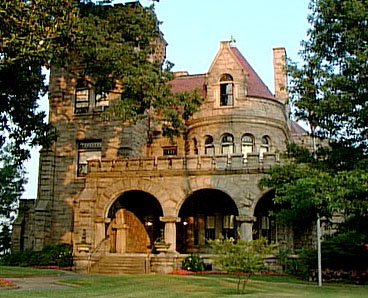
Abram’s Delight, 2012, by Joel Bradshaw. Courtesy of Wikipedia.

Some years later, the City of Winchester acquired the water rights to the spring near Mary’s home and constructed a sewage facility. Angered at the prospect of having her family land defiled by the city’s sewage, Mary proposed to never set foot in the city of Winchester again. She passed away in the home where she had been born in 1917. Her sister Annie remained in the home.

As Marguerite DuPont Lee was compiling her book, Virginia Ghosts, she spoke with Annie about the spirits remaining in Abram’s Delight. Mary, it seems, is not the first spirit to take up residence. Annie Hollingsworth reported that as a young girl she would sit at the piano and sing. While singing, another woman’s voice would sometimes mysteriously join in. Commonly, at night, the sounds of people carousing would echo from the parlor below. Lee in her politely Southern fashion notes that these sounds “did not annoy, being as familiar to her as the call of the whippoorwills outside the window.”

While it seems that Mary is the most active spirit at Abram’s Delight, as of late, another spirit has been active much longer: the possible shade of Abraham Hollingsworth, the family’s and Winchester’s patriarch. This marvelous home remains as a testament to the fortitude of Mr. Hollingsworth. A Quaker, Abraham traveled to the Shenandoah Valley around 1728 in search of a prime location to farm and build a home and a mill. Supposedly, upon discovering a group of Shawnee camped near a small spring, Hollingsworth exclaimed that the place was “a delight to behold.” He constructed a small cabin on the property and was granted nearly 600 acres. Construction on the large, limestone house began a few years before Hollingsworth’s death in 1748.

The spirit of a large man in Quaker dress and a large hat has been seen for years within and without the house. At one time, the appearance of this spirit was so frequent that workmen would amuse themselves by watching the figure. The figure would appear and walk up the front steps of the house and pass through the front door. The workmen would pause and watch the figure and then patiently wait about ten minutes for the figure to reappear. After passing through the front door again, the figure would walk down the stairs and disappear again.

This familiar spirit was also reported in 1951 while the house was being restored. L. B. Taylor reports another story from the early 20th century where the spirit would often shoo away cows that were being brought in.

Of course, based on the evidence, it is difficult to determine whether these spirits are actually the shades of Mary and Abraham but based on what we know of their personalities, it’s altogether conceivable that these are the very independent spirits of them.

I just hope the staff at Abram’s Delight have shoveled the snow away.

For a tour of the Shenandoah Valley, including Winchester and Abram’s Delight, see my Spectral Tour of the Shenandoah Valley.

Sources

  • Abram’s Delight. Winchester-Frederick County Historical Society. Accessed 31 March 2014.
  • Abram’s Delight Museum. Washington’s Frontier Forts Association. Accessed 19 November 2013.
  • Lee, Marguerite DuPont. Virginia Ghosts. Berryville, VA: Virginia
  • Book Company, 1966.
    Libby, Elizabeth. “Haunting happenings at Abram’s Delight.” The North Virginia Daily. 27 October 1995.
  • Mangino, Stephanie M. “Scandal and sadness marked Mary Hollingsworth’s life.” Winchester Star. 25 October 2003.
  • Shufelt, Gail. “Homes, ghost stories part of Winchester history.” The Daily Gazette. 11 August 1996.
  • Taylor, L. B., Jr. The Big Book of Virginia Ghost Stories. Mechanicsburg, PA: Stackpole, 2010.
  • Virginia Historic Landmarks Commission Staff. National Register of Historic Places nomination form for Abram’s Delight. September 1972.

Spirits on the Bay of the Holy Spirit—Richards DAR House

Richards DAR House
256 North Joachim Street
Mobile, Alabama

The figure appears to me to be a man wearing a frock coat. An image was captured during a recent investigation of the Richards DAR House in Mobile. It was taken in one of the bedrooms and includes the image of a man with his back to the camera. The figure is only partial, definitely a head, shoulder, arm and torso are visible, but not much else is visible. It could be a woman, for all we know.

The Richards DAR House is one of those fascinating places where the paranormal appears to be very much in evidence. The Daughters of the American Revolution chapter who operates the home has recently begun allowing investigators to scour the house for evidence of the paranormal and they have found a great deal.

“Every time we end up going into that location, we end up with evidence of some sort,” says one of the investigators from the Alabama chapter of the Delta Paranormal Project who sponsored a public investigation of the house.

As it came into being, the city of Mobile endured very violent labor pains. The area was originally occupied by native people who called themselves the Mauvila. It was these people who met the Spanish who first explored the area in 1519 under Alonzo Alvarez Pineda naming Mobile Bay the “Bay of the Holy Spirit” or “Bahia Espirito Sancto.” While the first Spanish approached the natives peacefully, the second encounter under Henando de Soto a few decades later, was wracked with violence.

Often, places like this that produce a plethora of evidence tend to be the scene of tragedy, the Richards DAR House goes against the grain: it appears to have been a very happy home. The house has quite a cheerful appearance from the street.

The Richards DAR House, 2010, by Carol M. Highsmith. Courtesy of the Carol M. Highsmith Collection, Library of Congress Prints and Photographs Division.

Ralph Hammond in his 1951 Ante-Bellum Mansions of Alabama, notes that the home has the some of the finest ironwork in the city of Mobile. Lacey grillwork surrounds the first floor porch with a similarly decadent iron fence running along the sidewalk in front. The National Register of Historic Places nomination form for the De Tonti Square Historic District, of which the Richards House is a contributing structure, notes that the ironwork depicts the four seasons and is the most elaborate in the city. The rest of the house is far simpler: it’s a brick townhouse with a few fanciful, Italianate decorative touches.

The home was completed around 1860 for Charles G. Richards as a family home for his wife, Caroline Elizabeth Steele, and their many children. In total, the couple had twelve children, though a few did not make it past childhood as was common in the era. Caroline Richards lived in the home for seven years before dying in childbirth. Her husband did not remarry, which, according to the president’s of the home’s executive board, indicates that “there was a lot of love in that family.”

The home remained in the family for a few further generations until passing into the hands of the owners of a cement company. Luckily, the cement company owners were dedicated to preserving the house that served as their offices. When the building outlived its usage as an office, it was turned over to the city in excellent condition.

Quickly, the DAR members became aware of the spirits in residence. “There are times when you hear—when you first go in, after opening up—you’ll hear young children. It sounds like children playing on the stairs or right at the top of the stairs,” one of the ladies told author Elizabeth Parker.

In an effort to contact the children, a recent investigation introduced marbles with the promise that if they were moved, the children could keep them. Later in the investigation, the marbles were found to have moved.

Apparently, there are adults watching over the children. Definitely the person who appeared in the photograph, but also the woman who is seen staring out the window of the red bedroom may be watching over the children. In fact, one guide entered the home one morning and she and the guests with her clearly heard the sound of a woman scolding children.

According to the president of the home’s board, “We just feel like it might be Captain Richards and his wife and children. They’re just happy that we’re taking care of the house so well, and letting others enjoy the house.”

Sources

  • Floyd, W. Warner & Thomas St. John, Jr. National Register of Historic Places Nomination Form for De Tonti Square Historic District. 29 December 1971.
  • Hammond, Ralph. Ante-Bellum Mansions of Alabama. NYC: Bonanza Books, 1951.
  • Kirkland, Scotty. “Mobile.” Encyclopedia of Alabama. 25 September 2008.
  • Paker, Elizabeth. Haunted Mobile: Apparitions of the Azalea City. Charleston, SC: History Press, 2009.
  • Sharp, John. “Ghost hunters make haunting discoveries at Richards DAR House.” com. 10 September 2013.
  • Vargas, Lauren. “Ghost Hunting at Richards DAR House.” WKRG News 5. 22 February 2012.

Newsworthy Florida–October 2013

There are articles about hauntings blooming all around the South for the Halloween season. Florida, the floral state, is at full bloom. Here’s an overview of recently reported Florida hauntings.

St. Cloud Greater Osceola Chamber of Commerce
1200 New York Avenue
St. Cloud

The Southern literary magazine, The Oxford American, explores Southern culture. As ghosts, ghostlore and ghost hunting (Southerners love their hunting) have permeated Southern culture in recent decades, it’s appropriate that the magazine would publish an article about it. An article by Chantel Tattoli explores this through the experiences of GhostStop, a St. Cloud business specializing in ghost hunting equipment. They also conduct investigations and the St. Cloud Chamber investigation included the article’s author.

According to the investigation team she was working with, the building dates to 1910, when it opened as a bank. One major robbery occurred in the building as well as, if local lore is accurate, a double homicide. The activity in the building includes the requisite footsteps in conjunction with what the author describes as “shadows, rattles and whistles.”

The article ends with the author wistfully asking, “What is a ghost but a smear in the air? A memory, willful and invincible, determined to keep living its life.” I really like that statement.

Source

Florida Theatre
128 East Forsyth Street
Jacksonville

When the Florida Theatre opened in 1927, it was the fifteenth movie palace in the city, but definitely the most lavish. The Mediterranean revival-style architecture was very popular throughout Florida throughout that decade. The grand theatre served the citizens of Jacksonville very well for more than five decades even as many other glorious movie palaces and other theatres were shuttered and demolished.


The marquee of the Florida Theatre, 2008, by Craig O’Neal. Courtesy of Wikipedia.

It was here in 1956 that a young singer named Elvis Presley performed. Seated among the screaming fans in the audience was a juvenile court judge to monitor Presley’s notorious hips for movements that were deemed “too suggestive.”

The theatre closed in 1980, but efforts were quickly underway to revive the grand dame. In October of 1983, the theatre opened its doors once again as a performing arts center, a use that has kept the marvelous building open for three decades.

A press release from PR Newswire announces that the theatre will be the scene of a paranormal investigation on Halloween night. The press release includes a remark from the theatre’s house manager that recounts her experience with a strange humming in the theatre. “I’ve heard a strange humming sound that made the hair on the back of my neck stand up. I thought it was a bar refrigerator, so I unplugged it, but the humming noise continued.”

The ghosts of the Florida Theatre are fairly well documented, especially after an investigation in 2010 captured the image of someone sitting in a seat in the balcony.

An article in the Florida Times-Union from July recounts the experience. The crew was filming with infrared cameras when they began to detect movement in the balcony. “The cameras captured something in Seat E2, Section 500, up in the balcony, where the original 1927 seats are still in place.” The video captured what appears to be someone sitting in the seat and moving their arm.

Perhaps the figure will make an appearance on Halloween.

Sources

The Petite Boutiques
1002 East New Haven Avenue
Melbourne

The Petite Boutiques describes themselves as an “upscale mini-mall” that “hosts a collection of small retail businesses located inside a historic landmark.” The landmark building was once the Brownlie-Maxwell Funeral Home which moved to new location some years ago. After the building’s conversion to retail space, people working in the building began experiencing odd activity including Christmas trees in the Christmas shop being rearranged.

A member of the family who owns the building was quoted in Florida Today speaking about the Christmas trees. “Every morning, I would come into find a bird on one of our trees that was upside down, and I would have to rearrange it. It happened all the time. Then one night, I closed and knew the bird was on the tree right side up. But when I got there the next morning, it was upside down again.”

The article mentions that various customers have picked up on various entities within the building.

Sources

Eau Gallie Cemetery
Intersection of Avocado Avenue and Masterson Street
Melbourne

Eau Gallie was an independent city until 1969 when it merged with Melbourne. The name may be a reference in French to the salt water found around the town.

In the Eau Gallie Cemetery sleep many of Eau Gallie’s founding and prominent family. But, their rest may not be so easy. The cemetery has been rumored for years as being haunted and has been investigated by Florida Unknown, a local paranormal investigation team.

According to an article from Florida Today, the team did succeed in capturing a female voice responding to a direct question.

Sources

Crooked Mile Cemetery
aka Georgiana Cemetery
Crooked Mile Road
Merritt Island

It appears that the Crooked Mile Cemetery may be quite a bit more active than the Eau Gallie Cemetery. Indeed, the cemetery plays a part in one of the area’s most well-known ghost stories—the haunting of Ashley’s Restaurant in nearby Rockledge.

On November 21, 1934, the badly mutilated and decomposing body of a young woman was found near the river. Nineteen year old Ethel Allen had been seen just a few days before when she stopped at a local packing house to say goodbye to a friend. Ethel was leaving to visit her mother. She may have also stopped by her favorite local hangout, Jack’s Tavern, now Ashley’s of Rockledge. The Tudor style restaurant, on U.S. 1, still has activity, which has been attributed to Ethel Allen.

The gentleman with whom Ms. Allen was travelling was identified, but never questioned. Ms. Allen was laid to rest in the Crooked Mile Cemetery where she continues to interact with the living. In yet another article from Florida Today, the Brevard Ghost Hunters report that they received an EVP saying “yes” at the grave of Ethel Allen. The investigators had asked if Ms. Allen was present.

Within the moss-draped graveyard, others have reported seeing and hearing apparitions, but scarier still, hands have been known to reach out of graves here.

Sources

Pritchard House
424 South Washington Avenue
Titusville

It is said that Lola Pauline Smith Pritchard, known as Miss Lovie, never liked people in her house. Perhaps it is she who is upset about tourists regularly visiting her magnificent Queen Anne-style house.


Pritchard House, 2012, by Jigar,brahmbhatt. Courtesy of Wikipedia.

As of late, Florida Today has been ramping up on paranormal articles. Interestingly, the reporter interviewed Michael Boonstra whose blog I used for information concerning Ethel Allen’s murder in the above location. As the director and archivist for the Brevard County Historical Commission, he was invited on an investigation two years ago of the Pritchard House.

Recently restored, the home has been returned to its original color scheme, an orange color with coral colored trim. Captain James Pritchard, a businessman important in the development of the area, built the home in 1891. Until Brevard County purchased the home in 2005, it had remained in the Pritchard family.

The investigation uncovered evidence that members of the Pritchard family may still remain in the house. Voices were heard, a light turned on by itself and a grandfather clock that was not in working order was heard pinging.

Sources

Apparitions of Atlanta

N.B. Last Thursday, I did a presentation on Atlanta ghosts for the Atlanta History Center’s event, Party with the Past. The presentation began with the 1908 New York Times story of a ghost in the governor’s mansion. This has since been broken out into its own article here.

Atlanta doesn’t have a very good record of preserving its historic environments. Historic preservation not only preserves the historic fabric of a location, but the spiritual fabric as well. That can most certainly explain cities such as Savannah, New Orleans, Charleston, SC and St. Augustine—cities known for their ghosts.

Disturbances in the historic fabric of a location can also uncover spirits. This is evident throughout the Atlanta area as the sacred ground where many gave their lives during the Civil War is developed. One of the better documented occurrences of this phenomenon took place on a development called Kolb Creek Farm in Marietta, just north of here.

Valentine Kolb House, 2011, Photo by Lewis O. Powell IV, all rights reserved.

This house and a small family cemetery on Powder Springs Road in Marietta are all that remain of the Valentine Kolb farm where a minor battle was fought June 22, 1864, a battle leading up to the vicious Battle of Kennesaw Mountain which would be fought a few days later.

Behind this house, the farm fields have been developed into subdivisions. A couple, James and Katherine Tatum, purchased a home in the neighborhood in 1986. After a quiet first year in the house, the couple began to experience unexplained activity. The television show Unsolved Mysteries publicized their story and they were interviewed by Beth Scott and Michael Norman, interviews that were included in their 2004 book, Haunted America.

The first encounter occurred early one morning. “My husband and I had gotten up to go to the bathroom at the same time, about 2:30 AM. Our bedroom is upstairs. My husband used the bedroom bath and I went into the hall bath. The bathroom door was open. I saw a man walking down the hall in front of the open bathroom door. I assumed it was my husband looking for me since I was not in bed.”

After calling out to her husband with no response, Mrs. Tatum returned to the bedroom where she found her husband and asked if he’d been in the hall. He had not and he was disturbed by the idea that someone else might be in the out. Climbing out of bed, he retrieved his gun and searched the house to no avail, no one else was there.

Mrs. Tatum realized that the figure she had seen was wearing a hat and a coat. “I came to realize that when the man walked past me there had been no sound, as you would normally hear whenever someone is walking down the hall.”

For the Tatums, this would begin a series of odd events including something playing with an electric drill, pocket change on a dresser jingling on its own accord and a small bell ringing by itself.

Sources

  • Battle of Kolb’s Farm. Wikipedia, the Free Encyclopedia. Accessed 28 October 2013.
  • Scott, Beth and Michael Norman. Haunted America. NYC: Tor, 2004.

Apparently, this isn’t the only modern house with spiritual residue possibly left over from the war, homes and businesses throughout the area have activity as well.

Among the multiple stories coming out of the area, one recent story stands out.

On the night of October 8, 2007, a gentleman and his teenage son were driving across one of the many roads that cross the battlefield at Kennesaw Mountain. They spotted something about to cross the road and were amazed to see a horse with a Union cavalry officer upon it appear in their headlights.

“I quickly locked on my brakes as the horse proceeded to come right in front of us,” the anonymous driver told 11 Alive News, an Atlanta news station. The father and son watched in awe as the figure moved across the road and through a fence opposite before fading into the night.

Keep in mind, as you traverse Atlanta’s battlefield, keep on the lookout for ghosts.

Sources

  • Crawley, Paul. “Ghost rider at Kennesaw Mtn.?” 11 Alive News. 1 November 2007.

The Civil War left a heavy, spiritual pall around the city, a pall that has been detected by visitors to Atlanta’s great necropolis, Oakland Cemetery.

[I have covered Oakland in depth here]

[the section that once covered the Ellis Hotel, formerly the Winecoff, has been broken out into its own article.]

Moving on to a happier place on Peachtree in Midtown, we find ourselves at the Fabulous Fox which may possess a handful of “phantoms of the opera.” When this building opened, Christmas Day, 1929, one of the local papers called it “a picturesque and almost disturbing grandeur beyond imagination.” The grandeur, however did not last and the theatre floundered during the Depression. Under threat of demolition in the 1970s, Atlantans banded together to save the theatre and it has since been restored.

Fox Theatre, 2005. Photo by Scott Ehardt, courtesy of Wikipedia.

Some of the mysteries among the minarets include the holy grail of ghost hunting, a full body apparition seen by an investigator. An investigator with the Georgia Ghost Hounds, Denise Roffe (who, incidentally, wrote a book on the ghosts of Charleston, SC), had to use the restroom during an investigation. In the dark she found her way to the ladies restroom and upon entering a stall was shocked to see a young woman. “She was just standing there wearing a long, period dress and a hat.”

Startled, she screamed and other members of the group quickly joined her but the image was gone.

Another popular story involves a man hired to stoke the theatre’s furnaces. He lived down in the basement with a cot and his few, meager possessions. After his death, he has possibly continued to stay in the basement. He is said to like women and when they enter the basement they will, at times, detect a peaceful and relaxing atmosphere while men are sometimes harassed by the spirit.

Sources

  • Fox Theatre (Atlanta, Georgia). Wikipedia, the Free Encyclopedia. Accessed 28 October 2013.
  • Underwood, Corinna. Haunted History: Atlanta and North Georgia. Atglen, PA: Schiffer, 2008.

Just before Peachtree crosses over I-85, visitors to the city may be surprised to see what appears to be a castle looming above the road. Built with granite supplied from Stone Mountain, Rhodes Memorial Hall was constructed in 1904 for local furniture bigwig, Amos Rhodes. After serving as the home of the State Archives the building played a haunted house for a few years in the 1980s and 90s, despite actually being haunted.

Rhodes Hall in an undated photo from the Georgia Trust for Historic Preservation. Courtesy of Wikipedia.

The house was investigated by the Atlantic Paranormal Team from SyFy’s paranormal investigation show, Ghost Hunters. To aid in this endeavor, the show’s producers called in the Real Housewives of Atlanta to perhaps scare up a few ghosts with their attitudes and fashion sense. While some scant evidence was uncovered, Rhodes Hall got to show off its ghostly activity which includes the typical unexplained footsteps, doors opening and closing by themselves and apparitions, though with a sardonic sense of humor that includes a bouquet of dead flowers supposedly being left on the desk of a staff member in the house.

Sources

  • Merwin, Laura. “Ghost Hunters meet Real Housewives of Atlanta and nothing.” com. 2 December 2010.
  • Rhodes Hall. Wikipedia, the Free Encyclopedia. Accessed 28 October 2013.

In terms of Atlanta hauntings, these are just the very tip of the iceberg. While some of these hauntings have been documented, I believe there are many more that should be documented from private homes to office complexes. 

A MARTA train passes by Oakland Cemetery. Photo 2011, by Lewis Powell IV, all rights reserved.

I’d like to leave you with one final story. Ghosts do not just appear in old houses or buildings, but they’re also found in planes, trains and automobiles. Curt Holman in an article a few years ago from Creative Loafing Atlanta relates a story from MARTA, the Metro-Atlanta Rapid Transit Authority which operates a system of trains and buses throughout the city.

Holman relates that a young man riding on a nearly empty train on a winter’s afternoon. The young man was absorbed in the music he was listening to on his headphones and was startled to feel someone sit next to him. Looking at his reflection in the window, the young man saw a man in his 40s with dark hair and wearing a business suit sitting next to him.

Turning to speak to the man he found the seat empty.

Thank you very much and support your local ghosts!

Sources

  • Holman, Curt. “The hauntings of Atlanta.” Creative Loafing Atlanta. 27 October 2011.

The Fickleness of Phantoms—Rippavilla Plantation

Rippavilla Plantation
5700 Main Street
Spring Hill, Tennessee

N.B. This post was edited and revised 13 May 2019.

Phantoms and ghosts are very fickle things. Like birding for a rare species, it’s very difficult to find them even in their natural habitat. I was contemplating all of this as I sat alone in a bedroom at Rippavilla around 2:30 AM, towards the end of my first, formal paranormal investigation.

Rippavilla Plantation Spring Hill Tennessee ghosts haunted
The facade of Rippavilla. Photo 2013 by Lewis O. Powell IV, all rights reserved.

As Nashville, Tennessee sprawls its fingers outwards, it’s beginning to take over middle Tennessee. Small towns like Franklin and Spring Hill have been caught up in the web of development as these charming, and once rural towns are paved over with asphalt and chain businesses. Franklin, just north of Spring Hill and closer to Nashville, has only in recent decades begun fighting back and working to preserve its historic and battle-scarred heart.

Middle Tennessee was one of the areas that saw the brunt of fighting during the Civil War. As the last state to join the waltz of the Confederacy, Nashville became an immediate target for the Union and was the first state capitol to fall into their hands. Those cities and towns south of Nashville—Franklin, Spring Hill and Columbia, among them—were captured and held by armies of both sides during this turbulent period. After Sherman’s capture of Atlanta, far south, the Confederates under General Hood—who had lost Atlanta—attempted to capture Nashville and redeem themselves in the eyes of the Confederates.

Spring Hill and its surrounding estates had seen an influx of Confederate wounded into the small town. Many of the homes—including Rippavilla—had been requisitioned for use as hospitals. According to my guides in the house, the house had seen a smallpox epidemic among the wounded in 1862. During Hood’s Nashville campaign, wounded soldiers once again began to pour in followed by a series of generals, including Hood himself. During the fighting here in Spring Hill, Rippavilla’s fields were the scene of fighting.

Spring Hill saw battle the day before the Battle of Franklin in 1864. While not a major battle, it did leave a few hundred dead or wounded on both sides. Spring Hill was just a stepping-stone in Confederate General Hood’s attempt to dislodge the Union army from Nashville. As the fighting edged on towards Christmas, hope for the Confederacy faltered. Sherman held Atlanta and was marching to the sea destroying much in his path to Savannah, while Hood was defeated at Nashville and routed to Tupelo, Mississippi.

Part of that battle was fought on the grounds of Rippavilla Plantation, just south of town and like so many buildings throughout the South, the house was used as a hospital. This house has many layers of history, each leaving spirits within the house. One source reports spirits from Native Americans, through the Civil War and a smallpox epidemic during that era through to the 20th century, when rumors indicate the house may have seen use as a brothel.

Rippavilla Plantation Spring Hill Tennessee ghosts haunted
The Egyptian-Greek capitals of Rippavilla’s columns. Photo 2013 by Lewis O. Powell IV, all rights reserved.

The home is very similar to a number of other remaining plantation homes in the area in its brick construction and Greek Revival design. The columns, however, show the influence of Egyptian Revival design with capitals depicting papyrus but with the addition of the Greek-style acanthus leaf. This adds a unique touch. Apparently, while the exterior of the home has not changed much, the interior has changed greatly. Downtown Nashville’s First Presbyterian Church—now a National Historic Landmark—features Egyptian Revival elements, one must wonder if there’s a connection.

Visitors being shown inside will encounter a dramatic, sweeping staircase that splits at the landing to rise to the second floor. This feature was added in the early 20th century to replace the smaller, less dramatic staircase. Electricity, plumbing and air conditioning were installed in the house as well as bathrooms.

The home was built by Nathaniel Cheairs, a wealthy cotton planter. It was modeled on Ferguson Hall—the nearby home of his brother, Martin. Work was begun in 1851 and it took four years to complete. The large kitchen building behind the house was completed first and the family lived there until the mansion was finished. Legend holds that the mansion’s walls were pulled down three times to correct Nathaniel’s perceived deficiencies in the masonry.

Rippavilla flourished along with other nearby plantations owned by Cheairs, and by 1860, the census reports some 75 slaves working the estate. Though, with the coming war, all that would be swept away.

Rippavilla Plantation Spring Hill Tennessee ghosts haunted
The back of the house from the courtyard. Photo 2013 by Lewis O. Powell IV, all rights reserved.

Many have automatically assumed that I’m a paranormal investigator. That’s not really the case. I consider myself a writer and researcher—more adept at sussing out information and presenting it in a palatable form—as opposed to an investigator tramping through historic places with loads of technology. I can say, that I’m very much a Luddite. Not that I reject technology, but I do grow weary of having to keep up with it.

This brings me to sitting alone in a bedroom at Rippavilla Plantation last weekend as the clock neared 3 AM. We’d been told to pick a room and then just sit for a little while and see what happens. Always being the “different” one, I chose the room that a number of people didn’t “like.” One of the volunteers helping with the investigation had told me that she could not enter this particular room. If she did, she’d usually end up having an emotional reaction.

This bedroom, in particular, had been used as a surgery. Blood stains on the floor attested to that fact. A military style bed had been installed in the room with soldier’s accoutrements sitting upon and around it. I found a single chair within in the room next to the door leading into the next bedroom. Through the door I could see the door of another bedroom, one that had bloodstains from a more recent murder still staining the floor.

All of this did make me uncomfortable. Glancing at the floor around my chair I did see about five drops of something staining the floor. My active imagination envisioned these drops possibly dripping from a surgeon’s knife or a spurting artery as a soldier writhed in pain. In fact, I had nothing to indicate it was actually even blood.

Still, sitting in this room, I found it hard to imagine the air filled with moans and cries, as it would have been during the war. Though, it seems that other, far more sensitive souls had had experiences in this room. Earlier in the evening, as I was awaiting the start of the investigation, a volunteer who had been working in the house that weekend began to report the smell of tobacco in that room along with the smell of an astringent—possibly witch hazel. She’d been one of the first people in the house that morning when it was discovered that the antique dresses so carefully laid on the beds had been moved.

Rippavilla Plantation Spring Hill Tennessee ghosts haunted
Civil War hospital display in one of the bedrooms. This is the bedroom that staff members do not like. Photo 2013 by Lewis O. Powell IV, all rights reserved.

The senses can play tricks on you. At various times through the night, I was convinced that I saw things, but realized my eyes were fooling me. At times I may have heard things, but I was listening so hard my brain could have simply misinterpreted other, more common, sounds. For these reasons it is imperative for ghost hunters to obtain clear evidence and that exists for Rippavilla. During previous investigations, many Class A EVPs have been captured that point to the conclusion that this house is active. A haunting photograph with a couple of possible spiritual images and video of some type of phenomena that was captured on three different cameras also exists.

The investigation’s leader suggested that the site was very quiet that night. A fair had been held on the grounds of the house and many visitors had passed through the house in the days leading up to the investigation. Perhaps the spirits were resting?

The highlight of the evening took place in a small, modern building at the back of the property. Built on part of the battlefield, this structure is used for various meetings and consists of a large room with restrooms and a small kitchen. The entire group of investigators was seated in this room around an empty chair with a ball on it. Dudley Pitts, the lead investigator, encouraged the spirits to move the ball and we waited in earnest for something to happen. Mr. Pitts spoke up again, saying that if the ball moved, we would all leave. Not two seconds after he said that, a very small, male voice was heard from a side of the room where no one was sitting. The voice asked, “All of you?” A gasp went up among the group and, as promised, we made a quick exit.

As the group I was with concluded their first investigation of the second floor I walked through two of the bedrooms: the nursery and the master bedroom. We left the upstairs in the dark. We had not turned on any lights during the time we were up there. We returned to the kitchen and no one else was in the house. We returned to the upstairs about 15 minutes later to discover that lamps in both rooms were on. The lead investigator turned off the lamp in the master bedroom and then as he approached the lamp in the nursery it turned itself off. Were the spirits saying hello?

The evidence is still being reviewed. Personally, the experience was really wonderful. Though, in the words of one of the investigators, a paranormal investigation “is 7 hours of waiting and 60 seconds of a thrill.” To spend time in such a marvelous historic home, quietly contemplating darkened rooms is actually marvelous. Especially in today’s hyper world of fast technology, instant gratification and even quick tours of historic tours, the experience of sitting and listening and imagining is often lost.

This investigation at Rippavilla lead by Dudley Pitts of Innovative Paranormal Research (IPR) and resident paranormal investigator is held monthly. I’d like to thank Mr. Pitts and the investigators for their help and leadership during the investigation and especially Laura Bentley and Lisa Webber for their kindness. For further information, contact Rippavilla Plantation on their website or through their FaceBook page, “Whispers of the Past.”

Sources

  • History of Nashville, Tennessee. Wikipedia, the Free Encyclopedia. Accessed 20 July 2013.
  • Logsdon, David R. “Rippavilla.” Middle Tennessee Eyewitness to the Civil War.
  • Morris, Jeff, Donna Marsh and Garett Merk. Nashville Haunted Handbook. Cincinnati, OH: Clerisy Press, 2011.
  • Rippavilla Plantation. “History.” Accessed 20 July 2013.

Oldest Spirits–González-Alvarez House

González-Alvarez House
14 St. Francis Street
St. Augustine, Florida

N.B. This entry was originally posted October 13, 2010. Since I now have many more sources at my disposal, I tried to add to the research I’ve presented here, but no further sources could be immediately found, so I’m reposting this with only minor changes. It’s interesting to note that this location is not found in most books on the ghosts of St. Augustine. I still find the video that inspired this post absolutely fascinating. Regular readers may also recognize my “most haunted” rant here, as well.

It is said that St. Augustine, Florida is the most haunted city in America, at least according to a number of authors. As I mentioned in this blog’s very first entry, I find this description to be somewhat distasteful. On one count, the term “haunted” really can’t be any further qualified. Something is either haunted or it isn’t; it’s like death: one is either dead or alive not “more dead” or “more alive.” Therefore, a location either has spiritual activity or not. Certainly, what authors mean is that St. Augustine has more spiritual activity and that may be the case.

Taking this further, though, the phrase “most haunted” is tossed around easily. When cities or locations are rated or ranked as “most haunted,” the basis for this conclusion is often not presented. What makes New Orleans more haunted than Savannah? Why is St. Francisville, Louisiana’s The Myrtles the most haunted place in the nation? Based on what? Granted, a good deal has been published on all three locations, but what criteria make them “more haunted?” Certainly, these locations may have a number of spirits and be very spiritually active, but they are no more haunted than any other location.

González-Alvarez House, 2008, by Ebyabe. Courtesy of Wikipedia.

Additionally, there’s also the issue of research and documentation. Of the three previously mentioned locations, all of them have been well researched and documented, but does that make them any “more haunted” than a location that is not well documented. That’s one of the goals of this blog: to document Southern locations that may be quite active, though perhaps not as well documented. In addition, I’m also adding to the scholarship on locations that are well documented by synthesizing the available information.

The González-Alvarez House is called “The Oldest House” in America and is located in America’s “Oldest City.” The only part of that statement that bears even partial truth is the fact that St. Augustine is the oldest continuously inhabited European settlement in the continental United States. There are Native American cities, notably the Acoma and Taos Pueblos in New Mexico that are far older, but St. Augustine is the oldest European settlement. The González-Alvarez House is not the oldest house in America by any stretch of the imagination. There are far older houses in New England and even as far south as Virginia, but the house sits on a site with far more history than its early 18th century walls can attest to. In fact, this house may not even be the oldest house in St. Augustine. The moniker dates to a time when the house was believed to date to the 16th century.

While the location of the González-Alvarez House may have been inhabited as far back as the initial founding of the city in 1565, archaeologists can only prove inhabitants at the site as far back as the early 17th century. Regardless, the centuries of hope, despair, madness, birth, death, pain and joy have left both physical and spiritual scars on the house.

I was first acquainted with “The Oldest House” on a visit to St. Augustine as a child. An avid collector of travel brochures, seeing racks of brochures in a hotel lobby would give me heart palpitations and soon my little fist would be clutching a stack to take home. Among the brochures I gathered on this trip was one from “The Oldest House.” We didn’t visit, but I was certainly fascinated by the numerous “oldest” places throughout the city.

That memory wasn’t jarred until I came across this video on YouTube one evening. The video’s creator doesn’t provide much information on the video itself, but I found it to be quite intriguing. The first part of the video shows a series of haunted locations in the city including “The Oldest House.” The second part of the video (starting around 3:35) is from a camera placed in a room of one of the houses on the site (there is a handful of buildings located on the site) where supposedly some 50 people were slaughtered by the Spanish, though I can find no reference to this event in any materials I have found). The piece of video, taken during the day, shows what appears to be the shadowy figure of a man, with his hands behind his back, walking through doorway on the right and disappearing into the other room. What I find remarkable is the fact that the figure, unlike an actual shadow, does not fade when it walks into the sunlight in the next room. Perhaps this video is faked, I don’t think so and it’s an excellent fake if it is.

Postcard, c. 1914.

In his marvelous guide to haunted America, Haunted Places: The National Directory, Dennis William Hauck presents some of the activity that has been witnessed in the house. According to him, objects move about the house on their own accord specifically in Maria’s Room. This report is backed up by Dave Lapham in his Ancient City Hauntings. Lapham reports that objects throughout the house move according to one long-time staff member. Hauck also includes strange lights seen in various rooms and the experience of a tourist whose poodle was upset inside the house. Apparently, once the dog was taken outside it was fine. It is believed that animals can sense spirits and may sometimes be upset by them. Interestingly, none of the accounts of spiritual activity include figures such as the one in the video, though there are relatively few accounts of activity that I could find.

As stated earlier, the site of the house had been inhabited for some time when the existing house was constructed. The date of construction, however, is in question and could be anytime between 1703 and 1727. Documentary evidence indicates that this house was home to Tomàs Gonzàlez y Hernàndez and his wife, Maria Francisca Guevara y Domínguez. Gonzàlez was a Canary Island-born sailor who served as a soldier. When Spain ceded Florida to the English in 1763, the Gonzàlez family fled the city and the house stood vacant until 1775 when Englishman Major Joseph Peavett purchased the house. Peavett enlarged the house and following his death in 1786, the house was acquired by a Spaniard, Gerònimo Àlvarez. The Àlvarez family owned the house for nearly a century and in 1884, the house was purchased by dentist, Dr. C. P. Carver who began opening the house for tours and who also began calling the house, “The Oldest House.” The house came under the ownership and operation of the St. Augustine Historical Society in 1918 and has been operated as a museum ever since.

The Gonzàlez-Alvarez House was named a National Historic Landmark, 15 April 1970.

Sources

  •  Gonzàlez-Alvarez House. Wikipedia, the Free Encyclopedia. Accessed 12 October 2010.
  • Hauck, Dennis William. Haunted Places: The National Directory: Ghostly Abodes, Sacred Sites, UFO Landings, and Other Supernatural Locations, 2nd Edition. NYC: Penguin, 2002.
  • Lapham, Dave. Ancient City Hauntings: More Ghosts of St. Augustine. Sarasota, FL: Pineapple Press, 2004.
  • Oldest buildings in the United States. Wikipedia, the Free Encyclopedia. Accessed 12 October 2010.
  • Snell, Charles. National Register of Historic Places Nomination Form for The Gonzàlez-Alvarez House. Listed 15 April 1970.

Die Deutschen in Amerika—Two German Homes in Maryland

Prior to the 19th century, Germany did not exist as a unified nation but rather as a confederation of nation states ruled by a panoply of aristocrats. There had been tension between many of these groups for centuries, but none more contentious than after Martin Luther stirred the religious pot in 1517 setting the stage for the Reformation. As a result, through part of the 17th century the Thirty Years War ravaged central Europe wreaking havoc throughout.

Exhausted with political, religious and economic strife, Germans turned their eyes towards the seemingly bountiful wilds of North America. The English settlers in Jamestown, Virginia had included a German in 1607 and he was followed by a group of German craftsmen the next year. Pennsylvania’s founder, William Penn, travelled through the German states and the Netherlands proclaiming the gospel of his colony. Germans began to flood the colony of Pennsylvania towards the end of the century and they also began to trickle from there into other parts of the east coast. Western Maryland, that part of the state west of the Chesapeake Bay, saw part of this influx of Germans, particularly in Frederick and Washington counties.

In 1739, German immigrant Jonathan Hager purchased 200 acres within the Cumberland Valley and named it Hager’s Fancy. Some years later, he established Elizabethtown on a nearby tract of land which he named for his wife. On the other side of South Mountain, which, at this point, forms the southern side of the valley, the town of Frederick was founded by a land speculator in 1745. This land was settled by German immigrants, among them, Josef Bruner, who purchased a portion of land from Daniel Dulaney, the land speculator, in 1746. Both Jonathan Hager and Josef Bruner would build large, German-style stone houses which remain as monuments to the Manifest Destiny that brought them to this New World.

Hager House
110 Key Street
Hagerstown

Jonathan Hager, a native of Westphalia, arrived in Philadelphia in 1736. He moved into Western Maryland, an area that was sparsely settled, three years later settling on 200 acres. He built a crude cabin which was quickly replaced by yet another cabin most likely while constructing the stone house that still stands. Interestingly, this home is built over springs. It is supposed that this protected the family’s water supply in the event of attack by natives.

Hager House, 2008, by Acroterion. Courtesy of Wikipedia.

The house remained with Hager for seven years until he sold it to another German immigrant, Jacob Rohrer, who is believed to have enlarged the house from one and a half stories to two and a half stories. Meanwhile, Hager acquired a larger tract of land and built a fine log home there. Hager continued to purchase land and in 1762 he founded Elizabethtown. The town’s name was later changed to Hagerstown in his honor.

The home remained in Rohrer’s family until it was sold to the Hammond family in 1814. It remained with them through most of the 19th century until 1890. After that, it went through a series of owners until it was purchased by the Washington County Historical Society in 1944. Speculation among the staff working in the house lays the blame for most of the spiritual activity on the Hammonds. Research has uncovered that at one point in the mid-19th century, the Hammonds lost all of their children in quick succession during a six-month period, quite possibly due to an epidemic.

According to the site facilitator, “there are stories for each room in the Hager House from the attic to the basement.” The staff also states that at least 13 deaths have been recording within the 22” thick stone walls of this house. Among the numerous accounts of possibly supernatural phenomena are the appearances of two specters, one a man in 19th century attire seen on the porch and a woman in Victorian style dress seen in the upper hallway. Accompanying these apparitions are many odd sounds including screams heard in the basement, laughter, footsteps and phantom smells including perfume and tobacco.

Jonathan Hager’s town became a successful crossroads town. The town’s proximity to important cities such as Baltimore, Washington, D.C. and Pittsburgh brought national events to the front stoop of many Hagerstown citizens. Among these events, the Civil War brought a plethora of battles to the pastoral farmlands of the area including one of the bloodiest battles, Antietam which is just south of the city. This crossroads effect also brought success to the nearby town of Frederick.

Schifferstadt Architectural Museum
1110 Rosemont Avenue
Frederick

Around the time of the French and Indian War, a couple years after British General Braddock had marched through the area on his way to Fort Duquesne in what is now Pittsburgh, Pennsylvania, where his troops would be repulsed by the French, Josef Bruner decided to replace the family’s modest wood home with a substantial stone structure. The farm had been named for Josef’s hometown in the Rhineland-Palatinate region of Germany and Josef’s son, Elias, owned the farm at the time and really could be credited with one of the finest examples of German Colonial architecture in the country. The house that the Bruners built has come down to the present with alterations, but many of the original features have remained including wood cabinets around the fireplaces, a squirrel-tail bake oven, arched windows, a winder staircase and a vaulted cellar.

Schifferstadt, 2008, by Acroterion. Courtesy of Wikipedia.

The home passed through many hands until the early 1970s when the suggestion was made to tear down the now ramshackle old house and replace it with a modern gas station. The owner, upset by this prospect, sold Schifferstadt to the Frederick County Landmarks Foundation to preserve. With its wealth of architectural features, the home made an ideal architectural museum and work was performed to restore the home and provide visitors a glimpse into the lives of the town’s original German settlers. Docents provide tours and lessons into historic daily life, but they’ve also encountered some of the original inhabitants themselves.

The first reports from staff members working in the house concerned hearing voices in the house when they were alone. Another reported hearing a door slam in the house after she had just checked all the doors. She quickly left but when she checked the next morning, all the doors were as she left them. Footsteps have been heard on the winder staircase. At some point in the early 80s, staff members heard hammering and other construction sounds with voices speaking German.

Over the years, reports have built up and include apparitions such as the man who walked into the gift shop and dematerialized in front of a staff member or the little boy who has been spotted in the attic. Investigators have spent time in the house and have been rewarded with EVPs including direct answers to questions and some replies in German. The Mason Dixon Paranormal Society investigated in 2008 and captured enough evidence to deem the house as actually being haunted.

Investigator Michael Varhola who, with his father, authored Ghosthunting Maryland, toured the house and documented much of the evidence. He explains that two of the more active spirits in the home have been identified by psychics as a young woman, Wilhelmina, and a young boy, Christian. Wilhelmina was a young midwife who died in the kitchen when her clothing caught fire. One staff member was physically hugged by a spirit in the kitchen, quite possibly that of Wilhelmina. The young boy, Christian, may possibly be three-year-old Christian Bruner who died of a fever in the house. He’s possibly the young boy seen occasionally hiding in the shadows of the attic. He may also be the little boy that children in the neighborhood have spent time playing with.

If, while visiting Schifferstadt, you feel a calm touch in the kitchen or see a slight spirit in the attic shadows, they’re only the kindly spirits of colonial Germans curious about the inhabitants of the country they helped create.

Sources

  • Frederick, Maryland. Wikipedia, the Free Encyclopedia. Accessed 14 October 2011.
  • Gallucci, Gina. “Schifferstadt’s spirits.” Frederick News-Post. 28 October 2007.
  • German American. Wikipedia, the Free Encyclopedia. Accessed 27 September 2011.
  • The Hager House.” The City of Hagerstown. Accessed 14 October 2011.
  • Hager House (Hagerstown, Maryland). Wikipedia, the Free Encyclopedia. 14 October 2011.
  • Hagerstown, Maryland. Wikipedia, the Free Encyclopedia. Accessed 14 October 2011.
  • Hill, Ann and Pamela James. National Register of Historic Places nominationform for Hager House. August 1973.
  • Julius, Erin. “Other specters said to haunt area.” Herald-Mail. 28 October 2007.
  • Leese, Jennifer. “Hager House Offers Haunted Ghost Tours.” Picket News. No Date.
  • Mullen, Katherine. “Ghost tours tell tales of Frederick’s ghostly past.” net. 24 July 2008.
  • Negas, Kristina. “Museum recordings provide haunting evidence.” Frederick News-Post. 27 November 2008.
  • Negas, Kristina. “Team looks for haunting evidence.” Frederick News-Post. 4 November 2008.
  • Rivoire, J. Richard. National Register of Historic Places nomination form for Schifferstadt. 25 August 1973.
  • Schifferstadt (Frederick, Maryland). Wikipedia, the Free Encyclopedia. Accessed 16 October 2011.
  • Schifferstadt General Information. Frederick County Landmarks Foundation. Accessed 16 October 2011.
  • Varhola, Michael J. and Michael H. Varhola. Ghosthunting Maryland. Cincinnati, OH: Clerisy Press, 2009.
  • Weinberg, Alyce T. Spirits of Frederick. Braddock Heights, MD: Alyce T. and Aldan T. Weinberg, 1992.
  • Widener, Christina. “Mystery Lives Here: Local Ghost Stories.” Hagerstown Magazine. September/October 2006.

“A shade of sadness,” Barbara Fritchie of Frederick, Maryland

An incident occurred in 1862 as Confederate troops under General Stonewall Jackson marched through the picturesque Western Maryland town of Frederick September 10th. Union sympathizers in Frederick (Maryland never seceded from the Union) hung out American flags to antagonize Confederates moving through town. Seven days later, those troops would be embroiled in heavy fighting in neighboring Washington County near Sharpsburg, a battle that would forever be named by the lowly stream running through the idyllic pastures where the battle was fought, Antietam.

Among the sympathizers that hung out their flags was 96 year old Barbara Fritchie. Her actions that day became part of the oral tradition of Union troops and two years later were immortalized in a poem by John Greenleaf Whittier, actions that became a hallmark of patriotism that is still celebrated. The poem became a Union rallying cry towards the end of the brutal Civil War that raged over the bucolic farmlands of Western Maryland.

Barbara Fritchie in a contemporary portrait. Courtesy of Wikipedia.

The Ballad of Barbara Frietchie

By John Greenleaf Whittier, 1864

Up from the meadows rich with corn,
Clear in the cool September morn,

The clustered spires of Frederick stand
Green-walled by the hills of Maryland.

Round about them orchards sweep,
Apple and peach tree fruited deep,

Fair as the garden of the Lord
To the eyes of the famished rebel horde,

On that pleasant morn of the early fall
When Lee marched over the mountain-wall;

Over the mountains winding down,
Horse and foot, into Frederick town.

Forty flags with their silver stars,
Forty flags with their crimson bars,

Flapped in the morning wind: the sun
Of noon looked down, and saw not one.

Up rose old Barbara Frietchie then,
Bowed with her fourscore years and ten;

Bravest of all in Frederick town,
She took up the flag the men hauled down;

In her attic window the staff she set,
To show that one heart was loyal yet,

Up the street came the rebel tread,
Stonewall Jackson riding ahead.

Under his slouched hat left and right
He glanced; the old flag met his sight.

‘Halt!’ – the dust-brown ranks stood fast.
‘Fire!’ – out blazed the rifle-blast.

It shivered the window, pane and sash;
It rent the banner with seam and gash.

Quick, as it fell, from the broken staff
Dame Barbara snatched the silken scarf.

She leaned far out on the window-sill,
And shook it forth with a royal will.

Barbara Fritchie waving her flag, by American painter N.C. Wyeth, c. 1922. Courtesy of the Library of Congress, Prints and Photographs Division.

‘Shoot, if you must, this old gray head,
But spare your country’s flag,’ she said.

A shade of sadness, a blush of shame,
Over the face of the leader came;

The nobler nature within him stirred
To life at that woman’s deed and word;

‘Who touches a hair of yon gray head
Dies like a dog! March on! he said.

All day long through Frederick street
Sounded the tread of marching feet:

All day long that free flag tost
Over the heads of the rebel host.

Ever its torn folds rose and fell
On the loyal winds that loved it well;

And through the hill-gaps sunset light
Shone over it with a warm good-night.

Barbara Frietchie’s work is o’er,
And the Rebel rides on his raids nor more.

Honor to her! and let a tear
Fall, for her sake, on Stonewalls’ bier.

Over Barbara Frietchie’s grave,
Flag of Freedom and Union, wave!

Peace and order and beauty draw
Round they symbol of light and law;

And ever the stars above look down
On thy stars below in Frederick town!

A political cartoon by J.S. Pughe, published in Puck, 1905, using the imagery of Barbara Fritchie. Courtesy of the Library of Congress, Prints and Photographs Division.

The historical marker located just outside Barbara Fritchie’s (Whittier spelled her name with an extra “e”) home notes that “spoilsport” historians have proven that this likely never happened. It is reported that while Jackson’s troops marched through the town, they never marched down this particular portion of West Patrick Street where the BARBARA FRITCHIE HOUSE (154 West Patrick Street) is located. In fact, some sources say that the elderly Fritchie was sick in bed that day though Mrs. Mary Quantrell did wave an American flag at Confederate troops, though she was ignored by them and later by history.

The Barbara Fritchie House, 2006. Photo by Hal Jespersen, courtesy of Wikipedia.

The house itself is a reconstruction built in the late 1920s. The original house, which had been built over a creek in 1785, was damaged during a flood and was demolished in 1868. The reconstruction now houses a small museum with artifacts relating to Mrs. Fritchie and possibly her spirit. The house is apparently not very active in a paranormal sense. A rocking chair is said to rock by itself and one staff member reported seeing a pair of feet underneath the quilt draped over the chair. It is also noted that the lights in the basement of the house next door (which was also occupied by Mrs. Fritchie) turn off and on by their own accord. While not terribly interesting paranormally, this house is one of a number of haunted locations within Frederick County, which appears to be a very active county.

Sources 

  • Barbara Fritchie. Wikipedia, the Free Encyclopedia. Accessed 18 September 2011.
  • Barbara Fritchie House. The Historical Marker Database. Accessed 18 September 2011.
  • Rigaux, Pamela. “Walking with the dead.” Frederick News-Post. 23 October 2005.
  • Van Fossen, Nancy and Douglas M. Greene. Maryland Historical Trust Inventory Form for States Historic Sites Survey for Barbara Fritchie House. October 1974.
  • Varhola, Michael J. and Michael H. Varhola. Ghosthunting Maryland. Cincinnati, OH: Clerisy Press, 2009.

Revisiting Ezekiel Harris—The Ezekiel Harris House, Augusta, Georgia

N.B. This is an edit and repost of the very first location I wrote about for this blog, back in August of last year. I’ve combined what was originally two separate entries, updated some information and added pictures.

Ezekiel Harris House
1822 Broad Street
Augusta, Georgia

One of the very first books of ghost I read was the late Kathryn Tucker Windham’s 13 Georgia Ghosts and Jeffrey. Windham’s books covering various Southern states broke ground as some of the first books on the folklore of many of these areas. These books create an important foundation for writing about Southern ghosts. Being among the first stories I read a child, I figured this would be a good location to start with. We’ll start with the history books.

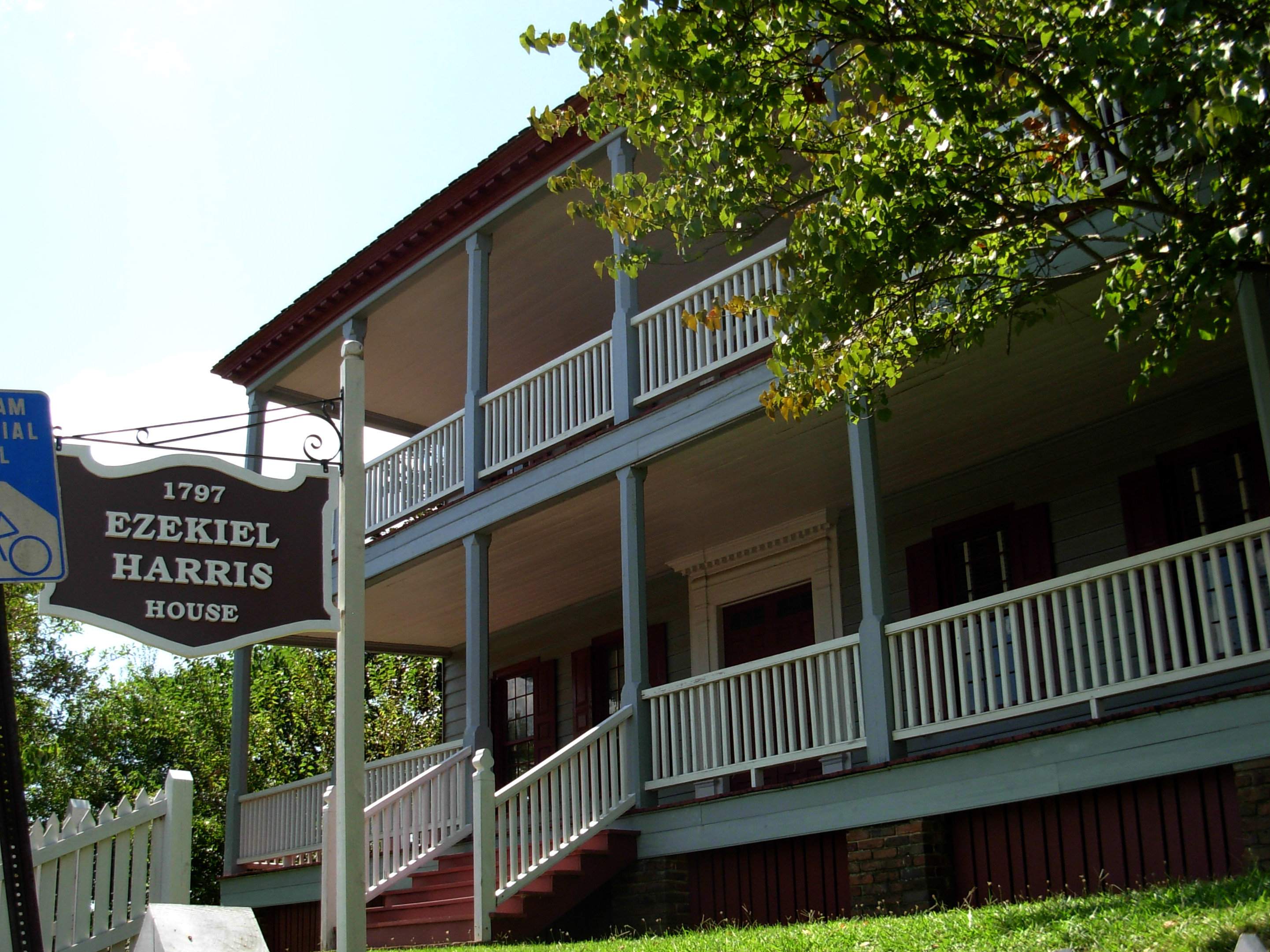
Sign on the back gate of the Ezekiel Harris House, 2011. Photo by Lewis Powell IV, all rights reserved.

The city of Augusta was laid out on the orders of the founder of Georgia, General James Oglethorpe, in 1736, three years after the establishment of the Georgia colony. Named for Princess Augusta of Saxe-Gotha, wife of the Prince of Wales, the city was one of the first inland cities founded in the colony. It is located roughly 127 miles northwest of Savannah at the end of the navigable portion of the Savannah River. The city briefly became the capital of Georgia in 1779 after the fall of Savannah during the American Revolution, but the city also soon fell to British forces. The British held the city briefly and then recaptured and held it from May 1780 to June 1781.

Just before the outbreak of hostilities, the Augusta region was placed under the purview of Thomas Brown by Royal Governor James Wright. Brown was a wealthy Englishman who, with a boatload of indentured servants, created the settlement of Brownsborough, north of Augusta. Anti-British sympathy had begun to smolder in the area and Brown worked hard to stamp out the rebellious feelings of groups like the Sons of Liberty. As an example to other Loyalists, the group captured Brown and subjected to tarring and feathering, a horrifically painful and sometimes fatal ordeal. Escaping the city, Brown travelled to South Carolina where, upon recovery, he began to gather Loyalists about him to fight the revolutionary threat. Brown returned to the city with troops in tow in May of 1780 quite possibly hell-bent on revenge.

Upon entering Augusta again, Brown began quickly exacting measures against its patriot inhabitants, stripping those families of their possessions and expelling them from the colony. Others were arrested and put to death. These actions soon spread beyond the limits of Augusta and throughout British-controlled Georgia and South Carolina. Under Brown’s orders, a contingent of soldiers travelled north of the city to what is now Lincoln County, Georgia and murdered revolutionary leader Colonel John Dooley in his home.

On September 14th, 1780, Colonel Elijah Clarke, commander of the revolutionary forces that had been dogging the British in the area for some time, attacked an Indian village near Augusta, this putting Brown in notice that they were in the area. American forces pushed towards Mackay’s Trading Post, also called the White House, situated outside the city of Augusta near the Savannah River. Brown reinforced his forces which held the trading post with British regulars and allied Native Americans. The Americans laid siege to the trading post and the surrounding area, a siege that would last nearly four days.

The American forces retreated in the morning of the 18th having sustained nearly sixty casualties, but it’s the proceeding events that really concern us. Charles C. Jones, Jr. spells the story out quite grotesquely in his 1890 Memorial History of Augusta, Georgia:

Thus did Captain Ashby, an officer noted for his bravery and humanity, and twenty-eight soldiers fell into the hands of the enemy. He and twelve of the wounded prisoners were forthwith hung upon the staircase of the White House, where Brown was lying wounded, that he might enjoy the demonical pleasure of gloating over their expiring agonies. Their bodies were then delivered to the Indians, who, after scalping and mutilating them, threw them into the river. Henry Duke, John Burgamy, Scott Reeden, Jordan Ricketson, Darling, and the two brothers Glass, youths seventeen and fifteen years of age, were choked to death under a hastily constructed gibbet. Their fate, however, was mild when contrasted with that reserved for the other prisoners who were delivered into the hands of the Indians that they might be avenged of the losses which they had sustained during the siege.

Back of the house. The staircase is behind the horizontal beams. Photo 2011, by Lewis Powell IV, all rights reserved.

This event was noted in a letter by Governor Wright to King George III: “Thirteen of the Prisoners who broke their Paroles & came against Augusta have been hang’d, which I hope will have a very good effect.” Windham notes that the number thirteen represented each of the rebellious American colonies. Though the Americans were repelled after this first siege and Thomas Brown was able to construct a small fortress closer to town, named Fort Cornwallis, British controlled Augusta was eventually broken following a siege in May of 1781.

Ezekiel Harris House, 1934 before it was purchased and restored. Photo by Branan Sanders for the Historic American Building Survey (HABS), courtesy of the Library of Congress, Prints and Photographs Division.

Fast forwarding ahead 165 years to 1946, the Richmond County Historical Society purchased an 18th century house near the river believing it to be the infamous Mackay Trading Post. According to Cherie Pickett, an associate with Historic Augusta in a 1999 article in The Augusta Chronicle (notably one of the oldest American newspapers still in print), historians clung steadfastly to the idea that this building was the Mackay Trading Post for many years, with architectural historians and archaeologists possibly skewing their results to lend credence. Even more importantly to our cause, the Writers’ Project of the WPA recorded stories about the “White House” haunting in 1938 among many other noted Georgia ghost stories.

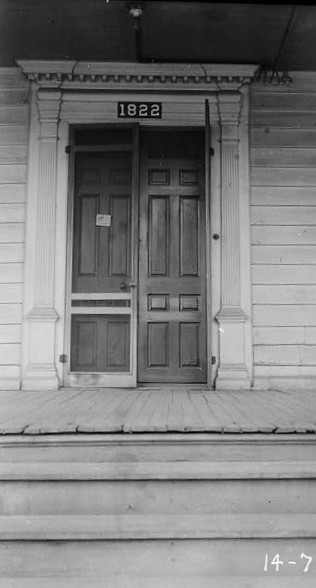
Front door, 1934. Photo by Branan Sanders, for HABS, courtesy of the Library of Congress, Prints and Photographs Division.
Front door, 2011. Photo by Lewis Powell IV, all rights reserved.

Mrs. Windham’s 1973 book gave wings to the story, enshrining it in the Southern folklore tradition. Windham recounts the legends that had grown up about the house. These legends state that visitors standing in the stairwell and slowly counting to thirteen would sometimes hear the thud of the thirteen men as they are hung or moaning of the dying men. Additionally, a female spirit has been seen wandering the second story as if searching for someone. Many have identified this spirit as Mrs. Glass, the mother of the two executed brothers. Windham adds wistfully that this spirit is said to hold her hands out in supplication, perhaps begging the spirit of Colonel Brown for a reprise for her sons.

But, there’s a problem. There had been questions for many years about the history of the building preserved and identified as the Mackay Trading Post. Mary Mackay, mother-in-law to the post’s owner, Andrew McLean, remarked upon seeing the damaged structure after the battle, “I have never seen such destruction.” The building identified as the trading post, however, showed no evidence of damage. A 1975 study by the state of Georgia confirmed that the house was not the Mackay Trading Post and that the misidentified house was likely built almost two decades later. As a result, the house was renamed the Ezekiel Harris House after the first known owner and the possible builder. Interestingly, some have said that the house, which was called by the Smithsonian Institute’s Guide to Historic America, “the finest 18th Century house in the state of Georgia,” would likely have never been purchased and restored had it not been mistakenly identified as the scene for such the bloody events of the American Revolution.

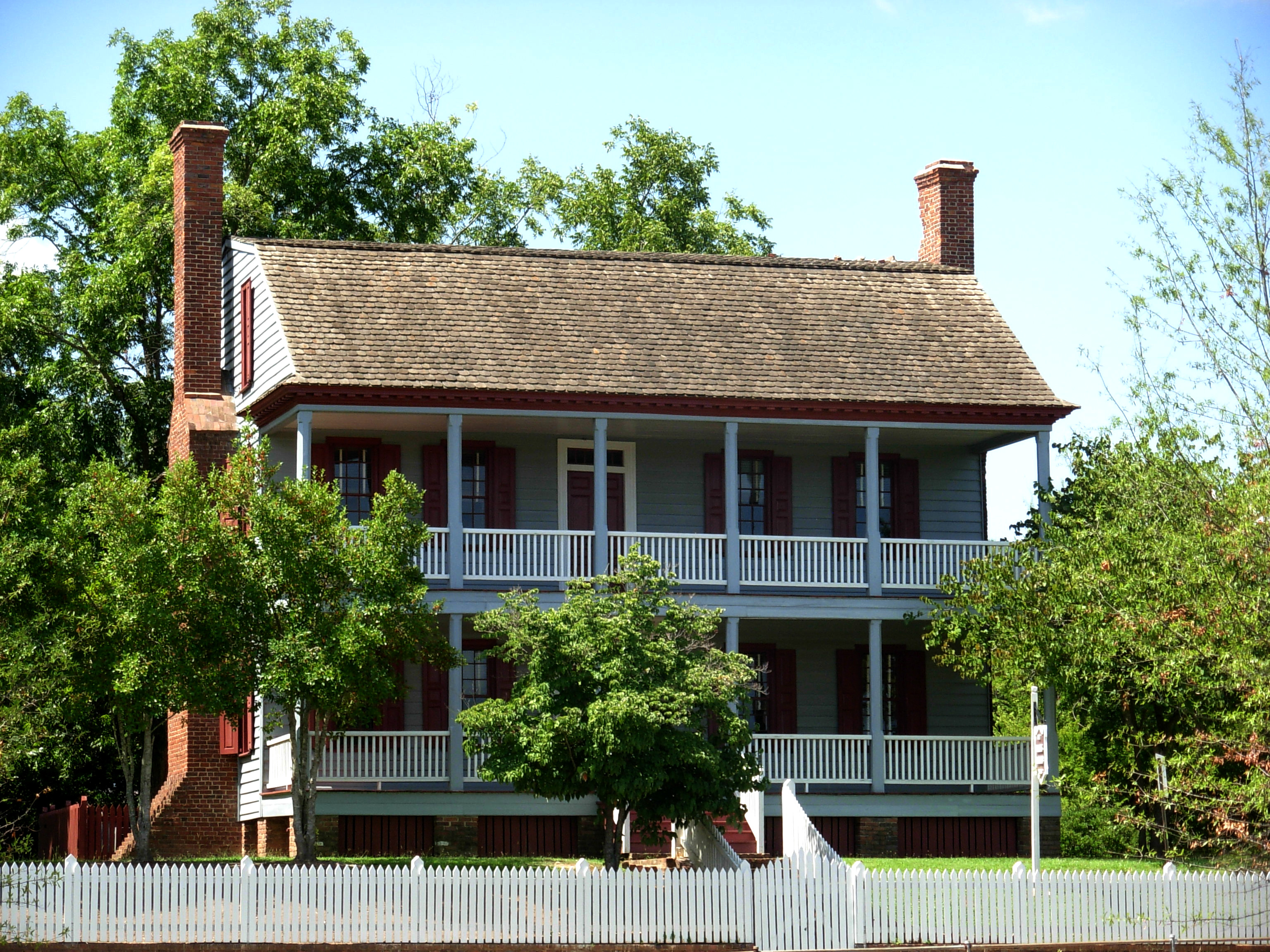
The Harris House today. Photo 2011, by Lewis Powell IV, all rights reserved.
Another view of the front. Photo 2011, by Lewis Powell IV, all rights reserved.

So, if the Ezekiel Harris House is not the Mackay Trading Post, are there still ghosts? Well, historians researching this first siege of Augusta have noted that the trading post was located somewhere in the vicinity of the Harris house, though the exact spot is unknown. We do know, however, that Ezekiel Harris, a tobacco merchant, built this house around 1797, though the exact date is unknown. Scott A. Johnson, author of The Mayor’s Guide to the Stately Ghosts of Augusta, posits that the ghosts may simply have taken up in the house after its construction. According to him, visitors still report odd occurrences on the staircase that includes the feeling of having a rope about your neck. He also reports that the female ghost is commonly seen as well.

It’s not uncommon for spirits to take up in a nearby structure if their regular haunt has been destroyed, but some remained unconvinced that this is the case here. Ben Baughman, manager of the house for the Augusta Museum, which has controlled the property since 2004, stated that he has had no experiences in the house. In 2006, two videos appeared on YouTube showing an investigation of the house. The first part of the video shows part of the usual tour of the house being led by Mr. Baughman as well as his docent’s spiel about the house’s history. The second video shows the beginning of a night investigation involving a Ouija board. The video ends just as the Ouija board is produced and there is no part II. So there is no indication that anything was discovered.

Interestingly, one of the females on the video states that the female apparition is probably not Mrs. Glass, but more likely Mrs. Ezekiel Harris. History may back her up on that assumption. While there are few records relating to either Mr. or Mrs. Harris, those that remain on Mr. Harris reveal that he was an ambitious businessman with some legal problems including an accusation of murder. In one surviving letter from 1805, Mr. Harris describes his wife as having breast cancer. She died the following year, quite possibly in the house. This does leave open the possibility that the spirit may be her still worrying over her husband’s troubles or the cancer in her breast.

The remainder of the home’s history may be relatively free of violence. The house was owned by two other families before being bought by the company constructing the Sibley Mill. The house was turned into a boarding house and the porch of the upper story was enclosed. Of course, as a boarding house, there may have been some violence and some tenants may not have left.

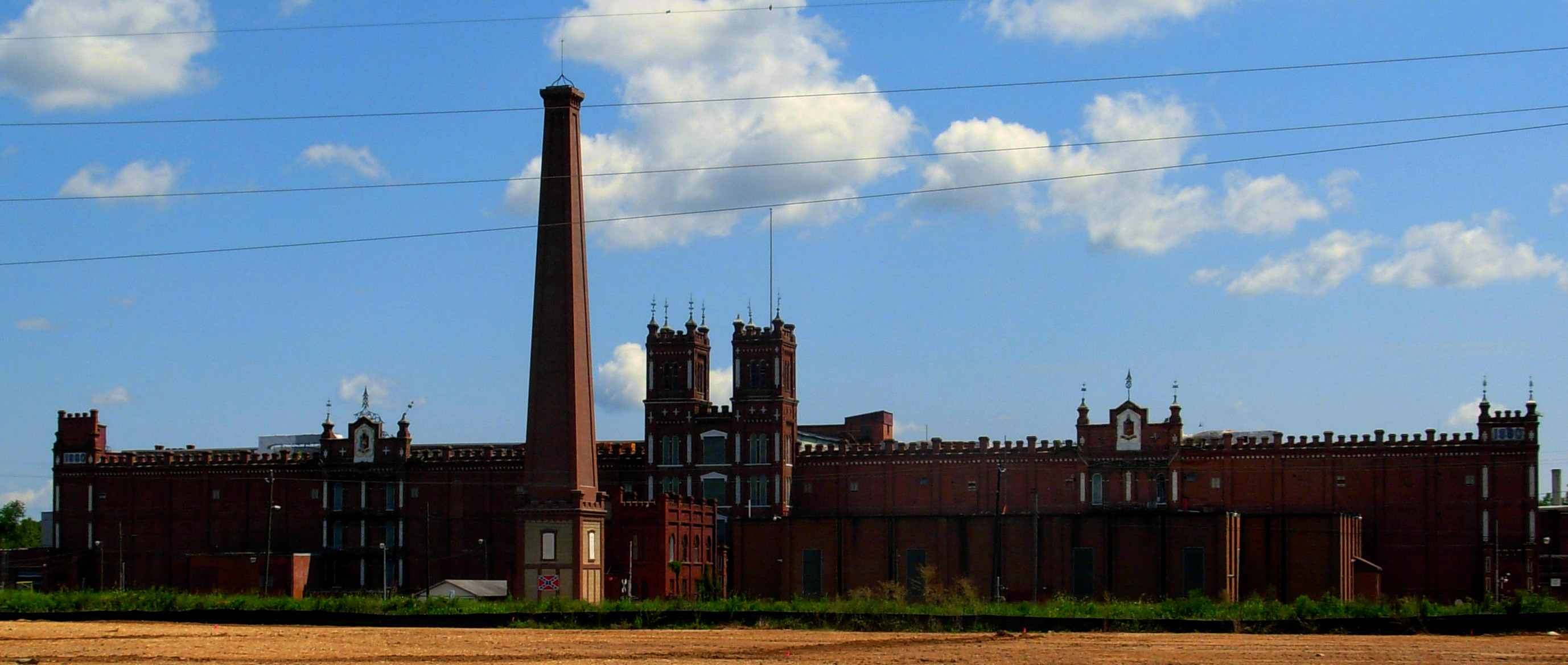
Mill in view of the house. Photo 2011, by Lewis Powell IV, all rights reserved.

As for the question of whether this house is haunted, I cannot say. I would be interested in seeing the results of any paranormal investigations on the location. Certainly, with its age and history ghosts are likely, but I have not seen a single, identifiable report of paranormal activity. In other words, the descriptions of activity are always general and cannot be linked to any specific individual.

Postscript 

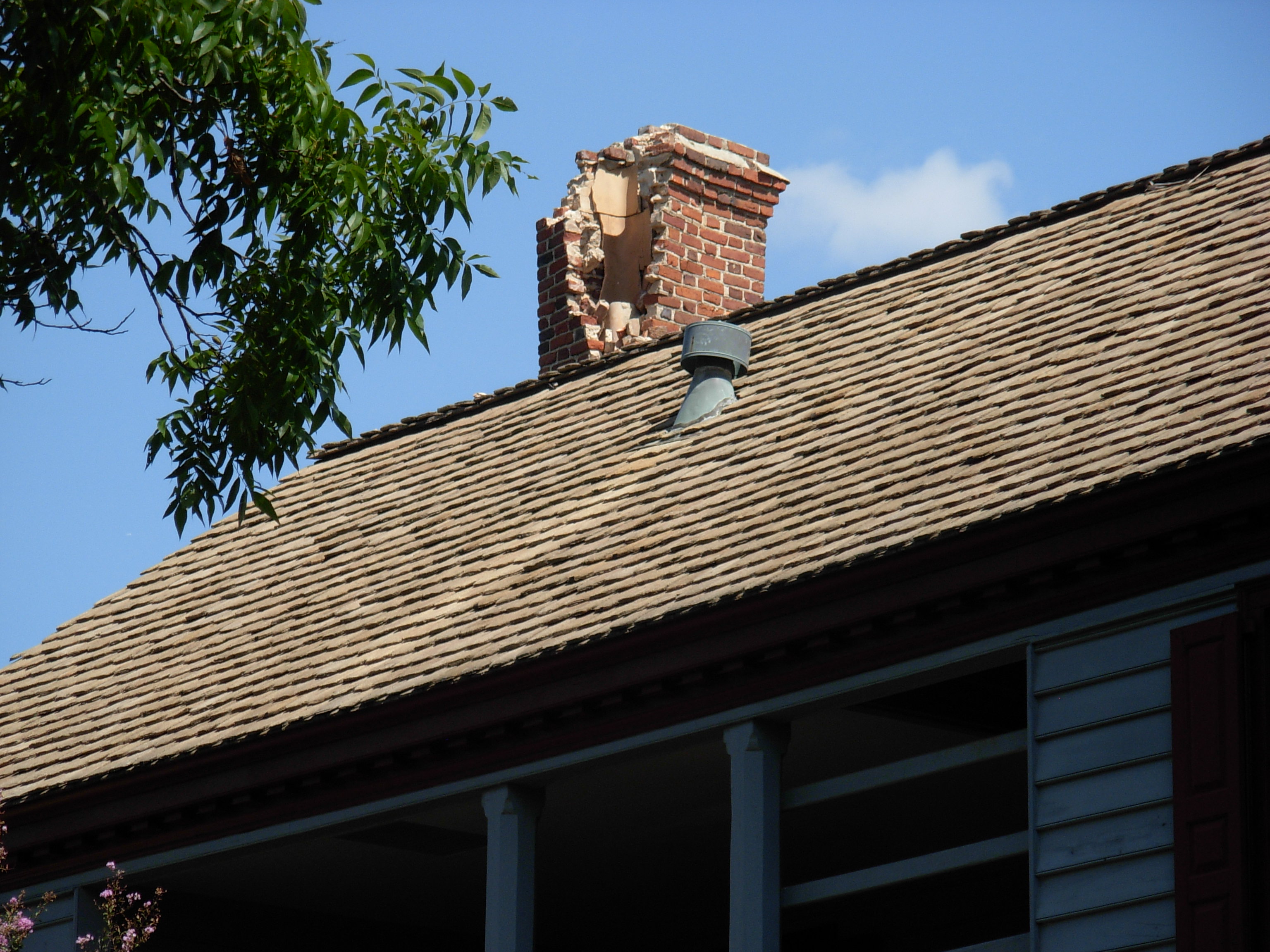
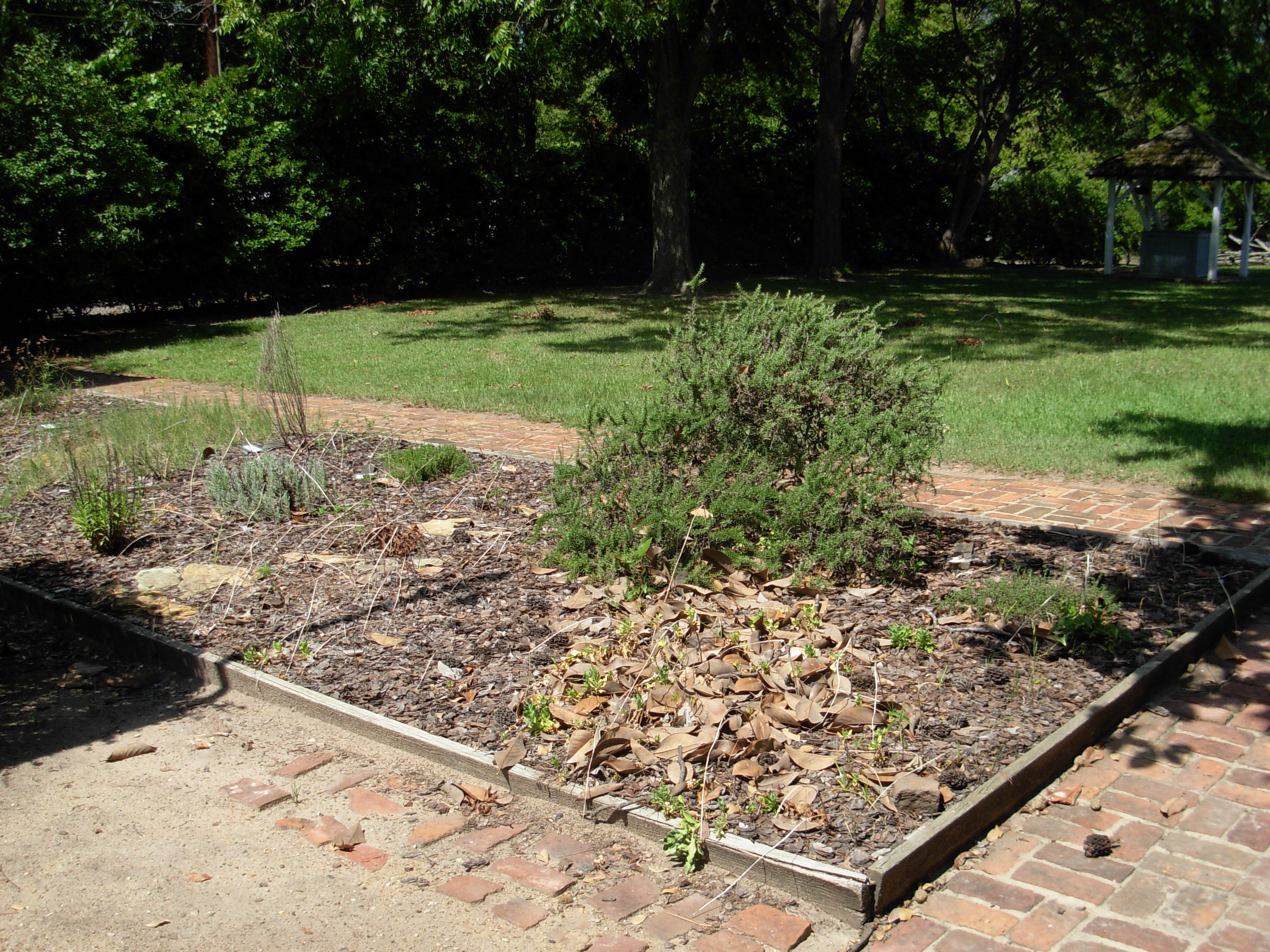
Back in July, I finally visited the Ezekiel Harris House for the first time. Presumably, due to budget cuts, tours of the house are now by appointment only and I only had time to take a few pictures and ponder the forlorn house from outside the white picket fence surrounding it. The house is a bit unkempt with grass needing mowing, a dead kitchen garden and a falling chimney. Even in that state, the house is a commanding presence, situated on a high hill with a vista of the grand Sibley Mill in the distance. I wonder if the spirits enjoy the solitude.

Crumbling chimney. Photo 2011, by Lewis Powell IV, all rights reserved.
Dying kitchen garden. Photo 2011, by Lewis Powell IV, all rights reserved.

Sources

  • Ghosthunting—Ezekiel Harris House Daytime Tour.” YouTube. 12 September 2006.
  • Ghosthunting—Ezekiel Harris House Nighttime Investigation.” YouTube. 9 December 2006.
  • Cashin, Edward J. “Augusta.” The New Georgia Encyclopedia. Accessed 19 February 2007.
  • Johnson, Scott A. The Mayor’s Guide to the Stately Ghosts of Augusta. Augusta, GA: Harbor House, 2005.
  • Jones, Charles C. Jr. and Samuel Dutcher. Memorial History Of Augusta, Georgia. Syracuse, NY: D. Mason & Co., 1890.
  • Killion, Ronald G. and Charles T. Waller. A Treasury of Georgia Folklore. Atlanta, GA: Cherokee Publishing, 1972.
  • Kirby, Bill. “The legend of this old house.” The Augusta 24 July 2010.
  • “Urban legends add mystique to Harris House.” The Augusta Chronicle. 20 June 1999.
  • Windham, Kathryn Tucker. 13 Georgia Ghosts and Jeffrey. Tuscaloosa, AL: The U. of Alabama Press, 1973.

A Handful of Haunts–Photos from New Orleans

Labor Day Weekend was wild and wooley for New Orleans with Tropical Storm Lee hitting the city at the same time as numerous revelers for Southern Decadence and other events. A friend of mine, Benjamin Lewis, was able to take pics of a handful of haunted sites and I’m most grateful to him for these marvelous images!

Beauregard-Keyes House
1113 Chartres Street

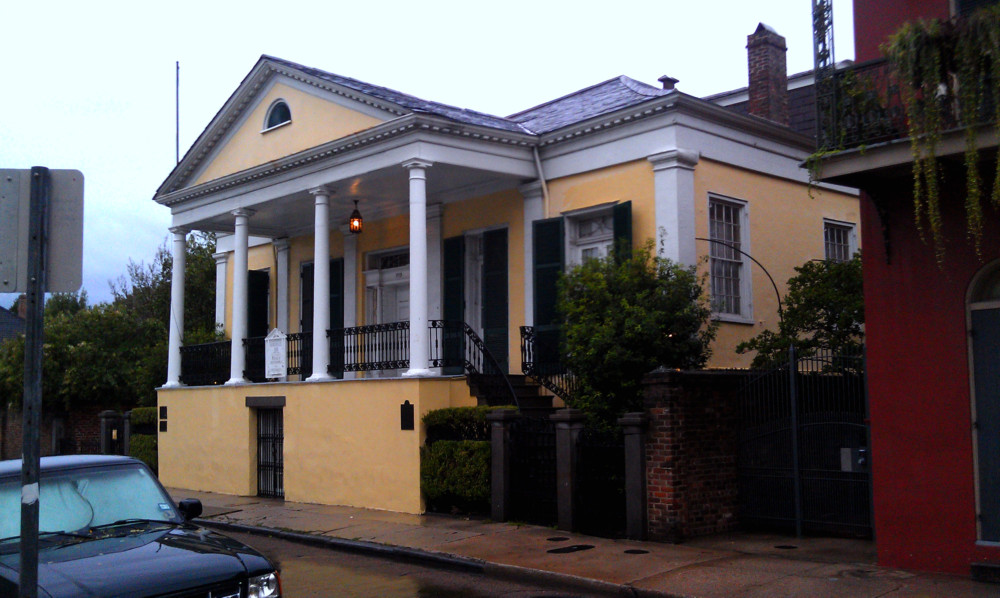
A bright spot of sunshine on a dreary day, the Beauregard-Keyes House, 2011. Photo by Benjamin Lewis, all rights reserved.

One of the most famous homes in the city, the Beauregard-Keyes House has served as the residence for a number of famous names including Confederate General P. T. G. Beauregard, chess master Paul Morphy and novelist Frances Keyes. Events in this house have ranged from glittering balls to a bloody Sicilian mafia massacre in the early 20th century. Gun shots from the massacre are still heard, a waltzing couple seen inside while some have heard the name of General Beauregard’s Waterloo, Shiloh, being repeated over and over again. One resident even claimed to have encountered the battle of Shiloh being fought in the ballroom. I’ve covered this site in depth here.

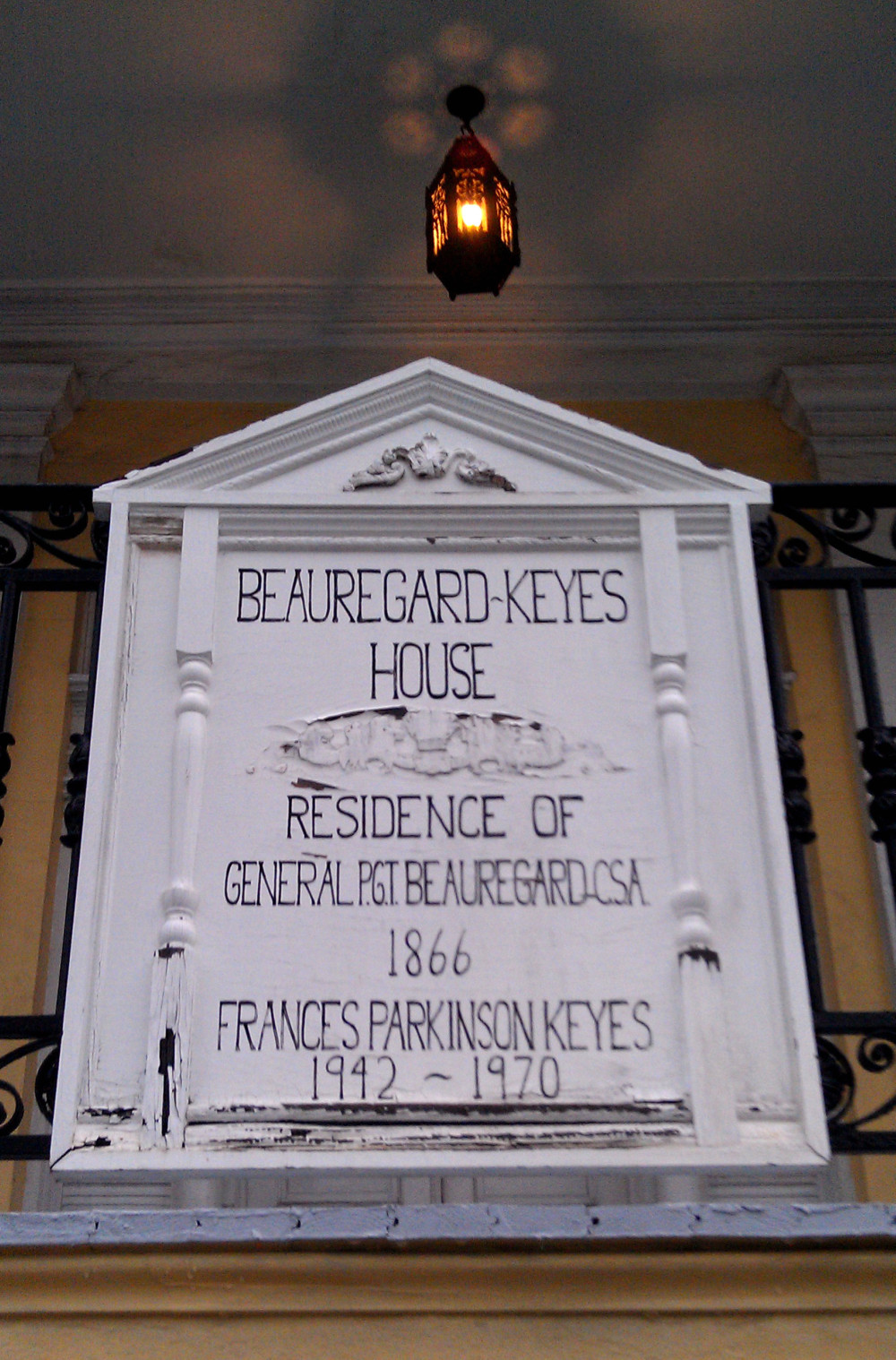
Sign at the front of the Beauregard-Keyes House, 2011. Photo by Benjamin Lewis, all rights reserved,

Le Richelieu
1234 Chartres Street

Front entrance to Le Richelieu, 2011. Photo by Benjamin Lewis, all rights reserved.

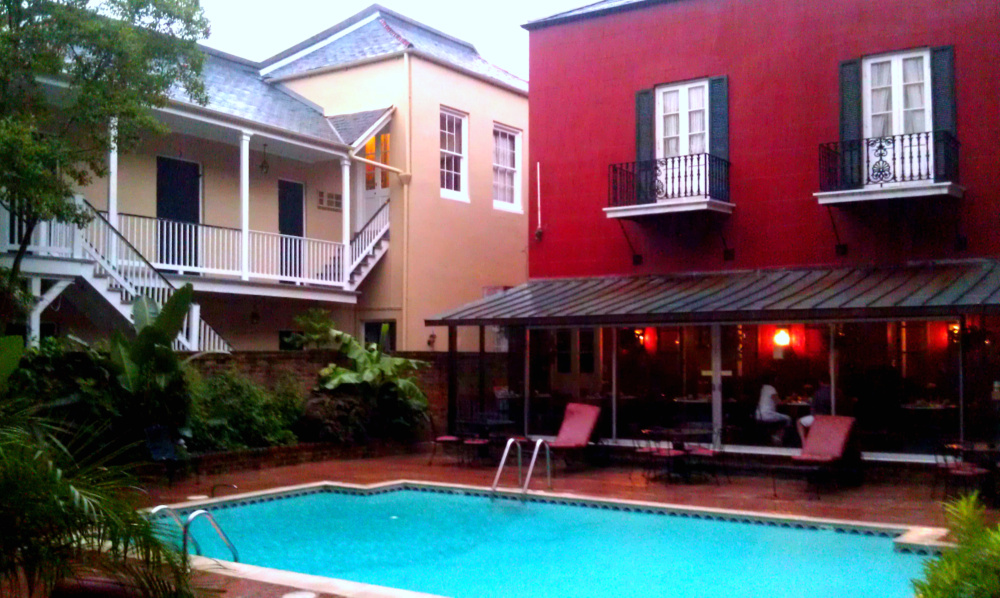
Housed in two buildings, one dating from 1845, the other from 1902, the Le Richelieu Hotel occupies the site where five French patriots were executed in the late 18th century. The spirits of these five men may still reside here.

Housed in two buildings, one dating from 1845, the other from 1902, the Le Richelieu Hotel occupies the site where five French patriots were executed in the late 18th century. The spirits of these five men may still reside here.

The two buildings that comprise Le Richelieu, 2011. Photo by Benjamin Lewis, all rights reserved.
A view of Le Richelieu from Barracks Street, 2011. Photo by Benjamin Lewis, all rights reserved.
Looking down this hallway at Le Richelieu one can almost imagine the Shining Twins appearing here. Photo by Benjamin Lewis, all rights reserved.
Courtyard and pool where a group of Spanish soldiers may have been executed. Do their spirits still wander here? Photo by Benjamin Lewis, all rights reserved.

Old United States Mint
400 Esplanade Avenue

Front entrance to the old US Mint, now the Louisiana State Museum, 2011. Photo by Benjamin Lewis, all rights reserved.

From 1838 to 1909, this building housed the New Orleans Mint, producing currency in all denominations. Since its closure as a mint, the building served a variety of functions until 1981 when it became a part of the State Museum of Louisiana, the capacity in which it functions today. In the second floor gallery a man in blue coveralls has been seen rolling a cigarette. He then places the cigarette into his mouth and walks into a nearby wall.

View down the length of the facade, 2011. Photo by Benjamin Lewis, all rights reserved.
The massive old mint, 2011. Photo by Benjamin Lewis, all rights reserved.
The rear of the old mint building, 2011. Photo by Benjamin Lewis, all rights reserved.

Old Ursuline Convent
1100 Chartres Street

Plaque on the old convent, 2011. Photo by Benjamin Lewis, all rights reserved.

One of the oldest buildings in New Orleans, the Old Ursuline Convent has survived hurricanes, fires and the nuns have lent aid during plagues and epidemics. It’s no surprise that their old convent would house spirits. According to Jeff Dwyer, the spirits of Ursuline sisters have been seen gliding throughout the building while the spirit of a Civil War era soldier has been seen in the garden.

A brooding sky over the Old Ursuline Convent, 2011. Photo by Benjamin Lewis, all rights reserved.

Sources 

  • Dwyer, Jeff. Ghost Hunter’s Guide to New Orleans.Gretna, LA: Pelican Press, 2007.
  • New Orleans Mint. Wikipedia, the Free Encyclopedia. Accessed 10 September 2011.
  • Powell, Lewis IV. “Beauregard-Keyes House, Part I.” Southern Spirit Guide.3 December 2010.
  • Powell, Lewis IV. “Beauregard-Keyes House, Part II.” Southern Spirit Guide.6 December 2010.
  • Smith, Katherine. Journey Into Darkness…Ghosts and Vampires of New Orleans. New Orleans: De Simonin Publications, 1998.