Alabama Haunt Briefs

Needing a project to carry me through this quarantine, I’ve decided to return to some original blog roots. Just after establishing this blog in 2010, I created a series of articles highlighting ten haunted places within each of the 13 states that I cover. Over time, these articles have been picked apart, rewritten, expanded, and used elsewhere. When I moved this blog, I did not move over those articles. Because I have a backlog of incomplete articles and bits and pieces that haven’t been published I’m creating a new breed of these articles during this quarantine.

The Alabama article, the first to be posted, was recreated after I finished my Alabama book as the “Southern Spirit Guide to Haunted Alabama.” This article contains new entries that I have not covered in this blog.

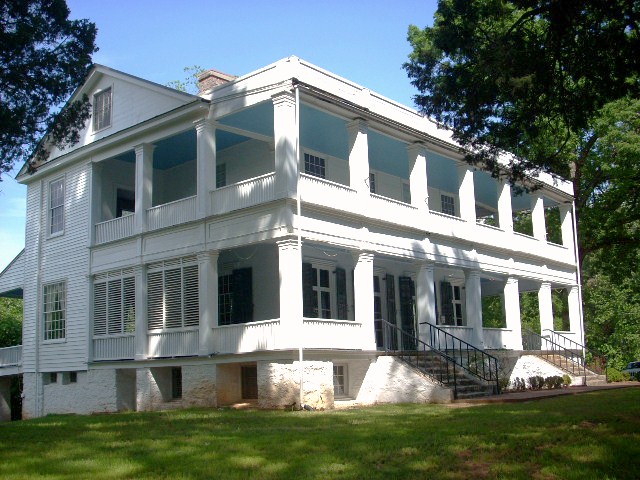
Hank Williams Boyhood Home and Museum
127 Rose Street
Georgiana

One of Alabama’s most important native sons, Hiram King “Hank” Williams, Sr. played a major role in taking country music from the rural backwaters and byways of the South to nationwide popularity. He created a sound that combined the folksy sound of Jimmie Rodgers with stylistic elements of African-American blues, taught to him by Rufus “Tee Tot” Payne, all combined with honest, straight-talking, and evocative lyrics that are now the standard for country music lyricism. Williams’ hard drinking and even harder living lead to an early death at the age of 29 while traveling to West Virginia. While he sang, “I’m Leavin’ Now,” it seems that Williams’ spirit may remain earthbound. His lonesome spirit appears at several sites associated with his life including Birmingham’s Redmont Hotel.

Hank Williams Boyhood Home Georgiana Alabama
Hank Williams’ Boyhood Home, 2010, by Carol M. Highsmith. Courtesy of the George F. Landregger Collection of Alabama Photographs in Carol M. Highsmith’s America. Courtesy of the Library of Congress, Prints and Photographs Division.

Born in rural Butler County in 1923, young Hank’s early childhood was fraught with difficulties. Hank’s father, a long-term patient at the veterans’ hospital in Pensacola, Florida suffering from a brain injury sustained during his service in World War I, left Lily, Hank’s mother, to fend for herself and her little family. They were offered this home in Georgiana in 1930 after the family lost their cabin and all their possessions in a fire.

Williams lived here with his family during perhaps the most significant time in his musical development. During the four years the family occupied this house, Williams is said to have practiced his guitar underneath it while sitting on “an old car seat.” Williams’ son, Hank Jr., writes of an encounter with his father’s spirit at this home in his song, “127 Rose Avenue.” Can this be considered actual evidence of a haunting? Perhaps, or maybe it’s simply Hank Junior’s lyrical way of memorializing his late father.

Sources

  • Butler County Heritage Book Committee. Heritage of Butler County, Alabama. Clanton, AL: Heritage Publishing Consultants, 2003.
  • Lange, Jeffrey J. “Hank Williams Sr.” Encyclopedia of Alabama. 19 March 2007.
  • Serafin, Faith. Haunted Montgomery, Alabama. Charleston, SC: History Press, 2013.

Lafayette Lanier Elementary School and Langdale Auditorium
6001 20th Avenue
Valley

Following the Civil War, local industrialists began establishing textile mills throughout the South. In order to provide for their employees—and also as a way of making them and their families beholden to the mill owners and managers—these industrialists established mill villages. These villages provided most everything an employee and their families would require including housing, schools, churches, and stores. Valley, Alabama is made up of a series of mill villages on the western bank of the Chattahoochee River.
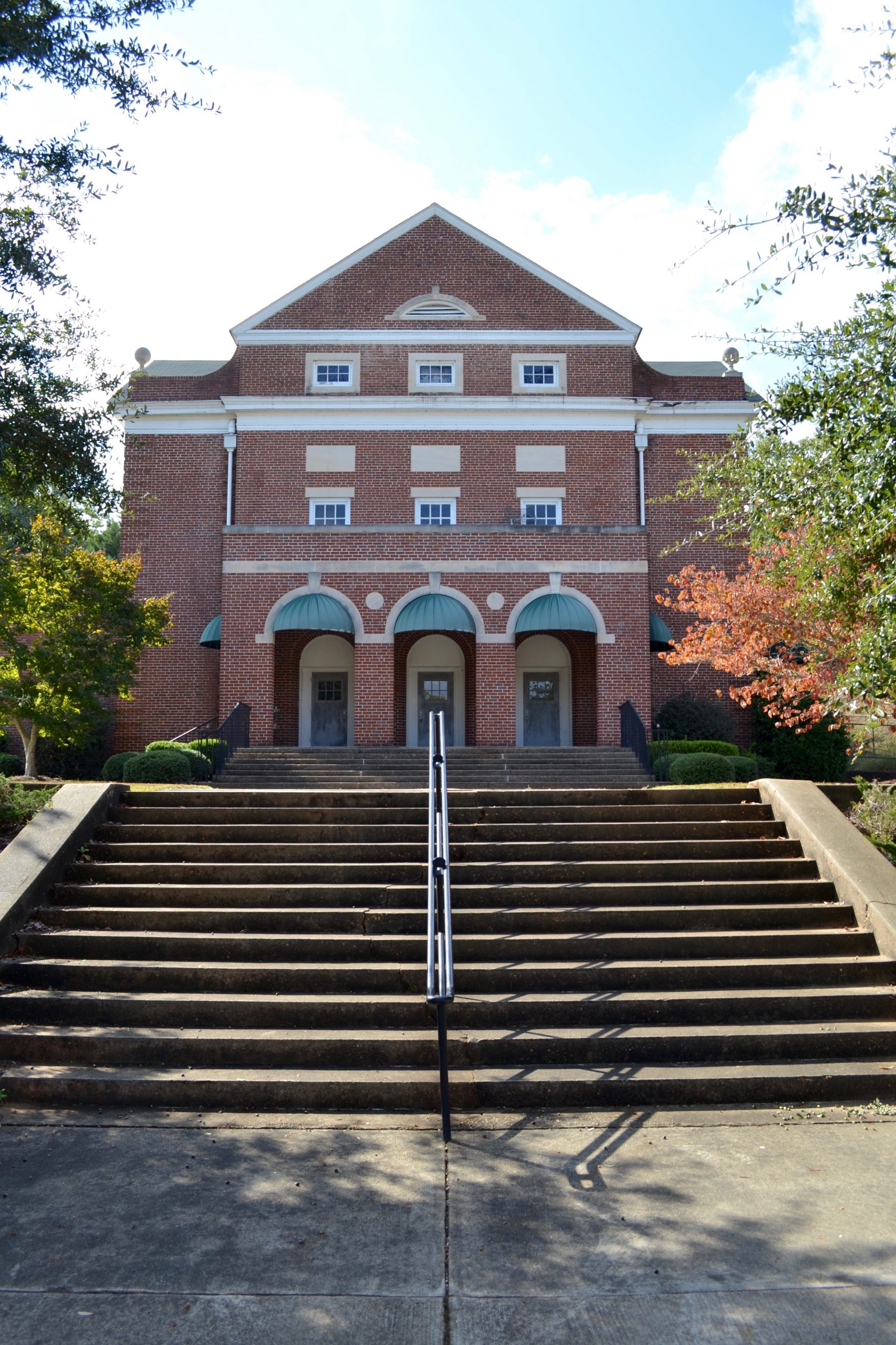
Langdale Auditorium Valley Alabama
Langdale Auditorium stands next to Lafayette Lanier Elementary. Photo 2016, by Lewis O. Powell IV, all rights reserved.

One of the oldest of these villages is centered on the Langdale Mill that was established in 1866. While the village has a number of late-19th century buildings, many of the most prominent buildings were constructed in the early 20th century. Lafayette Lanier Elementary School and the adjoining Langdale Auditorium were constructed around 1935. Though the mill across the street has closed, both buildings are still used for their initial functions and known to be haunted.

Kenneth W. Allen, a local paranormal investigator, penned a book, Southern Alabama Hauntings, in 2013. An employee with local law enforcement and first responders, Allen was in a great position to collect tales of strange doings in the area. With these stories, he also investigated several of these locations to further prove rumors of them being haunted.

In the book, Allen includes the experience of a local police officer who was sent to investigate a possible intruder in the school. He made his way through the first floor and found no one so he headed up to the second floor. Stepping into the second-floor corridor, he spotted a figure darting into one of the classrooms. He drew his weapon and called for backup. When three other officers arrived, they proceeded into the classroom that the suspect had disappeared into only to find the room empty. Over the years, teachers, staff, and students have seen an odd figure on the second floor. One story reveals that the figure is that of one of the school’s principals.

The auditorium has its own panoply of ghosts. Besides footsteps that reportedly resound throughout the old building, the spirits enjoy playing with toys that are kept in storage. Allen tells one story of a teacher who put toys away only to find them out again when she entered the storage room a short time later.

Sources

  • Allen, Kenneth W. Southern Alabama Hauntings. CreateSpace: 2013.
  • Binkley, Trina. National Register of Historic Places Nomination form for the Langdale Historic District. May 1999.

Mount Pisgah Missionary Baptist Church Cemetery
7400 Tabor Road
Gadsden

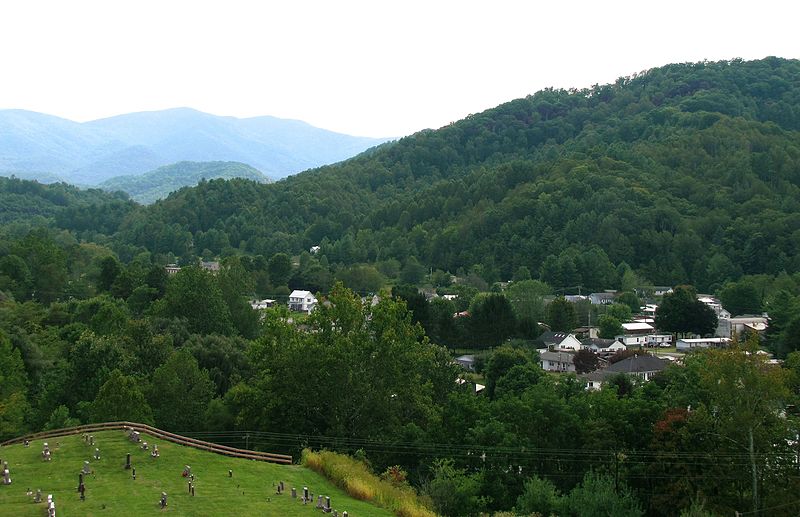
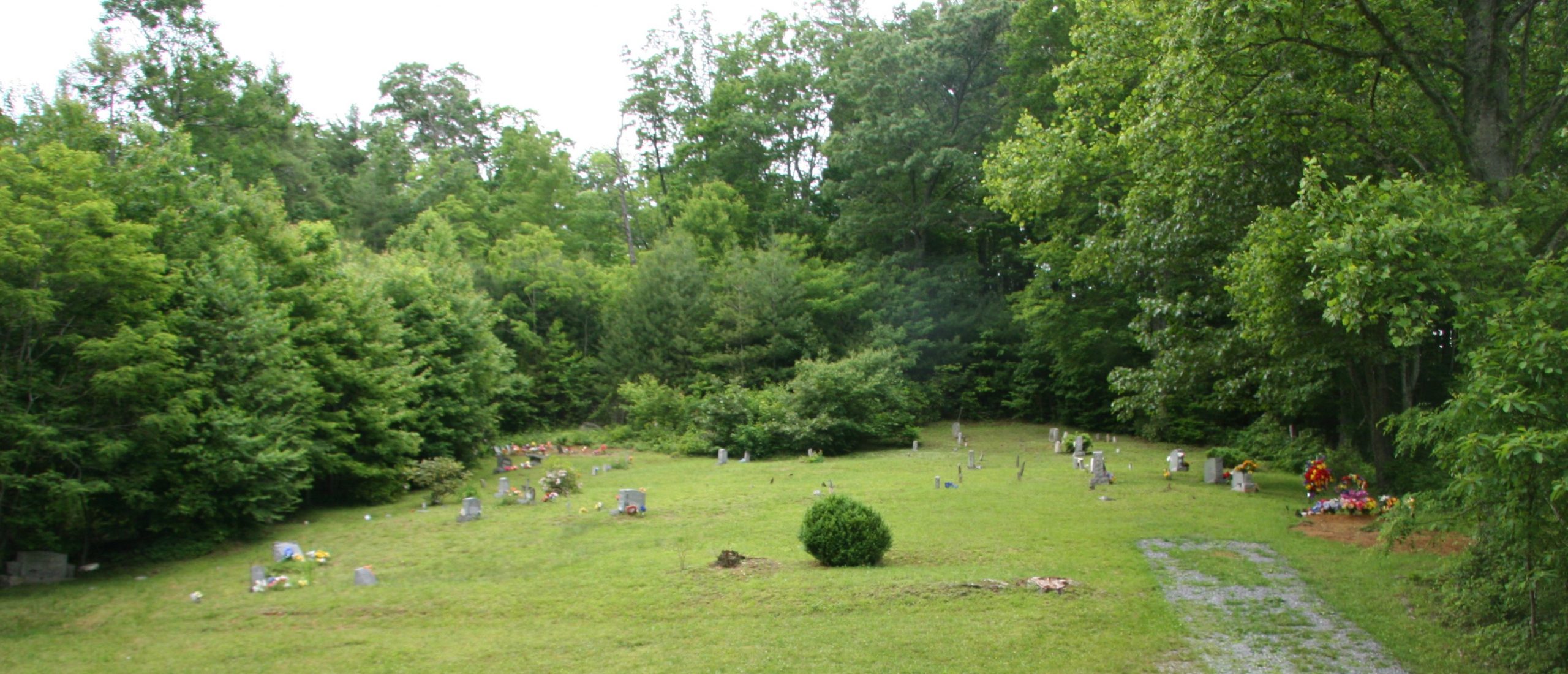
A recent conversation with a Northeast Alabama resident led me to begin uncovering stories from this cemetery. Located northeast of Gadsden on Lookout Mountain, this small country church has an old cemetery located just across the road. Consulting the Find-A-Grave page on this cemetery, it seems that the first burial occurred in 1886 and continuing to the present day.

As for the spookier side of this cemetery, it is reported that strange lights are sometimes seen here. I would note that these are likely cemetery lights, which are seen in and around cemeteries worldwide. Additionally, disembodied voices are heard.

A search on this location brought up a frightening account on GhostsofAmerica.com. While I cannot vouch for the validity of this account, it seems to me to ring true. According to this account, a group of curious people decided to visit the cemetery after finding it listed on a haunted places website. As they stepped out of their car, the group began to hear strange whistling, screaming, and a thumping noise. Frightened, the group piled back in their car as the sounds grew closer. Before the group drove away, a hand appeared, pressing against the passenger window.

Please respect this holy burial ground, and tread lightly taking only memories with you.

Sources

Old Bibb County Jail
21 Court Square, West
Centreville

When I wrote my Alabama book, the Old Bibb County Jail was facing a death sentence. Local officials had made the decision to demolish the forlorn building on the town square. Sadly, the death sentence was imposed, and the building has been razed.

Built in 1910, this imposing Renaissance Revival structure had seen many a prisoner pass through its barred cells until its closure in 2004. Indeed, it also saw executions as well, with the last occurring in 1949. Perhaps this is why the building may be haunted. A 2009 investigation report from the Tuscaloosa Paranormal Research Group suggests that paranormal activity in the old jail ranges from full body apparitions to odd sounds and a feeling of being watched.

Sources

  • Floyd, W. Warner. National Register of Historic Places Nomination form for the Centreville Historic District. 21 December 1977.
  • McClanahan, Mike. “Old Bibb County Jail set to be demolished, citizens protesting decision.” WIAT. 5 June 2015.
  • Reed, Jon. “See inside 105-year-old abandoned Alabama jail.” com. 15 June 2015.
  • Tuscaloosa Paranormal Research Group. Bibb County Jail. 14 November 2009.

Peerless Saloon & Grille
13 West 10th Street
Anniston

The Peerless Saloon may have had few peers when it opened in 1899, though now there are quite a few options for spirits in Anniston. However, the Peerless has few peers regarding ghosts, legends, or history. From 1899 until Prohibition, the Peerless offered an opulent place to enjoy a cocktail and possibly buy some time with a lovely woman upstairs.

Peerless Saloon Anniston Alabama
The Peerless Saloon in all its Victorian glory, 2014. Photo by Chris Pruitt, courtesy of Wikipedia.

Gentlemen entering the Peerless in the early 20th century were greeted by Lucinda Talley from her perch at the top of the stairs. She reigned as a queen over her brothel for a little more than 20 years before she met her death here. In 1920, as police chased a saloon patron upstairs, she unknowingly stepped into the line of a police bullet; some suspect she has not left her post.

After sitting abandoned and decaying for many years, the saloon was restored and reopened in 1992. Mrs. Talley’s upstairs domain now features an events space called the Atlanta Room. Staff members have glimpsed Lucinda still at her post at the top of the stairs and in the Atlanta Room. It may also be her spirit who occasionally breaks glasses behind the bar. The Oxford Paranormal Society visited The Peerless some years ago capturing a few visual anomalies on video.

Sources

  • Barton, Donna. “Local filmmakers tackle the legend of Lucinda.” Anniston Star. 1 March 2015.
  • “History.” Peerless Saloon. <http://www.southernmusic.net/peerless2.html>. Accessed 6 June 2015.
  • Kazek, Kelly. “Few historic stagecoach inns and taverns survive across Alabama, take a tour.” com. 14 August 2014.
  • Oxford Paranormal Society. Peerless Saloon. Accessed 6 June 2015.

Swift-Coles Historic Home
17424 Swift-Coles Lane
Bon Secour

This late 19th century home presents a glimpse into life on the Alabama coast in the early 20th century. When Charles Swift moved to the area in 1885, he purchased a small dogtrot house—a house featuring an open hallway through the middle— with four rooms on either side. During the Swift family’s occupation, they transformed the home into a luxurious 16-room mansion. The house remained in the family until 1976 when a local entrepreneur bought and restored it.

Swift-Coles House Bon Secour Alabama
Swift-Coles House, 2015, by Sandy Forsman. Courtesy of Wikipedia.

In 2008, the house was investigated by Bon Secour Paranormal Investigations. An article from the Mobile FOX affiliate details the investigation and reveals that the apparition of a female servant has been seen on the stairs, while Civil War soldiers have been seen in the front yard. The article reports that throughout the night the team experienced “small, but strange phenomena.”

Sources

  • Jackson, John. “Baldwin County’s tidewater mansion: the historical Swift-Coles home.” Gulf Coast Visitor’s Guide. 20 August 2013.
  • Rockwood, Mike and Charissa Cowart. “Ghost hunters, Swift-Coles House.” FOX10. 31 October 2008.

Trinity Lutheran Church
1024 Quintard Avenue
Anniston

A “benign, Casper-like, presence” may haunt Trinity Lutheran Church, according to the church’s pastor. A Halloween 2010 article in the Anniston Star details the haunting of this 1920s-era church and the parish house next door. The legend of this church dates to the church’s construction as Sacred Heart of Jesus Catholic Church. A priest supposedly died in a bedroom of the parish house, and he has continued to return for many years. Another priest living in the parish house later summoned the police after hearing heavy footsteps walking towards his bedroom. When police arrived, no one was found in the home. Now a Lutheran church, members and staff have continued to hear footsteps and have sensed the presence of the long- dead priest.

Sources

  • Buckner, Brett. “Ghost of the parsonage: It is said that Trinity Lutheran is haunted by a benign spirit.” Anniston Star. 30 October 2010.
Superlatives–Virginia

Berry Hill Resort and Conference Center
3105 River Road
South Boston

Even the ghosts of Berry Hill are spoken of in superlatives. In fact, the ghosts have found their way into the august pages of the New York Times, a place where even some of the most famous ghosts have yet to tread. In a 2002 article, the Berry Hill Resort is described as “bucolic” and as having, “ghosts. Lots of ghosts.” The reporter spoke with a local paranormal investigator:

“There are three ghosts upstairs,” said Francis Hunt, a local entrepreneur known as Biggy whose hobby is “dowsing,” or ghost hunting. “Malcolm, James Coles, and a lady. Three ladies are in the nursery; four slave ladies and three free black ladies are in the slaves’ quarters.” That adds up to an unlucky 13. Also, he says, 20 or so “immature” ghosts (of babies and children) haunt the main foyer, under the elaborately carved mahogany staircase.

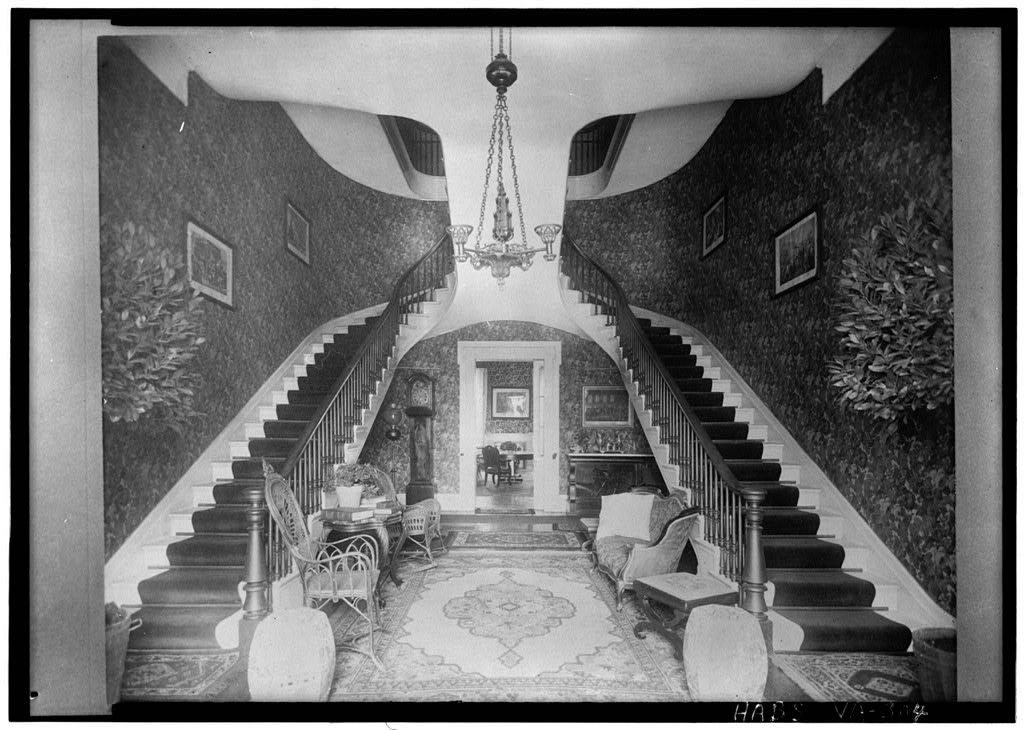
staircase Berry Hill Plantation South Boston Virginia
The magnificent double staircase inside Berry Hill. Taken for the Historic American Buildings Survey, no date. Courtesy of the Library of Congress, Prints and Photographs Division.

The author continues:

Here at Berry Hill, rumors of celestial squatters have abounded for centuries — tales of phantom horses, mussed sheets, cold-air pockets, rearranged tools, people being “touched” on the shoulder or arm, and apparitions (especially of a young boy) in windows.

While the atmosphere of Berry Hill seems to be seething with “celestial squatters,” an investigation with the reporter and a local paranormal team produced few results. Though, one investigator reported that as they drove home their car inexplicably filled with the aroma of pipe or cigar smoke.

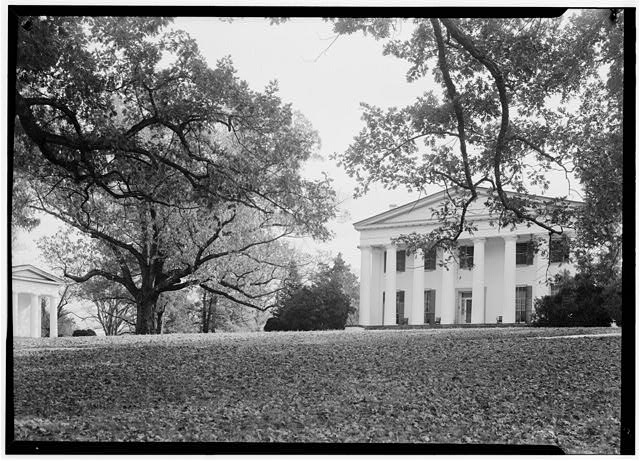
Berry Hill Plantation South Boston Virginia
The front facade of Berry Hill with one of its dependencies. Taken for the Historic American Buildings Survey, no date. Courtesy of the Library of Congress, Prints and Photographs Division.

Berry Hill’s origins are impressive. The property, once owned by William Byrd of (haunted) Westover Plantation, and later statesman and planter Isaac Coles, was inherited by businessman James Coles Bruce from his father. Bruce, whose fortune had been made through a chain of general stores, was considered the wealthiest man in the country at that time, being worth an estimated $4 million. His wealth included some 3,000 enslaved who would work what would become the largest plantation in the state.

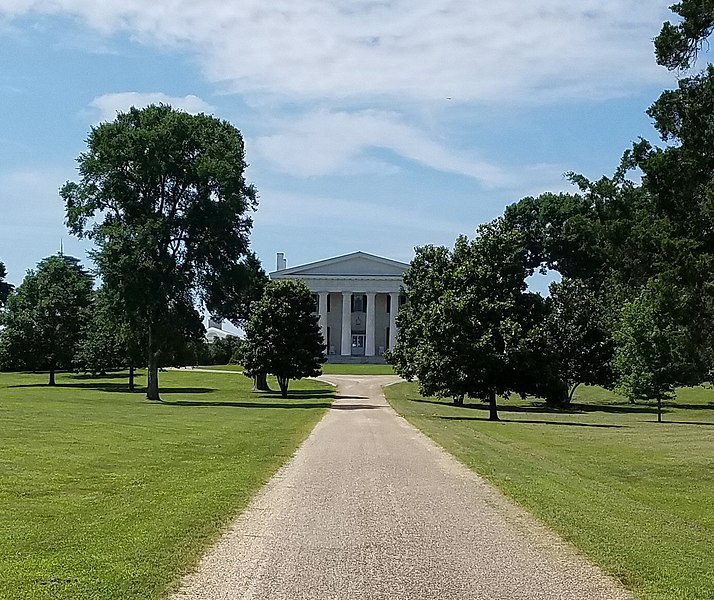
Undertaking the task of renovating the plantation’s original home in 1839, Bruce hired architect John E. Johnson to build this impressive manse. The home’s design borrows from the Parthenon of Ancient Greece to create a sense of awe. As one of the greatest examples of Greek Revival architecture in the country and possessing “the purest style of Virginia’s surviving Greek Revival houses,” the house has been named a National Historic Landmark. When he died in 1865, Bruce escaped witnessing the collapse of the Southern economy and the downfall of the planter aristocracy, though his spirit may be one of the throng that watches and stirs for the guests and staff of the hotel and conference center that now occupies the house and grounds.

While the New York Times reporter did not witness anything supernatural during her investigation, a reporter from the local South Boston News & Record participated in a different investigation in 2010. Starting at the plantation’s Diamond Hill Slave Cemetery, considered the largest of its type in the South, the group interacted with a number of spirits. To the investigators, the atmosphere seemed “welcoming, inviting, and restful.”

Berry Hill Plantation South Boston Virginia
Berry Hill in 2007. Photo by User: B from Wikipedia. Courtesy of Wikipedia.

As the group spread out among various locations on the plantation grounds, they found the spirits to be “social and positive.” In addition to a few EVPs, the group collected several photographs that seemed to show odd figures and shadows within the house. One of the investigators told the reporter that she couldn’t “personally can’t say that Berry Hill is haunted. It’s very possible that there is something there.”

So it may be that even with its dearth of spirits, Berry Hill may not live up to its superlatives in terms of hauntings, but perhaps further investigation will help it to eventually do so.

Sources

  • Ellin, Abby. “Business Travel; A Hotel Stephen King might find just right.” New York Times. 23 July 2002.
  • Rose, Sullivan. “Just in time for Halloween, a ghost hunt at Berry Hill.” South Boston News & Record. 28 October 2010.
  • Virginia Historic Landmarks Commission. National Register of Historic Places Nomination form for Berry Hill. 25 April 1969.

South Carolina Haunt Briefs

Needing a project to carry me through this quarantine, I’ve decided to return to some original blog roots. Just after establishing this blog in 2010, I created a series of articles highlighting ten haunted places within each of the 13 states that I cover. Over time, these articles have been picked apart, rewritten, expanded, and used elsewhere. When I moved this blog, I did not move over those articles. Because I have a backlog of incomplete articles and bits and pieces that haven’t been published I’m creating a new breed of these articles during this quarantine.

Aiken County Courthouse
109 Park Avenue, Southeast
Aiken

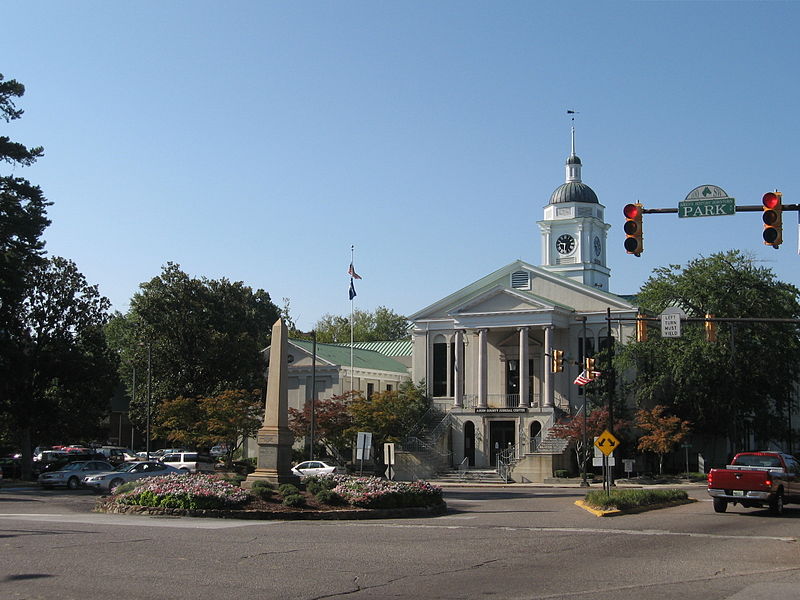
Aiken South Carolina County Courthouse haunted
The Aiken County Courthouse, 2007. Photo by Festiva76, courtesy of Wikipedia.

A number of spirits are believed to flit through the rooms and corridors of the 1881 Aiken County Courthouse. One of the spirits is thought to be the ghost of a young girl whose body was once held in the basement morgue of the building. Legend holds that her body changed position after being deposited in the drawer. Supposedly, she continues to roam the building giggling. A male spirit is known to whisper, “hey!” in the ears of employees, while another female spirit sometimes demonstrates her disapproval of the court’s decisions by moving chairs, rattling papers, and sending pens and pencils flying off desks.

Sources

Beaty-Spivey House (private)
428 Kingston Street
Conway

Beaty-Spivey House Conway South Carolina ghosts
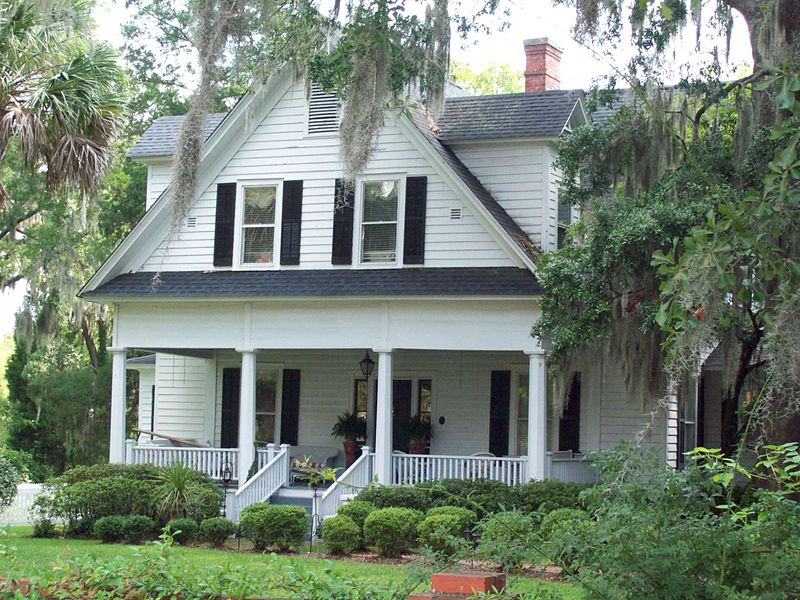
The Beaty-Spivey House, 2010. Photo by Pubdog, courtesy of Wikipedia.

A tragic tale has been told about the Beaty-Spivey House, known as “The Oaks,” since the death of young Brookie Beaty in 1871. Thomas and Mary Beaty had five children, four of which passed before they reached adulthood. After her son fell ill, Mrs. Beaty was greeted by a vision of several angels in the form of her deceased daughters. The angels revealed that they had been sent to retrieve their brother. Rushing into her son’s room, Mrs. Beaty discovered that he had just died.

Sources

Blakeney Family Cemetery
John Blakeney Lane
Pageland

Irish-born John Blakeney served in the American Revolution under General Francis Marion. When he died at the age of 100, he was interred in this rural family cemetery where he joined many members of his family. According to online rumors, those family members regularly appear to roam amongst the headstones, though the veracity of these stories is questionable.

Sources

Brown House
328 Greene Street (private)
Cheraw
 

Known for many years as the “Brown House” due to its unpainted exterior, this now white early 19th-century farmhouse has activity that have led locals to believe it may be haunted. That activity includes the furniture on the front porch being rearranged by unseen hands.

Sources

Carolina Country Store & Café
11725 South Fraser Street
Georgetown
 

The main road from Charleston to Georgetown, U.S. Route 17, passes through many small communities including one called North Santee. This ramshackle general store and gas station has been serving travelers and locals since 1929. As well as selling food, drinks, gas, and souvenirs, this small business also features a ghost. Called Mary Jane by employees, the spirit tends to rattle doorknobs, fiddle with the knobs on the crockpot, call employee’s names, and sometimes appear as a shadow.

Sources

  • Carmichael, Sherman. Legends and Lore of South Carolina. Charleston, SC: History Press, 2012.

Enfield
135 McIver Street (private)
Cheraw

When Union troops invaded the town towards the end of the Civil War, General Sherman took up headquarters in the Hartzell House, while General Oliver Howard set up in Enfield next door. Local lore preserves a story that one of Howard’s officers shot a young enslaved girl when she fumbled with the reins of his horse. History does speak to the veracity of this story, though the spirit of this woman is supposed to haunt the home.

Sources

Florence National Cemetery
803 East National Cemetery Road
Florence

In late 1864, the Confederate government open a prisoner of war camp on the outskirts of Florence. Known as the Florence Stockade, the prison held nearly 18,000 prisoners in miserable conditions. During its operation, nearly 2,800 prisoners died and were interred in trenches outside the prison walls. Following the war, these burials were incorporated as Florence National Cemetery.

Florence National Cemetery South Carolina
Florence National Cemetery. Photo courtesy of the National Cemetery Administration.

Among the graves is that of Florena Budwin, a female who fought in the Union Army alongside her husband. Her grave is believed to be the first burial of a female in a national cemetery.

Investigation by author Tally Johnson reveals that Mrs. Budwin and her comrades may not be resting peacefully. He observed an orb hovering over her tombstone as well as hearing moans and groans from the trenches holding the many other soldiers who died imprisoned.

Sources

  • Florena Budwin. Wikipedia, the Free Encyclopedia. Accessed 3 July 2019.
  • Florence Stockade. Wikipedia, the Free Encyclopedia. Accessed 3 July 2019.
  • Johnson, Tally. Ghosts of the Pee Dee. Charleston, SC: History Press, 2009.

Gurganus-Collins House (private)
902 Elm Street
Conway

In 2012, the family occupying the 1862 Gurganus-Collins House revealed that their 12-year-old son encountered the spirit of the home’s builder, William Gurganus, sitting on a bed one morning. The apparition “turned and smiled at him,” which prevented the young man from sleeping upstairs for six months.

Sources

Hangman’s Tree
Saints Delight Road (US-17 ALT)
Andrews

Looming over this two-lane road outside of Andrews, this ancient cypress’ story is told in its gnarled trunk and limbs. On the outskirts of the community of Lamberttown, this tree, as legend holds, has been the scene of many hangings since the American Revolution. After the Civil War, several people were lynched from this same tree. Sources indicate that some locals are reticent to pass by the tree late at night. Travelling northeast on Saints Delight from the intersection with Walker Road, the tree is roughly a mile on the left.

Sources

  • Floyd, Blanche W. Ghostly Tales and Legends Along the Grand Strand of South Carolina. Winston-Salem, NC: Bandit Books, 2002.
  • Huntsinger, Elizabeth Robertson. More Ghosts of Georgetown. Winston-Salem, NC: John F. Blair, 1998.
  • Orr, Bruce. Haunted Summerville, South Carolina. Charleston, SC: History Press, 2011.
  • Summey, Debby. “The Hanging Tree.” South Strand News. 29 January 2013.

Hopsewee
494 Hopsewee Road
Georgetown 

Created as a rice plantation around 1740, Hopsewee was the birthplace of Thomas Lynch, Jr., one of the four signers of the Declaration of Independence from the South Carolina Colony. Along with his father, he served as a delegate to the Second Continental Congress, the only father and son within the body. When the Declaration was signed, Lynch’s father was too ill to make the journey, so only his son signed the document.

Hopsewee Plantation Georgetown South Carolina
Hopsewee in 1971. Photo courtesy of the National Park Service.

Hopsewee was declared a National Historic Landmark in 1971, and the house and grounds are open to the public as a historic site. In addition to the watchfulness of the current owners, it seems that Thomas Lynch, Sr. may remain here watching over the grounds. Some years ago, a neighbor and his son watched as a man in colonial dress and carrying a lantern walked down a road near the house and disappeared into a swamp.

The spirit of the indomitable Thomas Lynch, Sr. may have once revealed his distaste for immodesty. While a crew was filming in the house, the film’s costumer took photographs of the actresses in their costumes. A group photo was taken of the young ladies in their period underclothes. When the picture was developed, a prominent white streak covered all of the women from their necks to just below their knees.

Sources

  • Brown, Alan. Stories from the Haunted South. Jackson, MS: University Press of Mississippi, 2004.
  • Snell, Charles W. National Register of Historic Places Nomination form for Hopsewee. 4 June 1971.

Lamar High School
216 North Darlington Avenue
Lamar

School ghostlore is often the product of overactive young minds, and that seems to be the case here. According to author Tally Johnson, a student athlete at Lamar High School was killed in a tragic automobile accident during her senior year. In her memory, the school retired her number and enshrined a picture and her shoes in the school’s trophy case as well as establishing a scholarship in her name. Supposedly, the young lady returns to the school gym on the anniversary of her death.

Sources

  • Johnson, Tally. Ghosts of the Pee Dee. Charleston, SC: History Press, 2009.

Lincoln Village Apartments
712 South 8th Street
Hartsville

The end of this small apartment complex came ignominiously with a small fire in one building in 2015. Two years later, the City of Hartsville chose to demolish this blighted property. A local resident who lived across the street told a reporter for WMBF (the Myrtle Beach NBC affiliate) that the complex—which was abandoned in 2000—brought down the morale of the entire neighborhood.

Perhaps the decaying state of this property aroused ghost stories, but the idea has been bandied about online for a number of years. A small cemetery is supposed to exist on the site, though the graves are unmarked. Legend speaks of some of the buildings having been built over graves, though there is nothing to prove this.

Stories speak of residents experiencing “babies crying and adult voices begging for help in otherwise empty apartments.” Tally Johnson spoke with a sheriff’s deputy who said that law enforcement had been called to the property several times by reports of lights on and people inside the abandoned buildings. There is no word if the demolition has ended these urban legends.

Sources

Lower River Warehouse
206 US-501 BUS
Conway

For nearly two centuries, the old Lower River Warehouse that sidled up next to the Waccamaw River served as a main shipping point for goods being brought to Conway by many of the town’s best-known families. A few years ago, the building housed a haunted Halloween attraction, Terror Under the Bridge. While employees were working to manufacture scares for their guests, they were being frightened by actual paranormal activity. An employee working the fog machines in the back of the building fearfully noticed that the fog was blowing against the draft created by an open window and door. Footsteps were sometimes heard in the empty building as well.

Sources

  • Carmichael, Sherman. Legends and Lore of South Carolina. Charleston, SC: History Press, 2012.

Lucas Bay Light
Near Gilbert and Little Lamb Roads
Conway

Along these country roads near the community of Bucksport is Lucas Bay. The bay is not a typical large body of water, but a “Carolina bay,” an elliptical depression in the landscape. Occurring all over the east coast, these bays hold special significance geologically and ecologically, while this particular bay is also a part of the landscape of legend.

Stories tell of a mother in the area towards the end of the Civil War, when Union troops were advancing through the state. Hearing rumors of the approach of troops and worried about her infant, the mother hid the swaddled child underneath a bridge, while she returned home to secure her meager possessions. When a storm erupted during the night, the mother rushed into the rain and wind to find her child. Both mother and child were lost in the deluge.

Since that time, many have witnessed an odd light near Lucas Bay and the account of this mother and her child is retold. This story bears many of the hallmarks of the typical “Crybaby Bridge” legend, and, as is usually the case, there are no historical records to back up the story. Paranormal investigators have confirmed that the area is rife with spirits, though they cannot confirm the legend either.

Sources

  • Boschult, Christian. “Lucas Bay Lights-urban legend or true ghost story?The Sun News. 30 October 2016.
  • Brown, Alan. Haunted South Carolina: Ghosts and Strange Phenomena of the Palmetto State. Mechanicsburg, PA: Stackpole, 2010.
  • Floyd, Blanche W. Ghostly Tales and Legends Along the Grand Strand of South Carolina. Winston-Salem, NC: Bandit Books, 2002.
  • Lucas Bay Light.” Phasma Paranormal. 12 April 2012.

Memorial Hall
Campus of Coker University
Hartsville

This small, private liberal arts college (which has just recently changed its name to Coker University) has a 15-acre campus, around 70 faculty members, about 1,200 students, and one resident spirit. A college history attributes the hauntings of Memorial Hall and the school’s former and current library buildings to a student, Madeline Savage, who attended the school in the 1920s. According to legend, Savage died on campus, but historical records only note her enrollment as a student from 1920 to 1921. Her whereabouts after that time are unknown.

Memorial Hall Coker University Hartsville South Carolina ghosts
Memorial Hall at Coker University, 2018. Photo by Jud McCranie, courtesy of Wikipedia.

Though she may have disappeared from the historical record, she has supposedly remained active in Memorial Hall, the oldest residence hall on campus. Students in this circa 1916 dormitory have had a variety of encounters with the other side. Madeline has appeared wearing a long, white gown, while she has been heard crying in empty rooms.

Sources

Upper Long Cane Cemetery
Greenville Street
Abbeville

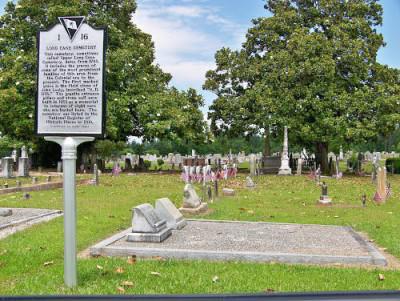
About 2 miles north of the town of Abbeville, the Upper Long Cane Cemetery serves as a resting place for about 2,500 souls. According to local folklore, the first burial on the site occurred around 1760 when John Lesley buried a young girl who was either a relative or visitor to his home. The girl had succumbed to severe burns she received while making lye soap. With her burial, the family established the spot as a family cemetery. Over time, the cemetery became a prominent cemetery for locals.

Upper Long Cane Cemetery Abbeville South Carolina haunted
Upper Long Cane Cemetery, 2012, by Upstateherd, courtesy of Wikipedia.

According to John Boyanoski, the cemetery was investigated by the Heritage Paranormal Society from Georgia. While there were no stories of activity in the cemetery, its age led them to believe that there might be something. During a review of photographs taken during the investigation, members of the group were shocked to see the image of a balding man wearing a blazer in one of the photos. When the photo was taken, a living person was not seen walking through the frame.

Sources

  • Boyanoski, John. More Ghosts of Upstate South Carolina. Mountville, PA: Shelor & Son Publishing, 2008.
  • Power, J. Tracy, et al. National Register of Historic Places Nomination Form for Upper Long Cane Cemetery. 29 October 2010.

Woodburn
130 History Lane
Pendleton

A former resident of Woodburn, which is now a house museum, reported several encounters with a little girl in the house. Since that time, a photograph has been taken that seems to show the figure of a young girl in the window of the nursery. Police have also seen a figure peering at them from the same window.

Woodburn Pendleton South Carolina ghosts
Woodburn, 2009. Photo by KudzuVine, courtesy of Wikipedia.

Woodburn was constructed around 1830 as a summer home for Charles Cotesworth Pinckney, a son of the prominent Pinckney family. Named for his uncle who was one of the authors of the U. S. Constitution, Pinckney was a prominent lawyer, politician, and planter.

Sources

  • Hornsby, Ben. National Register of Historic Places Nomination form for Woodburn. 15 October 1970.
  • Staed, John. “Does Woodburn Historical House still hide some secrets?” Anderson Independent. 29 June 2010.

Southern Spirit Guide Video–The Legend of the Talbot County Werewolf

I have been meaning to create some videos for some time. Now, in the midst of the coronavirus pandemic, it’s a great time to begin making videos and telling ghost stories.

I wrote this version of the legend of the Talbot County werewolf to be presented at the Georgia Library Association Convention in 2018. While some of the details of this legend are fact, my setting adds scenes and dialogue for effect.

Talbot County Werewolf Grave
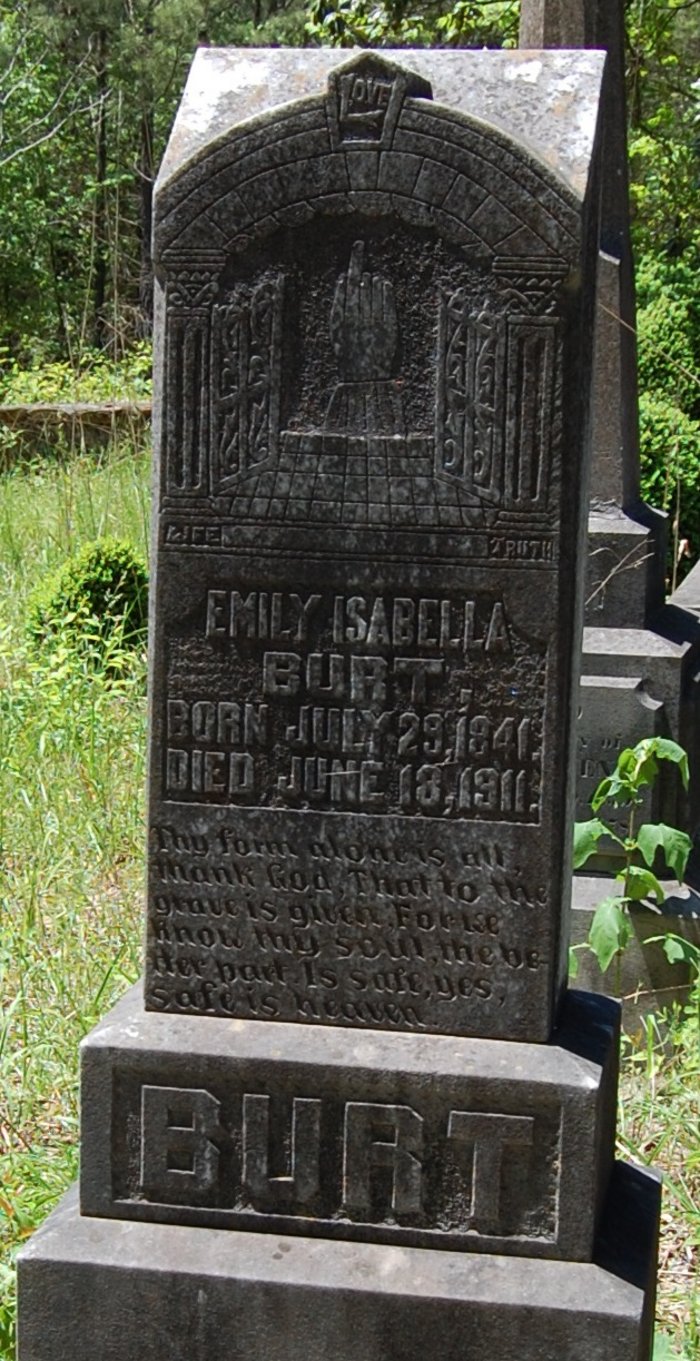
The gravestone of Emily Isabella Burt (1841-1911) bearing the image of an open gate. Photo by Denise Roffe, courtesy of Find-A-Grave.

As always, I must provide a source list.

Sources


A slab shattering spirit—Fairfield, Alabama

Walter J. Hanna Memorial Library
4615 Gary Avenue
Fairfield
, Alabama

Since I’m under semi-quarantine like so many other people, I have begun to haunt several Facebook groups in search of new-to-me hauntings and further information. I was delighted to find accounts of several frightening encounters experienced by a member of the Hauntings of Alabama group in the public library in Fairfield.

It seems that the poster was involved in renovations at the library in 1989. According to her, the building formerly housed a financial institution Judging from the architecture, it appears that the building was built in the 1950s, though it could be earlier and appears to have been a bank building. A photograph on the library’s website shows what appears to be an old bank vault. It appears to be clad in light colored marble, with a band of darker marble on the front façade. The presence of marble (a type of limestone) may be significant as limestone is believed to possibly attract paranormal activity. Unfortunately, there’s little available online speaking of the building’s history.

Among the activity the poster described was seeing shadow figures “that would dart below my 20 ft ladder as I was painting.” She also noted that something in the ladies’ room scared her so much that she avoided using that restroom in the building for the remainder of the three months she worked there. “There is something in the ladies’ restroom that makes you just want out.”

Most significant was an encounter that happened during a work break. As the workers sat on the stairs inside the building an amorphous black figure “with no defined edges” entered through the door. A four-foot-long slab of marble leaning against the wall, was lifted by the entity and shattered on the floor. After a chill went through the group on the stairs, they heard a door slam.

Fairfield Alabama Seal
Seal of the City of Fairfield, note the steel mill for which the town was created is prominently displayed.

Fairfield is located in Jefferson County, just west of Birmingham. It was founded in 1910 by the Tennessee Coal, Iron and Railroad division of U.S. Steel as a “model industrial city” built around a steel plant. The community was incorporated in 1919 and continues to operate as a separate entity from Birmingham.

For other haunted libraries in Alabama, see my guide.

Sources

The Unquiet Grave—St. Clair County, Alabama

William Gibson Gravesite
US-11 between Shelley Drive and Pinedale Road
Springville, Alabama
 

The wind doth howl today m’love
And a winter’s worth of rain;
I never had but one true love
In cold grave she was lain.

–“The Unquiet Grave,” traditional ballad (Child Ballad #78)

Since I wrote my Alabama book, I have been searching for a haunting from St. Clair County. I finally found one, thanks to my friend, Dr. Kelsey Graham. Dr. Graham has always had an interest in the unexplained, even recently creating an organization, Abnormal Alabama. In his travels through his home state, he has explored numerous sites, including this lonely, and possibly unquiet roadside grave. My thanks to him and the members of the Hauntings of Alabama Facebook group for information!

U.S. Route 11, which stretches from New Orleans to the Canadian border in Rouses Point, New York, passes through many small towns such as Springville. It also passes a number of haunted sites including the white oak outside of Surgoinsville, Tennessee, that is the subject of the “Long Dog Legend.” Created in 1925, this U.S. Highway pieced together a number of roads under one designation to ease driver confusion and to systematically establish travel routes between major cities. Among the Southern cities linked are Meridian and Hattiesburg, Mississippi; Tuscaloosa, Birmingham, and Gadsden, Alabama; Chattanooga and Knoxville, Tennessee; Winchester, Staunton, and Roanoke, Virginia; Martinsburg, West Virginia; and Hagerstown, Maryland. Dr. Graham notes that this road was originally a stagecoach route between Georgia and Tuscaloosa.

About six miles north of the town, the road passes a single gravesite with a headstone still standing sentinel over a broken marble slab. This is the grave of William G. Gibson, born 12 December 1795, who died, possibly near here, on 20 October 1827. This early grave may be the one of the oldest marked burials in the county.

William Gibson Gravesite Springville Alabama
The roadside grave of William Gibson. Photo courtesy of Waymarking.com.

There is some mystery and legend surrounding the grave’s occupant. Legends agree that Mr. Gibson was a hat salesman from North Carolina. How he ended up dying in the wilds of Alabama is mere speculation. Some stories describe him as the victim of a duel, while others say that he was gored by an ox. The most likely reason for his death was probably an illness that afflicted him as he traveled this early road.

Despite its location in the right-of-way, officials have worked to preserve this grave, even carving out part of the landscape when the road was graded and paved. However, this location just above the road can sometimes surprise drivers. A 1961 article from the newspaper in nearby Pell City describes how this gives “the illusion that it is in the road.” One motorist felt chills when he spotted “the grave silhouetted against the sunset.” Strange lights are sometimes seen around the grave, which I might attribute to cemetery lights, which are frequently seen around graveyards.

Sources

The curious canines of Surgoinsville—Hawkins County, Tennessee

Terror in the Tri-Cities—Tennessee & Virginia

The Tri-Cities Region encompasses the extreme northeastern corner of Tennessee and part of southwest Virginia, surrounding the major cities of Kingsport and Johnson City in Tennessee, and Bristol, VA/TN, which is situated astride the state line. This area, in the heart of Appalachia, is noted for its culture, mountain lore, and ghost stories.

This series looks at a representative haunting in each of the region’s counties and it’s one independent city.

Legend of the Long Dog and Friends
US-11W north of Surgoinsville

Perched on the state line with Virginia, Hawkins County is one of the oldest counties in Tennessee. Two major paths make their way through the borders of this county. The Holston River snakes its way through much of the county on its route from Kingsport to Knoxville where it converges with the French Broad River to create the might Tennessee River. The river provided mobility to Native Americans and later settlers to the area.

The Natives also trod a path near to the river that was later dubbed the Great Indian War Path which connected the heart of the Muscogee Nation in Alabama through to what would become Upstate New York. European settlers would later claim this path and use it as they migrated throughout the Appalachians. As settlers claimed the area, the path was utilized as a stage coach route from Knoxville to Kingsport. This road is now followed by US Highway 11 West.

In the late years of the 18th century and into the early 19th, these paths attracted hordes of settlers, but also highwaymen and bandits who preyed like wolves on the unwary travelers, which gave rise to many stories and legends in these parts. Kathryn Tucker Windham, the great Alabama storyteller, published her version of one of these legends from the small town of Surgoinsville in her 1977 book, 13 Tennessee Ghosts and Jeffrey.

The opening parts of her story, which are likely fictional, describe a common sighting of the “Long Dog” on the road just northeast of Surgoinsville. However, the heart of her piece includes the legend of the “Long Dog” and the experience of Marcus Hamblen, a member of a prominent local family. The legend that she confers involves one of the most famous of the bandits to haunt the state of Tennessee: the infamous John Murrell.

Known as the “Great Western Land Pirate” and the “Rob Roy of the Southwest,” John Murrell was among the most notorious of the thieves and highwaymen who prowled the South. Born in Virginia in 1806, Murrell spent his formative years in Williamson County, Tennessee (just outside of Nashville, this county includes Franklin). Around the age of 16, he was imprisoned for horse theft and remained in the state prison in Nashville until 1830. Upon release, he resumed a rollicking life of crime and recruited others to join his band of outlaws. This dubious group primarily operated along the Mississippi River and along the Natchez Trace from Natchez to Nashville until Murrell’s arrest and conviction for stealing a slave in 1834. For this theft, he served ten

John Murrell bandit
Portrait of John Murrell made during his second time in the state prison in Nashville.

years in prison before he was released in 1844 having been reformed. Later that year Murrell died in Pikeville, Tennessee.

It seems, however, that Murrell’s real life does not hold a candle to his oversized legend. Much of his legend was spurred on by an 1835 pamphlet written by one of the primary witnesses against him. This pamphlet accused Murrell of inciting a slave rebellion, one of the top fears for planters of that era. As a result of the pamphlet, slaveholders and law enforcement throughout Mississippi questioned, tortured, and even hung some of their slaves along with white outsiders who were implicated as being members of Murrell’s gang.

Returning to the legend that haunts the landscape outside of Surgoinsville, Murrell and his men attacked a family camping under a large white oak there. The family’s dog attempted to defend his family from the marauders but was as brutally slaughtered as well as his family. As a result, the spirit of this dog has been known to appear to travelers along this road near the old oak.

One of the more remarkable encounters happened to a young man named Marcus Hamblen. Walking the road one night, Hamblen was shocked to see a luminous and abnormally long dog approach from behind the old white oak. Hamblen picked up a fence rail and swung it at the animal when it got close enough, but the rail passed cleanly through the creature. As he ran the dog continued his pace until the phantom disappeared suddenly at a particular curve in the road. Hamblen supposedly kept his eye out for the curious canine and continued to see his spectral friend many more times.

Since the old road was paved and named the Lee Highway, sightings of the luminous Long Dog have grown fewer and fewer. Since the Lee Highway was designated US Route 11 West, sightings have nearly stopped, though the white oak is still alive and continues to preside over the now four-lane highway. It should be noted that the oak is on private property, though it can easily be viewed from the road.

Maxwell Academy Surgoinsville Tennessee
Maxwell Academy in 2015, by Brian Stansberry. Courtesy of Wikipedia.

This area is no stranger to spectral activity. Heading north from Surgoinsville, just past the old white oak, turn left onto Stoney Point Road. After a short distance, the road turns a corner and a marvelous antebellum brick building comes into view, this is Maxwell Academy. Built around 1852, this building was originally used by the congregation of New Providence Presbyterian Church and also utilized by a school established by the church. The building that still stands was constructed on this site in 1901, to replace the original structure lost in a fire. It seems that the voices of children are still heard within the old building. Justin Guess notes that during an ice cream social held in the building guests were treated by sounds above them, though no one was upstairs.

New Providence Presbyterian Church Surgoinsville Tennessee
New Providence Presbyterian Church in 2015, by Brian Stansberry. Courtesy of Wikipedia.

After the academy building became too cramped to hold both the students and the church, a new church was constructed across the road. It should be noted that the congregation of New Hope Presbyterian Church (214 Stoney Point Road) was among the earliest congregations founded in the state of Tennessee, having been founded in nearby Carter’s Valley in 1780. The church moved to this site around 1800 and the peaceful cemetery surrounding the church dates to this time.

tombstone Colonel George Maxwell
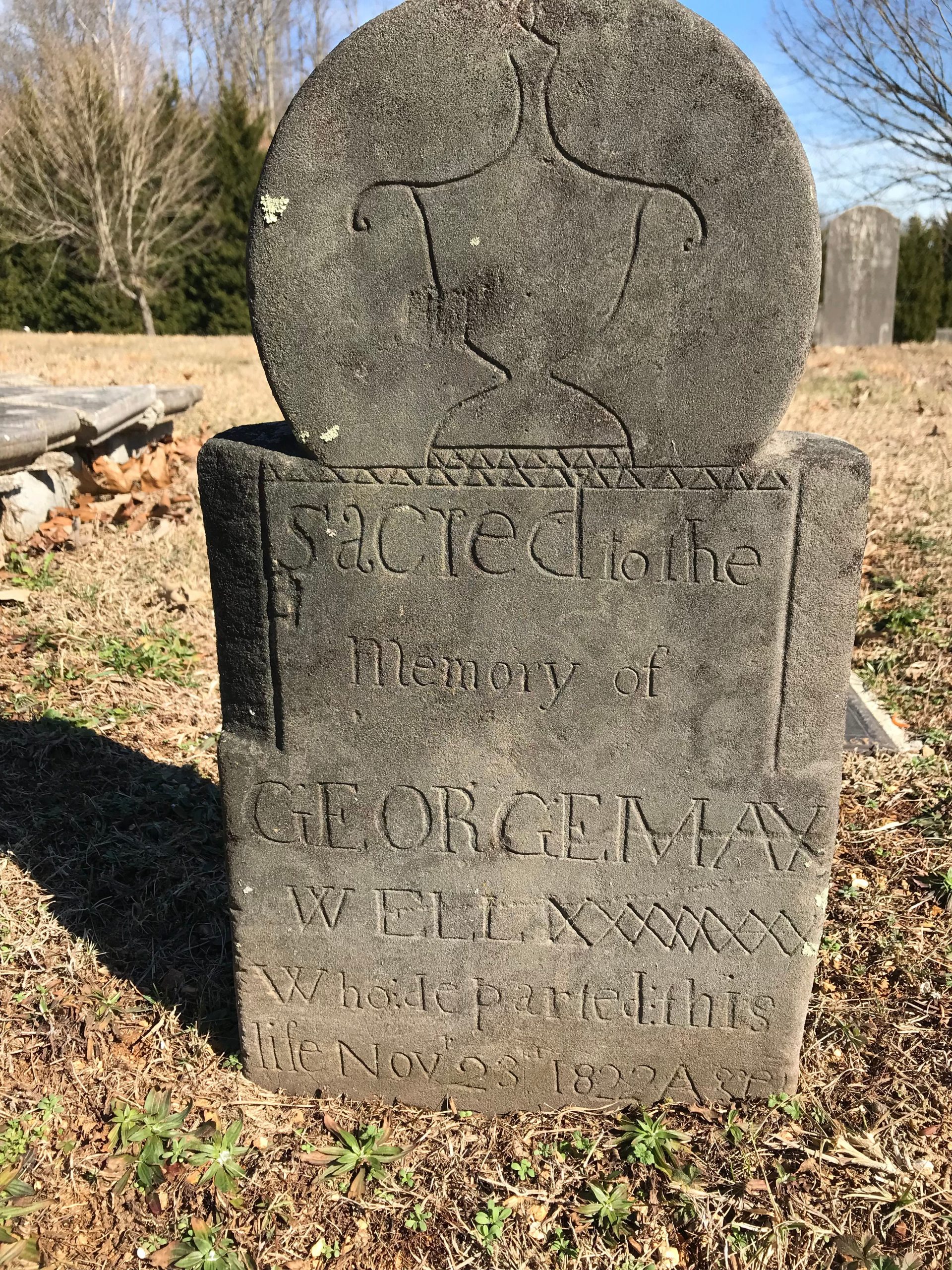
The grave of Colonel George Maxwell, 2018, by Glennster. Courtesy of Find-A-Grave.

Among the souls who rest here is Colonel George Maxwell, a veteran of the American Revolution who served at the Battle of Kings Mountain. After Maxwell’s death in 1822, a legend has sprouted that a large black dog guards his grave. It is unknown if this dog is the spirit of a former companion or just a spectral guardian protecting the spirit of the military veteran. In addition to this curious canine, phantom footsteps are supposed to be heard around this grave at night.

Sources

  • Brown, John Norris. “The Legend of the Long Dog.” Ghosts and Spirits of Tennessee (now defunct). Accessed 18 July 2017.
  • Brown, John Norris. “New Providence Church.” Ghosts and Spirits of Tennessee (now defunct). Accessed 18 July 2017.
  • Grigsby, Blanche. National Register of Historic Places nomination form for New Providence Presbyterian Church, Academy, and Cemetery. 8 March 1976.
  • Guess, Justin H. Weird Tri-Cities: Hawkins County, Tennessee. Kindle Edition, 2012.
  • Libby, David J. “John Murrell.” Mississippi Encyclopedia. 11 July 2017.
  • Sakowski, Carolyn. Touring the East Tennessee Backroads. Winston-Salem, NC: John F. Blair, 1993.
  • Windham, Kathryn Tucker. 13 Tennessee Ghosts and Jeffrey. Tuscaloosa, AL: U. of AL University Press, 1977.

Prison Strike–Tennessee

N.B. This article was originally published as part of “Preserving Haunted History—Tennessee” in 2012. With this update on the structure, this section has been broken out into a new article.

Tennessee State Prison
6410 Centennial Boulevard
Nashville, Tennessee

The hulking Tennessee State Prison perched above the Cumberland River has recently been the scene of a prison strike. This strike, however, did not involve prisoners or guards, but a powerful EF3 tornado.

Around 12:30 CST on March 3rd, this powerful tornado touched down near the John C. Tune Airport, which received a tremendous blow before the twister crossed the Cumberland River. Crossing over Briley Parkway and bearing down on the old Victorian prison. Having been put out of commission in 1992 and only used for storage by the state Department of Corrections, the site was thankfully unoccupied by the living.

The tornado’s strike on the seemingly impregnable brick and stone facility caused the walls of the east cellblock to collapse. The prison’s main building, which sits just in front of the cellblocks with an array of castle-like turrets and a high-pitched roof, lost parts of its roof and blew many of the windows out. A nearby building housing records was demolished.

Tennessee State Prison
Interior of one of the cellblocks in 2007. Photo by Dave Scaglione, courtesy of Wikipedia.

After crossing the Cumberland again, the tornado bore down in North and East Nashville, claiming several lives and causing extensive damage before heading east into Wilson County. Another tornado touched down in Putnam County about an hour later and claimed 18 lives as it moved towards Cookeville.

With the widespread damage done at the Tennessee State Prison, there are now questions as to what to do with the massive historic facility. Since its closure, the building has been used for storage and a news story several years ago reported that while the building was well built, that there were no plans to restore the building or hold tours due to the presence of asbestos and other dangerous materials.

Tennessee State Prison
Main Building of the Tennessee State Prison, 2006. Photo by
Pepper6181, courtesy of Wikipedia.

The prison opened in 1898 to replace the old prison, which had been built in 1830. The new prison was constructed using prisoner labor and after opening, outbuildings were constructed using salvaged materials from the old prison. The day the prison opened, some 1400 prisoners were transferred into the facility which had been built to house only 800. For almost a century, the prison was overcrowded, and the treatment of prisoners was one of the issues driving the creation of Riverbend Maximum Security Institution nearby.

When the prison closed in 1992, an injunction was issued preventing the state from ever using the prison to house inmates again. While the building has sat abandoned, it has been used as a set for a variety of movies including Earnest Goes to Jail and The Green Mile. It has also been used for television and recently was used for the video for Pillar’s “Bring Me Down.” Guards now patrol the grounds keeping away the criminal and the curious.

Like hospitals and battlefields, most prisons tend to have paranormal activity. Visitors to the Tennessee State Prison have reported numerous sounds including the sound of the heavy metal doors closing. Other visitors have encountered apparitions of prisoners in the corridors and exercise yards while people passing by have reported seeing faces peering from the windows.

It is unknown what effect the tornado’s damage will have on the prison’s paranormal populace, though, I imagine that it will continue to have activity very much like the Kentucky State Penitentiary. Even if the state decides to demolish the magnificent building, I believe that the land has been imprinted with much of the negative energy and the site will remain haunted for centuries to come.

Sources

A general and friends–Greene County, Tennessee

Terror in the Tri-Cities—Tennessee & Virginia

The Tri-Cities Region encompasses the extreme northeastern corner of Tennessee and part of southwest Virginia, surrounding the major cities of Kingsport and Johnson City in Tennessee, and Bristol, VA/TN, which is situated astride the state line. This area, in the heart of Appalachia, is noted for its culture, mountain lore, and ghost stories.

This series looks at a representative haunting in each of the region’s counties and it’s one independent city.

Greene County, located on the state line with North Carolina, was established in 1783 and named for Revolutionary War General Nathanael Greene. The name of the county’s seat, Greeneville, is also named for him.

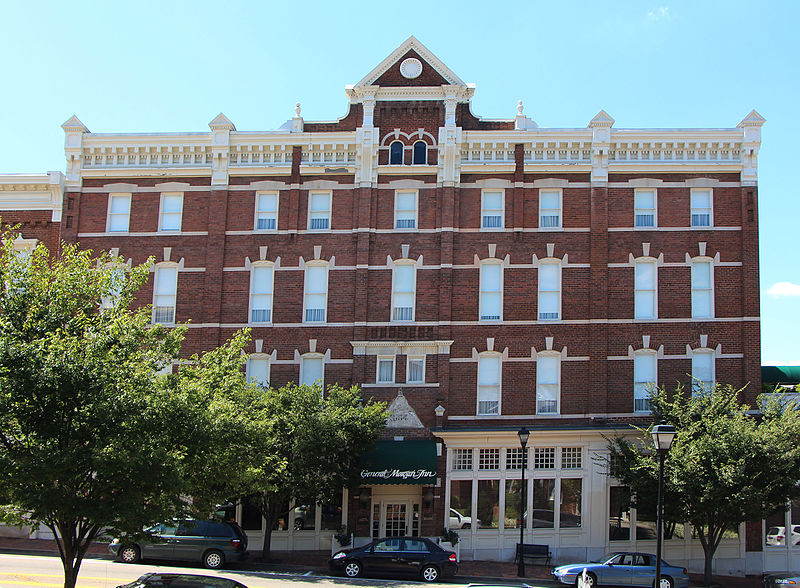
General Morgan Inn and Conference Center
111 North Main Street
Greeneville

When the Grand Central Hotel opened in Greeneville in 1884, it was considered the “finest hotel from Chattanooga to Roanoke.” In recent years however, it could be considered the most haunted hotel from Chattanooga to Roanoke.

On a recent investigation one of the more active spirits informed investigators that there were 26 spirits within the hotel. If the spirit it believed, that is nearly a single spirit per room of this 30-room Victorian hotel. Certainly, the spirits have made their presence known.

Among the prominent spirits here is that of Confederate General John Hunt Morgan, who was killed near the site of the hotel in 1864. Definitely, the dashing general didn’t imagine that he would spend eternity in a hotel in Greeneville, Tennessee bearing his name, but evidence proves that he remains here.

John Hunt Morgan
General John Hunt Morgan, from The Photographic History of the Civil War in Ten Volumes: Volume Four, The Cavalry, published in 1911.

Alabama-born Morgan settled in Lexington, Kentucky, where his home still stands and may be haunted. After the outbreak of war, Morgan signed up with the Confederate Army and raised a regiment of Kentucky cavalry which served in the Battle of Shiloh in early 1862. In hopes of convincing Kentucky to secede and join the Confederacy, Morgan conducted a series of raids through the state, eventually moving across the Ohio River into Ohio and Indiana. The raid across the Ohio was unsuccessful and ended with Morgan and his men being captured and incarcerated in Union POW camps.

Ever the dashing and cavalier cavalry officer, Morgan escaped and was assigned to oversee troops in Eastern Tennessee and Virginia. During a surprise Union raid on Greeneville, Morgan, who was staying in the nearby Dickson-Williamson Mansion, attempted to mount his horse and was unceremoniously shot in the back and killed. Before his untimely death, he arrogantly proclaimed that he would never be taken alive.

Years later, with the construction of the hotel, General Morgan was honored in the hotel’s presidential suite where a photograph of him has been hung. Since that time, those staying in Room 207 or nearby have had strange experiences. One hotel staff member reported that the front desk will get complaints about noise in that room. Knowing that the room is unoccupied, the front desk clerk will assure the guest that they will ask the occupant to quiet down.

General Morgan Inn Greeneville Tennessee
The General Morgan Inn in 2015, photo by Steven C. Price. Courtesy of Wikipedia.

Aside from the ruckus in Room 207, the hotel’s restaurant, Brumley’s, has a spirit that’s fond of spoons. Dubbed “Grace,” she “is notorious for stealing spoons, and only spoons, from place settings overnight. But, she only takes from her preferred Green Room.” A server in the restaurant told WJHL, “So, you’ll walk through, and you’ll be like, ‘Ugh, there’s a spoon missing.’ When we polish them, we’re always like really low on spoons. We have to order spoons like all the time. So, it’s crazy. Why spoons? I don’t know. And where she puts them, I don’t know.” Not only that, the spirit regularly adjusts pictures on the wall so that they hang crookedly.

Another spirit, known as “Front Desk Bill,” makes appearances from the neighboring Depot Street Hotel, and is believed to be the spirit of a former hotel employee who loved his job so much that he has remained after his death.

With so many spirits and so much activity, it’s no surprise that this may be one of the most active hotels in the region.

Sources

The lascivious lady–Carter County, Tennessee

Terror in the Tri-Cities Series—Tennessee & Virginia 

The Tri-Cities Region encompasses the extreme northeastern corner of Tennessee and part of southwest Virginia, surrounding the major cities of Kingsport and Johnson City in Tennessee, and Bristol, VA/TN, which is situated astride the state line. This area, in the heart of Appalachia, is noted for its culture, mountain lore, and ghost stories.

This series looks at a representative haunting in each of the region’s counties, and it’s one independent city.

Carter County, Tennessee, situated on the state line with North Carolina, possesses a number of haunted places, especially around its county seat, Elizabethton, where just outside of town the Siam Steel Bridge once stood.

Birchfield Cemetery
Dark Hollow Road
Roan Mountain

Roan Mountain, which is shared by Tennessee and North Carolina, is the center of many folktales and legends. For centuries, a mysterious hum or singing has been heard near the top of this mountain and has never been adequately explained as well as the sounds of a spectral bull.

Roan Mountain Tennessee
The town of Roan Mountain with its namesake mountain rising up behind it. Photo 2015 by Brian Stansberry, courtesy of Wikipedia.

On the flanks of the mountain winds a mysterious road called Dark Hollow Road. With such a creepy name, it’s no wonder that the road has spirited legends associated with it. The legend here revolves around a woman named Delinda. In some sources, she is a prostitute, simply a renowned lover, or sometimes she is suggested to be a witch. Most sources agree, however, that she was carrying on relationships with many local men, most of whom were married. In fact, she was suspected of spreading illness to these men, further angering the already spurned wives.

Blogger Jason Norris Brown recounts in his now, sadly defunct blog, Ghosts and Spirits of Tennessee, that Delinda was in love with a man named Jankins. When he died, she was suspected of climbing into his casket in order that they spend eternity together. Another version of the legend has the women of the town killing her and hiding her body in Mr. Jankins casket. Following the burial, locals began to notice a shadowy figure around the cemetery at the bend in the road.

A darker version of the story has Delinda being murdered by a group of angry wives. She was invited to a quilting bee, but after her arrival she was tarred and feathered before being hung in a nearby tree.

Birchfield Cemetery Roan Mountain Tennessee Dark Hollow Road
The Birchfield Cemetery on Dark Hollow Road, 2016. Photo by Loyal Limb, courtesy of Find-a-Grave.

There are reports that drivers near the cemetery have experienced an odd bump to their cars, sometimes feeling like a person has jumped on the bumper, which has been blamed on the spirit of Delinda trying to hitch a ride. One story cited by several sources, describes a group of friends driving past the cemetery at night when their car begins to buck wildly as if the driver was stepping on the accelerator and the brakes at the same time.

Paranormal investigator and researcher Justin H. Guess notes in his 2012 book on the hauntings of Carter County that visitors to the cemetery throwing a coin up in the air will have it disappear before it hits the earth. Perhaps Delinda is still trying to collect her fee?

The identity of the exact cemetery has not been reported, though after some digging, it appears this may be the Birchfield Cemetery, which is located across the road from another small family cemetery, the Gibbs Cemetery. Please have respect for the families who own these cemeteries and their loved ones who are buried here.

Sources

  • Brown, Alan. Haunted Tennessee: Ghosts and Strange Phenomena of the Volunteer State. Mechanicsburg, PA: Stackpole Books, 2009.
  • Brown, Jason Norris. “The Phantom Jumper of Dark Hollow.” Ghosts and Spirits of Tennessee.
  • “Do you believe in ghosts?” Johnson City Press. 30 October 2012.
  • Guess, Justin H. Weird Tri-Cities: Haunted Carter County, Tennessee. Kindle Edition, 2012.
  • Manley, Roger. Weird Tennessee: Your Travel Guide to Tennessee’s Local Legends and Best Kept Secrets. NYC: Sterling, 2010.