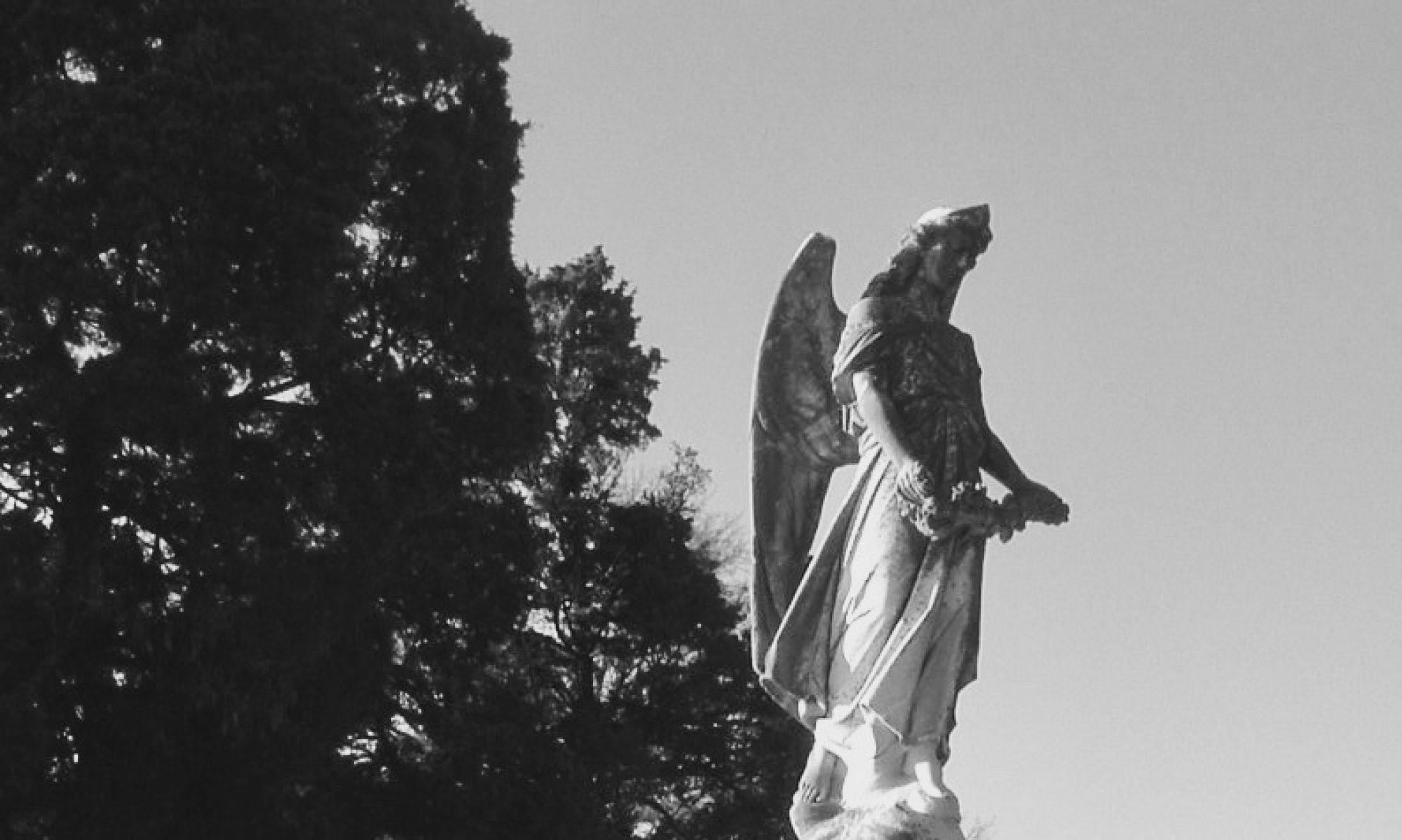
“There surges forth a shriek…Maryland, my Maryland!”

But lo! there surges forth a shriek,
From hill to hill, from creek to creek-
Potomac calls to Chesapeake,
Maryland! My Maryland!
–from Stanza VII, “Maryland, my Maryland” by James Ryder Randall (1861), state song of Maryland since 1939.

Point Lookout State Park
11175 Point Lookout Road
Scotland, Maryland

N.B. This article was first published on Courtney Mroch’s Haunt Jaunts 14 September 2016.

Where the Potomac River calls to and meets the Chesapeake Bay at a place called Point Lookout, shrieks sometimes rend the quiet night air. The shrieks and cries may come from the throats of the countless men who withered and died in the Union prison camp here or perhaps they are shrieks of terror from the living who have encountered the active spirits who haunt this place. Here in this wild and lonely place, apparitions are frequently accompanied by audible echoes of the past and negative energies of the past are still palpable in the salty breeze from the Chesapeake Bay.

Point Lookout Scotland Maryland ghosts haunted
Waves crash on a breakwater just offshore from Point Lookout. Photo by Matt Tillett, 2008. Courtesy of Flickr.

Seemingly squashed between Virginia and Pennsylvania and hemmed in by the Chesapeake Bay, Delaware, and West Virginia, Maryland seems to be more of an afterthought as a state, though it is perhaps one of the more important states in the early history of this country. In terms of the paranormal landscape, Maryland is also not well regarded, though it could be seen as one of the more haunted states in the South if not the country. From the small villages clustered along the shores of the Chesapeake Bay to the Washington, D.C. suburbs, Baltimore, Annapolis, the battlefield-pocked farmland of Washington County to the mountains of Western Maryland, the state is haunted to its core. Among its contributions to American paranormal studies are the 1949 exorcism of a young boy in Cottage City (a Washington, D.C. suburb in Prince George’s County) that forms the basis of William Peter Blatty’s novel, The Exorcist; the persistent legend of a goatman-like creature near Beltsville (also near Washington); and numerous macabre near-mythical characters including the killer Patty Cannon, the vengeful slave Big Lizz, the Pig Woman of Cecil County. Haunted landmarks include the USS Constitution docked in Baltimore Harbor, the Antietam battlefield, the Landon House in Urbana, Governor’s Bridge, the University of Maryland in College Park, and historic and haunted cities such as Ellicott City and Frederick.

Point Lookout is the most southern tip of St. Mary’s County, the oldest established county in the state having been established in 1637. The area was first explored by Captain John Smith (yes, the one of Pocahontas fame) in 1608 who noted the abundant fish and game, the fertile soil, and the strategic military importance of this spot. Over the next couple centuries settlers here endured attacks from Native Americans and the site’s military importance brought a raid from British forces during the American Revolution. After a number of ships were lost on the shoals just offshore from Point Lookout, the government built a lighthouse in 1830. Despite the warning beacon, some catastrophic shipwrecks still occurred here including the USS Tulip which sank with 47 souls after a boiler explosion, and the tragic breakup of the steamship Express during the Great Gale of 1878 with the loss of 16 souls.

Point Lookout Scotland Maryland ghosts haunted rebel prisoner Civil War
A rebel prisoner photographed by L. V. Newell. Courtesy of the Library of Congress, Prints and Photographs Division.

The Civil War brought thousands to this little peninsula with the establishment in 1862 of Hammond General Hospital to care for wounded soldiers. The immense building could house 1,400 patients and consisted of 16 buildings arranged as the spokes in a wheel. A short distance from the hospital Camp Hoffman was established the next year to house Confederate prisoners of war. In The Photographic History of the Civil War, the camp is described: “No barracks were erected, but tents were used instead…The prison was the largest in the North, and at times nearly twenty thousand were in confinement…in winter the air was cold and damp, and the ground upon which most men lay was also damp.” In this rude prison—nearly all prison camps during this war were rude and inhumane—some 3,000 Confederate troops perished from disease and exposure to the elements. With this dark history it’s no wonder that Point Lookout is teeming with activity.
Point Lookout Scotland Maryland ghosts haunted Confederate Monument
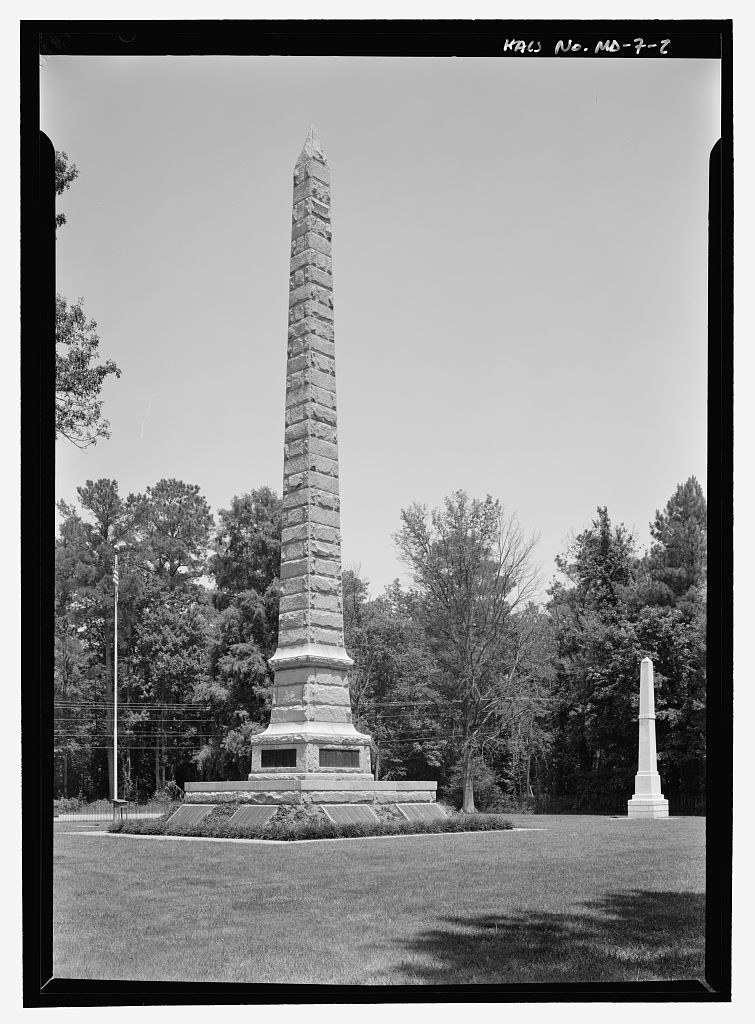
Point Lookout Confederate Monument. Photo taken for the Historic American Buildings Survey (HABS) by David Haas, 2006. Courtesy of the Library of Congress, Prints and Photographs Division.

In 1992 on the FOX TV show, Sightings, paranormal investigator Lynda Martin says of Point Lookout: “This has to be one of the places that I’ve investigated, that it’s just the whole area is just full of activity. It’s not just localized to just one building or one spot on the grounds, it includes the whole area. I’ve never come in contact with anything like that before.” After a 1980 paranormal investigation here involving Hans Holzer, the pioneering paranormal researcher and early ghost hunter, he declared, “that place is haunted as hell!” For decades, reports have been filtering out from Point Lookout from staff and visitors alike regarding paranormal activity here. What makes these reports so interesting and important is the wide variety of experiences and the evidence that has been captured.

Some years ago a reenactor was spending the night in an old guardhouse near Fort Lincoln, one of the earthen forts built to defend the prison stockade. Going out after dark to gather firewood, the man knelt down and heard the distinct sound of a bullet whizzing past his head. A window pane in the guardhouse behind him was struck and shattered. Shaking with fright from his near-death encounter, the reenactor fled the area. Returning the next morning, he was shocked to find that all the window panes were perfectly in place and none had been shattered.

It is perhaps the old lighthouse here that serves best as a beacon for spirits. Various caretakers have lived in the early 19th-century structure and many of them have had experiences. It was one of these caretakers living here in the late 1970s who asked paranormal investigators to check out the activity after he had numerous experiences in the building. One evening as the caretaker sat at his kitchen table he was overcome with the sensation of being watched. Walking to the door he saw the visage of a man wearing a floppy hat looking back at him through the window. His curiosity was aroused by the strange visitor and the caretaker opened the door to let him in. The figure turned and walked through the screen that enclosed the porch. The same caretaker regularly reported hearing voices, footsteps, moaning, and snoring throughout the house when he was home alone.

Point Lookout Scotland Maryland ghosts haunted Lighthouse
Point Lookout Lighthouse, 2013, by Jeremy Smith. Courtesy of Wikipedia.

A park ranger reported that he saw a Confederate soldier running across the road near where the camp hospital once stood. Over the years that he served at the park he claimed to have seen the soldier nearly a dozen times. A group of fishermen arriving early one morning reportedly struck a man who suddenly appeared in the road ahead of them. The group exited the vehicle to find no man or damage to the car, though they had all experienced the thump of the man’s body hitting the car. Another park employee on patrol one night turned to see a field of white tents lined up in the middle of the road. She fled without looking back.

In terms of auditory evidence, Sarah Estep, one of the pioneers in the field of EVP or electronic voice phenomena, was a part of the 1980 investigation and captured a number of EVP here. Among the EVPs captured was one saying, “let’s talk,” while another EVP came in response to Estep’s question, “were you a soldier here?” The clear voice of a young man states, “I was seeing the war.” These EVPs were among some 25 captured during this investigation. Others have successfully captured singing, humming, and even the chanting of soldiers on tape when nothing was heard at the time.

From the ominous lighthouse to the spiritual artifacts remaining from the Civil War prison camps, Point Lookout remains one of the most important historical and paranormal landmarks in the South.

Sources

  • Charles, TBN. “Troubled spirits are restless at one Southern Maryland site.” The Bay Net. 22 October 2015.
  • Cotter, Amelia. Maryland Ghosts: Paranormal Encounters in the Free State, 2nd Ed. Haunted Road Media, 2015
  • Davis, William C. & Bell I. Wiley, eds. Photographic History of the Civil War, Vicksburg to Appomattox. NYC: Black Dog & Leventhal Publishers, 1983.
  • Gallagher, Trish. Ghosts and Haunted Houses of Maryland. Tidewater Publishers, 1988.
  • “Legends of Point Lookout. Bay Weekly, Vol. 8, No. 42. 19-25 October 2000.
  • Oconowicz, Ed. Big Book of Maryland Ghost Stories. Mechanicsburg, PA: Stackpole, 2010.
  • Point Lookout Light. Wikipedia, the Free Encyclopedia. Accessed 2 November 2017.
  • Point Lookout State Park. Wikipedia, the Free Encyclopedia. Accessed 2 November 2017.
  • Rasmussen, Frederick N. “A grisly past continues to haunt Point Lookout.” Baltimore Sun. 27 October 2007.
  • Varhola, Michael J. & Michael H. Varhola. Ghosthunting Maryland. Cincinnati, OH: Clerisy Press, 2009.
  • Winkler/Daniel Productions. Sightings, Season 1, Episode 2. Aired 28 February 1992.
‘Twas the Night Before Halloween—Recycled Revenants

‘Twas the night before Halloween and all through the blog, little was stirring…

This move from Blogger to this new site has been tedious and time-consuming. I’ve tossed out a great deal of junky posts and put many posts aside that need to be updated and refreshed leaving me with many bits and pieces that should be republished in a different context. This is a selection of recycled pieces for Halloween.

East Coast/West Coast
138 St. George Street
St. Augustine, Florida

This modest commercial building once housed Kixie’s Men’s Store and some odd activity. The shop employed a young tailor, Kenneth Beeson who would later serve as mayor for the city. While working late one evening he noticed a door opening by itself followed by the sweet scent of funereal flowers. After experiencing odd activity for a while, Beeson put out a tape recorder and set it to record just before he left. When he returned the following morning, he was shocked to discover a plethora of sounds including marching feet and guttural growls. Disturbed by these incidents, Beeson had a priest exorcise the building. The activity ceased.

Sources 

  • Cain, Suzy & Dianne Jacoby. A Ghostly Experience: Tales of St. Augustine, Florida. City Gate Productions, 1997.
  • Lapham, Dave. Ghosts of St. Augustine. Sarasota, FL: Pineapple Press, 1997.

Western & Atlantic Railroad Tunnel
Chetoogeta Mountain
Tunnel Hill, Georgia

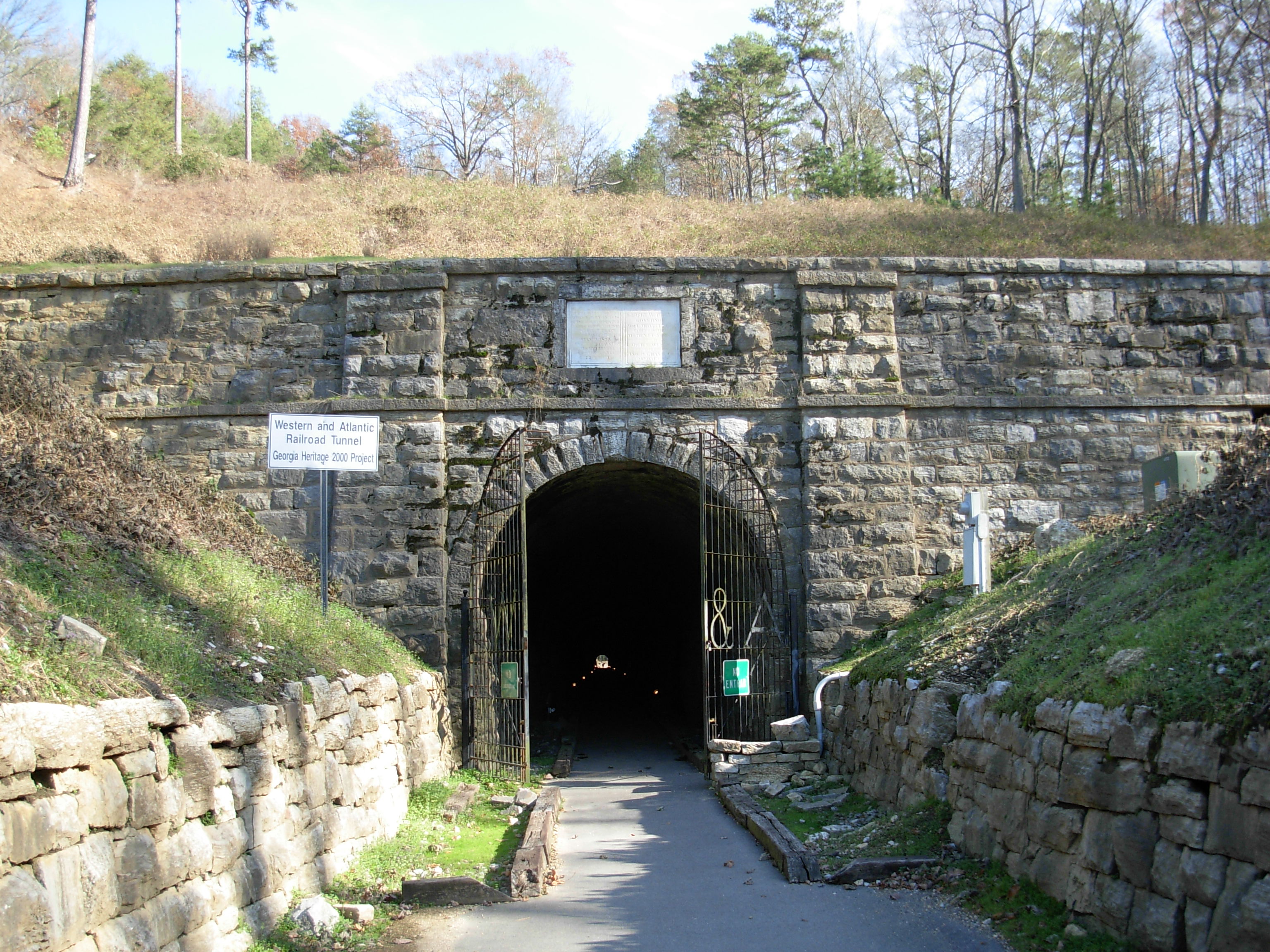
As the railroad spread its tentacles throughout the nation before the tumult of the Civil War, a route was needed from Augusta, Georgia to Chattanooga, Tennessee. Numerous obstacles stood in the way, but the biggest was Chetoogeta Mountain. Plans for a railroad tunnel dated to the second half of the 1830s, but work did not commence until 1848 with work completed two years later. The new tunnel was instrumental in Atlanta’s growth as a railroad hub and was a strategic feature for the Confederacy to protect during the Civil War.

The tunnel’s strategic importance led to a series of skirmishes being fought here leading up to the Battle of Atlanta. Following the war, the tunnel remained in service until 1928 when a new tunnel was built a few yards away. The old tunnel became overgrown with kudzu and was largely forgotten until 1992 when preservationists fought to save the tunnel. It is now the centerpiece of a park that features reenactments of the skirmishes fought at the site.

Entrance to the old Western & Atlantic Railroad Tunnel, 2011. Photo by Lewis O. Powell, IV, All rights reserved.

It is often re-enactors who have encountered anything supernatural at the site. I’ve been pleasantly surprised by the number of documented accounts of spirits at Tunnel Hill. At least four books and a handful of good articles document the high levels of activity at this site. Accounts include the apparitions of soldiers seen both inside the tunnel and around it. Ghostly campfires, disembodied screams, spectral lantern light and the smell of rotting flesh (minus the presence of actual rotting flesh) have all been reported by re-enactors and visitors alike.

Sources

  • DeFeo, Todd. “Antebellum railroad tunnel still a marvel after all These years.” com. 22 June 2009.
  • Kotarski, Georgiana C. Ghosts of the Southern Tennessee Valley. Winston-Salem, NC: John F. Blair, 2006.
  • Underwood, Corinna. Haunted History: Atlanta and North Georgia. Atglen, PA: Schiffer, 2008.
  • Western and Atlantic Railroad Tunnel. Tunnel Hill Heritage Center. Accessed 28 November 2010.

Old Talbott Tavern
107 West Stephen Foster Avenue
Bardstown, Kentucky

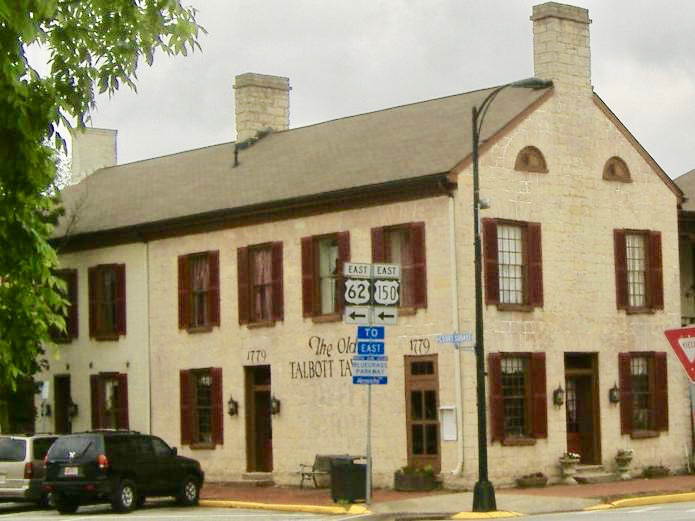
Old Talbott Tavern, 2008, by C. Bedford Crenshaw. Courtesy of Wikipedia.

Continuously open since the late 18th century except for a period in the late 1990s when the tavern was being renovated following a disastrous fire, the Old Talbott Tavern has hosted an impressive array of visitors ranging from Daniel Boone to General George Patton. Perhaps one of the famous guests who has never checked out is outlaw Jesse James who stayed frequently in the tavern while visiting his cousin who was the local sheriff. With the claims of Jesse James’ spirit which may also roam the halls of Selma, Alabama’s St. James Hotel, James’ spirit may split the hereafter between two favorite locales. But James’ spirit is not the only spirit acting up in the Old Talbott Tavern. Other ghosts may include formers guests, owners and their families.

Sources

  • Brown, Alan. Haunted Kentucky. Mechanicsburg, PA: Stackpole Books, 2009.
  • Brown, Alan. Stories from the Haunted South. Jackson, MS: University Press of Mississippi, 2004.
  • Starr, Patti. Ghosthunting Kentucky. Cincinnati, OH, Clerisy Press, 2010.

Old Louisiana State Capitol
100 North Boulevard
Baton Rouge, Louisiana

When the state capitol was moved from New Orleans to Baton Rouge in 1846, the city donated land atop a bluff over the Mississippi for the capitol building. Architect James Dakin designed a Neo-Gothic building very much unlike the other state capitols which were often modeled on the U.S. Capitol building in Washington. The magnificent crenellated and be-towered structure was used as a prison and garrison for soldiers under the city’s Union occupation and during this time it caught fire twice leaving it a soot-stained shell by the war’s end. The building was reconstructed in 1882 but abandoned in 1932 for Governor Huey Long’s new state capitol.

Old State Capitol, 2009, by Avazina. Courtesy of Wikipedia.

Even before the capitol burned during the war, there was a ghost gliding through its halls. Pierre Couvillon, a legislator representing Avoyelles Parish, enraged by his colleagues’ corruption, suffered a heart attack and died. Though he was buried in his home parish, his spirit was said to reside in the capitol; perhaps checking up on his colleagues. When the capitol building underwent restoration in the 1990s, the spirit or spirits in the building were stirred up and activity has increased. Staff members and visitors have reported odd occurrences. One security guard watched as movement detectors were set off through a series of rooms while nothing was seen on the video.

Two organizations investigated the building in 2009 and uncovered much evidence. Louisiana Spirits Paranormal Investigations picked up a number of interesting EVPs including someone singing the old song, “You Are My Sunshine.” Everyday Paranormal, in their investigation had a few encounters in the basement of the building, the area used as a prison during the Union occupation. It seems that there are many spirits within the crenellated walls of the Old Capitol.

Sources

  • Duvernay, Adam. “Several Baton Rouge sites said to be haunted.” The Daily Reveille. 27 October 2009.
  • Dwyer, Jeff. Ghost Hunter’s Guide to New Orleans. Gretna, LA: Pelican, 2007.
  • Louisiana Spirits Paranormal Investigations. Old State Capitol, Baton Rouge, LA. Accessed 11 November 2011.
  • Manley, Roger. Weird Louisiana. NYC: Sterling Publishers, 2010.
  • Old Louisiana State Capitol. Wikipedia, the Free Encyclopedia. Accessed 9 November 2011.
  • Southeastern Students. “Old State Capitol Still Occupied by Former Ghosts.” com. 29 October 2009.

Jericho Covered Bridge
Jericho Road at Little Gunpowder Falls
Harford County Near Jerusalem, Maryland

Jericho Covered Bridge, 2009, by Pubdog. Courtesy of Wikipedia.

Straddling the county line between Harford County and Baltimore County over the Little Gunpowder Falls is the Jericho Covered Bridge, constructed in 1865. According to Ed Okonowicz in his Haunted Maryland, there are legends of people seeing slaves hanging from the rafters inside this nearly 88-foot bridge. Certainly, there is an issue with this as the bridge was constructed in 1865, after the end of both slavery and the Civil War. Other, more realistic legends, speak of a woman seen on the bridge wearing old-fashioned clothing and people having their cars stop inexplicably in the middle of the bridge.

Sources

  • Jericho Covered Bridge. Wikipedia, the Free Encyclopedia. Accessed 20 January 2011.
  • Ed. Haunted Maryland. Mechanicsburg, PA: Stackpole Books, 2007.
  • Varhola, Michael J. and Michael H. Varhola. Ghosthunting Maryland. Cincinnati, OH: Clerisy Press, 2009.

Corinth Battlefield
Corinth, Mississippi

Following the Confederate’s disastrous attack in April of 1862 on the Union forces at Shiloh, Tennessee (for a battle description see my entry on the Beauregard-Keyes House in New Orleans), the Union army laid siege for two days to the vital railroad town of Corinth, just over the state line. To save his army from annihilation, General P.T.G. Beauregard gave the appearance of reinforcement troops arriving and being put in place while efficiently moving his troops out of the city to nearby Tupelo. The Union army entered the city the following day to find it devoid of Confederates. In October of the same year, Confederates tried once again and failed to capture the city losing some 4,000 men (including dead, wounded and missing) in the process.

The railroad junction at the heart of Corinth. Photo 2013, by Ron Cogswell. Courtesy of Wikipedia.

The battlefield on which these two battles were fought is now incorporated into the mid-sized city of Corinth. Portions of the battlefield and earthworks are now preserved as the Corinth unit of Shiloh National Military Park. As one might expect, some of those portions have spiritual artifacts remaining. Some of the best stories from Civil War battlefields come from re-enactors who have experiences while re-enacting battles and one of the primary reports of ghosts from the Corinth battlefield comes from a re-enactor whose story was documented by Alan Brown. This particular re-enactor heard the sound of a phantom cavalry and a few nights later, the sound of someone rummaging through her tent while camping on the battlefield.

Sources

  • Brown, Alan. Stories from the Haunted Southland. Jackson, MS: University Press of Mississippi, 2004.
  • Second Battle of Corinth. Wikipedia, the Free Encyclopedia. Accessed 27 January 2011.
  • Siege of Corinth. Wikipedia, the Free Encyclopedia. Accessed 27 January 2011.

North Carolina Zoological Park
4401 Zoo Parkway
Asheboro, North Carolina

North Carolina lawyer and folklorist Daniel Barefoot has done much to preserve North Carolina and Southern legends and ghost stories in his books. His series, North Carolina’s Haunted Hundred provides a single ghost story or legend from each of the state’s one hundred counties. From Randolph County, smack dab in the middle of the state, comes the legend of the aptly named, Purgatory Mountain, now home to the NC Zoo. The state-owned zoo is the largest walk-through habitat zoos in the world and a major attraction in the region.

NC Zoo sign, 2010, by Eleazar. Courtesy of Wikipedia.

During the Civil War, much of rural North Carolina was resistant to seceding from the Union and, as a result, the state was the final state to secede. Still, many citizens, including the peaceable Quakers of Randolph County resisted joining the butternut ranks. Recruiters were sent to these areas to nudge and sometimes force the inhabitants to join. One particular recruiter in this area earned the nickname, “The Hunter,” for his harsh methods.  He rounded up a group of Quaker boys, tied them roughly and marched them to Wilmington to join the army, but a few escaped and returned, bedraggled to their rural homes. When the recruiter returned, this group of escaped boys shot him outside of his cabin at Purgatory Mountain. His malevolent spirit is still supposedly stalking the crags of his mountain home.

Sources

  • Barefoot, Daniel W. North Carolina’s Haunted Hundred, Vol. 2: Piedmont Phantoms. Winston-Salem, NC, John F. Blair, 2002.
  • North Carolina Zoo. Wikipedia, the Free Encyclopedia. Accessed 11 April 2012.

Carter House
1140 Columbia Avenue
Franklin, Tennessee

By some accounts, the Battle of Franklin, November 30, 1864, was one of the bloodiest battles of the war. Some historians have even deemed it the “Gettysburg of the South.” Fought right on the edge of the town of Franklin, the battle hit very close to the home front and absolutely hammered the farm of the Carter family which was located at the center of the main defensive line. During the furious fighting, the Carters, neighbors and slaves cowered in the basement of the house, emerging after the battle to witness the carnage spread through their yard and around their house. The house and outbuildings still bear bullet holes, attesting to their experience.

Fanny Courtney Carter, who was 8 years old when the battle overtook her family’s farm, later recalled the day following the battle: “Early the next morning after the Battle I went to the field. The sight was dreadful. It seemed I could scarcely move for fear of stepping on men either dead or wounded. Some were clod and stiff, others with the lifeblood ebbing out, unconscious of all around, while others were writing in agony and calling ‘Water! Water!’ I can hear them even now.” Fanny’s brother, Tod, who had enlisted in the Confederate army was found some yards from the house, his body riddled with eight bullets, but still clinging to life. The family brought him into the parlor of his home where he died on December 2.

Carter House by Hal Jesperson, 2009. Courtesy of Wikipedia.

The pastoral fields that once surrounded the Carter House as well as the town of Franklin that saw so much blood that November day have mostly been lost to development though the spiritual imprint of the battle is still felt throughout the city. The spirit of Tod Carter may be one of the more active spirits at the Carter House. He has been seen sitting on the edge of the bed where he may have died and according to Alan Brown, he took a tour of the house, correcting the tour guide when she didn’t use the correct name or date and disappearing before he and the guide could descend to the basement.

Apparently he’s not the only lingering spirit. Poltergeist activity in the house has been attributed to Tod’s sister, Annie. Objects have moved from room to room and one visitor on a tour watched a figurine that jumped up and down.

Sources

  • Battle of Franklin (2009). Wikipedia, the Free Encyclopedia. Accessed 13 December 2010.
  • Brown, Alan. Haunted Tennessee: Ghosts and Strange Phenomena Of the Volunteer State. Mechanicsburg, PA: Stackpole, 2009.
  • O’Rear, Jim. Tennessee Ghosts. Atglen, PA: Schiffer, 2009.

Rockledge Mansion
440 Mill Street
Occoquan, Virginia

The town website for Occoquan (pronounced OK-oh-qwahn), Virginia states that the city, “has an inordinate amount of spooks per capita” and then goes on to list a number of locations in the town with ghosts. Among this remarkable collection of haunted locations is the magnificent Georgian mansion, Rockledge, which commands a literal rock ledge above Mill Street. The town was founded in the mid-eighteenth century as a port on the Occoquan River and during the Civil War this northern Virginia town served as a post office between the North and the South.

Rockledge Mansion by AlbertHerring, 2008. Courtesy of Wikipedia.

Quite possibly the work of colonial architect, William Buckland, Rockledge was built in 1758 by local industrialist John Ballandine. In the yard of this house the ghost of a Confederate soldier has been seen and possibly heard. One witness saw the soldier then noticed peculiar wet footprints on the front steps that appeared to be from hobnail boots, the kind that would have been worn by soldiers during the war. Many people have heard loud footsteps in the house as well as someone knocking at the door. So far, no source has identified this soldier.

Sources 

  • Occoquan History. com. Accessed 16 November 2010.
  • Occoquan, Virginia. Wikipedia, the Free Encyclopedia. Accessed 13 December 2010.
  • Streng, Aileen. “Benevolent ghost believed to haunt mansion.” com. 27 October 2010.
  • Virginia Historic Landmarks Commission. National Register of Historic Places Nomination Form for Rockledge Mansion. Listed 25 June 1973.

Berkeley Castle
WV-9
Berkeley Springs

Berkeley Castle by Jeanne Mozier. Courtesy of Wikipedia.

Berkeley Springs, also known as “Bath,” has attracted visitors who come to take the waters of the mineral springs located there. Overlooking this quaint town from a commanding position on Warm Spring Mountain sits Berkeley Castle, seemingly a piece of medieval Britain transplanted. Modeled and named after Britain’s own Berkeley Castle, the castle was built as a wedding gift from Colonel Samuel Suit for his bride, Rosa Pelham. The Colonel, who was quite a bit older than his bride, died before the castle was finished and his widow finished the building. She lived in the castle after his death and squandered the fortune she inherited and died penniless well away from the castle, but legends speak of her return.

The castle was purchased by paranormal investigators in 2000 but sold fairly shortly after that. Once open for tours, the castle is now primarily a private residence, though it may be rented for weddings, parties and other events.

Sources

  • Fischer, Karin. “Castle in Eastern Panhandle could be in need of a new lord this spring.” Charleston (WV) Daily Mail. 21 November 2000.
  • History Berkeley Castle. Berkeley Castle. Accessed 19 March 2011.
  • Robinson, James Foster. A Ghostly Guide to West Virginia. Winking Eye Books, 2008.

Saving the living and the dead in Maryland

Ocean City Life-Saving Station Museum
813 South Atlantic Avenue
Ocean City, Maryland

On October 28th, Dead of Night Paranormal Investigations will host an investigation of Ocean City’s former Life-Saving Station. Constructed in 1891, this white, wood frame building housed a keeper and a team of “surfmen” who monitored the local coast for ships in distress. Once a distressed ship was spotted, the team would leap into action and attempt to rescue any souls aboard the vessel. It was dangerous work that sometimes claimed the lives of the rescuers as well as those who they tried to rescue.

Ocean City Life-Saving Station Museum, 2014. Photo by Preservation Maryland, courtesy of Wikipedia.

The Life Saving Service—organized by the federal government in 1848—was merged into the Coast Guard in 1915 and this building was in service until 1964 when a new structure opened nearby. When the town considered demolishing the building in 1977, locals organized to save the structure and install a museum of local history. Today, packed with local artifacts and memorabilia, the building remains occupied by spirits who flit through the exhibition reminding visitors and staff of the lives that have been led and may have ended in this unassuming building.

Among the many relics is life-sizes rag doll with a grotesque gap-toothed grin known as “Laughing Sal.” Sal once greeted visitors to Jester’s Funhouse, one of the attractions located along the Ocean City Boardwalk. With a terrifying laugh and jerky animatronic movements, Laughing Sal invited visitors into the thrills of the funhouse. When the funhouse closed Sal was stored away, though vandals attempted to destroy the doll, she was restored and returned to greet visitors to the museum. Like Key West’s famous Robert the Doll, Sal continues to frighten visitors and staff alike. While the doll is no longer rigged to move, her disconcerting laugh can be heard by pressing a button in front of her display. However, Sal has been known to laugh when no one is around and when no one has pressed her button.

Laughing Sal’s creepy guffawing is not the only paranormal activity encountered in the old life-saving station. A little, blonde haired boy has been seen running and playing in the museum. Once, as the museum staff was closing, the little boy dashed through the front door into the museum. A staff member pursued the child into the museum, though he had apparently vanished. Despite checking every space a curious child might hide, the staff member could not locate him. The life-saving station has saved many a life and a few spirits as well.

Sources

  • Boardwalk Birdie. “Ghost hunting in Ocean City.” com. 11 September 2017.
  • Burgoyne, Mindie. Haunted Ocean City and Berlin. Charleston, SC: History Press, 2014.