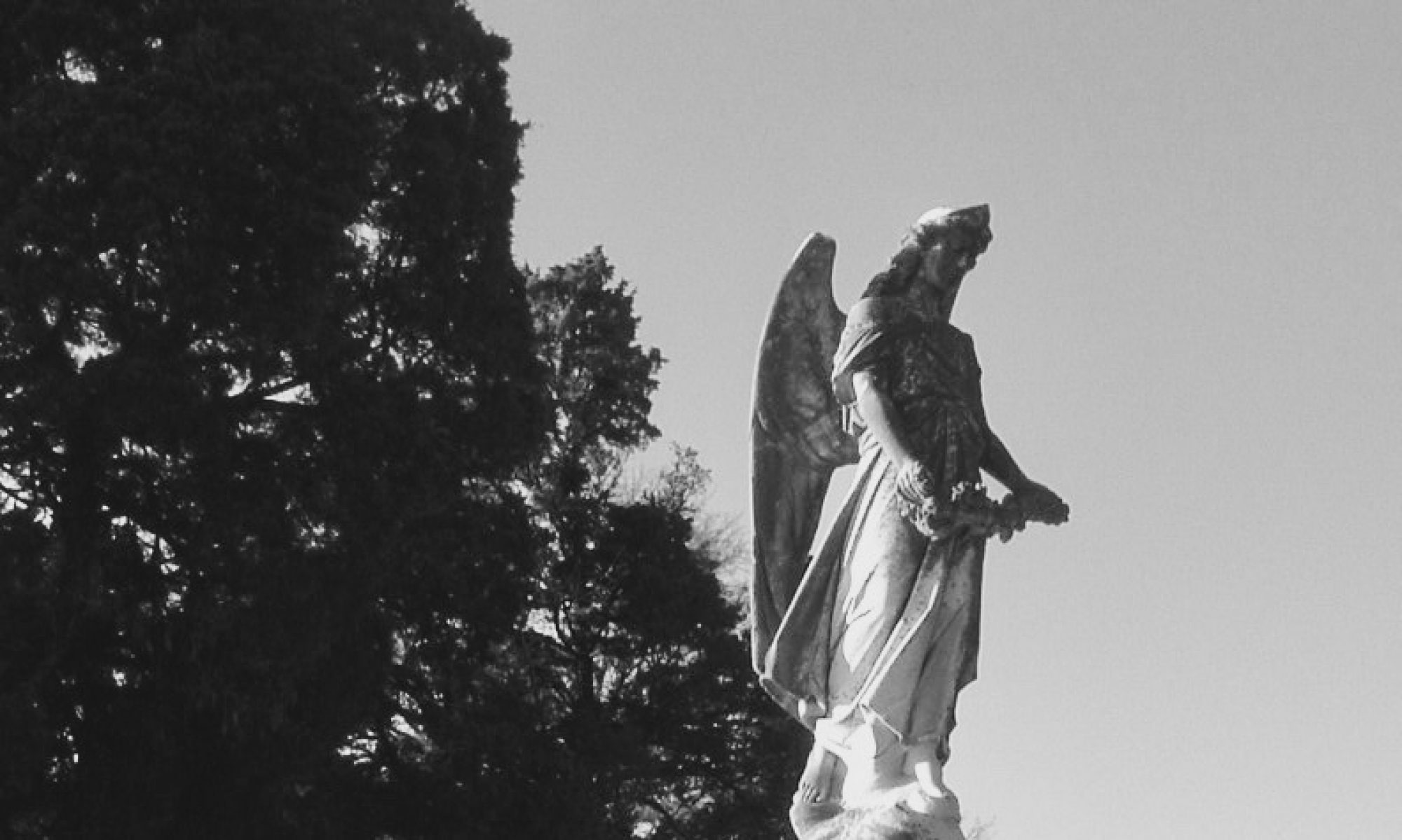
The haunts of Washington, D.C.

N.B. This article was edited and revised 2 September 2020.

Though I haven’t really touched on it much yet, the geographical region for this blog includes the District of Columbia. When it was established in 1790, the district was not based in a specific state and instead is under the direct supervision of the Federal Government. With the drama that has and continues to occur in this monumental city, it’s no surprise that there are spiritual remnants. The spirits of past presidents, politicians and their families, civil servants and common people are found throughout the city, from the White House to the Capitol and beyond.

Congressional Cemetery
1801 E Street, SE

Congressional Cemetery, 2008. Photo by AgnosticPreachersKid, courtesy of Wikipedia.

Established as a private burying ground in 1807, this cemetery was later deemed the Washington Parish Burial Ground. About ten years later, space was designated for the burial of government officials and legislators. Cenotaphs, monuments to persons buried elsewhere, were also erected here to memorialize certain notables. Over time, as the burial spot for many of Washington’s elite, this became known as the Congressional Cemetery, though it was not officially a congressional entity.

Among the many famous people who rest here are three who are believed to remain in this plane of existence. John Philip Sousa, was a bandleader and composer known for such patriotic standards as The Washington Post March and Stars and Stripes Forever, he also invented the sousaphone, a type of marching tuba. Legend has it that the bass tones of a sousaphone are sometimes heard around Sousa’s grave.

Famed Civil War-era photographer Mathew Brady, whose stunning images captured the horrors of war is also buried here. After the war, Brady expected that the government would purchase his photographs. When they declined to do so, Brady was left in a penurious state. After being forced to sell his New York studio, he died penniless. His spirit has been reported wandering among the graves of some of those same government officials who denied him compensation.

In 1824, Choctaw Chief Pushmataha, considered by some historians to be the greatest of the chiefs to serve this particular tribe, journeyed to Washington to argue against further concessions of his tribal lands. While on this trip, he fell ill and died and was given full military honors in his burial in this cemetery. Despite his eloquent arguments against the removal of his people, the Choctaw were removed from their homeland. It is possible that his spirit remains here causing trouble at the graves of those who spurned his people after his death.

Sources

  • Congressional Cemetery. Wikipedia, the Free Encyclopedia.Accessed 20 December 2010.
  • Hauck, Dennis William. Haunted Places: The National Directory. NYC: Penguin, 2002.
  • John Philip Sousa. Wikipedia, the Free Encyclopedia. Accessed 20 December 2010.
  • Mathew Brady. Wikipedia, the Free Encyclopedia. Accessed 20 December 2010.
  • Ogden, Tom. Haunted Washington, DC: Federal Phantoms, Government Ghosts, and Beltway Banshee. Guilford, CT: Globe Pequot, 2016.
  • Pushmataha. Wikipedia, the Free Encyclopedia. Accessed 2 September 2020.
  • Taylor, Troy. Beyond the Grave: The History of America’s Most Haunted Graveyards. Alton, IL: Whitechapel Press, 2001.

Decatur House
1610 H Street, NW

Decatur House, 2009. Photo by Tim1965, courtesy of Wikipedia.

Overlooking Lafayette Park and situated just down the street from the White House stands the Decatur House which is open as the National Center for White House History, a joint effort of the National Trust for Historic Preservation and the White House Historical Association. Built in 1818 by Commodore Stephen Decatur, a naval hero of the War of 1812, the house was designed by Benjamin Henry Latrobe, America’s first professional architect and the designer of the U.S. Capitol Building. Decatur lived in the house only a little more than a year before he was killed in a duel with Commodore James Barron. Decatur’s spirit has been seen standing at a window perhaps contemplating the duel that would end his life while his wife’s piteous spirit has been heard and felt throughout the house.

Sources

  • Hauck, Dennis William. Haunted Places: The National Directory. NYC: Penguin, 2002.
  • Decatur House. Wikipedia, the Free Encyclopedia. Accessed 2 September 2020.
  • McCurry, Jason. “Decatur House” in Jeff Belanger’s Encyclopedia of Haunted Places. Franklin Lakes, NJ: New Page Books, 2005.
  • Reportedly haunted locations in Washington, D.C. Wikipedia, the Free Encyclopedia. Accessed 20 December 2010.

Independence Avenue
In the vicinity of FAA Headquarters

FAA Headquarters on Independence Avenue, 2009. Photo by Matthew Bisanz, courtesy of Wikipedia.

Much of early Washington was built on the backs of African-American slaves. Two of the most notorious slave markets, the Williams Slave Pen and the Robey Slave Pen were ironically located along Independence Avenue near what is now the headquarters of the Federal Aviation Administration. Witnesses in the area report the clanking of chains and screams in this area.

Sources

Indonesian Embassy
(Walsh-McLean Mansion)
2020 Massachusetts Avenue, NW

Indonesian Embassy (Walsh-McLean Mansion), 2008. Photo by Josh Carolina, courtesy of Wikipedia.


The Walsh-McLean Mansion is an architectural gem and currently the home to the Indonesian Embassy and several mysteries. The home was owned by the wealthy Edward Beale McLean, owner and publisher of The Washington Post. In 1911, he purchased the famed Hope Diamond, which he presented to his wife, socialite Evelyn Walsh McLean. The purchase went through despite the rumors of a curse attached to the stone.

For eight years the McLeans avoided any tragedy that could be blamed on the stone. As a series of misfortunes befell the family, the press labeled the diamond a “talisman of evil.” These tragedies included the death of the McLean’s son in an automobile accident, their eventual divorce, their daughter from an overdose of sleeping pills, Edward’s dive into insanity, and Evalyn’s demise from disease in 1947. It is Evelyn’s spirit that is supposedly seen descending the grand staircase of the house.

Sources

  • Edward Beale McLean. Wikipedia, the Free Encyclopedia. Accessed 2 September 2020.
  • Ganschinietz, Suzanne. National Register of Historic Places Nomination form for Indonesian Embassy. Listed 18 January 1973.
  • Hauck, Dennis William. Haunted Places: The National Directory. NYC: Penguin, 2002.
  • Holzer, Hans. Where the Ghosts Are: The Ultimate Guide To Haunted Houses. Secaucus, NJ: Citadel Press, 1995.
  • Hope Diamond. Wikipedia, the Free Encyclopedia. Accessed 22 December 2010.

National Building Museum
(Old Pension Building)
440 G Street, NW

National Building Museum, 2010. Photo by AgnosticPreachersKid, courtesy of Wikipedia.
The faux-onyx Corinthian columns in the National Building Museum, 1918. Photo by National Photo Company, courtesy of Library of Congress, Prints and Photographs Division.

Some of the first paranormal phenomena witnessed in the 1885 Old Pension Building were odd faces appearing on the simulated onyx Corinthian columns in the main court of the building. In 1917, on the eve of the death of “Buffalo” Bill Cody, a guard saw the veins in the onyx take on the shape of a Native American head and a buffalo. Other faces seen on the columns include George and Martha Washington and eventually got so bad the columns were painted over. Following the painting, the spirits took to the halls in the form of shadowy figures.

Sources

  • Hauck, Dennis William. Haunted Places: The National Directory. NYC: Penguin, 2002.
  • National Building Museum. Wikipedia, the Free Encyclopedia. Accessed 22 December 2010.

Octagon House
1799 New York Avenue

The Octagon House, 2009. Photo by AgnosticPreachersKid, courtesy of Wikipedia.

The Octagon House is described by the National Park Service as “a zenith in Federal architecture in the United States, through its brilliant plan which combines a circle, two rectangles, and a triangle, and through the elegance and restraint of the interior and exterior decoration.” Construction on this magnificent manse began in 1798 and was completed two years later. The house was home to Colonel John Tayloe, one of the wealthiest planters in Virginia and his spirit as well as the spirits of two of his daughters have been seen in the house. One daughter died after plunging over the stair’s railing. Among other spirits reported is that of Dolley Madison who spent time in house when it served temporarily as Executive Mansion after the White House was burned by the British.

Sources

  • Holzer, Hans. Where the Ghosts Are: The Ultimate Guide To Haunted Houses. Secaucus, NJ: Citadel Press, 1995.
  • National Park Service. “Octagon Hall.” Accessed 22 December 2010.

United States Capitol Building
Capitol Hill

Among the more interesting legends of this most legendary city is that of Statuary Hall in the Capitol. The magnificent domed chamber originally served as the chamber for the House of Representatives in the first half of the nineteenth century. When the House of Representatives moved into a new chamber, legislation was put forth to use the room to celebrate prominent Americans with each state adding statues of two of its most prominent citizens. The collection of statues has grown to the point where only 38 are actually located in the hall with the remainder of the collection scattered throughout the Capitol. The legend associated with this room is that on the stroke of midnight on New Year’s Eve, the statues all climb down from their pedestals and dance to celebrate another year of the Republic’s survival. According to Dennis William Hauck, the guard who swore he saw this happen was dismissed.

For information on a ghost from the Library of Congress’ original location within the Capitol that may continue to haunt the building see my article on the haunted libraries of D.C.

Sources

  • Hauck, Dennis William. Haunted Places: The National Directory. NYC: Penguin, 2002.
  • National Statuary Hall. Wikipedia, the Free Encyclopedia. Accessed 20 December 2010.

Woodrow Wilson House
2340 S StrOeet, NW

Woodrow Wilson House, 2008. Photo by AgnosticPreachersKid, courtesy of Wikipedia.

The shade of our 28th president, Woodrow Wilson apparently appears in two places: Blair House and his home in the northwestern part of the city. Also facing Lafayette Square near the Decatur, Cutts-Madison and White Houses, all of which are haunted, the Blair House is now the official state guest house. According to Michael Varhola, Wilson’s spirit has been seen rocking in a rocking chair in one of the bedrooms. His spirit is also seen in the home he occupied following his presidency and where he subsequently died in 1924. Wilson’s “slow shuffle” aided by a cane, which he used following a stroke in 1919, has been heard frequently in this house.

Sources

    • Blair House. Wikipedia, the Free Encyclopedia. Accessed 22 December 2010.
    • Hauck, Dennis William. Haunted Places: The National Directory. NYC: Penguin, 2002.
    • Varhola, Michael J. Ghosthunting Virginia. Cincinnati, OH: Clerisy Press, 2008.
    • Woodrow Wilson House (Washington, D.C.). Wikipedia, the Free Encyclopedia. Accessed 22 December 2010.

A few notes on the Old Phenix Regional Hospital

Old Phenix Regional Hospital
18th Street
Phenix City, Alabama 

A front page article in this past Tuesday’s Columbus (GA) Ledger-Enquirer featured this possibly haunted location and presented a number of interesting issues regarding ghosthunting. The article, entitled, “Haunted Hospital?” covers a recent incident where a couple entered the abandoned hospital. After neighbors summoned the police, the couple, who claimed to be conducting a séance, was asked to leave.

By default, it seems most hospitals have some spiritual activity; not only residual activity, but intelligent spirits that have not been able to leave the confines of the place where they died. Throughout the nation and, of course the South, there are numerous hospitals that are known for their spiritual activity. Among them are locations like Waverly Hills Sanatorium in Louisville, Kentucky, an abandoned tuberculosis hospital; the Old South Pittsburg Hospital in South Pittsburg, Tennessee, an abandoned regional hospital that closed fairly recently but is now open for paranormal investigations; and Milledgeville, Georgia’s Central State Hospital, once one of the largest mental institutions in the nation, it is now confined to a handful of buildings sitting on a mostly abandoned campus. Even hospitals still in operation may be counted among those that are haunted including Anniston, Alabama’s Stringfellow Memorial Hospital.

Phenix City, located just across the Chattahoochee River from Columbus, Georgia, is the product of the merger of two smaller towns, Girard and Brownsville, which consolidated in 1923. The city acquired a reputation as “Sin City, USA” in the first half of the twentieth century. Organized crime, prostitution and gambling were rampant in the city until a group of citizens banded together to reclaim the city. After the less moral elements of the city were done away with, the city has remained mostly a sleepy bedroom community for Columbus.

The large Phenix Regional Hospital facility opened in 1947 and was heavily in debt when Columbus Regional Health Systems purchased the hospital from the city in 1993. Columbus Regional intended on replacing the facility with a new hospital, but the plans fell through. When the hospital was closed in 2002, the land that had been purchased for the new hospital was used for a rehabilitation hospital instead with Phenix City residents having to seek medical attention in Columbus instead. The old hospital facility was boarded up and put up for sale. According to the article, neighbors have witnessed the homeless and vandals entering the deteriorating building.

Nationwide, ghosthunting is still considered by the general public to be the realm of thrill-seeking teenagers looking to scare themselves silly in dark, abandoned places. Certainly the couple conducting a séance in Phenix Regional doesn’t aid that reputation. With the rise in interest in the paranormal in recent years, many groups have been formed that are respectably investigating locations after procuring the proper permission to investigate. The investigations attempt to document hauntings using practices accepted by the paranormal community; a far cry from silly teenagers and off the cuff séances.

The article doesn’t cite any particular paranormal activity at the hospital. In fact, it is written from a rather close-minded point of view; discounting the mere existence of anything beyond this realm of possibility. I hope in the near future, the editors would take a more open-minded view of the supernatural.

Sources

  • Barnes, Kirsten J. “Haunted Hospital?” Columbus Ledger-Enquirer. 7 December 2010.
  • Lange, Jennifer. “Hospital was victim of economics.” Columbus Ledger-Enquirer. 9 April 2002.
  • Phenix City – Russell County Chamber of Commerce. History Highlights Phenix City, Alabama. Accessed 10 December 2010.

“We fired our guns and British kept a’comin”–Chalmette Battlefield

We fired our guns and the British kept a’comin.
There wasn’t nigh as many as there was a while ago.
We fired once more and they began to runnin’ on
Down the Mississippi to the Gulf of Mexico.
— from “The Battle of New Orleans” by Jimmie Driftwood, recorded by Johnny Horton in 1959.

Jean Lafitte National Historic Park and Preserve
8606 West St. Bernard Highway
Chalmette, Louisiana

A Haunted Southern Book of Days–8 January

This article is a part of an occasional blog series highlighting Southern hauntings or high strangeness associated with specific days. For a complete listing, see “A Haunted Southern Book of Days.”

The Battle of New Orleans by American painter, Thomas Moran, 1910.


Situated a few miles southeast of the city of New Orleans, the Chalmette Battlefield is the site of America’s greatest victory in the War of 1812. The British first threatened the city with the arrival of a flotilla just off of Lake Pontchartrain. The Americans attempted to block the British from landing but were defeated in the brief Battle of Lake Borgne on December 18, 1814. An attack by the Americans on the British position, once they landed on the 23rd, was successful only in keeping the British on their toes, though their maintained their position. General Andrew Jackson’s American troops dug in and created earthworks on Chalmette Plantation right along the Rodriguez Canal and bounded on both sides by cypress swamps and the Mississippi River that became known as “Line Jackson.”

Undated map of the battle line and line of attack. Courtesy of Wikipedia.

At the Ursuline Convent in New Orleans (see my entry on the convent here), prayers were raised by the sisters to the Virgin Mary to ensure an American victory and protect the city. The sisters had prayed a few years earlier in 1812 when fire ravaged the city. Miraculously, the flames were swept away from the convent by a sudden change in direction. The sisters’ prayers were answered on the morning of January 8th when the British launched their main attack in darkness and heavy fog. Perhaps as an answer to the sisters’ prayers, the fog lifted to reveal the troops marching towards the American’s fortifications. Exposed to brutal artillery fire, the British lost many of their senior officers quite early on leaving the soldiers in the field without direction. Despite being outmanned by British forces, the Americans held their ground and incurred few losses. The British, on the other hand, lost 291 soldiers including two generals with over 1,200 wounded and nearly 500 captured or missing.

This decisive American victory served as the final engagement of the War of 1812, despite its occurrence after the end of the war. The war officially ended in Belgium with the signing of the Treaty of Ghent on Christmas Eve, 1814, some two weeks previous to the battle. Following the tumult of battle, the site returned to its agrarian origins and the Beauregard House was built on part of the battlefield around 1830. The entrenchments, especially those in the area around the National Cemetery, were reused by Confederate and later, Union, forces during the Civil War. Towards the end of the war, a national cemetery was established for the burial of Union troops who had died in the area. The cemetery has seen over 15,000 burials and is now closed. Attempts to memorialize the site date to 1855 when construction began on a marble tower on the battlefield which was completed in 1908.

Modern photo of the battlefield with the remains of the “Line Jackson” earthworks, battle monument and the Beauregard House. From the National Park Service.

The Battlefield and National Cemetery now comprise a unit of the Jean Lafitte National Historic Park and Preserve, which preserves a series of cultural and natural resources that represent the rich history and ecology of the region. The park is named for the nineteenth century pirate, Jean Lafitte, who worked in some of the areas preserved in the park and who also came to the aid of the American’s before and during the battle. The spirit of Lafitte is one of the spirits that is said to haunt Destrehan Plantation which I wrote about in the entry on the River Road plantations of Louisiana.

Battlefields appear frequently in paranormal literature. Seemingly, the more important the battle, the more haunted the battlefield and the Chalmette Battlefield is no exception. Though finding good information on the haunting of this battlefield is not as easy. There are two primary sources for information on the ghosts of the battlefield: Jeff Dwyer’s excellent Ghost Hunter’s Guide to New Orleans and a blog from the Southern Area Paranormal Society. Outside of these sources, there is information on the haunted, but its validity is questionable.

Jeff Dwyer’s book provides good information on the battle, but he doesn’t say too much about what supernatural elements have been experienced there. He states that cold spots have been felt and that sensitive people have felt a “pulling sensation as if gravity has increased many times.” My skeptical side is apt to not usually believe “feelings” that people may get in a location, especially if that’s the only indication of paranormal activity.

The other main source for what is taking place in the battlefield involves a good deal more information. The Southern Area Paranormal Society discusses the battlefield and two nearby forts in their blog. Activity they mention on the battlefield include apparitions and voices. They also mention that activity has been reported in the Beauregard House including the sound of footsteps and possible shadow people.

Sources

  • The Battle of New Orleans. Wikipedia, the Free Encyclopedia. Accessed 19 November 2010.
  • Dwyer, Jeff. Ghost Hunter’s Guide to New Orleans. Gretna, LA: Pelican, 2007.
  • Greene, Jerome A. National Register of Historic Places Nomination Form for Chalmette Unit. Listed 6 July 1987.
  • Jean Lafitte. Wikipedia, the Free Encyclopedia. Accessed 22 November 2010.
  • Manley, Roger. Weird Louisiana: Your Travel Guide To Louisiana’s Local Legends and Best Kept Secrets. NYC: Sterling, 2010.
  • Southern Area Paranormal Society. Fort Beivnue, Chalmette Battlefield & Fort Pike. 19 May 2009.

Revenants of the Rawls Hotel–Alabama

Rawls Hotel
116 South Main Street
Enterprise, Alabama

It seems that ghosts can be good for business; they are a paranormal economic stimulus if you will. With the rise of interest in the paranormal in recent years, businesses are playing up their more supernatural elements in order to attract business. This is certainly evident at the Rawls Hotel in Enterprise, Alabama. A quick visit to the hotel’s website produces a link dedicated to the hotel’s ghosts.

Street facade of the Rawls Hotel, 2013. Photo by Lewis Powell IV, all rights reserved.

Two recent articles, in the Dothan Eagle and The Southeast Sun, an online newspaper out of Enterprise, have featured investigations of this hotel by the Southern Paranormal Researchers, a Montgomery, Alabama based paranormal group. According to another article from 2002 posted on the hotel’s website, reports of activity at the Rawls began just after World War I (about 1919) and have continued ever since. This activity includes everything from apparitions to the sounds of children’s laughter heard in some of the hallways to objects being moved and lights coming on by themselves. During the hotel’s renovation in the late 1970s, one very interesting event occurred: Hayden Pursley who was working to restore the hotel was hanging window treatments in the ballroom. Pursley returned the next day to find that the window treatments had been taken down. He put them back up to find them down again the next day. When he attempted to put them up a third time, he was hit by a board that flew across the room.

Rear facade of the Rawls Hotel, 2013. Photo by Lewis Powell IV, all rights reserved.

The Rawls Hotel was opened initially as the McGee Hotel in 1903 by Japheth and Elizabeth Rawls. It was a small structure built to serve the needs of railroad passengers. After the death of Mr. Rawls, the hotel passed to his nephew who undertook an expansion of the hotel: adding a third floor and wings onto the original building and creating a grand atmosphere. The hotel remained at the heart of Enterprise society functions until it closed in the early 1970s. Towards the end of that decade the hotel was purchased by Mr. Pursley who restored and renovated the hotel, returning it to its former glory.

Southern Paranormal Researchers (SPR) have previously investigated the Rawls Hotel and according to their investigation report, gathered a good deal of evidence. Among the events that were witnessed, were lights coming on by themselves, the sound of a child screaming and an investigator having her hair played with. The investigators also used dowsing rods to explore the hotel. Dowsing is an ancient technique that uses either a Y-shaped rod or two L-shaped rods that has been used to find water sources and spirits. Often when using the two L-shaped rods, investigators will loosely hold the rods by the short end of the “L” and ask the spirits to communicate by crossing the rods. During an investigation of the Rawls by SPR, the investigators believed they contacted the spirit of Hayden Pursley who passed in 2004.

SPR has created an internet radio show, “Down at the Crossroads,” that they host live on Thursday nights at 8 PM CST on their website. I will be a guest this upcoming Thursday, the 18th discussing this blog. Please listen in if you have a chance.

Sources

  • Brand, Carol. “In search of spirits at historic Rawls Hotel.” www.RawlsBandB.com. 2002.
  • Braun, Melissa. “Haunting in historic Enterprise hotel.” The Southeast Sun. 27 October 2010.
  • “History of The Rawls.” www.RawlsBandB.com. Accessed 13 November 2010.
  • “Meet the Ghosts.”  www.RawlsBandB.com. Accessed 13 November 2010.
  • Phillips, Greg. “Paranormal investigators examine, praise Historic Enterprise hotel.” Dothan Eagle. 23 October 2010.
  • Southern Paranormal Researchers. Investigation Report for The Rawls Hotel. Accessed 13 November 2010.

Spirited Soldiers and Sailors–West Virginia

Soldiers and Sailors Memorial Building
200 South Kanawha Street
Beckley, West Virginia

So far, West Virginia has been this blog’s Achilles heel. While Mississippi has not been well documented in terms of its ghosts, it seems that West Virginia is in the same quandary. So far, I’ve found 2 books about the ghosts of Mississippi and 4 on the ghosts of West Virginia. Therefore, whenever I find anything on either state I get excited.

Halloween is a wonderful time to pull newspaper articles on ghosts and I was excited to find a great article on the Soldiers and Sailors Memorial Building in Beckley, West Virginia. The article, “Stories of Beckley’s ghosts to be told Friday” from The Register-Herald, is regarding a fundraiser presentation for Theatre West Virginia which has just recently moved into the building. The presentation, called “Beckley’s Ghosts, Legends & Lore,” included storytellers describing experiences with the paranormal, including their own, in Beckley. The article then turns to the stories about the Soldiers and Sailors Memorial Building.

The article quotes Scott Worley, Raleigh County Historic Landmarks commissioner and historian, as stating that many people have had strange experiences in the building. He includes a story about a phantom saxophone solo that was heard during a show in the theatre. Of course, no one with a saxophone was in the building at the time.

A quick search online produced an investigation report from Eastern States Paranormal, a ghost hunting organization out of Virginia. The investigation, evidently conducted this year but otherwise no date is provided, produced some very interesting results. While the first few hours of the investigation was fairly quiet, the final few hours were particularly active starting during the group’s break with a noise like “a herd of elephants r[unning] across the stage.” For the next few hours the group was bombarded with many noises including “footsteps and doors closing…along with knocks, bangs and every other thing you could expect at a ghost hunt.”

According to the background information provided in the investigation report, the theatre opened in 1931 as a memorial to the veterans of World War I. During the opening ceremony, a set of makeshift bleachers collapsed injuring some including a tuba player who survived despite a broken neck. “Bob,” the tuba player, at some point later took up residence in an apartment in the basement of the building and it is there that his apparition has been seen. James Foster Robinson’s 2008 book, A Ghostly Guide to West Virginia, provides a brief mention of this building and simply identifies the ghost as a “gentleman ghost cloaked in gray” though he also mentions that music and children’s laughter are also heard in the building.

The Soldiers and Sailors Memorial Building is owned by the Raleigh County Commission which has just recently handed over use of the building to Theatre West Virginia, a noted theatre company in the area. At the moment, the company is renovating the building for future use.

UPDATE 14 July 2011 

In an earlier article, I covered this location in Beckley and recently, a little bit more information has been released about it. Briefly, the building is a theatre opened in 1931 as a memorial to veterans of World War I. During the opening ceremonies for the building, hastily erected bleachers collapsed with a few injuries but no deaths. Legend holds that one of those injured was a band member named Bob. For the remainder of his life, Bob suffered neck problems and was offered a small apartment in the basement of the building. After his death, his spirit has reportedly been encountered.

As I pointed out in the original article, the structure was investigated by Eastern States Paranormal who encountered a great deal of evidence. Patricia Marin, a writer on the paranormal for Examiner.com recently wrote an article about some of the evidence from that investigation that has recently been publicized by the group. The investigation began slowly, but when the group took a break they heard a sound similar to “a herd of elephants running across the stage.” After that, activity filled the space. Sounds included someone, possibly Bob, walking across the stage, response knocking and a sound akin to tap dancing. Some of this evidence has been posted to the website of Eastern States Paranormal, here.

Theresa Racer’s marvelous blog, Theresa’s Haunted History of the Tri-State, includes an entry on this location and provides a few more details on the history and the haunting of this structure. According to her, the building has served a variety of uses including a temporary courthouse, county library, YMCA and community center. After my last entry on the building, a good friend of mine who is from Beckley revealed that he had taught art classes in the building.

Racer includes the rumor that the building may be built near a Civil War era graveyard which was used by a local hospital during the war. She notes that two locations nearby, the old Beckley Junior High School (occupied by Mountain State University) and a radio station, may all be haunted by Civil War era spirits associated with the cemetery.

According to Marin’s Examiner article, the building will be taken over by Theatre West Virginia next month.

Sources

  • Eastern States Paranormal. Soldiers and Sailors War Memorial Theater. Accessed 8 November 2010.
  • Kuykendall, Taylor. “Stories of Beckley’s ghosts to be told Friday.” The Register-Herald. 28 October 2010.
  • Lannom, Andrea. “County hands TWV control of Soldiers and Sailors Building. The Register-Herald. 25 June 2010.
  • Marin, Patricia. “Eastern States Paranormal investigates haunted theatre in West Virginia.” Examiner.com. 6 July 2011.
  • Racer, Theresa. “Soldier’s Memorial Theater, Beckley.” Theresa’s Haunted History of the Tri-State. 2 March 2011.
  • Robinson, James Foster. A Ghostly Guide to West Virginia. WV: Winking Eye Books, 2008.

The haunts of Williamsburg, Virginia

Williamsburg, Virginia is one of three locations, the others being Jamestown and Yorktown, that form the Historic Triangle of Virginia. These three locations tell the story of the nation’s colonial development from its first settlement to the defeat of the British at Yorktown, ending the American Revolution. Williamsburg was founded as Middle Plantation, a fortified plantation in 1632. When the capital of the Virginia Colony was moved there in 1698, it was renamed Williamsburg. The city was at the heart of much of the anti-British movement in the South that led to the American Revolution.

With the loss of status as a capital in 1780, Williamsburg reverted to being a small provincial town. The town remained a sleepy, provincial town until the dream of Episcopal priest, the Rev. W. A. R. Goodwin began to take shape and return the town to its colonial appearance. With such a concentration of historic structures, these were preserved and more modern structures removed and replaced with recreations of the original structures. This recreation of colonial Williamsburg, now under the control of the Colonial Williamsburg Foundation is now one of the premier tourist attractions in Virginia.

Of course, with such a concentration of historic structures, Williamsburg has a good deal of paranormal activity. Some of the hauntings in Williamsburg are well documented such as the Peyton Randolph and Wythe Houses, but others aren’t. It is my belief that these hauntings are just the tip of the iceberg. I’ll be certainly working on trying to find more about the hauntings of Williamsburg.

Brafferton Building
College of William & Mary Campus

Brafferton Building, 2007. Photo by Ser Amantio di Nicolao, courtesy of Wikipedia.

Built in 1723 with funds provided by English scientist Robert Boyle with the intent to spread the Gospel to the Indians, the Brafferton Building saw many young Native American men pass through its halls and sleep in its rooms. Now serving as the college president’s and administrative offices, the building may still have the spirits of these young Native Americans still roaming it. When the building served as a dormitory for both students and faculty, reports came out of the building of footsteps late at night accompanied by the sound of sobbing and even the sound of Indian drums. Over the centuries the school has been in operation, students have seen the site of a young Native American running bare-chested and barefooted near this building. This building sits near the Wren Building featured later in this entry and across from the President’s House which is haunted by the spirit of a French soldier.

Chiswell-Bucktrout House
416 Francis Street, East

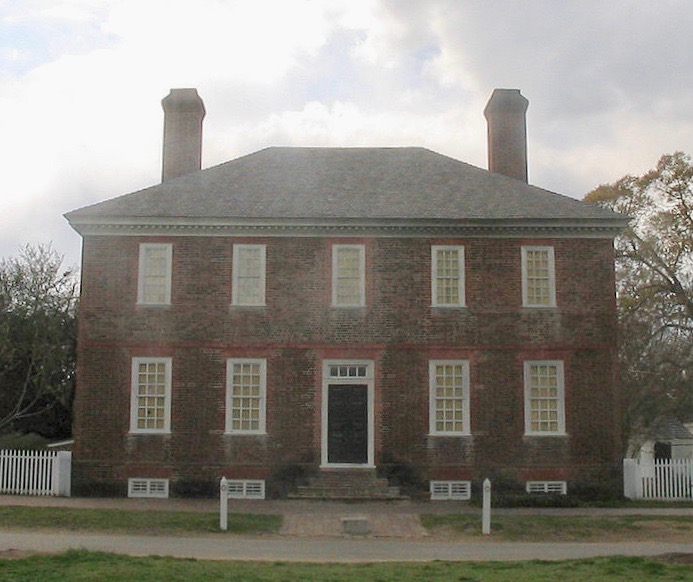
Chiswell-Bucktrout House, 1959. Photo by Gottscho-Schleismer, Inc. Courtesy of the Library of Congress, Prints and Photographs Division.

Built around 1764 (deed books and other records for Williamsburg were destroyed during the Civil War so houses usually cannot be dated exactly), this house was occupied by Colonel John Chiswell when he was accused of murder in 1766. While free on bail awaiting trial, Colonel Chiswell died mysteriously in the house. Now used as lodging, stories have surfaced from this house of people being awakened by spirits touching and talking to them.

Public Gaol
461 East Nicholson Street

Gaol in 1936 before it was restored. Taken for the Historic American Building Survey, courtesy of the Library of Congress, Prints and Photographs Division.

According to Dennis William Hauck’s Haunted Places: The Nation Directory, the old Williamsburg Gaol is haunted by the ghosts of two women who are heard in animated conversation on the second floor of the jailer’s quarters.

Ludwell-Paradise House
207 East Duke of Gloucester Street

Ludwell-Paradise House. Taken for the Historic American Building Survey, courtesy of the Library of Congress, Prints and Photographs Division.

Built around 1755 possibly on the site of a much earlier house, the Ludwell-Paradise House was also the first house purchased for restoration by Dr. Goodwin and his partner in the venture, John D. Rockefeller, Jr. In 1805, the house was occupied by Lucy Paradise nee Ludwell. Stories of the former London socialite’s odd quirks quickly spread through town. Among them, Lucy’s penchant for bathing several times a day and her habit of borrowing new hats from other ladies in town to compliment her own dresses. She was also known for conducting carriage tours from a carriage on her back porch that was rolled back and forth by a servant. In 1812, she was committed to the state’s mental asylum, the nearby (and still extant) Public Hospital, where she died two years later. When the house was occupied by one of the vice presidents of the Colonial Williamsburg foundation, they reported hearing the sound of someone running bathwater and bathing on the second floor. Evidently, Lucy continues her eccentric rituals.

Nicholson House
139 York Street

Nicholson House. Taken for the Historic American Building Survey, courtesy of the Library of Congress, Prints and Photographs Division.

Some believe the spirit found in the Nicholson house is that of an itinerant musician, Cuthbert Ogle who is known to have died in the house shortly after arriving in town. Among the scant evidence of Ogle’s existence is an advertisement in the local paper announcing his arrival in 1755 and that he would be teaching “Ladies and Gentlemen to play on the Organ, Harpsichord or Spinet.” A little less than a month later, records indicate that Ogle was dead leaving a little money and a few things. Residents of the house have spoken of feeling a male presence in the house, being tapped on the shoulder by an unseen force and a mysterious scratching coming from the walls of the house.

Old Capitol
500 East Duke of Gloucester Street 

Old Capitol Building from an undated postcard, courtesy of Wikipedia.

At the foot of Duke of Gloucester street stands the stately Old Capitol building. The third capitol to stand on this spot, this structure witnessed the some of the first contractions in the birth of the nation. According to Michael Varhola, there are many ghost stories associated with this building, but the main one that he describes is the legend that at the stroke of midnight on July Fourth, the spirits of Patrick Henry and other Revolutionary leaders assemble once again. A fanciful legend at most. I have covered the spirits of the Old Capitol in depth in a separate article.

Orrell House
302 Francis Street, East

Orrell House. Taken for the Historic American Building Survey, courtesy of the Library of Congress, Prints and Photographs Division.

Sheila Turnage documents an odd experience a family had while staying in the Orrell House. While the entire family was watching TV one evening in the living room of this house, they heard the sound of water running in the bathroom. The father went into the bathroom and turned it off. Upon returning to the living room the sound of water was heard once again. Returning to the bathroom, the water was found to be running again. Again, the father turned it off and returned to the living room. Once again the water turned on and the father turned it off. After hearing glass breaking in the bathroom, the father returned to find that a glass had been removed from the medicine cabinet, removed from its plastic wrapping and then thrown to the floor. Turnage also notes that activity had not been previously reported in the house.

Peyton Randolph House
100 West Nicholson Street

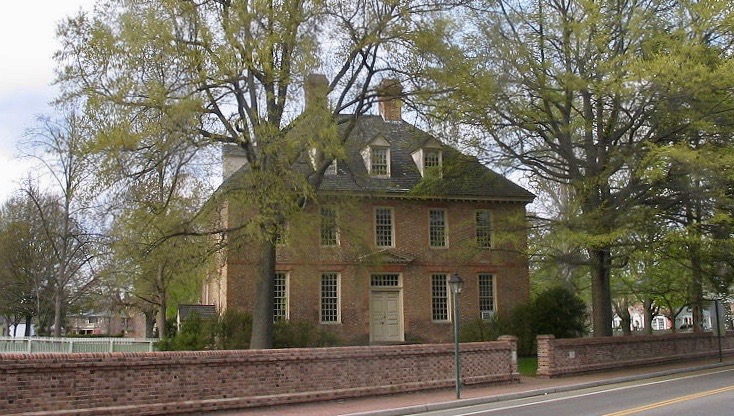
Peyton Randolph House in 2008. Photo by Jrcla2, courtesy of Wikipedia.

The Peyton Randolph House is one of the best-documented houses in Williamsburg in terms of its spiritual activity and may also be one of the most active locations in the area. Built around 1715 by Sir John Randolph, a member of the House of Burgesses, the house was passed to his son, Peyton who would serve as speaker of the House of Burgesses and later, first president of the Continental Congress. Since his ownership the house passed through many hands and was the scene of many deaths, perhaps some that have left a spiritual imprint on the house. Former residents, as well as guides and docents, have reported numerous odd sounds as well as apparitions including a man in colonial dress.

Public Records Office
433 East Duke of Gloucester Street

Public Records Office. Taken for the Historic American Building Survey, courtesy of the Library of Congress, Prints and Photographs Division.

When the Capitol burned in 1747, many of the colony’s records were destroyed. Legislation was later passed to construct the Public Records Office or Secretary’s Office to house and protect records. Construction began in 1748 and the building was used for records until they were moved to the new capital, Richmond, in 1780. Since that time, the building has served a variety of purposes including as a residence. Legend tells us of a family occupying the building in the early twentieth century whose myopic daughter was killed when she stepped in front of a carriage. Since that time, her spirit has been seen lingering around the building she once called home. This article has been broken out into a separate article.

Raleigh Tavern
410 East Duke of Gloucester Street

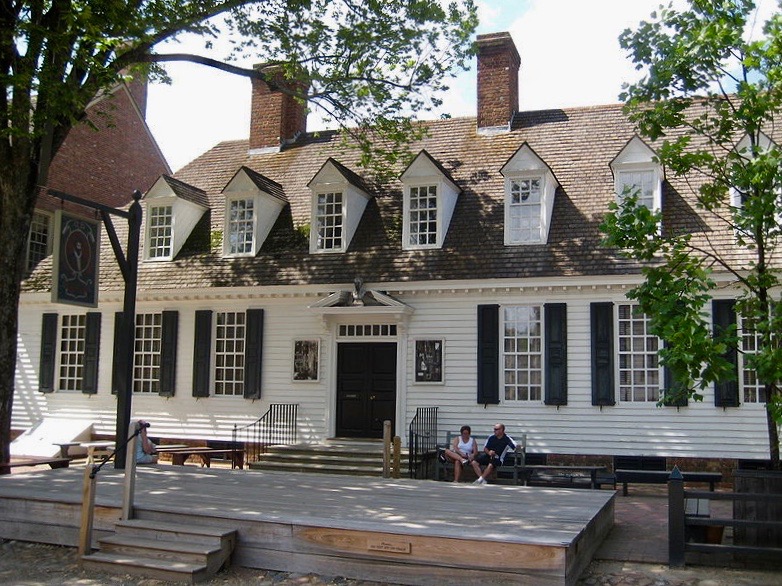
Raleigh Tavern in 2008. Photo by Jrcla2, courtesy of Wikipedia.

In order to recreate Williamsburg as it appeared before the American Revolution, much of the city had to be completely rebuilt as was the case with the Raleigh Tavern. Opened in 1717, this respected tavern served as a meeting place for many involved in the creation of the nation as well as the first meeting site for the fraternity Phi Beta Kappa. In 1859, the old tavern burned and was not rebuilt. When Colonial Williamsburg purchased the site it was occupied by two brick stores which were razed and after finding the remains of the tavern’s original foundation, the tavern arose once again in its original footprint. The building reopened in 1932 and apparently many of the tavern’s spectral residents resumed their parties. Reports of these spectral parties surfaced first in 1856 and have continued since.

Wren Building
College of William & Mary Campus

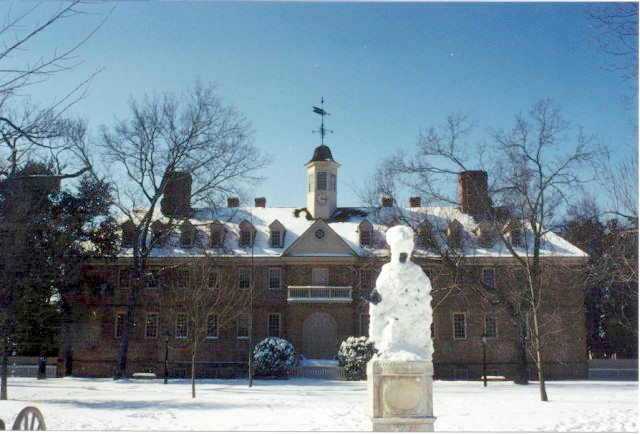
Wren Building on the campus of the College of William & Mary. Photo taken 2007 by Highereditor2, courtesy of Wikipedia.

Known as the oldest functioning academic building in the nation, this structure is at the heart of one of the most venerable institutions of higher learning in the nation. As noted earlier, this building has two other haunted structures nearby: the Brafferton Building and the President’s House. Possibly designed by English architect, Sir Christopher Wren, construction on this edifice began in 1695. As one would expect of a building so old, there is evidently some spiritual activity including odd sounds that resonate throughout the structure. Daniel Barefoot in his Haunted Halls of Ivy, describes a professor whose lectures was interrupted by odd noises from the floors above. When the professor and his class investigated, no sources was discovered.

Wythe House
101 Palace Green

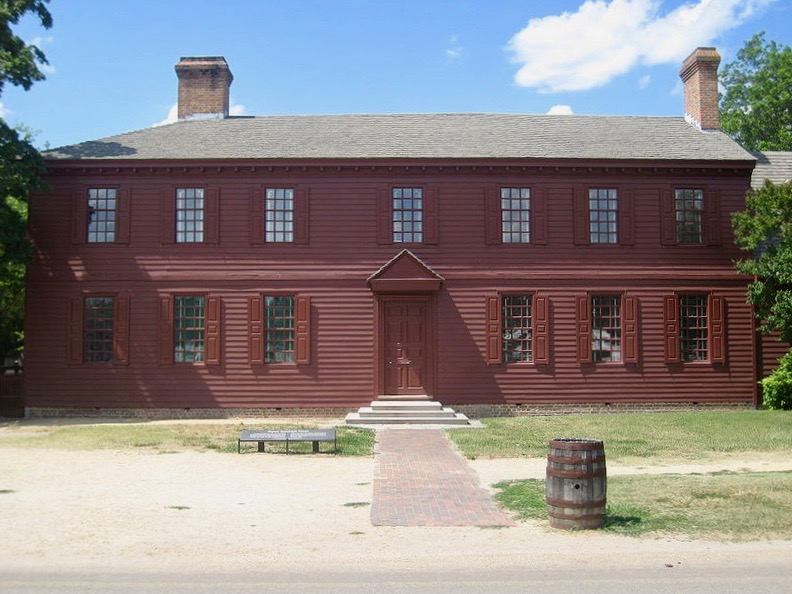
George Wyeth House, 2007. Photo by Ser Amantio di Nicolao, courtesy of Wikipedia.

In Williamsburg, it seems that the more important the history of a location, as that of the Payton Randolph House, the more likely it is to be haunted. Such is the case with the George Wyeth (rhymes with “with”) House. The home of George Wyeth, patriot leader, Continental Congress leader and one of the Virginia signers of the Declaration of Independence, this large, Georgian house has seen much historical activity in its eight rooms. There are numerous reports of spectral activity as well including people being tapped on the shoulder by an unseen person, apparitions seen throughout the house and even a docent feeling hands trying to push her down the stairs.

Sources

  • Barefoot, Daniel W. Haunted Halls of Ivy: Ghosts of Southern Colleges and Universities. Winston-Salem, NC: John F. Blair, 2004.
  • Brafferton (building). Wikipedia, the Free Encyclopedia. Accessed 5 November 2010.
  • Colonial Williamsburg. George Wyeth House. www.history.org. Accessed 6 November 2010.
  • Colonial Williamsburg. Ludwell-Paradise House. www.history.org. Accessed 6 November 2010.
  • Colonial Williamsburg. Peyton Randolph House. www.history.org. Accessed 6 November 2010.
  • Colonial Williamsburg. Raleigh Tavern. www.history.org. Accessed 6 November 2010.
  • Colonial Williamsburg. Wren Building. www.history.org. Accessed 6 November 2010.
  • Hauck, William Dennis. Haunted Places: The National Directory. NYC: Penguin, 2002.
  • Stephenson, Mary A. Chiswell-Bucktrout House Historical Report, Block 2 Building 17 Lot 253-254. Colonial Williamsburg  Foundation Library. 1959    
  • Taylor, L. B., Jr. The Ghosts of Tidewater…and nearby environs. Progress Printing Co., 1990.
  • Taylor, L. B., Jr. The Ghosts of Williamsburg and Nearby Environs. Progress Printing Co., 1983.
  • Varhola, Michael J. Ghosthunting Virginia. Cincinnatti, OH: Clerisy Press, 2008.

The haunting of Columbus, Mississippi

The Google News Search feature is quite useful for web-based ghost hunting, especially around Halloween. Newspapers throughout the world are printing articles about local ghosts and ghost tours. I stumbled on an article about a ghost tour being held in Columbus, Mississippi and it put me on the path to a handful of articles. I’ve been able to connect those with a few entries in some books, and voila; I have the basis for a blog entry.

As I stated in one of the first entries, it appears to me that Mississippi has not been as well documented as other Southern states. I still believe this. Where my research might turn up mounds of information, I can usually only find a trickle for the Magnolia State. That’s why I’ve been surprised to find so much information on Columbus. Certainly, this city could be called the best documented city in Mississippi, at least in terms of its ghosts. Of course, it does help that three of the state’s better known hauntings: Waverly, Errolton and Temple Heights; are located in the city.

The banks of the Tombigbee River near Columbus, Mississippi. Undated postcard courtesy of the Mississippi State Archives, Cooper Postcard Collection.

“Sprawling leisurely along the banks of the Tombigbee and Luxapalila Rivers, is a city in which there is room to breathe.” That’s how the opening line of the city’s entry in the 1938 WPA Guide to Mississippi begins. It continues and describes the “gracious lines of Georgian porticos forming a belt of mellowed beauty about a modern business district.” Certainly, Columbus is a city known for its concentration of old homes, many of them antebellum. The city was later the birthplace of famed American playwright, Tennessee Williams, who would preserve and analyze the South in his plays; among them, A Cat on a Hot Tin Roof and A Streetcar Named Desire.

Columbus was originally named “Possum Town,” for Spirus Roach who was “gray and bent and wizened” and reminded the local Native Americans of a possum. Roach set up a tavern there in 1817. However, with the arrival of other white men who “expressed their distaste for Indian humor,” the town was given the more respectable name of Columbus in 1821. The city grew as a center for the many planters in the area as well as a center for education with the establishment of Franklin Academy and later, the Columbus Female Institute (now Mississippi University for Women). During the Civil War, the city hosted the state government while Jackson was in Union hands. A story told of the 1863 visit of Confederate President, Jefferson Davis, describes the townspeople gathering under Davis’ bedroom window and serenading him. After being awakened by the joyous throng, Davis addressed the crowd, still in his nightshirt, from his balcony. History aside, though, we came about the ghosts…

The following list has been created not just from articles on the ghost tour, but other resources as well.

Friendship Cemetery
Fourth Street South

Created on land by the Order of the Odd Fellows in 1849, Friendship Cemetery includes local citizens and soldiers who fell at the Civil War Battle of Shiloh in 1862. It is a Confederate soldier that is said to still walk through the military section of the cemetery. Visitors to the cemetery are also attracted to the weeping angel that stands over the grave of the Reverend Thomas Teasdale. People grasping the angel’s hand have remarked that it feels lifelike. While the angel’s hand might be explainable phenomena, the soldier’s apparition may not be as easily explained away. I would be interested to find out if the cemetery has been investigated by a ghost hunting organization.

Lincoln Home
714 Third Avenue South

Built in 1833, the Lincoln Home was home to one of the first mayors of the city. Now a bed and breakfast, the home has been marvelously restored and may still be visited by former residents. A woman in white has been reported by neighbors and guests while a dark, black and grey cloud has been witnessed by the owners drifting though the parlor.

Waverly
1852 Waverly Mansion Road

 
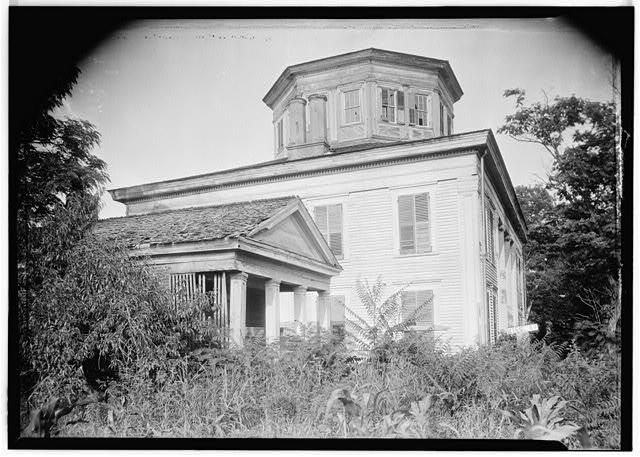
Waverly in 1936, this is probably as the house probably first appeared to the Snows. This was taken nearly 30 years before the house was rescued. Photo by James Butters for
the Historic American Building Survey (HABS), courtesy of the Library of Congress, Prints and Photographs Division.

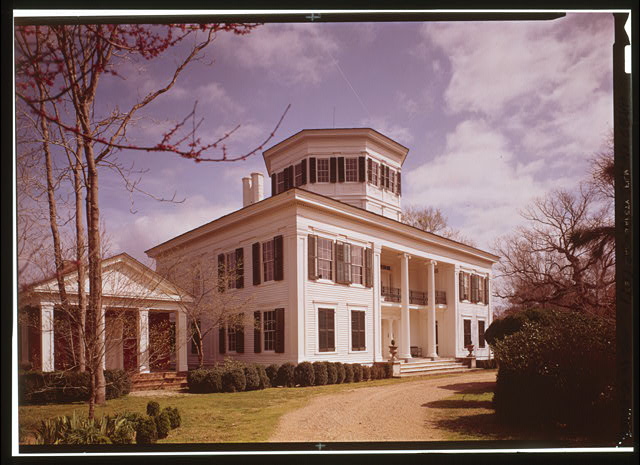
Located between Columbus and West Point in Clay County, Waverly was named a National Historic Landmark in 1974. This graceful house features an octagonal rotunda that rises above the roof of the house. When Robert and Donna Snow discovered the house in the early 1960s, it was an immense, magnificent mess, uninhabited for nearly 50 years that had been left to its ghosts. Though ghosts were not at all on their mind when they began restoration, the spirits of Waverly announced their presence with a loud crash that awoke the family. Locals began to tell stories of hearing the sound of parties coming from the ruined manse as well as the spirit of an Indian riding a stallion through the nearby fields. But no one prepared Mrs. Snow for the plaintive cries of a little girl that she began hearing. Occasionally, between two and four in the afternoon, the impression of a little girl would appear on the bed of one of the upstairs bedrooms.

Waverly after restoration. Photo for the Historic American Building Survey (HABS), courtesy of the Library of Congress, Prints and Photographs Division.

The voice of the little girl was heard for about five years and then no more, but her spirit is still seen around the house. According to Alan Brown’s Haunted Places in the American South, the identity of this little girl was a mystery until 1997 when records revealed that two little girls staying in the house during the Civil War died during a single, tragic week. One girl died of diphtheria, the other, while playing on the stairs, got her head stuck between two of the spindles. During the struggle to free herself, she died as well.

The magnificent rotunda of Waverly. Photo for the Historic American Building Survey (HABS), courtesy of the Library of Congress, Prints and
Photographs Division.

Since her death in 1991, the ghost of Mrs. Snow has been reported sitting on the third floor stairs smoking. Apparently, the ghosts of Waverly are still quite active. The North Mississippi After Life (NMAL), a paranormal investigation group, performed an investigation at the house, though only a small amount of evidence was uncovered.

Princess Theatre
217 Fifth Street South

The 1924 Princess Theater was constructed originally as a vaudeville theater, then converted to cinema as the popularity of vaudeville waned. According to Adelle Elliott, with the Columbus Convention and Visitor’s Bureau, the ghost of the theater’s original owner, Mr. Kirkendall, has been seen throughout the theater. A paranormal team photographed a figure standing in the balcony, possibly one of many ghosts within the theater. The theater is still utilized as a performance space.

Errolton
216 Third Avenue South

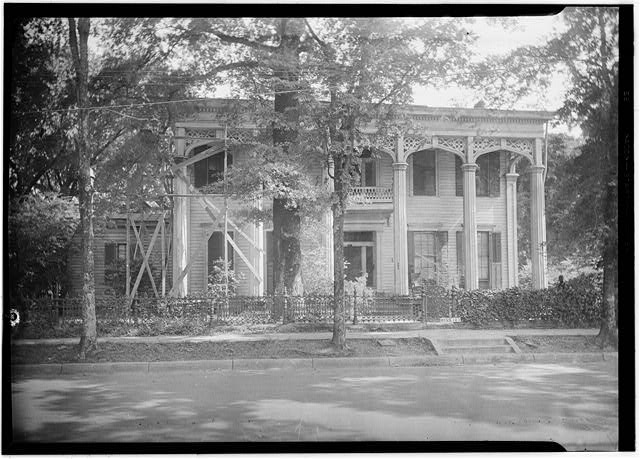
For more than half a century, the familiar figure of Miss Nellie Weaver rocked on the porch of her father’s home telling stories of Columbus’ past that she had witnessed herself. Until her death in the 1930s, the story of Miss Nellie, as she was affectionately called, was well known in town. Born and raised in the magnificent house on Third Avenue, she had had numerous suitors, but Charles Tucker caught her eye and they were married 1878. In her nuptial mirth, Miss Nellie carved her name with her diamond engagement ring on one of the windows in the south parlor. Charles Tucker left his wife and young daughter, Ellen, a few years later.

Errolton, around the time of Miss Nellie’s death. Photo by James Butters for the Historic American Building Survey (HABS), courtesy of the Library of Congress, Prints and
Photographs Division.

Miss Nellie and her daughter remained in the home and she supported herself by teaching, though the house slowly decayed. In 1950, the house was purchased by Mrs. Erroldine Hay Bateman who set about restoring the home. It was during this restoration that a careless worker broke the pane of glass bearing Miss Nellie’s signature. The glass was replaced and after the restoration, the residents were surprised to notice the atching had reappeared. Besides this reappearing signature, no other spiritual activity has been reported in this regal, “Columbus eclectic” styled home.

Temple Heights
515 Ninth Street North

Built in the style of a Doric Temple with an odd (at least to me) roof rising above it, Temple Heights is one of the more well known restoration jobs in the city. Dennis William Hauck states that the ghost in this circa 1837 home is that of Miss Elizabeth Kennebrew, whose father purchased the house in 1887. Miss Kennebrew died a spinster and was known for her eccentric behavior. Her ghost has been spotted throughout the house and she may also be responsible for the voices heard throughout. The house is open for visitors and events.

Temple Heights, 1936. Photo by James Butters for the Historic American Building Survey (HABS), courtesy of the Library of Congress, Prints and Photographs Division.

Wisteria Place
524 Eight Street North

Upon the death of William Cannon, who built Wisteria Place around 1854, Jefferson Davis remarked, “I have lost my best friend.” While Cannon did die in this house, the identity of the home’s resident spirit is unknown. According to the Beth Scott and Michael Norman’s Haunted America, a figure in a white shirt has been seen scurrying past the kitchen window towards the door. This house is a private residence.

Highland House
810 Highland Circle

Highland House. Undated postcard courtesy of the Mississippi State Archives, Cooper Postcard Collection.

According to the Convention and Visitor’s Bureau Historic Driving Tour pamphlet, this house was built by W. S. Lindamood in the “Robber Baron style” around 1902. This was in love with Lindamood. Garthia Elena Burnett, author of one of the articles highlighting the city’s ghost tour states that some interesting EVPs have been captured in this historic residence.

Lee House
316 Seventh Street North

Once the home of General Stephen D. Lee, the youngest Confederate lieutenant general during the Civil War, this house was built circa 1847. Lee was later involved with the creation of Vicksburg Military Park. His ghost has been seen sitting in the parlor of his former home, while the shade of his wife has been seen during the annual pilgrimage tours. Her form was so solid, she was mistaken for a costumed guide.

Lee House, 1936. Photo by James Butters for the Historic American Building Survey (HABS), courtesy of the Library of Congress, Prints and Photographs Division.

Sources 

  • —–. Lincoln Home circa 1833. AmziLoveLincolnHomes.com. 2010. Accessed 24 October 2010.
  • Breland, David. “Local Haunts: Columbus Ghost and Legend Tour offers look into town’s spooky past.” The Reflector. 21 October 2010.
  • Breland, David. “Visit to Columbus haunts makes for Halloween not easily forgotten.” The Reflector. 29 October 2007.
  • Brown, Alan. Haunted Places in the American South. Jackson, MS: University Press of Mississippi, 2002.
  • Burnett, Garthia Elena. “Ghosts and Legends: A tour of local haunts.” The Commercial Dispatch. 14 October 2010.
  • Columbus Mississippi Convention and Visitor’s Bureau. Historic Driving Tour, Columbus, Mississippi. July, 2008.
  • Federal Writer’s Project of the WPA. Mississippi: A Guide to the Magnolia State. NYC: Viking, 1938.
  • Hauck, Dennis William. Haunted Places: The National Directory. NYC: Penguin, 2002.
  • Hubbard, Sylvia Booth. Ghosts! Personal Accounts of Modern Mississippi Hauntings. Brandon, MS: Quail Ridge Press, 1992.
  • Lowndes County, Mississippi History and Genealogy. Friendship Cemetery. Accessed 24 October 2010.
  • North Mississippi After Life. Waverly Mansion. Accessed 24 October 2010.
  • Scott, Beth and Michael Norman. Haunted America. NYC: TOR, 1994.
  • Stephen D. Lee. Wikipedia, the Free Encyclopedia. Accessed 25 October 2010.
  • Taylor, Troy. “Haunted Mississippi, Errolton, Columbus, Mississippi.” Ghosts of the Prairie. 1998. Accessed 22 October 2010.
  • Taylor, Troy. “Haunted Mississippi, Temple Heights, Columbus, Mississippi.” Ghosts of the Prairie. 1998. Accessed 22 October 2010.
  • Taylor, Troy. “Haunted Mississippi, Waverly, Columbus, Mississippi.” Ghosts of the Prairie. 1998. Accessed 22 October 2010.
  • Windham, Kathryn Tucker. 13 Mississippi Ghosts and Jeffrey. Tuscaloosa, AL: U. of Alabama Press, 1974.

Brice House Photos–Annapolis, Maryland

Brice House
42 East Street

Annapolis, Maryland

N.B. This article was edited and revised 25 February 2019.

The Brice House is one of three large, brick, and quite similarly designed, Georgian houses in Annapolis (the others being the William Paca House and the Hammond-Harwood House). According to various sources, all three are haunted, but the best information I have found so far, attests to the haunting of the Brice House.

The house was erected between 1766 and 1773 by Colonel James Brice who would later serve two-terms as mayor of Annapolis and acting governor for the state of Maryland in 1792. The house remained in the family until the 1870s and passed through other private hands until the 1920s when St. John’s College purchased it. Restoration began in the 1950s under private ownership. The house is now owned by the International Masonry Institute which uses the flanking pavilions. The main house is occasionally open for tours. The house was named a National Historic Landmark in 1970.

I have covered three haunted local taverns in my article, “One nation, under the table–The haunted taverns of Annapolis.”

haunted Brice House Annapolis ghosts
The Brice House, 2009. The house is made up of five parts, the large main house, two pavilions with “hyphens” that connect the pavilions to the main house. Photo by Wikipedia user, Pubdog. Courtesy of Wikipedia.
haunted Brice House Annapolis ghosts
First floor reception hall and staircase. Two of the spirits have been identified as one of the sons of Col. Brice and his manservant. The elderly son is said to have been murdered by the manservant. Photo by Jack Boucher, 1964, for the Historic American Buildings Survey (HABS). Courtesy of the Library of Congress, Prints and Photographs Division.
haunted Brice House Annapolis ghosts
Dining Room. The spirit of James Brice is said to be wandering this house, possibly checking up on the upkeep of his manse. Photo taken by Jack Boucher, 1964, for the Historic American Buildings Survey (HABS). Courtesy of the Library of Congress, Prints and Photographs Division.
haunted Brice House Annapolis ghosts
Ballroom. The spirit of a young woman has frequently been seen wandering from room to room. During restoration work in the 1970s, a skeleton of a woman was discovered in a sealed, closet-like room. Photo by Jack Boucher, 1964, for the Historic American Buildings Survey (HABS). Courtesy of the Library of Congress, Prints and Photographs Division.
haunted Brice House Annapolis ghosts
The ballroom from a different angle. Photo taken for the Historic American Buildings Survey (HABS). Courtesy of the Library of Congress, Prints and Photographs Division.

Sources

  • Brice House (Annapolis, Maryland). Wikipedia, the Free Encyclopedia. Accessed 22 October 2010.
  • Heintzelman, Patricia. National Register of Historic Places Nomination form for the Brice House. Listed 15 April 1970.
  • Jarvis, Sharon. Dead Zones. NYC: Warner Books, 1992.

Haunted South Carolina Lighthouses

N.B. This article was revised and edited 20 February 2019.

In the study of ghosts, particularly in North America, lighthouses appear frequently. I’m not sure about why these beacons for the living play such a role in the world of the dead, but they appear with noticeable regularity. In the United States, the bulk of the attention on haunted lighthouses concern those of the mid-Atlantic and New England states as well as the Great Lakes lighthouses of Michigan, though there are some quite prominent haunted Southern lighthouses. Among them, the St. Augustine and Pensacola lighthouses in Florida, both of which have been investigated by TAPS, the ghost hunting organization featured on the TV show, Ghost Hunters. In fact, the investigation of the St. Augustine Lighthouse featured the investigators chasing something up and down the stairs of the lighthouse itself.

On this blog, I have covered two other lighthouses, the Assateague Light on Assateague Island, Virginia, and the Point Lookout Lighthouse in Scotland, Maryland.

Hilton Head Rear Range Light
Arthur Hill Golf Course, Palmetto Dunes Resort
Hilton Head Island

The most southern of all South Carolina’s lighthouses, the Hilton Head Rear Range Light is the only remaining of two lights that originally guided shipping in Port Royal Sound. With the front light, which was mounted on the roof of a lighthouse keeper’s cottage a mile away, these lights could be lined up by the navigators of ships to provide the safest route into port.

This, the remaining light, was constructed between 1879 and 1880 and lit for the first time in 1880. It consists of a cast-iron skeleton and the stair tower (originally clad in wood, but clad in iron sheeting probably around 1913) topped by a wooden watch room and lantern room. The cast-iron skeleton is bolted to  a  series of concrete bases. This complex once included a keeper’s cottage, but it was moved to Harbour Town in the Sea Pines Plantation resort complex in the 1980s. The light was decommissioned in 1932 and it was restored with the building of the Palmetto Dunes Resort. The beacon now presides over the 15th hole of the resort’s golf course.

haunted Hilton Head Rear Range Light ghosts lighthouses Arthur Hills Golf Course
Hilton Head Rear Range Light, 2012, by Bill Fitzpatrick. Courtesy of Wikipedia.

In 1898 at the height of a tremendous hurricane, the lighthouse keeper, Adam Fripp, and his daughter Caroline, remained in the lantern room tending the light. A gale shattered the glass in the lamp, extinguishing it. At the same moment, Mr. Fripp suffered a massive heart attack. Still conscious, Fripp encouraged 20-year-old Caroline to continue tending the light and she did so following his death. Exhausted by the work and probably grief, Caroline died three weeks later.

Wearing the blue gown she was wearing the night of the hurricane, her spirit has been seen, and her sobs and wails of grief have been heard in and around the lighthouse. Terrance Zepke’s Ghosts of the Carolina Coast recounts a story of a young couple who encountered a young woman wearing a blue dress one stormy evening. She climbed in the back seat of their car soaking wet and the couple drove on. When the wife turned to speak to the young woman, the back seat was empty, though covered with water.

Cape Romain Lighthouse
Lighthouse Island
Cape Romain National Wildlife Refuge
McClellanville

Situated on a lonely barrier island, the Cape Romain Lighthouse is the perfectly place for a lonely spirit to walk. The first Cape Romain lighthouse is 65 feet high and was constructed in 1827 to guide mariners past the dangerous Cape Romain shoals. The light burned until 1857 when its much taller sibling, soaring 150 feet, was constructed with slave labor.

Like Pisa’s famous tower, the taller Cape Romain Lighthouse began to lean in the late nineteenth century. The tilt became so precarious that the Fresnel lens had to be adjusted to function properly. The lens was replaced in 1931 and the lighthouse was automated in 1937. Ten years later, the lighthouse was decommissioned and the light went dark. Since that time, the keeper’s quarters and outbuildings have disappeared leaving only the two towers standing mute. The Fish and Wildlife Service, which operates the surrounding refuge, still maintains the pair of lighthouses.

haunted Cape Romain Lighthouses early 20th century ghost
The lighthouses of Cape Romain in the early 20th century. Courtesy of the US Coast Guard Historic Light Stations Database.

The lonely setting of these now mute sentinels plays a significant part in its legend. Most likely in the late nineteenth century, a Norwegian man named Fischer was the keeper and lived on Lighthouse Island with his wife. The wife continuously begged her husband’s permission to leave the island and return to Norway for a visit, but he refused. One evening, Fischer was so angered by his wife’s pleading that he plunged a knife into her breast and buried her body near the lighthouse.

Those asking about his wife’s whereabouts were told that she had become despondent from the loneliness and had committed suicide. On his deathbed, he confessed to his wife’s murder and lighthouse keepers thereafter tended to the grave on the lonely island. Over time, a spirit was heard ascending the 195 steps of the lighthouse tower. Additionally, bloodstains inside the keeper’s cottage could not be scrubbed away.

haunted Cape Romain Lighthouses ghost
The Cape Romain Lighthouses circa 2011, courtesy of Wikipedia.

August Fredreich Wichmann, one of the keepers in the early twentieth century reported hearing the sounds of footsteps in the tower many times. Wichmann’s son, who was born at the lighthouse believes the footsteps are from Fischer’s wife. If the footsteps are still heard, the only things to hear them are the goats and seabirds that now inhabit this lonely island.

Georgetown Light
North Island
Georgetown

Winyah Bay at the end of the eighteenth and into the nineteenth centuries was vital to American trade. To aid ships passing into this bay, the Georgetown Light was constructed first in 1801. This cypress tower did not last long and was replaced in 1806 after being toppled in a gale. Some six years later, the current 87 foot brick tower was constructed. It is now the oldest active lighthouse in South Carolina.

Georgetown Light. Courtesy of the US Coast Guard Historic Light Stations Database.

Two reports of ghosts come from this light. Bruce Roberts and Ray Jones in their Southeastern Lighthouses: Outer Banks to Cape Florida report that footsteps are heard in the tower, though no indication is given as to the identity of the spirit.

The second story, in Terrance Zepke’s Ghosts of the Carolina Coast, however, is more interesting. Mariners tend to be a very superstitious bunch and this is indicated in this legend of a warning spirit attached to this lighthouse. Apparently, a lighthouse keeper and his young daughter had ventured into Georgetown, some miles south of the light. As they returned, a storm blew in and the young girl was tossed into the water. Her father jumped in to rescue her but she was lost. The lighthouse keeper survived and following his death, he and his daughter were seen rowing a small boat in Winyah Bay. Local mariners always took their appearance as a sign of a storm blowing in.

Sources

  • Bansemer, Roger. Bansemer’s Book of Carolina and Georgia Lighthouses. Sarasota, FL: Pineapple Press, 2000.
  • Califf, John, III. National Register of Historic Places Nomination form for the Georgetown Light. Listed 30 December 1974.
  • DeWire, Eleanore and Daniel E. Dempster. Lighthouses of the South: Your Guide to the Lighthouses of Virginia, North Carolina, South Carolina, Georgia and Florida. Stillwater, MN: Voyageur Press, 2004.
  • Elizabeth, Norma and Bruce Roberts. Lighthouse Ghosts: 13 Bone Fide Apparitions Standing Watch Over America’s Shores. Birmingham, AL: Crane Hill, 1999.
  • Hilton Head Range Rear Light. Wikipedia, the Free Encyclopedia Accessed 18 October 2010.
  • Huntsinger, Elizabeth Robertson. More Ghosts of Georgetown. Winston-Salem, NC: John F. Blair, 1998.
  • Lee, Charles E. National Register of Historic Places Nomination form for the Cape Romain Lighthouses. Listed 12 November 1981.
  • Roberts, Bruce and Ray Jones. Southeastern Lighthouses: Outer Banks to Cape Florida. Philadelphia: Chelsea House, 2000.
  • Wells, John E. National Register of Historic Places Nomination form for the Hilton Head Rear Range Light. Listed 12 December 1985.
  • Zepke, Terrance. Ghosts of the Carolina Coasts: Haunted Lighthouses, Plantations, and Other Historic Sites. Sarasota, FL: Pineapple Press, 2000.

Spirits of Old Morrison and the Gratz Park Historic District

Gratz Park Historic District
Bounded by Second Street, the Byway,
Third Street and Bark Alley
Lexington, Kentucky

Old Morrison
Transylvania University Campus

Transylvania University was almost 40 years old when the European with the odd name of Constantine Samuel Rafinesque-Schmaltz strode into the large, Federal Main building. Rafinesque had journeyed “across the woods,” as the Latin name of the university implied, to take on a professorship of botany as well as teach Italian and French, languages from his broad repertoire.

Constantine Rafinesque from
an 1820 publication. Courtesy
of Wikipedia.

His Christian name belied his birthplace, Constantinople, where he was born to a French trader father and a Turkish-born German mother. His education was as mixed as his heritage and upbringing. A polymath autodidact, he taught himself Latin and early on began to collect natural specimens, ranging from plants to shells. Rafinesque spent time in the fledgling United States and in various locales in Europe returning to the States in 1815. Travelling throughout the states, he gathered, described and named an astounding array of species and studied the Native Americans who were just beginning to be pushed west of the Mississippi River.

His new employer was also on an upward trajectory. Transylvania University had grown in its forty years of existence into one of the premier universities in the U.S. As one of the nation’s top ranked schools, it produced and employed some of the greatest names of the day including lawyer and later statesman, Henry Clay who served as a professor; Stephen Austin, the “Father of Texas;” Jefferson Davis, the president of the Confederacy; and the fiery abolitionist, Cassius Clay. The medical school included in its faculty, smallpox vaccination pioneer Samuel Brown and Benjamin W. Dudley, the most imminent surgeon in the Mississippi Valley.

These two upward trajectories maintained a parallel course briefly and then collided in the spring of 1826 when university president Horace Holley dismissed Rafinesque. Officially, the reason was that Rafinesque had acted unprofessionally and had missed numerous classes, but the unofficial reason, according to campus gossip, was the affair that Rafinesque was carrying on with Holley’s wife. When informed of his dismissal, an incensed Rafinesque uttered a curse, “Damn thee and thy school as I place a curse upon you!”

Rafinesque quietly returned to Philadelphia where he lived the remaining years of his life. He died of stomach cancer some 14 years later. According to legend, friends of Rafinesque had to break into his home to steal his corpse as his landlord was planning to sell it to a local medical school in lieu of back rent. He was buried in Philadelphia, but, in 1924, a campus organization rallied to have his remains returned to rest on campus; an “Honor to Whom Honor is Overdue,” as the words are inscribed on his crypt in Old Morrison. The group, though, was somewhat unsuccessful. Recent tests on the remains have discovered that they are fact the remains of Mary Ann Passamore, one of the handful of others interred in Rafinesque’s plot in the cemetery. 

Old Morrison. Photo taken for the Historic American Buildings Survey (HABS), courtesy of the Library of Congress, Prints and Photographs Division.

While Rafinesque still rests in Philadelphia, his curse still may linger in Lexington. President Horace Holley resigned the following year and died unexpectedly of yellow fever. Two years later, the main building was destroyed by fire. Following the destruction of the campus, the campus was moved across the street. The University’s upward momentum as one of the premier universities slowed as well, perhaps a result of the curse?

Old Morrison, designed by architect Gideon Shryock, was completed in 1834 and considered one of the finest examples of Greek Revival architecture in America. The edifice was restored to its original appearance in 1962 which removed unsympathetic additions added in the late nineteenth century. On January 27, 1969, a fire swept the newly restored building leaving only exterior walls standing, according to the National Register of Historic Places nomination form. Daniel Barefoot in his Haunted Halls of Ivy, points out that a little more survived: the crypt of Rafinesque was completely untouched by fire. Even more, he reports that firefighters saw the figure of a man standing in the doorway of the crypt while the fire raged around.

Old Morrison was restored and still stands a symbol of the school, though odd things still happen. A security guard in the buildings claims to have been tripped by something in the dark hall. Every few years, tragic things occur on campus and of course, the curse is invoked. But, Old Morrison faces a historic district where some even stranger events may occur.

Hunt-Morgan House
201 North Mill Street

Hunt-Morgan House, 2008, by Russell and Sydney Poore. Courtesy of Wikipedia.

Just a block down North Mill Street from Old Morrison sits one of the more historic structures in the region, the Hunt-Morgan House. Originally known as Hopemont, the house was built in 1814 by John Wesley Hunt. One of the first millionaires west of the Alleghenies, John Hunt Morgan was the head of an illustrious family that included his grandson, General John Hunt Morgan, a notable Confederate general and Dr. Thomas Hunt Morgan, the Nobel Prize-winning geneticist.

The legend of the Hunt-Morgan House dates to the Civil War. The Morgans had a slave named Bouviette James, known to the family as Ma’am Bette.  Ma’am Bette served as the nursemaid to the Morgan’s children and by all accounts was a valued member of the family. Upon her death, she was laid out in the parlor and four of the Morgan’s sons, whom she had raised, served as pallbearers. She was even buried in the family plot, but, she would not rest there. After she passed, one of the children became grievously ill. The child’s nurse fell asleep at the child’s bedside and awoke to see a woman, wearing Ma’am Bette’s signature red shoes and turban sitting at the child’s side. The child died soon after, but the thought of Ma’am Bette guiding the child in the afterlife was comforting to the Morgans.

Maria Dudley House. Photo taken for the Historic American Buildings Survey (HABS), courtesy of the Library of Congress, Prints and Photographs Division.

Maria Dudley House
215 North Mill Street

Sitting among Federal and Greek Revival houses, the starkly Victorian Maria Dudley House stands out. This 1880 structure remains a private residence, but one that, according to Jamie Millard, author of the article that inspired this entry, possesses a dark energy. Millard describes a recent incident where a young man was apparently thrown over a stair railing which broke his arm. Indeed, others have felt a disturbing presence in the rear portion of the house and a family dog refused to go into that portion. Unfortunately, I have found no further information on this house.

John Stark House
228 Market Street 

On the opposite side of Gratz Park, the John Stark House, also a private residence, was built in 1813 and was occupied by Gideon Shryock during the building of Old Morrison. Later, this house was the home of Dr. Robert Peter, Union Surgeon General during the Civil War. Perhaps the apparition of a Union soldier that has been seen here is one of Dr. Peter’s former patients.

Bodley-Bullock House
200 Market Street

Built around 1814-5, the Bodley-Bullock house has seen a range of owners in its history. The house was built by General Thomas Bodley, a veteran of the War of 1812. After losing the house in the financial crisis of 1819, the house passed through a series of hands. During the Civil War, the house was used as a headquarters for both Confederate and Union troops. It is noted that grand balls were held under both sides. The house’s illustrious history ended with Mrs. Minnie Bullock who purchased the house in 1912. Mrs. Bullock lived in this house longer than anyone and helped in the restoration of the Hunt-Morgan House. Upon her death, the house was restored and opened as a house museum as well.

Reports of spiritual activity have been reported by museum staff and visitors. A photographer taking a bridal portrait in the house apparently captured the image of a woman and a small child standing on the staircase behind the bride. Staff members believe the woman is Mrs. Bullock who is disapproving of some of the activity in her old home. In her will, Mrs. Bullock stipulated that there would be no drinking in the house, but the will was changed when it was decided the house would be used for events as well as a museum.

Gratz Park Inn
120 West Second Street

Hospitals almost invariably have haunting and the Gratz Park Inn, built as the Lexington Clinic, is no exception. With construction beginning in 1916 and opening its doors to the public in 1920, this structure is one of the few 20th century structures in the historic district and among the founders of the clinic was Dr. Waller Bullock, husband of Minnie, who resided in the Bodley-Bullock House just down the street. This building served as a clinic until 1958 when the clinic moved. The building was then used as the offices of an engineering firm which closed its doors in 1976. The building remained vacant until it was bought and renovated for use as an inn in 1987. It now ranks as one of the top inns in the region.

Among the inn’s non-paying guests are three spirits: a young girl, a man and a classic “lady in white.” The little girl is described differently in the two sources I have consulted. The Jamie Millard article names her “Little Annie” and states she plays quietly with her doll on the third floor. Alan Brown in his Haunted Kentucky, calls her Lizzie and says her voice is most commonly heard laughing and playing, though she did crawl in bed with a guest and fall asleep on evening. The Millard article goes on to describe the other two spirits: John is a humorous spirit and the “lady in white” is apparently looking for something or someone.

Sources

  • Brown, Alan. Haunted Kentucky: Ghosts and Strange Phenomena of the Bluegrass State. Mechanicsburg, PA: Stackpole, 2009.
  • Brown, Alan. Stories from the Haunted South. Jackson, MS: University Press of Mississippi, 2004.
  • Constantine Samuel Rafinesque. Wikipedia, the Free Encyclopedia. Accessed 3 October 2010.
  • Constantine Samuel Rafinesque Biography. YourDictionary.com. Accessed 3 October 2010.
  • Fayette County Committee. National Register of Historic Places Nomination Form for the Gratz Park Historic District. Listed 14 March 1973.
  • Millard, Jamie. “Hauntings in Gratz Park.” Chevy Chaser Magazine. 28 September 2010.
  • National Park Service. “Bodley-Bullock House.” Lexington Kentucky: Athens of the West. National Register of Historic Places Travel Itinerary. Accessed 3 October 2010.
  • National Park Service. “Gratz Park Historic District.” Lexington Kentucky: Athens of the West. National Register of Historic Places Travel Itinerary. Accessed 3 October 2010.
  • National Park Service. “Hunt-Morgan House.” Lexington Kentucky: Athens of the West. National Register of Historic Places Travel Itinerary. Accessed 3 October 2010.
  • National Park Service. “Old Morrison, Transylvania College.” Lexington Kentucky: Athens of the West. National Register of Historic Places Travel Itinerary. Accessed 3 October 2010.
  • Rettig, Polly M. National Register of Historic Places Nomination Form for Old Morrison Building. Listed 15 October 1966.