A Road of Legend —US-1 in Maryland

Stretching from Key West, the southernmost point in the country to the Canadian border at the St. John River in Fort Kent, Maine, US-1 connects the East Coast. In the South it links together important cities from Miami to Jacksonville, Florida; Augusta, Georgia; Columbia, South Carolina; Raleigh, North Carolina; Richmond and Arlington, Virginia; Washington, D. C.; to Baltimore, Maryland before entering into Yankee territory. It also links historic and haunted cities like St. Augustine, Florida; Aiken and Camden, South Carolina; Petersburg, Fredericksburg, and Alexandria, Virginia before it solemnly passes The Pentagon, with Arlington National Cemetery beyond it, before crossing the Potomac into Washington.

US-1 in Maryland, 2004 by Doug Kerr. Courtesy of Wikipedia.

US-1 may be considered among the most haunted roads in the country. Not only does it directly pass a number of haunted places, but many more can be found within a short drive of this legendary road. This tour samples just a few of the legendary spots found alongside or near this legendary road.

Pig Woman Legend
Cecil County

As US-1 dips south out of Pennsylvania into the countryside of Maryland, it enters Cecil County, the domain of the Pig Woman. According to local folklorist, Ed Okonowicz, the Pig Woman stalks the northern counties of the state as well as the marshes of the Eastern Shore, though the primary setting is usually in Cecil County. Okonowicz’s version of the tale begins near the town of North East where a farmhouse caught fire in the 19th century. The lady of the house was horribly burned in the fire and witnesses watched her flee into the nearby woods. She usually confronts drivers near a certain old bridge and causes cars to stall. The drivers see the specter of the Pig Woman who scratches and beats on the car. Terrified drivers who flee their vehicles are never seen again, though those who stay in their cars are left with horrible memories and odd scratches as well as dents on their vehicles.

This tale has been told around Cecil County for decades with hotspots for Pig Woman encounters being reported around North East, Elkton, and, in the 1960s, near Rising Sun, through which US-1 passes. Matt Lake, author of Weird Maryland, associates this tale with tales from Europe that tell of a woman with a pig-like face, particularly stories that ran rampant in early 19th century London. Despite deep European roots, the Pig Woman Legend remains fairly unique among Southern ghostlore.

Sources

  • Lake, Matt. Weird Maryland. NYC: Sterling Publishing, 2005.
  • Okonowicz, Ed. The Big Book of Maryland Ghost Stories. Mechanicsburg, PA: Stackpole, 2010.
  • Wormuth, Laura. “Decoding the Pig Lady of Elkton legend.” 31 October 2013.

Susquehanna River
At the Conowingo Dam
Between Cecil and Harford Counties

 The Conowingo Dam, built between 1926 and 1928, carries US-1 over the Susquehanna River. Only five miles from the Pennsylvania border, this area was rife with activity when the Underground Railroad was in operation before the Civil War. Slaves seeking freedom in Pennsylvania would ply the river at night looking for red lanterns on the riverbanks that marked the safe houses. Slave catchers also used red lanterns to capture contraband slaves only a scant few miles from freedom in order to return them to their owners. Flimsy rafts were often employed here that led to the drowning deaths of some.

1930s era postcard of the Conowingo Dam. Courtesy of Wikipedia.

Along the river, the red lights are supposed to bob and dance on the riverbanks even today while the moans of slaves and even spectral bodies floating in the water are encountered by hikers, campers, and fishermen in the area.

Sources

  • Okonowicz, Ed. Haunted Maryland. Mechanicsburg, PA: Stackpole, 2007.
  • Ricksecker, Mike. Ghosts of Maryland. Atglen, PA: Schiffer, 2010.

Peddler’s Run
Flowing parallel to Glen Cove Road and MD-440
Near Dublin

On the western side of the river, one of the tributaries offering up its waters to the Susquehanna is named for a ghost; it’s called Peddler’s Run. As the legend states, in 1763 a poor peddler on the Dublin-Stafford Road (now MD-440) was found decapitated near John Bryarley’s Mill on Rocky Run. Locals buried the body near the creek where it was discovered. Not long after the peddler’s burial, his specter was seen walking along the creek without his head. In 1843 a skull was found by another local farmer. Presuming it to be that of the now legendary peddler, the skull was buried with the traveler’s remains. The peddler’s spirit was not seen again, though his name still graces the creek.

Sources

  • Dublin, Maryland. Wikipedia, the Free Encyclopedia. Accessed 17 September 2016.
  • Hauck, Dennis William. Haunted Places: The National Directory. NYC: Penguin Press, 1995.
  • Varhola, Michael J. and Michael H. Varhola. Ghosthunting Maryland. Cincinnati, OH: Clerisy Press, 2009.

Tudor Hall
17 Tudor Lane
Bel Air

As it hurries towards Baltimore, US-1 passes through the county seat of Harford County, Bel Air. Northeast of downtown is Tudor Hall, the former home of the famous and infamous Booth family. Junius Brutus Booth, one of the greatest American Shakespearian actors of the first half of the 19th century, built this Gothic-style home for his family. In this fine home, Booth’s family were immersed in the family occupation of acting. The halls rang with snippets of Sheridan and Etheredge while family members are supposed to have performed the balcony scene from Shakespeare’s Romeo and Juliet using the balcony on the side of the house. Some of the elder Booth’s children would achieve their own celebrity including his sons Edwin, Junius Brutus Jr., and his daughter, Asia. Booth’s son, John Wilkes, who inherited his father’s fiery personality, would achieve notoriety after he assassinated President Lincoln after the end of the Civil War heaping infamy of Shakespearean proportions on the family name.

As word of Lincoln’s assassination spread, troops began to seek out members of the Booth family. Troops searched Tudor Hall which was still owned by the Booths but being rented to another family. The house passed out of family hands a few years later and has been owned by a host of individuals. Now owned by Harford County, the house is home to the Center for the Arts and is open a few times a month for tours.

Tudor Hall, 1865. Courtesy of Wikipedia.

The Booth’s legacy has extended from the theatrical realm into the spiritual. The spirits of several Booth family members have been reported throughout the South including John Wilkes Booth’s spirit which may still stalk Ford’s Theatre in Washington and Dr. Mudd’s farm in Waldorf, Maryland, where he was treated for a broken leg after his dastardly deed at the theatre. Legend holds (wrongly so) that Edwin’s dramatic spirit still appears on the stage of Columbus, Georgia’s Springer Opera House where he appeared in the early 1870s as well as in the halls of the Players’ Club in New York City where he died. Junius Brutus Booth’s fiery spirit may still roam the halls of Charleston, South Carolina’s Dock Street Theatre, formerly the Planter Hotel, where he stayed in the 1850s. Appropriately the building was transformed into a theatre in the 1930s.

Of course, the family’s seat in Bel Air may also be haunted by members of the spirited family. One couple who owned the house told the Washington Post in 1980 that they once were greeted by small brown and white pony. The curious creature looked into the couple’s car and then peeked into the house through a rear window. Moments later the creature vanished. The couple believed the animal was the spirit of Junius Booth’s favorite pony, Peacock. The same couple had a dinner party interrupted by spectral antics when a guest asked for seconds. The hosts and their guests were astonished as the top of a cake lifted up and landed at the place of that guest. People who have lived and worked in the house continue to tell stories of unexplained footsteps, voices, and things moving on their own accord with this storied house.

Sources

  • Allen, Bob. “In Maryland, a couple preserves the estate of the ill-starred Booth family.” The Inquirer (Philadelphia, PA). 21 December 1986.
  • Meyer, Eugene L. “House Booth built is slightly spooky.” Washington Post. 10 January 1980.

Perry Hall Mansion
3930 Perry Hall Road
Perry Hall

It is arguable that the namesake of this Baltimore suburb is actually haunted. This grand colonial mansion sat derelict for many years and acquired a reputation of being haunted. The legend that has persisted about this house states that builder of this home and his wife both died on Halloween night in the late 18th century and that in the time since, some 50 other people have died here under mysterious circumstances some of whom still haunt the house. Though, according to the mansion’s website, none of this is true.

Baltimore businessman Harry Dorsey Gough acquired this vast estate in the 1770s and constructed this mansion which he named for his family’s ancestral home in Britain. Gough lived the life of a colonial playboy for a while after Perry Hall was constructed but after a visit to a Methodist meeting in Baltimore, he converted to the new Christian denomination. After distinguishing himself as a planter, businessman and politician, Gough passed away here in May of 1808 (not Halloween as the legend states). The estate remained in the family until 1852 when it began its long journey in the hands of others. Baltimore County acquired the derelict house recently and will be used as a museum and events facility.

In a 2011 article for the Perry Hall Patch Jeffrey Smith, then president of the Friends of Perry Hall Mansion debunked some of the legends around Perry Hall. Using the version of the legend in Matt Lake’s 2006 book, Weird Maryland, Smith breaks down the points of the legend. While there have likely been deaths in the house, the 50 deaths under mysterious circumstances that the legend purports are absurd. Smith notes that the house is hooked up to electricity and lights seen inside may have simply been left on by a previous visitor. Where the legend states that visitors have been unable to capture video of the house is also preposterous. While this house has reasons to be haunted on account of its history, there are no stories to support that assertion.

Sources

  • Coffin, Nelson. “Perry Hall Mansion shuttered while updates considered.” Baltimore Sun. 1 March 2016.
  • History of the Perry Hall Mansion.” Historic Perry Hall Mansion. Accessed 23 September 2016.
  • Lake, Matt. Weird Maryland. NYC: Sterling Publishing, 2004.
  • Smith, Jeffery. “Perry Hall’s most renowned and mistaken ghost story.” 31 October 2011.

Green Mount Cemetery
1501 Greenmount Avenue
Baltimore

As US-1 bypasses downtown Baltimore it forms a northern border for this venerated cemetery. After visiting Boston’s Mount Auburn Cemetery, the first “garden cemetery” in the country, Samuel Walker, a Baltimore merchant, began to draw up plans for a similar cemetery to occupy a former estate called Green Mount. Hiring Benjamin Latrobe, architect for the U.S. Capitol Building, to design this park-like cemetery which opened in 1838. In the decades since, the cemetery has become the resting place for famed statesmen, artists, writers, and military figures, as well as the infamous including John Wilkes Booth who is buried with his family.

Gates of Green Mount Cemetery, 2010, by Pubdog. Courtesy of Wikipedia.

While numerous articles state that Green Mount is haunted, none of them connect specific stories with this august resting place. However, the cemetery has one very interesting connection to the paranormal, the grave of Elijah Bond, the creator of the Ouija Board. It was not until recently that Bond’s grave was marked, appropriately with a stone engraved with his Ouija board design.

Sources

  • “Baltimore headstones, horrors for a hair-raising, haunted Halloween.” The Towerlight (Towson University). 27 October 2013.
  • History.” Green Mount Cemetery. Accessed 23 September 2016.
  • Oordt, Darcy. Haunted Maryland: Dreadful Dwellings, Spine Chilling Sites, and Terrifying Tales. Guilford, CT: Globe Pequot Press, 2016.

Hilton Mansion
Campus of the Community College of Baltimore County
Catonsville

Hilton 2009, by Pubdog. Courtesy of Wikipedia.

As US-1 leaves Baltimore it swings by the suburb of Catonsville. According to a 2004 lecture given on the haunts of Catonsville, community college faculty held contests to select a member to attempt to spend the night in this haunted mansion. Some encountered the sword-wielding Confederate soldier who is supposed to guard the home’s main staircase. Author Tom Ogden notes that the apparition of a woman wearing a nightgown and holding a candle has also been encountered here. The house dates to the early 19th century, though the interior was completely replaced in the early 20th century. The home now serves as the college’s Center for Global Education.

Sources

  • Hagner-Salava, Melodie. “’Spirited’ talk evokes ghosts of Catonsville’s past.” Catonsville Times. 4 March 2004.
  • Ogden, Tom. Haunted Colleges and Universities: Creepy Campuses Scary Scholars and Deadly Dorms. Guilford, CT: Globe Pequot Press, 2014.

Historic Savage Mill
8600 Foundry Street
Savage

Located between Baltimore and Laurel, Savage, Maryland is a quiet, unincorporated community on the banks of the Little Patuxent River. Downtown Savage lies between busy I-95 and slightly less busy US-1. The community was created as a mill town providing employees for the Savage Manufacturing Company’s textile mill which was constructed in the 1820s. The mill was in operation for more than a hundred years before it closed just after World War II. The old mill complex was used for the manufacture of Christmas ornaments for a few years before it was purchased for use as a warehouse. In 1985, the mill was reopened as a venue for boutiques, restaurants, and antiques dealers.

Aerial view of Savage Mill and the Little Patuxent River, 1970, by William E. Barrett for the Historic American Buildings Survey. Courtesy of the Library of Congress, Prints and Photographs Division.

The mill has since become one of the driving forces for tourism to the area drawing more than a million people in 2010, but not all those people are attracted by shopping and attractions at the mill, some are brought because of the ghosts. The owners of the mill started ghost tours in the mid-2000s to capitalize on the ghost stories surrounding the mill complex.

Throughout the mill complex, spirits of former millworkers still linger. Merchants and patrons of the mill have heard their names called, been tripped by the puckish little girl’s spirit on the steps of the New Weave Building, seen faces at the windows, or perhaps encountered the spirit of Rebecca King who fell down the steps in the mill’s tower.

Sources

  • Alexander, Sandy. “Using the supernatural to sell Howard County.” Baltimore Sun. 4 October 2004.
  • “Ghostly history.” Washington Times. 23 October 2004.
  • Hoo, Winyan Soo. “At Maryland’s Savage Mill, history and commerce converge.” Washington Post. 28 April 2016.

St. John’s Episcopal Church
11040 Baltimore Avenue
Beltsville

Like a moralizing parent looking over wild children, St. John’s Episcopal Church presides over the sprawl of US-1 (known as Baltimore Avenue here) as it passes through Beltsville. During the Civil War this commanding site featured a Federal artillery battery. The wife of a rector here in the 1970s recorded a number of experiences with spirits both in the church and in the churchyard. One evening while the wife and her children picked flowers in the churchyard they were startled to hear the sounds of a service coming from the church. After intently listening, the family entered the sanctuary to find it darkened and empty.

Sources

  • Carter, Dennis. “Hunting for haunts.” The Gazette. 25 October 2007.

Tawes Fine Arts Building
Campus of the University of Maryland
College Park

Moving south out of Beltsville, US-1 passes through College Park and the University of Maryland Campus. Though no longer home to the Department of Theatre, the Tawes Fine Arts Building retains its theatre and recital hall. The current home to the university’s English department, the building may still also retain its resident spook. Not long after the building’s opening in 1965, students began noticing the sound of footsteps in the empty theatre and would occasionally have mischievous jokes played on them, seemingly from beyond.

With quite a population of resident ghosts on campus, the university archivists have started documenting the stories. According to one of the archivists quoted in Michael J. and Michael H. Varhola’s Ghosthunting Maryland, Mortimer, Tawes’ ghost, may actually be a dog rather than a human spirit. According to campus lore, Mortimer was brought into the theatre during its construction and would frolic on the stage. The theatre’s seats had yet to be completely installed and the house was filled with metal frames the seats would be attached to. The frolicsome canine jumped from the stage into the house and impaled himself on one of the frames. Supposedly, he was buried in the building’s basement.

Sources

  • Okonowicz, Ed. The Big Book of Maryland Ghost Stories. Mechanicsburg, PA, Stackpole, 2010.
  • Tawes TheatreWikipedia, the Free Encyclopedia. Accessed 5 April 2013.
  • Varhola, Michael J. and Michael H. Ghosthunting Maryland. Cincinnati, OH: Clerisy Press, 2009.

Bladensburg Dueling Ground
Bladensburg Road and 38th Street
Colmar Manor

When Washington outlawed dueling within the limits of the district, the hotheaded politicians and gentlemen of the district needed a place to “defend their honor.” They chose a little spot of land just outside the district in what is now Colmar Manor, Maryland. The activities at the dueling ground provided the name for the nearby waterway, Dueling Creek or Blood Run, now blandly called Eastern Branch. When the city of Colmar Manor was established in 1927, the city used dueling imagery on its town crest including a blood red background, a pair of dueling pistols and crossed swords.

Senators, legislators and military heroes are among the hundred or so men who dueled at this place in some fifty duels that are known and countless others that took place at this spot. Commodore Stephen Decatur was killed here in a duel with Commodore James Barron in 1820 and Representative John Cilley of Maine, who knew little of firearms, died here after combat in 1838 with Representative William Graves of Kentucky. The spirit of Stephen Decatur has been seen here along with other dark, shadowlike spirits that still stalk the old dueling grounds. The bloody grounds are now a park that stands silently amid the roaring sprawl of suburbia.

Sources

  • Hauck, Dennis William. Haunted Places: The National Directory. NYC: Penguin, 2002.
  • Taylor, Troy. “The Bladensburg Dueling Grounds, Bladensburg, Maryland.” Ghosts of the Prairie. 1998.
  • Varhola, Michael J. and Michael H. Varhola. Ghosthunting Maryland. Cincinnati, OH: Clerisy Press, 2009.

Straddling the line–Virginia and Tennessee

East Hill Cemetery
East State Street
Bristol, Tennessee and Virginia

The city of Bristol straddles the border between Virginia and Tennessee with East State Street marking the state line west of East Hill Cemetery. The cemetery itself is divided into nearly equal portions as it passes through the cemetery. The primary entrance, however, is located on the Tennessee side.

The death of a child is always traumatic, though it was especially harrowing when five-year-old Nellie Gaines passed away in 1857 as her family was preparing to leave the area. Worried that the pitiful grave would be neglected and forgotten, the family sought a proper place for their daughter. One of Bristol’s founders, Samuel Goodson, owned a hill east of town and suggested it as a proper burial place.

A wagon bore the child’s casket up the hill prodded by a branch snapped off by the driver. After the service, the branch was stuck into the earth to mark the grave. The branch grew into a tree atop the grave until the early 1970s. Over the years the hill began to collect graves and eventually became an official cemetery.

haunted East Hill Cemetery Bristol Tennessee Virginia state line ghosts
East Hill Cemetery by Dan Grogan, 2013. Courtesy of Flickr.

This hill had been the scene of strange occurrences for many years prior to its use as a cemetery. During the latter days of the 18th century, this area was a favored hunting ground for General Evan Shelby who lived nearby. As the old general developed dementia in his old age, he took to wandering his old hunting grounds which included East Hill. After his death passersby still spotted the form of the old general still rambling about the hillside.

Even stranger was the image of a burning tree that was spotted on rainy nights. Brave souls who ventured into the cemetery in search of the torch-like tree never found any sign of fire. A local reverend built a home on a nearby hill with a good view of East Hill and he and his family regularly witnessed this phenomenon that they dubbed the “burning tree ghost.”

Sometime after the cemetery was formally established, a man taking a shortcut through the cemetery late on a snowy night heard the sounds of children playing. Thinking the sounds odd, he stopped momentarily to listen and was shocked to see three white figures moving towards him. He fled. Over the years, many others have reported similar sounds on cold, snowy evenings.

Local historian Bud Phillips tells a more recent story involving a woman searching for the grave of her great-grandmother. After tramping through the cemetery and have no luck finding her great-grandmother’s marker the woman decided to give up. As she walked back to her car she saw the strange figure of a woman standing not far away wearing a pink gown and pointing to a shrub. The figure vanished and the intrepid visitor decided to take a closer look at the shrub the woman had been pointing at. Lo and behold, the shrub was covering her great-grandmother’s marker. A short time later, the woman remembered that her great-grandmother had been buried wearing a pink gown.

With the activity here, it seems that East Hill Cemetery may also straddle the line between life and death.

There are several other places that “straddle the line” that I have covered. Two theatres on State Street–the Paramount Center for the Performing Arts on the Tennessee side, and the Cameo Theatre on the Virginia side–have been covered in my article, “Phantoms of the Operas, Y’all–13 Haunted Southern Theatres.” I have also covered the ghosts of the Bristol Train Station in Virginia.

Sources

Just whistling Dixie—Rural Hall, North Carolina

Payne and Edwards Roads
Rural Hall, North Carolina

The ritual is thus: drive out at night to the bridge where Edwards Road crosses over Payne Branch, stop your car in the middle of the bridge, and put it into neutral. Open the windows and begin to whistle “Dixie.” Supposedly your engine will die and you will be unable to restart the car until it is pushed from the bridge.

Author Michael Renegar tells of a friend of his who performed this ritual with frightening results. This young man and two female companions ventured out to haunted Payne Road one night looking for a thrill. After performing the ritual their car sputtered and died. After the young man pushed the car off the bridge, he was able to crank the car, though while he was outside of the car he was spooked by a feeling of being watched.

Reportedly, the vehicle never acted the same after that. Besides the scary moments on the bridge, the three also noted that when they drove past one of the old cemeteries an angel on the edge of the cemetery faced away from the road, but was facing them the second time they passed it.

Authors Burt Calloway and Jennifer FitzSimons record an earlier encounter on the bridge where a young man was trying to impress his date. The couple performed the ritual, and the young man left his date sitting in the car as he strutted around the lonely bridge provoking the spirits. As lightning lit up the night’s sky, it revealed something to the young man.

Stumbling  back to the car, he attempted to crank it. It refused to start and the young man just sat stunned in the driver’s seat. His date, not too pleased with his sudden fear, cranked the car and drove them away from the bridge. Only after leaving the haunted spot, did the man reveal that he saw a ghost during the lightning’s flash.

The stories of Payne and Edwards Roads have circulated in this rural area of Forsyth and Stokes counties for decades. The legendary history has entered the digital realm where it is discussed and argued among the more than 4000 members of the Legend of Payne Road group on Facebook. To add more fuel to the fiery legends, the viral website Only In Your State recently published an article repeating many of the lurid, and oft disputed legends of these haunted roads.

First off, there is a great deal of confusion regarding the exact location of the hauntings. Edwards Road branches off from Broad Street within the Rural Hall city limits. Google Maps notes that the road is NC 1903 until after it intersects Forsto Road at which point it combines with NC 1961. Apparently, the haunted portion of the road is located south of Payne Branch where the road curves before crossing over Payne Branch. Edwards Road terminates at Payne Road just north of the bridge. Payne Road continues east as NC 1961, while the western section is NC 1962. At some point, part of Payne Road may have been renamed Edwards Road, but that is only speculation, however the roads do appear to have been named for the families that once owned the land: the Paynes and the Edwards.

The Only In Your State article notes three legends associated with this road, though, like all legends, these legends change from storyteller to storyteller and article to article. The first legend involves the story of Payne Edwards, a cruel plantation owner whose daughter was impregnated by a slave. After killing the slave, Edwards began to practice devil worship and eventually killed his entire family. He also burned the plantation killing all the remaining slaves.

A different version of the story casts Payne Edwards as the head of a large household here in the 1930s. After losing his mind he decided to murder his family and tied his wife to a chair in the living room. One by one he took his children to kiss their mother before he took them upstairs and slit their throats. The mother was able to escape, but was beheaded by her husband who dumped their infant child into a well.

While these stories are both grotesquely fascinating, they are utter balderdash. One of the best sites for a well-researched view of this story is the blog of the North Carolina Room of the Forsyth County Public Library. Last Halloween, one of the research librarians presented these two stories from Payne Road and checked their validity against the historic records. She found no record of Payne Edwards, though an early settler in the area, Robert Payne, owned land in the area. According to the Federal Census, Robert Payne was also a slave owner and had several children, though most apparently survived him.

The detail of a man murdering his entire family is also quite interesting. This detail is borrowed from an actual murder that occurred nearby in 1929. On Christmas Day, Charlie Lawson systematically killed his wife and six of his seven children (his oldest son was away from the family farm) and then shot himself a short time later. Lawson’s reasons for the murders went to the grave with him, though family and acquaintances have speculated that domestic issues, including possible incest, may have led to the tragedy. This gruesome mass murder elicited awe and curiosity from locals for many years and the family’s farmhouse was open as a tourist attraction for many years. Interestingly, these murders occurred roughly 5 miles from Payne and Edwards Roads on Brook Cove Road outside of Germanton. Though the family’s ramshackle farmhouse was demolished decades ago, there are still reports of paranormal activity in the area linked to the family’s murder.

While this tragedy did not occur in the Payne/Edwards Road area, there are a number of documented tragedies that have occurred here. In 1955, Milus Frank Edwards—who lived at the curve in Edwards Road just south of the bridge—committed suicide with a stick of dynamite. From the Gastonia Gazette, 7 October 1955:

Man Takes Life with Dynamite

Danbury—(AP)—A 73-year-old Stokes county man committed suicide yesterday with a dynamite explosion.

Sheriff Harvey Johnson said Milus Frank Edwards of Rt. 1, Rural Hall, apparently parked his pickup truck in a shed at his home, climbed into the truck bed and set off a stick of dynamite near his head.

A coroner’s jury ruled that death was self-inflicted.

Aubrey Edwards, son of the dead man, said his father had made several threats to end his life.

Sadly, this was among a handful of suicides to plague this family. According to the North Carolina Room blog, Mr. Edwards had four siblings also take their own lives. The blog poster further speculates that this is the beginning of the urban legends that surround these roads.

A more recent misdeed in the area can only be used to back up the tragic nature of this place. In December 1992 several men picked up a young woman in Winston-Salem. The young woman was driven to an old logging road off Payne Road. She was tied to a tree, raped, possibly tortured, and stabbed to death. More than a decade later one of the men involved was found guilty, though that conviction was later overturned based on DNA evidence.

This photograph appears in the 1990 book, Triad Hauntings, and is identified as the “Payne Road House,” though I cannot positively identify it as the haunted farmhouse.

While many of the legends that have accumulated around this area appear to be mostly fantasy embellished with fact, the experiences of locals and investigators cannot be denied. Writer Edrick Thay includes an interesting post-script to this research in his 2005 book, Ghost Stories of North Carolina. In a chapter entitled “The Haunted Farmhouse,” Thay recounts an investigation of an abandoned farmhouse by Haunted North Carolina Paranormal Investigators and Research that the group first looked into in 2002. Thay attempts to disguise the location saying that the lead investigator “refuses to disclose the farm’s location, except to say that it may or may not be around Winston-Salem.” Later details of the history make it certain that this is the old Edwards farmhouse outside of which Frank Edwards died by his own hands. “With this abandoned farm, the sheer number of the deaths from suicide and foul play over the last 50 years is staggering.” The investigator continues noting “gruesome accounts of people exploding themselves with sticks of dynamite, of the Mafia-style executions of two individuals beneath the awnings of an outbuilding and of the torture and grisly murder of a prostitute.”

During the several investigations the group has conducted here they have encountered high levels of activity in and around the old farmstead. On the first investigation several investigators were touched by unseen hands. One had their backpack grabbed and a nearby video camera proved her experience while another was touched on the hand leaving a red welt. Voice recorders used throughout the investigation recorded a number of EVPs including one with “many plaintive voices calling ‘help us!’” Perhaps the most interesting moment occurred when four investigators simultaneously witnessed a shadowy apparition moving along the banks of the nearby creek.

This investigation was conducted some years ago before the farmhouse and outbuildings were destroyed by vandals and an arsonist. Payne and Edwards Roads have both been paved and the mysterious haunted bridge has been replaced by a culvert. Despite these intrusions of modernity, teens and the curious still drive this road at night legend tripping. Hopefully they’re not just whistling Dixie.

Sources

  • Breedlove, Michael. “Local Haunts: Investigating the haunted side of the Twin Cities.” Winston-Salem Monthly. 29 September 2014.
  • Calloway, Burt & Jennifer FitzSimons. Triad Hauntings.Winston-Salem, NC: Bandit Books, 1990.
  • The Legend of Payne Road.” North Carolina Room— Forsyth County Public Library. 29 October 2015.
  • “Man takes life with dynamite.” Gastonia Gazette. 7 October 1955.
  • “Prosecutors confident they can convict Penland anew.”Asheville Citizen-Times. 1 August 2005.
  • Rakestraw, Emory. “Driving down this haunted North Carolina road may give you nightmares.” Only In Your State. 26 August 2016.
  • Renegar, Michael. Roadside Revenants and Other North Carolina Ghosts and Legends. Fairview, NC: Bright Mountain Books, 2005.
  • Renegar, Michael. Tar Hell Terrors: More North Carolina Ghosts and Legends. Fairview, NC: Bright Mountain Books, 2011.
  • Thay, Edrick. Ghost Stories of North Carolina. Auburn, WA: Lone Pine Publishing, 2005.
  • Whitmire, Tim. “Lawyers: DNA tests show Penland wrongly Convicted in ’92 killing.” Asheville Citizen-Times. 9 July 2005.

No milkshakes after midnight—Bolivar, Tennessee

Old Hardeman County Jail
305 East Market Street
Bolivar, Tennessee

On a recent investigation of the old Hardeman County Jail in the small, but well-haunted town of Bolivar (pronounced BAH-lih-vur to rhyme with Oliver), paranormal investigators had a long conversation with a spirit that requested a chocolate milkshake. One wonders if milkshakes are unavailable in the afterlife. Certainly they’re unavailable in Bolivar after midnight.

Looking at the building from the all-seeing eye of Google Streetview, the old jail is a fairly unremarkable mid-century modern building as one heads out from downtown. According to a recent article from Mississippi News Now, this structure possesses several dark secrets. For one, the building is constructed atop a cemetery. Construction crews in the late 1950s did not relocate the graves on the site, choosing instead to simply build over them.

Of course, during the time that it served as a jail a great deal of sadness filled the building. Much of that sad energy continues to linger. A black figure has been reported walking through the booking area, the spirit of an inmate who took his life remains in his former cell, and the sounds of a woman’s sobbing emanates from the cells that once held females. The spirit of a former sheriff who also died in the building is sometimes felt. On this recent investigation he may the source of an EVP captured at the door to the former sheriff’s office.

EPIC Haunted Tours is now conducting investigations in the old jail and in other historic buildings throughout Bolivar including The Pillars and the Little Courthouse Museum—located just a few doors down from the old jail. I have covered one other location in town, Magnolia Manor, which was “certified” as being haunted several years ago. If you visit Bolivar, you might consider dropping off a chocolate milkshake at the old jail.

Sources

Those Old Campus Spirits—University of North Alabama

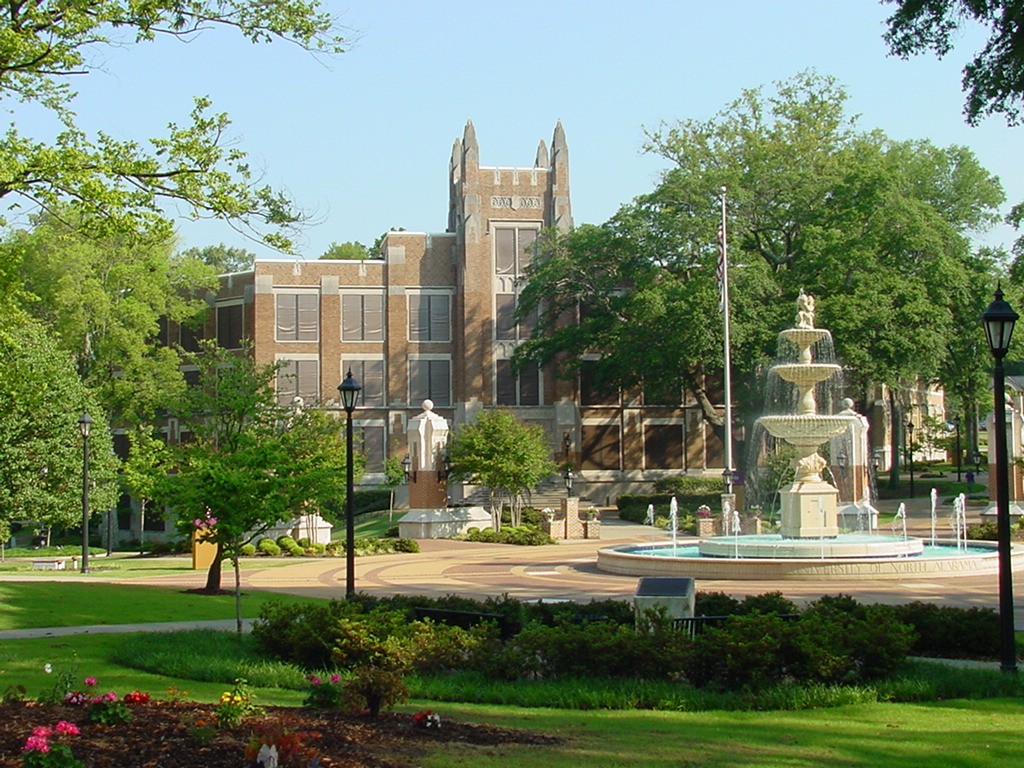
On a cold day in January of 1830, a small Methodist school was carved out of the North Alabama wilderness and named LaGrange College. The college was built in the community of LaGrange, near what is now Leighton in Colbert County. With 70 male students and 3 professors, the college was fairly successful. Twenty-five years after opening, the Methodist conference decided to move the school to Florence, renaming the school Florence Wesleyan University. A large, Gothic structure, named Wesleyan Hall, was constructed for the school and it was here that Union General Sherman stayed as he and his forces passed through the city during the Civil War.

Harrison Plaza Bibb Graves Hall University of North Alabama ghosts haunted Florence Alabama
Harrison Plaza and Bibb Graves Hall, the school’s administration building. Bibb Graves Hall is said to be haunted. Photo 2007 by Burkeanwhig, courtesy of Wikipedia.

The school struggled during and following the war. In 1870, the Methodist conference offered the school to the state of Alabama. After the state’s acquisition, the college became a teachers’ college and has operated successfully under a series of different names until it took on the current name in 1974. Operating on a campus designed by the sons of landscape architect Frederick Law Olmstead, and within a mix of historic and modern structures, the university has over 7,000 students, over 350 faculty members, and a number of spirits.

Off Campus Bookstore
472 North Court Street

Occupying a corner of the intersection of North Court Street and East Irvine Avenue, the Off Campus Bookstore is a part of what could very well be named the most haunted intersection in Florence. Just next door to the bookstore is the Edward Asbury O’Neal House, the haunted home to two state governors. Across North Court is historic and haunted Coby Hall, then across East Irvine is the modern and haunted hulk of Norton Auditorium with antebellum Rogers Hall (also known as Courtview) next door. While Rogers Hall is purported to be haunted, there is little documentation.

In the presence of these grand buildings, the Off Campus Bookstore, located in an early 20th century bungalow, may seem out of place, but its story is perhaps the saddest and most terrifying. The story began with the young daughter of the family living here being bitten by her dog. The dog was foaming at the mouth, and when the little girl extended her hand, it bit her, infecting her with rabies. With no treatment options at that time, the child died painfully in one of the upstairs bedrooms.

Since the girl’s death, she has continually been seen both in and around the house, sometimes in the presence of her beloved pet. Debra Johnston recounts an evening once, during the time that this house served as the Kappa Sigma fraternity house, when some brothers in conversation were interrupted by the apparition of a small girl asking, “Have you seen my dog?” In the 1980s, while the house was being renovated for use as a bookstore, a gentleman in the house witnessed a floating pink mist accompanied by the sound of a child walking barefoot.

Store employees still see the little girl around the store and note that candy often turns up missing when the store is opened in the mornings. Passersby still see the little girl looking from the windows of the bookstore at night and sometimes report hearing a child inquiring about her dog.

Directly across the street from the bookstore stands graceful COBY HALL which served as a private residence until the early 1990s when a school benefactor bought the house and donated it to the university in memory of his wife. Originally named Courtland Mansion, the home was constructed in the 1830s, and it has had an interesting history. During the Civil War, the house was occupied by troops of both sides including Confederate General John Bell Hood. The home is now an events space for the university.

Coby Hall, 2006 by Burkeanwhig, courtesy of Wikipedia.

Many staff members and students working in the house have experienced paranormal activity. The apparition of a woman wearing a navy skirt and white blouse has been seen on the first floor of the house, though her identity hasn’t been established. Jessica Penot reports that the spirit of Margaret Patton Simpson, wife of John Simpson who built the home, is still in residence here and dislikes disorder and chaos within her former home.

Across East Irvine from Coby Hall sits modern NORTON AUDITORIUM. During construction of this auditorium in the 1960s, tradition holds that a worker was killed in a fall and subsequently remains in the building in spirit. Interestingly, this common feature in ghostlore can also be related to two other Southern college theatres: Price Theatre, LaGrange College, LaGrange, Georgia and Van Meter Hall, Western Kentucky University, Bowling Green, Kentucky.

While the exact identity of the spirit remains unknown, the spirit has been named “George” by those working in the auditorium. George has become notorious for causing odd sounds throughout the building and messing with the lights. Two young men spending the night in the building actually witnessed all the lights in the building turning on at once, though the main electrical breaker was switched off. Members of the staff of the campus newspaper, The Flor-Ala, were able to communicate with George via a Ouija board in 2011 (not something I can recommend for amateurs).

Behind the auditorium Oakview Circle branches off of North Pine Street. Along this street of gracious old Southern homes is the PHI GAMMA DELTA HOUSE (523 Oakview Circle) where the brothers of the Phi Upsilon Chapter reside along with a female ghost named Ella. According to legend, Ella fell down the stairs here and died. Her screams are sometimes heard here and the spirit acts out when brothers bring their girlfriends into the house.

Phi Gamma Delta House, 2007 by Burkeanwhig, courtesy of Wikipedia.

Continuing down North Pine Street, the long, International Style LaGRANGE HALL stretches off to the right just after the bridge. This 1960s era residence hall has been the scene of some paranormal activity. A recent article from The Flor-Ala recounts the experiences of a student in this residence hall during the 2014-2015 school year. She reported a feeling of being watched in the bathroom and seeing stall doors open on their own.

Towards the east side of campus along North Wood Avenue is the oldest building on campus, WESLEYAN HALL, where the pathetic form of a young boy still wet from his fatal swim has been observed. At times, the young boy’s wet footprints have been seen on the floor, but questions still linger as to the youngster and how he downed. Tradition holds that the boy is Jeremiah, a young Union drummer boy, and the son of one of General Sherman’s officers. Sherman is traditionally thought to have occupied the building during the Civil War.

In some versions of the legend, young Jeremiah was kidnapped by locals and used as a pawn to prevent Sherman from burning the town. After Sherman threatened to do that very thing if the boy was not returned, the boy was returned unharmed. In other stories, the boy simply went for a swim in a nearby creek and drowned.

Wesleyan Hall, 2007 by Burkeanwhig, courtesy of Wikipedia.

Wesleyan Hall is considered a magnificent example of Gothic Revival architecture and was constructed in 1855. During the Civil War, troops of both sides occupied the building. An investigation conducted by the staff of the Flor-Ala, the campus newspaper, in a number of haunted buildings on campus in 2011 turned up doors opening and closing by themselves here, and a computer turning itself on and off.

A product of President Franklin Roosevelt’s Works Progress Administration, WILLINGHAM HALL was constructed as a men’s dormitory in 1939. It has seen a variety of uses in the years since and currently houses offices for history, English and political science faculty. It was an English instructor who had a fearful experience here late one night a few years ago. He had returned to his office to retrieve a book when he heard a loud pounding that seemed to come from the basement. Looking in the basement, the instructor saw nothing and returned to his office. The pounding started up again accompanied by male voices. At that point the instructor calmly fled the building.

Willingham Hall, 2007 by Burkeanwhig, courtesy of Wikipedia.

Willingham Hall sits on what was the site of the Locust Dell Academy which was operated by Nicholas Hentz. Local historian and ghost author Debra Glass noted that Hentz was known to play music very loudly into the night. Perhaps he is still responsible for the spectral racket that is heard here.

Towards the center of campus sits the massive GUILLOT UNIVERSITY CENTER. Built in 1986, this structure replaced O’Neal Hall which had originally stood on this site since 1913. The resident spirit of O’Neal Hall was Priscilla, who legend holds committed suicide by hanging herself in an elevator shaft. The reasons behind her pain have been lost to history, though her form was seen a number of times within the old building. In 1984 a student locking up the building after a fraternity meeting was drawn by the sounds of a woman sobbing. Venturing upstairs, the young man encountered the diaphanous form of a young woman weeping. He fled.

Guillot University Center, 2007 by Burkeanwhig, courtesy of Wikipedia.

Author and local ghost expert Debra Johnston has recounted that while giving tours in front of the Guillot Center after hours the elevator doors were seen to open and close despite no one being inside the building. The front door of the building then opened by itself, though the building was locked for the night. She ventured that perhaps Priscilla had come out to hear her own ghost story.

Sources

  • Delinski, Bernie. “UNA possesses lion’s share of ghost stories.” Times-Daily. 31 October 2015.
  • “Haunting at UNA.” The Flor-Ala. 27 October 2011.
  • Honeycutt, Lauren. “Ghost encounters on campus.” The Flor-Ala. 22 July 2016.
  • Johnston, Debra. Skeletons in the Closet: True Ghost Stories of the Shoals Area. Debra Johnston, 2002.
  • Johnston, Debra. Skeletons in the Closet: More True Ghost Stories of the Shoals Area. Debra Johnston, 2003.
  • Lindley, Alex. “University of North Alabama (UNA).” Encyclopedia of Alabama. Accessed 22 July 2016.
  • Penot, Jessica. Haunted North Alabama. Charleston, SC: History Press, 2010.
  • Tew, Kaitlyn. “UNA alumna, faculty recount campus ghost stories.” The Flor-Ala. 31 Oct 2013.
  • University of North Alabama. Wikipedia, the Free Encyclopedia. Accessed 22 July 2016.
  • Willingham Hall. UNA. Acc. 30 Jun 2015.

Phantoms of the French Quarter–New Orleans, Louisiana

The French Quarter has been lived in and died in; human energy has been manifested continuously and freely for 250 years. Where we find presently a sedate restaurant, we would have found—20 years ago, 50 years ago, 100 years ago or more—a dry goods store, a grocery, a saloon, a coffeehouse, a patisserie, an apothecary, a gambling joint, a silversmith, a printer, a jeweler, a letter-writer, a whorehouse, a bank. They may have disappeared along with their proprietors, but they’ve left behind an aura that infuses the atmosphere.

–Andy Peter Antippas, A Guide to the Historic French Quarter (History & Guide). 2013.

New Orleans’ French Quarter—the Vieux Carré to locals—is among a handful of locales in the South that possesses a high concentration of haunted places. Encompassing nearly two-thirds of a square mile (.66 to be exact), the French Quarter has been said to have spirits in nearly every building and site. Even looking at the documented hauntings here, the number is quite impressive.

The French Quarter is generally defined as the section stretching from Canal Street to Esplanade Avenue and from the Mississippi River northwest to North Rampart Street. This section of the city is where the city was originally founded by the French in 1718. With buildings and sites spanning three centuries, the French Quarter is easily the most paranormally active neighborhood in the entire city.

This series of articles is meant to act as a street by street guide to those hauntings. While some of these stories have gained quite a bit of notoriety in the literature, like Royal Street’s LaLaurie Mansion, and Bourbon Street’s Lafitte’s Blacksmith Shop, some stories have only been explored in the literature once or twice. This is an attempt to synthesize information from the many sources that exist on the French Quarter into a succinct guide.

For more haunted places in the French Quarter visit the main page for my series, “Phantoms of the French Quarter.”

Sources

  • Antippas, Andy Peter. A Guide to the Historic French Quarter (History & Guide). Charleston SC, Arcadia Publishing, 2013. Kindle Edition.
Jackson Square French Quarter New Orleans ghosts haunted street by street guide
Jackson Square, bounded by Decatur, Chartres, St. Peter, and St. Ann Streets. Behind the statue is St. Louis Cathedral with The Cabildo on the left and the Presbytere on the right. All three buildings are haunted. See the entry for Chartres Street for further information. Photo by Sammi99tr, 2009, courtesy of Wikipedia.

Street Guide to the Phantoms of the French Quarter

N.B. The streets that are not linked do not yet have guides. Check back here soon for those guides to be created.

Basin Street

Bienville Street

Bourbon Street

Burgundy Street

Chartres Street

Conti Street

Dauphine Street

Decatur Street

Dumaine Street

Esplanade Avenue

Iberville Street

Orleans Street

Pere Antoine’s Alley

Pirate Alley

North Rampart Street

Royal Street

St. Ann Street

St. Louis Street

St. Peter Street

St. Philip Street

Toulouse Street

Ursulines Street

Wilkinson Street


Street Guide to the Phantoms of the French Quarter—Royal Street

This article is part of my series, Street Guide to the Phantoms of the French Quarter, which looks at the haunted places of this neighborhood in a street by street basis. Please see the series main page for an introduction to the French Quarter and links to other streets.

Royal Street

Hotel Monteleone
214 Royal Street

This imposing hotel is the tallest building in the French Quarter and, at 600 rooms, among the largest. This building is a physical, literary, and paranormal landmark within the Quarter. When a lowly Sicilian cobbler, Antonio Monteleone, purchased a hotel in 1886, he probably did not imagine that it would be the beginning of a classic American rags-to-riches story. His hard work paid off and he acquired neighboring buildings and expanded his hotel. Since it opened its doors the hotel has attracted celebrities including numerous well-known writers who have mentioned the hotel in their works.

Hotel Monteleone, 2009 by Bart Everson, courtesy of Wikipedia.

One of the more well-known features of the Monteleone is the Carousel Bar featuring an actual carousel that was assembled in the bar in 1949 and rotates slowly as patrons enjoy craft cocktails. While patrons revolve at the bar, spirits revolve around patrons and staff throughout the hotel. Spirits here range from a trusty engineer to a little boy who supposedly died of a fever while his parents were out. Others include the spirits of a few people who committed suicide by jumping from the roof. The International Society of Paranormal Research investigated the hotel in 2003 and concluded that there are 12 individual entities patrolling the halls and corridors of this hotel.

Sources

  • Caskey, James. The Haunted History of New Orleans: Ghosts of the French Quarter. Savannah, GA: Manta Ray Books, 2013.
  • History.” Hotel Monteleone. Accessed 7 June 2016.
  • Hudson, Shaney. “The Big Easy’s his haunt.” The Age (Melbourne, Australia). 27 February 2012.
  • Mroch, Courtney. “Why Hotel Monteleone’s Haunted 14th Floor Isn’t What it Seems.” Haunt Jaunts. 25 March 2011.

Cafe Beignet
334 Royal Street

The spirit of a Native American woman is occasionally seen strolling through this restaurant that occupies an old carriage house. Most likely she remains here from the time prior to the city’s existence. She is most often seen towards closing time.

Sources

  • Dwyer, Jeff. Ghost Hunters Guide to New Orleans. Gretna, LA: Pelican Publishing, 2007.
  • Muro, Maria. “Haunted Eats.” New Orleans Living Magazine. 9 October 2012.

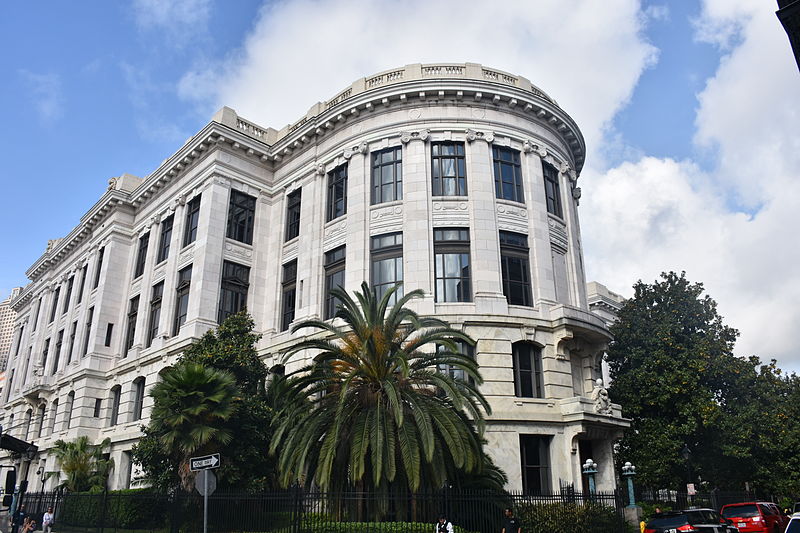
Louisiana Supreme Court Building
400 Royal Street

This monstrous white marble-clad building caused much controversy when the site was cleared starting in 1903. This block was originally a collection of 19th century buildings bisected by Exchange Alley which was lined with offices for architects, engineers, politicians and lawyers. The destruction that took place here contributed to the rise of preservation policies throughout the city. Upon completion of this building in 1910, the Louisiana Supreme Court, state Attorney General, and other courts moved in, though by 1934, the building was deemed inadequate. After years of deferred maintenance, the Supreme Court moved out in 1958. The building saw renovations starting in the 1990s and reopened in 2004 with the state Supreme Court returning to the building.

Rumors of the building being haunted began to arise during the building’s renovations. Author and researcher Victor C. Klein interviewed a construction supervisor and several workers and contractors who told similar tales of tools and equipment disappearing in the building. A number of them also encountered “a well dressed, middle age, white gentleman” whom they found looking out a window in the upper stories of the building. When confronted, the odd gentleman would disappear.

Louisiana Supreme Court Building, 2015 by MusikAnimal, courtesy of Wikipedia.

Klein continues by noting that guests of the Omni Royal Orleans Hotel on nearby St. Louis Street would report this man to the front desk staring intensely into their rooms. According to Klein, this was so frequent that the front desk had a scripted response to these calls, though they didn’t inform the guests that this gentleman is probably a ghost.

Jeff Dwyer remarks on several other spirits within the building including a pair of shooting victims who were supposedly gunned down in a courtroom during a Mafia trial in the 1930s and a panhandler who is sometimes seen just outside the building on Royal Street.

Sources

Brennan’s
417 Royal Street

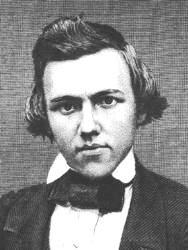
One of the more well-known and respected restaurants in the city, Brennan’s has made its home in this historic building since it opened in 1946. This 1795 structure once housed the Bank of Louisiana. Later on in the 19th century, Paul Morphy, one of the most famous chess players in the world lived and died here. He may be the apparition that is sometimes seen in the dining room.

Sources

  • Dwyer, Jeff. Ghost Hunters Guide to New Orleans. Gretna, LA: Pelican Publishing, 2007.
  • Taylor, Troy. Haunted New Orleans. Charleston, SC: History Press, 2010.
Brennan’s, 2015 by Infrogmation, courtesy of Wikipedia.

Court of the Two Sisters
613 Royal Street

One of the more romantic of New Orleans’ great restaurants, the Court of the Two Sisters possesses a number of legends including one about the gates through which patrons pass. The wrought iron gates are supposed to have been made in Spain where they were blessed by Queen Isabella with a charm that all those who touch them as they pass will be charmed. The restaurant occupies an 1832 building that housed a shop owned by two sisters, Bertha and Emma Camours. Apparently inseparable, the sisters operated a notions shop in this building for many years and, not being able to live without the other, died in 1944 two months apart.

The courtyard of this grand restaurant has a wishing well known as the “Devil’s Wishing Well” as it may have witnessed and been charmed by rites practiced here by Marie Laveau, the city’s great 19th century Queen of Voodoo. Until it was toppled by Hurricane Betsy in 1965, a willow tree grew here where pirate Jean Lafitte may have dueled with and killed three men. Those three men may be among the specters flitting throughout this courtyard. Enjoy one of the famous Jazz Brunches served here daily and be sure to pay homage to the sisters who may still be holding court.

Sources

  • Dwyer, Jeff. Ghost Hunters Guide to New Orleans. Gretna, LA: Pelican Publishing, 2007.
  • Our History.” Court of the Two Sisters. Accessed 8 June 2016.

LaBranch Building
700 Royal Street

The delicate lacy ironwork of this large home hides one of crueler ghost stories in this city. In the early history of the city a system of plaçage was practiced by many of the wealthy white planters. This system, found in Spanish and French colonies, allowed these wealthy men to take on mistresses, often free women of color, whom they would support. Certainly such arrangements caused conflicts within the legal marriages of these men. Such a conflict is at the heart of the story here.

Upon the death Jean Baptiste LaBranche, who owned this home at one time, his wife, Marie, was able to find out the name of his mistress. She sent an invitation to the young woman inviting her to tea. When the unsuspecting mistress arrived, instead of exchanging pleasantries over tea, Marie LaBranche had the woman bound and chained to a wall in the attic where she was left to die a slow death from starvation. While this is a marvelously gory legend, it is clouded with a good deal of doubt. Occupants of this building have reported paranormal activity, however. Cold spots and feelings of panic have overtaken some working on the third floor, where the poor mistress supposedly met her untimely death.

Sources

  • Dwyer, Jeff. Ghost Hunters Guide to New Orleans. Gretna, LA: Pelican Publishing, 2007.
  • Taylor, Troy. Haunted New Orleans. Charleston, SC: History Press, 2010.

St. Anthony’s Garden
Behind St. Louis Cathedral across from Orleans Street

This meditative garden has existed here behind the cathedral since the establishment of the church. Located between two haunted alleys: Pere Antoine’s and Pirate’s Alleys, the garden is named in memory of Pere Antoine or Antonio de Sedella, whose spirit may haunt the alley named for him as well as St. Louis Cathedral. According to Jeff Dwyer, this garden was a popular place for duels in the mid-18th century. Some sensitives have detected wafts of smoke from those events.

Sources

  • Dwyer, Jeff. Ghost Hunters Guide to New Orleans. Gretna, LA: Pelican Publishing, 2007.

734 Royal Street

Just like the story of the LaBranche Building, the story from this classic New Orleans town house involves a mistress, in this case she was an octoroon (she was 1/8th black) and her name was Julie. She was kept by a wealthy young man who was officially unattached in a well-furnished apartment here. Despite her pleas to her lover to marry her, he could not do so without losing his social standing and perhaps his fortune with it. Carelessly, in order to appease her frequent requests for marriage, the young man said he would marry Julie if she spent the coldest night in December nude on the roof. On the coldest night in December she undressed and crawled onto the roof. Her lover discovered her lithe corpse frozen not long after.

Since that time, Julie’s nude form has been seen on the roof of this building on the coldest night in December. During the remainder of the year Julie lingers in the warmth of the building’s interior. The Bottom of the Cup Tearoom once occupied the ground floor of this building (it moved to 327 Chartres Street) where the shop offered tea and psychic readings. Many of the psychics working here noted Julie’s shade and they believe she may have moved with the shop to Chartres.

Sources

  • Dwyer, Jeff. Ghost Hunters Guide to New Orleans. Gretna, LA: Pelican Publishing, 2007.
  • Smith, Katheine. Journey Into Darkness: Ghosts and Vampires of New Orleans. New Orleans, LA: De Simonin Publications, 1998.

Cornstalk Hotel
915 Royal Street

This intimate boutique hotel occupies a mansion with a unique cast-iron fence featuring stalks of corn. Legend relates that the fence was commissioned to comfort the Iowa-born wife of a former resident by reminding her of the cornfields of home. Once the home of Judge François Xavier Martin, he may be one the spirits that still stalks the halls with his footsteps, rattling door knobs. The sounds of children have also been heard here.

Sources

  • Brown, Alan. The Haunted South. Charleston, SC: History Press, 2014.
  • Dwyer, Jeff. Ghost Hunters Guide to New Orleans. Gretna, LA: Pelican Publishing, 2007.
Cornstalk Hotel by Infrogmation, courtesy of Wikipedia.

Andrew Jackson Hotel
917 Royal Street

A tragedy on this site more than 200 years ago may still continue to resonate today. A boarding school or orphanage (sources differ) stood here that was destroyed by fire. Five young boys lost their lives and they still play throughout the courtyard and hallways of this hotel. Sheila Turnage notes the experience of a night manager who was diligently working at his desk when he realized he was being watched. Looking up he saw the heads of a group of children trying to peer above the top of his desk. The children vanished moments later.

Sources

  • Asfar, Dan. Ghost Stories of Louisiana. Auburn, WA: Lone Pine Publishing, 2007.
  • Dwyer, Jeff. Ghost Hunters Guide to New Orleans. Gretna, LA: Pelican Publishing, 2007.
  • Taylor, Troy. Haunted New Orleans. Charleston, SC: History Press, 2010.
  • Turnage, Sheila. Haunted Inns of the Southeast. Winston-Salem, NC: John F. Blair, 2001.

Starling Magikal Occult Shop
1022 Royal Street

If you care to test drive any of the ghost hunting equipment available for sale here, the Starling Magikal Occult Shop offers its own ghosts. In a 2015 article, the shop’s co-owner Claudia Williams noted that staff and patrons of the shop hear disembodied voices and feel the touch of invisible fingers. Objects occasionally move around on their own accord as well.

Sources

  • Lopez, Kenny. “Want to hunt ghosts? Here are the tools you’ll need…” 26 October 2015.

LaLaurie House
1140 Royal Street, private

Of the myriad haunted houses throughout the South, few have captured the public’s attention more than the hulking LaLaurie Mansion that looms over the intersection of Royal and Nicholls Streets. While the structure itself is significant historically and architecturally, it’s the legends of the atrocities that took place here and the ghosts from those events that draw crowds of tourists. Though the house is not open to the public, the legend still draws people here.

In 1831 this property was purchased by Delphine LaLaurie, the wife of Dr. Leonard Louis LaLaurie. Madame LaLaurie had been married and widowed twice before her marriage to the good doctor and she had five children by her previous husbands. After construction of the mansion in 1832, LaLaurie took up residence and became a central pillar to New Orleans society.

LaLaurie Mansion, 2011 by Reading Tom, courtesy of Wikipedia.

The legend goes back to a fateful report of a fire in the kitchen here April 10, 1834. Firefighters arrived to discover the kitchen in flames and an elderly slave cook chained to the stove. She admitted to setting the fire as a suicide attempt to prevent her being sent to attic from which she said no one ever escaped. A mob that had gathered broke their way into the slave quarters and soon discovered the mutilated remains of “seven slaves, more or less horribly mutilated … suspended by the neck, with their limbs apparently stretched and torn from one extremity to the other” as the New Orleans Bee described the events the next day. While the mob remained to destroy the house and grounds in anger, Madame LaLaurie and her family fled the city. No one ever faced justice for the cruelties inflicted on the slaves here. While this is the most commonly related legend about the house, there is quite a bit of controversy.

As the story has captured the imagination of many, it has found its way into books dating back to the late 19th century, film, television and even video games. Most recently, the legend of Madame LaLaurie was woven into the plethora of local legends in the story arc of American Horror Story: Coven. Portrayed by Kathy Bates, Madame LaLaurie is a simpering racist weighted down with a curse of immortality placed upon her by the immortal Voodoo Queen, Marie Laveau. Researchers looking into the legend in recent decades have revealed that Delphine LaLaurie’s reputation may have been targeted as part of a smear campaign.

Do the spirits of slaves still stalk this lovely mansion? Legends relate that former residents here encountered some horrific spirits, though there are few recent stories. Writer and psychic Kala Ambrose tried to commune with the spirits while standing outside of the house recently. While she stood there a number of curious tourists inquired if this was the famous LaLaurie House. A short time later when she placed her hand on the wall of the house a passing ghost tour group took photographs of her. She didn’t contact anything out of the ordinary, perhaps the house is now just haunted by tourists.

Sources

  • Ambrose, Kala. Spirits of New Orleans. Cincinnati, OH: Clerisy Press, 2012.
  • Caskey, James. The Haunted History of New Orleans: Ghosts of the French Quarter. Savannah, GA: Manta Ray Books, 2013.
  • Delphine LaLaurie. Wikipedia, the Free Encyclopedia. Accessed 10 June 2016.

Street Guide to the Phantoms of the French Quarter—Chartres Street

N.B. This article was edited and revised 30 April 2020.

This article is part of my series, Street Guide to the Phantoms of the French Quarter, which looks at the haunted places of this neighborhood in a street by street basis. Please see the series main page for an introduction to the French Quarter and links to other streets.

Chartres Street

Chartres Street, which is often pronounced CHAR-terz or CHAR-trez, was named for the Duc de Chartres in 1724 and is among several of the earliest streets in town. Initially, Chartres only ran from Canal Street to Jackson Square. From Jackson Square to Esplanade, the street was called Condé.

Mahogany Jazz Hall Burlesque and Absinthe House
125 Chartres Street

100 block Chartres Stree French Quarter New Orleans
The building that now contains the Mahogany Jazz Hall is on the right of this photo under the sign of Don Juan’s (which formerly occupied this space). Photo 2007, Infrogmation, courtesy of Wikipedia.

This 19th century building served as a boarding house for many years during which two tenants committed suicide. In 1892, a laborer was shot to death in front of the building with his murderer escaping into the dark of night. These deaths may contribute to the building’s haunted reputation with patrons and staff witnessing shadowy figures, hearing disembodied whispers, and feeling the cold touch of hands from the other side.

Sources

  • “Murder in New Orleans.” The Daily Commercial Herald. 22 November 1892.
  • Pinheiro, Maria. “Four little-known paranormal hotspots in New Orleans.” Malay Mail Online. 11 October 2016.

204 Chartres Street

204 Chartres Street Crescent City Books French Quarter New Orleans
204 Chartres in 2007. The building on the left was still Crescent City Books at this time. Photo by Infrogmation, courtesy of Wikipedia.

Formerly the home to Crescent City Books, one of the more prominent second-hand bookstores in the city, this late 19th century commercial building is apparently haunted by ghosts on every floor, including the specter of a young boy on the first floor. An investigation by the New Orleans based International Society for Paranormal Research (ISPR) identified a number of children’s spirits on the first and second floor as spirits that may also haunt Le Petite Theatre de Vieux Carré on St. Peter Street. Other spirits were discovered on the third floor and attic.

Sources

  • Dwyer, Jeff. Ghost Hunter’s Guide to New Orleans, Revised Edition. Gretna, LA: Pelican, 2016.
  • Montz, Larry and Daena Smoller. ISPR Investigates the Ghosts of New Orleans. Atglen, PA: Schiffer, 2000.

W New Orleans – French Quarter
316 Chartres Street

Formerly the Hotel de la Poste, the W Hotel is made up of a collection of old buildings many of which are occupied by their own collections of spirits. ISPR investigated the hotel in July of 1996. On the second floor of the hotel, investigators encountered the spirit of a white woman in her 30s who may be causing some activity there. In another section of the building which may have once held slave quarters, the spirits of three enslaved children were discovered. A middle-aged enslaved man, Gerald, was found by the group near the hotel’s parking garage, which may have been the site of stables were this man labored.

Sources

The Bottom of the Cup Tearoom
327 Chartres Street

Since 1929, The Bottom of the Cup Tearoom has served as one of New Orleans’ psychical landmarks. The tearoom popularly featured psychics who would read the tea leaves left at the bottoms of customers’ teacups. Over time, the shop has added other forms of divination and psychic readings including tarot cards to its menu. While the shop’s second location (open from 1972-2003) at 734 Royal Street possessed the well-known spirit of Julia, there are no documented ghost stories associated with this building, though Jeff Dwyer has noted that the spirit may have moved to the shop after the closure of the Royal Street location. A quote from the shop’s manager indicates there may be some activity there, telling Country Roads Magazine, “There’s a lot of history ground into this neighborhood. Each decade leaves its traces and emotional resin, which helps us tune into the intuitive mind.”

Sources

  • Dwyer, Jeff. Ghost Hunter’s Guide to New Orleans, Revised Edition. Gretna, LA: Pelican, 2016.
  • McGunnigle, Nora. “The Bottom of the Cup.” Country Roads Magazine. 21 September 2018. 

Williams Research Center
410 Chartres Street

The Williams Research Center occupies one of three campuses that houses parts of The Historic New Orleans Collection, which preserves and collects historic items and archives covering the history of the city and the region. The largest items in this collection are a number of historic properties including the building that houses the research collection. Built in 1915, this Beaux-Arts structure originally housed the Second City Criminal Court and the Third District Police Station. The Historic New Orleans Collection purchased the building in 1993 after it had been vacant for many years.

The renovation of this structure required gutting the interior at which time construction workers began to have odd experiences. These included hearing the slamming of cell doors, despite the doors having been removed, and seeing apparitions of police officers in old-fashioned uniforms.

Sources

  • Chartres Street Campus.” Historic New Orleans Collection. Accessed 14 January 2020.
  • Montz, Larry and Daena Smoller. ISPR Investigates the Ghosts of New Orleans. Atglen, PA: Schiffer, 2000.

Napoleon House
500 Chartres Street

Postcard Chartres Street Napoleon House French Quarter New Orleans
An early 20th century postcard showing the Napoleon House. Postcard published by A. Hirschwitz.

Built in 1797, this home was significantly expanded for early mayor, Nicholas Girod, who served from 1812-15. According to local lore, offered it as a refuge for Napoleon after he was exiled from France. While he died before he could travel, the house still bears his name. In 1834, some thirteen years after Napoleon’s death, his former physician, Dr. Antommarchi, opened a free clinic in the building, thus continuing its association with the deposed emperor. During the Civil War, wounded soldiers were treated in a hospital that operated on the second floor. In 1914, the Impastato family acquired the property and opened the restaurant and bar that remains in operation.

The over 200-year old history of the building has left spiritual activity. Some stories speak of a Confederate soldier who is seen to stroll the Chartres Street balcony before vanishing or hiding. Another story tells of an old lady who is spotted sweeping on the second floor. While yet others have witnessed the apparition of an enslaved woman in the courtyard.

Over the years, guests and staff have been surprised by lights turning off and on, sometimes on request. During a renovation of the building in the mid-1990’s the spirits expressed their displeasure with a heavy and oppressive feeling throughout. Bartenders also reported that bottles would occasionally fall from their perch behind the bar during this time. A paranormal group that investigated the building recently noted several entities on the property including a young lady in the courtyard who may have died in an accident and an old sailor who drinks at the bar late at night.

Sources

  • Bailey, Shan. “Strange ghosts: Drinking sailor, sweeping lady haunt the Napoleon House.” NOLA Weekend. No Date.
  • Brown, Alan. The Haunted South. Charleston, SC: History Press, 2014.
  • Duplechien, Brad. “Napoleon House Bar – New Orleans, LA (A Ruler’s Hideout).” Haunted Nation Blog. 26 September 2016.
  • Dwyer, Jeff. Ghost Hunter’s Guide to New Orleans, Revised Edition. Gretna, LA: Pelican, 2016.
  • Montz, Larry and Daena Smoller. ISPR Investigates the Ghosts of New Orleans. Atglen, PA: Schiffer, 2000.
  • Napoleon House Historic Past.” Napoleon House. Accessed 2 June 2016.

New Orleans Pharmacy Museum (La Pharmacie Francais)
514 Chartres Street

When Louis Dufilho opened his pharmacy here in 1823, this was the first licensed pharmacy established in the country. Dr. Dufilho operated his business here for some 35 years before retiring and selling his business to Dr. Joseph Dupas. Many sources suggest that Dupas performed medical experiments on slaves, especially pregnant slave women.

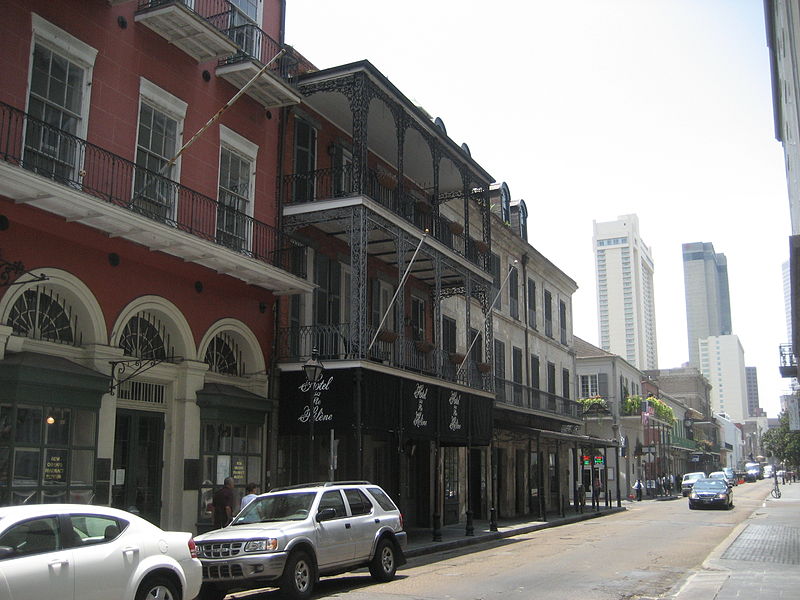
Chartres Street French Quarter Pharmacy Museum Hotel Ste. Helene Napoleon House
The view looking down Chartres Street. From the left, the buildings are the New Orleans Pharmacy Museum, Hotel Ste. Helene, and the Napoleon House. Photo 2008, by Infrogmation, courtesy of Wikipedia.

Tour guide Katherine Smith suggested in her book, Journey Into Darkness: Ghosts and Vampires of New Orleans, that Dupas also treated wounded soldiers here during the Civil War. Perhaps the pain and death from the medical experiments and the soldiers being treated have left a mark on the energy of this building. Some visitors have reported being suddenly overcome with nausea while others have encountered a figure in a brown suit and white lab coat that may be the spirit of Dr. Dupas.

Sources

  • Dwyer, Jeff. Ghost Hunter’s Guide to New Orleans. Gretna, LA: Pelican Publishing, 2007.
  • Oldfield, Eileen. “Things that go bump in the haunted pharmacy.” Pharmacy Times. 30 October 2014.
  • Smith, Katherine. Journey Into Darkness: Ghosts & Vampires of New Orleans. New Orleans, LA: De Simonin Publications, 1998.

Chartres House (Gally House)
540 Chartres Street

The large building occupying this corner of Chartres and Toulouse Streets is sometimes known as Keuffers Building. Built sometime after 1830, the building was intended to house businesses on the first floor with apartments on the second and third floors. If you walk alongside the building on Toulouse Street, you can see the separate slave quarters at the back of the building. Some passersby have noticed a young lady peering from the upper windows on this side of the building, despite the fact that these rooms were vacant at the time. Venture into the parking lot off Toulouse Street and look at the first small window. Tour guides will point out this window and encourage visitors to plunge their hand in. Some visitors have felt the feeling of their hands being grasped by small hands. Jeff Dwyer notes that these hands may belong to slave children who were housed in this room.

Gally House French Quarter New Orleans Frances Johnston
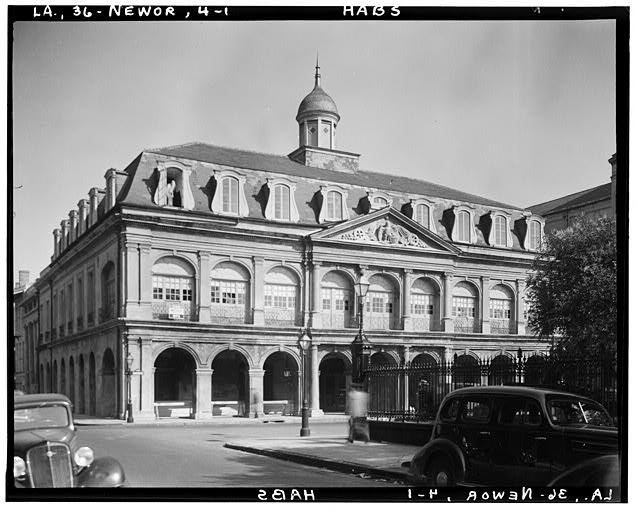
The Gally House in the 1930s as photographed by Frances Johnston for the Historic American Buildings Survey (HABS). Courtesy of the Library of Congress, Prints and Photographs Division.

Recently, the Chartres House restaurant, which opened originally in the former Reynes Mansion (see below) across the street, relocated into the majestic Gally House.

Sources

  • Dwyer, Jeff. Ghost Hunter’s Guide to New Orleans. Gretna, LA: Pelican Publishing, 2007.
  • HistoryChartres House. Accessed 30 April 2020.

Reynes Mansion (formerly the Chartres House)
601 Chartres Street

Originally built as a residence for the Reynes family following the Great Fire of 1788, this home was eventually occupied by the popular Victor’s Café in the late 19th century. Known as a hangout for artists and bohemians, Victor’s was a favorite of the writer William Faulkner.

An apartment located on the second-floor was the scene of a shooting death in the 1970s. The young man who lived there is supposed to have been involved in drugs. Following his death, the building’s owners had trouble renting the apartment as prospective tenants often detected bad energy and some became physically ill while touring the apartment.

Reynes Mansion French Quarter New Orleans
The Reynes Mansion in 2008, when it was still the Chartres House. Photo by Infrogmation, courtesy of Wikipedia.

This building was occupied by the Chartres House restaurant until it relocated across the street to the Gally House (see above).

Sources

Bosque House
617 Chartres Street, private

Bosque House French Quarter New Orleans
The Bosque House in 2011. Photo by Elisa.rolle, courtesy of Wikipedia.

This classic late 18th century Creole townhouse was built to replace a home destroyed in the Great Fire of 1788. Legend holds that this fire started on this site. Don Vicente Jose Nuñez, the army treasurer, owned the house at this site where curtains caught fire from a candle on the family’s personal altar on Good Friday. Tradition prohibited the ringing of bells on this most holy day and the priests of St. Louis Church would not allow the church’s bells to be rung to alarm the citizens. The fire eventually destroyed the church and nearly 900 other buildings in the city. Residents of this private home have heard the sounds of muffled bells. Perhaps better late than never?

Sources

  • Klein, Victor C. New Orleans Ghosts III. Metarie, LA: Lycanthrope Press, 2004.
  • Smith, Katherine. Journey Into Darkness: Ghosts & Vampires of New Orleans. New Orleans, LA: De Simonin Publications, 1998.

The Cabildo
701 Chartres Street

The younger twin of The Presbytère, The Cabildo was constructed to replace the city hall that was destroyed in the Great Fire of 1788. Of all the buildings in this city, this building has witnessed more important historic events than any other. Within the walls of the Cabildo the Louisiana Purchase was finalized in 1803. During the building’s time housing the Louisiana Supreme Court, the case of Plessy v. Ferguson was heard before it headed to the U.S. Supreme Court where it enshrined the concept of “separate but equal” into American racial law. The building became a part of the Louisiana State Museum in 1908.

Cabildo French Quarter New Orleans
The Cabildo, 1936, by Richard Koch for the Historic American
Buildings Survey (HABS). Courtesy of the Library of Congress,
Prints and Photographs Division.

While this building served as a seat of government for many years, a prison once stood behind it (see my entry on Pirate Alley for more information on this structure) which may explain the presence of a young soldier. Legend holds that the young man was imprisoned in the prison and, after a trial before a military tribunal, was summarily executed in the courtyard. Some of the museum’s staff and visitors have felt the sensation of someone rushing past them. Others have seen the pathetic form of a soldier in a ragged uniform.

Sources

  • The Cabildo. Louisiana State Museums. Accessed 2 June 2016.
  • Dwyer, Jeff. Ghost Hunter’s Guide to New Orleans. Gretna, LA: Pelican Publishing, 2007.

St. Louis Cathedral
Jackson Square

interior of St. Louis Cathedral New Orleans
Interior of St. Louis Cathedral by Carol M. Highsmith.
Courtesy of the Carol M. Highsmith Archive, Library of Congress, Prints and Photographs Division.

The Grande Dame of New Orleans, St. Louis Cathedral has stood at the sacred heart of this city since the construction of the first church on this site in 1718. The current building was originally constructed between 1789 and 1794 and heavily reconstructed in the mid-19th century. Legend holds that the black-robed form of Father Antonio de Sedella, often known by his French moniker, Père Antoine, appears during the Christmas Midnight Mass. The specter of this most beloved of curates appears to the left of the altar holding a candle.

Sources

  • Brown, Alan. The Haunted South. Charleston, SC: History Press, 2014.
  • Our History.” Cathedral Basilica of Saint Louis. Accessed 2 June 2016.

The Presbytère
751 Chartres Street

The Presbytere New Orleans
The Presbytère, 2007, by Infrogmation. Courtesy of Wikipedia.

The Presbytère is one of the pair of buildings flanking St. Louis Cathedral. Originally constructed in 1791 to match The Cabildo, this structure was known as “Casa Curial” or “Ecclesiastical House,” and provided housing for the Capuchin monks who ran the cathedral. In 1911, the building was taken over to house the Louisiana State Museum. The museum houses two permanent exhibits: one commemorating Hurricane Katrina and the other celebrating the city’s Mardi Gras traditions. While visiting the museum should you see a tall and slim maintenance man in a dark uniform with curly brown hair, be assured that you have just seen a ghost.

Sources

  • Dwyer, Jeff. Ghost Hunter’s Guide to New Orleans. Gretna, LA: Pelican Publishing, 2007.
  • The Presbytère. Louisiana State Museums. Accessed 2 June 2016.

Muriel’s Jackson Square
801 Chartres Street

Originally built as a grand residence for the noted Destrehan family (who also owned haunted Destrehan Plantation found along the famed River Road), the building that now houses Muriel’s partially burned in the Great Fire of 1788 that ravaged the city. Supposedly, the burned house was purchased by Pierre Antoine Lepardi Jourdan who restored the home but sadly lost it in a card game. Not willing to simply leave the home, he quietly resigned to the second floor where he committed suicide in what is now known as the Séance Lounge.

Muriel's Restaurant New Orleans
Muriel’s in 2008. Photo by Infrogmation, courtesy of Wikipedia.

At least this is the story that is commonly told about this building. It is even included on the restaurant’s website. According to a 2013 blog post entitled, “The ‘Ghost’ of Muriel’s Restaurant,” this story is partially bunk. The blog notes that the current building was constructed sometime around the turn of the 20th century after the house on that site was torn down. While the history may not match up to the legend, there still may be paranormal activity with staff and visitors hearing knocking from inside the brick walls of the Séance Lounge, and disembodied voices, while encountering shadowy figures throughout the building. In order to keep some of the activity at bay, the restaurant maintains a special table for the ghost of Monsieur Jourdan.

Sources

  • Brown, Alan. The Haunted South. Charleston, SC: History Press. 2014.
  • Dwyer, Jeff. Ghost Hunter’s Guide to New Orleans. Gretna, LA: Pelican Publishing, 2007.
  • The ‘Ghost’ of Muriel’s Restaurant.” Myth Busters! 4 July 2013.
  • Our Ghost.” Muriel’s Jackson Square. Accessed 2 June 2016.
  • Tipping, Joy. “Ghost trails and Halloween haunts in New Orleans.” Dallas Morning News. 23 October 2008.

Hotel Provincial
1024 Chartres Street

Hotel Provincial French Quarter New Orleans
Hotel Provincial in 2019. Photo by Infrogmation, courtesy of Wikipedia.

Like many hotels throughout the quarter, this hotel consists of an amalgam of different buildings, each with different histories. The 500 building seems to be the one with activity. The building was constructed on a site that was originally occupied by an Ursuline Hospital. It was here that the wounded from the 1814 Battle of New Orleans were treated. During the Civil War the buildings on the site were commandeered for use as a military hospital. That building burned and was replaced by the current structure. Guests and staff have, according to tradition, encountered bloodstains that disappear before their eyes, wounded soldiers in the rooms and corridors, doctors and nurses in bloodstained clothing, and one unlucky security guard using an elevator had the doors open to reveal the scene of a Civil War era surgery.

Sources

  • Brown, Alan. The Haunted South. Charleston, SC: History Press. 2014.
  • Dwyer, Jeff. Ghost Hunter’s Guide to New Orleans. Gretna, LA: Pelican Publishing, 2007.
  • The Hauntings of the Provincial Hotel.” Ghost Eyes Blog. 20 August 2009.

Old Ursuline Convent
1100 Chartres Street

One of the oldest buildings in New Orleans, the old Ursuline Convent has survived hurricanes, fires, and the nuns have provided aid during plagues and epidemics. It’s no surprise that their old convent would house spirits. According to Jeff Dwyer, the spirits of Ursuline sisters have been seen gliding throughout the building while the spirit of a Civil War era soldier has been seen in the garden. (For a couple photos of the Old Ursuline Convent see my entry here.)

Sources

  • Dwyer, Jeff. Ghost Hunter’s Guide to New Orleans. Gretna, LA: Pelican Publishing, 2007.

Beauregard-Keyes House
1113 Chartres Street

See my entry, “Creepiness on Chartres Street,” for an in depth look at the history and hauntings of this famous home.

Le Richelieu Hotel
1234 Chartres Street

Housed in two buildings, one dating from 1845, the other from 1902, the Le Richelieu Hotel occupies the site where five French patriots were executed in the late 18th century. The spirits of these five men may still reside here. For further pictures see, “A Handful of Haunts—Photos from New Orleans.”

Sources

  • A Brief History.” Le Richelieu. Accessed 3 June 2016.
  • Smith, Katherine. Journey Into Darkness: Ghosts & Vampires of New Orleans. New Orleans, LA: De Simonin Publications, 1998.

The Battlefield on Chartres Street

Beauregard-Keyes House
1113 Chartres Street
New Orleans, Louisiana

N.B. This article was edited and updated 8 August 2019.

For information on neighboring spirits see my Chartres Street guide and the main page for my Phantoms of the French Quarter series.

The sunny, yellow façade of the Beauregard-Keyes House on a relatively quiet section of Chartres Street does not belie the sometimes tragic history that has taken place within its walls. That quiet demeanor is shattered frequently by tour guides, with gawking tourists in tow,  intoning one of the many “legends” about this house as they pass. According to their spiels, the house is inhabited by a pantheon of shades, some quite famous.


Beauregard-Keyes House French Quarter New Orleans ghosts haunted
The sunny facade of the Beauregard-Keyes House on a bleak day in 2011. Photo by Ben Lewis, all rights reserved.

General Pierre Gustave Toutant-Beauregard, who occupied the house for about three years following the Civil War, was supposedly haunted by his defeat at the Battle of Shiloh. “…it’s General Beauregard whose presence at 1113 Chartres Street, and whose ghost seems obsessed with returning to the bloody scene of battle that traumatized him for the rest of his life—and beyond.”

Mary Beth Crain in her 2008 book, Haunted U.S. Battlefields continues, “In 1893, the year of the general’s death, people walking by the house late at night reported hearing ‘the voice.’ Someone seemed to be gasping ‘Shiloh…Shiloh’ over and over in a raspy chant that sounded as if it were coming from a great distance…Who else could ‘the voice’ belong to but General P.G.T. Beauregard, the man who throughout his life was haunted by the demons of the battle he needlessly lost? …There was terror in that one word, a sense of horror that was so convincing, those who heard it bolted as fast as they could.”

PGT Beauregard Beauregard-Keyes House French Quarter New Orleans ghosts haunted
P. G. T. Beauregard during his time as a Confederate general by photographer Matthew Brady.

A Haunting Battle

For a name that is Hebrew for “place of peace,” Shiloh, Tennessee is associated with the stench of death and quite possibly haunted Beauregard after his defeat there. The battle, fought in early April, 1862, is often described as the first of the many bloody battles that would be fought during the Civil War.

Union troops under General Ulysses S. Grant were encamped on the banks of the Tennessee River near Pittsburg Landing, Tennessee, while some twenty-odd miles away Confederate troops under General Albert Sidney Johnston and Beauregard, his second in command, were camped at Corinth, Mississippi. Union reinforcements under General Don Carlos Buell were expected to arrive from Columbia, Tennessee after which Grant would sweep down into Mississippi to begin slow disemboweling the Confederacy. Johnston, over Beauregard’s objections, aimed at attacking Grant’s forces before Buell’s arrival. Beauregard bowed to Johnston’s commands and prepared a battle plan along the lines of Napoleon’s advance at the Battle of Waterloo. Coincidently, Beauregard, due to his short stature and French heritage was known as “The Little Napoleon.”

The first assault hit the Union camps around 9:30 on the morning of April 6. Union troops were taken by surprise in the middle of breakfast as Confederate troops charged into their camps bearing the red battle flag emblazoned with the blue, starred St. Andrews Cross that had been designed by Beauregard. Many troops on both sides along the three-mile battle line were still green, and scared by the ferocity of battle, fled, with many of the Union troops fleeing towards the safety of the Tennessee River where they cowered under the bluffs. But one Union line held: composed mainly of Illinois and Iowa farmers. This line, along a sunken road through thick woods and a peach orchard under the command of Brigadier General Benjamin M. Prentiss, kept the Confederates at bay for some six hours. They endured charge after charge and almost point blank artillery fire. General Johnston led the final Confederate charge when a bullet severed his femoral artery from which he died a short time later. Command then passed to Beauregard.

battle of Shiloh Tennessee Beauregard-Keyes House French Quarter New Orleans ghosts haunted
The Hornet’s Nest during the Battle of Shiloh in a chromolithograph by Thure de Thulstrup, 1888.

Prentiss’ division maintained their position along the sunken road where the ferocity of fighting was dubbed “The Hornet’s Nest.” Confederates surrounded the area on three-sides and they massed artillery onto the position, pouring volley upon volley of cannon-fire onto the Union troops. At 5:30 in the afternoon, Prentiss and his remaining 2,200 troops surrendered. The remaining Yankees had been pushed back to the Tennessee. Surveying the situation, Beauregard surmised that he could easily wipe out the remaining troops the following morning.

The sun rose the next day on a Federal force of nearly 50,000 as Buell’s reinforcements had arrived during the night. This huge force now faced Beauregard’s 30,000 troops. Slowly but surely, Union forces sliced into the Confederates with the troops falling back all the way to Corinth, Mississippi. The battlefield was thoroughly littered with the dead and dying, more than had ever been killed in any war previously fought by the United States: some 3,477 dead with some 23,000 wounded.

Historian Shelby Foote described the battle as “a disorganized, murderous fistfight of one hundred thousand men slamming away at each other.” It was this murderous and costly battle that sickened Beauregard so that he took immediately sick leave without permission of Jefferson Davis, who demoted him. Grant’s responsibility in the blood bath led to his being replaced by General Henry Wager Halleck.

Beauregard’s Haunting Legacy

After losing his military rank, Beauregard’s rank was restored and he went on to serve admirably through the end of the war. He retired to the house in New Orleans that now bears his name where his lived quietly for three years. Over time, legend has risen speaking of a more sinister legacy left by Beauregard in the house. Some tenants of the house have spoken of hearing the sounds of battle, perhaps from Shiloh, within and without the house. Even more interesting is the story that tenants being awakened by the sound of battle have stepped into the ballroom only to walk into the midst of the battlefield of Shiloh. While perhaps the story of the battlefield appearing in the ballroom may be only the product of the story passing through a “multi-generational telephone game.”

Beauregard-Keyes House French Quarter New Orleans ghosts haunted
Sign at the front of the Beauregard-Keyes
House, 2011. Photo by Benjamin Lewis,
all rights reserved,

Of course the lone, contemplative shade of Beauregard has also been reported throughout the house. Jeff Dwyer in his Ghost Hunter’s Guide to New Orleans reports that the General’s spirit has been seen peering out the home’s windows, even seen waltzing with a female, most likely his second wife (his first wife, Marie, died in 1850), Caroline. Interestingly, Beauregard and his wife, Caroline, never lived in the house together. The dashing military man and his bride married in 1860 on the eve of the war. The young couple spent much of the war apart and Caroline died in New Orleans in March of 1864 while it was under Union occupation. After receiving news of his wife’s passing, the stunned Beauregard continued to carry out his duties.

Following the war, without a job, money, or a wife, a chastened Beauregard refused to take the loyalty oath until after he was counseled to do so by his former Confederate peers, Generals Robert E. Lee and Albert Sidney Johnston. He took the oath before the mayor of New Orleans around the time he took up residence in the elegant house on Chartres Street. He was offered positions in the militaries of Brazil, Romania and Egypt but refused the offers saying, “I prefer to live here poor and forgotten, than be endowed with honor and riches in a foreign country.” Perhaps he spent his time in the house in Chartres pining for his darling Caroline and regretting his military blunders, but that is only speculation. Novelist Frances Parkinson Keyes, who lived in the house in the mid-20th century promulgated this mythos in her 1962 novel, Madame Castel’s Lodger. The novel portrays a defeated Beauregard looking back over the remains of his life.

History of 1113 Chartres

Besides it’s three-year occupation by Beauregard, the home possesses quite an illustrious history. Built by Joseph Le Carpentier, an auctioneer, the house was designed by Francois Correjolles incorporated elements of Roman and Greek architecture. Le Carpentier is said to have started his business selling goods for the pirate, Jean Lafitte (who, incidentally, figures into many local ghost stories and legends), and was also grandfather to the master chess player Paul Morphy, who was born in the house.

Paul Morphy chess player Beauregard-Keyes House French Quarter New Orleans ghosts haunted
An undated image of Paul Morphy. Courtesy of Wikipedia.

A few writers mention Morphy among the pantheon of spirits in the house, though much of their information appears to be incorrect. Mary Beth Crain refers to Morphy as “Paul Munni,” though I can’t discern why. It states that he went insane while living in the house. While I have been able to determine that Morphy was in fact born in the house, his mother was Le Carpentier’s daughter, I can find nothing about his residency in the house as an adult. He returned to New Orleans towards the latter part of his life and “retired” from chess, having been victorious over all the world’s chess masters. While I’ve yet to find anything that specifically states that Morphy lost his sanity, he did live his life in seclusion. Morphy died at his home, which is now Brennan’s Restaurant at 417 Royal Street (which has a number of spirits, possibly even Morphy’s), after taking his usual afternoon constitutional and then taking a cold bath.

After leaving the hands of the Le Carpentier family, the house passed through a number of hands including those of Swiss Consul, John A Merle, whose wife created the garden surrounding the house. As the owners changed, the neighborhood changed; filling with Italian immigrants towards the end of the nineteenth century. The house was bought by Sicilian wine merchant, Pietro Giacona in 1904.

Beauregard-Keyes House French Quarter New Orleans ghosts haunted
The house around the time the Giacona family owned it. Image by the Detroit Publishing Company, courtesy of the Library of Congress, Prints and Photographs Division.
Beauregard-Keyes House French Quarter New Orleans ghosts haunted
A bright spot of sunshine on a dreary day, the Beauregard-
Keyes House, 2011. Photo by Benjamin Lewis, all rights reserved.

The Battle of Chartres Street

The Black Hand or La Mano Nero was an extortion racket commonly used among Italians and Italian Americans throughout the nineteenth and into the early part of the twentieth century, when the Mafia took on subtler methods of crime. New Orleans had already seen the tragic effects of such crime in 1890 with the assassination of police chief David Hennessy. The most common modus operandi for The Black Hand was to send the victims a letter, signed with a black handprint, threatening harm unless a specific amount of money was paid.

The Giacona family while living here found themselves victims of The Black Hand, in 1908, after receiving a letter demanding payment of $3000 or certain death. Events reached a zenith in the early morning hours of June 17. When Commander Thomas Capo of the Third Precinct Station arrived at the house around 2:45 AM, he witnessed everything in confusion:

I saw the old man standing on the gallery with the shotgun in his hand, while his son stood almost in the doorway with a rifle in his hands. On the gallery, two of the men were stretched out in death. Their shirts were covered with blood. In the yard, at the foot of the stairs, another man was lying. From its position in the yard, I judged that he was shot while running down the stairs, and had rolled to the ground. The table around which the men were seated before the shooting commenced was littered with watermelon rind and egg shells. Some half-filled wine goblets were also on the table.

A trail of blood led from the yard, over a wall and up and down a number of streets in the area. The trail led to Francisco Vitale who was found wounded at Bourbon and Ursulines Streets.

Pietro Giacona, his son Corrado, and a nephew, Pietro Bellonde, were all arrested for the murders of the Barraca brothers, Giovanni and Nuncy, and Cero Cusimano. Eventually, the Giaconas and the nephew were released. Upon their return, it is said that the house was turned into a fortress. The events of that early June morning were not easily forgotten and may continue to be re-enacted. Reports from people passing the house late at night have included the sounds of gunfire and shouting, the acrid smell of gunpowder and shadowy figures flitting around the fountain in the garden. 

Frances Keyes Beauregard-Keyes House French Quarter New Orleans ghosts haunted
Frances Keyes, 1921., by the National Photo Company. Courtesy of the Library of Congress, Prints and Photographs Division.

When the house was sold in 1925, Antonio Mannino, the new owner considered demolishing the house for either a warehouse or a macaroni factory. This possibility riled local preservationists who were disturbed by the loss of such a landmark. Beauregard House Inc. took over the house and in 1944, the group rented the house to novelist Frances Parkinson Keyes who occupied the house for some 25 years. During this time, she spearheaded a major renovation of the house while writing novels that included the house and former residents. She also created the Keyes Foundation which bought and now operates the house as a museum.

Spiritual remnants from this era may include Mrs. Keyes’ beloved cocker spaniel, Lucky. The dog died only a few days after his mistress’ death. Stories also tell of a large cat that is seen darting through and around the house but then disappearing. The cat is likely the shade of Caroline, a cat that took up in the house museum’s garden. Guests and guides in the house have felt a feline rubbing against their legs.

Though the current directors of the Beauregard-Keyes House deny the existence of spiritual activity in the house, it apparently hosts a legion of spirits. These denials keep investigators at bay, though the city’s many tour operators still walk and drive tourists past the house spinning creepy, and somewhat fictional tales battles on Chartres Street.

Sources

  • Battle of Shiloh. Wikipedia, the Free Encyclopedia. Accessed 2 December 2010.
  • Bruno, Stephanie. “A House Where the Tall-Tales Are True.” The Times-Picayune. 5 March 2005.
  • Crain, Mary Beth. Haunted U. S. Battlefields. Guilford, CT: Globe Pequot Press, 2008.
  • “Death of Paul Morphy.” The Daily Picayune. 11 July 1884.
  • Dwyer, Jeff. Ghost Hunter’s Guide to New Orleans. Gretna, LA: Pelican Press, 2007.
  • Frances Parkinson Keyes. Wikipedia, the Free Encyclopedia. Accessed 23 May 2016.
  • “Giacona hearing fixed for Thursday.” The Daily Picayune. 7 July 1908.
  • “Giaconas held, but allowed bail.” The Daily Picayune. 10 July 1908.
  • “Giaconas held without bond.” The Daily Picayune. 19 June 1908.
  • Klein, Victor C. New Orleans Ghosts. Chapel Hill, NC: Professional Press, 1993.
  • Paul Morphy. Wikipedia, the Free Encyclopedia. Accessed 2 December 2010.
  • G. T. Beauregard. Wikipedia, the Free Encyclopedia. Accessed 2 December 2010.
  • Sillery, Barbara. The Haunting of Louisiana. Gretna, LA: Pelican Publishing, 2001.
  • Ward, Geoffrey C., Ric Burns and Ken Burns. “A Bloody Affair (1862). The Civil War. American Documentaries, Inc. 1990.
  • Ward, Geoffrey C., Ric Burns and Ken Burns. The Civil War: An Illustrated History. NYC: Knopf, 1990.