Alabama Hauntings—County by County, Part I

Alabama Hauntings–County by County landing page.

One of my goals with this blog is to provide coverage of ghost stories and haunted places in a comprehensive manner. Perhaps one of the best ways to accomplish this is to examine ghost stories county by county, though so far, researching in this manner has been difficult. In my 2015 book, Southern Spirit Guide’s Haunted Alabama, I wanted to include at least one location for every county, though a lack of adequate information and valid sources prevented me from reaching that goal. In the end, my book was published covering only 58 out of 67 counties.

Further research has uncovered information for a few more counties and on Halloween of 2017, Kelly Kazek published an article on AL.com covering the best-known ghost story for every county. Thanks to her excellent research, I’ve almost been able to achieve my goal for the state.

Autauga County

Cross Garden
Autauga County Road – 86
Prattville

An odd collection of signs, crosses, and rusting appliances dots two hills along Autauga County Road 86; this is W. C. Rice’s Cross Garden, a testament to the South’s enduring religious fervor and one man’s personal religious devotion. After he was saved and healed of painful stomach issues in 1960, Rice began a journey to save those around him from eternal damnation. Created in 1976, the Cross Garden was maintained by Rice until his death in 2004.

Cross Garden, 2010, by Carol M. Highsmith. Courtesy The George F. Landegger Collection of Alabama Photographs in Carol M. Highsmith’s America, Library of Congress, Prints and Photographs Division.

Listed among Time Magazine’s “Top 50 American Roadside Attractions” in 2010, the Cross Garden has attracted a following fascinated with this place’s spiritual ambiance and the paranormal activity that supposedly permeates the area. There is a pair of visitors who claimed to have had their car held in place by an odd force. Others have heard strange sounds coming from some of the old appliances used in the display. Faith Serafin notes that in 2008 a man in a white robe seen stalking through the woods here.

Sources

  • Crider, Beverly. Legends and Lore of Birmingham and Central Alabama. Charleston, SC: History Press, 2014.
  • Cruz, Gilbert. “Miracle Cross Garden, Prattville, AL: Top 50 American Roadside Attractions.” Time Magazine. 28 July 2010.
  • Serafin, Faith. Haunted Montgomery, Alabama. Charleston, SC: History Press, 2013.

Baldwin County

Bay Minette Public Library
205 West 2nd Street
Bay Minette

Bay Minette Public Library, 2013, by Chris Pruitt. Courtesy of Wikipedia.

It is believed that the spirit of Bay Minette Public Library’s first librarian, Mrs. Anne Gilmer, is still on duty. A librarian recently encountered Mrs. Gilmer’s spirit while shelving books when she observed a book slowly pulling itself off a shelf and tumbling to the floor. This book was joined by others falling by themselves off the shelves. The librarian realizing these books had been mis-shelved returned the books to their proper places.

After her long tenure at the library, Mrs. Gilmer’s portrait was removed from its position above the library’s main desk. After some time, the portrait was returned to its original spot and employees began to notice the smell of roses. This same odor returns whenever something good happens in the library; perhaps as a sign of Mrs. Gilmer’s happiness. When the library was moved to the old Baptist church across the street, the librarian issued a verbal invitation for the ghost to join them in the new building just before workers moved Mrs. Gilmer’s portrait. When the elevator began to act strangely, librarians knew that Mrs. Gilmer was continuing her spectral duties in the new library.

Sources

  • Brown, Alan. The Haunted South. Charleston, SC: History Press, 2014.

Barbour County

Kendall Manor
534 West Broad Street
Eufaula

Crowning the hill of West Broad Street, Kendall Manor, with its white Italianate architecture and cupola resembles the front of a grand steamboat. It is certainly an architectural masterpiece among the hundreds of stately homes in Eufaula. The house, completed just after the Civil War, was constructed for James Turner Kendall, one of the few merchants and planters in the area whose fortune survived the war. A story circulated among the servants about a spirit that appeared near the house as a harbinger of bad luck. The Kendall family thought nothing of it until James Kendall’s manservant saw the spirit of a man in a gray uniform astride a white horse. Reportedly, James Kendall passed away the following day.
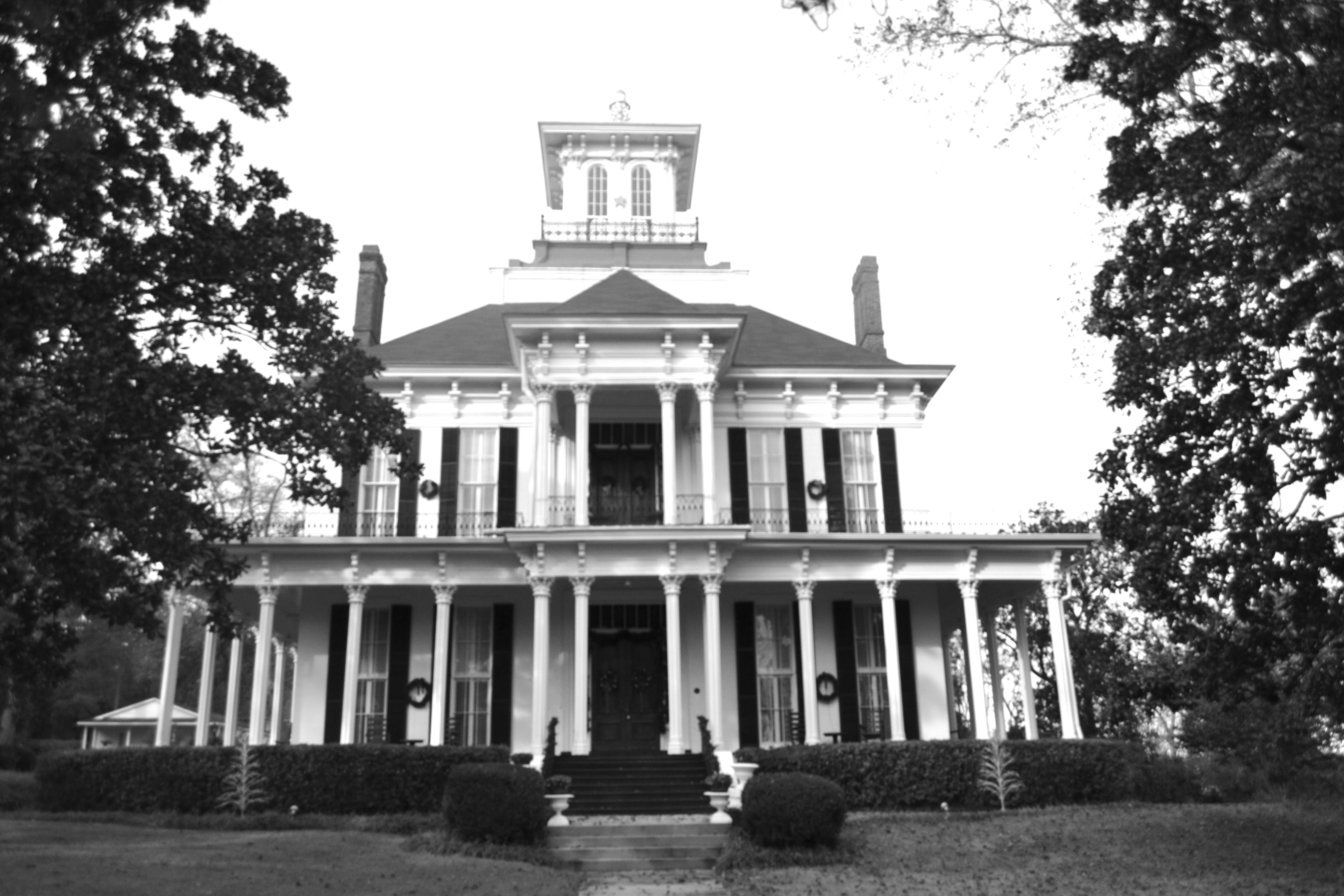
Kendall Manor, 2014, by Lewis O. Powell IV. All rights reserved.

For many years, this grand house served as a bed and breakfast with a unique staff member. A spectral nursemaid, known as Annie, is apparently on duty and has often been spotted by the children in the house. One family member told of seeing the specter wearing a black dress and starched white apron scowling at him as he and his siblings raced their tricycles on the home’s veranda. It seems Kendall Manor has returned to being a quiet, private residence in recent years, so please respect the home’s occupants.

Sources

  • Floyd, W. Warner. National Register of Historic Place Nomination form for Kendall Hall. 24 August 1971.
  • Mead, Robin. Haunted Hotels: A Guide to American and Canadian Inns and Their Ghosts. Nashville, TN: Rutledge Hill Press, 1995.

Bibb County

Brierfield Ironworks Historic State Park
240 Furnace Parkway
Brierfield

Founded by a group of local businessmen in 1862—as the Civil War was ramping up—the Brierfield Ironworks quickly attracted the attention of the Confederate Government which was interested in the high-quality pig iron produced here. During the war, the ironworks saw the production of about 1,000 tons of pig iron per year. Later in the war was Union General James H. Wilson swept through central Alabama, destroying targets of military importance, Brierfield was targeted and destroyed. Production resumed here after the war and continued until the ironworks was closed in 1894.
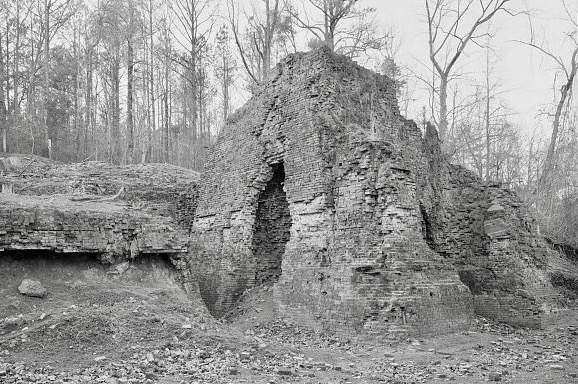
The ruins of the Brierfield Furnace by Jet Lowe. Photo taken for the Historic American Buildings Survey, 1993.

In 1976, the county heritage association turned the ruins into a heritage park. Two years later, the state took over the park, moving several historic structures here including Mulberry Church, which arrived here from its original site near Centreville. Built in 1897, this church is where tradition holds that the daughter of a moonshiner eloped despite her father’s disapproval of her fiancé. At the completion of the couple’s vows, the bride’s father appeared, firing his gun into the church door. The bullet struck both the bride and her new husband who was standing behind her. As a reminder of this tragic incident, the bullet hole remains in the door while the living have encountered the specter of the young bride at the site of her death.

Sources

Blount County

Old Garner Hotel
111 1st Avenue East
Oneonta

Built in 1915, the John Garner Hotel was built to accommodate guests arriving in town via the train depot located nearby. The building now serves as home to several businesses that occupy the first floor of this three-story building. Southern Paranormal Investigators spent an evening in the building in 2007 and were awed by the “findings and activity detected” within. Occupants had reported the smell of brewing coffee and tobacco smoke while the sounds of furniture moving and papers shuffling have also been heard here when the building was empty. The paranormal investigation team captured a few EVPs and photographic anomalies leading them to conclude that possibly three different spirits are present in this old hotel.

Sources

  • Blount County Heritage Book Committee. Heritage of Blount County, Alabama. Clanton, AL: Heritage Publishing Consultants, 1999.
  • Southern Paranormal Researchers. Paranormal Investigation Report on The Lobby. Accessed 29 November 2012.

Bullock County

Josephine Arts Center
130 North Prairie Street
Union Springs

The old Josephine Hotel is now home to the Josephine Arts Center. Built in 1880, the Josephine Hotel was a social center here in rural Southeast Alabama. Phantom odors of cigar and cigarette smoke are often encountered in this building along with the sounds of revelry from former patrons.

A 2012 investigation revealed some paranormal activity. At one point during the probe, members of the paranormal team witnessed an orb of light moving through a hallway which they captured on video.

Sources

  • Alabama Paranormal Research Team. Paranormal Investigation Report for the Bullock County Courthouse. Accessed 29 November 2012.
  • Higdon, David and Brett J. Talley. Haunted Alabama Black Belt. Charleston, SC: History Press, 2013.
  • Tour of Union Springs.” Union Springs, Alabama. Accessed 25 January 2013.

Butler County

Consolation Primitive Baptist Church and Cemetery
Oakey Streak Road
Red Level

On the morning of February 16, 2015, this historic church was lost to a fire. Local officials suspect that the church’s status as a haunted place led vandals to torch the small, rural building. Legend speaks of this place being the scene of a panoply of paranormal activity including demon dogs, or hellhounds; a banshee; and apparitions.

Organized in the 19th century, the church has not had an active congregation for many years, though a few locals maintained the building and cemetery and defended them against the rising tide of vandalism that had begun to overtake it. Teens and amateur “ghost hunters” had damaged the building by burning candles inside, carving their names on the structure, breaking windows, and even painting a pentagram on the floor of the lonely church. The Andalusia Star-News reports that 13 people were arrested in 2007 for burglary and criminal mischief after the police investigated reported illegal activity here.

Local investigator and author Shawn Sellers visited the church with his team in 2013. Upon arriving, two carloads of teens also appeared at the site. The group found the church standing open and showing signs of vandalism. One group of teens brought a Ouija board and attempted to make contact with spirits (something I cannot condone or recommend). A short time later, a man with a flashlight accosted the investigators and mysteriously disappeared after they attempted to speak with him.

Legends surrounding the church include the appearance of a banshee who wails as an omen that someone in the church will die. The grounds of the church are supposedly the domain of red-eyed “hellhounds,” as well as Confederate soldiers, two ghostly children, and a haunted outhouse where those who enter may be locked in. In 2012 reporters from The Greenville Advocate investigated the grounds and encountered nothing. In an article about the investigation, reporter Andy Brown suggested that the stories about this location are merely urban legend. Perhaps if there is paranormal activity here, it may have been drawn by irresponsible use of Ouija boards and rituals being performed here by amateurs attempting to summon spirits.

It is unknown if the loss of the church building has affected the spiritual activity here. Visitors should be warned to use extreme caution when visiting this location and to respect the site and the cemetery.

Sources

  • Bell, Jake. “The Church.” Shawn Sellers Blog. 18 January 2013.
  • Brown, Andy. “Butler County church haunted by tall tales.” Greenville Advocate. 5 October 2012.
  • Edgemon, Erin. “Church said to be haunted burns in Alabama.” com. 17 February 2015.
  • “Fire wasn’t first brush with vandalism for historic church.” Andalusia Star-News. 17 February 2015.
  • Higdon, David and Brett J. Talley. Haunted Alabama Black Belt. Charleston, SC: History Press, 2013.
  • Peacock, Lee. “Bucket List Update No. 165: Visit Consolation Church in Butler County.” Dispatches from the LP-OP. 28 July 2014.
  • Rogers, Lindsey. “Haunted Butler County church destroyed by fire.” WSFA. 16 February 2015.

Calhoun County

Boiling Springs Road Bridge
Boiling Springs Road over Choccolocco Creek
(This bridge is permanently closed to traffic)
Oxford

Known locally as “Hell’s Gate Bridge,” local lore related that visitors to this bridge at night could stop in the middle of the bridge, look back over their shoulders and see the fiery gates of Hell. Other lore tells of a young couple who drowned in the creek here. A traditional ritual said that stopping your car in the middle of the bridge and turning o the lights could summon one of the two people who drowned here. A sign of their presence would appear in the form of a wet spot left on the back seat of the car.

This wooden-decked, steel truss bridge was constructed between 1890 and 1930 and closed permanently in 2005. The Oxford Paranormal Society investigated the bridge in January 2007 and encountered an armadillo that was very much alive; no paranormal evidence was captured. When visiting this site, use extreme caution as the bridge is no longer maintained.

Sources

Chambers County

Oakwood Cemetery
1st Street
Lanett

Within this relatively modern cemetery stands a child-sized brick house complete with a front porch and chimney. The grave of Nadine Earles is among the most unique grave sites in the region. When four-year-old Nadine became ill with diphtheria just before Christmas in 1933, the child’s father had been building a playhouse as a gift for his daughter. After the child passed away on December 18th, the decision was made to erect the playhouse on the little girl’s grave. The playhouse has been well maintained ever since and remains filled with toys.

While not officially haunted, a recent interview with a friend revealed that she had a hard time photographing the grave when she visited. Using a smartphone camera, my friend’s attempts to photograph the grave resulted in black photographs. However, once she stepped away from the grave, the camera functioned properly.

Sources

  • Interview with Celeste Powell, LaGrange, GA. 23 July 2015.
  • Kazek, Kelly. “Alabama child’s playhouse mausoleum one of nation’s rare ‘dollhouse’ graves.” com. 5 June 2014.
  • Rouse, Kelley. “Little Nadine’s Grave.” Chattahoochee Heritage Project. 16 December 2011.
 

Cherokee County

Lost Regiment Legend
Lookout Mountain
Near the Blanche community

Extending from Chattanooga, Tennessee, through the northwest corner of Georgia, and into Alabama, the ridge of Lookout Mountain has played a prominent role in the history of the region. During the Civil War when its flanks were crawling with military activity, the mountain bore witness to several major battles and many skirmishes as the Union army attempted to extend its reach into the Deep South.

During this dark time, legend speaks of a group of Union soldiers getting lost in the mountain wilderness after a skirmish near Adamsburg, in DeKalb County. After retreating, the soldiers attempted to survive in the dangerous terrain. Fearful locals and enemy soldiers picked off a few of the men while others did not survive the harsh mountainous conditions. The last of these survivors was seen near the Blanche community in Cherokee County. Even decades after the disappearance of these soldiers, tales still circulate of sightings of the “Lost Regiment.” Others have discovered bootprints in the snow that suddenly stop, as if the men have vanished into thin air.

Sources

  • Hillhouse, Larry. Ghosts of Lookout Mountain. Wever, IA: Quixote Press, 2009.
  • Youngblood, Beth. Haunted Northwest Georgia. Atglen, PA: Schiffer, 2016.

Street Guide to the Phantoms of the French Quarter—Royal Street

This article is part of my series, Street Guide to the Phantoms of the French Quarter, which looks at the haunted places of this neighborhood in a street by street basis. Please see the series main page for an introduction to the French Quarter and links to other streets.

Royal Street

Hotel Monteleone
214 Royal Street

This imposing hotel is the tallest building in the French Quarter and, at 600 rooms, among the largest. This building is a physical, literary, and paranormal landmark within the Quarter. When a lowly Sicilian cobbler, Antonio Monteleone, purchased a hotel in 1886, he probably did not imagine that it would be the beginning of a classic American rags-to-riches story. His hard work paid off and he acquired neighboring buildings and expanded his hotel. Since it opened its doors the hotel has attracted celebrities including numerous well-known writers who have mentioned the hotel in their works.

Hotel Monteleone, 2009 by Bart Everson, courtesy of Wikipedia.

One of the more well-known features of the Monteleone is the Carousel Bar featuring an actual carousel that was assembled in the bar in 1949 and rotates slowly as patrons enjoy craft cocktails. While patrons revolve at the bar, spirits revolve around patrons and staff throughout the hotel. Spirits here range from a trusty engineer to a little boy who supposedly died of a fever while his parents were out. Others include the spirits of a few people who committed suicide by jumping from the roof. The International Society of Paranormal Research investigated the hotel in 2003 and concluded that there are 12 individual entities patrolling the halls and corridors of this hotel.

Sources

  • Caskey, James. The Haunted History of New Orleans: Ghosts of the French Quarter. Savannah, GA: Manta Ray Books, 2013.
  • History.” Hotel Monteleone. Accessed 7 June 2016.
  • Hudson, Shaney. “The Big Easy’s his haunt.” The Age (Melbourne, Australia). 27 February 2012.
  • Mroch, Courtney. “Why Hotel Monteleone’s Haunted 14th Floor Isn’t What it Seems.” Haunt Jaunts. 25 March 2011.

Cafe Beignet
334 Royal Street

The spirit of a Native American woman is occasionally seen strolling through this restaurant that occupies an old carriage house. Most likely she remains here from the time prior to the city’s existence. She is most often seen towards closing time.

Sources

  • Dwyer, Jeff. Ghost Hunters Guide to New Orleans. Gretna, LA: Pelican Publishing, 2007.
  • Muro, Maria. “Haunted Eats.” New Orleans Living Magazine. 9 October 2012.

Louisiana Supreme Court Building
400 Royal Street

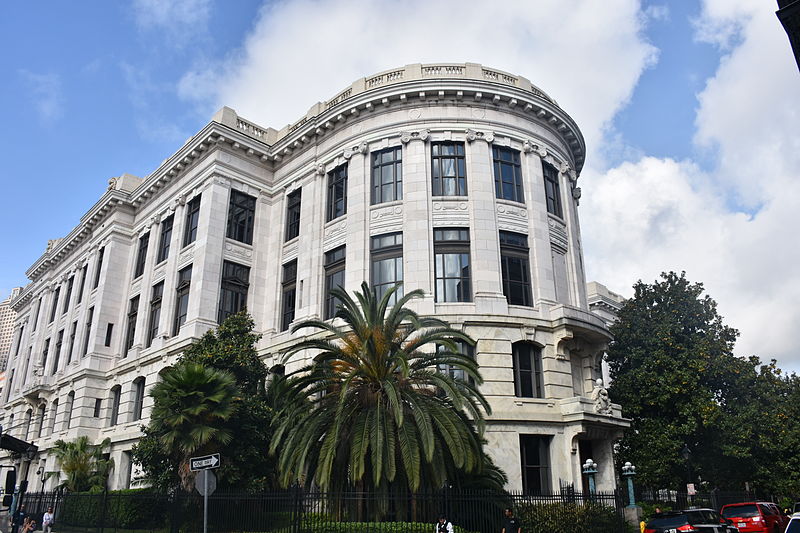
This monstrous white marble-clad building caused much controversy when the site was cleared starting in 1903. This block was originally a collection of 19th century buildings bisected by Exchange Alley which was lined with offices for architects, engineers, politicians and lawyers. The destruction that took place here contributed to the rise of preservation policies throughout the city. Upon completion of this building in 1910, the Louisiana Supreme Court, state Attorney General, and other courts moved in, though by 1934, the building was deemed inadequate. After years of deferred maintenance, the Supreme Court moved out in 1958. The building saw renovations starting in the 1990s and reopened in 2004 with the state Supreme Court returning to the building.

Rumors of the building being haunted began to arise during the building’s renovations. Author and researcher Victor C. Klein interviewed a construction supervisor and several workers and contractors who told similar tales of tools and equipment disappearing in the building. A number of them also encountered “a well dressed, middle age, white gentleman” whom they found looking out a window in the upper stories of the building. When confronted, the odd gentleman would disappear.

Louisiana Supreme Court Building, 2015 by MusikAnimal, courtesy of Wikipedia.

Klein continues by noting that guests of the Omni Royal Orleans Hotel on nearby St. Louis Street would report this man to the front desk staring intensely into their rooms. According to Klein, this was so frequent that the front desk had a scripted response to these calls, though they didn’t inform the guests that this gentleman is probably a ghost.

Jeff Dwyer remarks on several other spirits within the building including a pair of shooting victims who were supposedly gunned down in a courtroom during a Mafia trial in the 1930s and a panhandler who is sometimes seen just outside the building on Royal Street.

Sources

Brennan’s
417 Royal Street

One of the more well-known and respected restaurants in the city, Brennan’s has made its home in this historic building since it opened in 1946. This 1795 structure once housed the Bank of Louisiana. Later on in the 19th century, Paul Morphy, one of the most famous chess players in the world lived and died here. He may be the apparition that is sometimes seen in the dining room.

Sources

  • Dwyer, Jeff. Ghost Hunters Guide to New Orleans. Gretna, LA: Pelican Publishing, 2007.
  • Taylor, Troy. Haunted New Orleans. Charleston, SC: History Press, 2010.
Brennan’s, 2015 by Infrogmation, courtesy of Wikipedia.

Court of the Two Sisters
613 Royal Street

One of the more romantic of New Orleans’ great restaurants, the Court of the Two Sisters possesses a number of legends including one about the gates through which patrons pass. The wrought iron gates are supposed to have been made in Spain where they were blessed by Queen Isabella with a charm that all those who touch them as they pass will be charmed. The restaurant occupies an 1832 building that housed a shop owned by two sisters, Bertha and Emma Camours. Apparently inseparable, the sisters operated a notions shop in this building for many years and, not being able to live without the other, died in 1944 two months apart.

The courtyard of this grand restaurant has a wishing well known as the “Devil’s Wishing Well” as it may have witnessed and been charmed by rites practiced here by Marie Laveau, the city’s great 19th century Queen of Voodoo. Until it was toppled by Hurricane Betsy in 1965, a willow tree grew here where pirate Jean Lafitte may have dueled with and killed three men. Those three men may be among the specters flitting throughout this courtyard. Enjoy one of the famous Jazz Brunches served here daily and be sure to pay homage to the sisters who may still be holding court.

Sources

  • Dwyer, Jeff. Ghost Hunters Guide to New Orleans. Gretna, LA: Pelican Publishing, 2007.
  • Our History.” Court of the Two Sisters. Accessed 8 June 2016.

LaBranch Building
700 Royal Street

The delicate lacy ironwork of this large home hides one of crueler ghost stories in this city. In the early history of the city a system of plaçage was practiced by many of the wealthy white planters. This system, found in Spanish and French colonies, allowed these wealthy men to take on mistresses, often free women of color, whom they would support. Certainly such arrangements caused conflicts within the legal marriages of these men. Such a conflict is at the heart of the story here.

Upon the death Jean Baptiste LaBranche, who owned this home at one time, his wife, Marie, was able to find out the name of his mistress. She sent an invitation to the young woman inviting her to tea. When the unsuspecting mistress arrived, instead of exchanging pleasantries over tea, Marie LaBranche had the woman bound and chained to a wall in the attic where she was left to die a slow death from starvation. While this is a marvelously gory legend, it is clouded with a good deal of doubt. Occupants of this building have reported paranormal activity, however. Cold spots and feelings of panic have overtaken some working on the third floor, where the poor mistress supposedly met her untimely death.

Sources

  • Dwyer, Jeff. Ghost Hunters Guide to New Orleans. Gretna, LA: Pelican Publishing, 2007.
  • Taylor, Troy. Haunted New Orleans. Charleston, SC: History Press, 2010.

St. Anthony’s Garden
Behind St. Louis Cathedral across from Orleans Street

This meditative garden has existed here behind the cathedral since the establishment of the church. Located between two haunted alleys: Pere Antoine’s and Pirate’s Alleys, the garden is named in memory of Pere Antoine or Antonio de Sedella, whose spirit may haunt the alley named for him as well as St. Louis Cathedral. According to Jeff Dwyer, this garden was a popular place for duels in the mid-18th century. Some sensitives have detected wafts of smoke from those events.

Sources

  • Dwyer, Jeff. Ghost Hunters Guide to New Orleans. Gretna, LA: Pelican Publishing, 2007.

734 Royal Street

Just like the story of the LaBranche Building, the story from this classic New Orleans town house involves a mistress, in this case she was an octoroon (she was 1/8th black) and her name was Julie. She was kept by a wealthy young man who was officially unattached in a well-furnished apartment here. Despite her pleas to her lover to marry her, he could not do so without losing his social standing and perhaps his fortune with it. Carelessly, in order to appease her frequent requests for marriage, the young man said he would marry Julie if she spent the coldest night in December nude on the roof. On the coldest night in December she undressed and crawled onto the roof. Her lover discovered her lithe corpse frozen not long after.

Since that time, Julie’s nude form has been seen on the roof of this building on the coldest night in December. During the remainder of the year Julie lingers in the warmth of the building’s interior. The Bottom of the Cup Tearoom once occupied the ground floor of this building (it moved to 327 Chartres Street) where the shop offered tea and psychic readings. Many of the psychics working here noted Julie’s shade and they believe she may have moved with the shop to Chartres.

Sources

  • Dwyer, Jeff. Ghost Hunters Guide to New Orleans. Gretna, LA: Pelican Publishing, 2007.
  • Smith, Katheine. Journey Into Darkness: Ghosts and Vampires of New Orleans. New Orleans, LA: De Simonin Publications, 1998.

Cornstalk Hotel
915 Royal Street

This intimate boutique hotel occupies a mansion with a unique cast-iron fence featuring stalks of corn. Legend relates that the fence was commissioned to comfort the Iowa-born wife of a former resident by reminding her of the cornfields of home. Once the home of Judge François Xavier Martin, he may be one the spirits that still stalks the halls with his footsteps, rattling door knobs. The sounds of children have also been heard here.

Sources

  • Brown, Alan. The Haunted South. Charleston, SC: History Press, 2014.
  • Dwyer, Jeff. Ghost Hunters Guide to New Orleans. Gretna, LA: Pelican Publishing, 2007.
Cornstalk Hotel by Infrogmation, courtesy of Wikipedia.

Andrew Jackson Hotel
917 Royal Street

A tragedy on this site more than 200 years ago may still continue to resonate today. A boarding school or orphanage (sources differ) stood here that was destroyed by fire. Five young boys lost their lives and they still play throughout the courtyard and hallways of this hotel. Sheila Turnage notes the experience of a night manager who was diligently working at his desk when he realized he was being watched. Looking up he saw the heads of a group of children trying to peer above the top of his desk. The children vanished moments later.

Sources

  • Asfar, Dan. Ghost Stories of Louisiana. Auburn, WA: Lone Pine Publishing, 2007.
  • Dwyer, Jeff. Ghost Hunters Guide to New Orleans. Gretna, LA: Pelican Publishing, 2007.
  • Taylor, Troy. Haunted New Orleans. Charleston, SC: History Press, 2010.
  • Turnage, Sheila. Haunted Inns of the Southeast. Winston-Salem, NC: John F. Blair, 2001.

Starling Magikal Occult Shop
1022 Royal Street

If you care to test drive any of the ghost hunting equipment available for sale here, the Starling Magikal Occult Shop offers its own ghosts. In a 2015 article, the shop’s co-owner Claudia Williams noted that staff and patrons of the shop hear disembodied voices and feel the touch of invisible fingers. Objects occasionally move around on their own accord as well.

Sources

  • Lopez, Kenny. “Want to hunt ghosts? Here are the tools you’ll need…” 26 October 2015.

LaLaurie House
1140 Royal Street, private

Of the myriad haunted houses throughout the South, few have captured the public’s attention more than the hulking LaLaurie Mansion that looms over the intersection of Royal and Nicholls Streets. While the structure itself is significant historically and architecturally, it’s the legends of the atrocities that took place here and the ghosts from those events that draw crowds of tourists. Though the house is not open to the public, the legend still draws people here.

In 1831 this property was purchased by Delphine LaLaurie, the wife of Dr. Leonard Louis LaLaurie. Madame LaLaurie had been married and widowed twice before her marriage to the good doctor and she had five children by her previous husbands. After construction of the mansion in 1832, LaLaurie took up residence and became a central pillar to New Orleans society.

LaLaurie Mansion, 2011 by Reading Tom, courtesy of Wikipedia.

The legend goes back to a fateful report of a fire in the kitchen here April 10, 1834. Firefighters arrived to discover the kitchen in flames and an elderly slave cook chained to the stove. She admitted to setting the fire as a suicide attempt to prevent her being sent to attic from which she said no one ever escaped. A mob that had gathered broke their way into the slave quarters and soon discovered the mutilated remains of “seven slaves, more or less horribly mutilated … suspended by the neck, with their limbs apparently stretched and torn from one extremity to the other” as the New Orleans Bee described the events the next day. While the mob remained to destroy the house and grounds in anger, Madame LaLaurie and her family fled the city. No one ever faced justice for the cruelties inflicted on the slaves here. While this is the most commonly related legend about the house, there is quite a bit of controversy.

As the story has captured the imagination of many, it has found its way into books dating back to the late 19th century, film, television and even video games. Most recently, the legend of Madame LaLaurie was woven into the plethora of local legends in the story arc of American Horror Story: Coven. Portrayed by Kathy Bates, Madame LaLaurie is a simpering racist weighted down with a curse of immortality placed upon her by the immortal Voodoo Queen, Marie Laveau. Researchers looking into the legend in recent decades have revealed that Delphine LaLaurie’s reputation may have been targeted as part of a smear campaign.

Do the spirits of slaves still stalk this lovely mansion? Legends relate that former residents here encountered some horrific spirits, though there are few recent stories. Writer and psychic Kala Ambrose tried to commune with the spirits while standing outside of the house recently. While she stood there a number of curious tourists inquired if this was the famous LaLaurie House. A short time later when she placed her hand on the wall of the house a passing ghost tour group took photographs of her. She didn’t contact anything out of the ordinary, perhaps the house is now just haunted by tourists.

Sources

  • Ambrose, Kala. Spirits of New Orleans. Cincinnati, OH: Clerisy Press, 2012.
  • Caskey, James. The Haunted History of New Orleans: Ghosts of the French Quarter. Savannah, GA: Manta Ray Books, 2013.
  • Delphine LaLaurie. Wikipedia, the Free Encyclopedia. Accessed 10 June 2016.

Resting high on that mountain—Helen’s Bridge, Asheville

Helen’s Bridge
Over College Street between
Windswept Drive and Beaucatcher Road
Asheville, North Carolina

I know your life on earth was troubled
And only you could know the pain.
You weren’t afraid to face the Devil
You were no stranger to the rain.
Go rest high on that mountain…
 –“Go rest high on that mountain,” Vince Gill (1995)

The city drops away quickly as you drive up Beaucatcher Mountain from downtown Asheville. College Street—a main thoroughfare through the heart of downtown, forming one side of Pack Square—suddenly becomes a mountain road. As it dizzily traverses the side of the mountain, the road enters a gap spanned by a lonely, primeval bridge. Something about the patina of the stone and the flora growing around the bridge, make it appear to be a natural part of the landscape, as if it’s always been there. In truth, it has been here for a little more than a hundred years, enough time for the bridge to settle into the landscape and become ensconced in legend and lore. You have arrived at Helen’s Bridge.

Helen’s Bridge, October 2012, by Lewis O. Powell IV. All rights reserved.

The temperature here seems chillier; perhaps it’s the geography or perhaps it’s the wandering spirit of Helen; it’s hard to tell. While many are drawn to the bridge’s stark beauty it is the legend and lore that draws others. The legend speaks of a woman named Helen who lived near the bridge with her beloved daughter. After losing her daughter in a fire, the distraught Helen hung herself from the bridge. Some versions associate Helen with the nearby estate of Zealandia, where she was supposed to have been a mistress to one of the estate’s owners, and after becoming pregnant, hung herself in anguish. Researchers have found nothing to document the existence of an actual Helen, although author Alan Brown relates that some of the owners of Zealandia encountered the apparition of a woman on the stairs that they identified as Helen.

Teens have taken to trying to summon Helen by visiting the bridge at night and calling her name three times. It is reported that she will sometimes appear as a light or as an apparition. Others have reported that this ritual will sometimes cause car problems, ranging from odd mechanical issues to dead batteries. Florida author, Jamie Roush Pearce experienced problems with her car’s automatic locks after visiting the bridge and attempting to summon the sad spirit. Pearce briefly glimpsed a figure near her car and discovered the problem with the locks after leaving the site. After dealing with the issue for a week, she returned and asked Helen to leave her car alone. The lock problem has not reoccurred.

The bridge is immortalized in Thomas Wolfe’s 1929 novel, Look Homeward, Angel, when the main character, Eugene Gant walks with his girlfriend up Beaucatcher Mountain:

They turned from the railing, with recovered wind, and walked through the gap, under Philip Roseberry’s great arched bridge… As they went under the shadow of the bridge Eugene lifted his head and shouted. His voice bounded against the arch like a stone. They passed under and stood on the other side of the gap, looking from the road’s edge down into the cove.

Though Wolfe attempted to draw a thin veil over his hometown by renaming it Altamont, it was clear to the Ashevillians that he was depicting them in his novel. So much so that he is reported to have received death threats and did not return to the city for several years after the novel’s publication.

This rustic stone bridge was constructed as a carriageway for the Zealandia Estate in 1909. It was designed by R. S. Smith, who worked as an architect on the building of the nearby Biltmore Estate and was obviously fluent in the languages of Gothic, Tudor, and Elizabethan architecture.  In 1889, the same year that George Vanderbilt began construction on his magnificent manse that he would call Biltmore, John Evans Brown, who had spent his formative years in Asheville, began to build his estate here on Beaucatcher Mountain. Brown had left the city in 1849 to pursue his dreams of striking gold in the Golden West. When those dreams failed to pan out (pun intended), Brown set out for the green mountains of New Zealand where he found fortune in sheep and politics. He returned to his hometown with fortune in hand in 1888 and began construction on his estate.

Helen’s Bridge, December 2015, by Lewis O. Powell IV. All rights reserved.

Brown enjoyed his stately, mountainside view of Asheville for a few scant years before his death in 1895. The estate was purchased by Australian native Philip S. Henry in 1903 and this intellectual, art collector, and diplomat set about fashioning the estate into a showplace in this aristocratic resort community. Hiring architect R. S. Smith, Henry began to transform the lofty estate into a European-styled castle in the Tudor style. The carriageway with its notable bridge was constructed during this period. In 1924, Henry opened his estate for the public to see his art collection. Upon Henry’s death in 1933, the estate passed to his daughters and remained in the family until 1961.

When construction began on the nearby Interstate 240 corridor, plans originally called for slicing through part of Beaucatcher Mountain. Local preservationists quickly formed the Beaucatcher Mountain Defense Association to argue for the mountain’s preservation and even more specifically for the protection of Zealandia. A tunnel through the mountain was proposed instead. Though the state department of transportation tore down Philip Henry’s museum in 1976, the estate was named to the National Register of Historic Place in 1977 and was left alone. During the tunneling blasting supports were added to protect the bridge. In 1998 with the supports still in place and stones falling from the looming structure, the city considered demolishing the structure. Local history buffs and preservationists won the fight and the supports were carefully removed. The bridge was structurally sound and it has recently been bought by the city to use as part of a proposed greenway.

Helen’s Bridge, December 2015, by Lewis O. Powell IV. All rights reserved.

If you choose to visit Helen, be cautious as the area does have some traffic. There is a dirt turnout off Beaucatcher Road a few yards past the bridge ideal for parking. The top of the bridge is still closed off and Zealandia is private, so please confine your ramblings to the public thoroughfare underneath the bridge. Summoning spirits is never encouraged, especially if you wish to avoid car problems and please be kind to Helen, she’s been through a lot.

Helen’s Bridge, October 2012, by Lewis O. Powell IV. All rights reserved.

Sources

  • Bishir, Catherine W., Michael T. Southern, & Jennifer F. Martin. A Guide to the  Historic Architecture of Western North Carolina. Chapel Hill, NC: University of North Carolina Press, 1999.
  • Bordsen, John. “Find the most haunted place in these Carolina towns.” Dispatch-Argus. 31 October 2010.
  • Brendel, Susanne & Bettu Betz. National Register of Historic Places nomination form for Zealandia. 12 January 1977.
  • Brown, Alan. Stories from the Haunted South. Jackson, MS: University Press of Mississippi, 2004.
  • Burgess, Joel. “City acquires historic bridge.” Asheville Citizen-Times. 25 November 2009.
  • “Death of Col. J. Evans Brown.” Asheville Citizen-Times. 9 July 1895.
  • Interstate 240 (North Carolina). Wikipedia, the Free Encyclopedia. Accessed 30 December 2015.
  • “Saving Helen’s Bridge.” Asheville Community News. 1999.
  • Pearce, Jamie Roush. Historic Haunts of the South. Jamie Roush Pearce, 2013.
  • Tomlin, Robyn. “Zealandia Bridge Repairs Completed; Fixing historic bridge cost much less than originally forecast.” Asheville Citizen-Times. 1 June 1999.
  • Warren, Joshua. Haunted Asheville. Johnson City, TN: Overmountain Press, 1996.

A Southern Feast of All Souls—Feast Wrap Up

The feast is done, the table has been cleared, the guests have left, the spirits have quietly returned to their rest, and the veil between our world and the next has been restored. This season has been great for articles about the haunted South so, I’m wrapping up this Southern Feast of All Souls with a look at some of the new (to me) haunted places that were covered in the news media.

Colby Building
191 North Foster Street
Dothan, Alabama

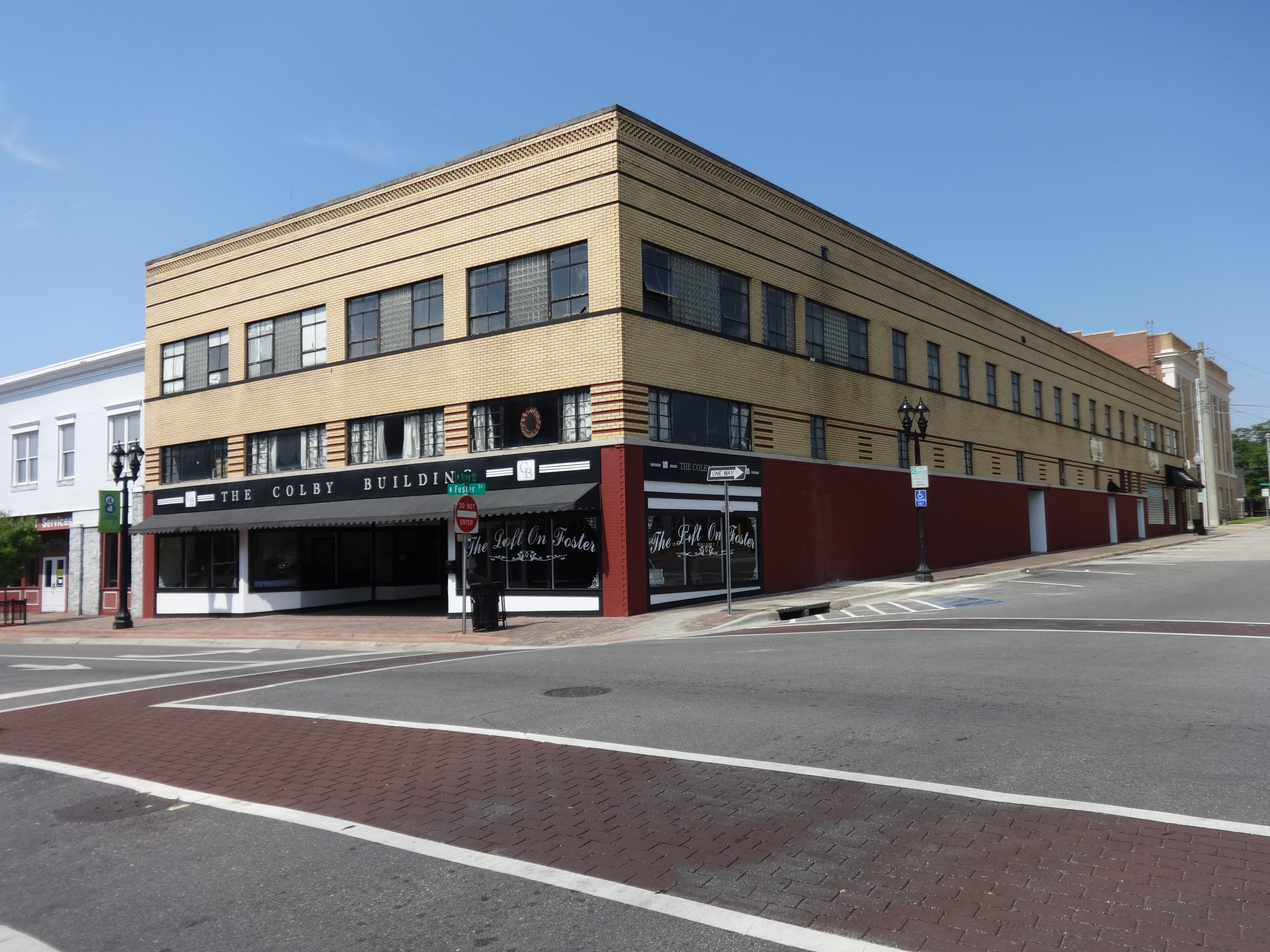
An investigator from Circle City Ghost Hunters said of the Colby Building in downtown Dothan, “Somebody once upon a time put their heart and soul in the building.” Perhaps that soul is still here. According to an October 29th article in the Dothan Eagle, this group investigated the building after numerous reports of paranormal activity in the building surfaced.

Colby Building Dothan Alabama ghosts haunted
The Colby Building, 2015, by Michael Rivera. Courtesy of Wikipedia.

While working on my recent book about haunted Alabama, I had a heck of a time trying to find anything on the Dothan area. As the seventh largest city in the state by population, there should be more information on hauntings in the area, sadly there was nothing reliable. Therefore, I was rather excited to see this article appear. The Colby Building was built in 1938 as a J.C. Penney’s Department Store and has since hosted a number of businesses. The building was redeveloped by a private/public partnership in 2008 and currently houses two restaurants, Colby’s on North Foster Street and Bella’s in the back of the building on West Troy Street.

Employees and guests have had experiences in the building including things moving on their own and seeing figures. Others have had their names called and the employees have nicknamed the spirit “’Rachel’ because all kinds of crazy stuff happened.” (I’m presuming this a reference to the television show Friends.) The owner of the restaurants was delighted to host an investigation when Circle City Ghost Hunters inquired about investigating there. The article notes that the activity is explained by a story involving the death of a young woman on the building’s third floor in the 1950s.

N.B. As of 2019, it appears that Colby’s has closed, though Bella’s remains open. 

Sources

Suntan Arts Center (Don Vicente Building)
3300 Gulf Boulevard
St. Pete Beach, Florida

Adjoining the Don CeSar Beach Resort, a palatial pink Jazz Age dream, is the Don Vicente Building which was built just prior to the grand hotel to serve as offices during the construction. Over the years, the building has seen many incarnations serving as offices for the hotel, a bank, and even a firehouse. The building has housed the 50 year old Suntan Arts Center for many years. The center provides classes and support for the local arts community.

The center hosted a ghost tour this year highlighting the paranormal activity that has been experienced in the building. For many years people here have encountered the spirit of a man in a white suit. As this building did serve as an office for Thomas Rowe, the hotel’s founder, this spirit has been identified as him. During an investigation of the building in 2013 by SPIRITS of St. Petersburg, the group got a response when Rowe’s name was mentioned. Besides Mr. Rowe’s white-suited spirit there may be other spirits here as well.

Sources

  • “Self-guided ghost tour departs from Suntan Arts Center.” TBN Weekly. 28 September 2015.
  • SPIRITS of St. Petersburg Paranormal Investigation Group. “Report for Suntan Arts Center.” Accessed 8 November 2015.

Porter Hall
Mercer University
Macon, Georgia

Porter Hall, a residence hall on the campus of Mercer University, one of the oldest private universities in Georgia, possibly has something mysterious residing on its fourth floor. One student reported that she “heard things like chairs being dragged across the pine, like a hard pine floor.” The fourth floor is not accessible to students and used for storage. Reportedly, only the dorm’s resident advisor has access. When students complain of noise from that floor, the resident advisor will check it out and find the floor empty of living beings.

Sources

Westover Terrace (private)
905 West Main Street
Richmond, Kentucky

When the current owners of Westover Terrace began restoration on the house after they acquired it in 1995, the house was severely dilapidated and vandals had defaced parts of the interior. A pentagram had been painted upstairs, walls and windows had been smashed, and the mantelpieces and radiators had been stolen. Local kids occasionally prowled the creepy house in search of ghosts in this former funeral home. The new owners did not realize they acquired ghosts with this magnificent 1881 home.

As work progressed, the owners and contractors began to have odd experiences including loud crashes and bangs that sounded like sledge hammers being used and heavy furniture being moved. The voice of a little girl was heard asking workers what they were doing and warning them on occasion. While doing repair work on a staircase, one particular board was removed several times. After the owner used a hydraulic nail gun to attach the it, the board disappeared entirely. When the owners finally moved into the home in 2005, the activity seemed to quiet down. Evidently, the ghosts are pleased with the renovations. This is a private home, please respect the owners’ privacy and observe the house from the street.

Sources

Green Light Bridge
Green Light Road
Winnsboro, Louisiana

An article about Louisiana hauntings from the Shreveport Times highlighted this very interesting location near Winnsboro in Franklin Parish in the northeast portion of the state. The origin of the road’s odd name has been lost to history, but is possibly related to the paranormal green light that is supposed to emanate from underneath the bridge and along the banks of the stream here. The article does not name the creek, but after looking at Google maps, it seems that the road only crosses one stream, Turkey Creek, in its course from LA-15 to its termination at Dummy Line Road.

The possible reasons for the odd green light are varied. A church once existed on one side of the creek and sometime in the mid-20th century a man was hung from a tree in front of the church. A fatal car accident that occurred here may be related to the activity as well. A woman lost her life when her car crashed into a tree. There is also speculation that the woman was frightened by the mysterious green light.

Sources

  • “’Haunted’ Louisiana: Tales of Terror from Shreveport and beyond.” Shreveport Times. 30 September 2015.

Glen Burnie Regional Library
1010 Eastway
Glen Burnie, Maryland

Librarians at the Glen Burnie Regional Library have been spooked by something within this 1969 library for many years. Odd sounds have been heard by staff when they have closed the building at night while books have been pushed to the floor by unseen hands. Staff called in the Maryland Ghost Trackers to investigate. During the investigation, the investigators made contact with a number of male spirits who are apparently hanging around and enjoy making a bit of trouble now and then.

Sources

Ole Tavern on George Street
416 George Street
Jackson, Mississippi

There are several ghosts still patronizing the Ole Tavern on George Street according to a Halloween article from Jackson, Mississippi news station, WAPT. The article highlights a recent investigation of this establishment by the Mississippi Paranormal Research Institute. Employees of the popular eatery have had several eerie encounters with a few possible spirits here.

One employee saw a woman sitting at the bar one morning as he opened up. He had just removed the padlock from the door when he saw the woman. Realizing that no one was in the building, the employee returned to his car until someone else arrived. This spirit is believed to be the spirit of a prostitute who once worked in the building and committed suicide here in the 1970s. The investigation produced evidence that this woman may remain in the building with some other spirits.

Sources

  • “Ghost hunters seek answers from ‘Bitter Hooker.’” 31 October 2015.

Apparitions of Atlanta

N.B. Last Thursday, I did a presentation on Atlanta ghosts for the Atlanta History Center’s event, Party with the Past. The presentation began with the 1908 New York Times story of a ghost in the governor’s mansion. This has since been broken out into its own article here.

Atlanta doesn’t have a very good record of preserving its historic environments. Historic preservation not only preserves the historic fabric of a location, but the spiritual fabric as well. That can most certainly explain cities such as Savannah, New Orleans, Charleston, SC and St. Augustine—cities known for their ghosts.

Disturbances in the historic fabric of a location can also uncover spirits. This is evident throughout the Atlanta area as the sacred ground where many gave their lives during the Civil War is developed. One of the better documented occurrences of this phenomenon took place on a development called Kolb Creek Farm in Marietta, just north of here.

Valentine Kolb House, 2011, Photo by Lewis O. Powell IV, all rights reserved.

This house and a small family cemetery on Powder Springs Road in Marietta are all that remain of the Valentine Kolb farm where a minor battle was fought June 22, 1864, a battle leading up to the vicious Battle of Kennesaw Mountain which would be fought a few days later.

Behind this house, the farm fields have been developed into subdivisions. A couple, James and Katherine Tatum, purchased a home in the neighborhood in 1986. After a quiet first year in the house, the couple began to experience unexplained activity. The television show Unsolved Mysteries publicized their story and they were interviewed by Beth Scott and Michael Norman, interviews that were included in their 2004 book, Haunted America.

The first encounter occurred early one morning. “My husband and I had gotten up to go to the bathroom at the same time, about 2:30 AM. Our bedroom is upstairs. My husband used the bedroom bath and I went into the hall bath. The bathroom door was open. I saw a man walking down the hall in front of the open bathroom door. I assumed it was my husband looking for me since I was not in bed.”

After calling out to her husband with no response, Mrs. Tatum returned to the bedroom where she found her husband and asked if he’d been in the hall. He had not and he was disturbed by the idea that someone else might be in the out. Climbing out of bed, he retrieved his gun and searched the house to no avail, no one else was there.

Mrs. Tatum realized that the figure she had seen was wearing a hat and a coat. “I came to realize that when the man walked past me there had been no sound, as you would normally hear whenever someone is walking down the hall.”

For the Tatums, this would begin a series of odd events including something playing with an electric drill, pocket change on a dresser jingling on its own accord and a small bell ringing by itself.

Sources

  • Battle of Kolb’s Farm. Wikipedia, the Free Encyclopedia. Accessed 28 October 2013.
  • Scott, Beth and Michael Norman. Haunted America. NYC: Tor, 2004.

Apparently, this isn’t the only modern house with spiritual residue possibly left over from the war, homes and businesses throughout the area have activity as well.

Among the multiple stories coming out of the area, one recent story stands out.

On the night of October 8, 2007, a gentleman and his teenage son were driving across one of the many roads that cross the battlefield at Kennesaw Mountain. They spotted something about to cross the road and were amazed to see a horse with a Union cavalry officer upon it appear in their headlights.

“I quickly locked on my brakes as the horse proceeded to come right in front of us,” the anonymous driver told 11 Alive News, an Atlanta news station. The father and son watched in awe as the figure moved across the road and through a fence opposite before fading into the night.

Keep in mind, as you traverse Atlanta’s battlefield, keep on the lookout for ghosts.

Sources

  • Crawley, Paul. “Ghost rider at Kennesaw Mtn.?” 11 Alive News. 1 November 2007.

The Civil War left a heavy, spiritual pall around the city, a pall that has been detected by visitors to Atlanta’s great necropolis, Oakland Cemetery.

[I have covered Oakland in depth here]

[the section that once covered the Ellis Hotel, formerly the Winecoff, has been broken out into its own article.]

Moving on to a happier place on Peachtree in Midtown, we find ourselves at the Fabulous Fox which may possess a handful of “phantoms of the opera.” When this building opened, Christmas Day, 1929, one of the local papers called it “a picturesque and almost disturbing grandeur beyond imagination.” The grandeur, however did not last and the theatre floundered during the Depression. Under threat of demolition in the 1970s, Atlantans banded together to save the theatre and it has since been restored.

Fox Theatre, 2005. Photo by Scott Ehardt, courtesy of Wikipedia.

Some of the mysteries among the minarets include the holy grail of ghost hunting, a full body apparition seen by an investigator. An investigator with the Georgia Ghost Hounds, Denise Roffe (who, incidentally, wrote a book on the ghosts of Charleston, SC), had to use the restroom during an investigation. In the dark she found her way to the ladies restroom and upon entering a stall was shocked to see a young woman. “She was just standing there wearing a long, period dress and a hat.”

Startled, she screamed and other members of the group quickly joined her but the image was gone.

Another popular story involves a man hired to stoke the theatre’s furnaces. He lived down in the basement with a cot and his few, meager possessions. After his death, he has possibly continued to stay in the basement. He is said to like women and when they enter the basement they will, at times, detect a peaceful and relaxing atmosphere while men are sometimes harassed by the spirit.

Sources

  • Fox Theatre (Atlanta, Georgia). Wikipedia, the Free Encyclopedia. Accessed 28 October 2013.
  • Underwood, Corinna. Haunted History: Atlanta and North Georgia. Atglen, PA: Schiffer, 2008.

Just before Peachtree crosses over I-85, visitors to the city may be surprised to see what appears to be a castle looming above the road. Built with granite supplied from Stone Mountain, Rhodes Memorial Hall was constructed in 1904 for local furniture bigwig, Amos Rhodes. After serving as the home of the State Archives the building played a haunted house for a few years in the 1980s and 90s, despite actually being haunted.

Rhodes Hall in an undated photo from the Georgia Trust for Historic Preservation. Courtesy of Wikipedia.

The house was investigated by the Atlantic Paranormal Team from SyFy’s paranormal investigation show, Ghost Hunters. To aid in this endeavor, the show’s producers called in the Real Housewives of Atlanta to perhaps scare up a few ghosts with their attitudes and fashion sense. While some scant evidence was uncovered, Rhodes Hall got to show off its ghostly activity which includes the typical unexplained footsteps, doors opening and closing by themselves and apparitions, though with a sardonic sense of humor that includes a bouquet of dead flowers supposedly being left on the desk of a staff member in the house.

Sources

  • Merwin, Laura. “Ghost Hunters meet Real Housewives of Atlanta and nothing.” com. 2 December 2010.
  • Rhodes Hall. Wikipedia, the Free Encyclopedia. Accessed 28 October 2013.

In terms of Atlanta hauntings, these are just the very tip of the iceberg. While some of these hauntings have been documented, I believe there are many more that should be documented from private homes to office complexes. 

A MARTA train passes by Oakland Cemetery. Photo 2011, by Lewis Powell IV, all rights reserved.

I’d like to leave you with one final story. Ghosts do not just appear in old houses or buildings, but they’re also found in planes, trains and automobiles. Curt Holman in an article a few years ago from Creative Loafing Atlanta relates a story from MARTA, the Metro-Atlanta Rapid Transit Authority which operates a system of trains and buses throughout the city.

Holman relates that a young man riding on a nearly empty train on a winter’s afternoon. The young man was absorbed in the music he was listening to on his headphones and was startled to feel someone sit next to him. Looking at his reflection in the window, the young man saw a man in his 40s with dark hair and wearing a business suit sitting next to him.

Turning to speak to the man he found the seat empty.

Thank you very much and support your local ghosts!

Sources

  • Holman, Curt. “The hauntings of Atlanta.” Creative Loafing Atlanta. 27 October 2011.

Ghosts of Georgetown, South Carolina

N.B. This article was edited and revised 14 July 2019. 

While visiting Charleston a few weeks ago, I took a quick day trip to Georgetown, just up the coast. The drive from Charleston passes numerous roadside stands selling traditional sweetgrass baskets, marshes, and haunted plantations like Hopsewee and Hampton. Driving into Georgetown on US-17, the first glimpse of the city is decidedly industrial. Turning towards town, the view changes quickly to broad, residential streets with sunlight dappled by the moss-laden ancient oaks.

The main street, Front Street, passes through a downtown of lovingly restored old commercial buildings filled with small shops, cafes and restaurants. (Sadly, the southwest side of the 700 block of Main Street was destroyed in a terrible fire in 2013.) Just beyond those buildings, the Sampit River slowly winds its way towards communion with Winyah Bay.

The residential streets beyond are lined with beautifully restored homes and the whole effect of the town is marvelously drowsy and quiet. The town seems lost in an aged and blissful dementia, unaware of time and the rush of the outside world. So many of Georgetown’s stories are just as timeless.

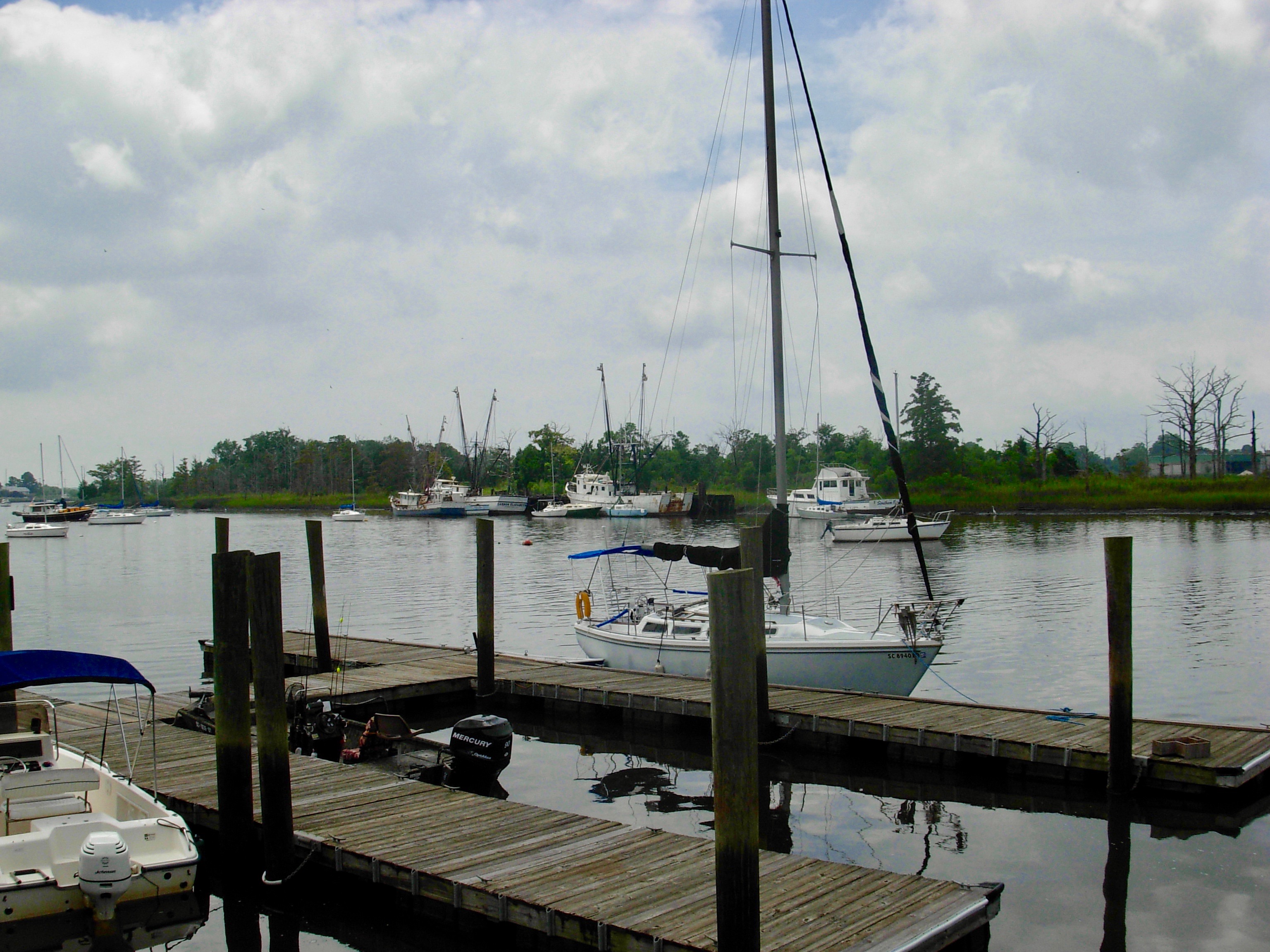
Sampit River Georgetown South Carolina ghosts haunted
Sampit River just off of Front Street. Photo 2011, by Lewis Powell IV, all rights reserved.

Georgetown is recognized as the third oldest city in South Carolina, though this is argued as the Spanish settled the area in the early 16th century, thus making it one of the oldest cities in the New World. Officially, the city was founded by the English in 1721 and served as a wealthy port city and center for agriculture for this fertile region. Initially, wealth flowed in from the trade in indigo, but following the American Revolution, cultivation of indigo was supplanted by rice which grew especially well in this wet, marshy area. By 1840, almost half of the rice produced in the United States was grown in this region, and Georgetown became the largest port for rice exportation in the world.

The Civil War brought horrors to the country and a blockade to Georgetown’s port, though the war did not scar the city like its neighbor, Charleston. With the loss of slave labor, many of the large plantations in the area struggled to produce the vast amounts of rice that had been produced before the war. Rice, once the port’s main export was replaced by timber and an International Paper plant gave a much needed boost to the local economy following the Great Depression. With such a large an intact historic district, the city has been able to capitalize on its heritage and now attracts tourists and retirees.

Many of the area’s ghosts have been documented by Elizabeth Huntsinger Wolf, in her three volumes: Ghosts of Georgetown, More Ghosts of Georgetown, and Georgetown Mysteries and Legends. Many of these stories appear to be old legends though a few have modern postscripts with activity that has been recently reported. Please note that many of these homes are private residences; please respect the owner’s privacy.

Sources

  • Georgetown, South Carolina. Wikipedia, the Free Encyclopedia. Accessed 11 August 2011.
  • Ruhf, Nancy R. National Register of Historic Places Nomination Form for the City of Georgetown Historic District. 3 February 1971.
  • Workers of the Writers’ Program of the Work Projects Administration in the State of South Carolina. South Carolina: A Guide to the Palmetto State. NYC: Oxford University Press, 1941.

Beth Elohim Cemetery
400 Broad Street

Beth Elohim Cemetery Georgetown South Carolina ghosts haunted
Gate of the Beth Elohim Cemetery. Photo 2011, by Lewis Powell IV, all rights reserved.

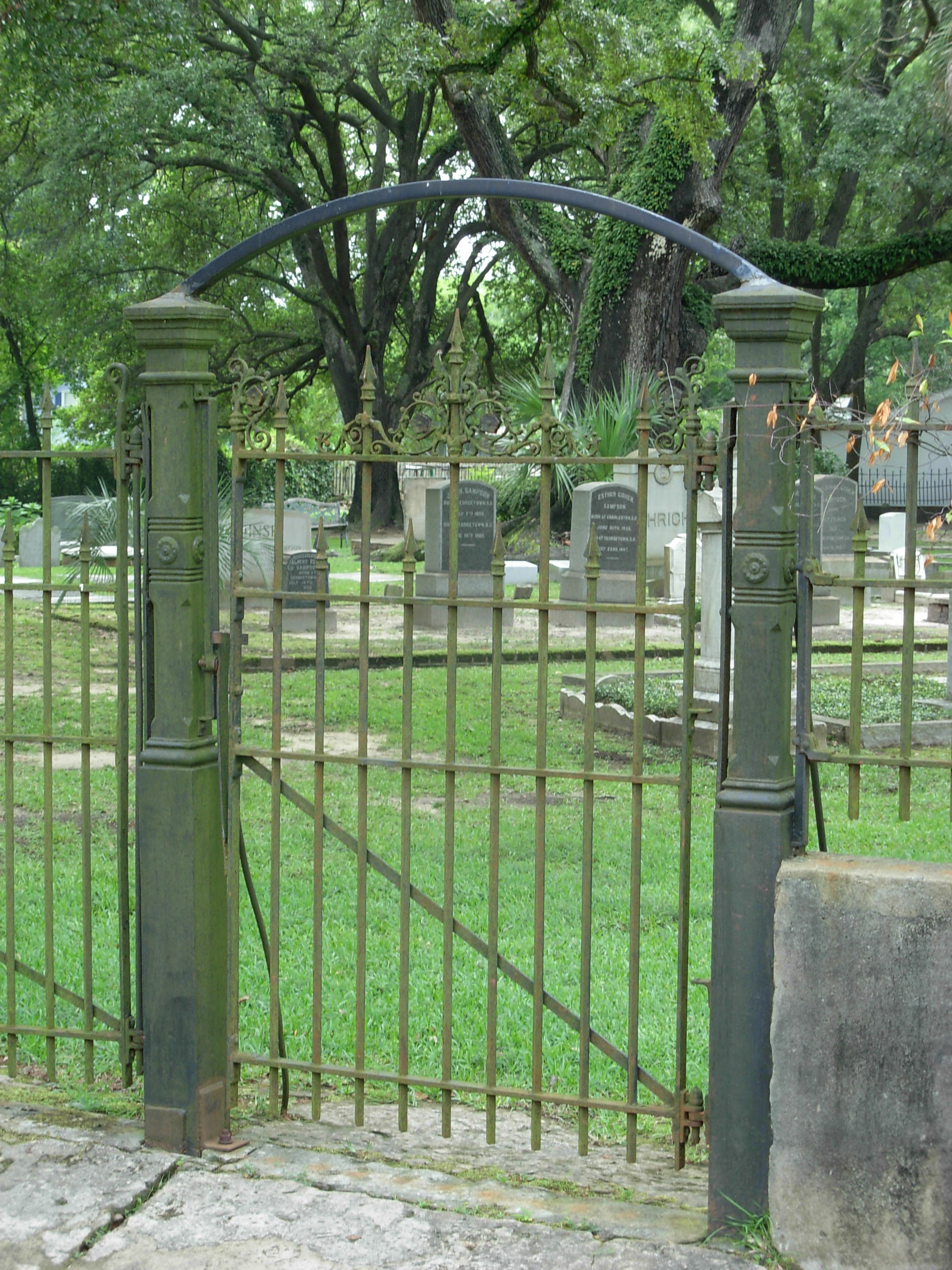
The second oldest Jewish cemetery in the state, the Beth Elohim Cemetery contains graves of many of the most prominent citizens of Georgetown, including three of the city’s six Jewish mayors. The legend associated with this graveyard involves Pauline Moses who, with her best friend Eliza Munnerlyn, had planned to be wed on the same day at the same time, though in different locations. Both girls contracted yellow fever and died a few days before the weddings. Subsequently, girlish laughter heard emanating from this cemetery as well as the cemetery of Prince George Winyah Episcopal Church just across the street, where Munnerlyn is buried, is thought to be theirs.

Sources

  • Beth Elohim Cemetery. Find-A-Grave. Accessed 13 August 2011.
  • Huntsinger, Elizabeth Robertson. Ghosts of Georgetown. Winston-Salem, NC: John F. Blair, 1995.

Bolem House (private)
719 Prince Street

Bolem House Georgetown South Carolina ghosts haunted
Bolem House. Photo 2011, by Lewis Powell IV, all rights reserved.

Possibly the oldest home in Georgetown, recent evidence indicates that it was originally constructed as a tavern. With the influx of sailors into the port, Georgetown would have had at least a few establishments to house and serve them. Residents of the house have since occasionally heard and seen the revenants of some of these long dead sailors. Huntsinger describes the surprise of a family member when he encountered a sailor on Christmas of 1993. The family member went into the kitchen and “encountered a very old man in an old-time sailor’s outfit, and he appeared to have no teeth. The man wandered around the kitchen, then into the hallway, never saying anything and looking somewhat displaced.” The witness asked the rest of the family if they had seen someone and they had not. Hopefully, the poor sailor will soon figure out where he needs to be.

Sources

  • Huntsinger, Elizabeth Robertson. More Ghosts of Georgetown. Winston-Salem, NC: John F. Blair, 1998.

Cleland House (private)
405 Front Street

Cleland House Georgetown South Carolina ghost haunted
The Cleland House, 2011, by Lewis O. Powell IV, all rights reserved.

The article for the Cleland House has been broken out into a separate article, “The scarab’s sting–Georgetown, South Carolina.”

DuPre House (private)
921 Prince Street

DuPre House Georgetown South Carolina ghosts haunted
DuPre House. Photo 2011, by Lewis Powell IV, all rights reserved.

This house has in the recent past served as a bed and breakfast, but there was a large for sale sign in the yard when I visited a few weeks ago. An internet search doesn’t say if the inn is still open. I do hope that the little girl and the mother who have resided there since before the Civil War are okay. Guests in this home constructed around 1740 have reported seeing and hearing a woman and small girl who may have been victims of a fire in the 19th century. In addition to occasionally smelling smoke, occupants have come face to face with the two spirits and have heard childish giggling and singing. At times, small footprints have even appeared in freshly vacuumed carpet.

Sources

  • Huntsinger, Elizabeth Robertson. Ghosts of Georgetown. Winston-Salem, NC: John F. Blair, 1995.
  • Turnage, Sheila. Haunted Inns of the Southeast. Winston-Salem, NC: John F. Blair, 1995.

Henning-Miller House
331 Screven Street

Henning-Miller House Georgetown South Carolina ghosts haunted
Henning-Miller House. Photo 2011, by Lewis Powell IV, all rights reserved.

This lovely, circa 1760 (some accounts state the house is circa 1800, which would make this story false), home boasts a helpful spirit on the staircase. During the American Revolution, British soldiers often imposed themselves on the hospitality of both Tory (British sympathizers) and Patriot families alike. The family living in the Henning House was Tory but had a daughter with Patriot sympathies.

Throughout the South Carolina Low Country, the British had chased Patriot hero, Francis “Swamp Fox” Marion through the swamps and marshes. One evening as the British were sleeping upstairs, of their officers overheard the daughter talking downstairs of Francis Marion being in town. He rose quickly and, in his rush, tripped on the stairs breaking his neck, killing him instantly. Since that incident, anyone losing their footing on the same stairs has felt a hand keeping them from meeting the same fate as that young British officer.

Sources

  • Barefoot, Daniel W. Spirits of ’76: Ghost Stories of the American Revolution. Winston-Salem, NC: John F. Blair, 2009.
  • Huntsinger, Elizabeth Robertson. Ghosts of Georgetown. Winston-Salem, NC: John F. Blair, 1995.

Heriot-Tarbox House
(formerly the Harbor House Bed & Breakfast, private)
15 Cannon Street

See my article, “A host of stories–Georgetown, South Carolina,” for the stories behind this home.

Prince George Winyah Episcopal Church
300 Broad Street

Prince George Winyah Episcopal Church Georgetown South Carolina ghost haunted
Prince George Winyah Episcopal Church. Photo 2011, by Lewis Powell IV, all rights reserved.

Opened in 1747, the marvelous church of Prince George Winyah has served the citizens of Georgetown for centuries. For the legend surrounding the churchyard, see the above entry on the Beth Elohim Cemetery.

Pyatt-Doyle House (private)
630 Highmarket Street

Pyatt-Doyle House Georgetown South Carolina ghosts haunted
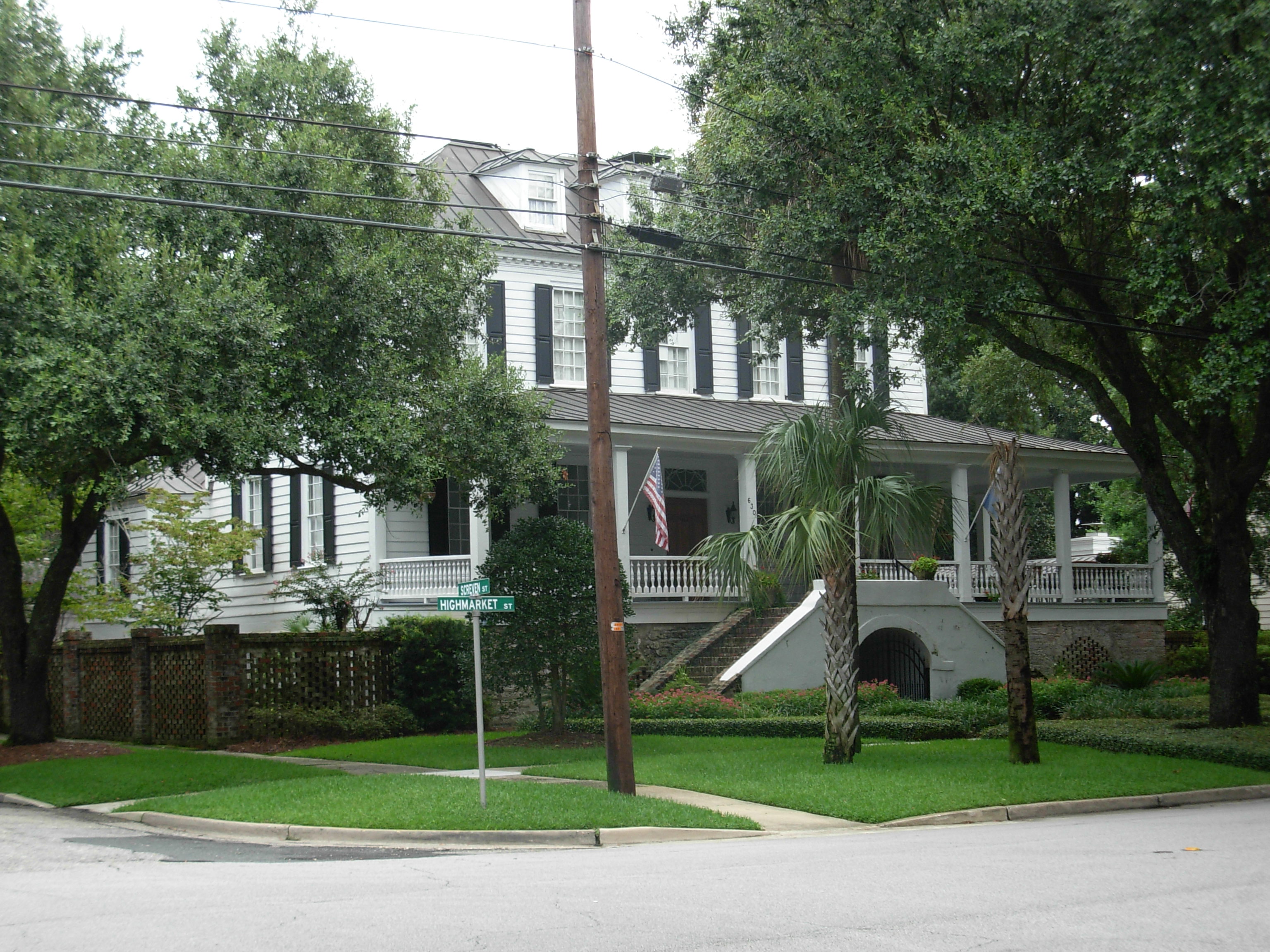
Pyatt-Doyle House. Photo 2011, by Lewis Powell IV, all rights reserved.

This 1790 home is home to what appears to be mostly residual activity. It is noted that when a rocking chair is placed in one bedroom, it will rock on its own. Some visitors have even witnessed a woman holding a baby sitting in the chair. Others have heard the sound of footsteps throughout the house.

Sources

  • Huntsinger, Elizabeth Robertson. Ghosts of Georgetown. Winston-Salem, NC: John F. Blair, 1995.
  • Turnage, Sheila. Haunted Inns of the Southeast. Winston-Salem, NC: John F. Blair, 1995.

Rice Museum
633 Front Street

Front Street Georgetown South Carolina Rice Museum clock tower fire 2013 ghosts haunted
A view of the block that burned this morning. The SC Maritime Museum in the foreground, sustained some damage, while the buildings towards the Rice Museum were gutted by the early morning fire. 2011, by Lewis O. Powell IV, all rights reserved.
Kaminski Building Rice Museum Georgetown South Carolina ghosts haunted
Kaminski Building. Photo 2011, by Lewis Powell IV, all rights reserved.

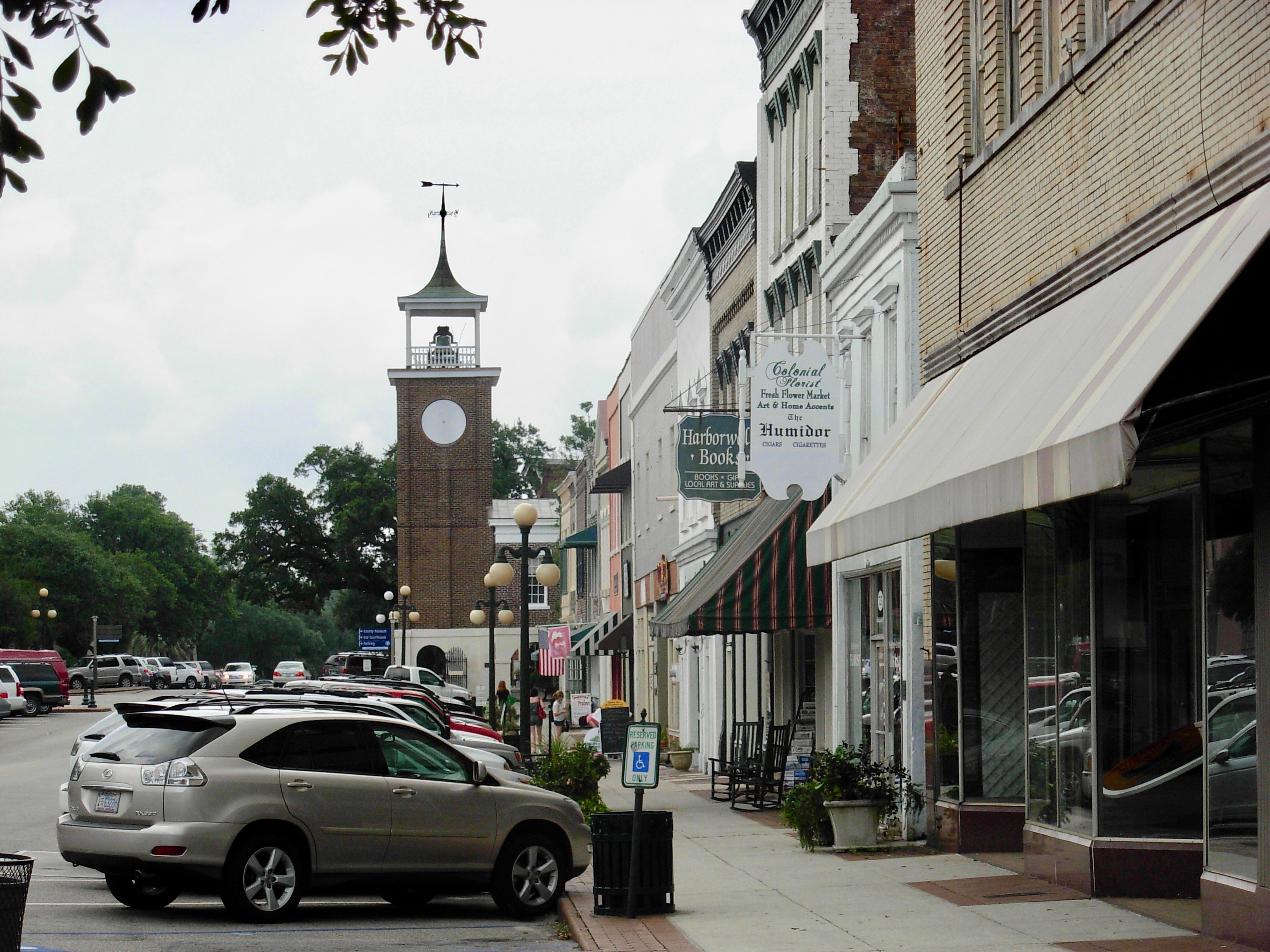
Georgetown’s Rice Museum, documenting the history of rice cultivation in the South Carolina Lowcountry, occupies two historic buildings on Front Street: the Old Market Building with its landmark clock tower, and the adjacent Kaminski Building. The Old Market Building once housed, as the name implies, the local market selling produce, livestock and slaves while the upper portions housed the town hall. Over the years the building has served as a jail, a printing shop, and the town police department.

The Kaminski Building, constructed in 1842, the same year as the market, served as retail space for many years. With so much activity over the years, it’s hard to imagine that these buildings wouldn’t contain a ghost or three. Footsteps, particularly those of someone with a peg-leg have been heard in the art gallery in the Kaminski Building. Elizabeth Huntsinger, author of Ghosts of Georgetown and More Ghosts of Georgetown, points out a particular antique sideboard in the museum that may even be associated with the spirit of an enslaved woman.

Sources

  • Fant, Mrs. James W. National Register of Historic Places Nomination form for the Georgetown County Rice Museum. 8 November 1969.
  • Huntsinger, Elizabeth Robertson. More Ghosts of Georgetown. Winston-Salem, NC: John F. Blair, 1998.

Strand Theatre
710 Front Street

Strand Theatre Georgetown South Carolina ghosts haunted
Strand Theatre. Photo 2011, by Lewis Powell IV, all rights reserved.

This plot of land on Front Street has been occupied by a cinema since the Peerless Theatre was constructed here in 1914. The Strand Theatre opened in 1941 and closed in the 1970s. In 1982 the Swamp Fox Players, a local community theatre company took over the building, slowly restoring its Art Moderne glory.

Almost immediately after taking over the building, company members began noticing the sounds of footsteps in the balcony. During a performance of an original show, Ghosts of the Coast, based upon a series of ghost stories and other haunting tales, actors leaving the theatre began to notice odd cold spots and the sounds of whispers began to emanate from the backstage area. They summoned a local ghost hunter who blamed the occurrence on a scene in the show involving a hoodoo spell. While the cold spots and whispers have since ceased, the footsteps continue.

Sources

  • Wolf, Elizabeth Huntsinger. Georgetown Mysteries and Legends. Winston-Salem, NC: John F. Blair, 2007.

Waterman-Kaminski House
622 Highmarket Street

Waterman-Kaminski House Georgetown South Carolina ghosts haunted
Waterman-Kaminski House. Photo 2011, by Lewis Powell IV, all rights reserved.

Next door to the Pyatt-Doyle House is the even earlier Waterman House, built around 1770. This house is home to two separate legends. One speaks of a little boy whose family left him in the care of the home’s owners while they journeyed north during the summer. The family was lost at sea and the little eight-year-old soon fell sick with grief and died. His pitiful spirit is still seen here occasionally.

The other legend concerns a young woman who fell for a faithless sea captain. Returning from a trip he presented his love with a vial of exotic perfume. After her lover left her home, the sweetheart watched him from a third-floor window. With horror she observed him entering a local tavern, eventually emerging with another young lady. Distraught, the young woman drank the contents of the vial and died. Her sad spirit is said to still watch from the window on summer evenings.

Sources

  • Georgetown Paranormal. “Waterman-Kaminski House.” Haunted Places in Georgetown, SC. Accessed 13 August 2011.
  • Huntsinger, Elizabeth Robertson. Ghosts of Georgetown. Winston-Salem, NC: John F. Blair, 1995.