Marietta City Cemetery 381 Powder Springs Street Marietta, Georgia
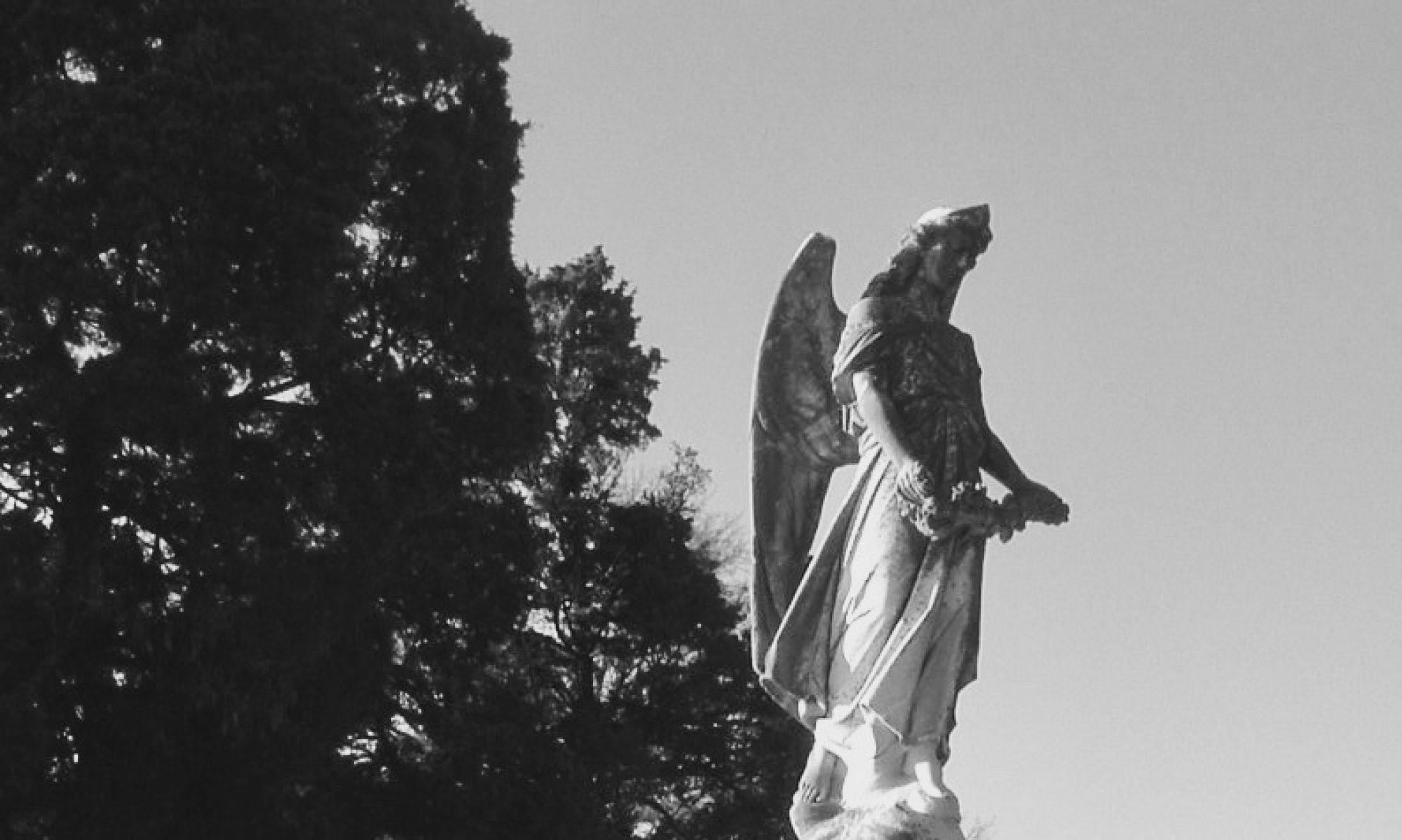
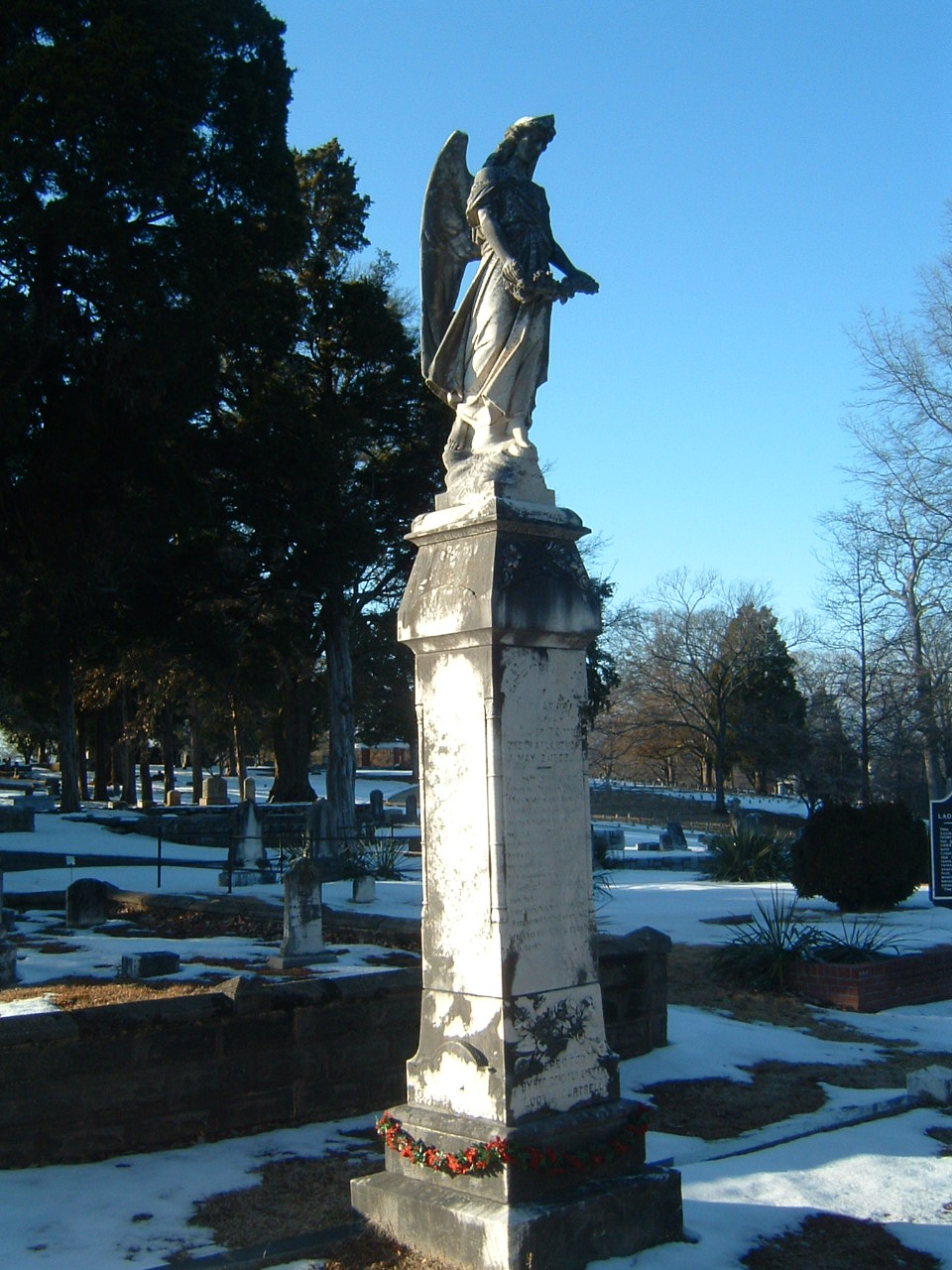
Thanks to a wonderful friend of mine, I now have a marvelous new blog header. The angel tops a monument to Mary Annie Gartrell erected by her sister Lucy. Tradition has it that Lucy visited her sister’s grave twice a week dressed in black mourning clothes. Over time, with Lucy’s biweekly appearances, she became known around town as the “Lady in Black.”
Gartrell Monument, 15 January 2011, the snow is not a usual occurrence in Georgia. Photo by Lewis O. Powell, IV, all rights reserved.
Marietta, located northwest of Atlanta and now a part of a the Atlanta metro area, was chartered in 1834, sometime before the creation of Atlanta. Of course every growing town needs a burying ground and the City Cemetery was established around the time the city was chartered. Over time, it has become the resting place for a cross-section of Marietta’s citizens and during the Civil War, many Confederate soldiers from throughout the South were buried in the adjoining Confederate Cemetery.
The ranks of Confederate Dead in the Confederate Cemetery adjoining the Marietta City Cemetery, 15 January 2011. Photo by Lewis O. Powell, IV, all rights reserved.
Over time, ghosts have been reported in the cemetery. The earliest reports, according to the cemetery brochure published by the Marietta Department of Parks and Recreation, come from a cemetery sexton in 1895 who reported a number of figures in the cemetery. Legend holds that the Gartrell Monument is still visited by a “Lady in Black” over a half-century after the death of Lucy, the original Lady in Black.
Update: 1 November 2017. Since the changeover to a new blog, I have retired my original header, though I’m still using a picture of the Gartrell Monument.
Sources
Akamatsu, Rhetta. Haunted Marietta. Charleston, SC: History Press, 2009.
Marietta City Cemetery and Confederate Cemetery Brochure. Marietta, GA: Marietta Department of Parks and Recreation. No Date.
Scott, Thomas A. “Marietta.” New Georgia Encyclopedia. 30 September 2003.
Eagle Tavern
26 North Main Street Watkinsville, Georgia
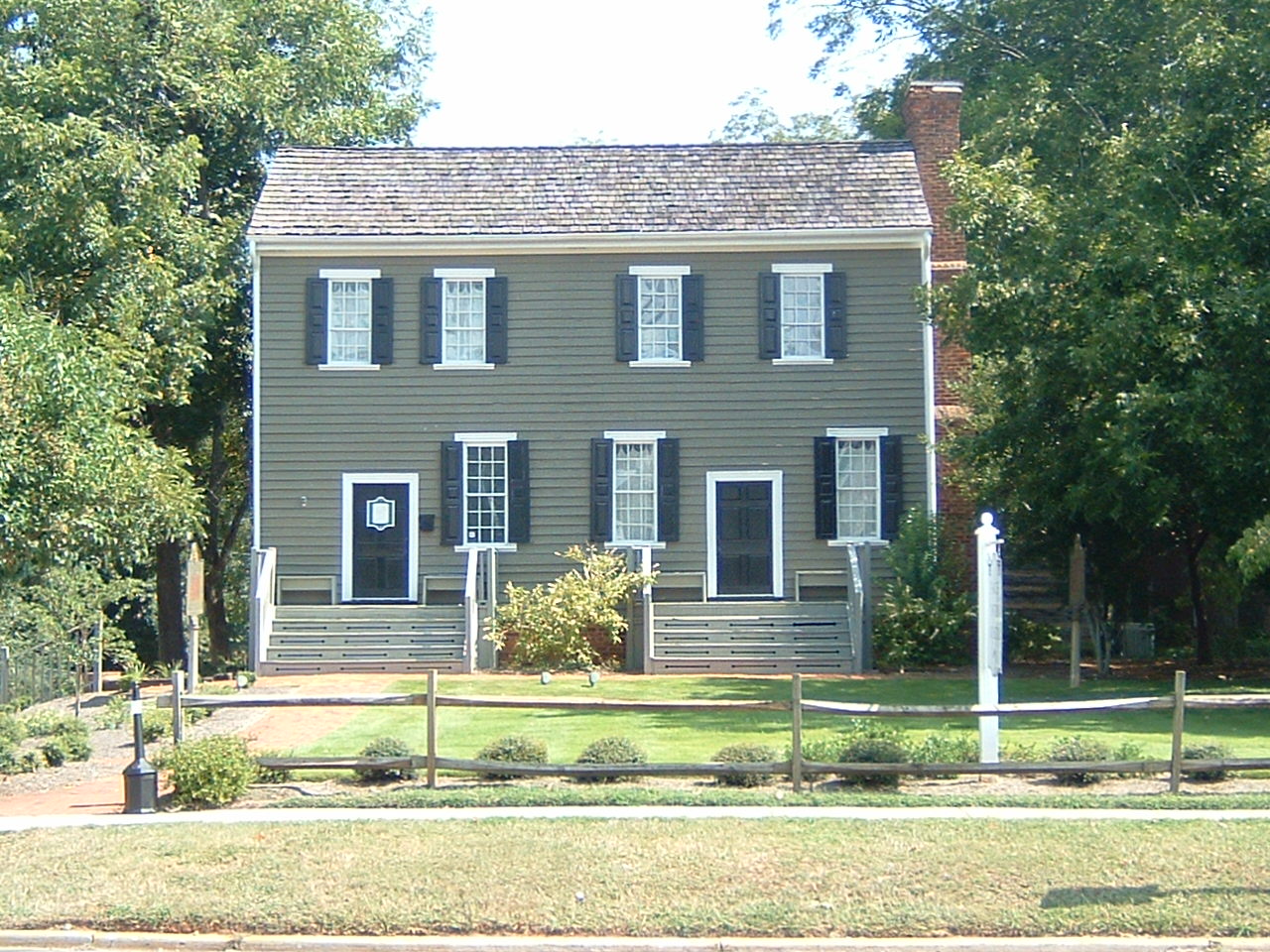
The Eagle Tavern. Photo by Lewis Powell, IV, 2010, all rights reserved.
On my recent trip to Milledgeville, I made some stops on the way home in Madison and Watkinsville, two of the more historic towns in east Georgia, to photograph some haunted locations. The Eagle Tavern is one of the most historic landmarks in the area and has hosted generations of Watkinsville citizens and guests. The date of its initial construction is lost to history and may be as early as 1789. The building was definitely serving as a tavern by 1801 or 1802. Over the years, additions were added haphazardly and when the building was restored by the state of Georgia in the 1950s, most of these additions were torn down. The tavern has served as a museum since its restoration.
The Eagle Tavern. Photo by Lewis Powell, IV, 2010, all rights reserved.
The structure remaining after the state’s restoration is not very large, but it possibly hosts an array of spirits. A dancing female in a ballgown has been reported by a cleaning woman in one of the downstairs rooms. Possibly, three male spirits have been encountered in the tavern, including a very unpleasant entity in the basement of the building. Phantom footsteps have been heard and phantom odors including cherry tobacco have been smelled.
Sources
Summer, Margaret T., editor. The History of Oconee County, Georgia. Curtis Media, 1993.
Underwood, Corinna. Haunted History: Atlanta and North Georgia. Atglen, PA: Schiffer, 2008.
As my first blogging trip, I’ve headed to Milledgeville, Georgia to explore some of its haunted past. Milledgeville was established in Middle Georgia by an act of the state legislature in 1803. The city was laid out as a seat of government for the state based on the designs for Savannah and Washington, DC. The state government was moved from Louisville in 1807 to the newly built and unfinished statehouse in the center of Statehouse Square. By 1814, the once rough and tumble town had grown into a respectable city that attracted wealth and prosperity. The new capital attracted skilled architects who created grand homes and government buildings including a state penitentiary, mental asylum and an institute of higher learning, Oglethorpe University.
In January of 1861, the city’s illustrious rise to prominence entered its twilight when a convention of delegates passed the Ordinance of Secession and officially joined the Confederate States of America. The city erupted in joy but on a fall day three years later, Union General William Tecumseh Sherman would enter the city accompanied by some 30,000 troops who would pillage and ransack it before leaving a few days later on their March to the Sea. The ruined capital was dealt a harsher blow when the state capital was moved to Atlanta in 1868.
The city remained provincial but worked to provide educational resources for the state. While Oglethorpe University during the Civil War and closed in 1872 (to be rechartered in Atlanta in the 20th century), Middle Georgia Military and Agricultural College (now Georgia Military College) was founded in 1879 in the Old State Capital building in Statehouse Square. Ten years later on the site of the Georgia Penitentiary which had burned during the Northern occupation of the city, the Georgia Normal and Industrial College (now Georgia College and State University) was founded. The state mental asylum developed into Central State Hospital which would carry a patient load of nearly 12,000 people in the early 1960s. Changes in mental health treatment have led to the slow phasing out of the hospital and many of its programs. Combined with the closing of local mills, the local economy has had to shift away from health care and manufacturing towards industries such as tourism.
With a concentration of historic structures, it’s no wonder that Milledgeville has many ghosts. Kathryn Tucker Windham in her 13 Georgia Ghosts and Jeffrey, includes the story of Sam Walker, who was mayor in the 1870s, who was deemed “the meanest man in Georgia” after he contributed to the untimely death of his son. It is believed that both Walker and his son may still haunt their former home. Barbara Duffey has penned two books, Banshees, Bugles and Belles: True Ghost Stories of Georgia (1995) and Angels and Apparitions: True Ghost Stories From the South (1996) both of which document many hauntings in Milledgeville.
Following are photographs of some of the haunted locations in Milledgeville. As my research continues, these locations will be highlighted individually.
Lockerly Hall, built in 1852 by Daniel Reese Tucker and originally called “Rose Hall.” The house in now the centerpiece of Lockerly Arboretum. The spirit of a young woman, possibly Emma Tucker, the daughter of Daniel Reese, has been seen in the house. The grounds of the arboretum are open to the public and the house may be toured as well. Photograph by Lewis Powell, IV, 2010, all rights reserved.The gates of Memory Hill Cemetery, Milledgeville’s primary historic burying ground, where many famous Milledgeville citizens are interred including author Flannery O’Conner, Congressman Carl Vinson and vaudeville magician Dixie Haygood. Memory Hill is the site of a few mysterious graves that may have some paranormal activity. Photograph by Lewis Powell, IV, 2010, all rights reserved.
Built as the first official residence for the state’s governor, the Old Governor’s Mansion was completed in 1839. It served as the official governor’s residence from its completion to 1868 when the capital was moved to Atlanta. The house served in a variety of functions including the home to Georgia College presidents until it was restored and opened as a house museum. The smell of food cooking has been reported wafting through the basement and ground floors while the ghost of a woman in period dress was seen in the State Dining Room. Photograph by Lewis Powell, IV, 2010, all rights reserved.Considered one of the grandest Gothic Revival structures in the United States, the Old State Capitol Building now serves as part of the campus for Georgia Military College. The sound of legions of marching spectral soldiers has been reported on the adjoining parade grounds as well as the apparition of a Confederate sentry. Photograph by Lewis Powell, IV, 2010, all rights reserved.
Sources
Duffey, Barbara. Angels and Apparitions: True Ghost Stories From the South. Eatonton, GA: Elysian Publishing, 1996.
Duffey, Barbara. Banshees, Bugles and Belles: True Ghost Stories of Georgia. Berryville, VA: Rockbridge Publishing, 1995.
Old Heard County Jail
Court Square
Franklin, Georgia
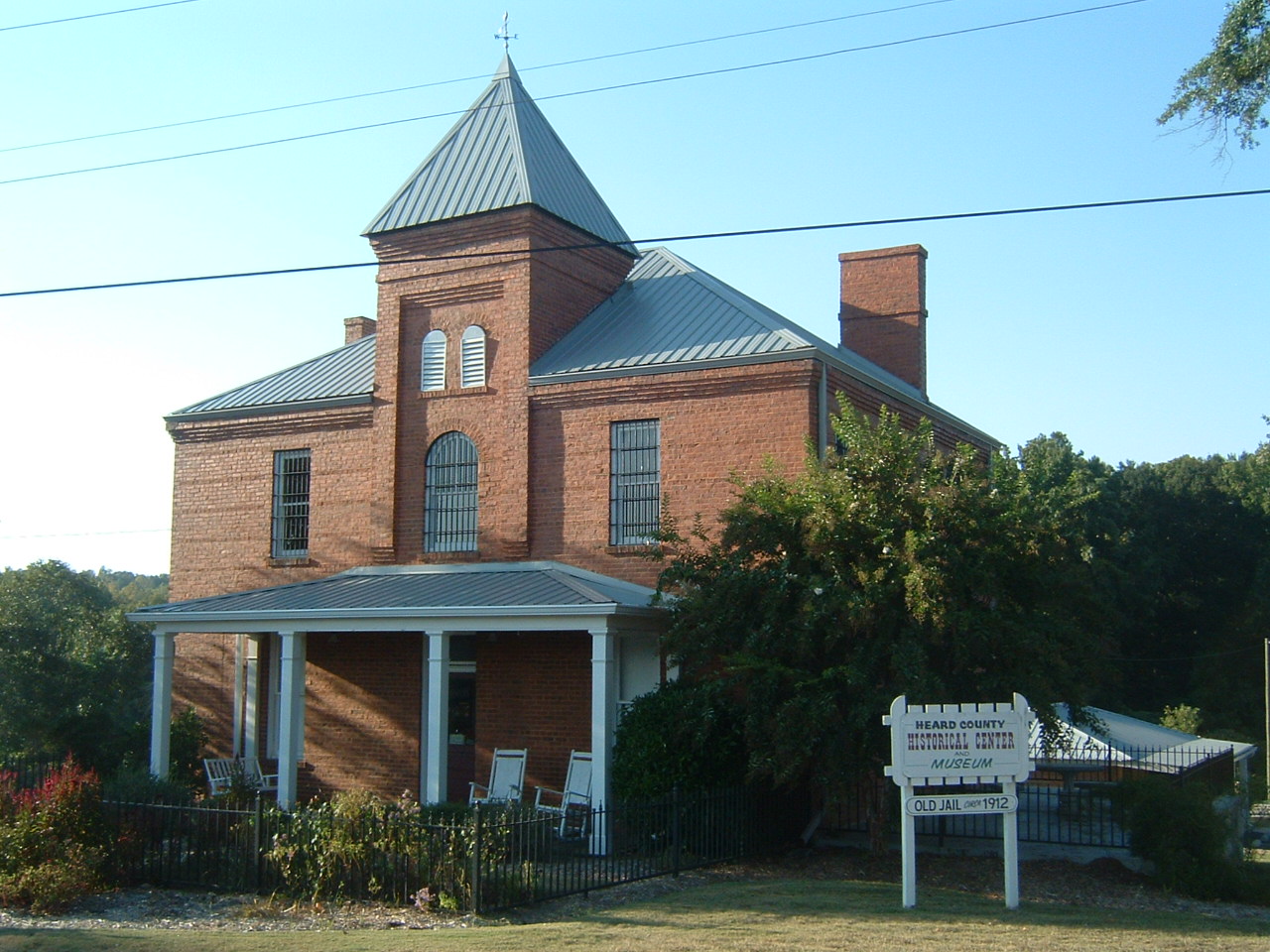
Old Heard County Jail, now the Heard County Historical Center and Museum in Franklin, Georgia. This facility was built in 1912 and added to the National Register of Historic Places in 1981. Photograph by Lewis Powell, IV, 2010, all rights reserved.Side view of the Old Heard County Jail. The inmate’s cells were located on the second floor while the first floor held offices. A museum employee reported hearing the sound of cell doors slamming shut when she was alone in the building. Photograph by Lewis Powell, IV, 2010, all rights reserved.The tower on the front of the Old Heard County Jail. The gallows are located in this tower and were quite possibly used for executions. This location was investigated by West Georgia Paranormal Investigations and presented in their show, Ghost Burn. Photograph by Lewis Powell, IV, 2010, all rights reserved.