N.B. This article was edited and updated 13 February 2019.
Triangle Brewing Company 918 Pearl Street Durham, North Carolina
The South has always had a tradition of alcohol-making: from the bourbons of Kentucky and whiskies of Tennessee, from modern micro-breweries to the backwoods moonshine that was created when legal liquor production was outlawed. With the rise of Southern wine-making and micro-breweries, many of these businesses have taken to occupying historic structures alongside ghosts.
At some point in the past, a man in Durham, North Carolina died and his body was dumped in a trash bag. When renovations were conducted in the old warehouse that now houses Durham’s Triangle Brewing Company, the human remains were found in a trash bag partially buried in the floor of the basement. Time had taken a toll, leaving only bones and teeth which could not be identified by the Durham Police Department. Not even a date could be established for the remains.
Presumably, the remains were buried in a local cemetery, though with spirited libations and good cheer, the anonymous man is now celebrated as the “patron saint” of a brewery and it may still be his spirit that rambles about the building. According to the spirit’s page on the brewing company’s website, he’s a good sort of spirit who occasionally whispers, moves things, and knocks darts off the dart board. The owners of the brewery have decided to keep him on and have dubbed him “Rufus.”
When he gets a bit rowdy, they pour a beer down the drain to sooth his antics.
Unfortunately, the Triangle Brewing Company will be closing with one last toast in April. Hopefully, Rufus will find a new home.
Sources
Rufus. Triangle Brewing Company. Accessed 23 April 2014.
Shaffer, Josh. “Durham brewery celebrates 7 years of Rufus the sudsy specter.” The News-Observer. 16 March 2014.
Talon Winery Tasting Room 7086 Tates Creek Road Lexington, Kentucky
Unlike the anonymous spirit spreading cheer around the Triangle Brewing Company, Talon Winery’s resident spirit has possibly been identified: none other than famed Lexington transvestite, Sweet Evening Breeze.
James Herndon—known best as “Sweet Evening Breeze” or “Miss Sweets”—is considered “the city’s most colorful character.” The transgender blog, TransGriot, states that Herndon “often wore makeup, occasionally performed or appeared on Main St. on Saturdays in drag, and was apparently quite effeminate. Long before there was RuPaul, Lexington’s Sweet Evening Breeze was titillating and gaining respect from the locals.” The biographical sketch ends by stating that Herndon “cut a path as an openly gay man, drag queen, and possibly a transgendered person.”
In an article from LEX18, Lexington’s NBC affiliate, Herndon is described—somewhat incorrectly—as “a man who liked to wear wedding dresses back in the 1950s.” The article quotes the owner of the winery, “if they go to the stairway that’s where they see the white wedding dress with the dark hair.”
According to what little history that can be found on the winery, the house was built in the 1790s, quite possibly by Isaac Shelby, the state’s first governor. Of course, some of the previous owners have remained in the house and staff reports that children have been seen peering from the windows of the house.
Sources
“Agritourism and wine: A natural pairing.” Agritourism Monthly. February 2014.
Tennessee Brewery 495 Tennessee Street Memphis, Tennessee
I covered the Tennessee Brewery about two years ago as part of an article on abandoned and possibly haunted buildings in Memphis. There have been developments with the Sears Crosstown Building as the local arts community has begun using the building for arts functions. The Sterick Building remains closed and for sale as far as I know while the Tennessee Brewery has been scheduled a date with destiny.
The owners of the building have announced that the building will be demolished on August 1st if no one steps forward to purchase the abandoned structure before then. However, innovative plans have recently been hatched to temporarily use the building ahead of the possible demolition in an effort to arouse interest. Six weeks of events, titled “Tennessee Brewery Untapped,” will be held in the building and expected to draw a crowd. Live music will echo through the aging halls of the brewery while beer—the products of local micro-breweries—will be served in a café that will operated in the building. Other events will include food trucks, mobile retail, movie screenings and workshops.
The massive Tennessee Brewery, 2010, by C ammerman. Courtesy of Wikipedia.
With so many people expected to crowd into the massive structure, it will be interesting to see how the spirits react. Laura Cunningham in Haunted Memphis states that the spirits “appear to be angry.” This is assumed from the loud noises that can sometimes cause the building to shake while some investigators have been touched, pinched and pushed.
Interestingly, in a 2012 article for the Memphis Commercial Appeal, Michael Einspanjer, founder of Memphis Paranormal Investigators states that “the spirits stuck in the building just couldn’t let go in life, they aren’t threatening.” The article notes that Einspanjer’s group has investigated the brewery at least 12 times and he states that the building is “a very haunted place.”
In looking through the material on the haunting of the brewery, it is very interesting to note that most sources do not speculate as to why the brewery may be haunted. Spurred on by the articles relating to Tennessee Brewery Untapped, I decided to check Newspapers.com to see what may be found relating to the brewery’s history. Indeed, I came up with a few very interesting leads.
The first event dates to 1888, just before the brewery’s construction. Papers in early August report a massive fire at the brewery that destroyed parts of the brewery as well as adjacent structures. The current structure dates to 1890. No deaths are reported in any of the articles, though a massive fire may have left a spiritual imprint on the site.
The second event dates to 1903 and involves at least one death. On April 15 of that year, Adolph Heinz, a German citizen and employee of the brewery was shot and killed. The article appeared in countless papers, obviously pulled from wire services and does not state exactly where the shooting took place. Reportedly, an African-American man named Gary Morgan asked Heinz to bring him a pail of beer. When Heinz refused, Morgan—“a negro with a picturesque police record”—shot him. The article notes that members of the local German community assembled to hunt down Morgan to lynch him. As of yet, nothing has turned up to reveal if Morgan was apprehended.
A third event was reported by the Associated Press in 1950. Prior to December 17th, an employee at the brewery fell from a stairway at the brewery and was killed when his head struck the floor. Perhaps his spirit is among the spirits remaining in the building.
Tennessee Brewery Untapped is scheduled to begin April 24th and run through June 1st.
Sources
Cunningham, Laura. Haunted Memphis. Charleston: History Press, 2009.
Douglas, Andrew. “Group pushes to save old Tennessee Brewery building.” 31 March 2014.
“FLAMES IN A BREWERY: The Tennessee Brewery at Memphis Badly Damaged—Other Fires Yesterday.” Chicago Daily Tribune. 11 August 1888.
“Killed in fall.” Kingsport Times-News. 17 December 1950.
Meek, Andy. “New Partners Sign On to Tennessee Brewery Effort.” Memphis Daily News. 4 April 2014.
Meek, Andy. “Plans Coming Together for Tennessee Brewery Untapped.” Memphis Daily News. 26 March 2014.
“One of the Kaiser’s Subjects Killed by Memphis Negro.” The Atlanta Constitution. 16 April 1903.
Pickrell, Kayla. “Haunted Memphis: Brewery a piece of history.” The Commercial Appeal. 24 July 2012.
Poe, Ryan. “Tennessee Brewery Untapped gets beer license.” Memphis Business Journal. 2 April 2014.
There are articles about hauntings blooming all around the South for the Halloween season. Florida, the floral state, is at full bloom. Here’s an overview of recently reported Florida hauntings.
St. Cloud Greater Osceola Chamber of Commerce 1200 New York Avenue St. Cloud
The Southern literary magazine, The Oxford American, explores Southern culture. As ghosts, ghostlore and ghost hunting (Southerners love their hunting) have permeated Southern culture in recent decades, it’s appropriate that the magazine would publish an article about it. An article by Chantel Tattoli explores this through the experiences of GhostStop, a St. Cloud business specializing in ghost hunting equipment. They also conduct investigations and the St. Cloud Chamber investigation included the article’s author.
According to the investigation team she was working with, the building dates to 1910, when it opened as a bank. One major robbery occurred in the building as well as, if local lore is accurate, a double homicide. The activity in the building includes the requisite footsteps in conjunction with what the author describes as “shadows, rattles and whistles.”
The article ends with the author wistfully asking, “What is a ghost but a smear in the air? A memory, willful and invincible, determined to keep living its life.” I really like that statement.
Florida Theatre 128 East Forsyth Street Jacksonville
When the Florida Theatre opened in 1927, it was the fifteenth movie palace in the city, but definitely the most lavish. The Mediterranean revival-style architecture was very popular throughout Florida throughout that decade. The grand theatre served the citizens of Jacksonville very well for more than five decades even as many other glorious movie palaces and other theatres were shuttered and demolished.
The marquee of the Florida Theatre, 2008, by Craig O’Neal. Courtesy of Wikipedia.
It was here in 1956 that a young singer named Elvis Presley performed. Seated among the screaming fans in the audience was a juvenile court judge to monitor Presley’s notorious hips for movements that were deemed “too suggestive.”
The theatre closed in 1980, but efforts were quickly underway to revive the grand dame. In October of 1983, the theatre opened its doors once again as a performing arts center, a use that has kept the marvelous building open for three decades.
A press release from PR Newswire announces that the theatre will be the scene of a paranormal investigation on Halloween night. The press release includes a remark from the theatre’s house manager that recounts her experience with a strange humming in the theatre. “I’ve heard a strange humming sound that made the hair on the back of my neck stand up. I thought it was a bar refrigerator, so I unplugged it, but the humming noise continued.”
The ghosts of the Florida Theatre are fairly well documented, especially after an investigation in 2010 captured the image of someone sitting in a seat in the balcony.
An article in the Florida Times-Union from July recounts the experience. The crew was filming with infrared cameras when they began to detect movement in the balcony. “The cameras captured something in Seat E2, Section 500, up in the balcony, where the original 1927 seats are still in place.” The video captured what appears to be someone sitting in the seat and moving their arm.
Perhaps the figure will make an appearance on Halloween.
History. The Florida Theatre. Accessed 29 October 2013.
Szaroleta, Tom. “Florida Theatre holding ‘paranormal tour.’” The Florida Times-Union. 26 July 2013.
The Petite Boutiques 1002 East New Haven Avenue Melbourne
The Petite Boutiques describes themselves as an “upscale mini-mall” that “hosts a collection of small retail businesses located inside a historic landmark.” The landmark building was once the Brownlie-Maxwell Funeral Home which moved to new location some years ago. After the building’s conversion to retail space, people working in the building began experiencing odd activity including Christmas trees in the Christmas shop being rearranged.
A member of the family who owns the building was quoted in Florida Today speaking about the Christmas trees. “Every morning, I would come into find a bird on one of our trees that was upside down, and I would have to rearrange it. It happened all the time. Then one night, I closed and knew the bird was on the tree right side up. But when I got there the next morning, it was upside down again.”
The article mentions that various customers have picked up on various entities within the building.
Eau Gallie Cemetery Intersection of Avocado Avenue and Masterson Street Melbourne
Eau Gallie was an independent city until 1969 when it merged with Melbourne. The name may be a reference in French to the salt water found around the town.
In the Eau Gallie Cemetery sleep many of Eau Gallie’s founding and prominent family. But, their rest may not be so easy. The cemetery has been rumored for years as being haunted and has been investigated by Florida Unknown, a local paranormal investigation team.
According to an article from Florida Today, the team did succeed in capturing a female voice responding to a direct question.
Sources
Eau Gallie, Florda. Wikipedia, the Free Encyclopedia. Accessed 30 October 2013.
It appears that the Crooked Mile Cemetery may be quite a bit more active than the Eau Gallie Cemetery. Indeed, the cemetery plays a part in one of the area’s most well-known ghost stories—the haunting of Ashley’s Restaurant in nearby Rockledge.
On November 21, 1934, the badly mutilated and decomposing body of a young woman was found near the river. Nineteen year old Ethel Allen had been seen just a few days before when she stopped at a local packing house to say goodbye to a friend. Ethel was leaving to visit her mother. She may have also stopped by her favorite local hangout, Jack’s Tavern, now Ashley’s of Rockledge. The Tudor style restaurant, on U.S. 1, still has activity, which has been attributed to Ethel Allen.
The gentleman with whom Ms. Allen was travelling was identified, but never questioned. Ms. Allen was laid to rest in the Crooked Mile Cemetery where she continues to interact with the living. In yet another article from Florida Today, the Brevard Ghost Hunters report that they received an EVP saying “yes” at the grave of Ethel Allen. The investigators had asked if Ms. Allen was present.
Within the moss-draped graveyard, others have reported seeing and hearing apparitions, but scarier still, hands have been known to reach out of graves here.
Pritchard House 424 South Washington Avenue Titusville
It is said that Lola Pauline Smith Pritchard, known as Miss Lovie, never liked people in her house. Perhaps it is she who is upset about tourists regularly visiting her magnificent Queen Anne-style house.
Pritchard House, 2012, by Jigar,brahmbhatt. Courtesy of Wikipedia.
As of late, Florida Today has been ramping up on paranormal articles. Interestingly, the reporter interviewed Michael Boonstra whose blog I used for information concerning Ethel Allen’s murder in the above location. As the director and archivist for the Brevard County Historical Commission, he was invited on an investigation two years ago of the Pritchard House.
Recently restored, the home has been returned to its original color scheme, an orange color with coral colored trim. Captain James Pritchard, a businessman important in the development of the area, built the home in 1891. Until Brevard County purchased the home in 2005, it had remained in the Pritchard family.
The investigation uncovered evidence that members of the Pritchard family may still remain in the house. Voices were heard, a light turned on by itself and a grandfather clock that was not in working order was heard pinging.
‘Tis the month for reporting on the paranormal. In collecting articles about paranormal phenomena in the South, I shall be busy this month.
I find it rather amusing to find haunted attractions that are actually haunted. The phenomena seems to stem from the use of old buildings for many of these attractions.
The Haunted Barn 426 Beauregard Street Charleston, West Virginia
The Haunted Barn did not start in Charleston, WV, it started in an actual barn in the small, nearby town of Winfield. The barn was damaged in last year’s June derecho and the barn’s operators decided to move the attraction to Charleston.
Originally housed in a 5,000 sq. ft. barn, the owners found a derelict warehouse in the city’s East End district to expand their operation. The nearly century old Coca-Cola warehouse was also used as a warehouse for SportMart and provides two floors for thrills. “We’re looking at 10,000 square feet upstairs,” one of the owners told the Charleston Gazette last year, “which makes us the largest haunted house in West Virginia—haunted house, not haunted attraction, but haunted house.”
Since opening in the new location last year, the owners have started opening themed haunted houses for a variety of holidays. An article in the same paper from earlier this year noted that the building may actually have some activity. “You’d have to be made of stern stuff to spend odd hours working in a dark, creepy place,” the article argues.
“We’ve heard a couple of things,” one of the owners says, “we’ve heard what sounds like footsteps upstairs when there’s nobody supposed to be up there.”
He continued, “I don’t want to say it’s haunted because I have to work here.”
Well, he may know a bit more about the hauntings around Halloween this year. An article from WCHSTV notes that Country Roads Paranormal Investigations out of Nicholas County will be performing an investigation. It’ll be interesting to see if the source of those mysterious footsteps can be tracked down.
Sources
Cart, Kallie. “Haunted Barn unveils two floors of fright.” WCHSTV. 2 October 3,
Fallon, Paul. “East End’s Haunted Barn is scary and merry.” Charleston Daily Mail. 5 December 2012.
Kersey, Lori. “East End Haunted Barn to open this weekend.” Charleston Gazette. 30 September 2012.
Lynch, Bill. “Haunted Barn offers bloody good Valentine’s bash.” Charleston Gazette. 6 February 2013.
As I’ve been working on this blog, I’ve started to get to know a variety of cities and small towns in the South. Among them, Georgetown, SC has become one of my favorites. I met native son and ghost tour guide extraordinaire, William Goins, earlier this year and began to delve into the city’s glorious past and even more glorious ghosts.
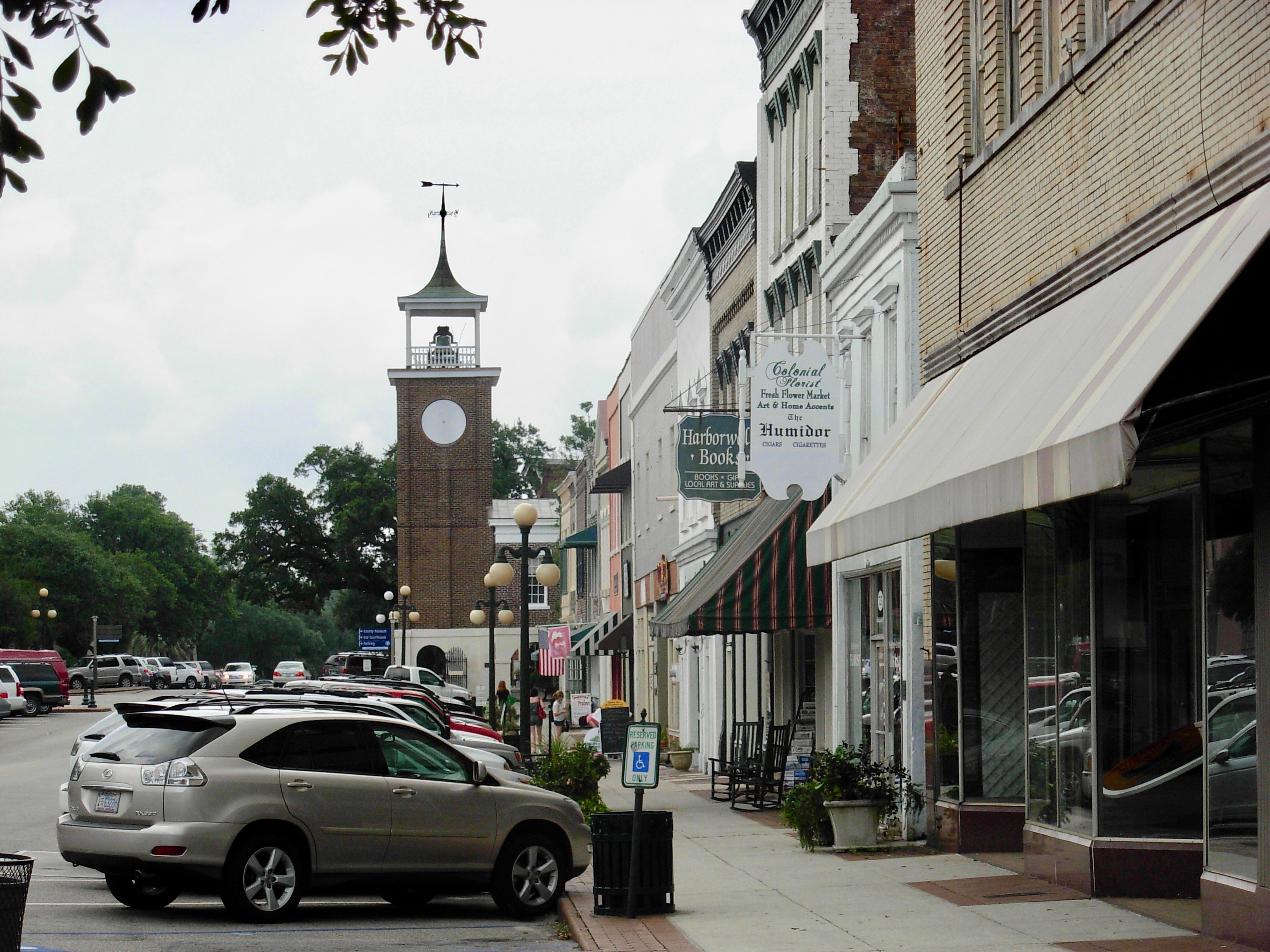
A view of the block that burned this morning. The SC Maritime Museum in the foreground, sustained some damage, while the buildings towards the Rice Museum were gutted by the early morning fire. 2011, by Lewis O. Powell IV, all rights reserved.
The stillness of downtown Georgetown was broken early this morning as flames devoured a block of Georgetown’s history. The block of commercial buildings with residential space above them at the core of the historic district between the Rice Museum and the South Carolina Maritime Museum sustained massive damage. The Rice Museum which is not connected was spared, though the Maritime Museum, according to the Georgetown Times, received some damage to its upper floors.
William Goins’ tour began at a bar, Limpin Jane’s, which is where the fire may have started. That building was entirely destroyed along with Harborwalk Books, located a few doors down, which had a marvelous selection of books on local folklore and ghosts.
Most of these buildings dated to the 19th century and had survived the terrible damage inflicted on the city during Hurricane Hugo, the monster hurricane that slammed into the South Carolina coast in 1989. Downtown Georgetown was flooded by the storm surge.
The fire may have started in Limpin’ Jane’s in the green building. All the buildings in this picture were mostly destroyed. This photo was taken earlier this year. Lewis O. Powell IV, all rights reserved.
Like the many of the surrounding buildings in the historic district there, this block did contain some ghosts. During my ghost tour earlier this year, I inquired if Limpin’ Jane’s had any activity and Goins replied that some possible activity had been observed in the upper areas of the building. There are questions as to if the spiritual fabric of a location is damaged during events like this.
Most certainly the fire may create some spiritual fabric itself. People in buildings that have burned may sometimes smell smoke or, even worse, the odor of burned flesh. There may be spirits at the location of those who died in the fire. In the case of the Monumental Church in Richmond, Virginia, the fire’s victims are now believed to haunt the building. The church was constructed to the memory of the victims of the 1811 Richmond Theatre fire. The building stands on the site of the theatre and entombs the remains of the victims.
Thankfully, no one was killed in today’s fire in Georgetown. I fully expect that the block will be reconstructed incorporating surviving original elements and I hope to see the block to return in even better condition.
Please pardon the lack of posting. I’m currently working not one, but two, jobs and my time has been very limited. When I do have a little time, however, I’ve been working on research.
Most of my research could be termed as arm chair ghost hunting. I start by scouring the books in my library, then move to other media sources—periodicals, newspapers and trustworthy blogs—looking for more information. To keep up with these disparate sources, I have spreadsheets—one for each of the 13 states I’m working on—listing hauntings by locations, with other pertinent information like address, city and county, then a column of references—with page numbers for books.
It’s a decent system that works for me. If I’m in need of finding haunted places in a specific area, I can sort the listings by city or county. When I need to find something I can simply pull the book from the shelf or go to the computer file and find it. Though it does take time to scour each book or article and add that information to the spreadsheet.
I have neglected Georgia for awhile, while working on other states. Though, it is hard to neglect my home state for too long. Jim Miles has just published three marvelous books on Georgia’s Civil War ghosts: Civil War Ghosts of North Georgia, Civil War Ghosts of Atlanta and Civil War Ghosts of Central Georgia and Savannah, and I’ve busily gotten these entered into the spreadsheet.
They’ve inspired me to start a heavy duty search for Georgia ghosts and I’ve found many interesting hauntings. Here are a couple of some of the more interesting hauntings.
Southeastern Railway Museum 3595 Buford Highway Duluth
According to a 2008 article from Accent Gwinnett Magazine, a few of the pieces of rolling stock in the museum’s collection contain ghosts. The “Washington Club” car from the old Atlantic Coast Line Railway is the supposed residence of a man in old fashioned attire. The story contains reports of two separate visitors encountering the mysterious man.
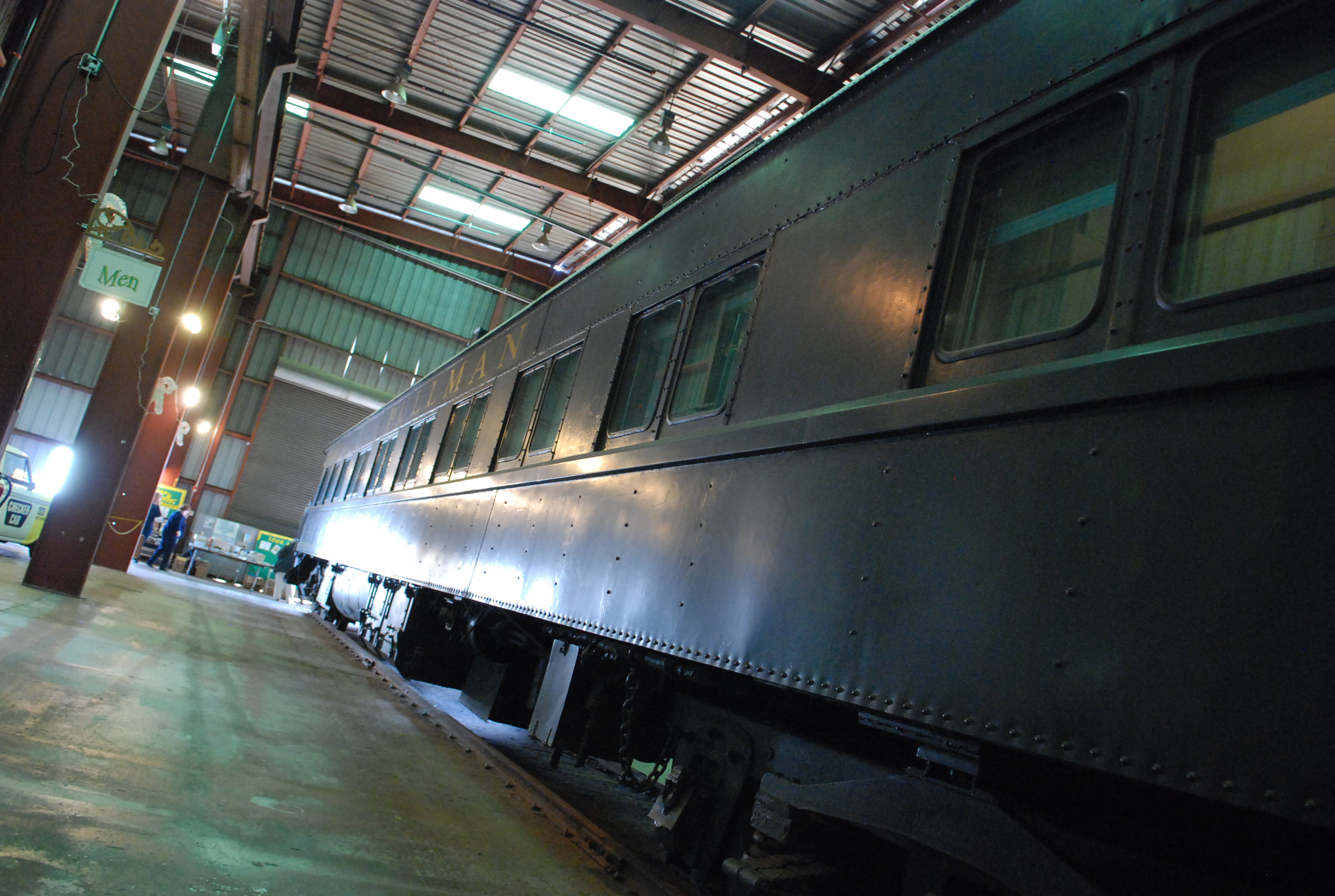
President Warren G. Harding’s personal Pullman Car, The Superb, now housed in the Southeastern Railway Museum in Duluth. Photo 2007, by John Hallett. Courtesy of Wikipedia.
President Warren G. Harding’s personal Pullman sleeper, The Superb, is also housed here and quite possibly houses a restless spirit. During a presidential cross-country tour in 1923, Harding collapsed and died in San Francisco. The Superb transported his body back to Washington.
The museum was founded in 1970 by the Atlanta chapter of the National Railway Historical Society. The grounds occupy some 35 acres and displays nearly 90 items of rolling stock. A quick search reveals that in the past the museum has operated ghost tours of its haunted collection.
Sources
Bieger, Emily. “Mysterious man from days gone by.” Accent Gwinnett Magazine. July-August 2008.
Southern Railway Museum. “About.” Accessed 31 August 2013.
Southern Tailway Museum. Wikipedia, the Free Encyclopedia. Accessed 31 August 2013.
The Superb. Wikipedia, the Free Encyclopedia. Accessed 31 August 2013.
Louisville Market House West Broad Street at Mulberry Street Louisville
As to whether the old market house in downtown Louisville is haunted remains to be seen, I did come across an article about an investigation conducted there in 2006. The organization that investigated, the Georgia Ghost Society, no longer has a website and is presumably defunct, like many paranormal organizations. Therefore, there’s nothing readily available on what the group found during their investigation.
Market House, 1934. Photograph by Branan Sanders for the Historic American Buildings Survey, Courtesy of the Library of Congress, Prints and Photographs Division.
The building itself is quite intriguing. Since its construction towards the last years of the 18th century, the market house has seen the sale of many things including slaves. The building was constructed during the few years that Louisville served as a capital of Georgia from 1796 to 1806. Under the building’s ancient roof is a bell that was originally sent by Louis XVI of France (for whom the city is named) to a convent in New Orleans. On its journey, it was supposedly captured by pirates and sold in Savannah.
Sources
Ellison, Faye. “Ghost society hopes to stir up spirits at Market House.” The News and Farmer. 26 October 2006.
Workers of the Writers’ Program of the WPA in the State of Georgia. Georgia: A Guide to its Towns and Countryside. Athens, UGA Press, 1946.
B & D Burgers 209 West Congress Street Savannah, Georgia
N.B. This article was edited and revised 15 September 2019.
In a city like Savannah with so much of the original built environment still intact, it can be expected that much of the spiritual realm will be intact as well. Even in places whose histories are not marked with tragic events, there still may be residual energy left from the many souls using these places over decades and centuries. Apparently, this may be the case of B&D Burgers, a gourmet burger joint.
According to two recent stories from Savannah ABC affiliate, WJCL, the B&D Burgers location on West Congress Street, well inside the large Savannah Historic District, may have some spirits lingering about it premises. The Savannah Historic District is a National Historic Landmark District, a recognition afforded to only around 2,500 sites in the nation, and even fewer historic districts.
B & D Burgers, 2017, by Michael Rivera. Courtesy of Wikipedia.
The plain, mid-19th century commercial building located on Congress Street looks out onto Ellis Square, one of the original squares laid out by General James Oglethorpe—the founder of Savannah and the Colony of Georgia—in 1733. The square and the market building within it were demolished in the mid-20th century and replaced by a not so glorious parking garage.
Spurred by this sad fate, locals began to band together to preserve the history that was being demolished around them. When the lease on the parking garage expired almost 50 years later, the city did not renew it and took over the square again with plans to renew the streetscape. The garage was demolished and replaced with underground parking while the square was recreated and reopened in 2010. All this has been witnessed by the little brick building on Congress Street.
For some time, the employees of the burger joint have thought the building to be haunted. One manager reported having had his name called when no one was present. Others have felt uncomfortable in the building’s basement. All of these things are classic signs of a haunting, but it wasn’t until surveillance video revealed some odd occurrences that a paranormal team was called in to investigate.
One video shows an odd light moving around the busy bar area and then seeming to hover. Another video shows a stack of plastic glass pallets toppling over on their own accord. Granted, these odd videos themselves do not preclude the presence of paranormal activity, though when combined with reports from the restaurant’s staff, paranormal activity becomes quite a bit more evident.
Paranormal investigators from 3D Ghost Hunters, did pick up on some spiritual energy within the building. Accompanied by a local psychic, the preliminary investigation of the building produced some high EMF readings and personal experiences for the investigators. A woman’s perfume was smelled, though none of those present were wearing any. Interestingly, when a brothel was mentioned, the odor of perfume got stronger. All of this evidence, coupled with the video and employee experiences appear to be enough to bring the investigators back for a full investigation.
WJCL included the surveillance videos on their website, but they do not appear to be working.
Sources
Colwell, Josh. “B&D Burgers Ghost Hunt.” WJCL. 1 May 2013.
Colwell, Josh. “Ghost Busters Anyone?” WJCL. 30 April 2013.
Actors Theatre of Louisville 316 West Main Street Louisville
The two buildings at this address are at the heart of modern American Theatre. The theatre company here, the Actors Theatre of Louisville, has striven to become one of the premier theatre companies in the nation and they have succeeded. From humble beginnings in a former tea-room, the company moved to an old train station which was renovated to house a 350-seat theatre. At that time, Jon Jory, son of Hollywood actor Victor Jory, joined the company as an artistic director. He expanded the horizons of the company and oversaw their move to this current space after the train station was demolished in 1972.
With the company, Jory envisioned and created the Humana Festival of New American Plays, now considered the “preeminent annual showcase of new theatrical work.” The festival has introduced new American plays such as David Margulies’ Dinner with Friends and Beth Henley’s Crimes of the Heart to the American theatrical consciousness; both of which garnered Pulitzer Prizes for drama.
Western theatre’s deepest roots lie in Ancient Greece, thus it’s appropriate that the entrance and lobby for this venerable theatrical institution is a remarkable Greek Revival structure. Built in the mid-1830s, for the Bank of Louisville, this building’s marvelous architecture and the participation of noted architect Gideon Shryock in its construction have led it to be named a National Historic Landmark. The adjoining late-19th century commercial building also belongs to the theatre.
Bank of Louisville Building, now the lobby of the Actors Theatre. Photograph taken in 1987 by William G. Johnson for the Historic American Buildings Survey. Courtesy of Wikipedia.
Part of the ghost story of this venerable institution begins in a field in the Hamptons in 1970. Rodney Anderson and his wife, Pamela Brown—an actress and scion of Kentucky’s prominent Brown family—were setting off on a journey with pilot Malcolm Brighton to cross the Atlantic in a Roziere balloon (a hybrid between a hot-air balloon and one held aloft by gases like helium or hydrogen). Friends and family gathered to fete the trio and watch as the intrepid voyagers headed into the horizon aboard The Free Life. One of the friends in attendance recalled that the event was “kind of a last hurrah.” She continued, describing the atmosphere as“all that hope and joy of the 60s that seems to have gone so sour, a last little flickering flame before everybody got serious again.” Grasping the euphoric hopes of a libertine decade the balloon ascended heavenwards into a perfect sky. Some thirty hours later, those hopes were dashed when fate caught up with them off the rocky coast of Newfoundland.
In the Brown family’s grief, the Actors Theatre was granted a substantial sum to build a theatre in Pamela’s honor. Built directly behind the antique buildings fronting the street, the 643-seat Pamela Brown Auditorium stands as a memento mori to the idealism of youth. The young, promising actress who was lost so young is still glimpsed in the theatre bearing her name while another specter is seen as well: the shade of an African-American male, possibly from the 19th century. He quietly goes about his business and disappears when he detects he has been spotted by the living.
Sources
Actors Theatre of Louisville. “The History of the Actors Theatre.” Accessed 15 March 2013.
Cummings, Mary. “The Day a Dream From Springs Crashed.” New York Times. 22 January 1995.
WATE-TV Studios in Greystone Mansion
1306 North Broadway Street, Northeast
Knoxville, Tennessee
N.B. This article was revised and expanded 31 January 2019 and 13 June 2021.
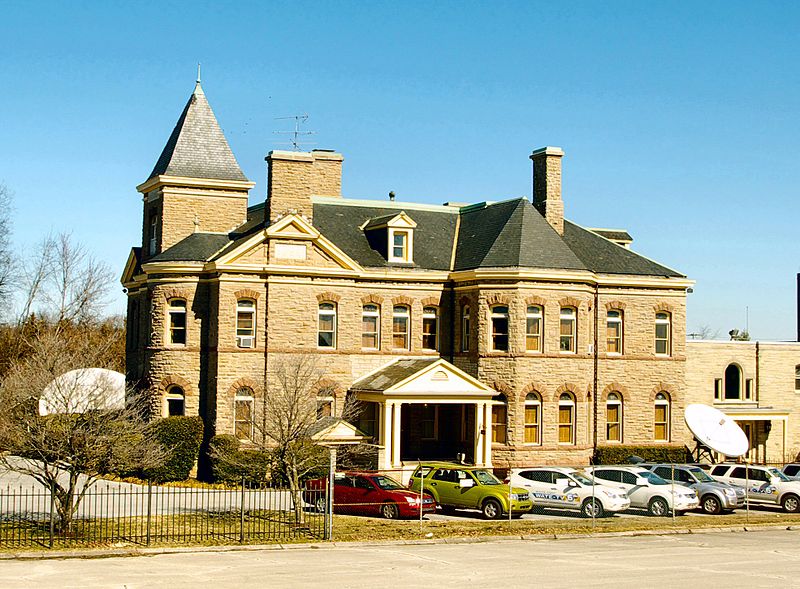
Throughout the South, hauntings can be found in unlikely places: Walmart stores, fast food restaurants (I’ve covered the haunted McDonald’s in Hermitage, Tennessee), and amusement parks among them. Some years ago, WATE-TV 6, the Knoxville ABC affiliate, revealed that their own studios may be haunted.
The studios occupy a rambling Victorian mansion that resembles a classic haunted house. The Richardsonian Romanesque mansion was constructed for Major Eldad Cicero Camp, Jr., the wealthiest man in East Tennessee at the time. He initially arrived in the area towards the end of the Civil War while he was serving Ohio Volunteer Infantry. Impressed at the region’s untapped mineral resources, he decided to make Knoxville his permanent home
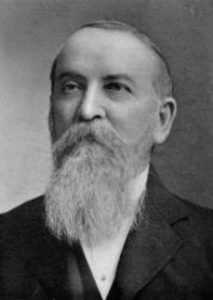
Major Eldad Cicero Camp, circa 1917. From Knoxville Men of Affairs.
Camp settled here when the city was still reeling from the divisions brought about by the war, and Camp had his own lingering dispute to settle. During the war, a number of men under his command had been held as prisoners of war under Colonel Henry Ashby in atrocious conditions. Camp held Ashby personally responsible for their mistreatment and, after the war, pressed charges of war crimes and treason against him. Ashby fled Knoxville but returned when the charges were eventually dropped.
On the afternoon of July 9, 1868, Ashby ran into Camp on the street. The gentlemen struggled as Ashby struck Camp with his cane while Camp fought back with his umbrella. The following day, Ashby appeared at Camp’s law office near the corner of Walnut and Main Streets. The two took their quarrel outside where Camp drew his revolver and fired. Henry Ashby was struck in the chest and killed. Camp was arrested and charged with murder, but the charges were dropped.
The following year, President Grant appointed him as the United States Attorney for the Eastern District of Tennessee. Taking advantage of the region’s natural resources, he organized the Coal Creek Coal Company and served as president of two other companies, building a name for himself as a businessman.
With his wealth, Camp began building Greystone Mansion in 1885. The home took five years to construct and featured elaborate woodwork, jeweled stained glass windows, and imported marble mantelpieces. He lived in the house for some 30 years until his death in 1920. He was buried in Old Gray Cemetery not far from where Henry Ashby was also laid to rest. The house remained in the family until 1935 when it was sold and divided into apartments. WATE-TV purchased the house in the 1965, restoring it and adding studio space at the back.
Oblique view of Greystone. Photo 2010 by Brian Stansberry. Courtesy of Wikipedia.
Since moving in, station employees have had experiences throughout the old house. Footsteps and other odd noises have been heard, and a door on the second floor closes by itself. Several years ago, a custodian filmed something moving on the second floor with her phone.
The building has been investigated by Appalachian Paranormal Investigations several times with the group capturing video and audio evidence. According to a WATE, that evidence points to the presence of four possible spirits on the premises.
Sources
Booker, Robert J. “Greystone Mansion builder shot, killed man downtown.” Knoxville News-Sentinel. 26 February 2018.
N.B. This article was edited and revised 6 April 2019.
Trans Allegheny Books 725 Green Street Parkersburg, West Virginia
Parkersburg Carnegie Library, formerly Trans Allegheny Books, 2010. Photo by Richie Diesterheft, licensed under Creative Commons 2.0.
Trans Allegheny Books truly sounds like heaven. A two-story former library, the building was crammed with some 500,000 volumes of used books with particular concentration on books relating to West Virginia and Appalachia. Until it closed just about this time last year, it was the largest bookstore in the state and a veritable tourist attraction in the region. Unfortunately, it was not to last.
The store was opened by Joe Sakach, a businessman with a passion for books and history, in the mid-1980s. The store flourished in the edifice on Green Street until the death of Mr. Sakach in April of last year. Upon his death the store was closed until his estate was settled by his children. They decided to sell the institution and a huge three-day sale was held in October, the store’s last dying breath.
The store is now a ghost along with the apparitions that lurked around its shelves while in operation. According to Theresa Racer in her marvelous blog on the ghosts of the Tri-State area (West Virginia, Ohio and Kentucky), Theresa’s Haunted History of the Tri-State, there are four distinct human and possibly three feline apparitions experienced within the century-old building. A small girl has been seen sitting on the magnificent iron stairs in the center of the building who sometimes may trip up patrons. A dapperly dressed man has been seen on the second floor and he may possibly be the same man seen browsing through the world history section. A female spirit may be that of a local newspaper reporter who was violently stabbed to death but who now returns to a place that she considered a second home.
The bookstore is home to living cats but possibly three feline apparitions have also been seen. All of these spirits may be the origins of other paranormal activity including disembodied footsteps, flickering lights, shadow figures and books that move from their shelves.
After its original function as a Carnegie Library, the building’s use as a bookstore is certainly the most appropriate use for the Neo-classical structure. Philanthropist Andrew Carnegie, who built magnificent libraries throughout the nation, presented Parkersburg with a gift of $34,000 to build a library. It opened in 1905 and served the area until 1975. The building was used briefly as a restaurant but that was unsuccessful. It was listed on the National Register of Historic Places in 1982 and it appears it is currently unused.
A story from WCHS ABC 8 in Charleston, West Virginia, provides a marvelous glimpse inside the bookstore.