13 Southern Rooms with a Boo

Following on the heels of my article, “Dining With Spirits,” I’ve decided to revamp my Halloween article from 2010 on haunted inns and hotels. That article was so large I published it in two parts so I’m breaking it into a smaller article with just 13 hostelries, one from each of the states that I cover. See part two of this article in “13 More Southern Rooms with a Boo.”

St. James Hotel
1200 Water Street
Selma, Alabama

The Queen City of the Black Belt, Selma, has a remarkable history that is intimately connected with the Civil War and the Civil Rights Movement, events that, despite their names, were hardly civil. The city is perched on a bluff overlooking the Alabama River and among the collection of buildings that peer down upon the river is the St. James Hotel. Built some 17 years after the incorporation of the town in 1820, the St. James has served patrons for nearly two centuries. The structure was occupied by Union forces during the Civil War, one reason the hotel was not burned like much of the city. Towards the late nineteenth century, the hotel fell on hard times and served a variety of functions. Keeping up with Selma’s drive to bill itself as a tourist destination, the St. James underwent a $6 million restoration in the 1990s which has provided 42 guest rooms, 4 riverfront suites with balconies overlooking the Alabama, the Troup House Restaurant (which utilizes the hotel’s name during the Civil War) and a number of spiritual guests.

The St. James Hotel, 2010, by Carol M. Highsmith. Courtesy of the Library of Congress, Prints and Photographs Division.

Outlaw Jesse James and his gang were frequent guests in the hotel and a male apparition seen in guest rooms on the second and third floors and in the bar may possibly be Jesse or a member of his gang. The spirit has been accompanied by the distinct jangle of spurs. Investigators in one of the hotel’s ballrooms asked “Is anyone there?” during an EVP session. The voice of a male answered on tape, “Well, that’s a stupid question.” Among other spirits still walking the halls of the St. James are a female and a dog whose barking is heard. So, if you check into the St. James, chances are high that you may encounter something, just don’t ask any stupid questions.

Sources

  • “Dead walk.” The Selma Times-Journal. 23 October 2005.
  • Lewis, Herbert J. “Selma.” Encyclopedia of Alabama. 12 August 2008.
  • “St. James hosts ‘spirit.’” The Selma Times-Journal. 30 October 2003.
  • Turnage, Sheila. Haunted Inns of the Southeast. Winton-Salem, NC: John F. Blair, 2001.

Omni Shoreham Hotel
2500 Calvert Street, NW
Washington, D.C.

Suite 870 of this 1930 hotel has seen three deaths. Juliette Brown, a live-in maid to the hotel’s owner, Henry Doherty and his family, died there unexpectedly as well as Doherty’s wife and daughter some time later. The apartment remained abandoned for some 50 years while guests staying in rooms around the suite would complain of late-night sounds coming from the room. Hotel staff has experienced being locked out of the room and cold breezes in and around the suite which is now known as the “Ghost Suite.” 

The Omni-Shoreham Hotel, 2009, by Jurden Matern. Courtesy of Wikipedia.

Writer Eric Nuzum spent a night in the room in 2007 and was awakened in the night by an odd, unexplained creaking that happened five times during the early morning hours. Just before he checked out of the room he discovered that lights he had left on were off. As he stood in the dining room pondering the lights, they turned back on by themselves.

The blog, Phantoms and Monsters published an account in 2012 of a hotel guest who stayed in room 866, just down the hall from the Ghost Suite. Around 2:25 AM he was awakened by moaning that seemingly came from the room next door. This was followed by a woman’s scream that issued from just underneath the guest’s bed. The terrified guest then observed a female form that began to take shape next to the bed. The form was a beautiful, nude female who smiled at the guest before turning and dissipating in a nearby wall.

Sources

Crowne Plaza Key West – La Concha
430 Duval Street
Key West, Florida 

La Concha Hotel, 2012, by Acroterion. Courtesy of Wikipedia.

The theme that runs through the ghost stories of the La Concha Hotel in Key West is falling from a great height, both deliberately and accidentally. This seven-story hotel, opened in 1926, is the tallest building in the city and has been the scene of suicides and a horrible accident. The building’s history has also experienced some great falls as well. Opened to great acclaim, this luxury hotel was visited by many of the notable names of the age: Ernest Hemingway, Tennessee Williams, even possibly Al Capone and his cronies, but with the stock market crash in 1929, business seriously dropped. The 1935 Labor Day Hurricane which swept the Keys destroyed the Key West Extension of the East Coast Railway which was one of the island’s major arteries.

Following World War II, the La Concha, much decayed, staggered on through the middle of the twentieth century with only the kitchen and the famous rooftop bar open to the public. The hotel was restored and reopened in 1986 to much fanfare. The La Concha Hotel has recovered from its fall, but, perhaps its spirits have not.

On New Year’s Eve, 1982 or ’83 (sources differ), a young man, unfamiliar with the hotel’s ancient service elevator, fell down the elevator shaft while cleaning up after a party. His spirit seems most active on the fifth floor and obviously, around the elevator. More deliberately, according to Dave Lapham’s Ghosthunting Florida, some 13 people have committed suicide from the rooftop bar of the hotel. Some of their spirits may also remain. One gentleman who took the leap in 2006 reportedly downed a glass of Chardonnay before doing so. Since then, patrons have reported their glasses of Chardonnay were sometimes suddenly jerked from their hands by an unseen force. Hopefully, these fallen spirits have found comfort in the Other Side.

Sources

  • Jenkins, Greg. Florida’s Ghostly Legends and Haunted Folklore, Volume 1, South and Central Florida. Sarasota, FL: Pineapple Press, 2008.
  • Lapham, Dave. Ghosthunting Florida. Cincinnatti, OH: Clerisy, 2010.
  • Rodriguez, Stacy. “La Concha Hotel turns 80.” The Key West Citizen. 20 January 2006.

Jekyll Island Club Resort
371 Riverview Drive
Jekyll Island, Georgia

The grand and glorious spirit of the Victorian Era is evident at the Jekyll Island Club Hotel, both in the atmosphere but also in the spiritual energy that persists there among the ancient oaks dripping with Spanish moss. Opened in 1888 by a consortium of America’s elite families, the Jekyll Island Club was an exclusive hideaway for families with names such as Vanderbilt, Carnegie, Morgan, Rockefeller, Macy and Goodyear. In addition to the grand clubhouse, some families built mansion-sized “cottages.” As America entered into war in 1942, the club closed its doors and sat vacant until the State of Georgia, who now owned the island, attempted, unsuccessfully, to open the club as a resort in the early 1970s. The club opened as a private resort in 1985.
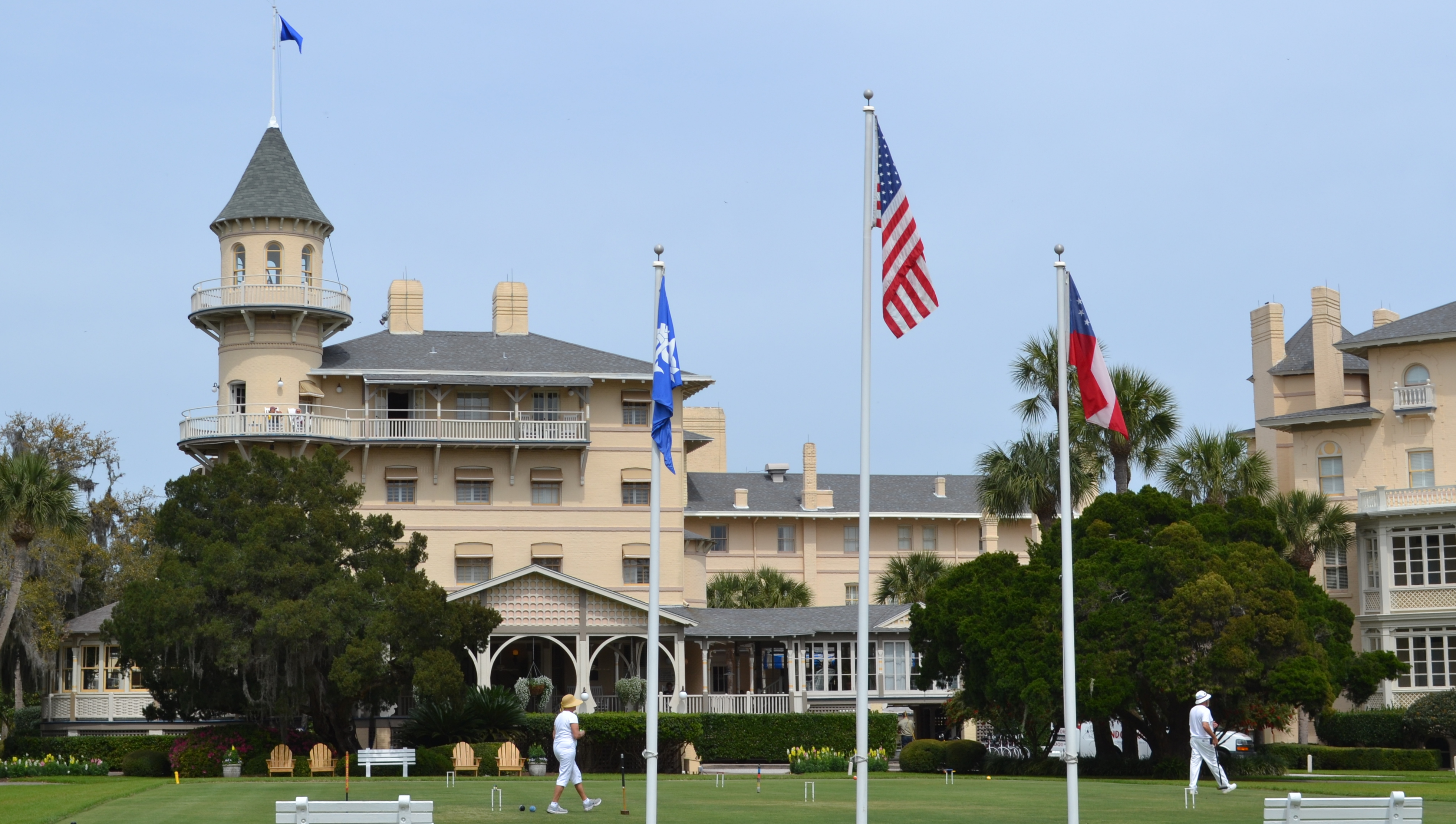
Jekyll Island Club, 2012, by Lewis Powell IV. All rights reserved.

Almost from the moment the club opened its doors, tales of ghosts were being told. The president of the club, Lloyd Aspinwall, died during the club’s construction, but some in the crowd spotted him stiffly gliding through the crowd in his usual military manner. He has also been encountered on the Riverfront Veranda of the club. In the annex of the clubhouse, a three-story apartment building called Sans Souci (“without care”), the apparition of Samuel Spenser, former head of the Southern Railroad Company, has been reported, still reading his morning paper. The shade of a former bellhop still knocks on doors requesting laundry.

Sources

  • de Bellis, Ken. National Register of Historic Places Nomination Form for the Jekyll Island Historic District. Listed 20 January 1972.
  • Turnage, Sheila. Haunted Inns of the Southeast. Winton-Salem, NC: John F. Blair, 2001.

The Brown Hotel
335 West Broadway
Louisville, Kentucky

A sculpted likeness of businessman James Graham Brown stands on the sidewalk just outside the magnificent 16-story hotel he built at the corner of Fourth and Broadway. At his feet sits his little canine friend, Woozem, who, as the story goes, Mr. Brown rescued from a circus that had recently cut the dog’s act. The dog and Mr. Brown lived in the lap of luxury there until the end of their days, perhaps they remain.

Brown Hotel, 2005, by Derek Cashman. Courtesy of Wikipedia.

Opening in 1923, the Brown Hotel provided four-star accommodations to the citizens of Louisville for a number of decades. The famous Hot Brown was developed in the hotel’s restaurant. The hotel operated until 1971, just two years after the death of James Brown, when it closed its doors. The grand dame held offices for the public school system and when the downtown began a resurgence in the late 1980s, the hotel was renovated and restored to its former glory.

The fifteenth floor of the hotel is currently an unimproved storage space for the hotel and seems to be the center of spiritual activity. It’s believed that it was on this floor that Mr. Brown has his suite and perhaps his spirit still roams the floor. The elevator is often called to this floor by an unseen presence. Two employees reported going up to the floor and as they exited they noticed a third set of footprints in the plaster dust on the floor. A guest who had stayed on the fourteenth floor complained of hearing heavy footsteps and furniture moving all night. Perhaps Mr. Brown and Woozem are just making themselves comfortable.

Sources

  • Brown, Alan. Haunted Kentucky: Ghosts and Strange Phenomena of the Bluegrass State. Mechanicsburg, PA: Stackpole, 2009.
  • Parker, Robert W. Haunted Louisville: History and Hauntings from The Derby City. Decatur, IL: Whitechapel Press, 2007.
  • Starr, Patti. Ghosthunting Kentucky. Cincinnatti, OH: Clerisy Press, 2010.

Bourbon Orleans Hotel
717 Orleans Street
New Orleans, Louisiana

Located just behind St. Louis Cathedral and running along the partier’s paradise of Bourbon Street is the grand Bourbon Orleans Hotel. On my first visit to New Orleans, my family stayed in this marvelous hotel. While we didn’t encounter anything paranormal, I remember spending a few wonderful hours sitting on the balcony watching the crowd below on Bourbon Street.

This graceful building was first opened as the Orleans Ballroom in 1817. It was host to the famous Quadroon Balls, balls where mixed race women (a “Quadroon” was someone whose ancestry was 1/4 of African descent) were introduced to wealthy white men. While these people could not legally marry, the system of plaçage provided these men with mistresses or concubines whom the men would support and provide for. By 1881, the building, with the adjoining Orleans Theatre, had begun to fall into ruin and the buildings were taken over by the Sisters of the Holy Family for use as an orphanage, school and convent. This convent, according to Sheila Turnage, was the first convent for African-Americans in the nation. After some 83 years as a convent, the building was converted into a hotel to serve the booming New Orleans tourist trade.

During my stay, I recall reading or hearing a story from the renovation of the building (though I cannot source it). A worker in the building hurt himself and uttered a vulgarity when an unseen hand slapped him across the face. Certainly, the spirits of nuns and the children that they tended have lingered in this building. Guests often encounter the spirits of children throughout the building. But also, the spirits from the structure’s wilder days as a ballroom do appear as well. Dancing couples have been seen in the ballroom and frock-coated gentlemen are sometimes reported in the men’s restroom off the lobby (once a room for playing poker).

Sources

  • “History.” com. Accessed 30 October 2010.
  • Turnage, Sheila. Haunted Inns of the Southeast. Winton-Salem, NC: John F. Blair, 2001.

Lord Baltimore Hotel
20 West Baltimore Street
Baltimore, Maryland

Blogger Lon Strickler of the blog, Phantoms and Monsters, wrote about a visit to the Lord Baltimore Hotel in 1980. Sitting with a friend in the hotel’s lobby, he writes, “I sensed many raw emotions, good and bad…We sat in the lobby over drinks and conversed about our past…but, in the meantime, I was being bombarded by distant sounds of yesteryear. It became so bad that I started to feel claustrophobic and had to make a ‘polite as possible’ excuse to leave.” He has never returned to the hotel.

Authors Melissa Rowell and Amy Lynwander include an account of a hotel employee named Fran in their book, Baltimore Harbor Haunts. In it, Fran describes her personal experiences as well as those of employees working under her. Fran’s account mentions a little girl she encountered on the nineteenth floor. The girl ran past an open doorway and when Fran ran after her, she found the hallway deserted. She turned and saw a couple in formal attire walking towards her. Asking if the little girl belonged to them, she turned towards the direction of the now missing child. Fran turned back to the couple and discovered they had disappeared as well. 

Lord Baltimore Hotel in a 1942 postcard.

Evidently, Fran is not the only person to witness the apparition of a little girl as a guest was awakened to find a young girl in her room crying. When approached, the girl vanished. One of Fran’s coworkers encountered three or four spirits standing in the hotel’s darkened ballroom. When she turned on the lights, all figures were gone.

Certainly, the Lord Baltimore Hotel could be haunted. Built in 1928, the hotel was the largest in the state of Maryland. As one of the tallest buildings in the area at the time, the hotel attracted jumpers after great stock market crash of 1929. Another writer and psychic, Paul Schroeder, had some possible interactions with some of these vestiges of suicides past when he stayed at the hotel. Entering a suite on the 18th floor, he encountered “the reek near the window overlooking the corner was of death and suicide.” After deeming the room unsatisfactory, Schroeder was given another suite where he had “persistent and intermittent visions of a young girl emotionally bereft screaming a face of frozen horror.” He was later told, by the staff, that a young woman had committed suicide on that floor which was believed to be behind much of the paranormal activity on that floor of the hotel.

Sources

  • Rowell, Melissa and Amy Lynwander. Baltimore’s Harbor Haunts: True Ghost Stories. Atglen, PA: Schiffer, 2005.
  • Schroeder, Paul. “Ghosts and nightmares in a haunted Baltimore hotel: The Raddison Lord Baltimore.” UFO Digest. 31 January 2014.
  • Shoken, Fred B. National Register of Historic Places nomination form for the Lord Baltimore Hotel. 17 March 1982.
  • Strickler, Lon. “Spooky Lord Baltimore Hotel.” Phantoms and Monsters. 31 January 2014.

Anchuca
1010 First East Street
Vicksburg, Mississippi

One guest at Anchuca remarked to the owners that she couldn’t stay in the house because it was too emotional. Indeed, Anchuca’s history is marked with periods of intense emotional turmoil. The house has seen the deaths of some of its past owners, members of their families and then soldiers who came through the home’s doors wounded and ill during the Civil War. Some of them most surely died here as well. Throw in Joe Davis, the brother of Confederate President Jefferson Davis, and you have quite the contingent of spirits roaming the halls of Anchuca.

A 1936 photo of Anchuca taken for the Historic American Buildings Survey by James Butters. Courtesy of the Library of Congress, Prints and Photographs Division.

With a name derived from a Choctaw word meaning “happy home,” Anchuca has hosted a number of families during its long history. It was originally constructed in 1830 for politician J. W. Mauldin and was sold to merchant Victor Wilson some years later. Wilson added the Greek revival portico to the house and he and his wife lived here through the tumult of the Siege of Vicksburg when the house served as a hospital. After the war, the home was owned by Joseph Davis who died here in 1870. The house was then purchased by the Hennessy family.

Portraits believed to be Mr. and Mrs. Hennessy grace the wall above the sideboard and with their portraits hang a tale. Some years ago, one of Anchuca’s owners discovered water leaking from the dining room ceiling. He rushed upstairs to the bathroom above the dining room to find that water is coming from the bathroom ceiling and then making its way into the dining room below. He called in a plumber to check the hot water heater and air conditioning unit that were in the attic above the bathroom. As he was looking for the leak, the plumber plunged his hand into the insulation and pulled out these two portraits. The plumber did not find any dampness to suggest a leak and the leaking water mysteriously subsided. Perhaps Mr. and Mrs. Hennessy wished to have their portraits restored to a rightful place within their former home?

Besides mysterious water leaks, the spirits of Anchuca also do a bit of redecorating on occasion. Just after purchasing the house, a friend of one of the owners witnessed a spirited display of displeasure. The owner had hung three South American masks on the wall of his quarters. A friend of his watched one afternoon as one of the masks lifted itself off the wall, hung for a moment in midair and then dropped to the floor. The friend fled in fear. The owner picked up the mask and hung it in its spot on the wall and asked the spirits to leave it alone. The masks have not been cast to floor since. The owners, staff and guests have also encountered a female spirit throughout the house.

Sources

  • Brown, Alan. Haunted Vicksburg. Charleston, SC: History Press, 2010.
  • Miller, Mary Warren. National Register of Historic Places nomination form for Anchuca. 25 February 1981.
  • Sillery, Barbara. The Haunting of Mississippi. Gretna, LA: Pelican, 2011.
  • Turnage, Sheila. Haunted Inns of the Southeast. Winton-Salem, NC: John F. Blair, 2001.

Grand Old Lady Inn (formerly Balsam Mountain Inn)
68 Seven Springs Drive
Balsam, North Carolina

Balsam Mountain Inn, 2012, by Lewis Powell IV. All rights reserved.

Passengers departing from their trains in Balsam, North Carolina just after the turn of the century were met with an inviting and palatial hotel overlooking the station. They would enjoy the cool mountain air from the double porch with views of the town below. Though the train no longer brings them, visitors today can enjoy the same air and views and, if they stay in room 205, perhaps a nice back rub from a spirit. One guest staying in this room with her husband had a bad back and was awaken by a back rub from him, until she realized he was sound to sleep next to her. The unidentified ghost on the second floor of this hotel which opened in 1908 also rattles doorknobs of rooms on that floor.

Sources

  • Bordsen, John. “Room with a Boo.” The Charlotte Observer. 25 October 2009.
  • Kermeen, Frances. Ghostly Encounters: True Stories of American’s Haunted Inns and Hotels. NYC: Warner Books, 2002.
  • Turnage, Sheila. Haunted Inns of the Southeast. Winton-Salem, NC: John F. Blair, 2001.

20 South Battery (formerly Battery Carriage House Inn)
20 South Battery
Charleston, South Carolina

Sign for the Battery Carriage House Inn, 2011, by Lewis Powell, IV. All rights reserved.

Located at the Southern tip of the city of Charleston overlooking the meeting point of the Cooper, Stono, Wando and the Ashley Rivers is The Battery, one of Charleston’s “best” neighborhoods. It was at The Battery where many of the city’s and state’s best families built grand homes. From the rooftops of these grand homes and White Point Gardens fronting Charleston Harbor that citizens, including the diarist Mary Chestnut watched as the Confederacy laid siege to Fort Sumter in Charleston Harbor. Number 20 South Battery is home to the Battery Carriage House Inn, possibly one of the more spiritually active locations in the city.

A few of the Battery Carriage House Inn’s eleven sumptuous guest rooms are apparently haunted. A couple staying in room 3 were awakened by noise from a cellphone; while this may be quite common, phones are not supposed to make noise when powered off as this phone was. But this activity seems minor compared to the reports from rooms 8 and 10. Guests staying in Room 8 have encountered the apparition of a man’s torso. There is no head or limbs, just a torso dressed in a few layers of clothing. One guest sensed that this figure was quite negative. The spirit in Room 10 is much more pleasant and even described as a gentleman. The innkeepers believe this may be the spirit of the son of a former owner who committed suicide.

Sources

  • “Ghost Sightings.” com. Accessed 31 October 2010.
  • Kermeen, Frances. Ghostly Encounters: True Stories of American’s Haunted Inns and Hotels. NYC: Warner Books, 2002.
  • Spar, Mindy. “Local haunts among treats for Halloween.” The Post and Courier. 26 Otcober 2002.
  • Turnage, Sheila. Haunted Inns of the Southeast. Winton-Salem, NC: John F. Blair, 2001.

The Union Station Nashville Yards
1001 Broadway
Nashville, Tennessee

Ghosts are associated with certain types of stone, primarily granite and limestone, water and also iron. The iron rails of railroads that have stretched around the globe have given rise to many ghostly legends associated with railroads. Nashville’s Union Station, first opened in 1900, while no longer hosting the iron rails or even the old train shed, still hosts a few ghosts associated with the railroad. Legend has it that on nights of the full moon, a ghostly train still pulls into the station, while that legend may be a bit ridiculous, staff and guests of the hotel have reported hearing the scream of a steam whistle at times; perhaps a residual noise. 

Union Station Hotel, 2008, by The Peep Holes. Courtesy of Wikipedia.

During World War II, Union Station was the point of departure for tens of thousands of troops departing for battlefronts around the world. Two spirits remain from this period. One is the revenant of a young soldier who stands near the tracks seemingly waiting for something. The other is the spirit of a young woman who legend states was killed when she fell onto the tracks in front of a train. With the demolition of the train shed, it is unknown if these spirits are still active.

In the second half of the twentieth century, the grand station saw fewer and fewer passengers as the automobile became the dominant mode of transportation in America. The last train departed the station in 1978 and the station closed its door only to be reopened as a luxury hotel some years later. A more recent legend tells of a middle-aged couple that would meet at the hotel on a weekend once a month. By all accounts, the man appeared to be married, but perhaps not the woman. The lovers would spend the entire weekend in their room but one month, the man did not show up. The woman, in distress, spent the weekend in her room and was later discovered dead with a revolver at her feet. Her room, 711, has seen a good deal of activity, with one guest reporting her bag, which she had unpacked, had been repacked upon while she had stepped into the bathroom. Activity seems to revolve around this room with the spirit of young woman being encountered in the hall outside this room and in surrounding rooms as well.

Sources

  • Harris, Frankie and Kim Meredith. Haunted Nashville. Atglen, PA: Schiffer, 2009.
  • Kermeen, Frances. Ghostly Encounters: True Stories of American’s Haunted Inns and Hotels. NYC: Warner Books, 2002.
  • Traylor, Ken and Delas M. House, Jr. Nashville Ghosts and Legends. Charleston, SC: History Press, 2007.
  • Turnage, Sheila. Haunted Inns of the Southeast. Winton-Salem, NC: John F. Blair, 2001.

The Martha Washington Inn & Spa
150 West Main Street
Abingdon, Virginia

War changes many things and the Civil War certainly changed Martha Washington College. The young girls that had studied and gossiped in the college’s rooms became nurses for the wounded young soldiers brought from battlefields far and near and some of those rooms housed able young men who were training on the grounds. Like so many buildings that served as hospitals during the Civil War, the pain and death left its mark upon the college. A number of soldiers still are rumored to walk the halls and occasionally shock guests and staff alike. In addition a ghostly horse, still looking for its long-dead master, still walks the grounds outside.

Martha Washington Inn, 2006, by RebalAt. Courtesy of Wikipedia.

Built as a private residence, General Francis Preston’s 1832 home became an upscale women’s college in 1858. The Great Depression’s punch to the nation led to the school’s closure in 1932 and “The Martha” was later reopened as an inn. The inn is now a part of The Camberley Collection, a group of fine, historic properties.

Sources

  • Hauck, Dennis William. Haunted Places: The National Directory. NYC: Penguin, 2002.
  • “History.” The Martha Washington Hotel and Spa. Accessed 10 March 2011.
  • Kermeen, Frances. Ghostly Encounters: True Stories of America’s Haunted Inns and Hotels. NYC: Warner Books, 2002.
  • Lee, Marguerite DuPont. Virginia Ghosts, Revised Edition. Berryville, VA: Virginia Book Company, 1966.
  • Rosenberg, Madelyn. “History and Legend Abound at Abingdon’s Martha Washington Inn.” The Roanoke Times. 31 July 1999.
  • Taylor, L. B., Jr. The Ghosts of Virginia. Progress Printing, 1993.
  • Turnage, Sheila. Haunted Inns of the Southeast. Winston-Salem, NC: John F. Blair, 2001.
  • Varhola, Michael J. Ghosthunting Virginia. Cincinnati, OH, Clerisy Press, 2008.

Lowe Hotel
401 Main Street
Point Pleasant, West Virginia

N.B. This article was originally published September 24, 2013, as a newsworthy haunt.

Paranormal events rarely resonate so much within a community or even on a national scale as the sightings of the Mothman have. A series of sightings of this creature occurred between November of 1966 and December of 1967; events that inspired a handful of books, a movie and, for over a decade, a festival in Point Pleasant.

Postcard of the Lowe Hotel circa 1930-45. Courtesy of the
Boston Public Library.

The annual festival has certainly boosted “paranormal tourism” in Point Pleasant and one of the more popular paranormal spots in the city is the Lowe Hotel. During the festival tours will be lead through this haunted, turn of the 20th century hotel. According to an article from the Point Pleasant Register, the current owners of the hotel were initially bothered by the idea that their hotel might be haunted, though as attitudes towards the paranormal have changed, the haunting has become an attraction to tourists.

Theresa Racer, of the blog, Theresa’s Haunted History of the Tri-State, presents the best history of the hotel to be found online. The hotel was opened as the Hotel Spencer in the nascent years of the 20th century. The four-story hotel was popular with riverboat traffic operating on the Kanawha and Ohio Rivers which meet at Point Pleasant. The hotel was purchased by Homer Lowe in 1929 who renamed it the Lowe Hotel. It operated until the late 1980s when the owner put it up for sale. The current owners purchased the hotel in 1990.

According to Racer, there is a large contingent of spirits within the hotel. The spirit of a beautiful, but disheveled woman has been reported on the mezzanine between the first and second floors. This section houses the dining room and it is here that the spirit is seen dancing to music that only she can hear. On the second floor, a tyke on a tricycle has been seen prowling the halls. Sometimes the sound of a little girl’s laughter will accompany the sound of a squeaky tricycle.

The third floor seems to be the most active with a few of the rooms there being haunted. One of the most remarkable stories involves the suite at 316. A female staying in this suite entered the room one evening to find a man standing by the window looking out. She asked him who he was and he replied that he was Captain Jim and he was waiting on a boat. After noticing the man did not have legs, the woman fled.

Two chairs on the fourth floor seem to have activity surrounding them. The recent article mentions a wheelchair on that apparently moved on its own volition. The chair vanished for about three years only to reappear out of the blue. Racer reports that an old rocking chair in a storage room on that floor is supposed to rock on its own.

Sources

  • Racer, Theresa. “The Lowe Hotel, Pt. Pleasant.” Theresa’s Haunted History of the Tri-State. 2 March 2011.
  • Sergent, Beth. “History of local hotel a festival favorite.” Point Pleasant Register. 19 September 2013.

At Play in the Field of the Dead—Huntsville, Alabama

Maple Hill Park
1351 McClung Avenue, Southeast
Huntsville, Alabama

What could be creepier than the spirits of children perhaps wistfully singing “Ring Around the Rosie” in a minor key and asking, “will you come play with me?” in a sing-song voice? Why, a playground next to a cemetery that’s crawling with these youthful spirits. It’s from these terrifying images that the legend of the “Dead Children’s Playground” was born.

Within view of the resting dead of adjacent MAPLE HILL CEMETERY (202 Maple Hill Street), children happily play on the playground equipment at Maple Hill Park. Lore says that only some of those children are alive. According to Jessica Penot in her 2010 Haunted North Alabama, the playground has gained notoriety among teens out for a scare. They will sometimes sneak into the park at night to witness the paranormal phenomena that supposedly plagues the park.

Maple Hill Cemetery Huntsville Alabama
A view of Maple Hill Cemetery, 2006. Photo by LonelyPilgrim, courtesy of Wikipedia.

The internet is rife with stories involving a murderer killing children here in the 1960s and the playground being constructed as a place of solace for parents whose own children rest just yards away in the cemetery. Even Wikipedia had an article (which now appears to have been deleted) though it is riddled with inaccuracies. These stories are mostly just common internet lore, the actual history of the park is a bit more pedestrian.

Other than its close proximity, Maple Hill Park is not a part of Maple Hill Cemetery. Local ghost authority, Jacquelyn Proctor Reeves, is quoted in a 2012 article as saying there is no evidence that anyone has ever been buried in the area of the park. The property, according to Penot, was originally a stone quarry from 1945 to 1955. After the quarry’s closure, the land was donated to the City of Huntsville and the property became a park in 1985.

Some sources provide the park’s founding as 1822, which is the date for the founding of the cemetery. The cemetery was founded by planter Leroy Pope, the founder of Huntsville, only a decade after the city’s incorporation in 1811. Pope would find his final rest here in 1844. Now spanning some 100 acres, the cemetery has some 80,000 interments and within its fences lie five state governors and a number of congressmen with a host of the local citizenry.

The history of the park, however, does not provide any indication that it might be haunted. Penot questioned a number of park visitors for her book and discovered that many of them had stories to tell about odd occurrences in the park. The most common activity recorded seems to be that the swings will often move by themselves. During her investigation, Penot witnessed this activity herself. In fact, there are a number of YouTube videos showing this phenomenon. Others report to Penot that voices of children have been heard. Of course, one must consider that the park is in a residential area and these voices may be from living neighbors.

A local paranormal organization, the Alabama Paranormal Society (APS), has investigated the location in the past few years and did experience some activity. A psychic with the group was able to determine that there were a number of spirits in the park. They believe that the spirits are wanderers who travel to the park from the cemetery. So far, I have not been able to find any documentation that there is activity in the cemetery.

Sources

Rending the veil—Historic Preservation in Alabama

And, behold, the veil of the temple was rent in twain from the top to the bottom…
— St. Matthew 27:51 (KJV)

One of Eufaula’s magnificent mansions seen through the veil of trees of North Eufaula Avenue. Photo 2014 by Lewis Powell IV, all rights reserved.

Frequent travelers on Alabama Highway 431 know the short section that passes through north Eufaula as a verdant meditation, a brief respite from the normal hustle of this four lane highway. For about a quarter mile, the road narrows from four to two lanes; the speed limit drops while ancient oaks spread their branches over the road, and historic homes keep watch from the sides. Travelers throughout north Georgia and Alabama know this lush drive, called North Eufaula Avenue, as they head towards the Florida Panhandle. Movie-goers may recognize this street from the Reese Witherspoon film, Sweet Home Alabama. In the film, the lead character drives down this historic roadway on the way to her Alabama home.

Historic preservationists often talk about the “historical fabric” which includes the concrete things that actually make up a historic structure, but also the things surrounding a structure that help to provide a complete historical picture, or context, if you will. Within a historic district this may include outbuildings, the roads and streets, sidewalks and other fixtures, plantings and the arboreal canopy. North Eufaula Avenue and its trees are a major feature of the historic fabric of the Seth Lore and Irwinton Historic District, which encompasses the residential neighborhoods to the north and west of Eufaula’s downtown.

The Alabama Department of Transportation is ramping up to rend part of the fabric of North Eufaula Avenue, considered by many to be the most iconic street in the city, if not the whole state. In an effort to ease occasional congestion on Highway 431—proponants argue that the congestion only occurs a few times a year—the DOT has decided to expand the two lanes to four through the historic district. This will require the destruction of part of the median and the removal of a few trees as well as trimming the arboreal canopy. Aside from this minor destruction to the physical fabric, the construction would cause some drastic changes to the aesthetics and spiritual fabric of the district.

Quite simply, the increased traffic will destroy the quiet beauty of the district. But there’s also the possibility that the spiritual fabric of the district may be harmed. In cities ranging from New Orleans, Louisiana to Savannah, Georgia to Frederick, Maryland and Williamsburg, Virginia—places where the historical fabric is very much intact—there often seem to be many ghosts. Perhaps the ghosts remain because the historical fabric has not been disturbed. While documentation for Eufaula’s spirited side is sorely lacking, there is one documented haunting on North Eufaula Avenue. The grand SHORTER MANSION (340 North Eufaula Avenue) has graced this lovely street since 1884, though it was remodeled into its current form starting in 1901.

The Shorter Mansion, 2014. Photo by Lewis Powell IV, all rights reserved.

Considered an outstanding example of neoclassical architecture, the house remained in the politically prominent Shorter family until 1965 when it was purchased by the Eufaula Heritage Association which has operated the house as a museum, memorial and events facility since. The house has been used frequently for weddings and it is in some of the wedding photos taken here that two spirits are purported to appear, though the man in the top hat and the woman in pink have also made some rare appearances in person as well. In one case, a staff member encountered the woman in pink and spoke to her in the parlor. The staff member turned away from the woman for a moment and turned back to her to find she had disappeared.

In 2007, Southern Paranormal Researchers, a paranormal investigation organization out of Montgomery, investigated the house. In their investigation report they note that there is other activity that has been witnessed within the house including phantom smells, items being moved and a feeling of being watched. Over the course of two investigations, the investigators had a few personal experiences including hearing “loud laughing” and banging in the next room. A possible apparition was observed as well as shadow figures. The investigators concluded that the house had residual energy manifesting itself, though there is the possibility of an intelligent spirit at work here as well.

While the activity at the Shorter Mansion is the only documented paranormal activity on North Eufaula Avenue, I imagine there is activity in many of the other graceful structures along the avenue. It is accepted in the paranormal community that renovation and remodeling can stir up activity, though it may also eventually lead to a decrease. Certainly, the activity from cities that have lost much of their historic fabric is decreased, witness Southern cities like Atlanta, which has little-reported activity from its core.

A sign advertising the Eufaula Pilgrimage in the median in front of the Shorter Mansion, 2014. Photo by Lewis Powell IV, all rights reserved.

The battle of North Eufaula Avenue is turning into a David and Goliath type fight. The city government, citizens and supporters of historic preservation have taken a stand against the state DOT and the Governor, who has come out in support of the road widening. Walking down North Eufaula Avenue just last month, I observed that nearly every house had signs against the widening prominently displayed. But the saddest sight seemed to be a large sign advertising the Eufaula Pilgrimage that is held annually in the spring. As if to rub in the destruction, the DOT originally scheduled the widening to be completed by the start of the pilgrimage.

One of the many anti-widening signs lining North Eufaula Avenue, 2014. Photo by Lewis Powell IV, all rights reserved.

Proponents of the widening have tried to stop or at least put the construction on hold through legal means. A lawsuit in federal court was dismissed just before the new year because the federal government is not involved in this battle. The judge suggested that the heart of the matter is really who owns the median of North Eufaula Avenue. Just yesterday (January 2), the mayor and members of the city council voted to not sue the state over the median’s ownership. It now appears that barring any further delays, Eufaula’s verdant veil will be rent beginning on Monday.

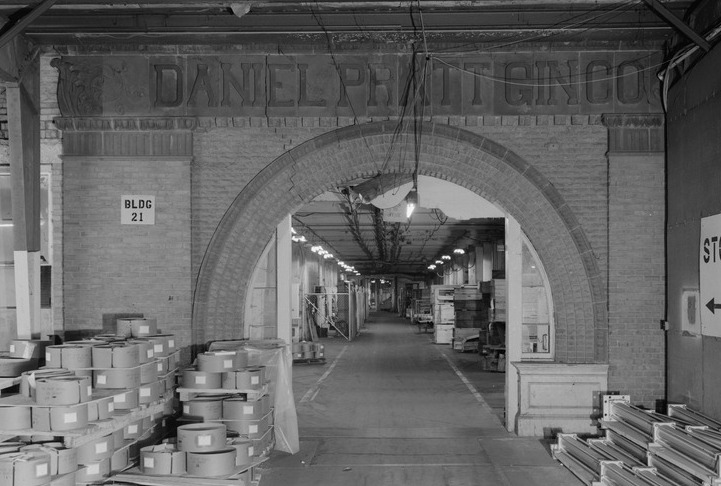
While the fate of North Eufaula Avenue looks bleak, another historic and haunted Alabama site appears to be off the chopping block. The future of Prattville’s landmark PRATT COTTON GIN (Bridge Street) building has been up in the air for a few years. The huge mill complex, which provides a background for downtown Prattville, has been abandoned since 2011. Recently, developers have taken an interest in the buildings, some wishing to demolish the buildings for their brick and wood while others have bandied the idea of renovating the mill into residential lofts.

One of the old entrances to the building now locked within the more modern structure. Photo 1997, by Jet Lowe for the Historic American Buildings Survey (HABS), courtesy of the Library of Congress, Prints and Photographs Division.

On Monday, the mill complex was sold on the courthouse steps to the Historic Prattville Redevelopment Authority, which will immediately begin to stabilize the buildings and begin creating a plan to reuse the old mill. The HPRA purchased five large mill buildings constructed between 1843 and 1912, some 40 acres of mill property, the millpond, and a few spirits.

Downtown Prattville with the Daniel Pratt Cotton Gin in the background. Photo 2010 by Spyder_Monkey, courtesy of Wikipedia.

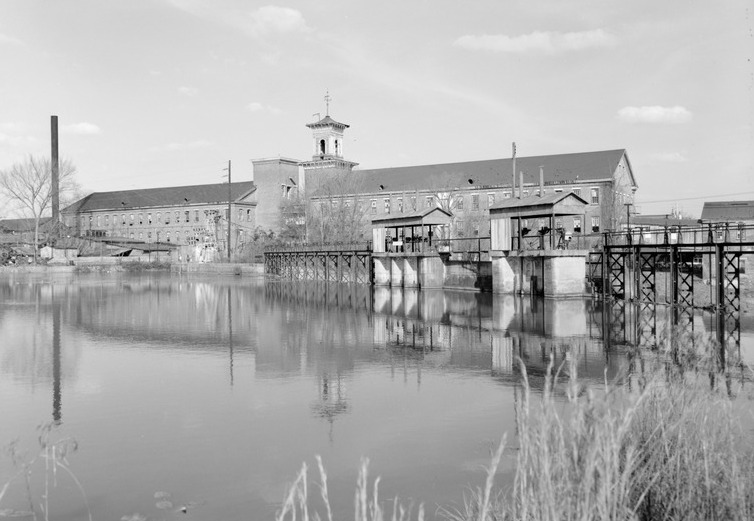
Before the advent of child labor laws, mills throughout the country employed young children. Often lacking safety policies and devices, millworkers were sometimes seriously injured or killed. At some point in the late 19th or early 20th centuries, sources do not provide a date, a young boy named Willie Youngblood was killed in one of the mill buildings. After his death, a woman was observed near the mill clad in black. Legend says that she threw herself off the mill dam.

The Pratt Cotton Gin with the mill dam in the foreground. Photo by Jack E. Boucher, 1974 for the Historic American Buildings Survey (HABS), courtesy of the Library of Congress, Prints and Photographs Division.

Believed to be the spirit of Willie’s mother, the darkly dressed figure has been seen by millworkers for decades. Recently, the mill buildings were investigated as part of the SyFy Channel show, Deep South Paranormal. While the team was able to capture some evidence during their investigation, the most impressive evidence was video of a black-clad figure walking on the mill dam. Perhaps the veiled figure won’t be rent from her nightly dam walk by the mill’s renovation.

Sources 

Writer says that ghosts necessary for heritage

I stumbled across this article while searching for ghosts in back issues of The Anniston Star. Without the influence Mrs. Windham’s wonderful books, this blog would not exist. A friend who knew Mrs. Windham was supposed to have gives me an introduction to her in March 2011 when she came to LaGrange for the Azalea Storytelling Festival. Unfortunately poor health prevented her appearance at the festival and she passed away a few months later. I wrote a memorial here as soon as I heard of her passing.

Kathryn Tucker Windham in 2007. Courtesy of Wikipedia.

Though she’s not present with us on this physical plane, her spirit and influence is still flitting like a bird reminding us of the ghosts around us.

The Anniston Star
21 September 1975

Page 10

Writer says that ghosts necessary for heritage

By Tom Gordon
Star Staff Writer

We need ghosts in order to keep our heritage, says Alabama’s own ghost-writer, Kathryn Tucker Windham.

Our heritage is a mixture of history, folklore, bits of good-natured nonsense and cold-hearted truth. Mrs. Windham, who lives in Selma with her ghost friend Jeffrey, says the heritage is being lost because persons are not taking the time to relax and enjoy life as they once did.

Speaking with intense enthusiasm, Mrs. Windham says that more and more Alabamians are growing up without having their lives enriched by tales and lessons once passed from generation to generation. This high-speed automated age has made it difficult and sometimes unnecessary for people to gather on front porches or in front of fireplaces to talk and learn from each other, she says.

“WE DON’T know who we are or what we are or where we come from,” she says. “We’re not talking about it the way we used to.”

The need to talk about and preserve our heritage, even that part which includes ghosts, was the message Mrs. Windham repeated several times Thursday in a short talk to a noon luncheon of the Anniston Kiwanis Club.

She has repeated it elsewhere—in schools, luncheons, newspaper interviews and on television and radio programs—and in four books of ghost stories she has written in the past few years. The first was “Thirteen Alabama Ghosts and Jeffrey.” Other books have presented 13 ghost tales from Mississippi and Georgia, and elsewhere around the South.

MRS. WINDHAM, a former reporter for the Selma Times-Journal, spends a lot of her time tracking down ghost stories and other folklore. “All you’ve got to do is listen” she says, because tales are everywhere. She even comes across many interesting tidbits in her work as a community services coordinator for the Alabama-Tombigbee River Planning and Development Commission’s Area Agency on Aging.

She grew up in Thomasville, in South Alabama’s Clarke County, and her childhood was filled with the church homecomings, family reunions, tall-tale telling, romance and other features she says make the South unique, even today.

She doesn’t remember the first ghost story she was told, but she says she has had a latent interest in spirits and scary stories since her youth. Much of her early ghost learning, she says, came from Thurza, her family’s black cook.

THAT INTEREST was stirred she says, by “Jeffrey”—the name she uses for whoever or whatever it is that walks the floors, slams the doors and scares the cat in her Selma home.

Jeffrey and two ghost stories figured prominently in her Kiwanis Club talk. One story, about the “Jumbo light,” dealt with a man who lived in the now-dead Chilton County community of Jumbo. The man was killed by moonshiners he surprised in some woods one night while making his way home with the aid of a lantern.

LONG-TIME AREA residents still say they see a moving lantern near the old Jumbo community to this day, she says. A Times-Journal photographer traveled to the Jumbo area to take a picture of the phenomenon, she says, and became scared. He was even more started when the pictures he developed showed not only a swinging light moving along a road, but a pair of empty shoes moving along with it.

Whether a ghost tale is true or not matters little to Mrs. Windham. The tale teller’s feeling about the story is more important.

“I can’t get interested in the stories unless I feel they are true to the people who are telling them,” she says.

13 Southern Haunts You’ve Probably Never Heard Of

We’ve all seen them and we’ve probably posted links to them on Facebook. They come with a seemingly infinite variety of name, superlative and number combinations: “Top 10 Scariest Haunted Places,” “6 Most Terrifying Places to Eat Dinner,” “50 Academically Prestigious Colleges and Universities with Ghosts,” “23 Super-Duper Awesome Most Haunted Prisons.” During Halloween especially, these “articles” sprout like veritable weeds along the sides of the information superhighway.

Usually, these articles simply rehash the same stories about the same locations and rarely do they ever provide much useful information. The author usually puts in just a modicum of research and produces something that is simply entertaining without providing much depth. It’s like a picture of Kim Kardashian that gets retweeted a million times, it provides nothing useful yet it gets passed around ad nauseum to the enlightenment of no one.

I do, however, have to commend Theresa Racer on her marvelous list of haunted places in all 50 states that she posted on her blog.

This is my attempt at one-upping these “articles.” There are countless haunted locations that are rarely covered, yet, in my humble opinion, are fascinating and worthy of a bit more attention.

University of Montevallo
Montevallo, Alabama

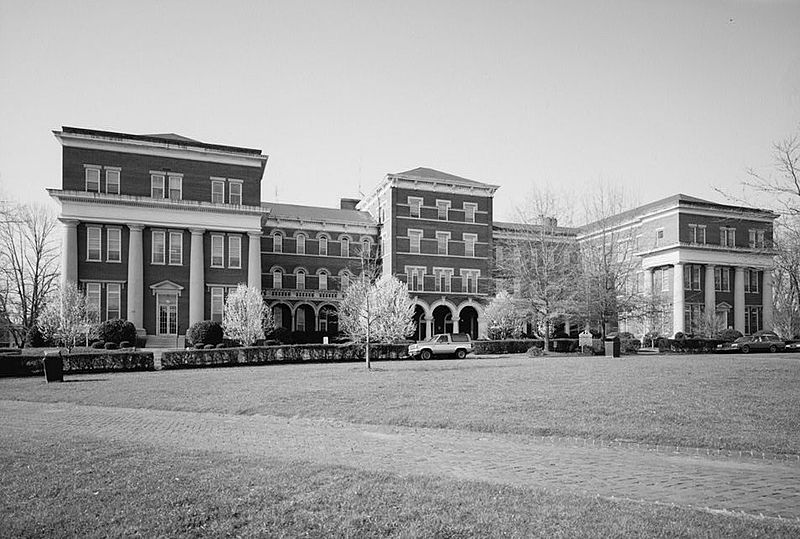
My friend, Jenna, had some roommate issues her freshman year at this small Alabama liberal arts college. At night in her dorm room in Old Main Residence Hall Jenna and her living roommate would hear whispering and footsteps both in her room and outside her door. These are not uncommon issues for college freshmen, though Jenna’s problem roommate was a former student who died in a fire in 1908. When the school operated as a women’s college in the early 20th century, a student, Condie Cunningham, caught her nightgown on fire while trying to heat fudge in a chafing dish. She went screaming down the hall and collapsed. She died a few days later in the hospital.

Main Residence Hall, 1993. Photo by Jet Lowe for the Historic American Buildings Survey (HABS). Courtesy of the Library of Congress, Prints and Photographs Division.

Set in the small, central Alabama town of Montevallo, the university has a wide-ranging roster of revenants, one of which even plays an annual part in one of the university’s most celebrated events: College Night. This annual event pits the students against each other producing competing musicals. Created in 1923, this event is adjudicated from the other side by the spirit of the competition’s founder, Dr. Walter Trumbauer, known affectionately as “Trummy.” According to Jenna, during dress rehearsals and performances, Trummy “gets crazy in Palmer.” Pipes are known to shake backstage and his spirit is seen in and around Palmer Hall where the competition is held. Trummy swings the battens of the curtains onstage during performances of the show that gets his approval. Usually, that show will win.

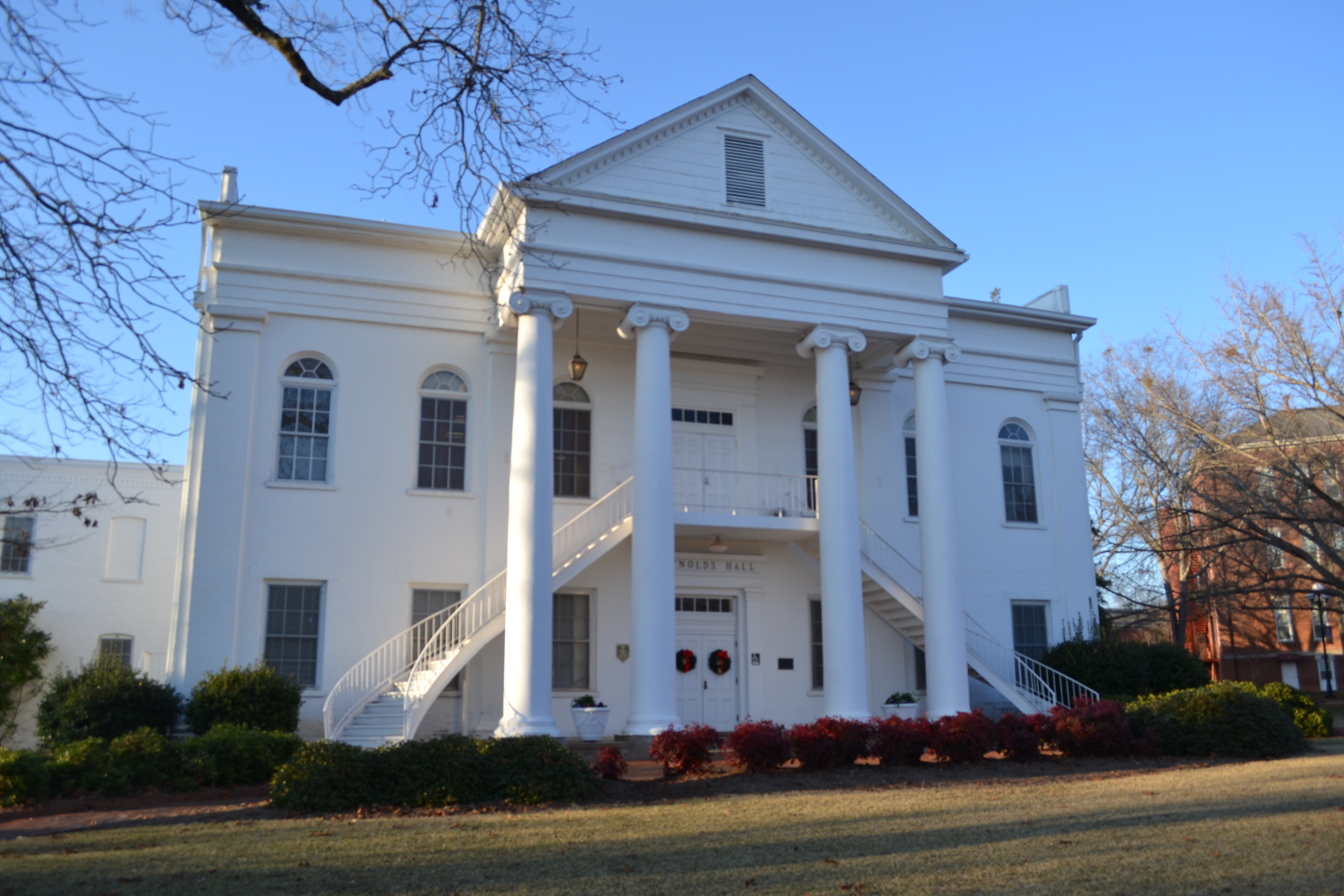
Among the many other spirits on this campus are Confederate soldiers seen in and around Reynolds Hall. The oldest building on campus, Reynolds was used as a makeshift hospital during the Civil War. Under the watch of Captain Henry Clay Reynolds, the wounded and sick soldiers were abandoned when Reynolds and his men left to defend the nearby Briarfield Iron Works. When he returned, he discovered the sick and wounded had been massacred by Union troops.

Reynolds Hall, 2014, by Lewis Powell, IV. All rights reserved.

Now home to the university’s Department of Theatre, Reynolds Hall is still plagued by spirits from that horrible, war-time event. Another student, Mia, told me she had experiences while working alone in an office on the second floor of the building. The room suddenly grew cold and the blinds started shaking violently. She fled. A visiting artist was walking backstage when he encountered a man in a Confederate uniform. He was later informed that there was no period production going on or re-enactors in the building.

By no means are these the only or most active spirits on campus, many buildings are haunted. These include the mid-19th century King House which may be one of the most active buildings on campus, Hanson Hall with its ghostly housemother and Napier Hall with its marble rolling ghost.

Sources

  • Brown, Alan. Haunted Birmingham. Charleston, SC: History Press, 2009.
  • Interview with Jenna M., Cherokee, North Carolina, June 2012.
  • Interview with Mia S., Cherokee, North Carolina, June 2012.

Halcyon House
3400 Prospect Street
Georgetown, District of Columbia

Just as the recent real estate bubble touched properties throughout the country, this very large, imposing haunted house was also affected. The house was put up for sale for around $30 million in 2008, just as the bubble began to burst, and sold for less than half of that in 2011. Of course, such an eccentric house with the dramatic history that Halcyon House has would probably have trouble selling in good times.

This 30,500 square foot manse comes complete with a “whimsical” library, a large studio space, a ballroom, a chapel, six apartments, a very large garage and a panoply of ghosts. A sealed tunnel in the basement of the house is supposed to have been used as part of the Underground Railroad. In the early 20th century, a carpenter was asked to seal the tunnel and as he did he heard cries and mournful sobs issuing from it. Over the years, various owners have reported apparitions in the house as well as phantom knocking. In one particular bedroom, several people have reported being levitated by an unknown force. 

Halcyon House, 1999. Photo by Jack E. Boucher for the Historic American Buildings Survey (HABS). Courtesy of the Library of Congress, Prints and Photographs Division.

The home’s history is just as dramatic as the hauntings. It was built in the late 18th century by Benjamin Stoddert, the first Secretary of the Navy, and was later owned by the eccentric Albert Adsit Clemons, who claimed to be a nephew of Mark Twain. Clemons extensively remodeled the house and refused to install electricity. Since Clemons death, the house was owned briefly by Georgetown University and recently by a sculptor who, with his wife, lovingly restored the home. During their residence, they claimed to have had no odd experiences within the home’s most historic walls.

Sources

  • Alexander, John. Ghosts, Washington Revisited. Atglen, PA: Schiffer Publishing, 1998.
  • Cavanaugh, Stephanie. “Centuries of Drama at Halcyon House.” The Washington Post. 30 August 2008.
  • Krepp, Tim. Ghosts of Georgetown. Charleston, SC: History Press, 2013.
  • Powell, Lewis O. IV. “Haunted Washington, D.C.” Southern Spirit Guide. 22 December 2010.
  • Taylor, Nancy C. National Register of Historic Places nomination form for Halcyon House. 3 November 1970.

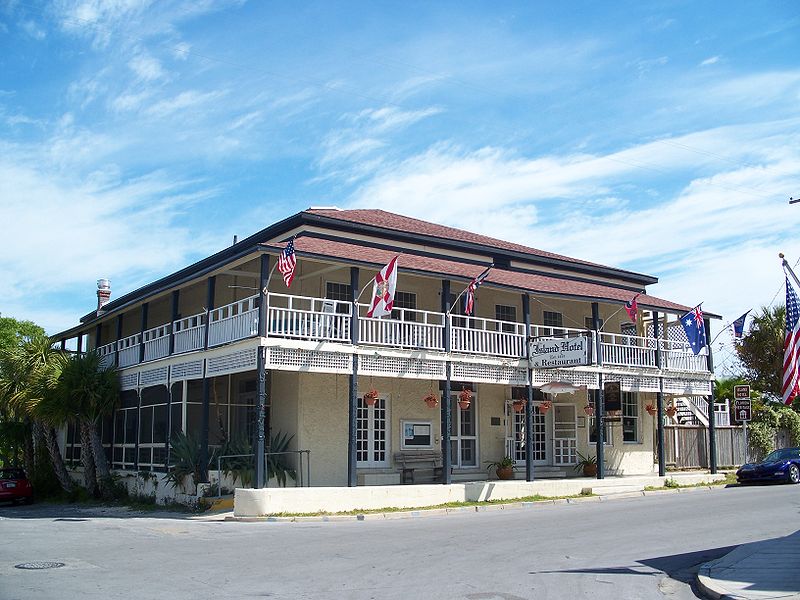
Island Hotel
373 2nd Street
Cedar Key, Florida

Most people head to Cedar Key to avoid the crowds, though visitors to the Island Hotel may encounter a crowd of spirits. According to a number of sources including the hotel’s website, thirteen—a very appropriate number—spirits walk the halls of this hotel.

 
Island Hotel, 2007. Photo by Ebyabe, courtesy of Wikipedia.

The building was built as a general store in 1860, the eve of the Civil War. In 1862, Cedar Key, at that time a small railroad town, became the first town in Florida to fall under Federal occupation. Some buildings were burned, but the general store was spared and quite possibly used as a barracks and warehouse for the occupying troops. After the war, the building returned to its commercial use as a general store and operated successfully until the collapse of the cedar industry and business began to slow. In 1915, the store was purchased by Simon Feinberg who converted the building into a hotel. It has served as a hotel, under a variety of owners, for the last hundred years.

According to a recent article in the Ocala Star-Banner, the spirit of a Confederate soldier has been quite active recently. Guests have spotted him standing guard throughout the upstairs portion of the hotel. Joining the soldier is a small African-American boy, possibly the spirit of a slave who legend holds drowned in a cistern on the property. Former owners, including Simon Feinberg and Bessie Gibbs still patrol the hotel checking up on guests to see that they are being taken care of.

Sources

  • Allen, Rick. “Cedar Key offers island life, complete with ghosts and clams.” Ocala Star-Banner. 7 August 2014.
  • The History of the Island Hotel.” Island Hotel and Restaurant. Accessed 12 December 2014.
  • Island Hotel Ghost Stories.” Island Hotel and Restaurant. Accessed 12 December 2014.
  • Jenkins, Greg. Florida’s Ghostly Legends and Haunted Folklore, Volume 3. Sarasota, FL: Pineapple Press, 2007.
  • Lewis, Chad and Terry Fisk. The Florida Road Guide to Haunted Locations. Eau Claire, WI: Unexplained Research Publishing, 2010.
  • Nolan, David and Micahel Zimny. National Register of Historic Places Nomination form for the Island Hotel. 1 October 1984.

Magnolia Springs State Park
1053 Magnolia Springs Road
Millen, Georgia

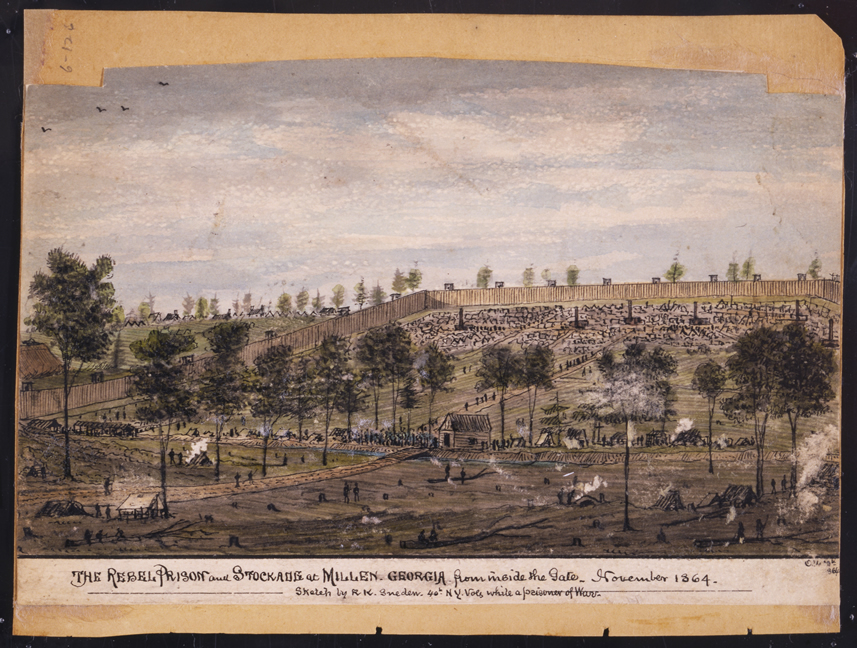
Of the many transgressions committed by both sides during the American Civil War, the neglect and contempt visited upon the prisoners of war looms large. Large-scale prisons were constructed and packed with prisoners who were underfed and sometimes virtually unclothed often under the open sky. Pestilence and lawlessness prevailed among the tightly packed men with death swooping among them picking off victims like a hawk.

Contemporary illustration of Camp Lawton by Robert Sneden,
a Union soldier who was incarcerated here. Courtesy of the U.S.
Fish and Wildlife Service.

In this sordid history, Andersonville Prison in West Central Georgia is the most tragic tale and the prison’s site has been spiritually scarred with many spirits still roaming the piney landscape. While it was possibly the worst of these horrendous prisons, Andersonville is not the only one to mar the Southern landscape. Camp Lawton, near the eastern Georgia town of Millen, was one of the largest prison camps erected by the Confederates. Encompassing some 42 acres, the camp was constructed in 1864 and used for only three months.

It was built to house 40,000 prisoners but in its short lifespan only held about 10,000 prisoners in conditions that were far better than Andersonville. However, there were about 500 deaths in the camp during its service. When Sherman found the camp during his march from Atlanta to Savannah in 1864, he burned it to the ground along with Millen. The site of the camp is now part of Magnolia Springs State Park.

Employees have reported spirits in the park, particularly around one of the cabins occupied by park staff. One manager reported being awakened by a uniformed apparition standing at the end of his bed. Another staff member approached the cabin and saw a face peering out one of the windows at him when he knew the house was empty. At night, staff members have reported that they get the feeling of being followed or watched.

Sources

  • Wilkinson, Chris. “Civil War Prisons.” New Georgia Encyclopedia. 9 September 2014.
  • Miles, Jim. Civil War Ghosts of Central Georgia and Savannah. Charleston, SC: History Press, 2013.

Hayswood Hospital
West Fourth Street at Market Street
Maysville, Kentucky

The large Neo-Classical building crowns a hill above West Fourth Street and turns its face towards the majestic Ohio River beyond the city’s downtown. It’s obvious that the building has been long abandoned. Windows stand open like empty eye sockets while other closed windows hold broken panes that stare jaggedly towards the river. Along the first floor, plywood covers the windows and doors, a thin barrier to intruders, both human and natural.

Hayswood Hospital has endured a long jag of bad luck since its closure in 1983. Just last year, the building was almost sold to collect on a nearly $6,000 unpaid tax bill, but at the last minute, the sale was withdrawn. Nearly a decade after its closure, the building was purchased with the intent of renovating it into apartments, though that has fallen through. In 1999, a condemnation order was placed on the structure requiring the owner to either demolish or renovate the building, but nothing has come of that. The order still stands like a death sentence over a weary prisoner.

Not only is the crumbling building a blight on the city’s face, but asbestos and lead paint within the building are a danger to the health of the community. The blight also attracts vandals and thieves including the two men who were arrested in the building as they tried to steal copper wiring. In addition to the health dangers, the building’s falling ceilings and weak floors are a physical danger to the curious who decide to investigate the building.

With the constant stream of legends flowing forth from abandoned (and even not so abandoned) medical facilities, it’s no surprise to hear that Hayswood has many of its own stories. Nothing about the reports of apparitions and voices provided in the article from the blog Most Haunted Places in America is particularly unusual. The blog reports apparitions throughout the building including that of a woman holding a baby in the old maternity ward.

A video posted on YouTube on Halloween 2006 purportedly shows a spirit in the building. The very grainy video taken of the exterior of the building at night shows a white figure appearing in one of the windows. The videographer focuses in on the figure and it appears to take on the features of a very large face then quickly vanishes. Personally, something doesn’t really look right about the video, but I cannot positively describe it as fake.

The grand hospital was constructed in 1915 and served the community well. The 87 bed hospital was bought by Hospital Corporation of America (HCA) in 1981 and it was closed when a new facility was opened nearby. The building remains in its uneasy slumber awaiting its fate and comforted only by the occasional spirit from its past.

The Hayswood Hospital building is closed to visitors, trespassers will be prosecuted.

Sources

  • Barker, Danetta. “Out of the hospital and into custody: Police make arrests at Hayswood.” The Ledger Independent. 22 September 2005.
  • “The Haunted Hayswood Hospital.” Most Haunted Places in America. 18 June 2012.
  • Maynard, Misty. “Video of ‘ghost’ at Hayswood Hospital getting planty of attention.” The Ledger Independent. 22 October 2007.
  • Toncray, Marla. “For Sale: Hayswood Hospital.” The Ledger Independent. 22 March 2013.
  • Toncray, Marla. “Hayswood sale plan halted.” The Ledger Independent. 26 April 2013.

Juju Road
Off of Swan Lake Road
Bossier City, Louisiana

Depending on the version of the legend, his crime ranged from simply looking at a white woman to the murder of two children who were simply fishing. Regardless, legend holds that he took his final breath somewhere along the road that still bears his name and possibly his lingering spirit. His name is said to be “Juju” or more properly “Juju Montgomery” in various versions of the legend, regardless, his name has been applied to this lonely country road outside Bossier City.

Like the countless cry baby bridges and haunted lovers lanes, the old dirt road is a popular hangout for local residents looking for a scare. Online accounts of the haunting describe people encountering the figure of an African-American man standing in the road or hanging from one of the trees with a rope around his neck.

Local paranormal enthusiasts, Marie Edgerly, her husband and son have formed a group called Louisiana Paranormal Addicts which explored Juju Road during the day. While they describe the location as “eerie,” they did not have any direct experiences with the spirit. Arriving home after their investigation, however, they were startled to discover a shadowy human form in one of their photographs from this location. Is it Juju?

Sources

  • Edgerly, Marie. “Juju Road.” Louisiana Paranormal Addicts. 31 October 2014.
  • Patton, Devon. “A Bossier Parish Ghost Story.” 29 April 2014.

Edgar Allen Poe House & Museum
203 Amity Street
Baltimore, Maryland

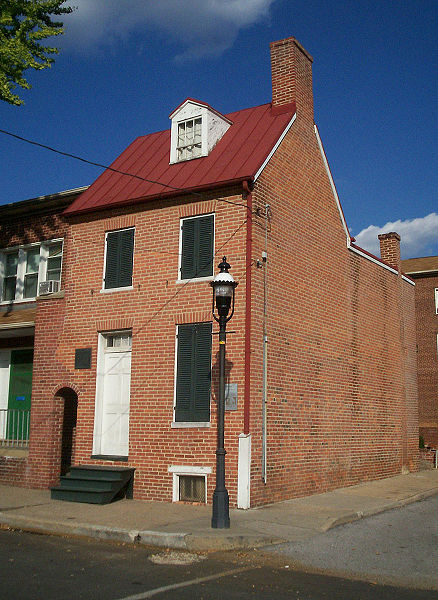
Of course the home to Baltimore’s favorite son of creepiness is haunted! Why would anyone think otherwise? When Vincent Price, one of the modern masters of creepiness, visited this house he said, “This house gives me the creeps.”

Edgar Allen Poe was born in Boston and lived intermittently in a number of cities including Baltimore where he would ultimately die in 1849. There are a few buildings where he lived that remain, including this small, unassuming house in Baltimore where Poe lived for about two years. The house had been rented by Poe’s aunt, Maria Clemm, in the spring of 1832 and was occupied by her daughter, Virginia, and his grandmother. Poe probably moved in the following year and he used the garret room at the top of the house for his writing. He would remain in these cramped quarters until 1835.

Edgar Allan Poe House, 2007. Photo by Midnightdreary, courtesy of Wikipedia.

Over the years that the house has operated as a museum, some visitors have had unusual experiences, among them the feeling of being tapped on the shoulder by an unseen entity. In the mid-1980s, an actress preparing for a performance in the house had a scary encounter. As she was dressing, she noticed that the window sash was moving in the frame, then was shocked when the sash flew out of the frame and landed at her feet. A 2012 investigation by the Pennsylvania-based Ghost Detectives did turn up some odd voices on the team’s voice recorders.

Sources

  • Hayes, Anthony C. “Ghost Detectives investigate ghostly voices inside the Edgar Allan Poe House.” Baltimore Post-Examiner. 16 July 2012.
  • Hayes, Anthony C. “Is the Edgar Allan Poe House haunted?” Baltimore Post-Examiner. 11 May 2012.
  • Hutchisson, James M. Jackson, MS: University Press of Mississippi, 2005.
  • Mendinghall, Joseph S. National Register of Historic Places nomination form for the Edgar Allan Poe House. 11 November 1971.
  • Okonowicz, Ed. Baltimore Ghosts: History, Mystery, Legends and Lore. Elkton, MD: Myst and Lace Publishers, 2006.

Kuhn Memorial Hospital
1422 Martin Luther King, Jr. Boulevard
Vicksburg, Mississippi


A Haunted Southern Book of Days–6 February

This article is a part of an occasional blog series highlighting Southern hauntings or high strangeness associated with specific days. For a complete listing, see “A Haunted Southern Book of Days.”


In a recent series on haunted Mississippi for Jackson, Mississippi’s The Clarion-Ledger, reporter Therese Apel remarks that she heard “completely improbable stories from completely sane people.” While researching for the series, Apel explored the deteriorating carcass of Kuhn Memorial State Hospital and had an improbable experience of her own. On the dusty top of an autopsy table a finger—possibly spectral—had spelled out “pleh,” the word “help” backwards.

The oldest part of this hospital was built in 1832 following an epidemic of smallpox that swept the area. In 1871, the state took over operations of the hospital rendering it a charity hospital for all those in need. During an outbreak of yellow fever in 1878, the dreaded mosquito-borne virus claimed the lives of some sixteen doctors and six Sisters of Mercy working here.

A modern wing was added to the building in 1959. The hospital faithfully served the citizens of Vicksburg and the surrounding area until the state cut funding and the hospital closed in 1989. The building has deteriorated under absentee owners for the past twenty-five years, visited only by urban explorers, filmmakers and ghost hunters. It was during a film shoot here that filmmakers may have unwittingly caught a voice exclaiming “oh my God,” upon the appearance of an evil clown, the film’s protagonist.

Further paranormal investigations of the facility have uncovered a plethora of voices in this most haunted of hospitals.

Sources

  • Apel, Therese. “Creepy phenomena recorded at abandoned hospital.” The Clarion-Ledger. 30 October 2014.
  • Apel, Therese. “Haunted Mississippi: Where are the most spiritually active places in the state?” The Clarion-Ledger. 22 September 2014.
  • Associated Press. “Owner of former hospital given deadline.” Mississippi Business Journal. 29 September 2013.
  • Russell, Randy. The Ghost Will See You Now: Haunted Hospitals of the South. Winston-Salem, NC: John F. Blair, 2014.

Stagville State Historic Site
5828 Old Oxford Road
Durham, North Carolina

While psychic and author Kala Ambrose was visiting Stagville as research for her book, Ghosthunting North Carolina, she took a moment, sat quietly and opened herself up in hopes of communicating with a spirit or two. Instead, she found herself thronged by them. She described it in her book, “the crowd of people was so large that I couldn’t see all of their faces. Instead, I felt the pressure of all of their bodies coming closer to me wanting to talk.”

Bennehan House at Stagville, 2008. Photo by Cotinis, courtesy
of Wikipedia.

One of the largest plantations in the South at its height, ghost stories have been a mainstay of Stagville Plantation for many years. Neighbors have reported strange lights on the property as well as screams in the night. The apparitions of an African-American girl and a group of African-American men have been reported near the Great Barn. The fire department has been summoned several times by reports of the slave quarters being ablaze. Upon arrival, there is no evidence of fire. Staff working in the remaining buildings have found that doors open and close and lock and unlock on their own. The site has been investigated by a number of groups who have captured a number of EVPs there.

The property itself has been the scene of much history. There is evidence of inhabitation by Native Americans and their possible burial on the site. Ambrose states that the remains of settlers have been found bearing evidence of attack from Native Americans. In the mid-19th century, this land was part of the huge holdings of the Bennehan and Cameron families and consisted of some 30,000 acres that were worked by some 900 slaves. Stagville State Historic Site preserves about 71 acres of the original plantation along with a number of remaining buildings and ruins.

Sources

  • Ambrose, Kala. Ghosthunting North Carolina. Cincinnati, OH: Clerisy Press, 2011.
  • Haunted North Carolina. “Historic Stagville.” Accessed 12 December 2014.
  • McDonald, Glenn. “Go ghost hunting with Haunted NC.” Indy Week. 22 October 2014.
  • Stagville. Wikipedia, the Free Encyclopedia. Accessed 12 December 2014.

Longstreet Theatre
Campus of the University of South Carolina
Columbia, South Carolina

The building housing the Longstreet Theatre at the University of South Carolina has seen a good deal of joy and a great deal of sorrow. According to the 1941 WPA guide to the state, the 1855 building has twice been pressed into service as a hospital: between 1862 and 1865 during the Civil War and then again in 1918 during the horrible influenza epidemic that swept the world. Legend holds that the room that is used as the theatre’s green room, where actors relax when they’re not onstage, was utilized as the hospital morgue during the Civil War.

To “ward off the Civil War ghosts,” according to a 2011 article from the student newspaper, The Daily Gamecock, students now employ a “buddy system” in the building. This may very well be a good idea as it seems that many of the reports of activity seem to stem from people who find themselves alone in the building. A secretary had her glasses “slapped off” her face as she walked through the building late one afternoon. “There was no one in the building but me, but I felt an impact on my face and my glasses flew off,” she told a reporter later.

A student was quoted as having a feeling of being watched while she was in the green room and then having the sensation of having “a wall of cold air being pushed across and around her.” Other students tend to get a very creepy feeling or even feel vibrations within the ancient structure. However, most students and professors take the spirits in stride. Alan Brown quotes a theatre professor, “I love to tease students and tell them the ghosts are real friendly unless you’re a Yankee.”

Sources

  • Brown, Alan. Haunted South Carolina. Mechanicsburg, PA: Stackpole Books, 2010.
  • Carmichael, Sherman. Eerie South Carolina. Charleston, SC: History Press, 2013.
  • Ellis, Sarah. “Ghost tours highlight USC’s haunted history.” The Daily Gamecock. 28 October 2011.
  • Kearns, Taylor. “The phantom of Longstreet Theatre?” Carolina Reporter & News. No date.
  • Mitchell, Wes. “Ghosts and legends plentiful on USC campus.” Carolina Reporter & News. No date.
  • Steimle, Douglas. “The Ghosts of Longstreet Theatre.” com. 31 October 2011.
  • Workers of the Writers’ Program of the WPA. South Carolina: A Guide to the Palmetto State. NYC: Oxford University Press, 1941.

Baker-Peters Jazz Club
9000 Kingston Pike
Knoxville, Tennessee

This entry has been reposted as a separate entry, “Spirits and Smooth Jazz–Knoxville, Tennessee.”

Graffiti House
19484 Brandy Road
Brandy Station

It’s not hard to imagine that soldiers throughout the Civil War began to quickly feel their own mortality. As they lay wounded in the homes and taverns, churches and barns that had been hastily converted into hospitals throughout the nation, many scratched their names into adjacent plaster walls and floorboards, perhaps in hopes of gaining some type of immortality. With so much of this graffiti obliterated by the buildings caretakers and time, these exercises into immortality have become increasingly rare, despite their importance to historians and the residents of the modern age.

Graffiti House, 2013. Photo by Cecouchman, courtesy of Wikipedia.

Built near a small railroad stop on the Orange & Alexandria Railroad, Graffiti House was built by James Barbour in 1858 as a residence and possible commercial building. As battles raged around Virginia, Mr. Barbour’s building was converted into a hospital and the patients began to scrawl on the walls of the structure. In June of 1863, the war that had been trickling into the community until then arrived as a deluge when Brandy Station was the scene of the largest cavalry battle fought on American soil.

The graffiti was only rediscovered in the early 1990s and the building was later purchased by the Brandy Station Foundation, an organization devoted to preserving the local battlefield and associated sites. But it’s not just graffiti that remains in the building, spirits are still active as well. A handful of paranormal investigation organizations have investigated Graffiti House and captured evidence.

A reporter from The Free Lance-Star in nearby Fredericksburg in 2007 observed a paranormal investigation by the Virginia Paranormal Institute. About an hour into the investigation he was apparently touched by something while an investigator had something grab her hand. During a more recent investigation by Transcend Paranormal, video of an anomalous light in an empty room was captured. The video is available on YouTube.

Sources

  • Johnston, Donnie. “What was that touching my back?” The Free Lance-Star. 23 November 2007.
  • Neville, Ashley and John S. Salmon. National Register of Historic Places Nomination form for Graffiti House. June 2005.
  • Transcend Paranormal. “Transcend Paranormal: Graffiti House Light Anomaly.” 18 November 2011.

West Virginia Turnpike–Interstate 77
Between Princeton and Charleston, West Virginia

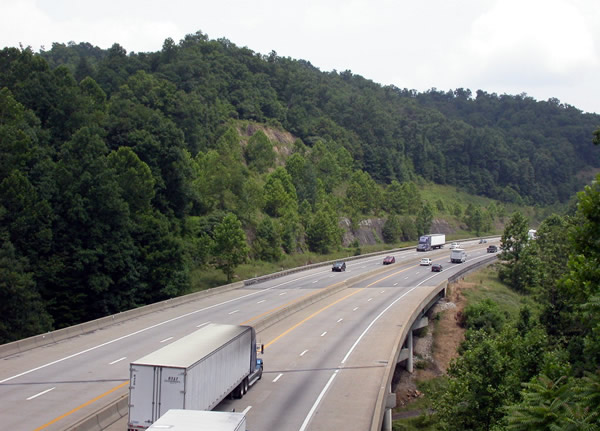
West Virginia Turnpike as it passes through Fayette County. Photo 2006 by Seicer. Courtesy of Wikipedia.

This article has been revised and expanded in “Turnpike Terror–West Virginia.”

Dining with Spirits—Halloween 2014

In celebration of Halloween, I’m exploring 13 haunted restaurants throughout the South. This article has two companion pieces exploring haunted hotels, inns, and bed & breakfasts: “13 Southern Rooms with a Boo” and “13 More Southern Rooms with a Boo.”

Trowbridge’s Ice Cream Bar
316 North Court Street
Florence, Alabama

Walking into Trowbridge’s, one can certainly get a sense of stepping back in time. With a checkerboard floor, mint green upholstery and food prepared using original recipes; the restaurant seems to be a holdover from the first half of the 20th century. But there is something else at Trowbridge’s that hearkens back to an earlier time: a spirit from the Civil War.

Trowbridge’s opened in 1918 primarily selling ice cream and eventually serving sandwiches and hot dogs at its lunch counter. The site where Trowbridge’s would eventually stand was originally occupied the home of the Stewart family. During the Civil War, Charles Daniel Stewart left his family’s home carrying the Confederate banner for the Florence Battalion. It was that same flag that Stewart was bearing when he was wounded during the First Battle of Manassas, one of the first serious engagements of the Civil War.

The young standard bearer lived for almost a month after being wounded in the battle. Restaurant staff members in the building that now occupies the site of his home have seen a young man within the restaurant. He’s most often seen briefly in passing but when the viewer turns he has vanished. Perhaps Stewart’s spirit just enjoys the shakes.

Sources

  • Johnston, Debra. Skeletons in the Closet: True Ghost Stories of the Shoals Area. Debra Johnston, 2002.
  • Trowbridge’s, Florence, Alabama.” com. Accessed 30 October 2014.

Wok and Roll Chinese and Japanese Restaurant
604 H Street, NW
Washington, DC

While Charles Daniel Stewart may have to develop a taste for milkshakes and hot dogs, the spirits of Mary Surratt and the conspirators involved in the assassination of Abraham Lincoln may have to develop a taste for General Tso’s Chicken and sushi. Wok and Roll Chinese and Japanese Restaurant is housed in the building that once housed Mrs. Surratt’s Boarding House where the conspirators met in the days leading up to Lincoln’s fateful night at Ford’s Theatre. Legends tell of spirits still flitting through the historic structure.

The building was constructed in 1843 as a single-family residence. Mary Surratt’s husband, John, purchased the property in 1853 and rented the building while he constructed a tavern at a crossroads in nearby Prince George’s County, Maryland. He was later named postmaster of the community that formed around his family’s tavern. After the outbreak of war, John Surratt passed away leaving his wife and family in somewhat dire financial straits. John’s son, John Junior was named postmaster in his father’s place, but he was arrested about two years later for working as a mail courier for the Confederacy with whom he sympathized.

The Surratt Boarding House, 1890, by Matthew Brady.

After the arrest of her son and being deprived of his income as a postmaster, Mary Surratt moved her family to their Washington home while she rented the family’s Maryland tavern. The family began taking on boarders and was drawn into the conspiracy to kidnap the president. To what extent Mary Surratt was involved is still rather unclear, but in the roundup that followed John Wilkes Booth’s shooting of Lincoln at Ford’s Theatre, Mary was arrested and charged in the conspiracy. She was tried before a military tribunal and subsequently found guilty.

Even after she was found guilty, many requested that she be pardoned including her daughter, Anna. Mary Surratt was executed on the hot summer afternoon of July 7, 1865, along with three of the conspirators; the first woman executed by the Federal Government. After her execution, Mary Surratt’s Boarding House was attacked by a mob which began to strip the building for souvenirs before they were stopped by police.

Wok & Roll Restaurant now occupies the old Surratt Boarding House. Photo 2008, by Leoboudv. Courtesy of Wikipedia.

Anna Surratt sold her mother’s boarding house not long after the execution and subsequent owners reported that they encountered “muffled sounds,” whispers and sobs. When John Alexander was putting together the 1998 edition of his book on Washington ghosts, he met with the owner of the Chinese grocery that existed in the building at that time. The Chinese grocer replied that he “had no complaints.”

Sources

  • Alexander, John. Ghosts, Washington Revisited: The Ghostlore of the Nation’s Capitol. Atglen, PA: Schiffer, 1998.
  • Mary Surratt. Wikipedia, the Free Encyclopedia. Accessed 4 November 2014.
  • Pousson, Eli. National Register of Historic Places nomination form for the Mary E. Surratt Boarding House. May 2009

Ashley’s of Rockledge
1609 US 1
Rockledge, Florida

Some believe that Ethel Allen’s rough road to her grave included a stop at Jack’s Tavern, her favorite local hangout. Last year, I wrote about paranormal investigators conducting an EVP session at Ms. Allen’s grave in the Crooked Mile or Georgiana Cemetery on Merritt Island. After asking if she was present, investigators received a reply, “yes.”

On November 21, 1934, Ethel Allen’s mutilated body was found on the banks of the Indian River in Eau Gallie, some 16 miles away. The nineteen year old had been seen just a few days before when she stopped at a local packing house to say goodbye to a friend. Ethel was leaving to visit her mother, accompanied by a male acquaintance and she may have also stopped by her favorite local hangout, Jack’s Tavern, now Ashley’s of Rockledge. The Tudor-style restaurant has paranormal activity, some of which has been attributed to Ethel Allen.

Ashley’s, 2010, by Leonard J. DeFrancisci. Courtesy of Wikipedia.

A variety of sources state that Ethel may have been murdered within the walls of the restaurant in a storeroom (possibly near the famously haunted ladies restroom) or just outside the building. A local genealogy blog makes no mention of where Ethel may have met her end, but I get the feeling it probably was not in or around the busy tavern. The stories of the restaurant’s haunting are quite readily available though they seem to sometimes perpetuate different variations of the murder.

The activity runs the gamut from simple, cold breezes being felt to voices and screams to full apparitions being seen and captured on film. Some sources also note that the activity does not seem to be limited to just the possible shade of Ethel Allen. There are other possible spirits including a child and an adult male. It does seem that Ashley’s may be one of the most paranormally active restaurants in the state.

Sources

  • Boonstra, Michael. “1934 Murder of Cocoa’s Ethel Allen.” Michael’s Genealogy and Brevard County History Blog. 9 April 2011.
  • History. Ashley’s of Rockledge. Accessed 3 November 2014.
  • Jenkins, Greg. Florida’s Ghostly Legends and Haunted Folklore: Vol. 1 South and Central Florida. Sarasota, FL: Pineapple Press, 2005.
  • Neale, Rick. Brevard’s spookiest spots are dead center for teams of specter- spotters.” Florida Today. 27 October 2013.
  • Thuma, Cynthia and Catherine Lower. Haunted Florida. Mechanicsburg, PA: Stackpole, 2008.
  • Walls, Kathleen. Finding Florida Phantoms. Global Authors Publications, 2004. 

Tondee’s Tavern
7 East Bay Street
Savannah, Georgia

With the immense host of spirits that inhabit the city of Savannah, chances are high that activity may be found most anywhere. Occupying part of a mid-19th century bank building, Tondee’s Tavern utilizes the name of a important colonial era tavern that existed in the city. The building’s history dates to 1853 when its lower floors were occupied by the Central Railway and Banking Company. The upper floors of the building were used as offices for a slave dealer, Joseph Bryan.

Stories of spirits within the building have evidently existed for some time, but the spirits made themselves very well-known recently. In late June of this year, a passerby on the street left a cigarette in a flower box in front of the building. The cigarette smoldered for a few hours before erupting into flames early in the morning. Meanwhile, two employees slept downstairs; a fairly common practice when employees close the previous night and must open the next day.

A closed-circuit security camera picked up the scene at the front of the restaurant. Over the course of two hours, as the flames can be seen building outside the window, a number of white orbs are seen almost frantically zipping through the air. Something woke the two young women asleep in the basement and they were able to begin extinguishing the flames before they could do more damage. The tavern’s owner, however, is still wondering if the orbs were spirits trying to save the building and his business.

Sources

Jailhouse Pizza
125 Main Street
Brandenburg, Kentucky

In a fairly creative use of a historic building, the old Meade County Jail is now a pizzeria. Built in 1906 by the Pauly Jail Company, this building was the third jail built for Meade County. The pizzeria’s website states that some of the inmates have apparently never left, including one who has been dubbed, “Bigsby.” These spirits have been both seen and heard.

Old Meade County Jail, 2011, by Nyttend. Courtesy of Wikipedia.

A recent investigation by the Hopkins County Paranormal Society was able to capture, what one investigator calls, “the best evidence ever.” Video taken during the investigation shows a blanket being pulled out and down. Audio evidence was also captured that includes footsteps, a scream and possibly a female child.

Sources

  • History.” Jailhouse Pizza. Accessed 31 October 2014.
  • Johnson, William G. Kentucky Historic Resources Inventory form for Meade County Jail. Summer 1983.
  • Landon, Heather. “Best Creepy Historic Sites in the US.” The Daily Meal. 14 October 2014.

Antoine’s
713 St. Louis Street
New Orleans, Louisiana

Antoine’s, 2007 by Infrogmation. Courtesy of Wikipedia.

Antoine Alciatore, like so many Europeans at that time, dreamed of making it big in the United States and immigrated in 1838 to make good on those dreams. After a couple years of struggling in New York City, he set his sights on that most French of cities, New Orleans and this is where he opened Antoine’s. In 1868, the restaurant moved to its current location that now boasts 14 unique dining rooms. Alciatore left New Orleans in 1874 bound for Marseilles where he died; his beloved restaurant was left in the hands of his son and his family has continued to own and run the restaurant. Antoine continues to return to check up on this famed New Orleans institution and he continues to be seen in the Japanese and Mystery Dining Rooms. Other specters in 19th century clothing have been seen peering from the mirrors in the washrooms as well.

Sources

  • Dwyer, Jeff. Ghost Hunter’s Guide to New Orleans. Gretna, LA: Pelican, 2007.
  • Antoine’s Restaurant. Accessed 8 January 2011.

Puccini Restaurant
12901 Ali Ghan Road, NE
Cumberland, Maryland

At Puccini, patrons may get a bit of the paranormal with their pasta. With your fettuccini, you may hear disembodied footsteps or perhaps there may be some voices heard as you enjoy your vino. Don’t mind them, they won’t hurt you.

The building now housing Puccini was near fighting on August 1, 1864 as Confederates were defeated in the Battle of Folck’s Mill. Many of the wounded were brought into the George Hinkle house (as it was known at that time) where they were treated. Of course there may also have been a few deaths in the house during that time. Some of those soldiers may have also written or carved their names on the walls in the attic.

Employees of the restaurant as well as guests have reported quite a bit of activity over the years. From footsteps to shadow figures to full apparitions, people in this building have had many experiences. The restaurant was investigated a few years ago by member of the team from City Lights Paranormal Society of Easton, Pennsylvania. The investigators were able to capture a good deal of audio evidence including a number of EVPs.

Sources

  • Barkley, Kristin Harty. “Paranormal investigator believes Cumberland restaurant haunted.” Cumberland Times-News. 29 October 2010.
  • City Lights Paranormal Society. Puccini Restaurant. Accessed 29 April 2014.
  • History.” Puccini. Accessed 3 November 2014.

Weidmann’s Restaurant
210 22nd Avenue
Meridian, Mississippi

Like Antoine’s in New Orleans, Meridian’s Weidmann’s restaurant was also started by an immigrant and has become a local institution after more than a century. Weidmann’s was opened by Felix Weidmann, a Swiss immigrant. While Antoine’s has remained in the same location, Weidmann’s location changed a number of times before it settled into a location in 1923.

Weidmann’s, 2010, by Dudemanfellabra. Courtesy of Wikipedia.

The haunting of Weidmann’s seems to be mostly residual activity. Sounds echo through the restaurant with no obvious source. For his 2011 book, Haunted Meridian, Mississippi, Alan Brown spoke with one employee who recalls hearing sounds associated with livestock near the restaurant’s freezers where livestock may have been kept before Weidmann’s moved in. But animal sounds are just a small part of the repertoire associated with the spirits of Weidmann’s.

At table one, a legend is oft told of a young couple visiting the restaurant during the Great Depression. The couple had recently become engaged and had enough money to treat themselves to a meal in the restaurant. Henry Weidmann, the restaurant’s owner at the time, picked up the tab and encouraged the couple to return for their first anniversary. The legend continues that the young couple did not return to their table in the restaurant in life, but they have continued to return in death. They are supposed to be seen on occasion sitting quietly at the table holding hands under the table.

Sources

  • Brown, Alan. Haunted Meridian, Mississippi. Charleston, SC: History Press, 2011.
  • Weidmann’s Restaurant. Wikipedia, the Free Encyclopedia. Accessed 4 November 2014.

Four Square Restaurant
2701 Chapel Hill Road
Durham, North Carolina

Bartlett Mangum built his house in 1908 on the outskirts of Durham and the house is now the only part of his 80-acre farm that has remained standing. The house remained in the family until Mangum’s daughters were moved to a nursing home in 1956. The house passed through a variety of owners who rented out the house or used it for commercial purposes including a variety of restaurants. During the early 1960s, the house was even used as a racially-integrated church.

The Mangum daughters, Inez and Bessie, inherited the house in 1927 and tradition holds that they did not speak to each other for many years due to a feud. According to an article by Colin Warren-Hicks in the local progressive paper, Indy Week, restaurant staff believes that the spirit of Inez Mangum still flits about her old house. Cooks in the kitchen reported to Warren-Hicks that pots and pans would move on its own accord. Dinner and glassware left on a certain mantelpiece in one of the restaurant’s dining rooms would often be inexplicably knocked to the floor.

UPDATE 4/23/2018: Four Square has closed.

Sources

  • Dickinson, Patricia S. National Register of Historic Places nomination form for Bartlett Mangum House. 5 December 1988.
  • Warren-Hicks, Colin. “The Devil went down to Four Square Restaurant.” Indy Week. 22 October 2014.

Connolly’s Irish Pub
24 East Court Square
Greenville, South Carolina 

This unassuming Irish pub in downtown Greenville, South Carolina is a front for a secret. Just outside the pub and behind the street door that provides access to this old commercial building’s second floor is an unused floor that is supposed to have served as a brothel some years ago. A recent investigation of this building by local investigator and ghost tour operator Jason Profit produced video of small orbs of light flitting through the corridor.

Sources

McDonald’s #2338
3470 Lebanon Pike
Hermitage, Tennessee

It’s my sincerest hope that the victims of the horrible event that happened here in 1997 are at rest; they most certainly deserve to be. On March 23, 1997, Paul Dennis Reid forced his way into this McDonald’s at closing time. After shooting three of the employees, he stabbed a fourth employee seventeen times before leaving with the restaurant’s money. The three shooting victims died while the stabbing victim survived. Just a month before, Reid had robbed a nearby Captain D’s brutally shooting and killing two employees. Before he was captured by the police, he managed to kill a total of seven people, all fast food employees. Reid passed quietly in prison just last year.

According to the Nashville Haunted Handbook, published in 2011, this restaurant has been plagued by a general sense of unease as well as shadow figures. After viewing this location on Google Streetview, it appears that this McDonald’s location may have a new building—the chain has been tearing down older restaurants and replacing them with new buildings. Though, since the building has been replaced, it is unknown whether this activity has persisted.

Sources

  • “2 Slain at Nashville McDonald’s.” Chicago Tribune. 24 March 1997.
  • Morris, Jeff; Donna Marsh and Garett Merk. Nashville Haunted Handbook. Cincinnati, OH: Clerisy Press, 2011.
  • Wilson, Brian. “Tennessee mass murderer Paul Dennis Reid dead.” 1 November 2013.

Coffee Pot
2902 Brambleton Avenue, SW (US 221)
Roanoke, Virginia

Just who or what is causing the odd activity at Roanoke’s landmark roadhouse, The Coffee Pot, is still a question. Primarily, the activity generally involves the movement of objects. One bartender was cleaning ashtrays and stacking them on the bar one evening after the restaurant had closed. They had already stacked a number of ashtrays when they witnessed the stack rise into the air and then drop back down on the bar. Startled, she returned to work only to have the stack of ashtrays rise and fall again. After that, she grabbed her things and left.

The Coffee Pot, 2009, by Patriarca12. Courtesy of Wikipedia.

A manager noted that spices would often disappear from their accustomed spot only to reappear in a very different location sometimes days later. Bottles of wine and other cooking utensils have been known to fly across rooms, while paranormal investigators have been able to photograph orbs and have captured EVPs within the restaurant.

The Coffee Pot, with its distinctive large coffee pot, was constructed in 1936 along what had been a fairly rural road. Over time, US 221 has grown along with the restaurant’s business. As a roadhouse, the restaurant has become known for its musical entertainment including Willie Nelson who played an impromptu concert at the restaurant in 1970s.

Sources

  • Hill, Helen. National Register of Historic Places nomination form for The Coffee Pot. December 1995.
  • Hurst, Chris. “Looking for ghosts at The Coffee Pot in Roanoke.” 24 October 2010.
  • Taylor, L. B. Jr. Haunted Roanoke. Charleston, SC: History Press, 2013.

Yellow Bank Restaurant
201 East German Street
Shepherdstown, West Virginia

In the historic town of Shepherdstown, the 1906 Jefferson Security Bank now houses the Yellow Bank Restaurant. The bank was converted to a restaurant some years ago and now houses the restaurant where table 25 was the scene of some activity in the 1990s when a patron reported to the restaurant’s manager that she couldn’t sit at the table because of the ghost. The bartender also reported that he had glasses fall from the glass rack and break.

UPDATE 4/23/2018: Yellow Bank Restaurant has closed.

Sources

  • Molenda, Rachel. “Town serves as home to ghosts from past.” The Shepherdstown Chronicle. 28 October 2011.

Shushing rumors—Albertville Public Library

Albertville Public Library
200 Jackson Street
Albertville, Alabama

One of the classic library images is the bespectacled librarian shushing anyone making noise within the solemn and sacrosanct confines of the building. In the case of the librarian at the public library in the small, north Alabama town of Albertville, she’s trying to shush rumors of the library being haunted.

“I find the whole thing embarrassing,” she told a local reporter in 2007. It seems the story started as a joke a few years previous but has taken on a life of its own. I even covered it in an entry called “Some Alabama Hauntings, Briefly Noted,” from January 16 of this year. This is what I wrote:

Should my spirit remain on this plane after my death, it’s my sincere wish that I would remain in a library. The public library in Albertville, a small town in the north east part of the state, is typical of small town libraries throughout the country, but on one account is not so typical: it may be haunted. Built in 1964, the building replaced a much older home. Local legend indicates that spirits from that home may have taken residence in the library building. Apparently harmless, the spirits make their presence known by turning faucets on and playing on the elevator.

In 2010, Albertville was devastated by an EF3 tornado which damaged the library. I can find no word if the spirit remained after repairs.

I have discovered that ghost stories are like a garden, they must be regularly tended. They are forever growing and needing to be weeded. While digging around through newspaper archives, I uncovered a few articles about the library’s ghost.

Of course it’s a bit disappointing to find that there’s no ghost behind the legend, though I’m happy to be able to post a correction. The story also gives us a view into how some folklore is created. According to the librarian, the rumors started when a local television news station ran a story about local businesses and institutions celebrating Halloween. “We were dressed up for Halloween and during the interview some of the girls up front started joking around about the library being haunted. Saying any time a book fell the ghost did it. Just joking around,” the library director continued.

Main Street Albertville Alabama
Main Street, Albertville, 2012, by Rivers Langley. Courtesy of Wikipedia.

From that local interview, the story has grown legs and made its way throughout the internet. The listing of the library on the haunted places list on the infamous site, Shadowlands, has most certainly helped give movement and credence to the rumor. The problem with Shadowlands is that the site is almost entirely user submitted, with none of the information being properly vetted before it’s posted. While there is some truth to some of the entries, many of them are a chaotic jumble of fact and fiction, or just pure fiction. I’ve seen Shadowlands credited in everything from blog posts to books and it’s given rise to many ghost stories and legends.

Possibly using Shadowlands as a source, the library was listed in a 2006 article in the Sand Mountain Reporter, the local paper. The article by Charlotte Christopher lists a number of haunted locations throughout north Alabama. An article detailing the fact that the library is haunted appeared in the same paper in 2007.

In 2008, the library was listed as part of an entry in the Encyclopedia Brittanica Blog listing haunted libraries throughout the United States. With the name as respected as the Encyclopedia Brittanica behind the listing, it must be true, right?

The story was picked up on by Jessica Penot in her excellent Haunted North Alabama, published in 2010. Just after the book’s publication, an article appeared in the Sand Mountain Reporter discussing the library’s inclusion in the book and quoting both Penot and the librarian. “With all ghost stories, there is the possibility they are as much legend as fact,” Penot says in the article.

One of the issues she encountered in researching the library was the large tornado that struck the town in 2010. The damaged library was closed for repairs, and she couldn’t find a proper contact to confirm the legends.

She continues in the article, “The fact that a legend surrounds a location like the library only underlines its importance in the community. Places that are central to communities are often the first to have ghost stories spread about them. Because people love these places, the stories spread more quickly.”

Sources

  • Albertville, Alabama. Wikipedia, the Free Encyclopedia. Accessed 16 January 2013.
  • Christopher, Charlotte. “Haunted sightings in Northern Alabama.” Sand Mountain Reporter. 26 October 2006.
  • Eberhart, George. “Library Ghosts: Southern U.S.Encyclopedia Britannica Blog. 29 Oct 2008.
  • Green, Lionel. “Albertville Public Library earns chapter in new book about haunted locations.” Sand Mountain Reporter. 1 October 2010.
  • Haunted Places in Alabama. Shadowlands. Accessed 15 December 2013.
  • Leak, Clay. “A ghost in the library? Perish the thought.” Sand Mountain Reporter. 31 March 2007.
  • Penot, Jessica. Haunted North Alabama. Charleston, SC: History Press, 2010.

“But a walking shadow”—Birmingham, Alabama

N.B. This article replaces the 4 October 2010 article about the Alabama Theatre.

Life’s but a walking shadow, a poor player
That struts and frets his hour upon the stage
And then is heard no more.
Williams Shakespeare, Macbeth, Act V, Scene 5

Sign for the Alabama Theatre,
Photo by Carol Highsmith, 2010. Courtesy of the Library of Congress.

The theatre world is full of superstition and spirits. In nearly every theatre I have worked, there are stories of ghosts. The theatre world is filled with mystery and mysticism, especially when it comes to actors. There is a ritual in preparing a character for his hour of strutting and fretting upon the stage before they are banished back to the world of fiction. Perhaps that may be a clue to why theatres are haunted.

While many haunted places may be locations of tragedy and death, that’s not always the case with theatres. As most theatre people are passionate about their profession, it’s not unheard of to imagine that they remain to rekindle that passion. In his Ghost Hunter’s Guide to New Orleans, Jeff Dwyer contends that one can be almost certain that a theatre will be haunted.

There are few certainties in ghost hunting. But when it comes to haunted places, ships and theaters offer ghost hunters the greatest opportunities for encounters with the spirit world. Theaters often harbor the ghosts of actors, writers, musicians and directors because something about their creative natures ties them to the place where they experienced their greatest successes or failures. Stagehands and other production staff may haunt backstage areas where they worked and, perhaps suffered a fatal accident. They may also be tied to room where props are stored. The ghosts of patrons remain long after death because they love the theater or, more likely, they loved an actor who performed regularly at that location.

Lyric Theatre, 2016, by Lewis O. Powell IV. All rights reserved.

I can agree with some of this. Yes, the creative natures of thespians, writers, musicians, directors and other members of the creative staff may cause them to linger in the places where they happily created their art. As for stagehands and other members of the production staff, with the higher rate of accidents for such people, there are cases where their deaths have left them in limbo within the theatre. The haunting of the Wells Theatre in Norfolk, Virginia comes to mind. One of the spirits in this 1913 theatre may be that of a careless stagehand who became entangled in the hemp rope-operated fly system (a system that is still in use) and accidentally hung himself.

Within a modern theatre, I do have an issue with Dwyer’s contention that spirits may be connected to props rooms. Most modern theatres serve mostly as general performing arts spaces and unless they have a theatre company attached, they are not likely to have props storage. In my research, I cannot recall any stories of haunted props storage spaces.

The Alabama Theatre’s Spanish Lounge. Photo taken for the Historic American Buildings Survey (HABS), courtesy of the Library of Congress.

As for lingering spirits of theatre patrons, there are a few love stories involving patrons and performers, though it does seems that most of the hauntings by members of the audience are apparently residual in nature with phantom laughter and applause sometimes being heard.

Contributing to theatres’ haunted natures, I would add the fact that theatres are often created in old buildings. These repurposed buildings may already be haunted and the spirits adapt to the new use of the location. Among the numerous examples of these types of theatres are the Baltimore Theatre Project in Maryland in an old building originally constructed for a men’s fraternal organization and the Hippodrome State Theatre in Gainesville, Florida, formerly a post office and courthouse.

Balconies of the Lyric Theatre. Photo by Andre Natta, 2006, courtesy of Flickr.

Regardless, some of these assertions can be seen in play with two haunted theatres in Birmingham, Alabama. Theatres that happen to be located directly across the street from each other, though they have wildly differing histories: the Lyric and the Alabama Theatres, located on 3rd Avenue, North.

Standing in the shadow of the Alabama Theatre, its well-restored, gaudier and haunted sister across the street, the LYRIC THEATRE (1800 3rd Avenue) is finally coming into her own after many years of neglect. The Lyric opened in 1914 at the height of American vaudeville. Upon its now dusty boards passed many of the top headliners of B.F. Keith’s vaudeville circuit: the curvaceous and naughty humor of Mae West; the last Red Hot Mama, Sophie Tucker; the Marx Brothers with their goofily brilliant brand of comedy; Buster Keaton and his family of acrobats; and legions of hoofers, singers, comedians and other weird and wonderful vaudevillians.

With the opening of the nearby Ritz Theatre in 1926, big time vaudeville departed the Lyric leaving its stage to second and third tier performers. Films were shown, but even these were overshadowed by the Alabama Theatre. The theatre limped on until 1958 when its doors were shut. In the 1970s under the flashy name, the Roxy, the grand lady became an adult theatre. Legend holds that the last film shown was the infamous “Deep Throat,” after which the projectionist was arrested. The theatre closed its doors to sit quietly and crumble for a few decades.

Efforts to revive the Lyric have reached a fever pitch and activity now hums in its once forlorn halls. Soon, it’s expected that the Lyric will stand proudly across the street from the Alabama Theatre again. And the ghosts of vaudeville will have found a new life.

There’s no question why the vaudeville performers of old would want to continue gracing the stage of the Lyric. It may be one of the best preserved vaudeville houses in the nation and it is also known for its superb acoustics. Those same acoustics and its remarkably well-preserved interior are the very reasons that local arts groups are clamoring to see the theatre restored for live performance.

On recent investigations of the Lyric, paranormal investigators have witnessed much activity that can possibly be traced to the ghosts of vaudeville. A reporter observing an investigation in 2012 saw what she believed to be a man with a cane move across the empty theatre’s stage. The figure stood in the wings for a few moments before disappearing. Another group of investigators smelled the distinct odors of lit matches and cigar smoke.

The crown jewel of Birmingham, the ALABAMA THEATRE (1817 3rd Avenue), was opened as the southeastern flagship theater for the Paramount-Publix chain in 1927. This most exuberant of theatrical monuments was named the Historic State Theatre of Alabama in 1993 and continues to serve the citizens of Birmingham and the region.

Interior of the Alabama Theatre before restoration. Photo taken for HABS, courtesy
of the Library of Congress.

Designed by the Chicago architectural firm of Graven and Mayger, the Alabama Theatre is one of only two extant theatres they designed, the other being Knoxville’s Tennessee Theatre which opened a year after its Alabama counterpart. The first air-conditioned building in the state of Alabama, the theatre features an opulent interior in the Spanish Colonial style that has wowed patrons for almost 90 years. A booming Wurlitzer organ still graces the auditorium and is featured in concerts and sing-alongs.

The theater served as a movie house until the owners declared bankruptcy in 1981. The theater had been sitting empty when Birmingham Landmarks, Inc. purchased the theater as a performing arts center. The theater edifice was fully restored in 1998 and hosts a wide array of events throughout the year.

Since reopening as a performing arts center, the Alabama Theatre has had varied reports of ghostly activity. One legend remembers a construction worker falling to his death during construction who allegedly haunts the balcony. A theatre staff member in the balcony checking sightlines did watch as a seat near her lowered by itself—the seats are spring-loaded to pop back up. Perhaps the construction worker enjoys watching the activity onstage?

HABS photo of the Alabama Theatre’s exterior. Courtesy of the Library of
Congress.

Southern Paranormal Researchers were granted permission to investigate the theatre in 2006. They encountered a variety of activity. As one investigator ascended the stairs to the balcony, they encountered a force that pushed them down. While investigating the film room shortly after that two investigators heard something descending a staircase.

According to Dr. Alan Brown, the now retired, long time theatre organist Cecil Whitmire told of many encounters in the building. While rehearsing with a singer in 1986, Mr. Whitmire reported that the singer watched a shadowy figure emerge from behind the edge of the curtain just offstage and disappear. He believes the spirit may be that of one of the former theatre organists. The extravagant theatre and its “walking shadows” still surprise and delight theatre patrons and visitors today.

Sources

  • Alabama Theatre. Accessed 8 March 2013.
  • Brown, Alan. Haunted Birmingham. Charleston, SC: History Press, 2009.
  • Brown, Alan.Stories from the Haunted South. Jackson, MS: University Press of Mississippi, 2004.
  • Dobrinski, Rebecca. “Wandering the Lyric at midnight.” Weld for Birmingham. 17 September 2012.
  • Dwyer, Jeff. Ghost Hunter’s Guide to New Orleans. Gretna, LA: Pelican, 2007.
  • “Haunted Places: the Lyric Theatre in Alabama.” The Most Haunted Places in America Blog. 21 April 2011.
  • The Heritage of Jefferson County, Alabama. Clanton, AL: Heritage Publishing, 2002.
  • Huebner, Michael. “Birmingham’s Lyric Theatre: Heightened anticipation for long-awaited restoration.” The Birmingham News. 29 Spetember 2012.
  • Seale, Kathy. “Happy Haunting!” Birmingham News. 29 October 2006.
  • Southern Paranormal Researchers. Investigation Report for Alabama Theatre. 24 November 2006.
  • Underwood, Madison. “Lyric Theatre set to host its ‘first concert in the 21st’”AL.com. 26 September 2012.

Spirits on the Bay of the Holy Spirit—Richards DAR House

Richards DAR House
256 North Joachim Street
Mobile, Alabama

The figure appears to me to be a man wearing a frock coat. An image was captured during a recent investigation of the Richards DAR House in Mobile. It was taken in one of the bedrooms and includes the image of a man with his back to the camera. The figure is only partial, definitely a head, shoulder, arm and torso are visible, but not much else is visible. It could be a woman, for all we know.

The Richards DAR House is one of those fascinating places where the paranormal appears to be very much in evidence. The Daughters of the American Revolution chapter who operates the home has recently begun allowing investigators to scour the house for evidence of the paranormal and they have found a great deal.

“Every time we end up going into that location, we end up with evidence of some sort,” says one of the investigators from the Alabama chapter of the Delta Paranormal Project who sponsored a public investigation of the house.

As it came into being, the city of Mobile endured very violent labor pains. The area was originally occupied by native people who called themselves the Mauvila. It was these people who met the Spanish who first explored the area in 1519 under Alonzo Alvarez Pineda naming Mobile Bay the “Bay of the Holy Spirit” or “Bahia Espirito Sancto.” While the first Spanish approached the natives peacefully, the second encounter under Henando de Soto a few decades later, was wracked with violence.

Often, places like this that produce a plethora of evidence tend to be the scene of tragedy, the Richards DAR House goes against the grain: it appears to have been a very happy home. The house has quite a cheerful appearance from the street.

The Richards DAR House, 2010, by Carol M. Highsmith. Courtesy of the Carol M. Highsmith Collection, Library of Congress Prints and Photographs Division.

Ralph Hammond in his 1951 Ante-Bellum Mansions of Alabama, notes that the home has the some of the finest ironwork in the city of Mobile. Lacey grillwork surrounds the first floor porch with a similarly decadent iron fence running along the sidewalk in front. The National Register of Historic Places nomination form for the De Tonti Square Historic District, of which the Richards House is a contributing structure, notes that the ironwork depicts the four seasons and is the most elaborate in the city. The rest of the house is far simpler: it’s a brick townhouse with a few fanciful, Italianate decorative touches.

The home was completed around 1860 for Charles G. Richards as a family home for his wife, Caroline Elizabeth Steele, and their many children. In total, the couple had twelve children, though a few did not make it past childhood as was common in the era. Caroline Richards lived in the home for seven years before dying in childbirth. Her husband did not remarry, which, according to the president’s of the home’s executive board, indicates that “there was a lot of love in that family.”

The home remained in the family for a few further generations until passing into the hands of the owners of a cement company. Luckily, the cement company owners were dedicated to preserving the house that served as their offices. When the building outlived its usage as an office, it was turned over to the city in excellent condition.

Quickly, the DAR members became aware of the spirits in residence. “There are times when you hear—when you first go in, after opening up—you’ll hear young children. It sounds like children playing on the stairs or right at the top of the stairs,” one of the ladies told author Elizabeth Parker.

In an effort to contact the children, a recent investigation introduced marbles with the promise that if they were moved, the children could keep them. Later in the investigation, the marbles were found to have moved.

Apparently, there are adults watching over the children. Definitely the person who appeared in the photograph, but also the woman who is seen staring out the window of the red bedroom may be watching over the children. In fact, one guide entered the home one morning and she and the guests with her clearly heard the sound of a woman scolding children.

According to the president of the home’s board, “We just feel like it might be Captain Richards and his wife and children. They’re just happy that we’re taking care of the house so well, and letting others enjoy the house.”

Sources

  • Floyd, W. Warner & Thomas St. John, Jr. National Register of Historic Places Nomination Form for De Tonti Square Historic District. 29 December 1971.
  • Hammond, Ralph. Ante-Bellum Mansions of Alabama. NYC: Bonanza Books, 1951.
  • Kirkland, Scotty. “Mobile.” Encyclopedia of Alabama. 25 September 2008.
  • Paker, Elizabeth. Haunted Mobile: Apparitions of the Azalea City. Charleston, SC: History Press, 2009.
  • Sharp, John. “Ghost hunters make haunting discoveries at Richards DAR House.” com. 10 September 2013.
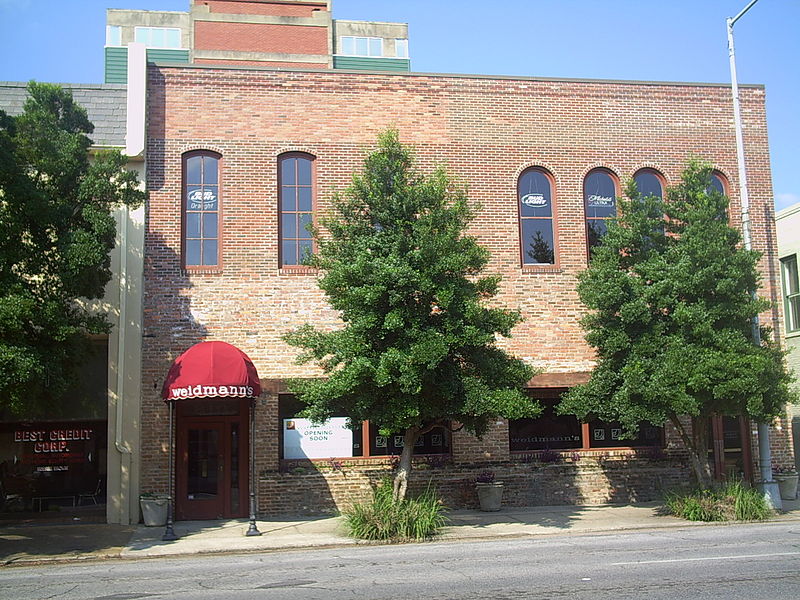
  • Vargas, Lauren. “Ghost Hunting at Richards DAR House.” WKRG News 5. 22 February 2012.

The Road to Smuteye—Southeast Alabama

I’m on the road again, this time to southeast Alabama to explore a few hauntings here. As I drove through rural Bullock County, I passed the road to a place called Smuteye. This is a land that wears its history on its sleeve. As I drove towards tonight’s destination, Ozark, I passed through small towns still bearing the scars of Reconstruction. Slavery’s grim face still shown on the streets and in the peeling paint of the grand, white houses lining the main streets. Discounting the modern cars, in some places it could still be 1965 or 1920 or 1885.

Driving through places like Union Springs, Brundidge, Tuskeegee, history is ever present. Tuskeegee, where African-Americans under the watchful eye of Booker T. Washington and George Washington Carver began to raise themselves from oppression to tolerance to the hallowed halls of the White House, is sadly decaying with the main street lined with crumbling old homes and boarded up commercial buildings. Passing through Union Springs on AL-29, architectural gems of past ages lined the street with occasional modern infill housing and run down mobile homes butting up against the Greek-Revival, Italianate, and Victorian manses. Between these towns churches every few miles remind travelers that this is God’s country.

This is also a land rife with ghosts, though most of these spirits are simply not discussed. The purpose of this trip is ultimately to see the Rawls Hotel in Enterprise, though I’m finding a few other hauntings along the way to occupy my interest. Had I done my research before my drive, I would have stopped in Union Springs to photograph the three possibly haunted locations in downtown: the BULLOCK COUNTY COURTHOUSE, the PAULY JAIL and the JOSEPHINE HOTEL.

All three locations have been investigated by the Alabama Paranormal Research Team with the courthouse and the jail investigated in 2009 and the hotel investigated the following year. According to the investigation reports they have published on their site, activity was uncovered in the courthouse and the hotel, but the jail, oddly, seemed quiet.

Bullock County Courthouse, 2000, taken by the US Dept. of Agriculture.

The Second Empire style Bullock County Courthouse was constructed in 1871-2, during Reconstruction. It was here that the paranormal team was told of the frightening photograph of a Confederate soldier hanging inside. Recently, one of the sheriffs reported that the portrait made him feel uneasy, to the point that he had the photograph covered. In addition, there were reports of the elevators operating on their own volition, which is not an uncommon occurrence. The investigation revealed some odd activity in the courtroom including odd static charges coming from the floor and certain seats. Some EVPs were recorded and a few strange photos were taken.

Behind the courthouse, the intimidating Pauly Jail stands. Named for the Pauly Jail Building and Manufacturing Company which constructed it in 1897, the jail is the oldest jail still in existence in the state. Unfortunately, the building produced no results during the investigation.

Just down the street stands the old Josephine Hotel which is now home to the Josephine Arts Center. This 1880 hotel did reveal some paranormal activity. At one point during the investigation, the investigators witnessed an orb of light moving through a hallway. Upon reviewing the video collected at the hotel, this orb was found to have been captured. In addition, an EVP was also collected. This was enough evidence for the organization to indicate that there is some activity within the building.

Down the road in Dale County outside of the town of Newton is the peculiar “CHOCTAWHATCHEE BRIDGE HOLE.” Legend tells us the sad story of Bill Sketoe, who was put to death near the bridge over the Choctawhatchee River which now carries Alabama Highway 123. In 1864, when the Confederate Army was desperate for manpower, poor Bill Sketoe was arrested by a company of soldiers and accused of desertion. Arguing that he had hired a substitute to fight on his behalf, Sketoe was hung from a nearby water oak. The amateur hang man misjudged Sketoe’s height and his feet were still touching the ground after the noose was tightened. One of the men slowly scraped away the dirt from under Sketoe’s feet and he was slowly strangled, most certainly a brutal death.

For years, the hole remained and refused all efforts to fill it. Kathryn Tucker Windham immortalized this story in her 1969 13 Alabama Ghosts and Jeffrey. Sadly, this was not enough to save the actual hole. When a new bridge was built to carry AL-123 over the river, the hole was covered. Though, the hole was recreated in a nearby park. Of course, it isn’t the same.

The point of this trip is to make a pilgrimage to the RAWLS HOTEL that I have previously written about, though I will be stopping past the recreation of Bill Sketoe’s hole as well. This is a fascinating landscape and I hope to find more about the spirits of the region.

Sources

  • Alabama Paranormal Research Team. Investigation Report for Bullock County Courthouse. Accessed 29 November 2012.
  • Alabama Paranormal Research Team. Investigation Report for The Josephine Hotel. Accessed 29 November 2012.
  • Cox, Dale. “The Ghost of Sketoe’s Hole—Newton, Alabama.” Exploring Southern History Blog. Accessed 25 January 2013.
  • Fox, Jovani. “Paranormal research team investigates Pauly Jail.” Union Springs Herald. September 2009.
  • Union Springs, Alabama. “A Tour of Union Springs.” Accessed 25 January 2013.
  • Windham, Kathryn Tucker & Margaret Gillis Figh. 13 Alabama Ghosts and Jeffrey. Tuscaloosa, AL: University of Alabama Press, 1969.